Lacy Tansyaster (Machaeranthera pinnatifida)
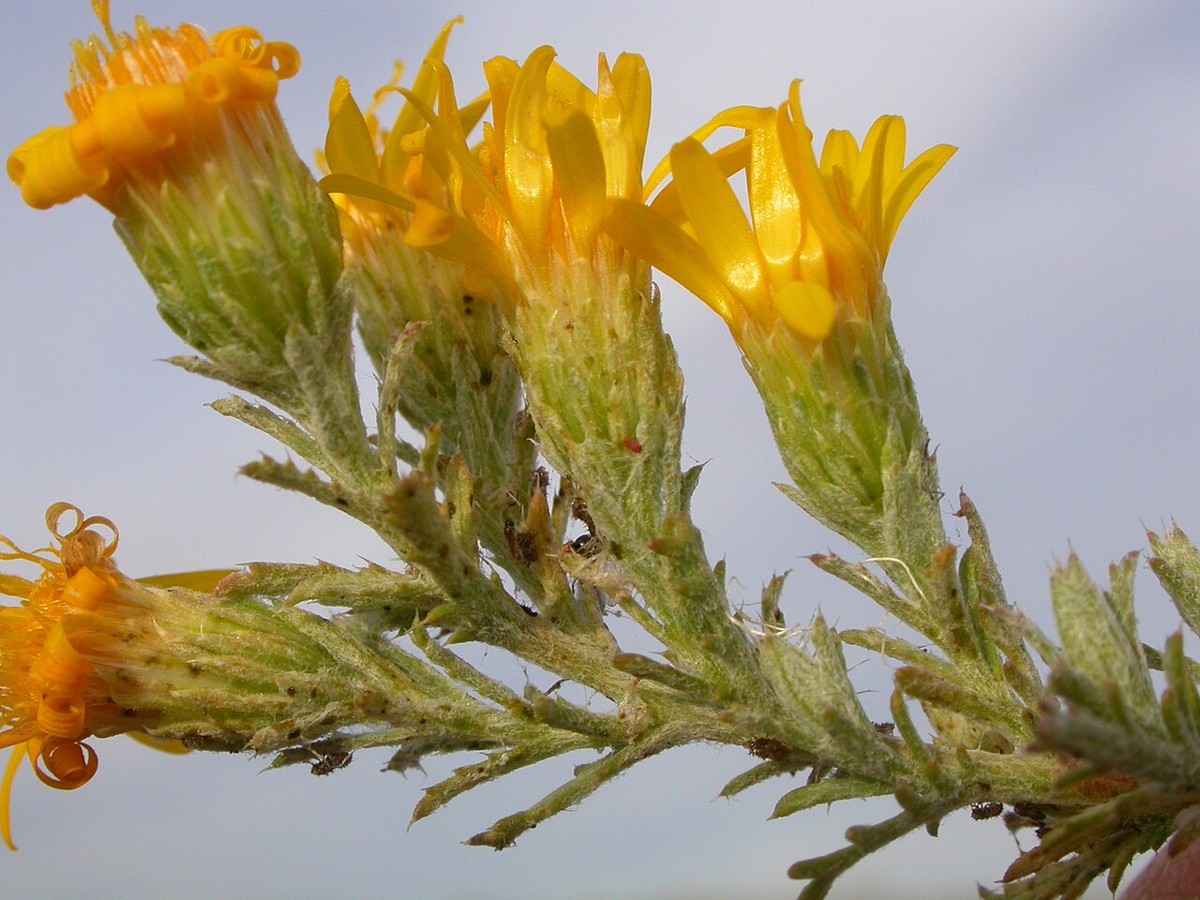
Machaeranthera pinnatifida, commonly known as Lacy Tansyaster, Spiny Goldenweed, or Prickly Daisy, is one of the toughest and most widely distributed wildflowers of the western United States. It is a low, mounding perennial in the aster family, instantly recognizable by its finely cut, spine-tipped leaves and cheerful golden-yellow daisy flowers that appear in waves from summer into fall, often right through the first frosts.
True to its wide range — spanning everything from Mojave Desert washes to high plains grassland and Rocky Mountain foothills — Lacy Tansyaster is remarkably adaptable. It thrives in exactly the kind of poor, rocky, disturbed, or sun-baked soil that discourages most other plants, which has made it both a pioneer species on degraded rangeland and a dependable, nearly carefree choice for xeric home gardens across a huge swath of the country.
The genus name honors its sharp, bristly character (machaira is Greek for “sword” or “dagger,” a nod to the pointed leaf lobes), while “tansyaster” describes the lacy, tansy-like foliage topped by aster-family flowerheads. Gardeners in the Southwest, Great Plains, and Intermountain West will often recognize it already growing wild along roadsides and in vacant lots — proof of just how little encouragement it needs once given a sunny, well-drained spot.
Identification
Lacy Tansyaster is a low, spreading to mounding perennial, usually 6 to 18 inches tall and somewhat wider, with a woody base and multiple leafy stems. It can behave as a short-lived perennial or even a biennial in harsher sites, but it reliably self-sows to maintain a presence once established.
Leaves
The leaves are the plant’s signature feature: alternate, narrow, and deeply pinnately lobed into slender segments, each tipped with a small, sharp spine — giving the foliage a lacy, almost fern-like texture that is nonetheless prickly to the touch. Leaves are gray-green to green, often slightly hairy or sticky-glandular, and persist in a dense, bushy clump at the base of the plant.
Flowers
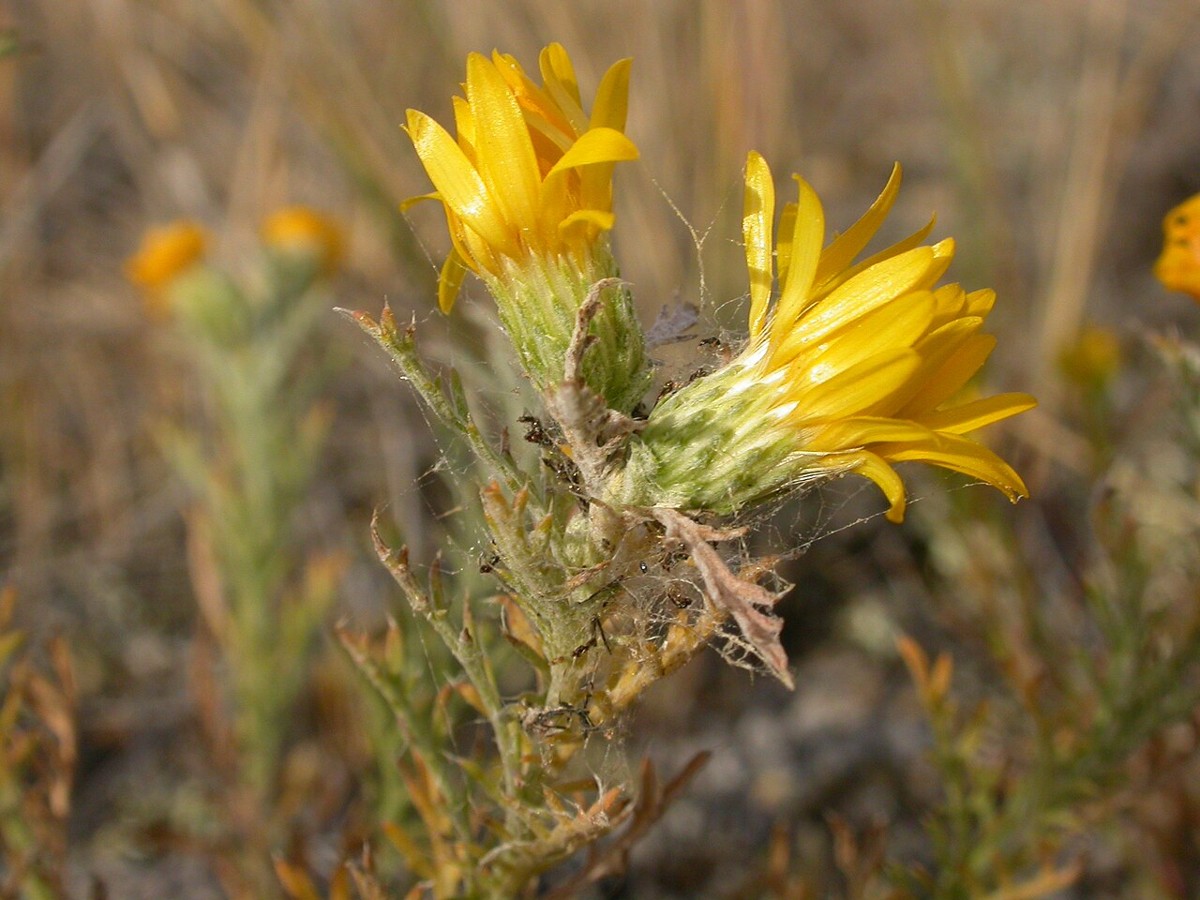
Flower heads are solitary or loosely clustered at the ends of branching stems, each about 1 to 1½ inches across, with numerous narrow, bright yellow ray florets surrounding a slightly darker yellow-orange center of disc florets. The bracts beneath each flower head (the phyllaries) are often narrow and reflexed or spreading, adding to the plant’s slightly shaggy, informal look. Bloom is heaviest from midsummer through fall, and established plants can flower nearly continuously through a long warm season.
Fruit & Seeds
Like other asters, the fruit is a small, ribbed achene tipped with a tuft of bristly hairs (a pappus) that carries the seed on the wind once the flower head dries. Seed is produced abundantly, which accounts for the plant’s readiness to colonize disturbed or bare ground.
Quick Facts
| Scientific Name | Machaeranthera pinnatifida (syn. Xanthisma spinulosum) |
| Family | Asteraceae (Aster/Sunflower) |
| Plant Type | Perennial Wildflower / Subshrub |
| Mature Height | 6–18 in (15–45 cm) |
| Mature Spread | 12–24 in (30–60 cm) |
| Growth Rate | Moderate |
| Sun Exposure | Full Sun |
| Water Needs | Low |
| Soil Type | Rocky, sandy, or gravelly; sharply drained |
| Soil pH | Neutral to alkaline |
| Bloom Time | June – October |
| Flower Color | Bright yellow |
| Fall Color | None notable; continues blooming into fall |
| Fruit | Small wind-dispersed achenes |
| Deer Resistant | Yes (spiny foliage deters browsing) |
| USDA Hardiness Zones | 4–9 |
Native Range
Lacy Tansyaster has one of the broadest native ranges of any western wildflower, spanning the Great Plains, Rocky Mountains, Intermountain West, and the Desert Southwest. Its range runs from Montana, Wyoming, and the Dakotas south through the high plains of Nebraska, Kansas, Colorado, and Oklahoma, and west across Utah, Arizona, and New Mexico to Nevada, California, and much of Texas.
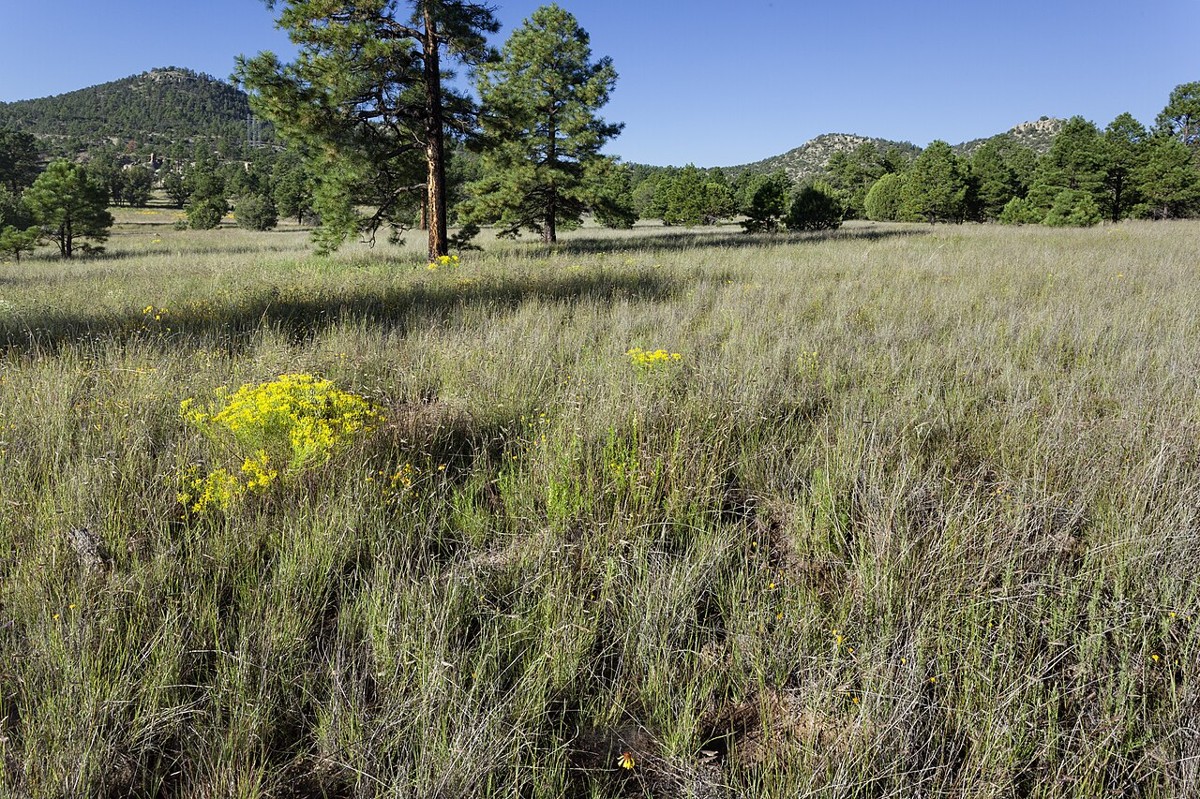
Across this huge range it occupies dry, open, often disturbed ground: sagebrush flats, shortgrass and mixed-grass prairie, piñon-juniper and ponderosa pine woodland openings, desert grassland, roadsides, and rocky or sandy slopes from the plains up into the mountain foothills. It is strongly associated with undisturbed sagebrush steppe in the northern part of its range and with desert grassland and chaparral-adjacent openings farther south and west.
Because it tolerates — and even favors — disturbed soil, Lacy Tansyaster is often among the first wildflowers to recolonize overgrazed rangeland, eroded slopes, and roadcuts throughout its range, making it ecologically valuable for erosion control and early-succession habitat as well as garden use.
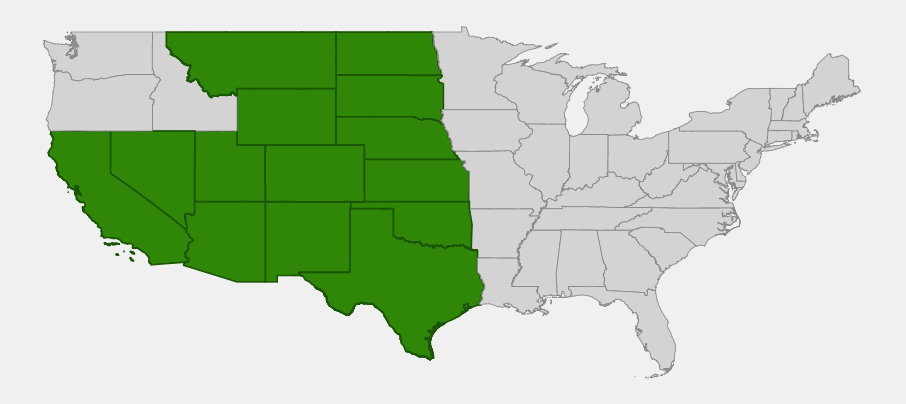
📋 Regional plant lists featuring Lacy Tansyaster: South and West Texas · California & Nevada · Arizona & New Mexico · Utah & Western Colorado · Nebraska, Kansas & Eastern Colorado · Montana & Wyoming · North Dakota, South Dakota & Western Minnesota
Growing & Care Guide
Lacy Tansyaster is about as low-maintenance as native wildflowers get, provided it has full sun and soil that drains quickly. It is an excellent choice for gardeners who want reliable, long-blooming color without irrigation or fuss.
Light
Give it full sun. It flowers most heavily and stays most compact in bright, open conditions; in partial shade it becomes sparse and leggy with fewer blooms.
Soil & Water
Lean, rocky, sandy, or gravelly soils with sharp drainage are ideal — this plant is naturally at home in poor soil and resents rich, moist garden beds. Once established, it needs little to no supplemental water and handles extended drought without complaint. Overwatering, especially in heavier soils, is the most common cause of failure.
Planting Tips
Plant in spring or fall in a sunny, open site with excellent drainage — a slope, raised bed, or gravel garden all work well. Space plants 12 to 18 inches apart to allow for their mounding spread. It establishes readily from container stock and also self-sows reliably once a few plants are in place.
Pruning & Maintenance
Shear back lightly in late winter or early spring to tidy the woody base and encourage fuller new growth. Deadheading is not necessary but can extend bloom and limit self-seeding where a more controlled planting is wanted. The plant is naturally short-lived in some sites, so allowing some seedlings to establish helps maintain a planting over time.
Propagation
Grows readily from seed sown in fall or cold-stratified and sown in spring; seed needs light to germinate, so press it onto the soil surface rather than burying it. Self-sown seedlings transplant easily while small.
Landscape Uses
- Xeriscape and gravel gardens — thrives with zero irrigation once established
- Rock gardens and slope plantings
- Erosion control on disturbed or eroded ground
- Roadside and rangeland restoration plantings
- Pollinator gardens for extended late-season bloom
- Front-of-border edging in dry, sunny beds
Wildlife & Ecological Value
Lacy Tansyaster’s long bloom season, running well into fall, makes it an outsized contributor to pollinator support across its range, often flowering after many other wildflowers have finished for the year.
For Pollinators
The late-season flowers are a magnet for native bees, honeybees, butterflies, and other beneficial insects, providing an important nectar and pollen source in early fall when fewer other flowers remain in bloom. It is a valuable late-forage plant for pollinators building up reserves before winter.
For Birds
Small seed-eating birds forage on the ripe achenes through fall and into winter, and the dense, spiny foliage can offer minor cover for ground-dwelling insects and small wildlife.
Ecosystem Role
As an early colonizer of disturbed, bare, or eroded ground, Lacy Tansyaster plays an important pioneer role across rangeland and arid plant communities, stabilizing soil and creating conditions that allow other native species to establish. Its presence is often used by range managers as an indicator of recovering, lightly disturbed ground rather than severely degraded sites.
Cultural & Historical Uses
Lacy Tansyaster does not carry the same extensive documented ethnobotanical history as some larger or more conspicuous Southwestern natives, but it has long been a familiar, if humble, part of the rangeland flora recognized by ranchers, botanists, and Indigenous communities across its vast range. Its persistence on heavily grazed or disturbed land made it a useful indicator species for those reading the condition of rangeland.
In recent decades, interest in regionally adapted, drought-tolerant native plants has brought Lacy Tansyaster into wider cultivation, particularly in xeriscape and water-wise gardening programs throughout the Southwest, Great Plains, and Intermountain West, where its long bloom season and complete reliability in poor soil have made it increasingly popular.
Frequently Asked Questions
Is Lacy Tansyaster the same as Spiny Goldenweed?
Yes. “Spiny Goldenweed” and “Prickly Daisy” are other common names for the same species, Machaeranthera pinnatifida, sometimes also listed under the synonym Xanthisma spinulosum.
Why are the leaves spiny?
The deeply lobed leaves are tipped with small, sharp points, an adaptation that likely discourages browsing by deer and livestock. The spines are not harmful to handle with normal care, just slightly prickly.
Does Lacy Tansyaster spread aggressively?
It self-sows readily, especially on bare or disturbed soil, but it is not aggressive in a planted garden bed with other established vegetation. Deadheading before seed set will limit spread if a tidier planting is preferred.
How much water does it need once established?
Very little. Established plants are highly drought-tolerant and generally need no supplemental irrigation outside of extreme, prolonged drought. Too much water is more likely to harm the plant than too little.
When does Lacy Tansyaster bloom?
It blooms from early summer into fall, often later than many other regional wildflowers, making it a valuable late-season nectar source for pollinators.

Looking for a nursery that carries Lacy Tansyaster?
Browse our native plant nursery directory: California · Nevada, New Mexico, North Dakota, Nebraska & Oklahoma · Utah, South Dakota & Texas · Colorado · Wyoming · Montana · Kansas · Arizona