Paperflower (Psilostrophe tagetina)
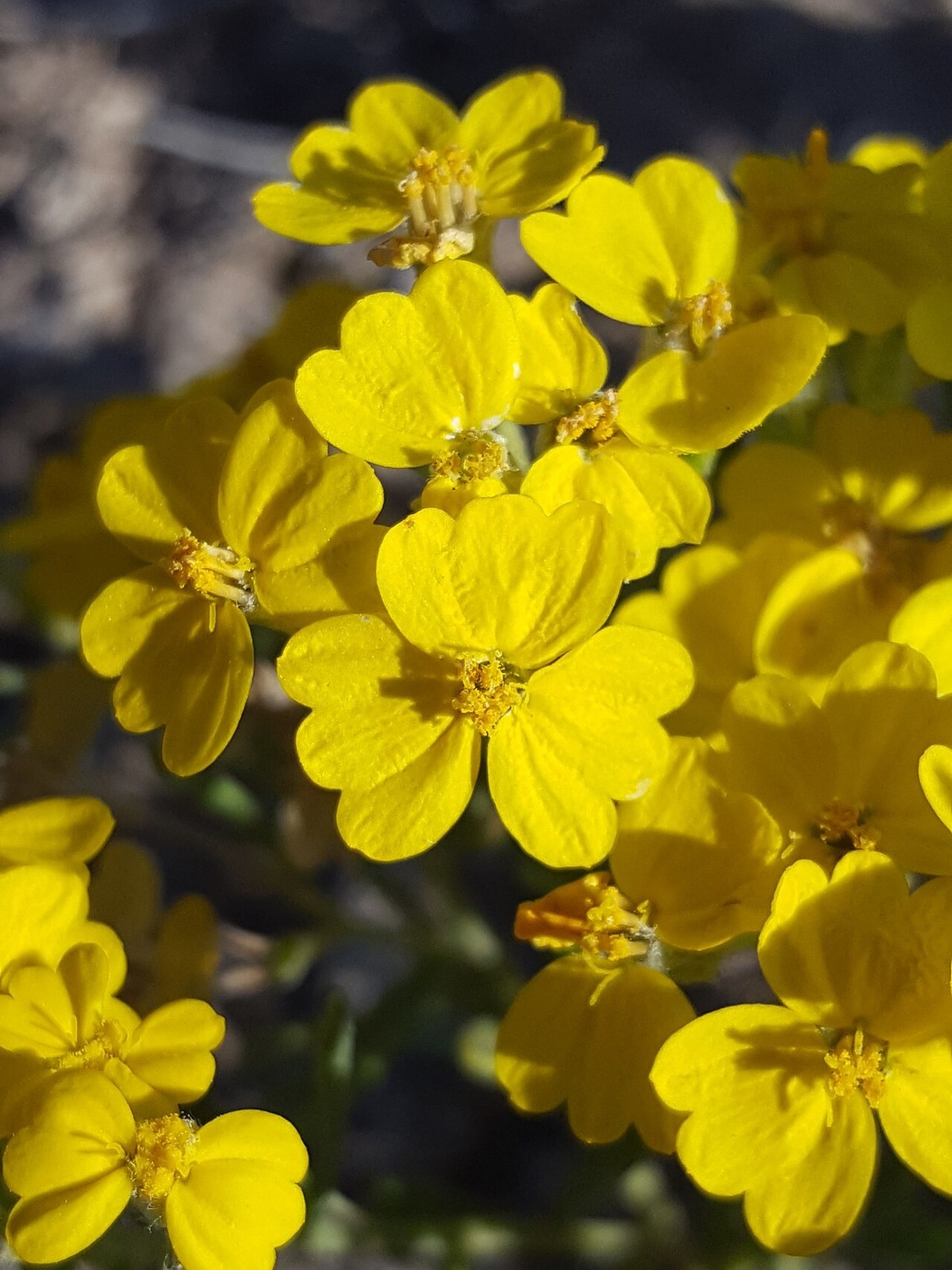
Psilostrophe tagetina, commonly called Paperflower or Woolly Paperflower, is a tough, silvery-leaved perennial wildflower of the arid grasslands and desert uplands of New Mexico and West Texas. True to its name, the broad, lobed yellow petals dry to a crisp, papery texture on the plant and persist for weeks after blooming, turning a soft straw color but rarely dropping — so a single flush of bloom can look fresh for a remarkably long time.
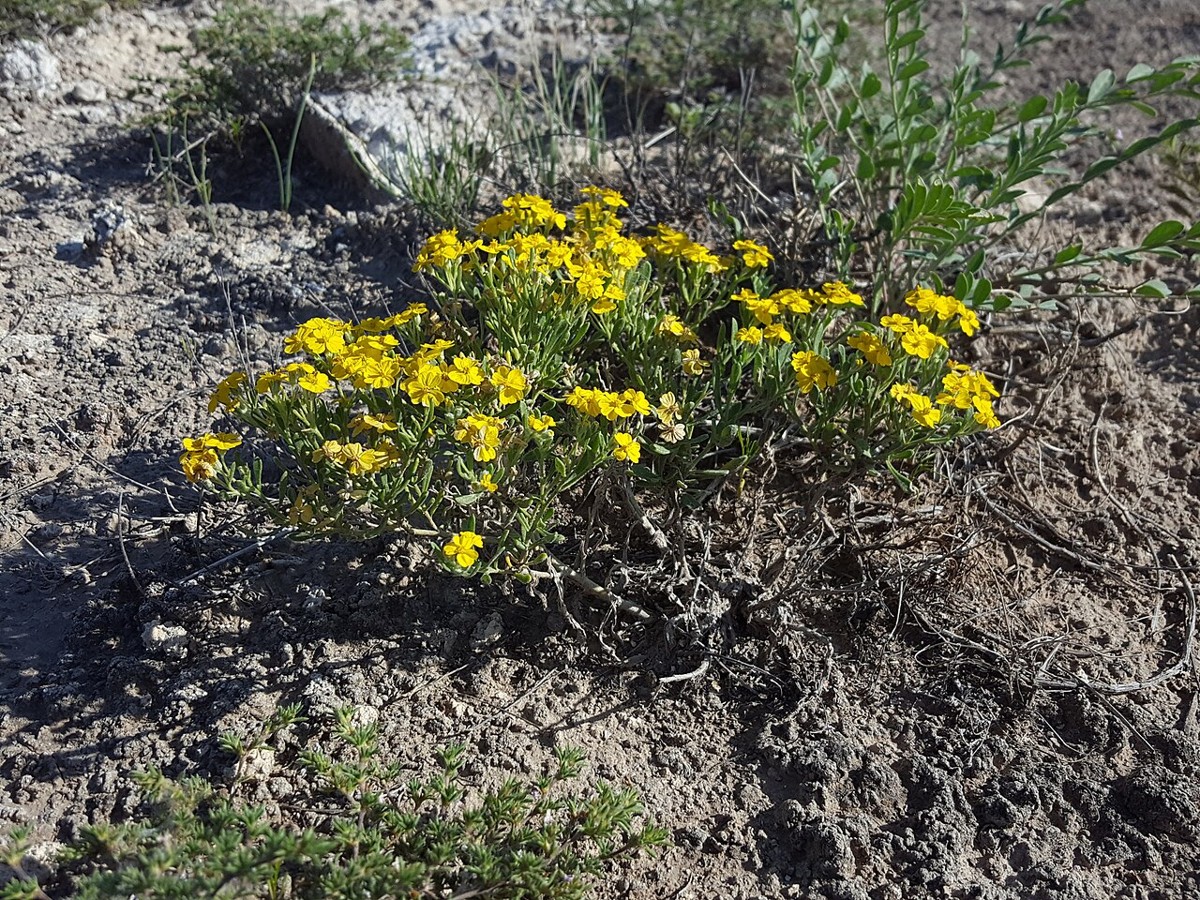
Paperflower forms a low, rounded mound of woolly, gray-green foliage topped almost continuously through the warm months with cheerful clusters of bright yellow flowers. Few native wildflowers bloom as reliably or for as long with so little water, which has made Paperflower a staple of xeriscape and high-desert gardens throughout its native range and well beyond it.
The genus name Psilostrophe comes from Greek roots referring to the smooth, twisted form of the ray petals, while “woolly” in the common name describes the dense, soft hairs covering the stems and leaves — an adaptation that reflects sunlight and reduces water loss in its sun-baked desert and grassland habitat.
Identification
Paperflower is a compact, rounded, woody-based perennial, typically 8 to 20 inches tall and somewhat wider, forming a dense, shrubby mound of silvery foliage topped by abundant flower clusters through most of the growing season.
Leaves
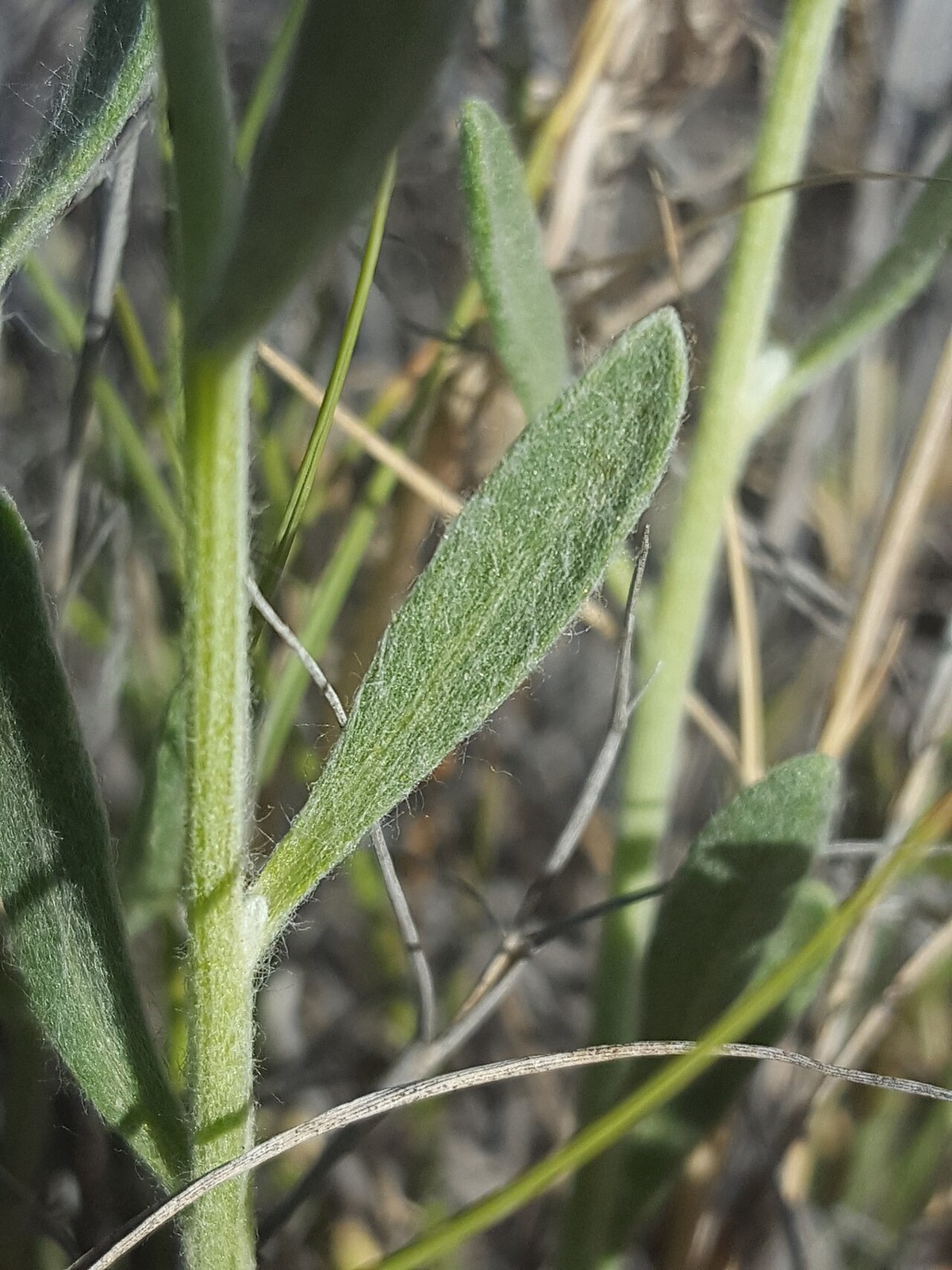
Leaves are narrow, lance-shaped to spoon-shaped, 1 to 3 inches long, and densely covered with soft white-woolly hairs that give the whole plant a silvery to gray-green cast. The woolly covering is especially pronounced on new growth and helps the plant conserve moisture in hot, dry, sun-exposed sites.
Flowers
Flower heads are borne in loose clusters at the ends of upright stems, each about 1 inch across, with 3 to 6 broad, three-lobed, bright yellow ray florets surrounding a small cluster of yellow disc florets. The rays have a distinctive crinkled, papery texture even when freshly open, and as the flowers age they dry in place to a pale straw color rather than dropping cleanly, giving plants a long season of visual interest even past peak bloom. Flowering is heaviest from spring through fall and can continue nearly year-round in mild winters.
Fruit & Seeds
Like other composites, Paperflower produces small, dry achenes following bloom, dispersed readily by wind. Plants self-sow modestly within their native range, helping maintain a planting over time without being weedy.
Quick Facts
| Scientific Name | Psilostrophe tagetina |
| Family | Asteraceae (Aster/Sunflower) |
| Plant Type | Perennial Wildflower / Subshrub |
| Mature Height | 8–20 in (20–50 cm) |
| Mature Spread | 12–24 in (30–60 cm) |
| Growth Rate | Moderate |
| Sun Exposure | Full Sun |
| Water Needs | Low |
| Soil Type | Rocky, sandy, or caliche; sharply drained |
| Soil pH | Neutral to alkaline |
| Bloom Time | Spring through fall, nearly year-round in mild winters |
| Flower Color | Bright golden yellow |
| Fall Color | None notable; continues blooming into fall |
| Fruit | Small wind-dispersed achenes |
| Deer Resistant | Yes (woolly, bitter foliage generally avoided) |
| USDA Hardiness Zones | 6–9 |
Native Range
Paperflower is native to New Mexico and West Texas, where it is a common and characteristic wildflower of the Chihuahuan Desert uplands and adjacent high plains grasslands. It grows across much of New Mexico and extends into far West Texas, including the Trans-Pecos region and scattered sites further east in the Edwards Plateau and South Texas.
Within this range, Paperflower favors open, rocky, or gravelly ground: desert grassland, caliche flats, limestone slopes, and roadsides, typically at elevations from the desert floor up into piñon-juniper foothills. It is a conspicuous and reliable bloomer across the high desert landscapes of its native range, often forming colorful roadside colonies.
Some sources describe Paperflower more broadly across the Southwest, but without confirmed county-level native records in Arizona, Utah, or Colorado, this profile limits its recommended native range to New Mexico and West Texas, where county-level distribution data is well documented.
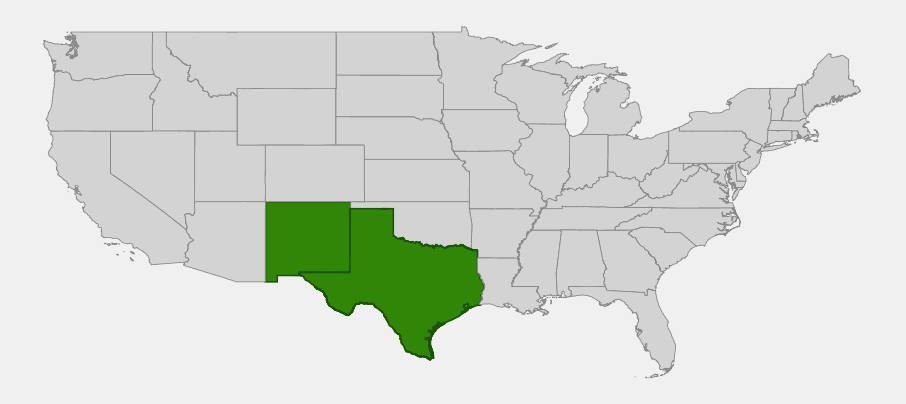
📋 Regional plant lists featuring Paperflower: South and West Texas · Arizona & New Mexico
Growing & Care Guide
Paperflower is among the easiest, most reliable long-blooming perennials for hot, dry gardens, thriving on neglect once it is established in the right spot.
Light
Full sun is essential. Paperflower is adapted to open, intensely sunny desert and grassland conditions and will bloom poorly and grow leggy in shade.
Soil & Water
Sharp drainage is the key requirement — rocky, sandy, or caliche soils suit it best, and it is highly drought-tolerant once established, needing little to no supplemental water beyond natural rainfall in most of its native range. It is intolerant of heavy, poorly drained, or consistently moist soils, which quickly lead to root rot.
Planting Tips
Plant in spring or fall in a well-drained, sunny site. Space plants 12 to 18 inches apart to allow for their mounding habit. Paperflower establishes quickly from container stock and tolerates poor, rocky soil that would challenge many other garden perennials.
Pruning & Maintenance
Shear lightly in late winter or early spring to remove old, woody growth and encourage a fuller, more compact mound. Deadheading is not necessary — the dried, papery flower heads remain attractive on the plant — but light grooming can tidy its appearance if desired.
Propagation
Propagate from seed sown in fall or spring, pressed lightly onto the soil surface. Established plants also self-sow modestly in open, rocky ground within their native range.
Landscape Uses
- Xeriscape and desert gardens — thrives with minimal irrigation
- Rock gardens and gravel beds
- Roadside and slope plantings for erosion control
- Pollinator gardens with extended bloom season
- Front-of-border mass plantings for long-lasting color
Wildlife & Ecological Value
Paperflower’s long, nearly continuous bloom season makes it a dependable nectar and pollen source across much of the growing year in its native desert and grassland habitat.
For Pollinators
The abundant flower heads attract a wide range of native bees, butterflies, and other pollinating insects, especially valuable during the hottest, driest stretches of summer when fewer other wildflowers are in bloom.
For Birds
Small seed-eating birds forage on the ripe achenes, and the dense, low mounding growth offers minor cover for ground-dwelling insects and small wildlife in otherwise open desert terrain.
Ecosystem Role
As a long-lived, drought-adapted perennial, Paperflower contributes structure and consistent floral resources to Chihuahuan Desert grassland and shrubland communities, helping stabilize soil on slopes and disturbed ground while supporting the broader insect community these arid ecosystems depend on.
Cultural & Historical Uses
Paperflower does not carry an extensive documented history of use as food or medicine. It has long been recognized, however, as a characteristic and dependable wildflower of the high desert landscapes of New Mexico and West Texas, valued by ranchers and naturalists alike as a reliable indicator of healthy desert grassland.
In recent decades, growing interest in water-wise, regionally adapted gardening has brought Paperflower into much wider cultivation throughout the Southwest, prized for its combination of drought tolerance, extended bloom, and low maintenance — qualities that have made it a staple recommendation in xeriscape and native plant gardening programs.
Frequently Asked Questions
Why are the petals described as “papery”?
The yellow ray petals have a crinkled, slightly stiff texture even when fresh, and as they age they dry in place on the plant to a pale straw color rather than dropping cleanly — much like dried paper — which is how Paperflower earned its name.
How much water does Paperflower need?
Very little once established. It is highly drought-tolerant and generally needs no supplemental irrigation in its native range beyond natural rainfall. Overwatering in heavy soil is a far more common problem than underwatering.
How long does Paperflower bloom?
It blooms over an unusually long season, typically from spring through fall, and can continue flowering nearly year-round in areas with mild winters, making it one of the longest-blooming native perennials for Southwestern gardens.
Is Paperflower deer resistant?
Generally yes. The dense woolly, somewhat bitter foliage is not a preferred browse for deer, making it a reliable choice in areas with deer pressure.
Does Paperflower need pruning?
Not strictly, but a light shearing in late winter keeps the woody base compact and encourages fuller new growth. The dried flower heads can be left on the plant, since they stay attractive rather than becoming unsightly.

Looking for a nursery that carries Paperflower?
Browse our native plant nursery directory: Texas · New Mexico