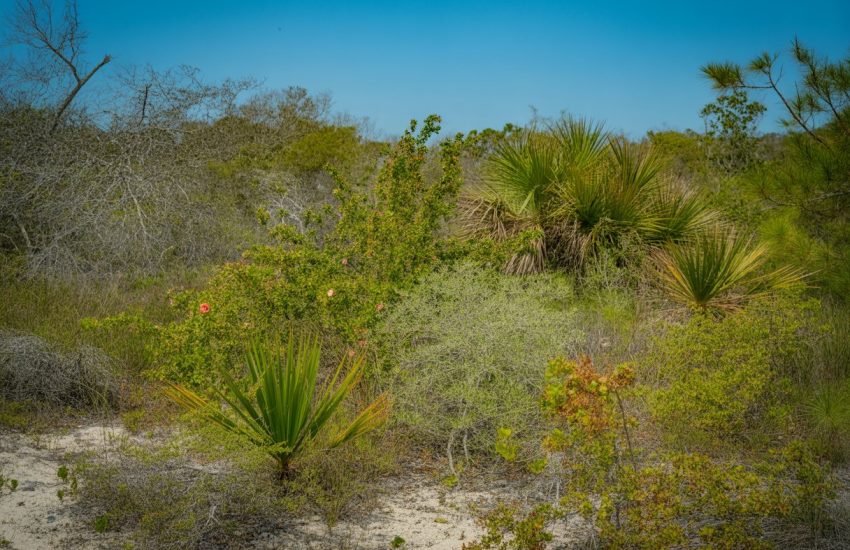
Stinking Passionflower (Passiflora foetida)
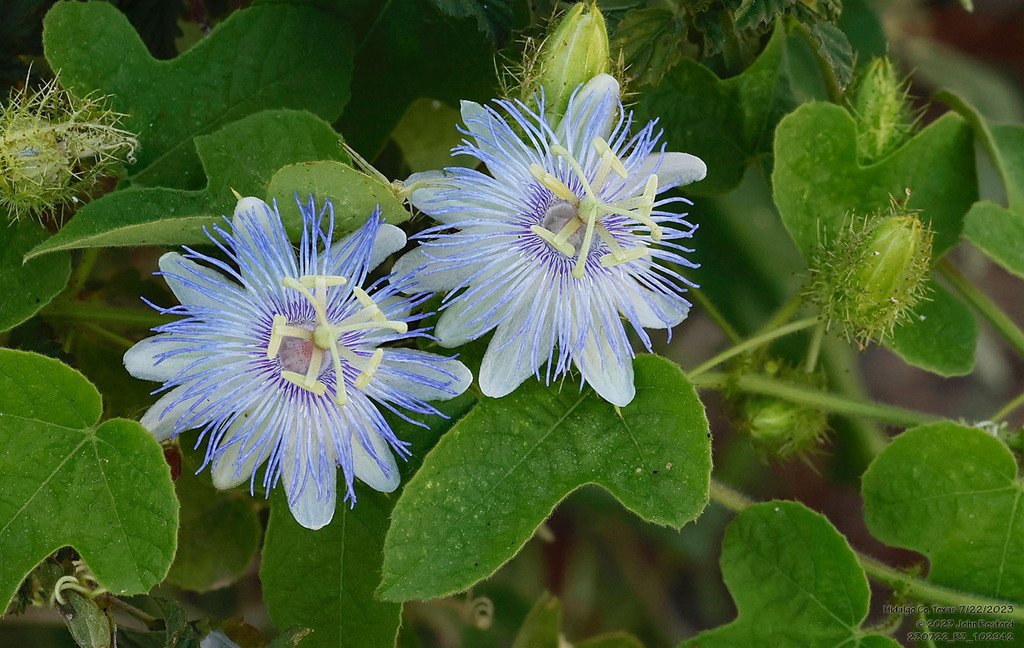
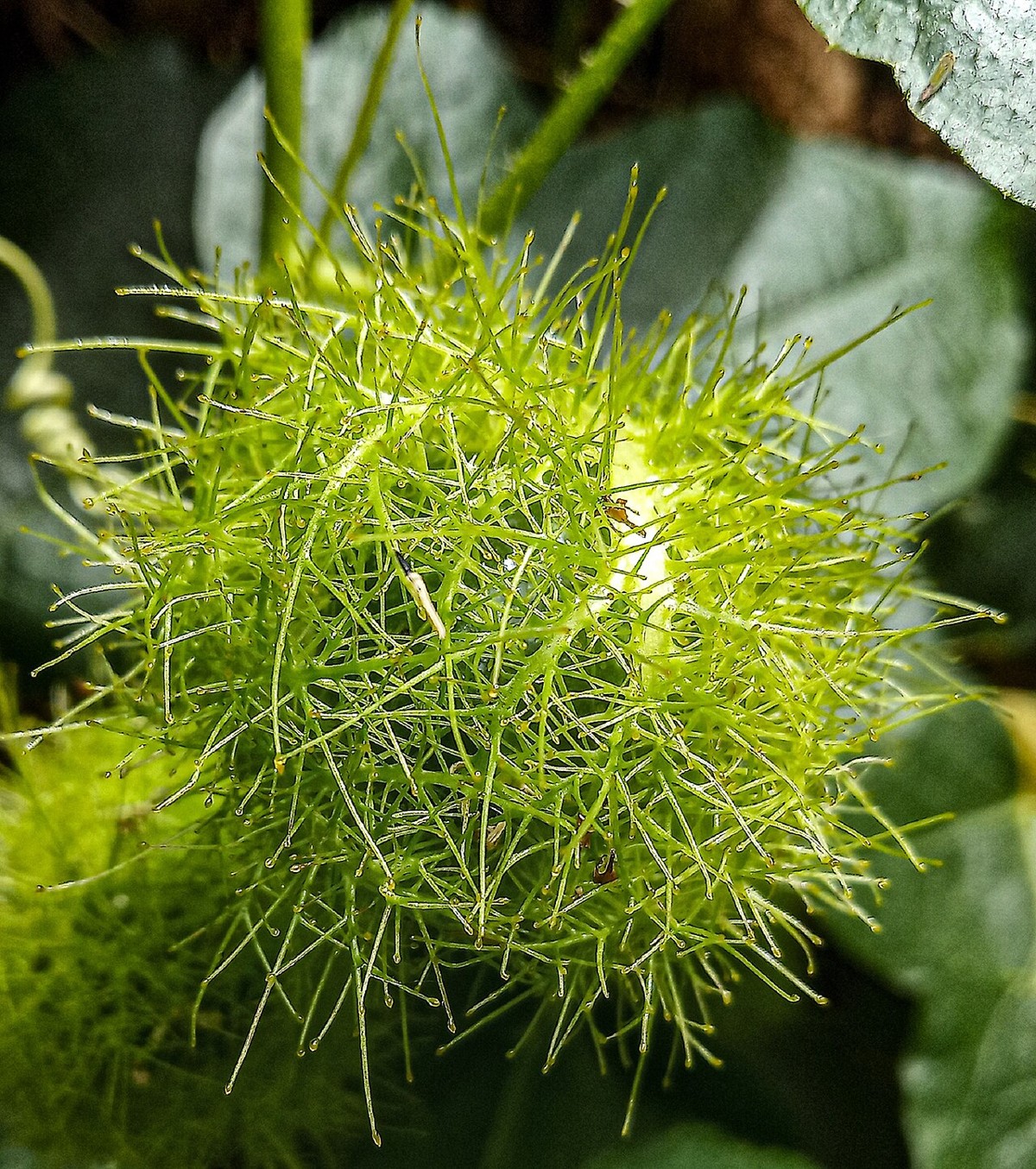
Passiflora foetida, commonly called Stinking Passionflower, Fetid Passionflower, or Running Pop, is a sprawling, tendril-climbing vine native to the brushlands of deep South Texas. It is one of the smaller-flowered members of the passionflower genus, but it more than makes up for its modest blooms with an elaborate, almost otherworldly set of thread-like, hairy bracts that wrap the flower buds and developing fruit like a delicate green pom-pom.
The common name comes from the musky, resinous odor released by glandular hairs on the stems, leaves, and especially the feathery bracts when the plant is brushed or crushed. Gardeners disagree on whether the scent is unpleasant or simply distinctive; either way, it is a reliable field mark once you know to look (and sniff) for it. The sticky hairs on the bracts are also thought to trap small insects, which may help protect the developing flower buds from herbivory — an unusual form of “protocarnivory” documented in several related Passiflora species.
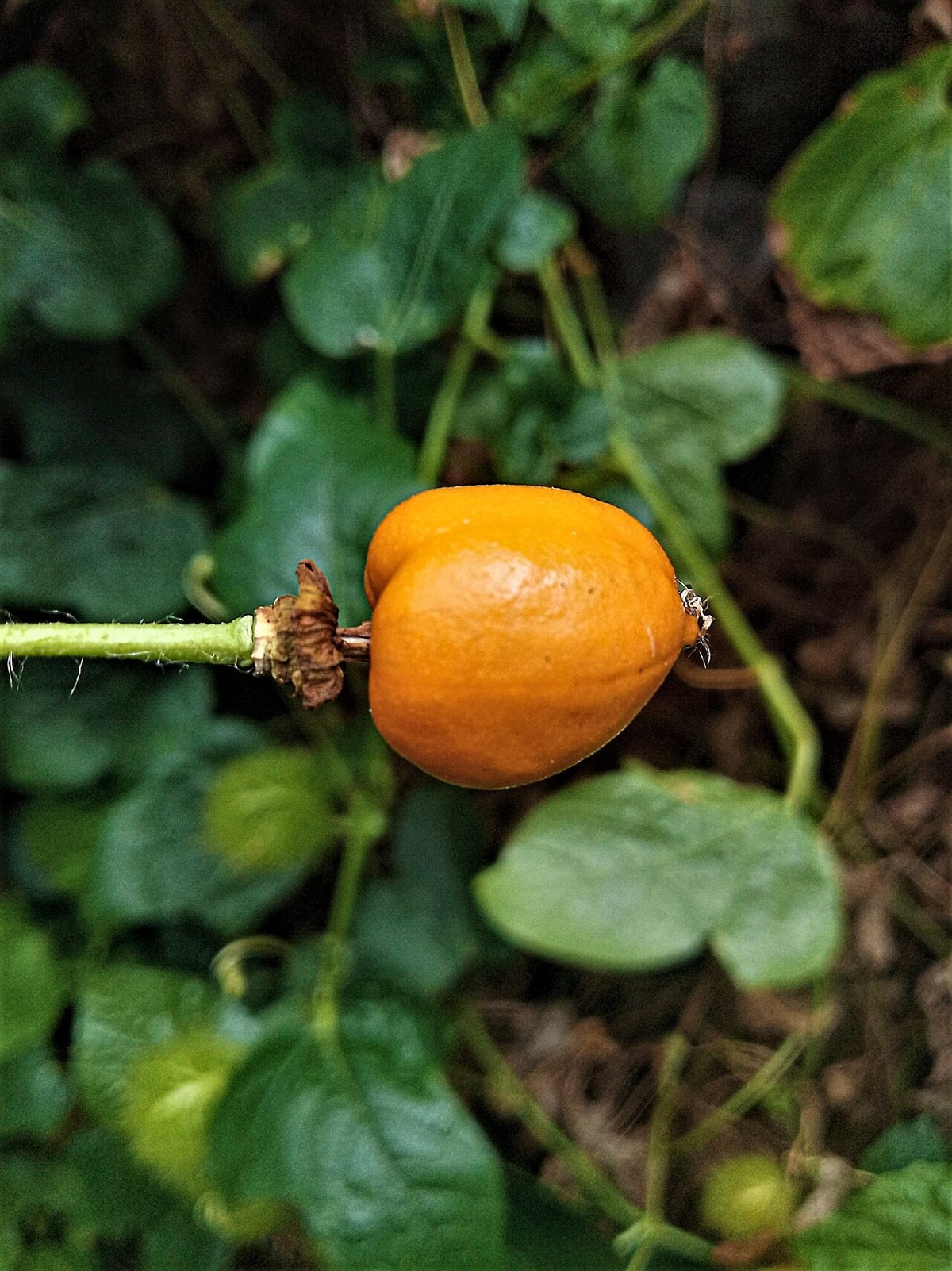
In its native South Texas range, Stinking Passionflower scrambles over fences, shrubs, and brush in thorn scrub and coastal plain habitats, producing small lavender-and-white flowers followed by round, orange, edible fruit relished by birds and wildlife. Outside the US it has become a widespread, sometimes aggressive colonizer in tropical and subtropical regions worldwide, and gardeners in warm climates far from Texas should check local invasive-species guidance before planting it; within its native Rio Grande Plain range, however, it is simply a tough, low-maintenance vine for a brushy, wildlife-friendly corner of the garden.
Identification
Stinking Passionflower is a trailing or climbing herbaceous vine, usually living a few years as a perennial in frost-free areas but often behaving as an annual or dying back hard where winters bring freezes. It climbs by coiling tendrils that emerge from the leaf axils, reaching several feet over neighboring vegetation, fences, or the ground when nothing to climb is available.
Leaves
The leaves are alternate, three-lobed (occasionally shallowly so, giving a broadly heart-shaped outline), 2 to 4 inches long, softly hairy on both surfaces, and give off the plant’s characteristic musky scent when crushed. Slender, thread-like, sticky-glandular bracts emerge just below each leaf and flower, a key identification feature that separates this species from other native and naturalized passionflowers.
Flowers
Flowers are about 1½ to 2 inches across, with five pale lavender to white petals and sepals surrounding a fringed corona of thread-like filaments banded in white and purple. Each flower is cradled by the same finely divided, hairy bracts found on the stems, which close loosely around the bud before it opens and persist around the developing fruit. Flowers open for a single day, typically in the morning, and are followed quickly by fruit set when pollination succeeds.
Fruit & Seeds
The fruit is a round to egg-shaped berry about 1 inch long, green and bristly-bracted while immature, ripening to bright orange or yellow-orange. Inside is a juicy, aromatic pulp surrounding numerous small, pitted brown seeds. The ripe pulp is edible and sweet-tart, though it is eaten mainly by wildlife; unripe fruit, like that of many passionflowers, should not be eaten.
Quick Facts
| Scientific Name | Passiflora foetida |
| Family | Passifloraceae (Passionflower) |
| Plant Type | Herbaceous Climbing Vine |
| Mature Height | Trailing/climbing to 6–10 ft |
| Mature Spread | Variable; sprawls widely over support |
| Growth Rate | Fast |
| Sun Exposure | Full Sun to Part Shade |
| Water Needs | Low to Moderate |
| Soil Type | Well-drained sandy or loamy soils |
| Soil pH | Adaptable; neutral to slightly alkaline |
| Bloom Time | Spring through fall (year-round in frost-free areas) |
| Flower Color | Pale lavender to white |
| Fall Color | None notable |
| Fruit | Round orange berry, bristly-bracted, ripe pulp edible |
| Deer Resistant | Moderate (hairy, scented foliage generally avoided) |
| USDA Hardiness Zones | 9–11 (root-hardy, often grown as annual in zone 8) |
Native Range
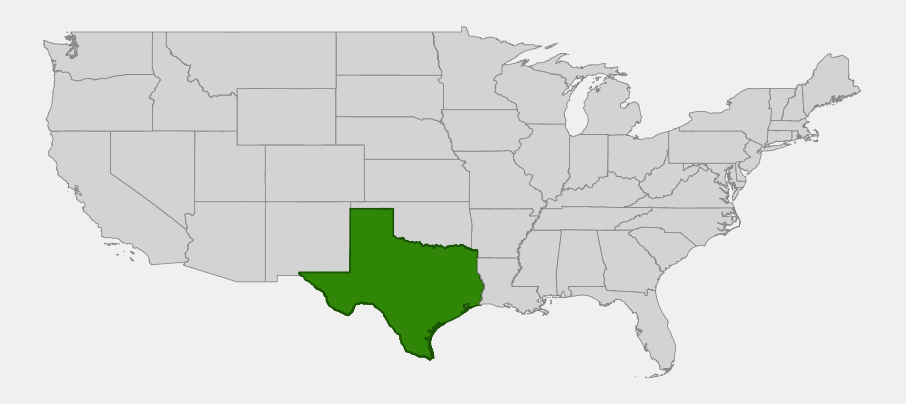
In the United States, Stinking Passionflower is native only to South Texas, concentrated in the Rio Grande Plain and the lower Rio Grande Valley — Hidalgo, Cameron, Starr, Webb, and neighboring counties — where it grows in thorn scrub, brushland edges, and disturbed ground near the coast and along the river. Its broader native range extends south through Mexico, Central America, the Caribbean, and much of tropical South America.
A separate, very rare variety, Passiflora foetida var. arizonica, is known from a handful of canyon sites in the Baboquivari Mountains of Pima and Santa Cruz counties, Arizona, and adjacent northern Mexico; because county-level distribution records for this isolated population are limited, it is not covered as a regional planting recommendation here.
Beyond its native South Texas range, Stinking Passionflower has become naturalized and, in many tropical and subtropical regions worldwide, invasive — including parts of Florida, Hawaii, and the Pacific Islands, where it is not native and can smother native vegetation. Gardeners outside the Rio Grande Plain of Texas should avoid planting it and check regional invasive-plant lists before introducing it to a new area.
📋 Regional plant lists featuring Stinking Passionflower: South and West Texas
Growing & Care Guide
Stinking Passionflower is easy to grow in its native Rio Grande Plain climate, thriving with heat, intermittent rainfall, and minimal fuss. It performs best where winters stay mild, since hard freezes kill it back to the root or outright.
Light
Full sun to light part shade suits it well. More sun generally means more vigorous growth and heavier flowering and fruiting.
Soil & Water
It tolerates a wide range of well-drained soils, from sandy to clay-loam, and is quite drought-tolerant once established, though it flowers and fruits more reliably with occasional deep watering during the hottest, driest stretches of summer. Avoid soggy, poorly drained sites.
Planting Tips
Give it something to climb — a fence, trellis, or shrub — since it will sprawl along the ground if no support is available. Plant in spring after the last frost. In the Rio Grande Valley and other frost-free parts of its native range it can persist as a short-lived perennial; farther north within zone 8, expect it to behave as a root-hardy perennial or reseeding annual.
Pruning & Maintenance
Cut back hard in late winter to control size and encourage fresh growth, especially where frost has damaged the vine. It can spread by seed within its native range, so remove unwanted seedlings if a more contained planting is preferred.
Propagation
Grows readily from seed collected from ripe fruit, sown in warm soil in spring. Softwood cuttings also root easily during the growing season.
Landscape Uses
- Fence and trellis cover in brush-country and coastal gardens
- Wildlife and pollinator gardens within its native South Texas range
- Thorn-scrub restoration plantings in the Rio Grande Plain
- Butterfly host plant for certain fritillary and longwing species
- Informal screening over chain-link or wire fencing
Wildlife & Ecological Value
Stinking Passionflower supports a range of wildlife within its native South Texas brushland, from pollinating insects to fruit-eating birds and mammals, and it is a larval host plant for several passionflower-dependent butterflies.
For Pollinators
The flowers are visited by a variety of bees and other insects, and the sticky, glandular bracts that surround the buds are thought to trap small crawling insects such as ants, reducing herbivory on the developing flowers and fruit — a striking example of indirect plant defense.
For Birds & Mammals
Ripe orange fruit is readily eaten by birds and small mammals, which disperse the seeds. In its native brushland habitat, the dense, tangled growth also offers cover for ground-dwelling wildlife.
Ecosystem Role
As a larval host plant for gulf fritillary and other heliconiine butterflies, Stinking Passionflower contributes to the food web of South Texas brushland, a globally distinctive habitat type that supports many regional specialist insects and birds found nowhere else in the United States.
Cultural & Historical Uses
Across its broader native range in Mexico, Central America, and South America, the ripe fruit of Passiflora foetida has long been eaten fresh by local communities, and various plant parts have been used in traditional folk preparations. These uses are a matter of historical and ethnobotanical record rather than guidance for modern use; the unripe fruit and foliage contain compounds that can be irritating or toxic, so only fully ripe fruit should ever be considered, and even then with caution and proper identification.
In South Texas, the plant has drawn modern interest less for human use and more for its natural history — the odd, hairy bracts and their possible insect-trapping role have made it a subject of botanical curiosity and classroom examples of plant defense strategies.
Frequently Asked Questions
Is Stinking Passionflower invasive?
Within its native South Texas range it behaves as a normal, well-behaved native vine. Outside the US, however, it has become invasive in many tropical and subtropical regions, including parts of Florida and the Pacific Islands, where it is not native. Only plant it where it is locally native or confirmed non-invasive.
Why does it smell bad?
Glandular hairs on the stems, leaves, and especially the fringed bracts release a musky, resinous scent when touched or crushed, which gives the plant its common name. Opinions vary on how unpleasant the smell actually is.
Can you eat the fruit?
The fully ripe, orange fruit is edible with a sweet-tart pulp, but unripe green fruit should not be eaten, as is true of many passionflower species. When in doubt, leave the fruit for wildlife.
What are those fuzzy green balls around the flowers?
Those are the plant’s distinctive glandular bracts — fine, thread-like, sticky-haired structures that wrap around flower buds and developing fruit. They are unique enough to help identify the species at a glance.
Does Stinking Passionflower need a trellis?
It climbs by tendrils and grows best with something to scramble over, such as a fence or shrub, but it will also sprawl along the ground as groundcover if no support is available.

Looking for a nursery that carries Stinking Passionflower?
Browse our native plant nursery directory: Texas