Fameflower (Phemeranthus calycinus)
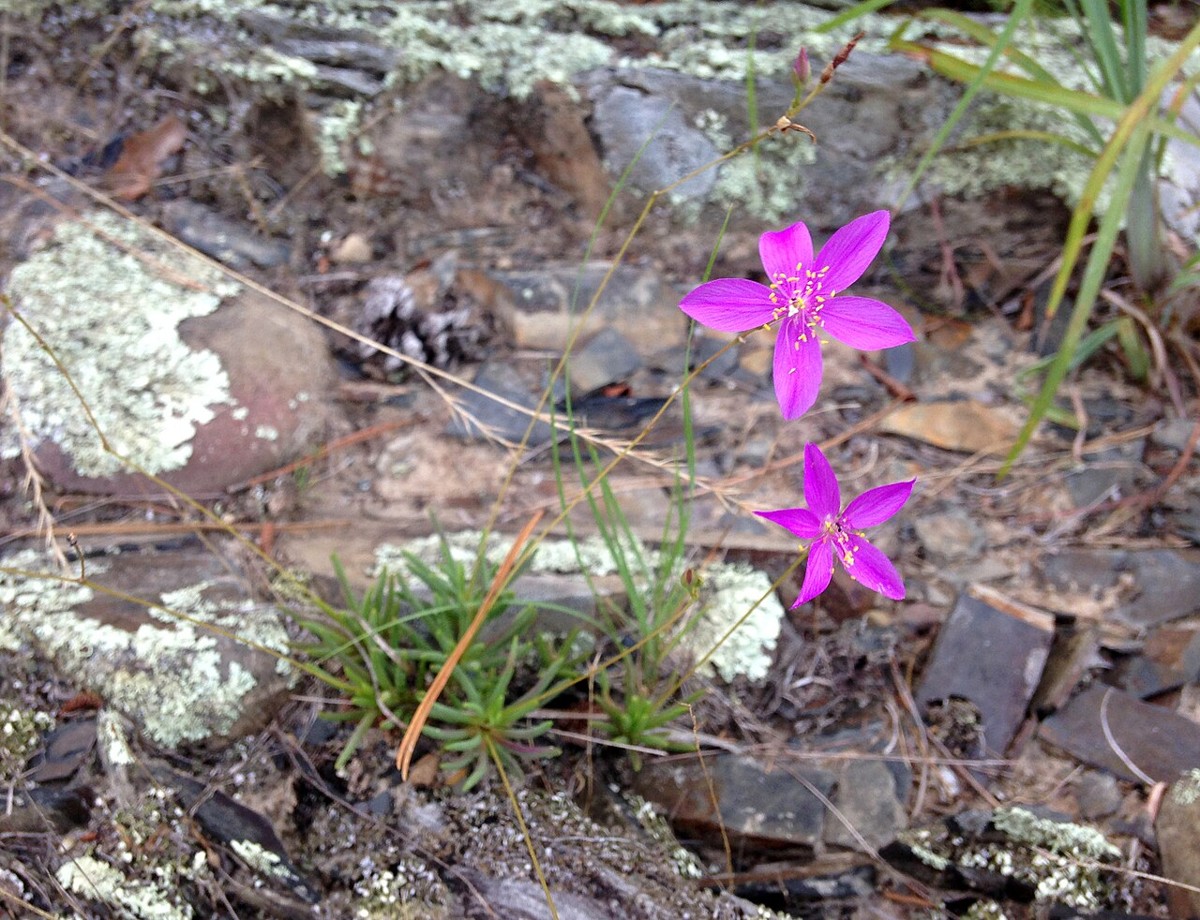
Phemeranthus calycinus (formerly classified as Talinum calycinum), commonly called Fameflower or Largeflower Fameflower, is a small succulent perennial of the south-central United States that puts on one of the most delightful short-lived flower shows of any native wildflower. Rooted in thin, gritty soil over exposed sandstone, limestone and granite, it spends most of its life as an unremarkable tuft of narrow, fleshy, needle-like leaves — then, for a few weeks in summer, opens brilliant magenta-pink, five-petaled flowers each afternoon.
Fameflower belongs to the Montiaceae (miner’s lettuce family), a group of mostly succulent plants adapted to seasonally dry, rocky habitats. The genus name Phemeranthus comes from Greek roots meaning “day flower,” a nod to the fact that each individual bloom opens for only a few hours in the afternoon and withers by evening, sometimes lasting just a single day. A new flush of buds appears continually through the blooming season, so a healthy colony stays in flower for weeks even though no single bloom lasts long.
Because it thrives where almost nothing else can — thin soil pockets on bare rock, glades, and gravelly outcrops — Fameflower is an excellent choice for rock gardens, gravel gardens, green roofs, and other lean, well-drained plantings where showier but less drought-tolerant perennials would fail. It asks for almost nothing once established and rewards minimal care with a reliable, cheerful bloom.
Identification
Fameflower is a low, clump-forming succulent perennial that rarely exceeds 10 inches in height, including the flowering stems. It grows from a thickened, somewhat woody taproot that lets it persist for years in the thinnest of rocky soils, resprouting each spring from the same root crown.
Leaves
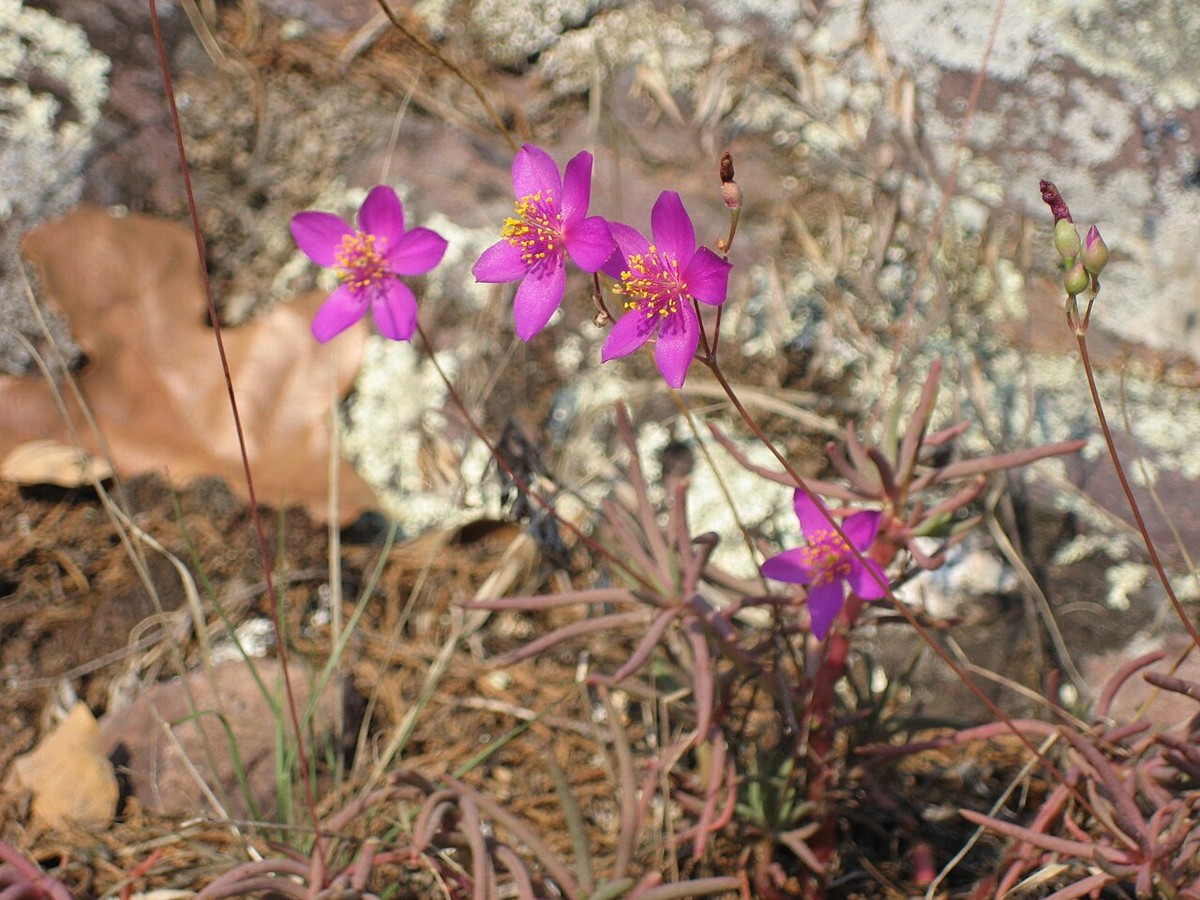
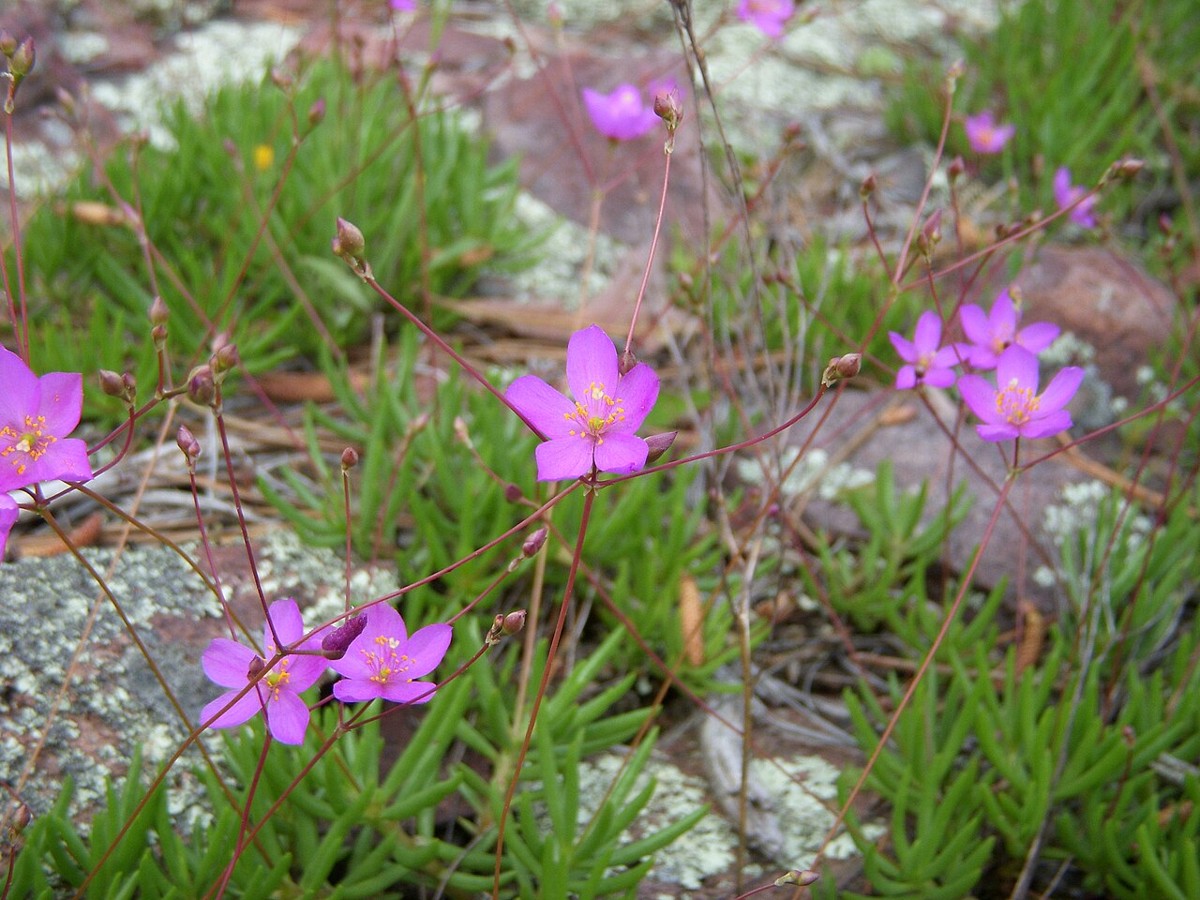
The leaves are the plant’s most distinctive identification feature outside of bloom: narrow, cylindrical, and fleshy, resembling short blades of grass or green pine needles, each about 1 to 2 inches long. They are arranged in a dense basal tuft and persist through the growing season, giving the plant a grassy, succulent texture even when not in flower. The foliage often takes on reddish or bronze tones under drought stress or strong sun.
Flowers
Flowers are carried on thin, wiry, branching stalks (scapes) that rise 4 to 10 inches above the leaf tuft, well clear of the foliage. Each flower is about ¾ to 1¼ inches across, with five broad, satiny, magenta to rose-purple petals surrounding a prominent cluster of yellow stamens. Flowers open in the afternoon, usually from mid or late afternoon into early evening, and close again by the next morning — an adaptation thought to time pollinator visits with the cooling temperatures of late day. Bloom typically runs from June through September, with individual plants producing a steady succession of new flowers.
Fruit & Seeds
After pollination, each flower forms a small, dry, three-valved capsule that splits open to release numerous tiny, glossy black seeds. The capsules are inconspicuous and dry quickly, blending into the gravelly ground where the seeds are scattered by wind and gravity.
Quick Facts
| Scientific Name | Phemeranthus calycinus (syn. Talinum calycinum) |
| Family | Montiaceae (Miner’s Lettuce) |
| Plant Type | Succulent Perennial Wildflower |
| Mature Height | 4–10 in (10–25 cm) in bloom |
| Mature Spread | 6–10 in (15–25 cm) |
| Growth Rate | Slow |
| Sun Exposure | Full Sun |
| Water Needs | Low (drought-tolerant once established) |
| Soil Type | Thin, rocky or gravelly; sharply drained |
| Soil pH | Neutral to slightly acidic or alkaline; tolerant of most pH on rock |
| Bloom Time | June – September, afternoon-opening |
| Flower Color | Magenta to rose-purple |
| Fall Color | Foliage may redden with cold or drought |
| Fruit | Small dry capsules with black seeds |
| Deer Resistant | Yes (succulent leaves generally avoided) |
| USDA Hardiness Zones | 5–9 |
Native Range
Fameflower is native to the south-central United States, centered on the Ozark Plateau and the southern Great Plains. Its core range runs from southern Illinois and central Missouri west across eastern Kansas and southeastern Nebraska, and south through eastern Oklahoma and western Arkansas into central and southern Texas, with scattered populations reaching eastern New Mexico.
Throughout this range, Fameflower is a specialist of exposed rock: sandstone and limestone glades, granite outcrops, bald knobs, and gravelly or rocky prairie openings where competing vegetation is sparse. It is especially characteristic of the dolomite and limestone glades of the Ozarks, where it grows in shallow soil pockets alongside other glade specialists adapted to summer heat, drought, and thin, mineral soils.
Because it depends on specific rocky microhabitats rather than general soil type, Fameflower’s distribution is patchy even within its native states — common on the right outcrop, absent from the surrounding landscape just a few hundred feet away. Gardeners outside this core range who want to grow it should replicate rocky, sharply drained conditions rather than expect it to adapt to ordinary garden soil.
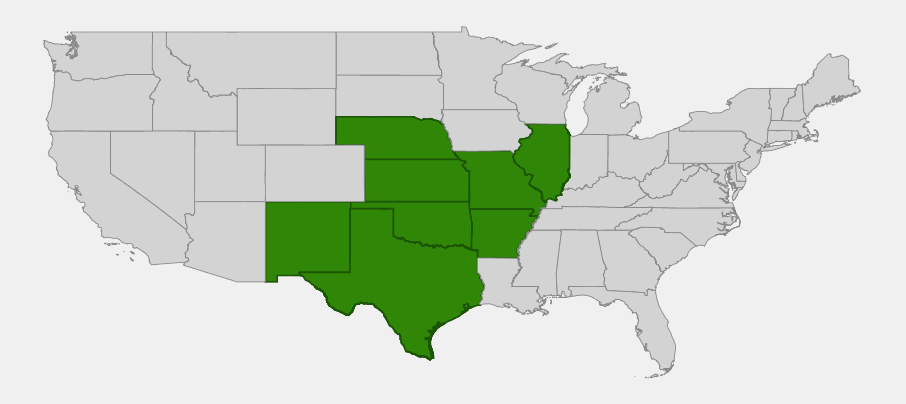
📋 Regional plant lists featuring Fameflower: South and West Texas · Nebraska, Kansas & Eastern Colorado · Illinois, Iowa & Missouri · Arkansas, Louisiana, Eastern Oklahoma & Eastern Texas · Arizona & New Mexico
Growing & Care Guide
Fameflower is simple to grow as long as its one essential requirement — sharp drainage — is met. It is a plant for lean conditions, not rich garden beds, and will struggle or rot in ordinary moisture-retentive soil.
Light
Give Fameflower full sun. It is adapted to open, exposed rock with no shade and performs best, flowering most heavily, where it receives direct sun for most of the day. In shadier sites it becomes leggy and blooms sparsely.
Soil & Water
The single most important factor is drainage. Plant in thin, gritty, rocky soil or a lean gravel mix — raised rock gardens, scree beds, crevice gardens, and gravel-topped berms all suit it well. Established plants need very little supplemental water and tolerate extended summer drought; in fact, too much water, especially in winter, is far more likely to kill Fameflower than too little. Avoid heavy clay or any spot where water stands after rain.
Planting Tips
Set out container-grown plants in spring after the soil has warmed, tucking the taproot into a crevice or deep gravel pocket rather than shallow topsoil. Space plants 6 to 10 inches apart in a glade-style planting. Fameflower resents being moved once established, so choose its final spot with care.
Pruning & Maintenance
Essentially none is needed. Spent flower stalks can be left in place to release seed for naturalizing, or trimmed back after bloom for tidiness. The plant goes dormant and may die back in severe drought or cold but typically resprouts from the taproot the following spring.
Propagation
Fameflower is most easily propagated from seed sown in fall or cold-stratified and sown in spring, pressed lightly into gritty soil and left exposed to light. Established clumps can occasionally be divided in early spring, though the taproot makes this less reliable than starting from seed.
Landscape Uses
- Rock gardens and crevice gardens — a natural fit for its preferred habitat
- Gravel gardens and xeriscape plantings
- Green roofs with shallow, well-drained substrate
- Glade and prairie restoration on thin, rocky soils
- Container and trough gardens paired with other succulents
- Dry stone wall plantings tucked into crevices
Wildlife & Ecological Value
Despite its small size, Fameflower contributes meaningfully to the specialized glade and outcrop communities it belongs to.
For Pollinators
The afternoon-opening flowers attract small native bees and other short-tongued pollinators active during the warmer part of the day, when many other prairie wildflowers have already finished their bloom cycle for the day. This timing helps fill a gap in nectar and pollen availability on hot summer afternoons.
For Birds
The tiny seeds are eaten opportunistically by small ground-foraging birds, though Fameflower is not a major food source for any species; its chief wildlife value lies in supporting the specialized insect community of glade habitats.
Ecosystem Role
As one of relatively few flowering plants able to establish in the thinnest soil pockets on bare rock, Fameflower helps hold a foothold of vegetation and organic matter on otherwise barren outcrops, which over time supports colonization by mosses, lichens, and other glade specialists. These rock-garden plant communities are themselves rare and ecologically significant, often harboring regionally uncommon insects and plants adapted to nowhere else.
Cultural & Historical Uses
Fameflower has no significant documented history of use by Indigenous peoples or early settlers as food or medicine, likely owing to its small size and the inaccessibility of its typical rocky glade habitat. Its historical significance is primarily botanical: naturalists and plant collectors in the Ozarks and southern Great Plains have long prized it as a signature wildflower of the region’s distinctive limestone and sandstone glades.
In more recent decades, Fameflower has become a favorite among rock garden enthusiasts and native plant hobbyists drawn to its toughness and its striking, if fleeting, afternoon blooms. Regional native plant societies frequently feature it in glade conservation and restoration programs, since healthy Fameflower populations are often used as an indicator of intact, undisturbed outcrop habitat.
Today, Fameflower is primarily valued ornamentally, for rock and gravel gardens that mimic its native glade conditions, and ecologically, as a specialist species tied to a shrinking and often overlooked habitat type.
Frequently Asked Questions
Why do Fameflower blooms only last one day?
Each individual flower opens in the afternoon and closes again by the next morning, sometimes lasting only a few hours. This is thought to be an adaptation to pollinator activity patterns and heat avoidance. The plant compensates by producing a continuous succession of new buds, so a healthy clump stays in bloom for weeks even though no single flower lasts long.
Can I grow Fameflower in regular garden soil?
Not successfully for long. Fameflower is adapted to thin, rocky, fast-draining soil and is prone to rot in rich or moisture-retentive garden beds. For best results, plant it in a rock garden, gravel bed, or raised scree bed that replicates its native glade conditions.
Is Fameflower drought tolerant?
Yes, exceptionally so once established. Its thick taproot and succulent leaves let it survive extended dry spells that would kill most garden perennials. In fact, overwatering is a far more common cause of failure than underwatering.
Does Fameflower spread aggressively?
No. It is a slow-growing, clump-forming perennial that stays in a tight tuft and spreads modestly, if at all, by self-seeding into nearby open rock or gravel. It is not weedy or invasive.
What does Fameflower look like when not in bloom?
Outside its bloom period, Fameflower is a low, unobtrusive tuft of narrow, cylindrical, succulent green leaves resembling short grass or pine needles, easy to overlook until the afternoon flowers appear.

Looking for a nursery that carries Fameflower?
Browse our native plant nursery directory: Texas · Illinois & Kansas · Nebraska, Oklahoma & New Mexico · Missouri & Arkansas