White Four O’Clock (Mirabilis albida)
Mirabilis albida, commonly called White Four O’Clock or Hairy Four O’Clock, is a tough, drought-hardy perennial wildflower native to the Great Plains and much of the central and south-central United States. It belongs to the four o’clock family, Nyctaginaceae, and shares the family’s signature trait of opening its flowers in the late afternoon and overnight, closing again by midmorning — a habit that gives the whole genus its common name.
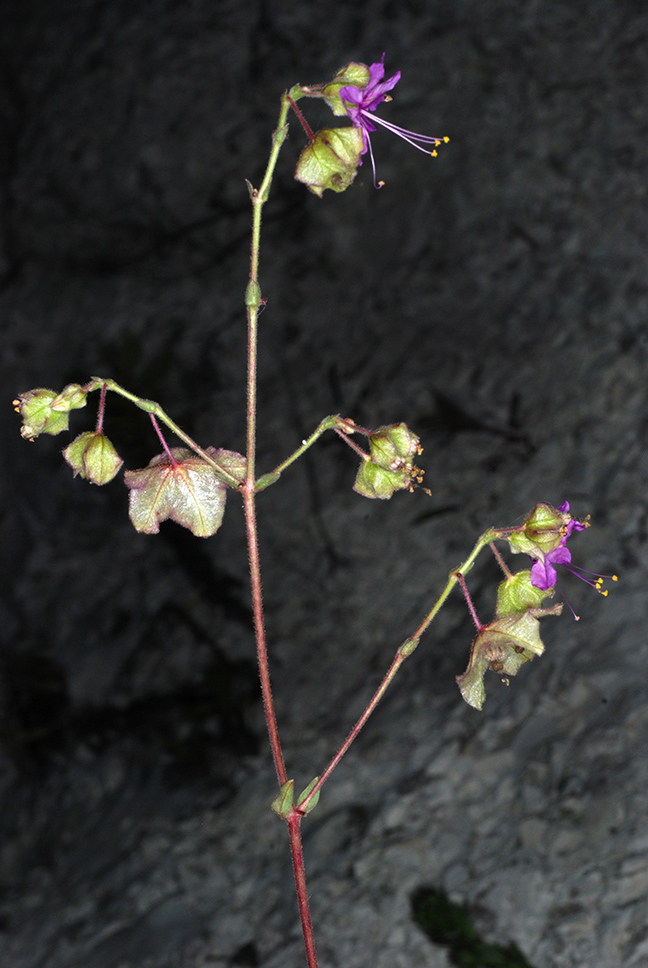
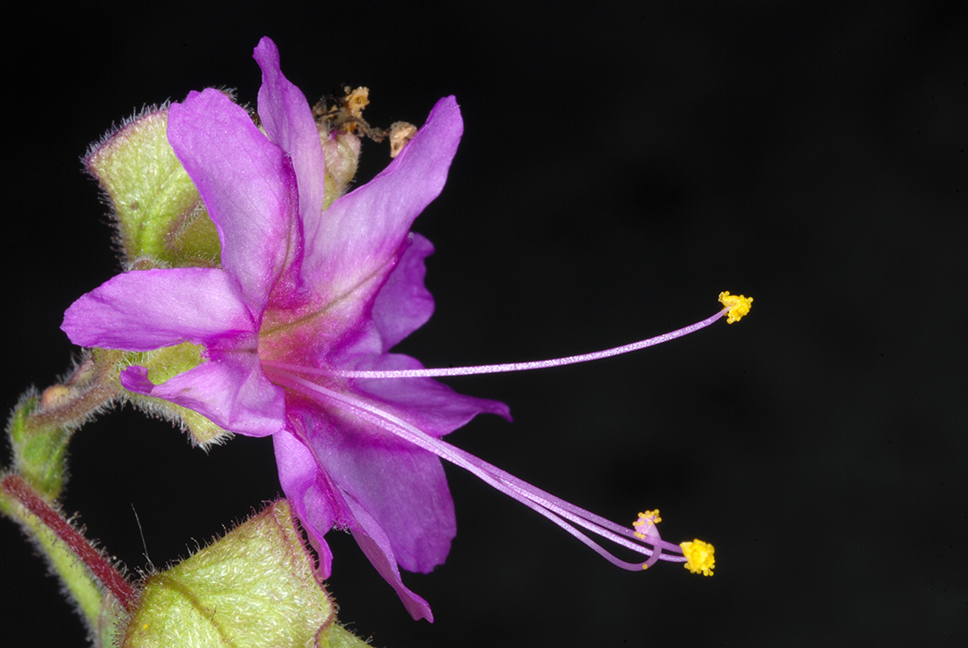
Despite “albida” (whitish) in its scientific name, the flowers are usually a soft pink to pale purple rather than true white, though they can appear washed-out or nearly white in strong sun. Each small trumpet-shaped bloom sits inside a papery, bell-like green bract that persists after flowering, giving the plant a distinctive, slightly shaggy look even out of bloom. The whole plant is covered in fine, soft hairs, which is the source of its other common name, Hairy Four O’Clock.
White Four O’Clock is a plant of open ground — prairie, pasture, roadsides, and rocky or sandy soils — and it is exceptionally tolerant of heat, drought, and poor soil once established. Its taproot allows it to persist through dry spells that would kill shallower-rooted plants, making it a reliable, low-maintenance choice for prairie restorations and dry native gardens across its wide range.
Identification
White Four O’Clock is an herbaceous perennial that dies back to a stout taproot each winter and resprouts in spring, typically reaching 1 to 2½ feet tall with a similar spread. Stems are slender, often reddish, and branch repeatedly, giving mature plants an open, airy form.
Stems
Stems are erect to spreading, finely hairy, and often forked, with swollen nodes typical of the four o’clock family. New growth emerges in mid-spring from the overwintering root and can rebranch vigorously after mowing or grazing.
Leaves
Leaves are opposite, narrowly lance-shaped to oblong, 1 to 3 inches long, with smooth or slightly wavy margins. They are soft-hairy on both surfaces, giving the foliage a grayish-green, slightly velvety appearance that helps the plant reflect intense summer sun.
Flowers
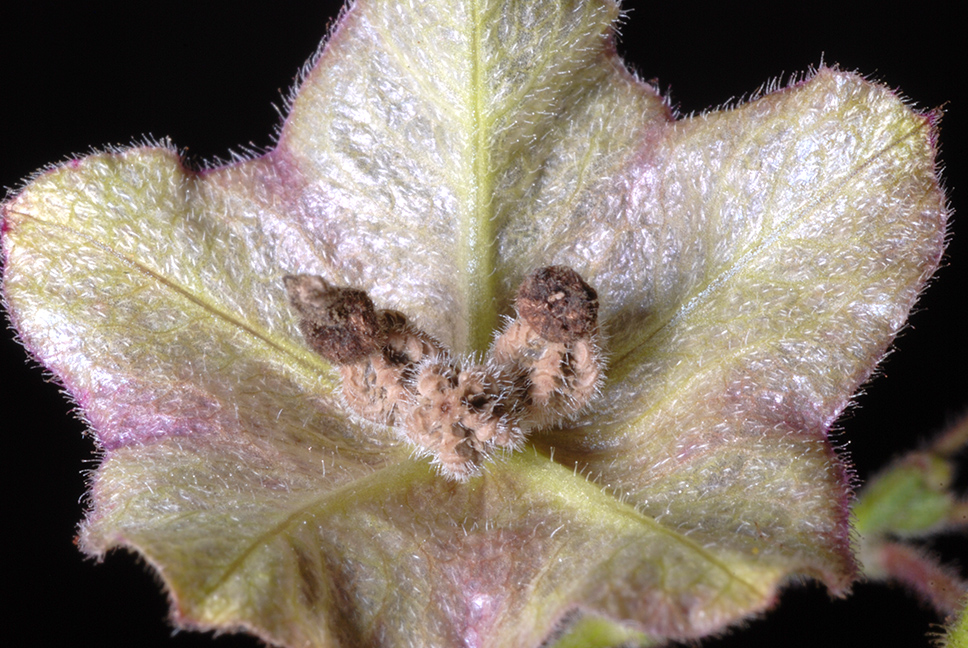
What appears to be a single flower is actually one bloom nestled inside a cup-shaped, papery green involucre (a modified bract structure) that resembles a small calyx. The true flower is funnel-shaped, about ½ inch across, in shades of pink to pale purple, with five shallow lobes and protruding stamens tipped in yellow pollen. Flowers open in late afternoon and through the evening, especially on warm days, then wilt by the following morning.
Fruit & Seeds
After flowering, each bloom is replaced by a single hard, ribbed, grayish-brown seed (an anthocarp) enclosed within the persistent bract. The dry, papery bracts remain on the plant well after flowering, scattering seed gradually through late summer and fall.
Quick Facts
| Scientific Name | Mirabilis albida |
| Family | Nyctaginaceae (Four O’Clock) |
| Plant Type | Herbaceous Perennial Wildflower |
| Mature Height | 1–2.5 ft |
| Mature Spread | 1–2 ft |
| Growth Rate | Moderate |
| Sun Exposure | Full Sun to Part Sun |
| Water Needs | Low |
| Soil Type | Sandy, rocky or loamy; well-drained |
| Soil pH | 6.0–8.0 (neutral to alkaline) |
| Bloom Time | May – September |
| Flower Color | Pink to pale purple |
| Fall Color | None notable |
| Fruit | Small ribbed seed in persistent papery bract |
| Deer Resistant | Yes (rarely browsed) |
| USDA Hardiness Zones | 4–9 |
Native Range
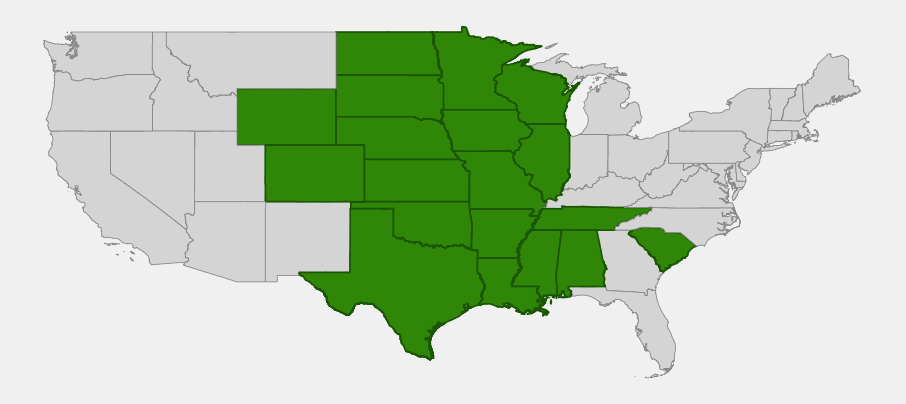
White Four O’Clock is native across a broad swath of the central United States, centered on the Great Plains and extending from North Dakota, South Dakota, and Wyoming south through Nebraska, Kansas, Oklahoma, and Texas, and east through Minnesota, Wisconsin, Iowa, Illinois, and Missouri into Arkansas, Louisiana, Mississippi, Alabama, Tennessee, and South Carolina.
It grows in open, sun-exposed habitats: prairie and plains grassland, dry pastures, rocky or sandy roadsides, open woodland edges, and disturbed ground. It is most abundant in the mixed and shortgrass prairie regions of the Plains states, where its deep taproot lets it persist through drought and grazing pressure that eliminates less resilient wildflowers.
Within its eastern and southeastern range the species becomes more localized, typically confined to dry, open, sandy or calcareous sites rather than occurring generally across the landscape — gardeners east of the Mississippi should look for county-level confirmation before assuming it is native nearby.
📋 Regional plant lists featuring White Four O’Clock: South & West Texas · Arkansas, Louisiana, Eastern Oklahoma & Eastern Texas · Nebraska, Kansas & Eastern Colorado · North Dakota, South Dakota & Western Minnesota · Michigan, Wisconsin & Eastern Minnesota · Illinois, Iowa & Missouri · Montana & Wyoming · Georgia, Alabama & Mississippi · Kentucky & Tennessee · North & South Carolina
Growing & Care Guide
White Four O’Clock is an easygoing prairie plant once its simple needs are met: full sun, sharp drainage, and patience while its taproot establishes. It is poorly suited to rich, constantly watered garden beds, where it tends to flop or rot, but it excels in lean, dry conditions many other perennials reject.
Light
Plant it in full sun for the best flowering and sturdiest growth. It tolerates light afternoon shade in the hottest, driest parts of its range, but flowering is noticeably reduced with more shade than that.
Soil & Water
Give it sandy, rocky, or lean loamy soil with excellent drainage; heavy clay or soil that stays wet will shorten its life. Once the taproot is established — usually by the second growing season — it needs little to no supplemental water and handles extended drought with ease. Avoid rich, fertile soil and heavy fertilization, both of which encourage weak, floppy growth.
Planting Tips
Start from seed in fall or early spring; scarifying the hard seed coat improves germination. Because of its deep taproot, White Four O’Clock transplants poorly once established, so direct-seeding or using young container stock is far more successful than moving mature plants.
Pruning & Maintenance
Cut plants back to the base after the first hard frost, or leave the dried stems and bracts over winter for visual interest and seed dispersal. No regular pruning is needed during the growing season; established plants are largely self-sufficient.
Landscape Uses
White Four O’Clock fits well into several low-maintenance plantings:
- Prairie and meadow restorations on dry, open sites
- Xeriscapes and gravel gardens needing summer color with minimal water
- Roadside and slope plantings in lean, well-drained soil
- Pollinator gardens for evening-active bees and moths
- Naturalized plantings among native grasses
Wildlife & Ecological Value
As a reliable bloomer through the hottest, driest part of the prairie growing season, White Four O’Clock supplies nectar and cover when many other wildflowers have gone dormant.
For Pollinators
Because its flowers open in late afternoon and through the night, White Four O’Clock is especially valuable to evening- and night-active pollinators, including hawk moths and other long-tongued moths, as well as bees active in early morning before the flowers close. The long floral tube and strong fragrance in the evening are classic adaptations for moth pollination.
For Birds & Mammals
Seeds are taken by ground-foraging birds and small mammals through late summer and fall. The plant’s dense taproot and persistent bracts also provide minor soil stabilization and ground-level cover in open prairie settings.
Ecosystem Role
White Four O’Clock is a characteristic forb of healthy shortgrass and mixed-grass prairie, contributing to the structural and bloom-time diversity that supports a broad community of prairie insects. Its drought tolerance and taproot system also help it persist through disturbance events — grazing, mowing, fire — that reshape prairie plant communities.
Cultural & Historical Uses
Some Plains Indigenous communities incorporated four o’clock species, including White Four O’Clock, into traditional plant knowledge associated with prairie landscapes, though it was not a major food or medicinal plant compared with other prairie forbs. Ethnobotanical references to the genus are more detailed for the showier garden four o’clock (Mirabilis jalapa) than for this smaller native relative.
Historically, the plant’s persistence on heavily grazed and disturbed rangeland made it a familiar, if unassuming, presence across the Great Plains cattle country, where ranchers and naturalists would have recognized its hairy foliage and evening-opening flowers as a routine part of the native prairie flora.
Today, interest in White Four O’Clock centers on prairie restoration and native gardening rather than any traditional use, valued for its drought tolerance and its role supporting moth and bee pollinators through the hottest months.
Frequently Asked Questions
Why are the flowers pink instead of white?
Despite the common name, White Four O’Clock’s flowers are usually pink to pale purple, not true white. The name likely refers to the pale, papery bracts surrounding each flower, or to flowers that fade to a whitish cast in strong sun.
When do the flowers open and close?
Flowers typically open in late afternoon and remain open through the evening and into the night, especially in warm weather, then wilt by the following morning — a pattern shared across the four o’clock family and timed to attract evening-active moth pollinators.
Is White Four O’Clock the same as the garden four o’clock?
No. The common garden four o’clock (Mirabilis jalapa) is a larger, often non-native ornamental with bigger, more colorful trumpet flowers. White Four O’Clock is a smaller native prairie perennial with modest pink blooms and hairy foliage.
Can I transplant an established plant?
It’s not recommended. The deep taproot that makes White Four O’Clock so drought-tolerant also makes mature plants very difficult to move successfully. Start new plants from seed or young container stock instead.
Is it toxic to pets or livestock?
No significant toxicity has been documented for White Four O’Clock, and it is not known to cause problems for grazing livestock, though as with any plant it’s reasonable to discourage pets from chewing on it.

Looking for a nursery that carries White Four O’Clock?
Browse our native plant nursery directory: Alabama & Arkansas · Colorado · Iowa, Illinois & Kansas · Louisiana, Minnesota, Missouri & Mississippi · North Dakota, Nebraska & Oklahoma · South Carolina, South Dakota, Tennessee & Texas · Wisconsin & Wyoming