
Lesser Spearwort (Ranunculus flammula)
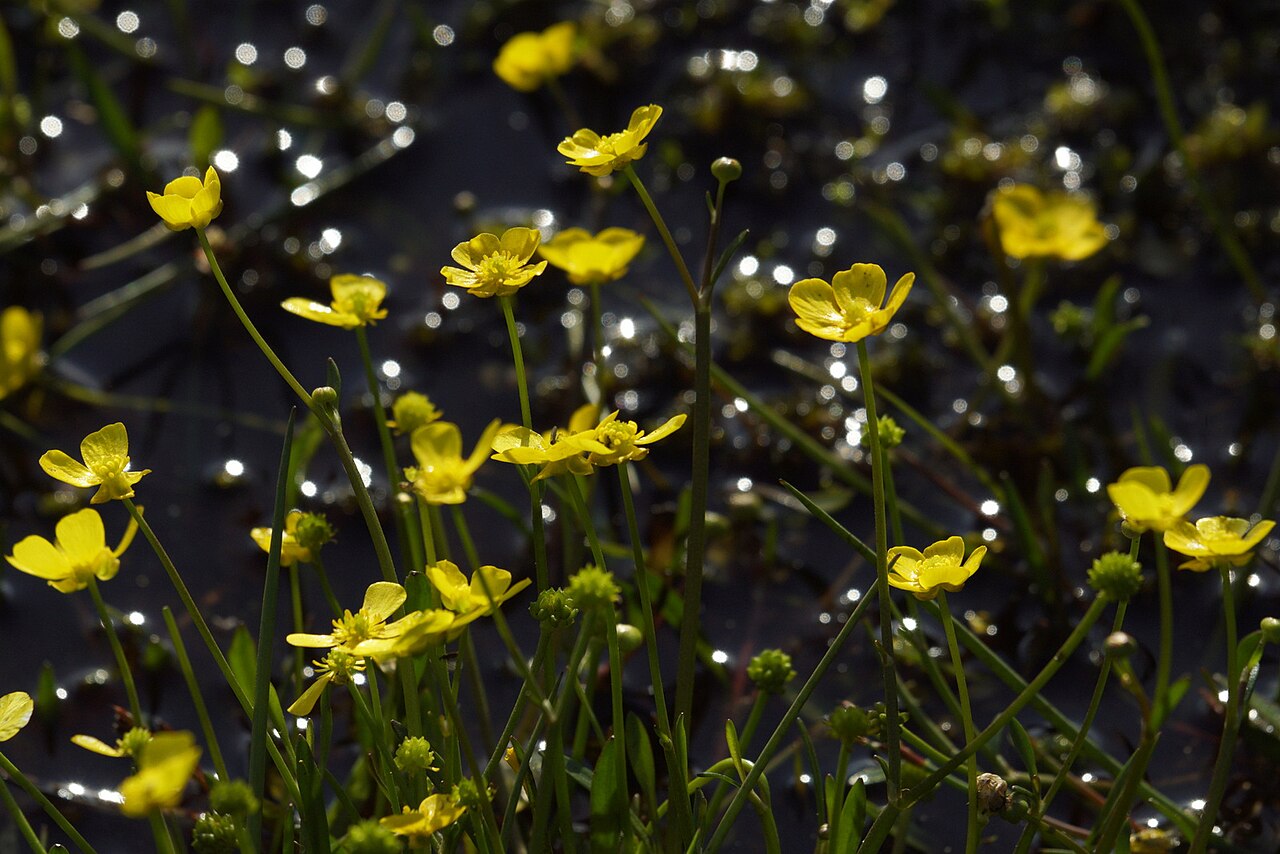
Ranunculus flammula, known as Lesser Spearwort, creeping spearwort or greater creeping spearwort (the USDA name), is a small wetland buttercup of muddy shores, wet meadows and shallow water. Unlike most buttercups it has narrow, undivided leaves shaped like little spearheads or blades of grass, and its glossy yellow flowers are usually less than half an inch across. Many plants creep over wet mud on slender runners that root at the nodes, forming loose mats.
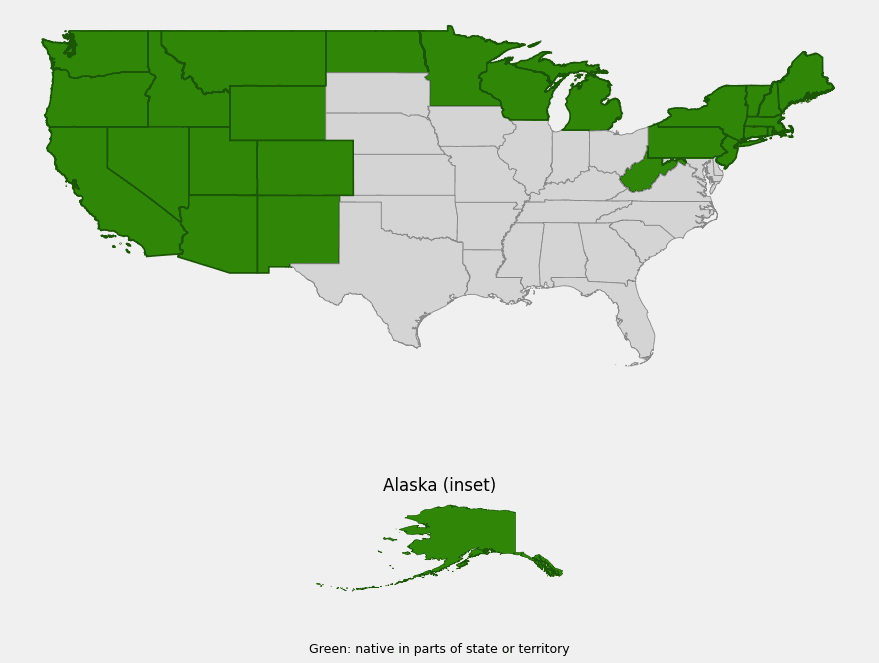
Lesser spearwort grows around the Northern Hemisphere, in Europe, Asia and North America. In the United States it is native across Alaska, the West from the Rockies to the Pacific, the Upper Midwest and the Northeast. It is most often found where water levels rise and fall: the drawdown zones of lakes and reservoirs, beaver ponds, sandy and gravelly river bars, vernal pools and ditches.
This guide covers how to identify lesser spearwort and its varieties, where it grows, how to use it in a rain garden or pond margin, its value for wildlife, and an important safety note: like other buttercups, all parts of the plant contain an acrid sap that irritates skin and is poisonous if eaten.
Identification
Lesser spearwort is easy to recognize as a buttercup by its shiny yellow flowers, but its narrow, mostly undivided leaves set it apart from the lobed-leaved buttercups of lawns and meadows. The plant is very variable, and botanists recognize several varieties in North America.
Stems & Growth Habit
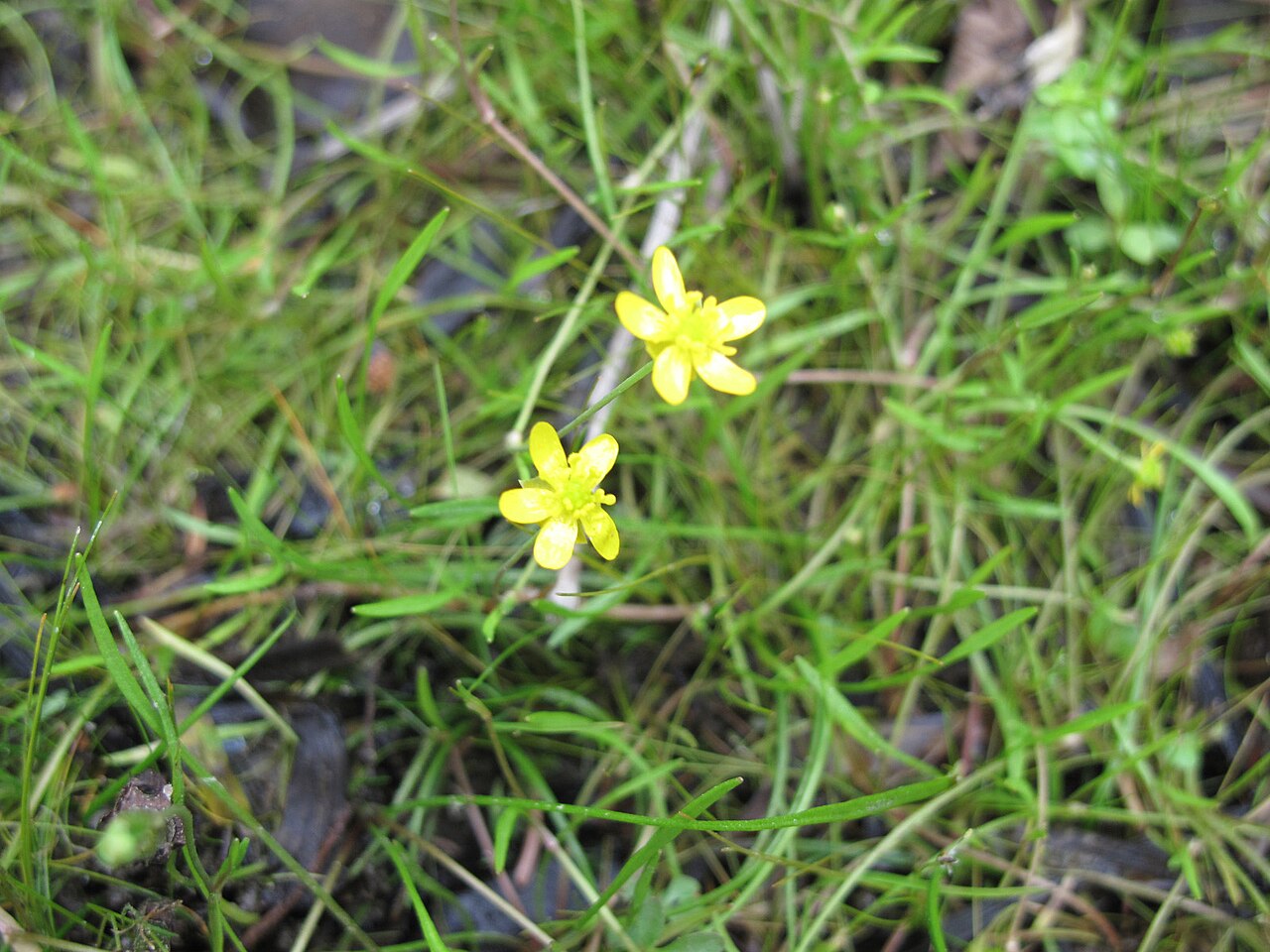
Stems range from upright, up to about 18 inches tall, to thread-thin runners that lie flat on wet mud and root at every node. The upright form is more common in deeper wet soils, while the creeping form (var. reptans) spreads over sand and gravel shores, sending up short leafy shoots and single flowers from the rooting nodes.
Leaves
The leaves are simple and alternate, without the deep lobes of most buttercups. On upright plants they are lance-shaped to oval, up to a few inches long, on long stalks, with smooth or slightly toothed edges. On creeping plants they are often almost thread-like, only a fraction of an inch wide. This blade- or spear-like shape gives spearworts their name.
Flowers
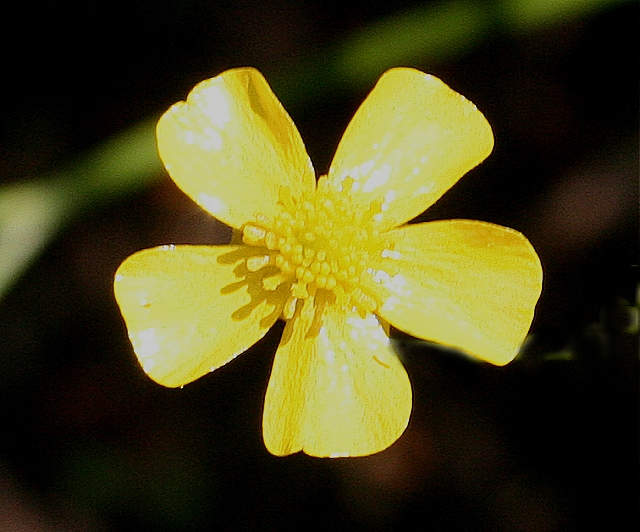
The flowers are borne singly or a few together at the stem tips from early summer into late summer. Each has five (sometimes more) glossy yellow petals, five small greenish sepals and a center packed with stamens. They are small, typically about a quarter to half an inch across, and the shiny petals catch the light like those of other buttercups.
Fruit
After flowering, each flower forms a small round head of tiny, smooth, one-seeded fruits (achenes) with short beaks. The heads are only about a quarter-inch across.
Varieties & Similar Species
North American botanists usually recognize two native varieties: the creeping, thread-leaved var. reptans, widespread in the north and east, and the more upright, broader-leaved var. ovalis, mostly in the West. The European typical variety, var. flammula, is larger and more upright, and it has been introduced in a few places such as the Pacific Northwest and Newfoundland. Plantainleaf buttercup (Ranunculus alismifolius) of western mountain meadows is similar but has broader leaves and larger flowers. Seaside buttercup (R. cymbalaria) also creeps by runners on wet ground, but its leaves are round to heart-shaped with scalloped edges. Common Water Crowfoot has white flowers and finely divided underwater leaves.
Quick Facts
| Scientific Name | Ranunculus flammula L. (incl. var. reptans and var. ovalis) |
| Family | Ranunculaceae (buttercup family) |
| Plant Type | Herbaceous perennial wetland wildflower; upright or creeping |
| Mature Height | 2–18 in (creeping forms only a few inches tall) |
| Mature Spread | Creeping runners spread 1–2 ft or more |
| Growth Rate | Moderate to fast in wet soil |
| Sun Exposure | Full sun to part shade |
| Water Needs | High; wet soil or shallow water up to a few inches deep |
| Soil Type | Wet mud, sand, gravel or peat; tolerates seasonal flooding |
| Soil pH | About 5.0–7.5 |
| Bloom Time | June–September |
| Flower Color | Glossy yellow |
| Fall Color | Not significant |
| Fruit | Small round heads of beaked achenes |
| Deer Resistant | Yes; foliage is acrid and toxic |
| USDA Hardiness Zones | 2–8 |
Native Range
USDA PLANTS lists lesser spearwort as native in Alaska and in 25 states of the lower 48: Arizona, California, Colorado, Connecticut, Idaho, Maine, Massachusetts, Michigan, Minnesota, Montana, New Hampshire, New Jersey, New Mexico, Nevada, New York, North Dakota, Oregon, Pennsylvania, Rhode Island, Utah, Vermont, Washington, West Virginia, Wisconsin and Wyoming. The records from West Virginia, Pennsylvania and New Jersey are outlying ones at the southern edge of its eastern range. The plants of the Northeast and Great Lakes are the native creeping spearwort, var. reptans, and in New England both native varieties occur.
In the West it grows from sea level along the Pacific coast to high mountain meadows, on the muddy margins of lakes, ponds and reservoirs, in wet meadows and seeps, and along slow streams. In the East it is mainly a plant of sandy, gravelly or muddy lakeshores and river shores that are flooded in spring and exposed in summer, and of the drawdown zones of ponds and beaver flowages.
Outside the United States, lesser spearwort occurs across Canada from the Yukon and British Columbia to Newfoundland, and throughout Europe and much of temperate Asia. The European var. flammula has been introduced in a few places, including the Pacific Northwest, Newfoundland and New Zealand.
📋 Regional plant lists featuring Lesser Spearwort: Alaska · Western Oregon & Western Washington · Idaho, Eastern Oregon & Eastern Washington · California & Nevada · Arizona & New Mexico · Utah & Western Colorado · Montana & Wyoming · North Dakota, South Dakota & Western Minnesota · Michigan, Wisconsin & Eastern Minnesota · New York, Pennsylvania & Northern New Jersey · Delaware, Southern New Jersey & Long Island · Maryland, Virginia & West Virginia · Connecticut, Massachusetts & Rhode Island · New Hampshire, Maine & Vermont
Growing & Care Guide
Lesser spearwort is a modest, easy plant for the wettest parts of a native garden: pond and stream margins, rain gardens that hold water, and bog gardens. It is rarely sold, but it is occasionally available from native wetland nurseries and as a pond-margin plant. Buy plants grown from North American stock where possible, since the European var. flammula is a different, more aggressive form.
Light
Full sun gives the most flowers. It tolerates light or part shade, but in deep shade it flowers poorly and becomes sparse.
Soil & Water
It needs constantly wet soil or very shallow water, up to about 2 to 4 inches deep. It does well in mud, sand or gravel and tolerates water levels that rise in spring and drop in summer, as long as the roots never dry out completely. It is not a plant for ordinary garden beds.
Planting Tips
Plant in spring at the edge of a pond, in a planting shelf, or in the low center of a rain garden. In a small water garden, a shallow container of loamy soil topped with gravel set on a marginal shelf keeps the runners in check. Space plants about 1 foot apart; the creeping stems will fill in.
Pruning & Maintenance
Little care is needed. Pull runners that spread where they are not wanted, and remove taller weeds that would shade it out. Always wear gloves when handling it, because the sap can irritate skin.
Propagation
The easiest method is division: the rooted nodes of the runners can be cut apart and replanted in wet soil in spring or early summer. Seed can be sown fresh in fall on the surface of wet soil and left outdoors over winter, since buttercup seeds usually need cold stratification.
Safety Note
Lesser spearwort, like all buttercups, contains ranunculin, which breaks down into the irritant protoanemonin when the plant is crushed or chewed. Fresh sap can redden and blister skin, and eating the plant can cause burning of the mouth, vomiting and diarrhea. Keep it out of reach of children and pets, wear gloves when dividing it, and do not plant it in pasture wetlands where livestock graze. Drying destroys most of the toxin, so it is far less hazardous in dried hay.
Landscape Uses
- Pond and stream margins: a low, creeping edging plant that softens the transition from water to land and flowers through midsummer
- Rain gardens and bioswales: the wettest, lowest zone of a rain garden in cool climates, where water stands after storms
- Bog gardens: a small companion for sedges, rushes and other low wetland plants in full sun
- Wetland restoration: shorelines, drawdown zones and created wetlands in the North and West, where its runners help bind bare mud
- Wildflower walks: look for it on summer lakeshores and reservoir margins as the water drops, often in carpets with spikerushes
Wildlife & Ecological Value
Lesser spearwort is a small plant, but it adds flowers and cover to shorelines and wet meadows through the summer.
For Pollinators
The open yellow flowers offer pollen and a little nectar to small bees, flies and beetles. Many small native bees and syrphid flies visit buttercups, and lesser spearwort blooms for a long period in summer when shoreline flowers can be scarce.
For Birds
Ducks and other waterfowl eat the seeds of buttercups, and the small achenes of spearwort are part of the mix of seeds found in shallow wetlands and on exposed mud.
For Mammals
Because of its acrid sap, deer, livestock and most other mammals avoid eating it while it is fresh.
Ecosystem Role
Its creeping, rooting stems help stabilize mud and sand on shores where water levels fluctuate, and its mats shelter aquatic insects, snails and young amphibians in shallow water. It is one of the plants that quickly colonizes newly exposed mud when water levels drop.
Cultural & Historical Uses
The name flammula means “little flame,” a reference either to the shape of the narrow leaves or to the burning sensation caused by the sap. The common name spearwort comes from the old English use of “wort” for plant, describing the spear-shaped leaves.
In Europe, lesser spearwort was a well-known poisonous weed of wet pastures, blamed for sickening cattle and sheep. In the past, the blistering sap was even applied to the skin as a crude counterirritant in folk medicine, a dangerous practice that is not recommended.
Linnaeus described both Ranunculus flammula and the creeping Ranunculus reptans in 1753. Many botanists now treat the creeping plant as a variety of lesser spearwort, but some North American floras still keep R. reptans as a separate species, so you may see either name for the native creeping spearwort.
Frequently Asked Questions
Is lesser spearwort native to North America?
Yes. It is native across Canada, Alaska, the western United States, the Upper Midwest and the Northeast, as well as in Europe and Asia. The native North American plants are mostly the creeping var. reptans and the western var. ovalis; the European var. flammula has been introduced in a few places such as the Pacific Northwest.
Is lesser spearwort poisonous?
Yes. Like other buttercups it contains protoanemonin, an irritant released from the sap when the plant is crushed. It can blister skin and causes burning of the mouth, vomiting and diarrhea if eaten. Wear gloves when handling it and keep children, pets and livestock away from it.
How do I tell lesser spearwort from other buttercups?
Look at the leaves. Most buttercups have lobed or divided leaves, while lesser spearwort has narrow, simple, spear-shaped or thread-like leaves. Its yellow flowers are also small, usually under half an inch across, and it grows in wet places.
Can I grow lesser spearwort in a pond?
Yes. Plant it on a shallow marginal shelf or in wet mud at the edge, in water no deeper than a few inches. It spreads by rooting runners and can be kept in check by growing it in a container.
What is the difference between lesser spearwort and creeping spearwort?
Creeping spearwort usually refers to the native, thread-leaved, mat-forming var. reptans (sometimes treated as the species Ranunculus reptans). Lesser spearwort is the name of the whole species, especially in Britain, where the larger, upright var. flammula is common.

Looking for a nursery that carries Lesser Spearwort?
Browse our native plant nursery directory: Alaska & Arizona · California · Colorado & Connecticut · Idaho · Maine, Massachusetts, Michigan, Minnesota & Montana · Nevada, New Hampshire, New Jersey, New Mexico, New York & North Dakota · Oregon · Pennsylvania, Rhode Island, Utah & Vermont · Washington · West Virginia, Wisconsin & Wyoming

