
Ground Plum (Astragalus crassicarpus)
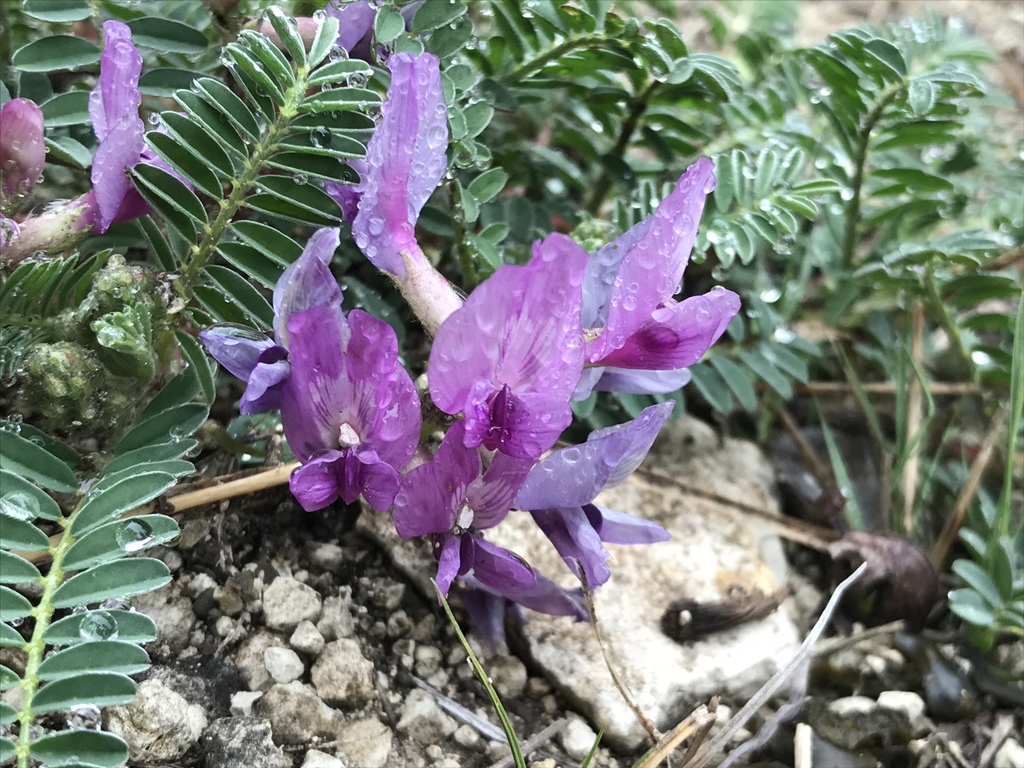
Astragalus crassicarpus, known as Ground Plum, groundplum milkvetch or buffalo bean, is a low, sprawling perennial of the pea family (Fabaceae) and one of the first wildflowers to bloom on the Great Plains. It grows in prairies and open, rocky grasslands from the Canadian Prairie Provinces south through the Plains and Midwest to Texas and Louisiana.
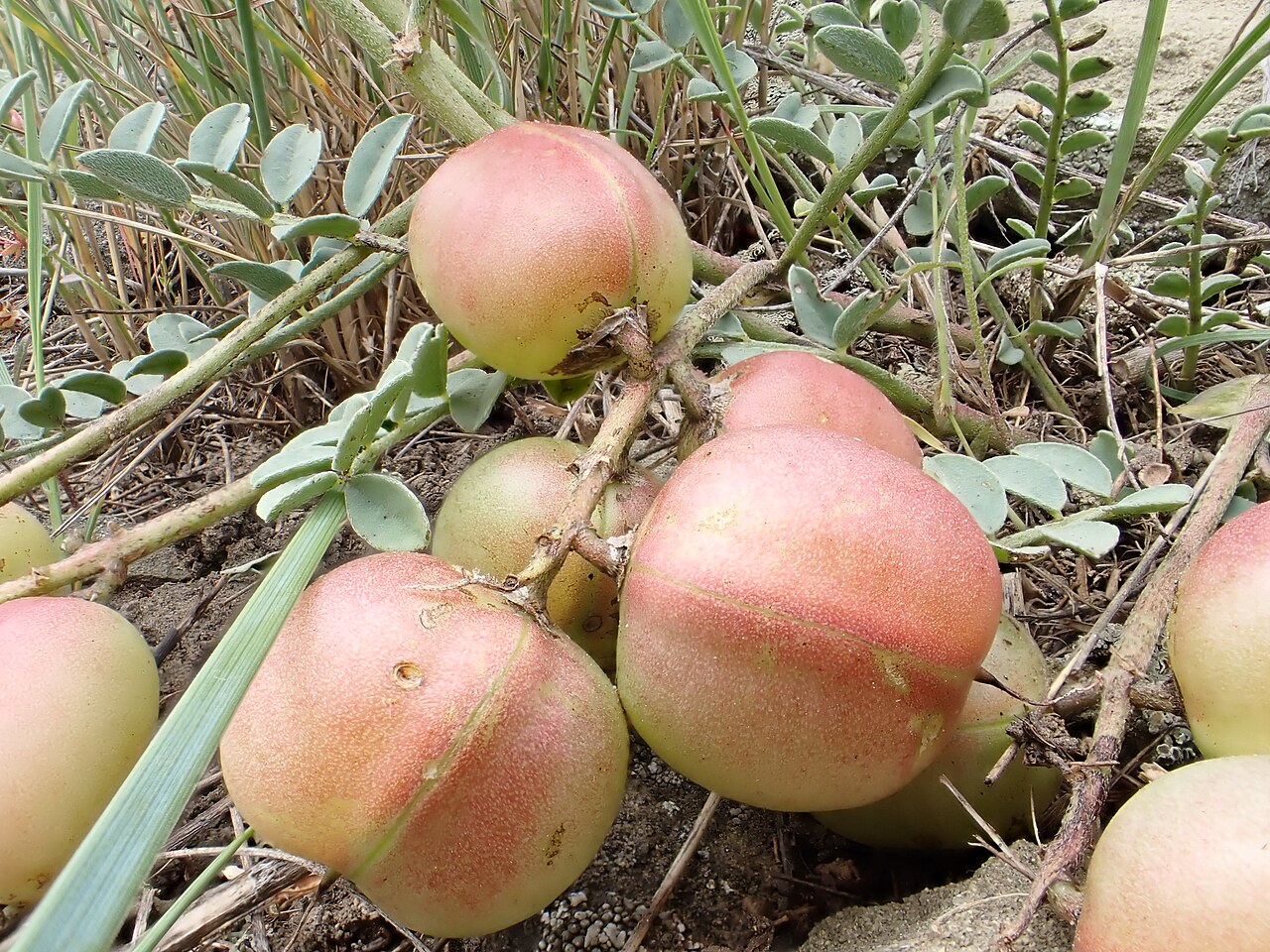
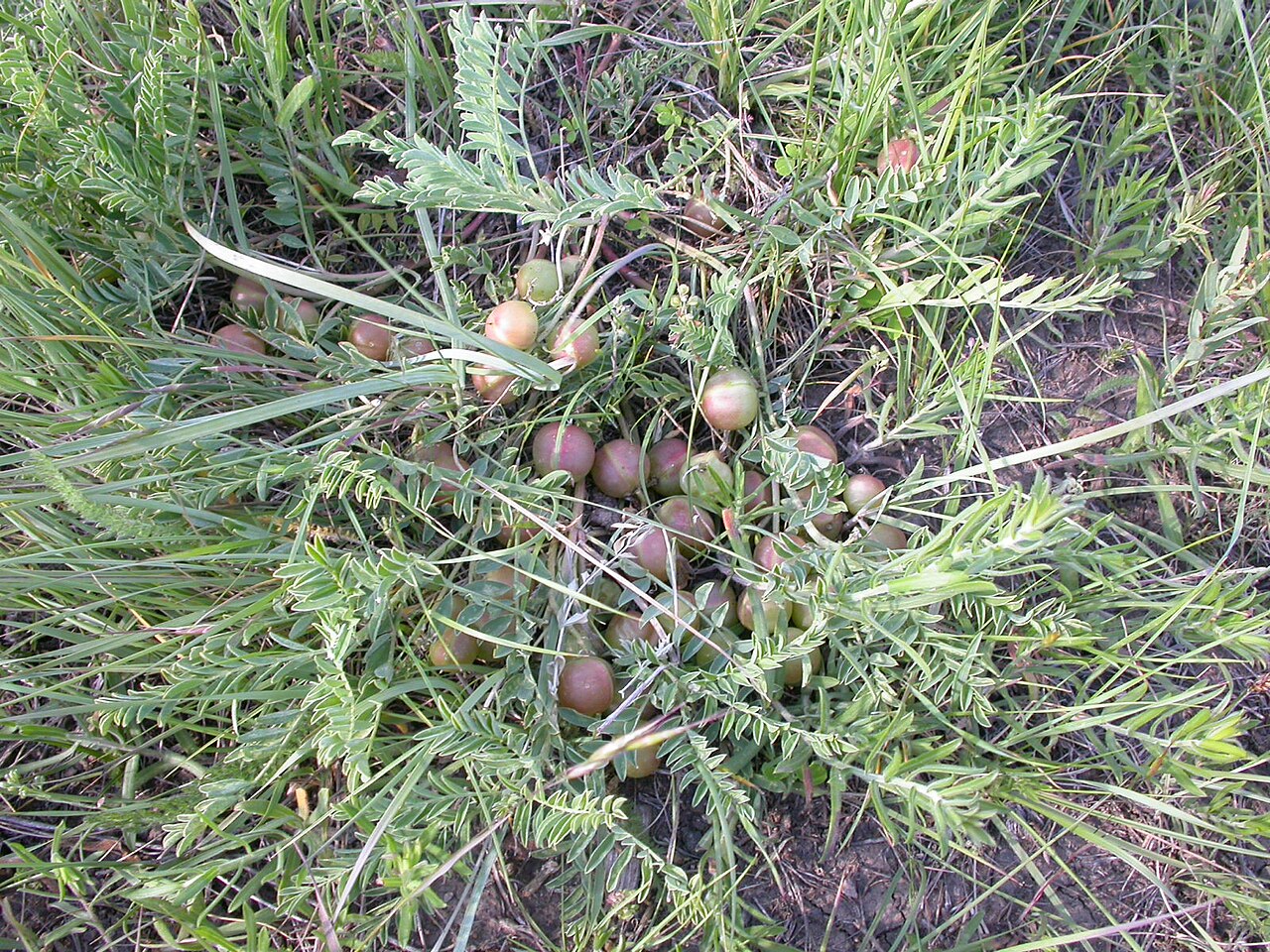
In spring, short clusters of purple, violet or creamy pea flowers rise just above a mat of gray-green, feathery leaves. By early summer the plant carries its most surprising feature: fat, round pods about 3/4 to 1 inch across that ripen from green to rosy red and lie on the ground like small plums. The species name means “thick fruit.”
Ground plum is long-lived, drought-tolerant and deep-rooted. It is a good early-season plant for prairie gardens and restorations, feeding queen bumblebees and the caterpillars of the Afranius duskywing, and it enriches the soil with nitrogen like other legumes.
Identification
Look for a low mat of pinnate, gray-green leaves on dry prairie in early spring, with short clusters of purple to cream pea flowers and, later, round, plum-like pods lying on the ground.
Growth Habit
Ground plum grows from a deep, woody taproot and a crown at ground level. Several stems, 6 to 24 inches long, spread outward along the ground or curve upward at the tips, so the plant is rarely more than 6 to 12 inches tall but can sprawl 1 to 2 feet across. It dies back to the root by midsummer to late summer in dry years.
Leaves
The leaves are alternate and pinnately compound, 2 to 6 inches long, with about 15 to 27 narrow, oblong leaflets 1/4 to 3/4 inch long. They are gray-green and covered in fine, flat-lying hairs, especially on the undersides.
Flowers
Flowers appear from late winter in Texas to May and June in the northern Plains. They are borne in short, crowded clusters of 5 to 25 on stalks from the leaf axils. Each flower is a typical pea flower, about 3/4 to 1 inch long, with a long, upright banner. Most plants have purple to violet flowers, but some are pale lavender, cream or nearly white, often with a purple tip on the keel.
Fruit & Seeds
The fruit is the best field mark: a thick-walled, nearly round pod about 3/4 to 1 inch across, smooth and fleshy when young, green turning red or purple on the sunny side. As it ripens it becomes hard, dry and woody, and it finally splits to release many small, dark, kidney-shaped seeds.
Look-alikes
Woollypod milkvetch (Astragalus purshii) is smaller and has densely woolly pods. Platte River milkvetch (Astragalus plattensis) has similar but smaller, egg-shaped pods. Lambert’s locoweed (Oxytropis lambertii) has all-basal leaves, a pointed beak on the keel and narrow, dry pods. No other Plains legume has such large, round, fleshy pods lying on the ground.
Safety Notes
Some Plains peoples and settlers ate the young, green pods raw or cooked. However, many other Astragalus and Oxytropis species are poisonous to people and livestock, and the plants are hard to tell apart without fruit. Do not eat any milkvetch unless you are certain of its identity, and keep pets and livestock from browsing unfamiliar milkvetches.
Quick Facts
| Scientific Name | Astragalus crassicarpus |
| Family | Fabaceae (pea family) |
| Plant Type | Herbaceous perennial |
| Mature Height | 6–12 in |
| Mature Spread | 1–2 ft |
| Growth Rate | Slow |
| Sun Exposure | Full sun to light shade |
| Water Needs | Low; dry to medium, well-drained soil |
| Soil Type | Loam, clay loam, sandy or rocky prairie soil |
| Soil pH | About 6.0–8.0 |
| Bloom Time | March–June (from February in Texas) |
| Flower Color | Purple, violet, lavender or cream |
| Fall Color | Foliage dies back by late summer |
| Fruit | Round, plum-like pods ripening red |
| Deer Resistant | Moderate; foliage and pods may be grazed |
| USDA Hardiness Zones | 3–8 |
Native Range
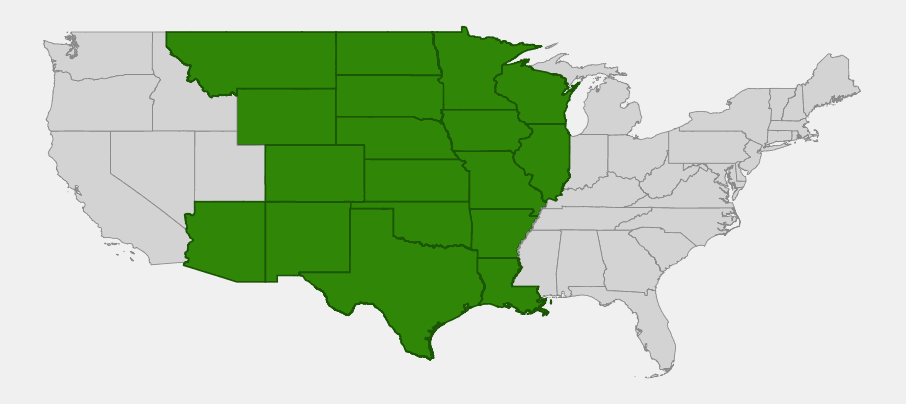
Ground plum is native to the interior of North America. USDA PLANTS lists it as native in Arkansas, Colorado, Illinois, Iowa, Kansas, Louisiana, Minnesota, Missouri, Montana, Nebraska, New Mexico, North Dakota, Oklahoma, South Dakota, Texas, Wisconsin and Wyoming, with an outlying record in Arizona. In Canada it grows in Alberta, Saskatchewan and Manitoba, and USDA also lists British Columbia.
It is most common on the northern and central Great Plains, from Montana and the Dakotas to Kansas and Oklahoma, and in the prairie regions of Minnesota, Iowa, Missouri and western Wisconsin and Illinois. To the south it reaches the Blackland Prairie and limestone hills of north-central Texas, the Ozarks and scattered prairies in Arkansas and Louisiana. In the west it reaches the foothills and plains along the eastern Rocky Mountains.
Typical habitats are dry to mesic upland prairie, rocky and gravelly hillsides, limestone glades and barrens, bluff tops, open woodland edges and grassy roadsides. It prefers well-drained ground and full sun.
📋 Regional plant lists featuring Ground Plum: Arkansas, Louisiana, Eastern Oklahoma & Eastern Texas · Illinois, Iowa & Missouri · Nebraska, Kansas & Eastern Colorado · North Dakota, South Dakota & Western Minnesota · Michigan, Wisconsin & Eastern Minnesota · Montana & Wyoming · South & West Texas
Growing & Care Guide
Ground plum is offered by native seed companies and some prairie nurseries. It is slow to establish but very long-lived and carefree once its taproot is down in a sunny, well-drained spot.
Light
Plant it in full sun. It tolerates light shade at a woodland edge but flowers and fruits best in sun.
Soil & Water
Give it well-drained loam, clay loam, sandy or rocky soil; it does well on lean, limestone or gravelly ground. Water young plants during dry spells in their first season. Established plants are very drought-tolerant and need no watering. Avoid soggy soil, which rots the crown.
Planting Tips
Grow it in the front of a prairie garden, on a dry slope or in a rock garden, where its low mats are not shaded out by tall plants. Pair it with short grasses such as little bluestem and blue grama and early bloomers such as pasqueflower and prairie smoke. Set out young plants in spring; the deep taproot makes older plants very hard to move.
Pruning & Maintenance
No pruning is needed. Do not fertilize; as a legume it makes its own nitrogen. Mark its location, since the foliage may disappear by late summer, and keep tall neighbors from crowding it.
Propagation
Grow it from seed. Collect the pods when they turn hard and dry, break them open and nick or sand the hard seed coat (scarify) before sowing, or pour hot water over the seeds and soak them overnight. Sow in spring in deep pots or directly in place, as seedlings resent root disturbance. Plants usually flower in their second or third year.
Landscape Uses
- Prairie gardens: early spring color and unusual plum-like pods at the front of the border
- Prairie restoration: a long-lived, nitrogen-fixing forb for dry and mesic upland sites
- Rock gardens and dry slopes: a low, sprawling mat on lean, well-drained soil
- Pollinator gardens: an early nectar source for queen bumblebees
- Butterfly gardens: larval host for the Afranius duskywing
Wildlife & Ecological Value
Blooming before most prairie wildflowers, ground plum feeds early bees, hosts butterfly caterpillars and supplies seeds to wildlife.
For Pollinators
The flowers are worked mainly by bumblebee queens and other long-tongued bees, which are strong enough to open the pea flowers. Ground plum is a larval host for the Afranius duskywing (Erynnis afranius), and other skippers and blues that feed on milkvetches may also use it.
For Birds
Ground-feeding birds may eat the seeds from split pods, and the low mats give cover to birds of open prairie.
For Mammals
Small mammals such as ground squirrels and pocket gophers eat the fleshy pods and seeds. Grazing animals take the foliage and pods, although the plant is not a preferred forage.
Ecosystem Role
Like other legumes, ground plum hosts nitrogen-fixing bacteria in root nodules and adds nitrogen to prairie soils. Its deep taproot lets it survive drought and fire, and it is a reliable indicator of undisturbed, native upland prairie.
Cultural & Historical Uses
Thomas Nuttall, who botanized along the Missouri River in 1811, described Astragalus crassicarpus in 1818. The species name combines the Latin crassus, “thick,” and the Greek karpos, “fruit.” The genus name Astragalus is an ancient Greek name for a plant in the pea family.
Several Plains peoples and early settlers gathered the young, fleshy pods in spring and ate them raw or cooked, and they were sometimes compared to green peas. Its other common names, buffalo bean and buffalo pea, recall the open bison country of the Plains where it is most common.
Several varieties are recognized, differing in flower color and in the size and hairiness of the pods. Northern and western plants usually have purple flowers, while some southern and eastern plants are cream-flowered.
Frequently Asked Questions
Why is it called ground plum?
Its round, fleshy pods, about an inch across, turn red as they ripen and lie on the ground under the leaves, looking much like small plums.
Are ground plum pods edible?
Young pods were eaten by Plains peoples and settlers. Because many related milkvetches are poisonous and hard to tell apart, foraging is not recommended unless you are certain of the plant.
When does ground plum bloom?
It is one of the earliest prairie wildflowers, blooming from February or March in Texas to May and June in the northern Plains.
Can I grow ground plum in my garden?
Yes. It needs full sun and well-drained soil and does best in a prairie, rock or dry slope garden. Start it from scarified seed in place, since its deep taproot makes older plants hard to move.
Does ground plum help wildlife?
Yes. Its early flowers feed queen bumblebees, it is a host plant for the Afranius duskywing butterfly, and birds and small mammals eat the seeds and pods.

Looking for a nursery that carries Ground Plum?
Browse our native plant nursery directory: Arizona & Arkansas · Colorado · Illinois, Iowa & Kansas · Louisiana, Minnesota, Missouri & Montana · Nebraska, New Mexico, North Dakota & Oklahoma · South Dakota & Texas · Wisconsin & Wyoming

