Blue Grama (Bouteloua gracilis)

Bouteloua gracilis, commonly known as Blue Grama, is one of the most iconic and ecologically important native grasses of the Great Plains and Rocky Mountain West. This warm-season perennial bunchgrass is immediately recognizable by its distinctive curved, comb-like seed heads that hold horizontally at a right angle to the stem — giving the grass an architectural, sculptural quality unlike almost any other grass species. The name “gracilis” (Latin for graceful) is fitting for this elegant, fine-textured grass that waves gently in the prairie breeze.
Blue Grama is a keystone species of the shortgrass prairie and mixed-grass prairie ecosystems that once stretched across millions of acres from Canada to Mexico. Remarkably drought-tolerant, this grass is adapted to surviving on just 10 to 20 inches of annual rainfall — among the most arid conditions of any North American grass. Its deep fibrous root system can penetrate 5 feet or more into the soil, allowing it to tap moisture far below the surface during extended dry periods. This drought resilience, combined with its palatability to wildlife and livestock, made Blue Grama the foundation species of the Great Plains grassland ecosystem for thousands of years.
Beyond its ecological importance, Blue Grama has gained considerable recognition as a low-maintenance, water-wise lawn alternative and ornamental grass for xeriscape gardens throughout the western United States. Its fine texture, attractive seed heads, and warm blue-green color during the growing season make it visually appealing, while its minimal water needs make it ideal for sustainable landscaping in arid and semi-arid climates. When mowed to 2–4 inches, Blue Grama creates a dense, attractive turf that requires a fraction of the water of traditional lawn grasses.
Identification
Blue Grama is a warm-season bunchgrass that grows in dense clumps or occasionally forms a loose sod. Plants typically reach 6–18 inches (15–46 cm) in height, with flowering stems extending to 18 inches. The overall color during the growing season is a distinctive blue-green to grayish-green, fading to a warm tan in winter. The growth form is compact and low, with leaves curling inward during drought stress.
Leaves
The leaf blades are slender and flat to slightly rolled, typically ¹⁄₁₆ to ⅛ inch (1–3 mm) wide and 2–5 inches (5–12 cm) long. They are smooth or slightly hairy on the upper surface and have fringed margins near the base. The color is a characteristic blue-green to grayish-green during the growing season. Leaves are basal and stem leaves are few. Blades curl inward along the midrib during drought conditions, reducing water loss — an elegant adaptation to arid conditions.
Seed Heads
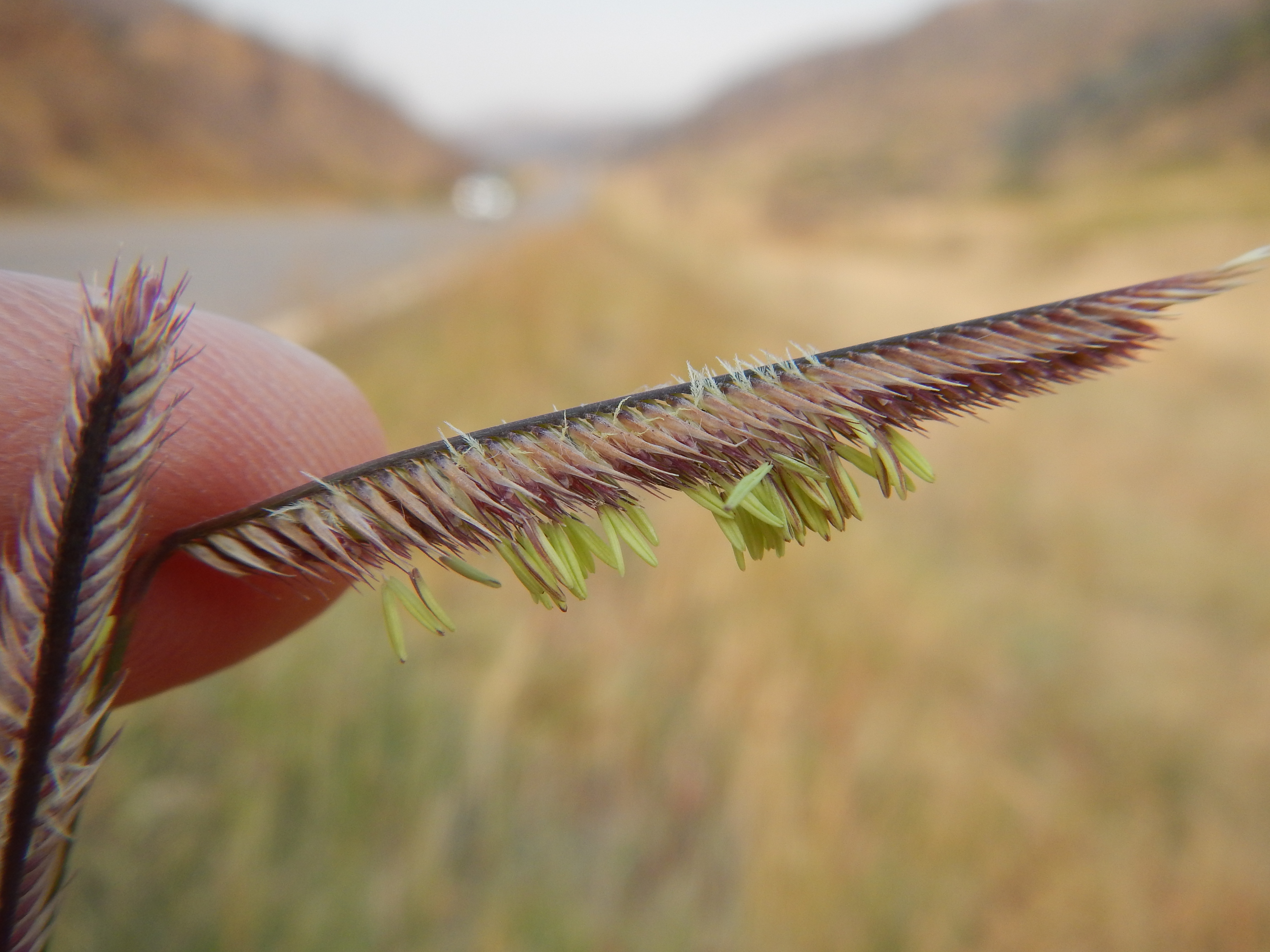
The seed heads of Blue Grama are its most distinctive feature and make it unmistakable among native grasses. The flowering stems produce one to three curved, comb-like spikes (racemes) that hold at right angles to the stem, typically 1–1½ inches (2.5–4 cm) long and curved like an eyelash or a tiny comb. The spikelets are densely arranged on one side of the spike only. As the seeds mature, the spikes turn from greenish-purple to golden tan. They remain on the plant through fall and winter, providing both ornamental interest and wildlife food.
Root System
Blue Grama develops an extensive, deep fibrous root system that is central to its drought tolerance and ecological value. Roots can reach 4–6 feet deep, with the densest root mass in the upper 12 inches of soil. This dense, extensive root network makes Blue Grama highly effective at preventing soil erosion and building soil organic matter — a critical ecological function in the sparse shortgrass prairie where it dominates.
Quick Facts
| Scientific Name | Bouteloua gracilis |
| Family | Poaceae (Grass family) |
| Plant Type | Warm-Season Perennial Bunchgrass |
| Mature Height | 1.5 ft (6–18 in) |
| Sun Exposure | Full Sun to Part Shade |
| Water Needs | Low (Drought Tolerant) |
| Bloom Time | July – September |
| Seed Head Color | Purplish-green maturing to golden tan |
| Soil Type | Sandy, loamy, or clay; well-drained |
| Spread | 6–12 in per clump; can form sod over time |
| USDA Hardiness Zones | 3–9 |
Native Range
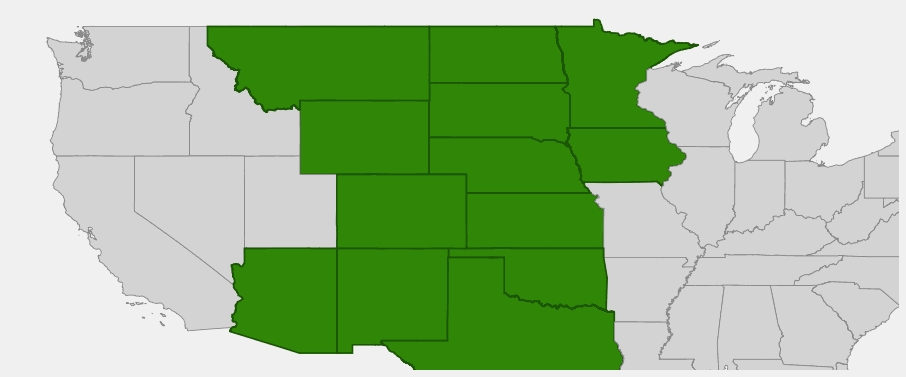
Blue Grama is one of the most widely distributed native grasses in North America, occurring across the entire Great Plains from southern Canada to northern Mexico, and extending into the Rocky Mountain foothills and intermountain valleys. Its core range encompasses a vast sweep of central North America — from Montana and Wyoming east through the Dakotas, Nebraska, Kansas, and Oklahoma, south through Texas and New Mexico, and west into Colorado and Arizona. At higher elevations, Blue Grama is a dominant species in mountain meadows and open parks in the Rocky Mountains up to 8,000 feet.
In Montana and Wyoming specifically, Blue Grama is a characteristic species of the dry shortgrass prairies and mixed-grass prairies in the eastern portions of both states, as well as in the intermountain basins of western Montana and Wyoming. It is commonly found on the lower slopes of foothills, in dry ponderosa pine parklands, and on exposed ridges where other grasses cannot survive the combination of drought and cold. The species is highly adapted to continental climates with hot, dry summers and cold winters.
Throughout its range, Blue Grama is a dominant or co-dominant species, often forming pure stands in the driest shortgrass prairie zones or mixing with Buffalo Grass (Bouteloua dactyloides) in the central Great Plains. At slightly higher moisture levels, it grows with Western Wheatgrass (Pascopyrum smithii), Needle-and-Thread Grass (Hesperostipa comata), and Sideoats Grama (Bouteloua curtipendula).
📋 Regional plant lists featuring Blue Grama: Montana & Wyoming
Growing & Care Guide
Blue Grama is one of the most low-maintenance native plants available for western gardens. Once established, it is remarkably self-sufficient and requires virtually no supplemental care. Its reputation as a xeriscape champion and lawn alternative stems from years of successful use in dry western climates.
Light
Blue Grama thrives in full sun and is at its best with at least 6 hours of direct sunlight daily. It can tolerate light partial shade (a few hours of shade per day) without significant loss of vigor or ornamental quality, but in deep or consistent shade it becomes sparse and weak. For lawn use or dense groundcover effects, full sun is essential. In rocky or exposed sites that receive intense afternoon sun, Blue Grama performs exceptionally well where other plants struggle.
Soil & Water
Blue Grama is extremely adaptable regarding soil. It grows in sandy, loamy, clay, or rocky soils, tolerating poor, infertile soils that would defeat most other plants. What it cannot tolerate is poorly drained, waterlogged soil — the crown must be above standing water during wet periods. Once established (after about one full growing season), Blue Grama needs little to no supplemental irrigation in most of its native range. In landscape use, watering deeply once every 2–3 weeks during the first summer promotes root establishment. After that, let nature take over. Do not overwater — more Blue Grama plants are killed by overwatering than drought.
Planting Tips
Blue Grama can be established from seed or transplanted from plugs or container plants. Direct seeding in fall (dormant seeding) or early spring yields good results when seeds are pressed into the soil surface (they need light to germinate). Seed germination rates vary by age and source — buy fresh seed from reputable native plant seed suppliers for best results. For instant lawn establishment, use plugs spaced 6–12 inches apart. As a lawn grass, mow to 2–4 inches in early spring to remove winter-dried foliage and stimulate fresh growth.
Pruning & Maintenance
Blue Grama requires minimal maintenance. In naturalistic or meadow plantings, leave plants uncut through winter — the dried seed heads provide wildlife food and visual interest. Burn or mow to 3–4 inches in very early spring to reset the plant and stimulate vigorous new growth. Avoid applying nitrogen fertilizer, which promotes weedy invasive grasses at the expense of Blue Grama. No pesticide applications are needed or recommended.
Landscape Uses
Blue Grama’s versatility makes it valuable across a wide range of landscape applications:
- Lawn alternative — dense, fine-textured, extremely low-water turf
- Prairie restoration — critical component of shortgrass and mixed-grass prairie seed mixes
- Erosion control — excellent on slopes, roadsides, and disturbed areas
- Xeriscape and rock gardens — pairs beautifully with native wildflowers, cacti, and succulents
- Wildlife habitat — seeds support many bird species; dense sod houses insects and small mammals
- Rangeland — highly palatable to cattle, horses, bison, and wildlife; excellent forage grass
- Ornamental specimen — distinctive seed heads make an excellent ornamental accent in borders
Wildlife & Ecological Value
Blue Grama is a cornerstone species for Great Plains and Rocky Mountain grassland wildlife, supporting an extraordinary web of life from insects to large ungulates. Its ecological value cannot be overstated — it is the grass that built the buffalo-filled shortgrass prairie that defined central North America for thousands of years.
For Birds
The abundant, persistent seeds of Blue Grama are consumed by many grassland bird species, including Horned Larks, McCown’s Longspurs, Chestnut-collared Longspurs, Lark Buntings, Grasshopper Sparrows, and various sparrows and finches. The dense basal clumps provide nesting cover and shelter for ground-nesting birds throughout the prairie region. In winter, the standing seed heads continue to provide critical energy-rich food for resident bird species when other food sources are buried under snow.
For Mammals
Blue Grama is one of the highest-quality forage grasses for large herbivores in North America. Historically, American Bison consumed Blue Grama as a primary food source across the Great Plains. Today, Pronghorn Antelope, Mule Deer, White-tailed Deer, and Elk all graze Blue Grama throughout its range. Prairie dogs maintain Blue Grama-dominated shortgrass around their towns, and the associated prairie dog colonies attract Black-footed Ferrets, Burrowing Owls, Ferruginous Hawks, and many other species. Meadow voles and other small mammals use the dense sod for cover and food.
For Pollinators
Blue Grama produces abundant pollen during its July–September flowering period, and the grass flowers attract a variety of native bees and beneficial insects that collect grass pollen. The dense clumps provide nesting and overwintering habitat for many ground-nesting native bee species. The insect diversity associated with Blue Grama prairies supports insectivorous birds and bats throughout the growing season.
Ecosystem Role
Blue Grama plays a fundamental ecological role in prairie ecosystems. Its deep, extensive root system builds soil organic matter, sequesters carbon, and prevents erosion even during severe drought. The dense root mass creates habitat for an extraordinary diversity of soil invertebrates — nematodes, earthworms, beetles, and countless others — that support the above-ground food web. Blue Grama prairies also support dramatic insect diversity, including many native grasshopper species that are the primary food source for grassland birds during breeding season.
Cultural & Historical Uses
Blue Grama has played an important role in the lives of the Indigenous peoples of the Great Plains for thousands of years. Many Plains tribes used the grass as tinder for fire-starting, and the dense sod it forms made it valuable for construction of earth lodges and sod houses. The Lakota, Comanche, Blackfoot, and many other Plains nations knew intimately the distribution and seasonal behavior of Blue Grama, as it indicated the best grazing areas for bison — and therefore the best hunting grounds.
The grass was also significant in the ranching history of the American West. Blue Grama-dominated shortgrass prairie supported the great cattle drives of the 1870s–1890s, when millions of longhorn cattle were trailed north from Texas through Blue Grama country. Ranch hands and trail drivers recognized Blue Grama as the finest curing grass on the plains — its high sugar content and nutritional value increase as it dries in the fall sun, making it valuable winter forage even after frost. The frontier expression “the grass was good” often referred specifically to Blue Grama pastures.
In the early twentieth century, large portions of Blue Grama prairie were plowed under for wheat production, contributing to the catastrophic Dust Bowl of the 1930s when the drought-resistant sod that had held the soil for centuries was gone. This ecological disaster demonstrated forcefully how critical native prairie grasses like Blue Grama are for soil stability. Today, Blue Grama is widely used in prairie restoration projects, Conservation Reserve Program (CRP) plantings, and highway revegetation throughout the western Great Plains, restoring some of the ecological function that was lost to the plow.
Contemporary interest in water-efficient landscaping has renewed appreciation for Blue Grama as a lawn grass and landscape plant. Numerous cultivars have been developed, including ‘Blonde Ambition’ — selected for exceptionally showy seed heads — which has won multiple national horticultural awards and brought Blue Grama to gardens far outside its native range.
Frequently Asked Questions
Can Blue Grama replace my traditional lawn?
Yes — Blue Grama is one of the best native lawn alternatives for dry western climates. Once established, it needs a fraction of the water of Kentucky Bluegrass or Bermuda grass. Mow to 2–4 inches for a traditional lawn appearance, or leave it unmowed for a naturalistic meadow effect. It stays green through the growing season and goes dormant (tan-colored) in winter.
Is Blue Grama hard to establish from seed?
Blue Grama can be established from seed, but patience is required. Germination rates are typically 50–70% for fresh seed. Dormant seeding in fall or seeding after last frost in spring yields the best results. Press seeds firmly into the soil surface and keep moist for 2–3 weeks. Expect slow establishment during the first season as the plant builds its root system, followed by much faster growth in subsequent years.
How much water does Blue Grama need?
Once established, Blue Grama can survive on as little as 10 inches of annual rainfall — some of the lowest water requirements of any lawn grass. In its first growing season, water deeply every 1–2 weeks to establish roots. After that, no supplemental irrigation is needed in most of its native range. In hotter, drier climates, occasional deep watering during extended droughts will keep it looking its best.
Does Blue Grama provide good erosion control?
Yes — Blue Grama’s extensive root system, reaching 4–6 feet deep, is highly effective at holding soil on slopes, disturbed areas, and roadsides. Its drought tolerance means it can be established in difficult, dry sites where other erosion-control plants fail. It is widely used in highway revegetation and watershed restoration projects throughout the western United States.
Will Blue Grama spread and become invasive?
No. Blue Grama is a well-behaved native grass that spreads slowly and modestly. It is not aggressive and will not take over a garden or crowd out desirable plants. It spreads by seed and by slight expansion of its bunchgrass clumps — both gentle, gradual processes. In native plant gardens and prairies, it is a welcome, manageable component that integrates well with native wildflowers.