
Tree Looks Like Wisteria: Identifying the Plant and Its Characteristics
Last updated: September 27, 2026
Wisteria is a beautiful flowering plant that is known for its cascading clusters of fragrant blooms. However, not everyone has the space or the desire to grow a wisteria vine. Fortunately, there are several trees that look like wisteria and can provide a similar aesthetic without the hassle of maintaining a vine.
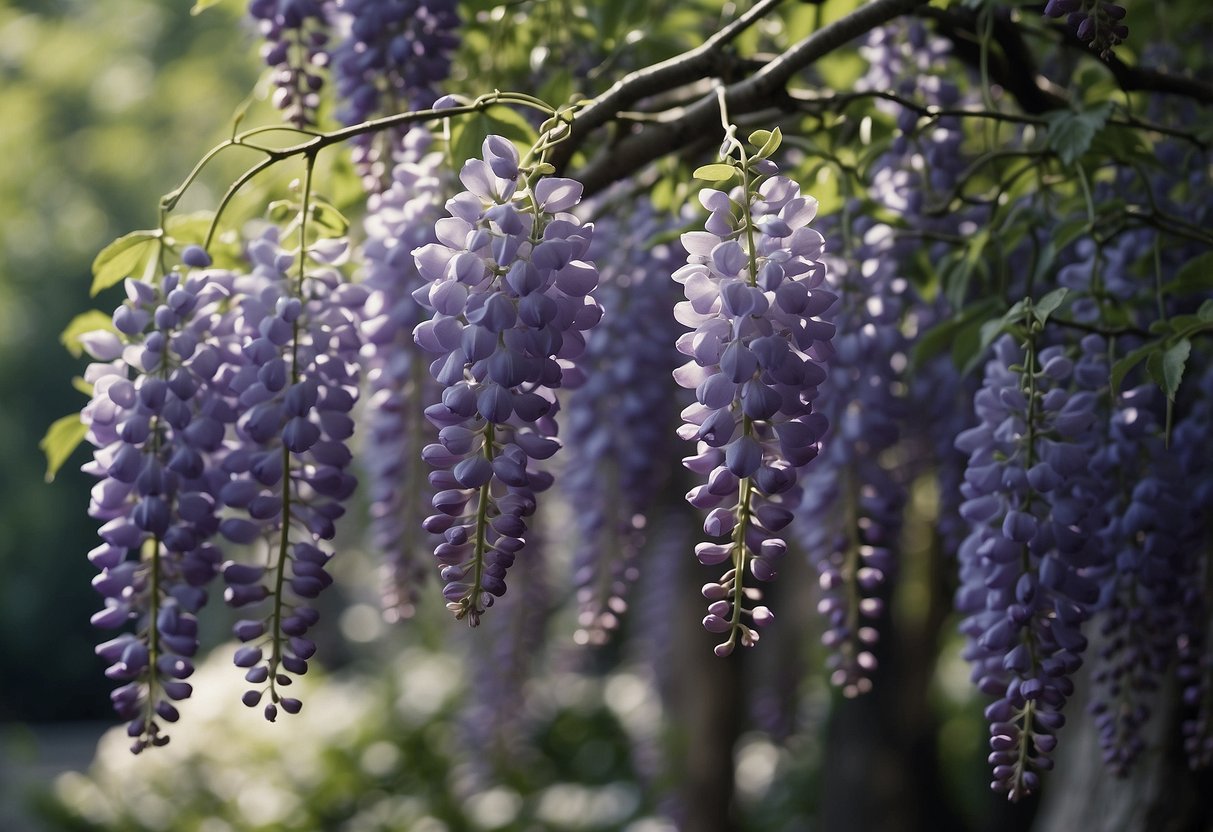
These trees are often characterized by their drooping branches and clusters of flowers that resemble those of wisteria. Some of the most popular trees that look like wisteria include the Texas Mountain Laurel, the Empress Tree, and the Catalpa Tree. These trees are all members of the Fabaceae family, which is the same family that wisteria belongs to.
If you are looking for a tree that can provide the same beauty as wisteria without the maintenance, then you may want to consider one of these wisteria look-alike trees. They can add a touch of elegance to any landscape and are sure to be a conversation starter. In the following sections, we will take a closer look at each of these trees and what makes them a great alternative to wisteria.
Characteristics of Wisteria Trees
Wisteria trees are deciduous plants that are known for their stunning, fragrant blooms that appear in the spring and early summer. These trees belong to the Fabaceae family and produce racemes of purple flowers that can also be white, pink, or purple-blue. In this section, we will explore the physical description, varieties and species, growth habits and conditions of wisteria trees.
Physical Description
Wisteria trees are small trees or vining plants that can grow up to 30 feet tall. They have woody, silver-gray stems that are sturdy enough to support the weight of their blooms. Wisteria trees are often trained to grow on pergolas, trellises, and other structures. They have a sprawling growth habit and can spread out to cover large areas.
Varieties and Species
There are several varieties and species of wisteria trees, including Chinese wisteria (Wisteria sinensis), American wisteria (Wisteria frutescens), and Japanese wisteria (Wisteria floribunda). Each of these species has its own unique characteristics, such as bloom time, color, and growth habit.
Growth Habit and Conditions
Wisteria trees are drought-tolerant and prefer full sun and well-drained soil. They can grow in a variety of soil types, but they do best in moist soil. Wisteria trees are also drought-resistant and can be grown in containers. They are hardy in USDA zones 5 through 9 and can be invasive in some areas.
In conclusion, wisteria trees are beautiful, fragrant trees that are perfect for adding color and interest to any landscape. They are easy to grow and maintain, and they can be trained to grow on a variety of structures. With the right conditions, wisteria trees can thrive and produce stunning blooms year after year.
Cultivation and Care
Planting and Pruning
The Tree Wisteria is a specimen tree that belongs to the legume family Fabaceae. It is a high-maintenance plant that requires regular pruning to control its aggressive growth. Late winter is the best time to prune the tree to encourage healthy growth and flowering. During planting, it is important to ensure that the crown of the tree is above the soil level and the roots are well spread out.
Protection and Maintenance
The Tree Wisteria is susceptible to pests and plant diseases. It is important to protect the tree from pests such as aphids, spider mites, and Japanese beetles. The tree is also prone to root rot and crown rot, which can be prevented by ensuring proper drainage and avoiding overwatering. Invasive species can also be a problem in North America, where the tree is not native.
Environmental Considerations
The Tree Wisteria requires a warm and humid environment to thrive. It is deer-resistant and can be used in landscape design to create a beautiful focal point. However, it is important to consider the aggressive growth of the tree and its potential to overtake other plants in the landscape. Overwintering can be a challenge in colder climates, but with proper care and maintenance, the tree can survive the winter.

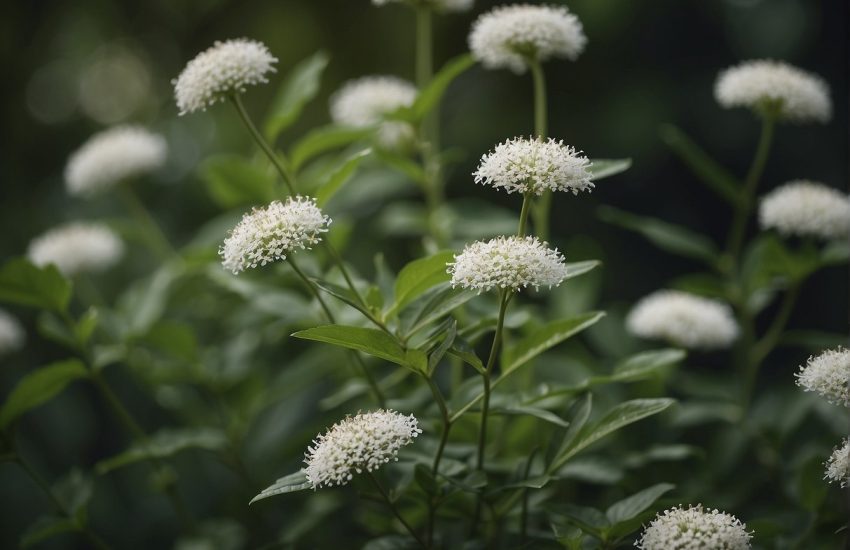
texas mountain laurel, empress tree and catalpa standing in for wisteria is a nice idea when a vine is too much.
We appreciate that, Dee! Happy gardening! 🌿 -Plant Native Team
drooping branches and flower clusters are what make these trees read as wisteria. the empress tree is one i’d never heard of.
Thank you for reading, Rita! Happy planting! -Plant Native Team