
Lambert’s Locoweed (Oxytropis lambertii)
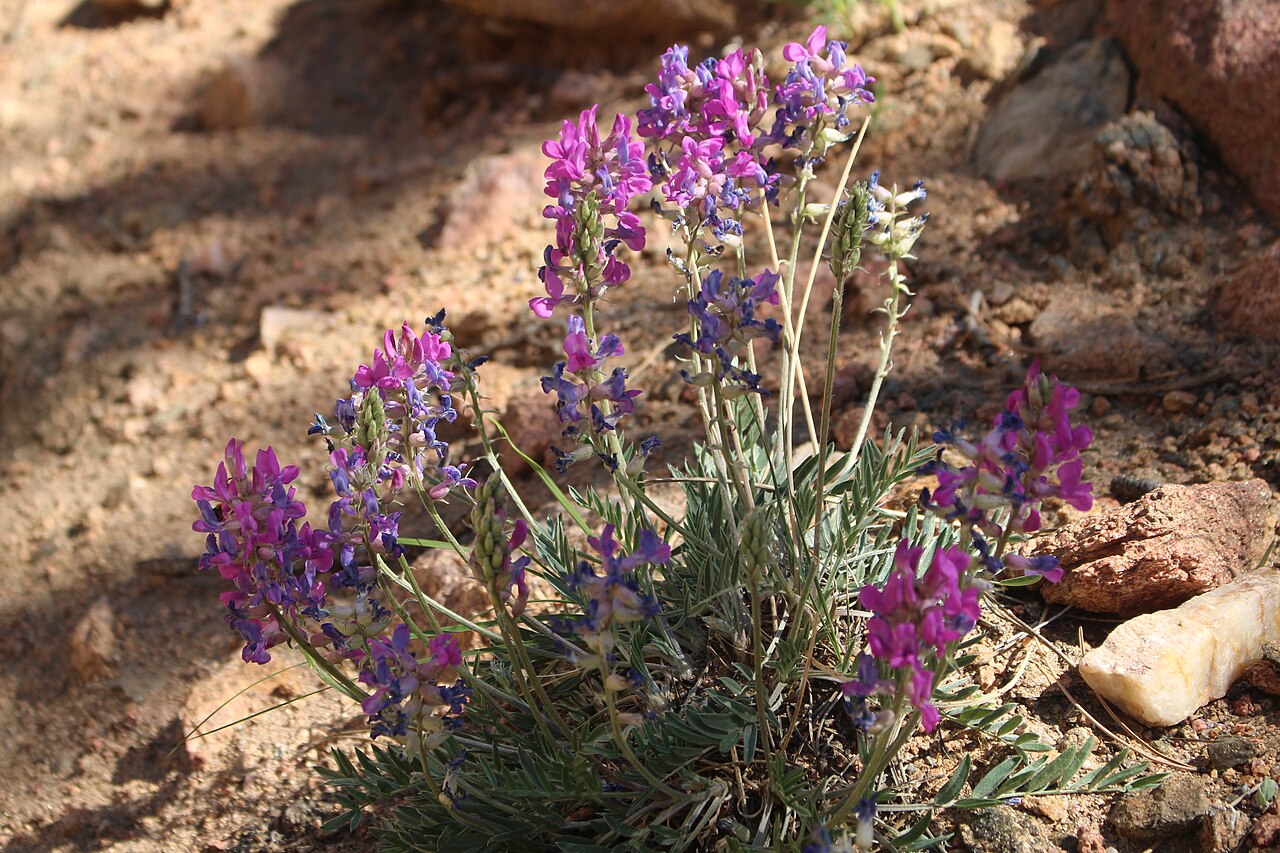
Oxytropis lambertii, known as Lambert’s Locoweed, is a low, tufted perennial in the pea family (Fabaceae) that brightens the Great Plains each spring with spikes of vivid magenta, rose-purple or violet pea flowers. It is also called purple locoweed (the USDA PLANTS common name), Colorado locoweed and Lambert’s crazyweed. It grows from a deep taproot and forms a rosette of silvery, hairy compound leaves, usually under a foot tall.
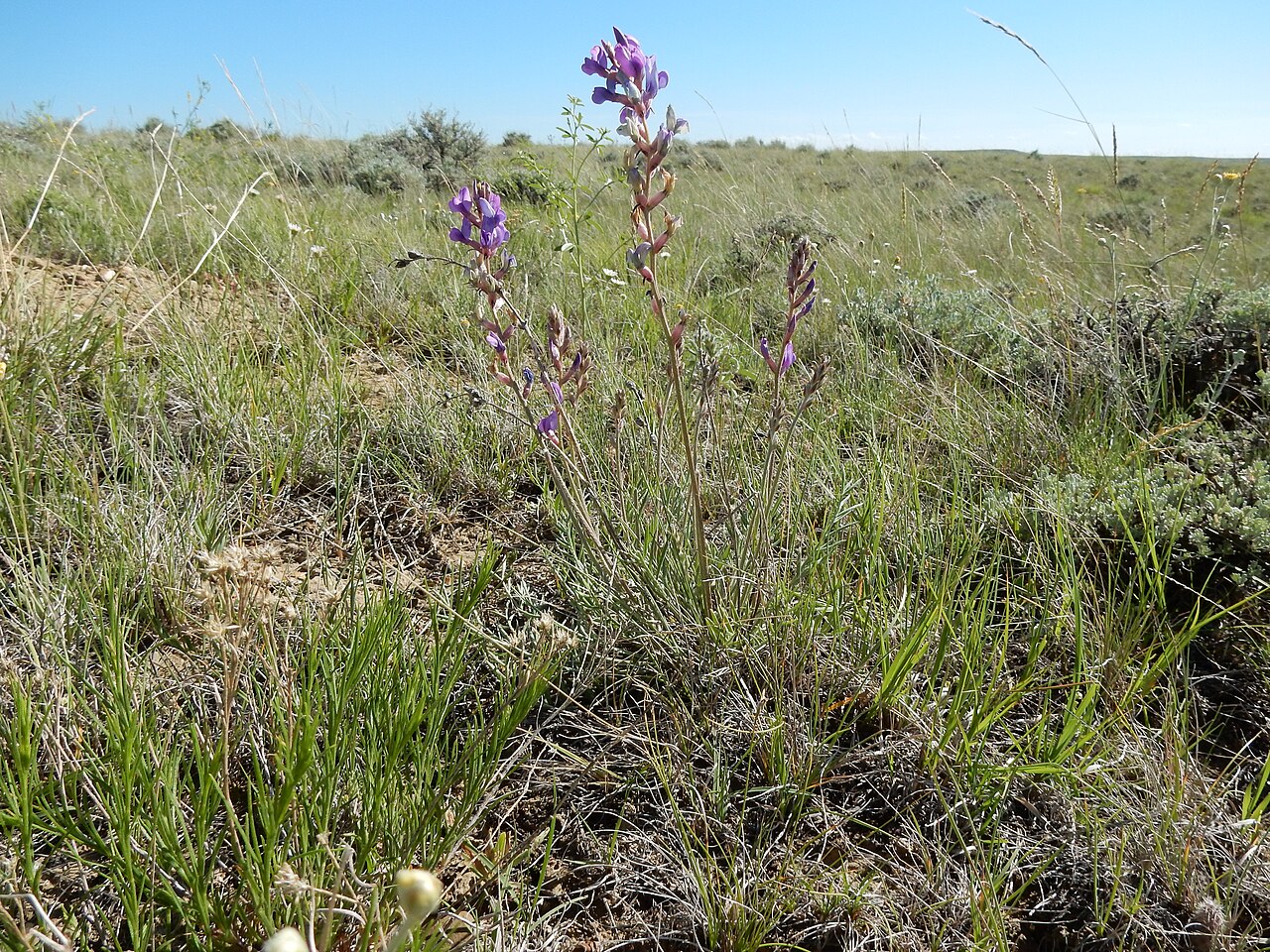
It is native to prairies, plains, foothills and open pine woodlands from the Canadian prairies south to Texas and west to Montana, Utah and Arizona. In bloom it is one of the showiest wildflowers of the shortgrass and mixed-grass prairie, and it is visited by native bumble bees and other long-tongued bees.
Safety note: Lambert’s locoweed is one of the locoweeds most often blamed for livestock poisoning. Horses, cattle and sheep that graze it for weeks can develop “locoism,” a nervous-system disorder caused by the toxin swainsonine, and some animals seek it out once they have eaten it. Do not plant it in or near pastures, horse paddocks or hay fields, and keep children and pets from eating any part of the plant. In a wildflower or rock garden away from grazing animals it is a beautiful, very drought-tolerant native.
Identification
Look for a low clump of silvery, hairy, feather-like leaves at ground level and leafless flower stalks carrying short spikes of bright purple-pink pea flowers in spring.
Growth Habit
Plants are stemless or nearly so, with all leaves coming from a woody root crown on a stout taproot. Clumps are usually 4 to 12 inches across, and the flower stalks rise to about 4 to 16 inches. Old clumps can be quite dense.
Leaves
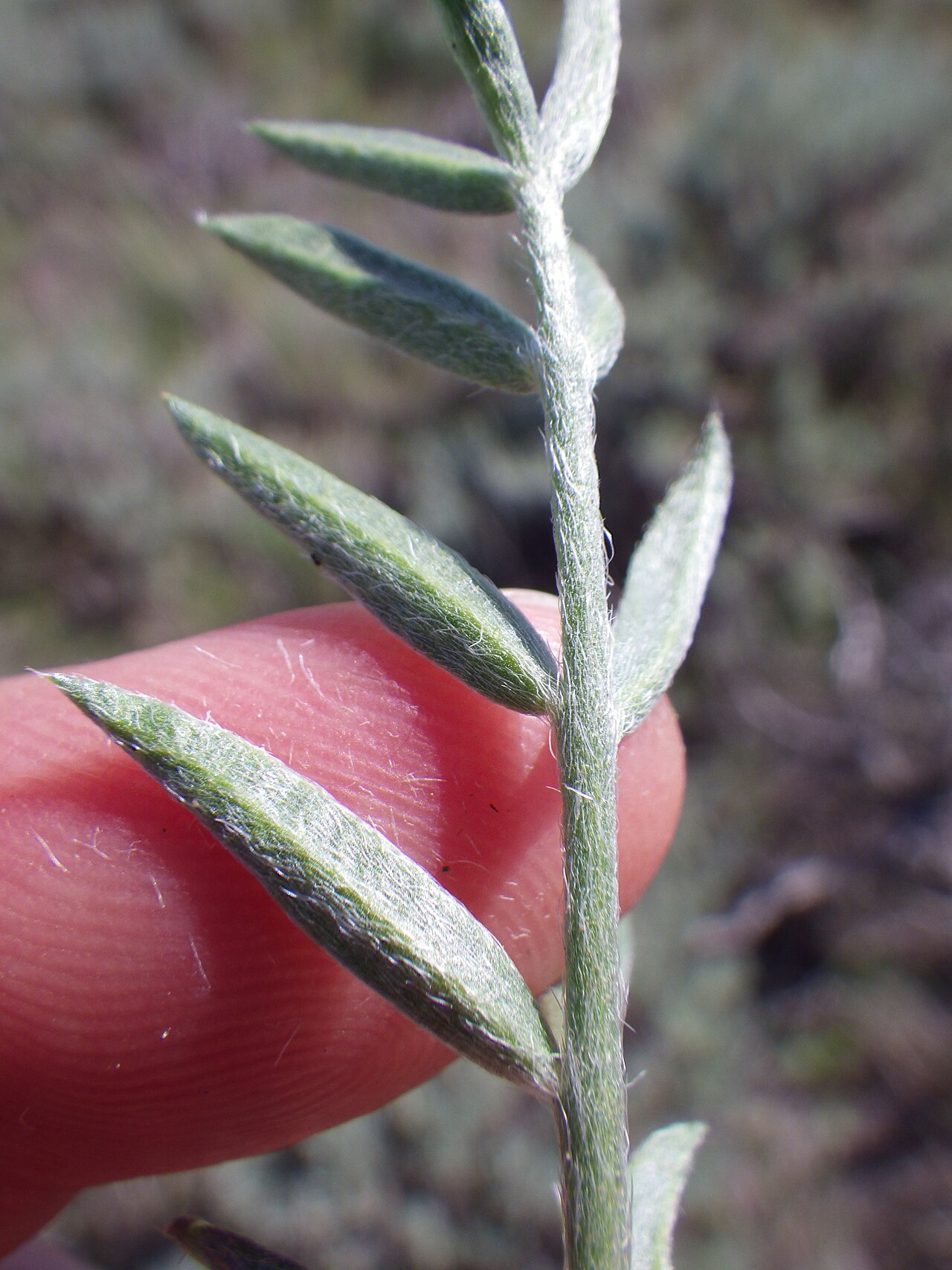
The leaves are pinnately compound, 2 to 10 inches long, with about 7 to 19 narrow, lance-shaped to linear leaflets. The whole leaf is gray-green to silvery because it is covered with flat-lying hairs. Under a hand lens, many of these hairs are attached at their middle, like a tiny two-armed T or teeter-totter (botanists call them medifixed or dolabriform hairs). This is the most reliable way to tell it from other American Oxytropis.
Flowers
Each leafless stalk carries a dense to loose spike (raceme) of 10 to 30 or more pea flowers, each about 3/4 to 1 inch long. The color is usually bright magenta to reddish-purple, but varies to violet, pink or rarely white. As in all Oxytropis, the keel petal ends in a short, sharp point or beak. The calyx is hairy and often purplish. Flowering is mostly from late spring to early summer, with occasional later flowers.
Fruit
The fruit is an erect, cylindrical, hairy pod about 1/2 to 1 inch long with a pointed tip. It splits along the top to release small, kidney-shaped seeds in summer.
Look-alikes
Milkvetches (Astragalus), such as scarlet locoweed (Astragalus coccineus), have a blunt keel without a sharp beak. Silky crazyweed (Oxytropis sericea) usually has white to cream flowers and hairs attached at the base, though the two species can hybridize where they meet. Field oxytrope (Oxytropis campestris) is a more northern and mountain species with pale yellowish to purplish flowers.
Quick Facts
| Scientific Name | Oxytropis lambertii |
| Family | Fabaceae (pea or legume family) |
| Plant Type | Herbaceous perennial wildflower (taprooted) |
| Mature Height | 4–16 in |
| Mature Spread | 4–12 in |
| Growth Rate | Slow |
| Sun Exposure | Full sun |
| Water Needs | Low; very drought tolerant |
| Soil Type | Dry, well-drained sandy, gravelly or rocky soil |
| Soil pH | Neutral to alkaline (about 6.5–8.5) |
| Bloom Time | Late spring to early summer (May–July) |
| Flower Color | Magenta, rose-purple or violet; rarely white |
| Fall Color | None; leaves fade in late summer |
| Fruit | Erect, hairy, beaked pods |
| Deer Resistant | Not reliably; toxic if grazed |
| USDA Hardiness Zones | 3–8 |
Native Range
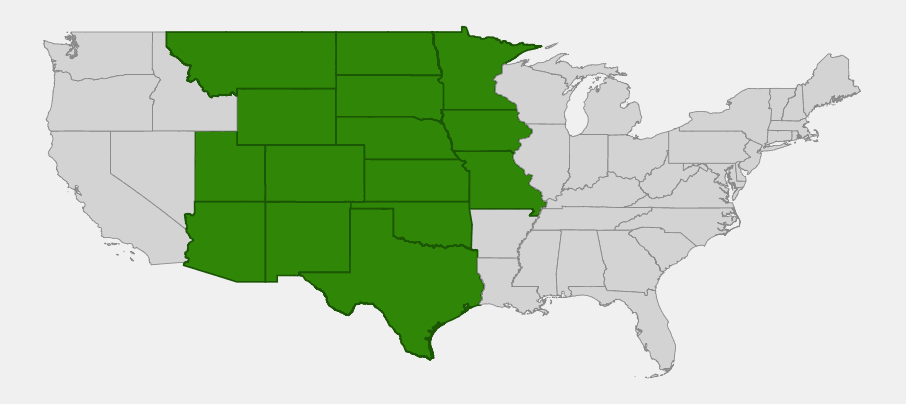
Lambert’s locoweed is a plant of the North American interior. USDA PLANTS lists it as native in 15 states: Arizona, Colorado, Iowa, Kansas, Minnesota, Missouri, Montana, Nebraska, New Mexico, North Dakota, Oklahoma, South Dakota, Texas, Utah and Wyoming. In Canada it grows in Manitoba, Saskatchewan and British Columbia.
It is most common on the shortgrass and mixed-grass prairies of the Great Plains, from the Dakotas and eastern Montana south through Nebraska, Kansas and eastern Colorado to western Oklahoma and the Texas Panhandle. It reaches its eastern edge in western Minnesota, Iowa and Missouri, where it is uncommon. To the west it climbs into the foothills and open ponderosa pine woodlands of the Rocky Mountains and continues through the mountains of New Mexico, Utah and northern Arizona.
It grows in dry, open, sunny places: upland prairie, rocky hillsides and ridges, sandy or gravelly plains, sagebrush steppe, pinyon-juniper and ponderosa pine openings, and road banks. It is often more common on overgrazed or disturbed range, because livestock tend to eat the grasses around it first.
📋 Regional plant lists featuring Lambert’s Locoweed: Montana & Wyoming · Michigan, Wisconsin & Eastern Minnesota · Nebraska, Kansas & Eastern Colorado · Utah & Western Colorado · Arizona & New Mexico · Illinois, Iowa & Missouri · North Dakota, South Dakota & Western Minnesota
Growing & Care Guide
Lambert’s locoweed suits dry, sunny wildflower plantings, rock gardens and prairie restorations in the Great Plains and Interior West, as long as no horses or livestock can reach it. It is rarely sold, so most gardeners grow it from purchased native seed.
Light
Full sun. It does not tolerate shade or competition from tall, dense plants.
Soil & Water
Plant in lean, very well-drained sandy, gravelly or rocky soil; it tolerates alkaline and calcareous soils. Once established, the deep taproot carries it through drought, and it usually needs no watering in its native range. Rich soil, heavy clay that stays wet and summer irrigation lead to crown rot.
Planting Tips
Sow seed where you want plants to grow, because the long taproot makes transplanting difficult. Use young container plants if you can find them and plant them in spring. Give each plant open, sunny space among short grasses such as blue grama or buffalograss, and never plant it in or next to pasture, hay ground or horse paddocks.
Pruning & Maintenance
Little care is needed. Remove spent flower stalks if you want to limit self-seeding near grazing land, or leave them for the seeds to ripen. Keep taller weeds from shading young plants.
Propagation
Grow it from seed. The hard seed coat should be scarified (nicked or rubbed with sandpaper) or soaked in hot water before sowing; fall sowing outdoors also works. Like other legumes it forms root nodules with nitrogen-fixing bacteria. Seedlings take a year or more to reach flowering size.
Landscape Uses
- Rock gardens: a low, silvery clump with vivid spring color for sunny, gravelly sites
- Prairie and xeric plantings: early-season color among short grasses in dry meadows
- Pollinator gardens: spring nectar and pollen for native bumble bees and other bees
- Restoration: a native legume for upland prairie and foothill restoration away from grazing land
- Not for pastures: avoid planting anywhere horses, cattle or sheep graze
Wildlife & Ecological Value
Lambert’s locoweed is a characteristic spring wildflower of western prairies and foothills, with both benefits and risks for wildlife and livestock.
For Pollinators
The flowers are pollinated mainly by bumble bees and other large, strong bees that can push open the keel. Smaller native bees and butterflies also visit the flowers in spring.
For Birds
The seeds are small and eaten only occasionally by ground-feeding birds. Prairie birds use the open grasslands where it grows.
For Mammals
Livestock that eat locoweed for a long period can be poisoned, and wild herbivores such as deer and elk can also be affected. Rodents sometimes eat the roots and seeds. It is not a plant to encourage for grazing animals.
Ecosystem Role
Like most legumes, it hosts nitrogen-fixing bacteria in root nodules, adding nitrogen to poor, dry soils. Its leaves, flowers and seeds feed a range of insects, including weevils and caterpillars that specialize on legumes.
Cultural & Historical Uses
The species is named for the English botanist Aylmer Bourke Lambert, a patron of early botanical exploration. Frederick Pursh described it in 1814 in his Flora Americae Septentrionalis. The genus name Oxytropis comes from Greek words meaning “sharp keel,” for the pointed tip on the keel petal.
The word “loco” is Spanish for “crazy.” Ranchers on the Great Plains coined “locoweed” for plants that made horses and cattle behave erratically. Research has shown that the toxin, swainsonine, is produced by an endophytic fungus (Alternaria section Undifilum, formerly called Embellisia) that lives inside the plant, which explains why toxicity varies from plant to plant and year to year.
Range managers still treat Lambert’s locoweed as a serious poisonous plant on western rangeland, especially in years when it is abundant. Grazing advice usually focuses on keeping animals away from dense stands in spring and providing enough good forage that they don’t turn to it.
Frequently Asked Questions
Is Lambert’s locoweed poisonous?
Yes, to livestock and other grazing animals. It contains swainsonine, which causes locoism in horses, cattle and sheep that eat it over time. No part of the plant should be eaten by people or pets.
Can I grow Lambert’s locoweed in my garden?
Yes, if you have a dry, sunny, well-drained spot and no horses or livestock nearby. Grow it from native seed and do not plant it in or near pastures.
When does Lambert’s locoweed bloom?
Mostly from May to July, depending on elevation and latitude, with occasional later flowers.
How do I tell Lambert’s locoweed from a milkvetch?
Look at the keel, the lowest petal. In locoweeds (Oxytropis) it ends in a sharp point; in milkvetches (Astragalus) it is rounded. Lambert’s locoweed also has leafless flower stalks and hairs attached at their middle.
Is Lambert’s locoweed native to Texas?
Yes. USDA PLANTS lists it as native in Texas, where it grows mainly in the Panhandle and adjacent plains.

Looking for a nursery that carries Lambert’s Locoweed?
Browse our native plant nursery directory: Arizona · Colorado · Iowa & Kansas · Minnesota, Missouri & Montana · Nebraska, New Mexico, North Dakota & Oklahoma · South Dakota, Texas & Utah · Wyoming