Field Oxytrope (Oxytropis campestris)
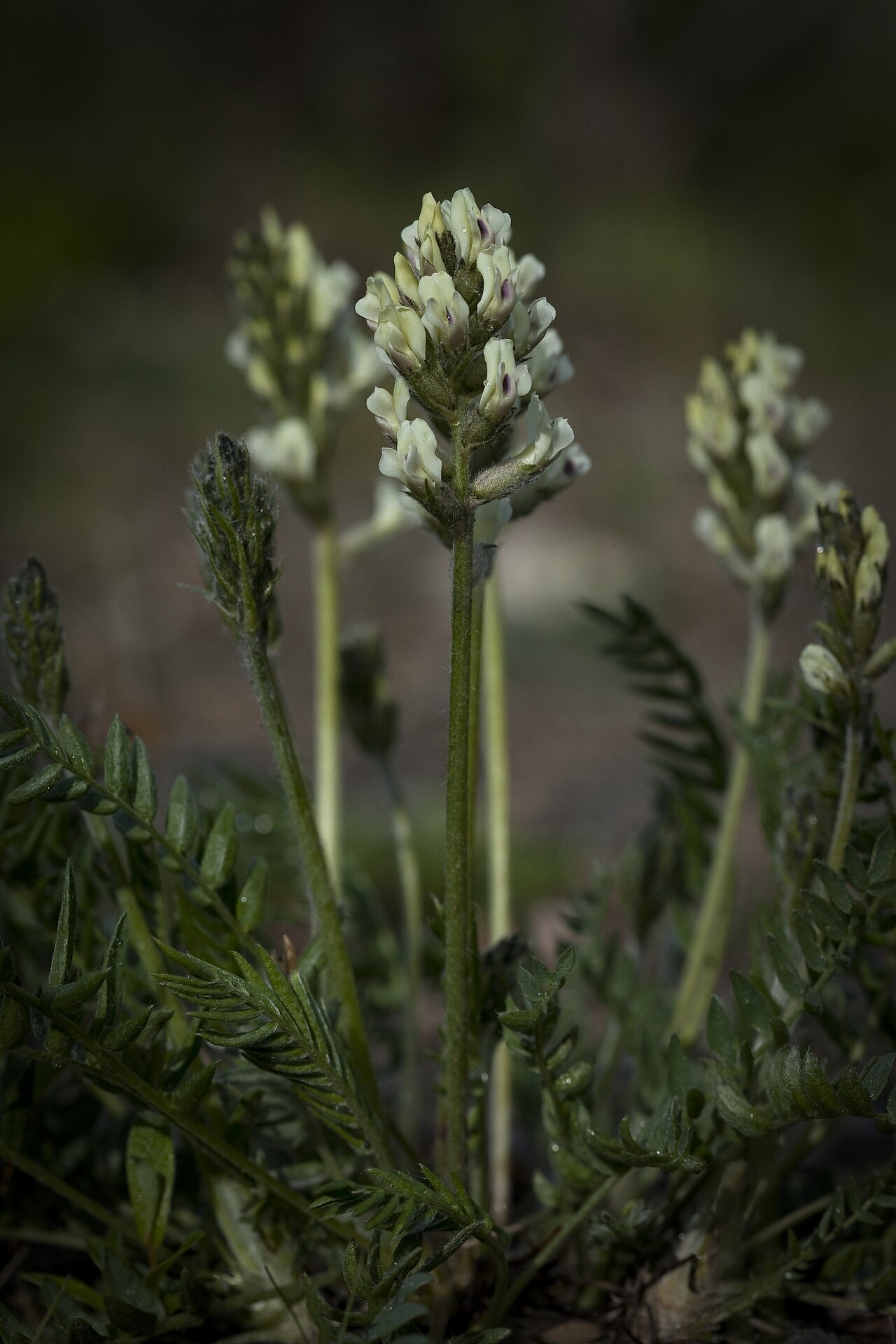
Field Oxytrope (Oxytropis campestris), also called field locoweed, is a low perennial legume with divided foliage and upright clusters of pale pea-shaped flowers. In Alaska it is associated with open, gravelly or rocky settings rather than lush wet borders. The contrast between its modest leafy base and its flower stalks makes it an interesting plant for a carefully chosen native rock or gravel garden.
The Alaska table lists full sun, dry soil and a typical height of 4–12 inches. Treat those as the starting point for a regional garden, not a description of every variety across the species’ broad range. Field oxytrope is a variable complex; keeping the source of nursery stock or seed is particularly important when using it in a native landscape.
Do not use field oxytrope as food or livestock forage. Alaska’s Plant Materials Center warns about locoweed toxicity associated with swainsonine. Its status as a native legume does not make it equivalent to an edible pea or a pasture clover. Keep it out of grazing areas and do not recommend it as a livestock-friendly ground cover.
Identification
Growth Form & Leaves
Field oxytrope grows from a persistent root system, with much of its foliage near the base. Each compound leaf carries numerous narrow leaflets along a central axis. The divided texture is quite different from a simple oval leaf, and fine hairs can give the plant a soft or gray-green appearance. Do not assume a fuzzy leaf is safe to touch, taste or offer to an animal.
Photograph the whole plant when seeking an identification. Leaflet shape, hairiness, flower structure and mature pods can all matter, while a close-up of a single cream-colored flower often omits important clues. A plant in a cool alpine setting may be more compact than a related population growing in a different open habitat.
Flowers
The flowers have the familiar pea-family arrangement, with a banner, wings and keel, but they are not edible peas. Flower clusters rise above the foliage. Pale yellow to creamy flowers are common in the Alaska material discussed here, and darker markings may be visible near the tips. Color and height alone do not separate every oxytrope.
Other Oxytropis species occur in Alaska. In particular, the separate yellow-oxytrope entry for O. maydelliana should not be linked to this page solely because both can have yellowish flowers. Common names such as “yellow oxytrope” and “locoweed” are shared or used inconsistently, so the scientific identity remains essential.
Pods & Seasonal Appearance
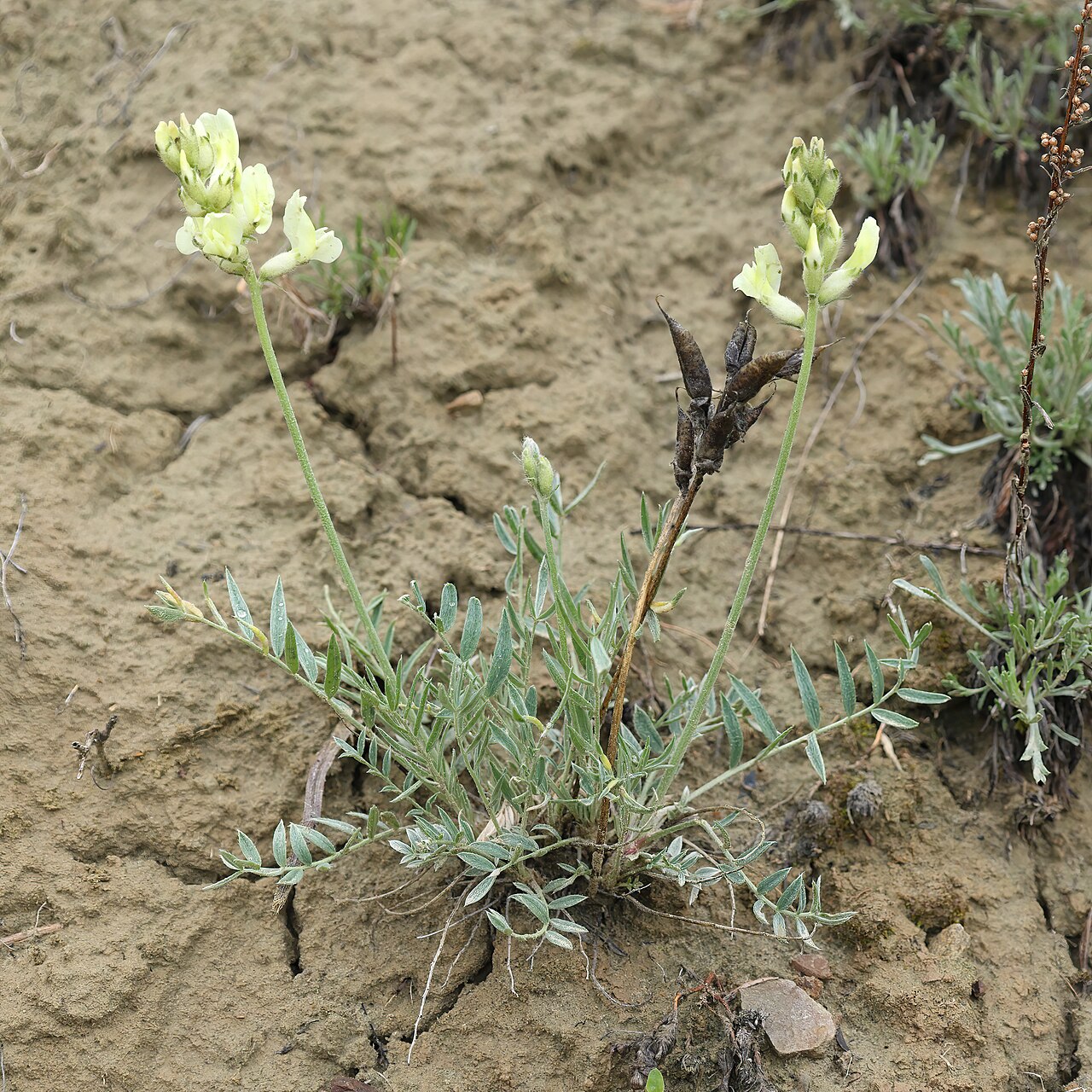
After flowering, seed pods add another useful identification feature. The Alaska Plant Materials Center describes hairy pods and uneven ripening in its selected material. Some pods may be mature while others on the same planting are still developing; a single collection date will not necessarily represent the entire crop.
Old stalks and pods can remain visible after the flower display has passed. A dry-looking flower stem is therefore not proof that the perennial root has died. Keep a label beside a garden plant and distinguish normal seasonal change from persistent decline of the crown.
A Complex Species
Kew recognizes numerous varieties and subspecies within Oxytropis campestris. This guide treats the species broadly while using the Alaska regional table for garden expectations. It does not assign a particular variety from a photograph or merge every northern oxytrope into one taxon.
For restoration or a conservation planting, use a botanically verified seed source appropriate to the project. A nursery’s species-level label may be enough for a small ornamental trial, but it is not automatically adequate documentation for seed transfer into a wild population.
Quick Facts
| Scientific Name | Oxytropis campestris (L.) DC. |
| Family | Fabaceae (pea family) |
| Plant Type | Low, taprooted herbaceous perennial |
| Mature Height | Typically 4–12 inches in the Alaska planting table |
| Sun Exposure | Full sun (F) |
| Water Needs | Dry-site plant (D); water during establishment as needed |
| Soil Type | Well-drained, gravelly, rocky or sandy soil |
| Bloom Time | Summer; July reported for Black Rapids germplasm |
| Flower Color | Usually cream to pale yellow in illustrated material |
| Foliage | Compound leaves with numerous narrow, often hairy leaflets |
| Native Range | Alaska and parts of northern and western North America; also Eurasia |
| Safety | Locoweed toxicity concern; not edible and not livestock forage |
Native Range
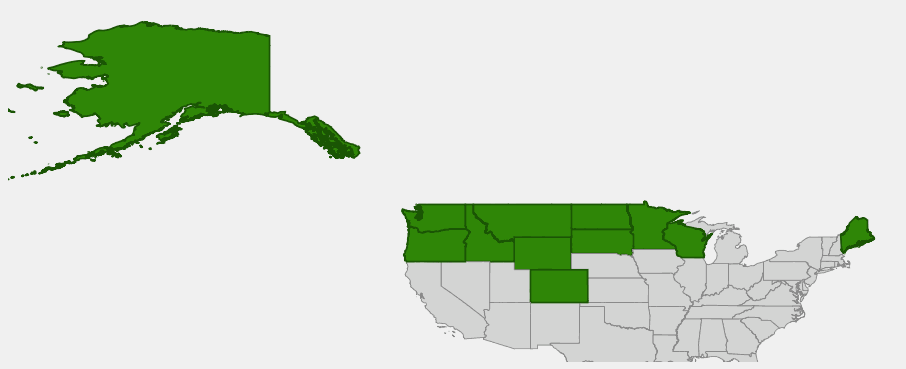
The native range extends well beyond Alaska. Kew records the species across subarctic North America and parts of the northern and western United States, with additional Eurasian populations. The map includes Alaska visibly, rather than silently cropping it out, and highlights the United States states in the Kew species-level distribution.
Within Alaska, dry gravel bars, sandy ground and rocky alpine settings are useful habitat clues. These are not interchangeable with standing-water wetlands. A statewide native label does not mean a plant belongs in every Alaska garden, and the full species range does not mean every variety or seed source is appropriate in every highlighted state.
State boundaries make a convenient overview, but the actual distribution is patchy and tied to habitat. Consult local botanical records and project guidance for natural-area planting. The map also omits Canadian and Eurasian portions of the range, which are part of the species’ broader story.
📋 Regional plant lists featuring Field Oxytropes: Alaska
Growing & Care Guide
Match the Dry, Open Site
Use the Alaska table’s full-sun recommendation when choosing a position. A low plant can quickly be shaded by surrounding grass or taller perennials, even when the bed itself looks sunny. Keep the crown in an open area and watch how neighboring growth changes the light through summer.
Dry-site suitability is not a reason to neglect a newly planted root ball. A container-grown plant begins with a limited root volume and may dry before it reaches surrounding soil. Water for establishment according to the actual soil condition, then avoid turning a well-drained planting into a permanently wet border.
Drainage Before Amendments
The most important initial question is where water goes. A gravel surface above compacted soil can still trap water around roots. Check the soil profile and runoff pattern rather than assuming a decorative layer of stones makes a site suitable. If drainage is poor, use a genuinely better-drained location instead of repeatedly replacing failed plants.
Do not bury the crown in deep organic mulch. Keep the immediate area open enough to inspect, weed and observe new shoots. In a rock garden, stones can provide visual context, but avoid placing a heavy rock directly on the root crown or repeatedly disturbing the soil after planting.
No narrow pH range is asserted here. Use a soil test and local advice before adding lime or acidifying products. Similarly, nitrogen fixation by a legume is not a recommendation to fertilize indiscriminately, nor proof that a single plant will supply all the fertility needs of neighboring vegetation.
Choose Propagated Stock
Obtain nursery-propagated plants or properly documented seed. Field oxytrope’s persistent root makes digging wild specimens a poor shortcut, and a transplanted wild plant may be damaged even if it initially looks intact. Avoid collecting in protected habitats or assuming that a common-looking population can tolerate repeated removal.
Keep labels with both the scientific name and source. If buying material named Black Rapids Germplasm, retain that identity: it is selected natural Alaska material released by the Plant Materials Center, not a generic synonym for every field oxytrope. A named release can be useful when it matches the purpose and seed-transfer guidance of a project.
Planting & Early Care
Handle a nursery plant gently and keep its root ball intact as far as practical. Plant at its previous depth, settle soil around it and water to make good contact. Do not compensate for a small plant by burying it deeply. Mark the position so it is not lost among stones or mistaken for an empty space after flowering.
During establishment, remove nearby weeds before they dominate the light and root space. Work shallowly around the crown rather than repeatedly cultivating through the rooting zone. Check for persistent wetness after rain as well as drying during clear weather; both can explain a struggling plant better than a vague assumption that all natives are maintenance-free.
Seed & Germination
Ask the seed supplier for instructions tied to the actual lot and its provenance. Legume seeds may have physical dormancy, but the correct treatment and its intensity should come from a tested protocol rather than a guess. Avoid applying harsh treatments simply because they are recommended for a different pea-family species.
For a small trial, keep untreated and supplier-recommended treatment groups labeled separately if the protocol calls for comparison. Record sowing date, conditions and emergence. Do not call a delayed pot dead after an arbitrary short interval or mix it into an unlabeled seed tray.
Store all seed clearly labeled and away from edible seed or feed. The word “legume” is a botanical classification, not a food-safety claim. If working on a revegetation contract, follow the project’s seed testing, provenance and establishment requirements rather than improvising from a home-garden article.
Maintenance Through the Season
Keep competing vegetation from covering the low foliage, but do not mow the planting as if it were turf. Flowering stalks and developing pods are part of the plant’s seasonal cycle. If unwanted self-sowing is a concern, manage pods before seed dispersal; if collecting permitted garden seed, monitor ripening rather than assuming all pods mature together.
A small dryland planting does not need routine pesticide applications. Inspect actual symptoms and distinguish chewing damage from wind injury, drought stress or root problems. Photograph persistent issues and seek local extension advice where necessary. Apply any treatment only after identifying the cause and confirming that the product is appropriate.
In winter, protect the planting from being used as a dumping area for salty road snow or heavy debris. A northern origin does not imply tolerance of all urban winter conditions. If plants fail repeatedly, revisit site drainage and stock origin before concluding that the species cannot grow locally.
Livestock & Household Placement
Do not plant field oxytrope in paddocks, forage strips or areas routinely grazed by horses, cattle or other livestock. The Alaska source explicitly flags locoweed toxicity. Native revegetation value and forage value are different questions and should not be conflated.
In a household garden, keep it clearly separate from edible peas and beans. Avoid loose seed or roots where children or pets might investigate them. This guide does not offer a safe dose, processing method or medicinal use; the practical choice is not to ingest it.
Landscape Role
Use field oxytrope as an accent in a small dry, sunny planting where its divided leaves and pale flower spikes remain visible. Select companions that will not quickly form a dense canopy over it. A vigorous, rich-soil meadow mix may be less suitable than a restrained grouping adapted to the same open substrate.
For erosion control or disturbed land, consult professional revegetation guidance. A species used in a documented release program is not automatically the right choice for every slope, and a few garden plants do not substitute for an engineered erosion-control plan. Match both ecological conditions and management goals.
Wildlife & Ecological Value
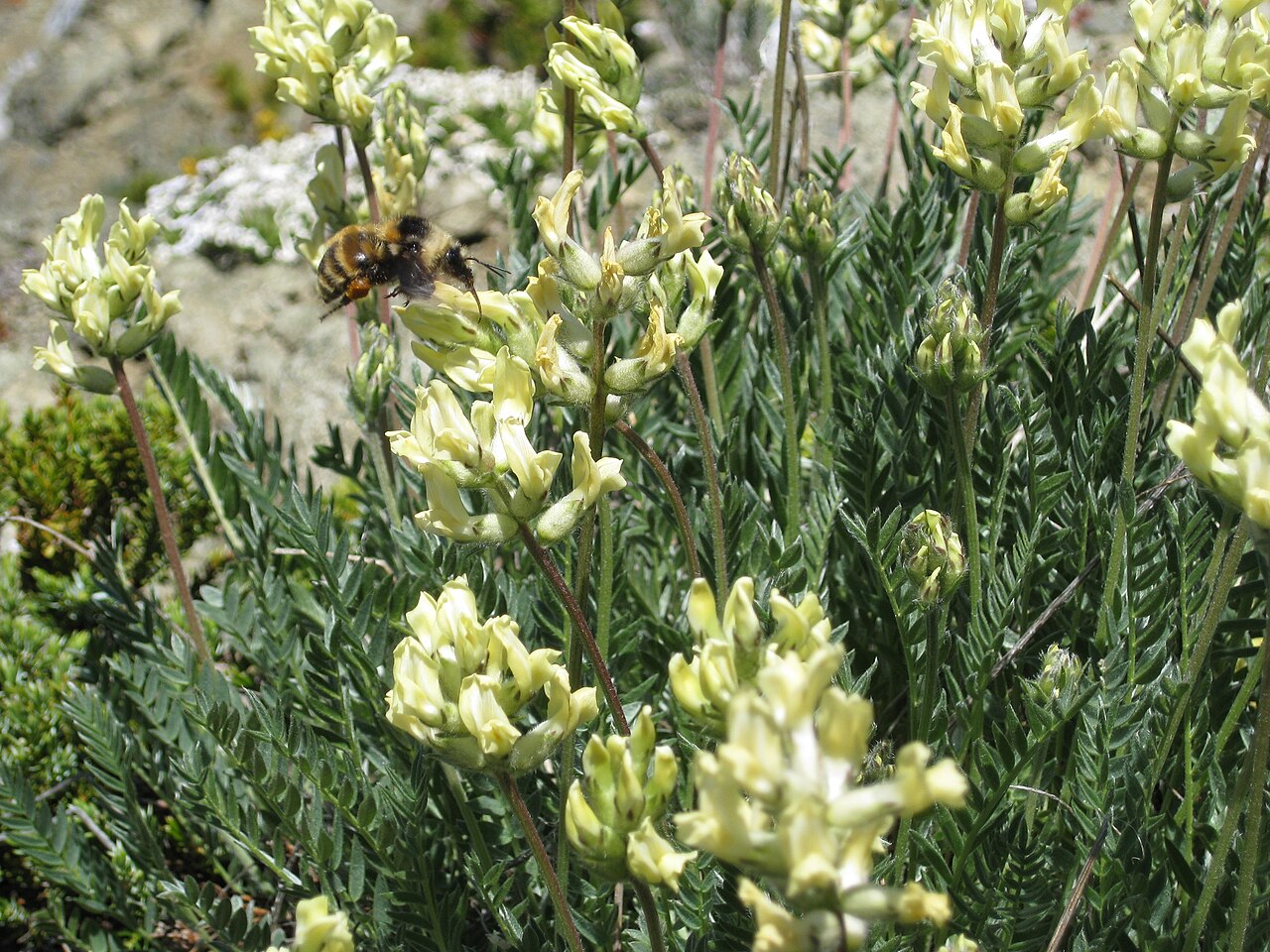
The photograph from Marmot Pass shows a bumblebee visiting field oxytrope flowers. That is direct evidence of a flower visit, not proof that every bumblebee species uses it or that butterfly larvae feed on it. The pea-shaped flowers offer a useful opportunity to observe how insects handle different flower structures.
As a native legume, field oxytrope can participate in nitrogen-fixing associations, a feature noted by Alaska’s Plant Materials Center in its revegetation material. The ecological effect depends on the site and biological partners. Do not market it as a guaranteed fertilizer replacement or a universal soil improver.
Its low form and persistence contribute to the variety of open-ground vegetation. In a garden, combine it with other appropriate native plants rather than expecting it to support every wildlife need alone. Toxicity to grazing animals remains relevant even when a plant has legitimate ecological value.
Cultural & Historical Uses
“Oxytrope” refers to a botanical group whose members are often called locoweeds. The common name can cover several species, so it is a poor substitute for a scientific identification. Field oxytrope in this guide is specifically Oxytropis campestris, not every yellow-flowered plant bearing the same informal name.
Alaska’s Black Rapids Germplasm release gives the species a documented role in native revegetation work. The Plant Materials Center selected natural material rather than presenting it as an edible crop. Preserving that distinction helps gardeners understand why a plant can be useful in one landscape context and inappropriate in another.
This page does not attribute traditional remedies or food uses without a specific, reliable source. Historical references to other legumes should not be imported into an account of this species. Its garden interest lies in native identity, floral form and adaptation to open ground, not home preparation of roots or seed.
Frequently Asked Questions
Is field oxytrope a pea I can eat?
No. It belongs to the pea family but has a documented locoweed toxicity concern. Do not eat it or use it as feed.
Does the D code mean drought tolerance?
Here D is the Alaska table’s dry-soil moisture category. It is not the E/G/M/P drought-rating scale used elsewhere.
Is it the same as yellow oxytrope?
Not necessarily. The Alaska list has a separate entry for Oxytropis maydelliana. Shared flower color is not a sufficient identification.
Will it grow in wet clay?
That is not the site recommended here. Choose open, well-drained ground and assess the actual root-zone drainage.
Can I transplant a wild plant?
Choose propagated stock instead. Digging can damage the persistent root and the surrounding habitat.
What is Black Rapids Germplasm?
A selected natural Alaska release documented by the Plant Materials Center. Keep its provenance information and use it where appropriate to the project.

Looking for a nursery that carries Field Oxytrope?
Browse our native plant nursery directory: Alaska
Sources & Further Reading
- Kew: Oxytropis campestris — taxonomy and distribution.
- Alaska Plant Materials Center: Black Rapids Germplasm — habitat, seed and toxicity context.
- Alaska native revegetation guidance — release context.
- University of Washington Burke Herbarium — species photographs and regional distribution.
- USDA PLANTS: OXCA4 — species record.