Kou (Cordia subcordata)
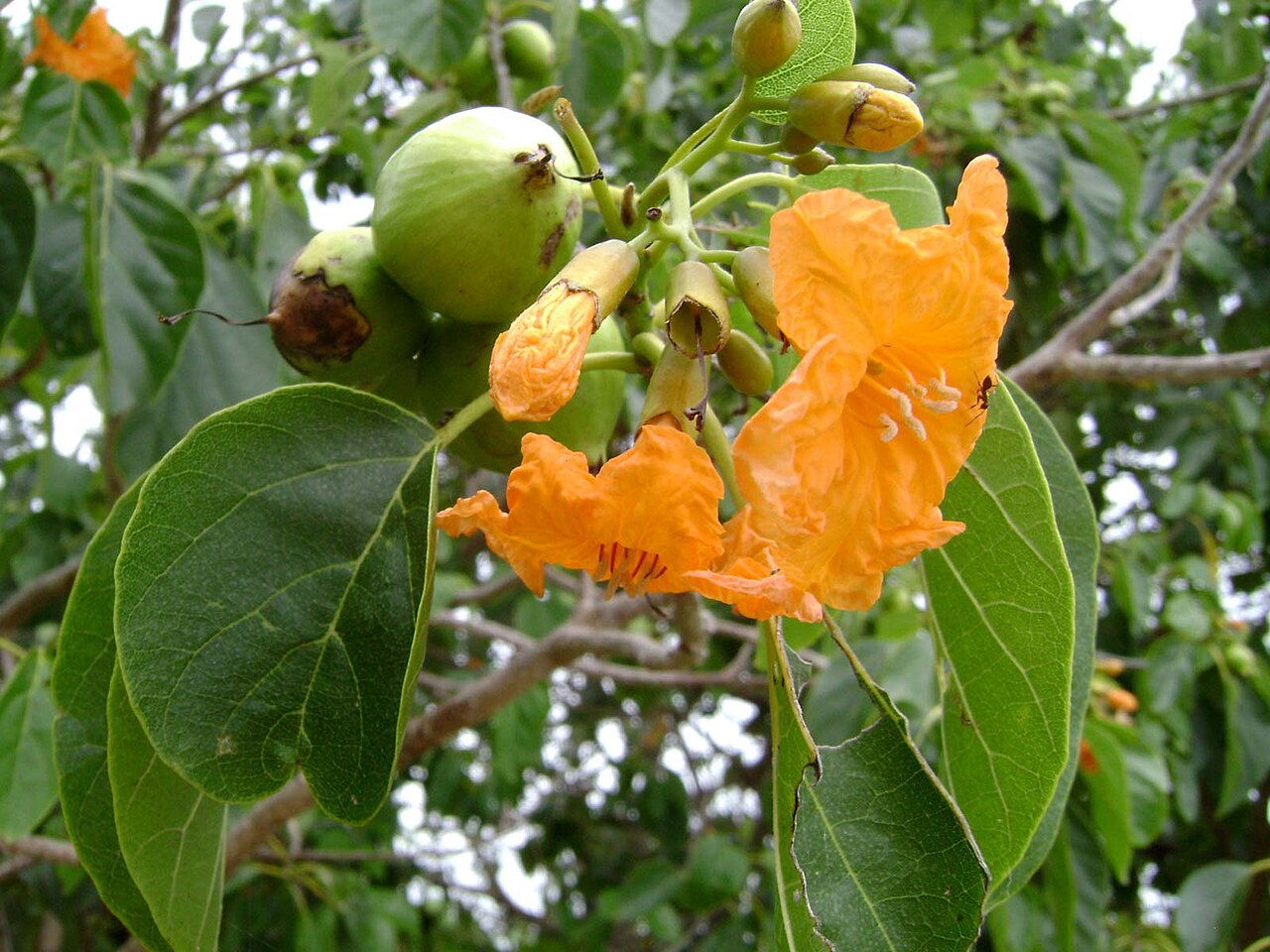
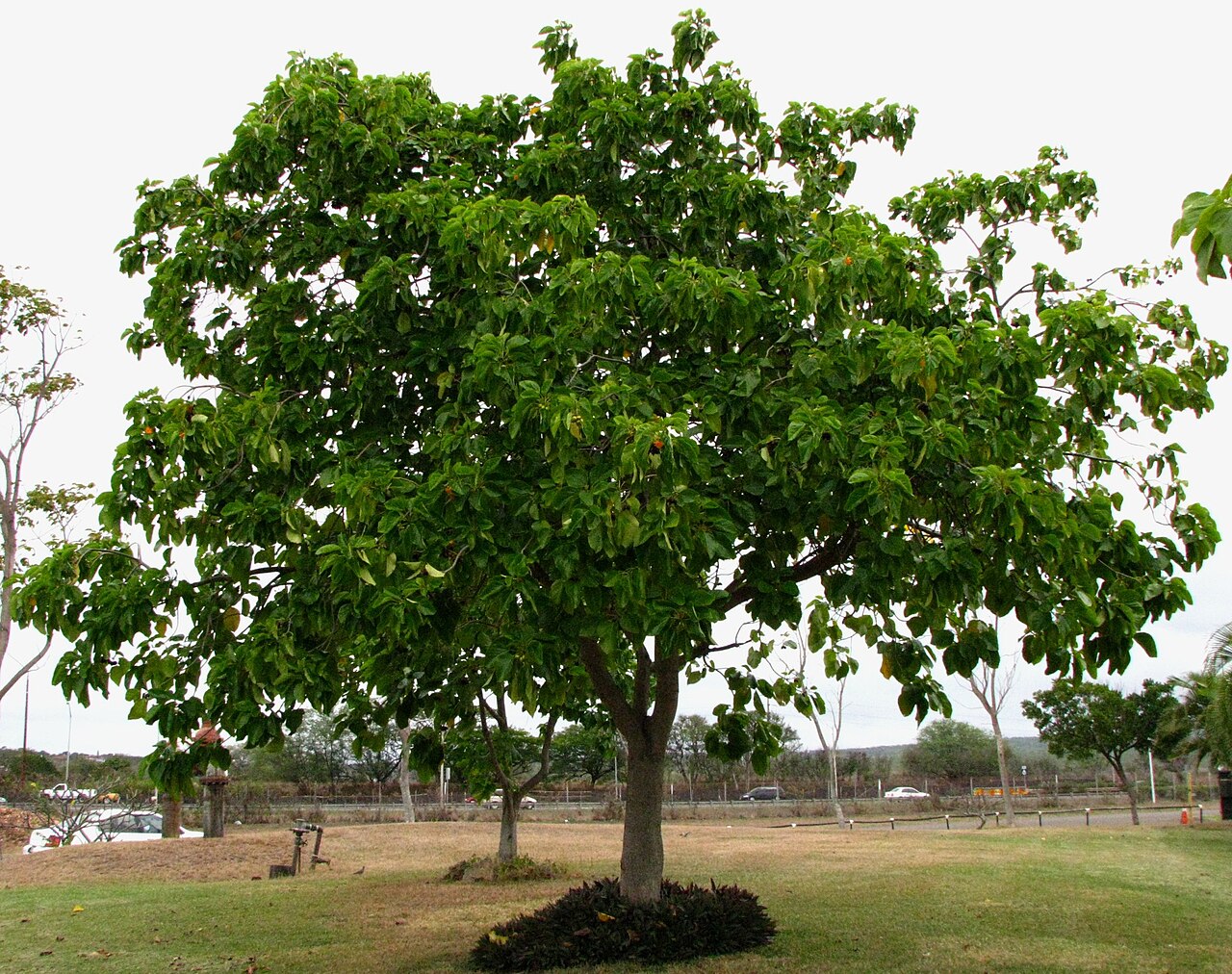
Kou (Cordia subcordata) is a broad-crowned coastal tree with smooth green leaves and warm orange flowers. It is valued both for shade and for a long history of Hawaiian woodworking. In a roomy, sunny landscape, its rounded canopy can create a generous place to sit or gather, provided the planting leaves enough space for roots, branches, and the cleanup of fallen fruit.
Kou is indigenous to Hawaiʻi, even though older accounts often treated it only as a Polynesian introduction. Fossil evidence from Māhāʻulepū on Kauaʻi predates human arrival and supports native status there. Human transport and cultivation also form part of its Hawaiian history. Those two facts can coexist: a species may arrive naturally and later be moved or planted by people.
This is not kou haole, the commonly planted Geiger tree, Cordia sebestena. The similar names and orange flowers can cause confusion at a nursery. Ask for Cordia subcordata specifically when the purpose is to plant the native kou described here.
Quick Facts
| Scientific Name | Cordia subcordata |
| Family | Boraginaceae |
| Plant Type | Evergreen native tree or large shrub |
| Mature Height | 25–40 ft |
| Mature Spread | Broad spreading crown; reserve shade-tree space |
| Growth Rate | Variable; good conditions support strong growth |
| Sun Exposure | Full sun |
| Water Needs | Average to dry after establishment, with drainage |
| Soil Type | Well-drained soil matched to native habitat and nursery provenance |
| Soil pH | Assess local soil and nursery performance before amending |
| Bloom Time | Variable with source and conditions; observe local seasonality |
| Flower Color | Orange, often recurring through the year |
| Fall Color | Evergreen; seasonal new growth may contrast with older foliage |
| Fruit | Rounded woody fruits |
| Deer Resistant | Not a browse-proof planting; protect young trees where needed |
| USDA Hardiness Zones | Use Hawaiian island, elevation, and exposure guidance for site selection |
Identification and Garden Character
Broad Leaves and Orange Flowers
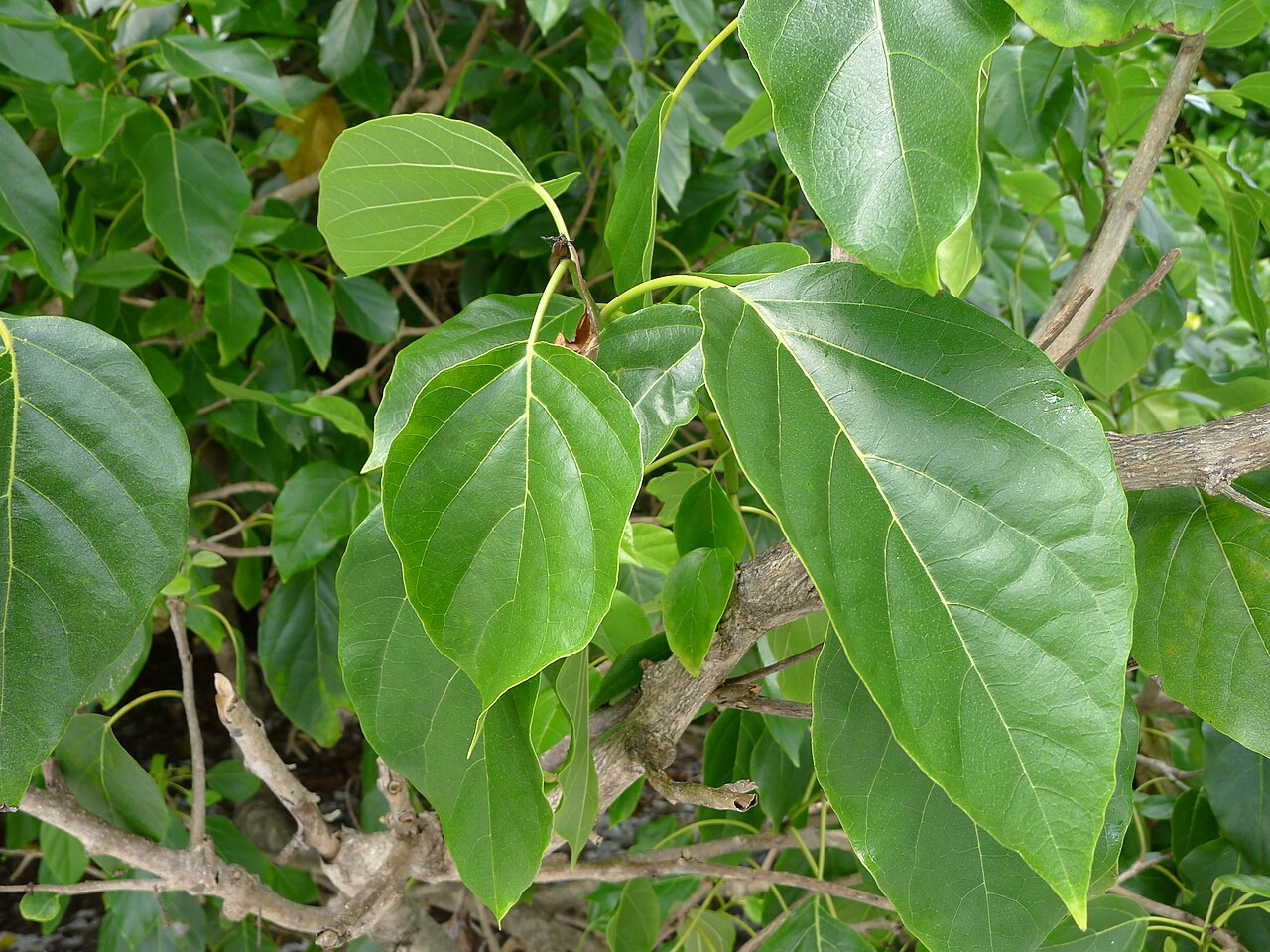
Kou has smooth, somewhat glossy leaves and a coarse foliage texture. The leaf shape helps explain the botanical epithet, which refers to an almost heart-shaped form. Leaves and flowers together are more useful for recognition than flower color alone, particularly where several orange-flowered landscape trees grow nearby.
The flowers range from light to brighter orange and can recur through the year, although flowering may be sporadic. A healthy tree should not be expected to carry the same density of bloom every week. Weather, growth stage, and local conditions influence the display. The flowers are an additional attraction on a tree whose broad shade canopy remains important between flowering periods.
Fruit and Crown Size
Rounded fruits begin green, become brown, and darken as they dry. They contain hard seeds and can create a slipping hazard when they accumulate on paving. This is a meaningful design consideration for a shade tree, especially if seating, parking, or a walkway is planned directly beneath the crown.
The University of Hawaiʻi account describes crowns around twenty-five feet across and notes that a tree may be nearly as wide as it is tall. Its landscape guidance emphasizes the need for room, with many trees occupying roughly a 25–35-foot scale. The regional list’s 25–40-foot height allows for a substantial tree, not a compact ornamental for a narrow courtyard.
Why Kou Qualifies as Native
The University of Hawaiʻi profile explains the evidence from the prehuman fossil site at Māhāʻulepū, Kauaʻi. That record changed the interpretation of kou from exclusively introduced to indigenous in Hawaiʻi. It is a useful example of how botanical status can be refined by evidence rather than inferred only from cultural use or present-day abundance.
The same source distinguishes the strong evidence for indigenous occurrence on Kauaʻi from kou’s widespread presence on other islands today. Do not assume that every planted tree or modern island record proves prehuman occurrence at that locality. For restoration, use local historical and botanical evidence appropriate to the site.
Native Range
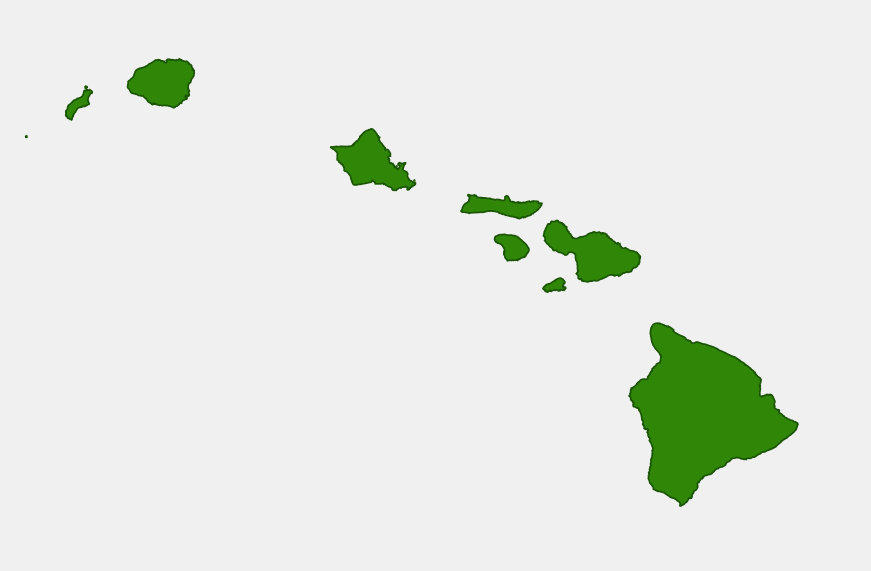
| U.S. States | Hawaii |
| Hawaiian Islands | Prehuman native evidence on Kauaʻi; widespread cultivated and historical plantings on other islands |
| Mexico / Canadian Provinces | Not included in the verified native range used here |
| Ecoregion | Hawaiian tropical forest and woodland |
| Elevation Range | Primarily lowland and coastal |
| Habitat | Coastal forest and dry-to-mesic lowland settings |
| Common Associates | Site-appropriate native forest canopy and understory |
USDA PLANTS profile (COSU2). Species identity verified; this link is not a guarantee of county-level distribution data.
Kou has a wider tropical range outside Hawaiʻi. Its fruits and seeds tolerate marine dispersal conditions, which helps explain its coastal distribution. The map above shows the U.S. state relevant to this guide, not the complete global range and not a reconstruction of every Hawaiian population before human settlement.
Choosing a Suitable Site
A Warm Lowland Shade Tree
Kou is a lowland and coastal tree. The University of Hawaiʻi account warns that it does not perform at high altitudes and cannot withstand frost. A warm, sunny setting is therefore a better starting point than a cool upland site selected merely because other native trees grow there.
Full sun is preferred, although some shade is tolerated. Consider the mature crown’s light as well as the young tree’s present exposure. A small opening between larger trees may become increasingly shaded as neighboring crowns expand, limiting the kou’s ability to develop a balanced canopy.
Salt and Drought Tolerance Have Limits
The species tolerates some salt spray and moderately dry conditions after establishment. Heavy salt spray can damage foliage, so tolerance should not be interpreted as immunity. A slightly sheltered coastal garden can differ substantially from the most exposed edge of a shoreline.
Good drainage is recommended across the range of soils in which kou is grown. A sandy surface does not guarantee that deeper soil drains freely, especially where construction or compaction has altered the site. Check actual conditions after rain and avoid placing the tree in a basin that remains waterlogged.
Plan Around the Canopy and Roots
Kou has a relatively shallow root system and can be harmed by excessive surface disturbance. Place it where the root zone will not later become a trenching corridor, frequently reworked bed, or heavily compacted traffic area. Protecting that space from the beginning is easier than repairing damage to an established shade tree.
Allow sufficient distance from buildings, boundaries, and overhead obstructions. A young tree’s narrow silhouette can be misleading; the mature crown is broad. If the available space requires constant severe pruning to preserve clearance, a different plant or location is likely to be more suitable.
Consider fruit fall at the same time as shade. A tree placed to shade a driveway or busy sidewalk may bring maintenance and slipping concerns. A planting bed or accessible landscape area beneath the crown can be easier to manage, provided it does not encourage repeated root disturbance during cleanup.
Planting and Establishment
Prepare the planting area before removing the nursery container. Keep the root ball from drying, handle it gently, and set the tree at the appropriate original soil level. Do not bury the stem base beneath backfill or mulch. Water after planting to settle soil around the roots, then confirm that the tree has not sunk too deeply.
Use mulch to moderate surface conditions and reduce weed competition, leaving a clear space around the trunk. Avoid installing vigorous shrubs immediately against the new tree. A manageable root-zone area makes it easier to check moisture, inspect the stem, and protect the shallow roots as they expand.
Where a tree requires temporary support, use a method suited to the site and review it as the tree establishes. Do not leave ties or supports in place indefinitely without inspection. The goal is a stable tree with room to grow, not a stem constrained by forgotten installation materials.
Watering an Establishing Kou
Moderate drought tolerance develops in an established root system; it does not eliminate the needs of a newly planted tree. Check moisture within the nursery root ball and in the surrounding soil, since they may dry differently. Water deeply enough to support roots and allow drainage between applications.
Adapt irrigation to rainfall, wind, soil, and the tree’s growth. As roots spread, widen the area receiving water rather than maintaining a small wet spot at the trunk. An unchanging schedule can become inappropriate as the plant establishes or the weather shifts.
If growth declines, inspect the root zone before assuming the tree is thirsty. Saturation, buried stems, damaged roots, and nutrient issues can all affect appearance. Direct observations of the soil and recent site history are more useful than adding water in response to every discolored leaf.
Pruning and Long-Term Structure
Kou can develop irregular or crooked growth, and thoughtful early pruning can help establish useful structure. Work with the tree’s natural form while addressing damaged branches, poor attachments, or necessary clearance. Avoid turning a potentially broad shade tree into a permanently hard-pruned object because the site is too small.
Large trees deserve periodic assessment, particularly if branches extend over areas used by people. The University of Hawaiʻi profile notes that older trees can develop heartwood rot. Visible decline, cavities, or structural concerns warrant evaluation by someone qualified to assess trees on site rather than a diagnosis from foliage alone.
Protect the trunk and surface roots from mowing and other maintenance damage. A carefully managed ground layer or mulch area can reduce repeated contact. The same root protection that supports tree health also preserves the stable, long-lived shade structure for which kou was planted.
Kou Leaf Worm and Other Problems
The kou leaf worm, Ethmia nigroapicella, is a notable pest in the University of Hawaiʻi account. Severe feeding can defoliate trees and has contributed to losses. Inspect the cause when foliage disappears or becomes extensively damaged rather than assuming that a native tree is protected from serious insect problems.
Document the extent and timing of damage and seek local guidance for an appropriate response. Treatment decisions should consider the tree’s condition, the identified organism, and the surrounding landscape. Routine broad spraying without diagnosis is not a substitute for monitoring.
Do not overlook site stress when pests are present. A tree also suffering from root disturbance, unsuitable irrigation, or restricted growing space may have several problems at once. Correcting those conditions is part of long-term care even when an insect issue requires separate attention.
Woodworking and Hawaiian Cultural History
Kou wood is renowned in Hawaiian carving traditions, especially for vessels used with food. The University of Hawaiʻi account describes its attractive grain, workability, and value for bowls, dishes, cups, and other objects. Its lack of a strong resinous flavor helped make it particularly useful for food containers.
The tree was also planted for shade near homes, and flowers were used in lei. Leaves appear in historical dye practices. These uses connect the living tree to daily work, craft, and gathering places rather than reducing its importance to timber alone.
Growing kou today does not require harvesting it. A well-sited tree can support teaching, observation, and continuity with those histories while remaining a shade tree for decades. Where cultural materials are desired, work with knowledgeable practitioners and use appropriately sourced material rather than treating a brief plant profile as instruction in a specialized practice.
Common Questions
Is kou only a Polynesian introduction? No. Prehuman fossil evidence on Kauaʻi supports indigenous status, while human transport and cultivation are also part of its history.
Is kou haole the same tree? No. Kou haole generally refers to Cordia sebestena, an introduced relative. Confirm Cordia subcordata when buying native kou.
Will it fit a small urban yard? Only if the yard can accommodate a broad tree and its root zone. The published landscape guidance specifically cautions against undersized spaces.
Can it shade a walkway? Shade is one of its strengths, but fallen fruits and hard seeds can be slippery. Plan the crown position and cleanup access before planting.
Does salt tolerance mean exposed beachfront conditions are always suitable? No. Some spray is tolerated, but heavy exposure can damage leaves. Evaluate the actual location.
A Roomy Setting for a Valuable Native
Kou offers orange flowers, generous shade, and a particularly rich cultural history. Its success depends on giving it the warm, well-drained, spacious setting of a real tree. Confirm the species, protect its shallow root zone, and plan for fruit and canopy maintenance. In the right place, it can become a lasting center of a native Hawaiian landscape.
Sources & Further Reading
- University of Hawaiʻi, Native Plants Hawaiʻi species profile
- USDA Forest Service: identification and ecology
Botanical range, identification, and cultural information are based on these sources. Garden-management advice should be adapted to local soil, exposure, and nursery provenance.
Find Native Plants Near You
Look for correctly identified, nursery-propagated plants with documented Hawaiian provenance. Visit our Hawaii native plant nursery directory and ask about stock suited to your island, elevation, and rainfall. Compare other trees in our Hawaii native plant list.