Maydell’s Oxytrope (Oxytropis maydelliana)
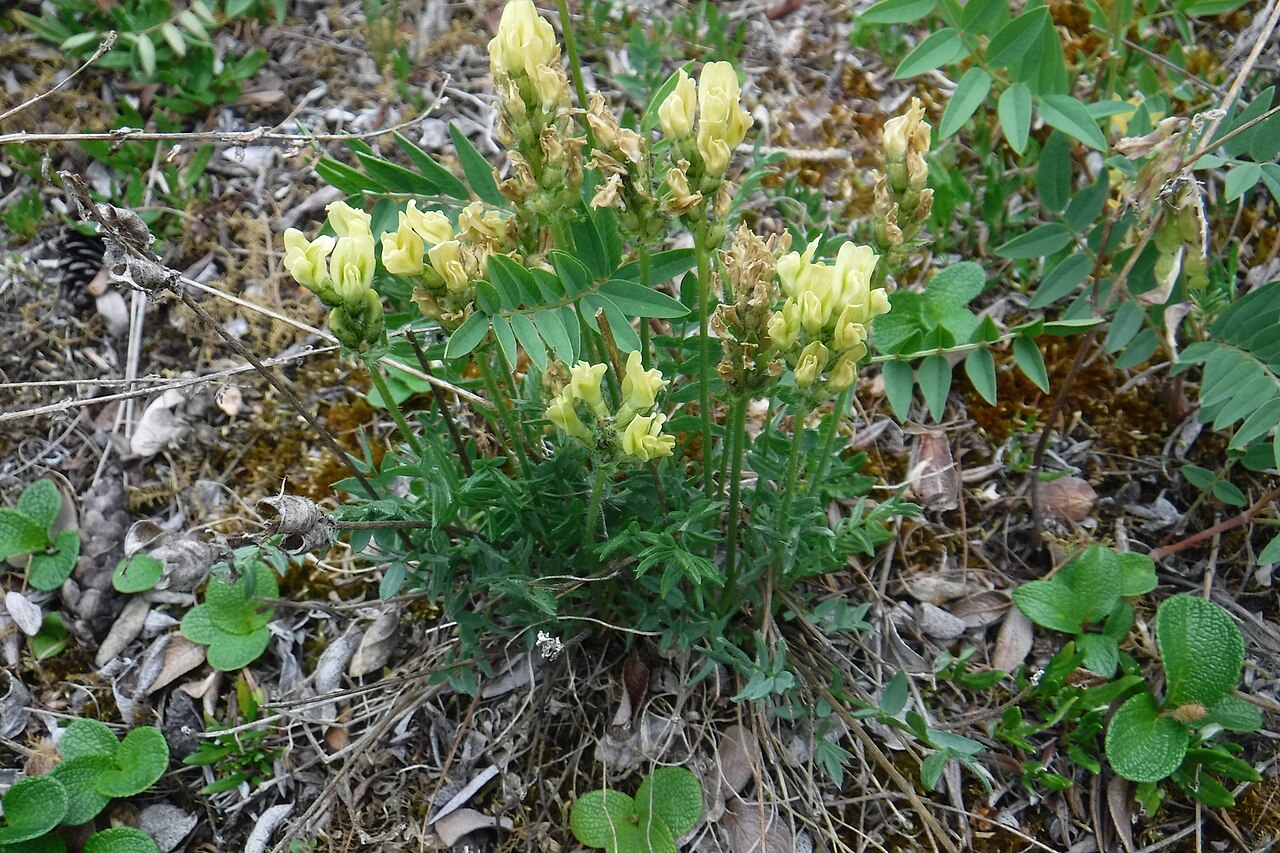
Oxytropis maydelliana, known as Maydell’s Oxytrope (also called Yellow Oxytrope), is a small, tufted perennial wildflower of the Alaska and Canadian Arctic tundra. It belongs to the pea family and grows as a dense, low cushion of silvery, hairy foliage topped by short spikes of pale yellow, sweetpea-shaped flowers — a tough, compact survivor built for one of the harshest growing climates on the continent.
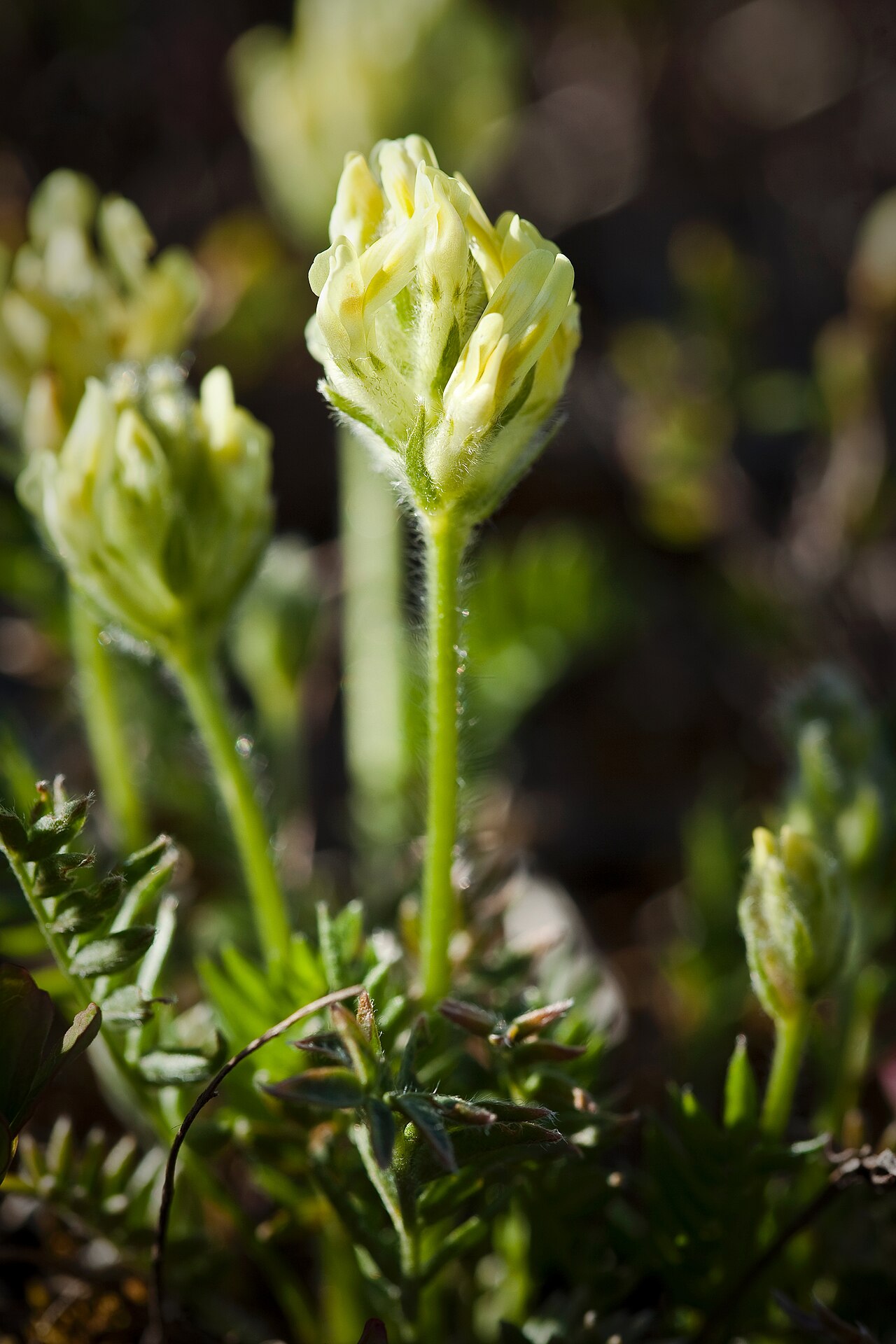
Each clump sends up several leafless flowering stems from a tight rosette of pinnately divided leaves, the whole plant usually no taller than 6 to 10 inches. Fine soft hairs cover the stems and leaflets, a common adaptation among Arctic plants that helps trap a thin insulating layer of warmer air against the tissue and reduce moisture loss in the dry, wind-scoured tundra.
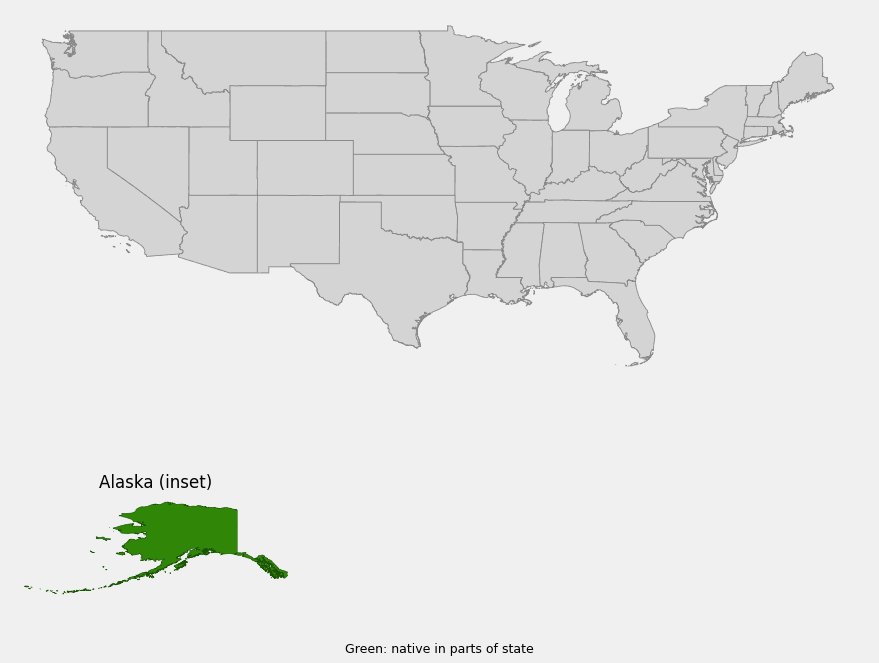
Maydell’s Oxytrope is native only to Alaska within the United States, found north of the Arctic Circle on rocky slopes, ridges and dry tundra. It is not a plant for most home gardens outside its native range, but it has real value in Alaska native plant landscaping, alpine rock gardens and tundra restoration work. Like its relatives in the genus Oxytropis — the locoweeds — it should never be planted where grazing livestock have access, since many species in this group are known to be toxic.
Identification
Maydell’s Oxytrope grows as a low, clumped perennial forming a tight rosette rather than a spreading mat, typically 6 to 10 inches tall at the top of its flowering stems.
Leaves & Stems
The leaves are pinnately compound, made up of 5 to 17 small, oval to oblong leaflets roughly ¼ to ⅓ inch long, arranged along a central stalk. Both the leaflets and the leafless flowering stems are covered in fine, soft, silvery hairs, giving the whole plant a slightly silvered, fuzzy look that helps it cope with intense wind and sun exposure above the Arctic Circle.
Flowers
Flowering stems rise directly from the base of the plant, separate from the leaves, and carry a dense, rounded to short-cylindrical cluster of pale yellow, pea-shaped flowers at the tip. Each flower follows the typical pea-family form, with a broad upper banner petal and smaller wing and keel petals below. Bloom occurs in the brief Arctic summer, generally June through August.
Fruit & Seeds
Flowers are followed by small, inflated, hairy seed pods typical of the locoweed genus, splitting to release the seeds inside. The pods and foliage dry quickly in the short Arctic growing season, and the plant overwinters as a dormant rootstock under snow cover.
Quick Facts
| Scientific Name | Oxytropis maydelliana |
| Family | Fabaceae (Pea) |
| Plant Type | Low, clumped perennial forb |
| Mature Height | 6–10 in |
| Mature Spread | 6–12 in, tight clumping habit |
| Growth Rate | Slow |
| Sun Exposure | Full sun to part shade |
| Water Needs | Low; prefers dry, well-drained rocky soils |
| Soil Type | Rocky, gravelly, well-drained tundra soils |
| Soil pH | Neutral to slightly alkaline |
| Bloom Time | June – August |
| Flower Color | Pale yellow |
| Fall Color | None (foliage dies back for winter) |
| Fruit | Small, inflated, hairy seed pods |
| Deer Resistant | Not applicable to its Arctic range; toxic to livestock (see below) |
| USDA Hardiness Zones | 1–3 |
Native Range
Within the United States, Maydell’s Oxytrope is native only to Alaska, where it occurs north of the Arctic Circle across the North Slope and adjacent Arctic and alpine areas, including sites in and around Denali National Park and Preserve farther south in suitable alpine habitat. Its broader native range extends into Arctic Canada, including the Yukon, Northwest Territories, Nunavut and northern Quebec.
Typical habitat is open, rocky tundra: dry slopes and ridges, alpine heath and gravelly or stony ground above treeline, where competition from taller vegetation is minimal and the growing season is short and cold. It grows in full exposure to wind and sun through the brief Arctic summer, tolerating conditions few other garden plants could survive.
Because its native range is restricted to Alaska and far northern Canada, Maydell’s Oxytrope is not a candidate for gardens outside this region; its value lies in Alaska-specific native landscaping, alpine and rock garden collections suited to cold climates, and tundra habitat restoration.
📋 Regional plant lists featuring Maydell’s Oxytrope: Alaska
Growing & Care Guide
Maydell’s Oxytrope is suited only to cold-climate growing conditions that mimic its Arctic home — this is not a plant for temperate gardens, even shaded or well-watered ones. Within Alaska and similar far-northern or high-alpine settings, it is a tough, low-care choice for the right site.
Light
Give it full sun to light part shade. In its native tundra habitat it grows in open, unshaded ground through the brief Arctic summer, and it performs best with maximum light exposure during the short growing season.
Soil & Water
Plant in sharply drained, rocky or gravelly soil; this species does not tolerate wet feet or heavy, poorly drained ground. Water needs are low, matching the dry conditions of its rocky slope and ridge habitat — avoid supplemental irrigation beyond occasional watering during establishment.
Planting Tips
Source nursery-propagated plants or seed from reputable Alaska native plant suppliers rather than collecting from wild tundra, which is slow to recover from disturbance. Plant in a rock garden, scree bed or other sharply drained setting that recreates its native alpine conditions, and avoid rich garden soil or regular fertilizing, both of which run counter to what this species is adapted to.
Pruning & Maintenance
Essentially no pruning or maintenance is needed beyond removing old flowering stems after seed has dispersed, if a tidier appearance is wanted. The plant is adapted to extreme cold and short seasons and needs no winter protection within its hardiness range.
Landscape Uses
- Alaska native plant gardens, where it suits rock gardens and gravel beds
- Alpine and scree plantings in cold-climate collections
- Tundra habitat restoration on disturbed Arctic or alpine sites
- Educational and botanical garden displays of Arctic flora
Wildlife & Ecological Value
In the short, intense growing season of the Arctic tundra, Maydell’s Oxytrope plays a modest but real role in a plant community with few flowering species to spare.
For Pollinators
The pea-shaped flowers are visited by Arctic bumblebees and other native pollinating insects adapted to the short northern summer, providing one of a limited number of nectar and pollen sources available on open tundra during the brief bloom window.
For Birds
Ptarmigan and other tundra-adapted birds forage among low tundra vegetation that includes this species, though it is not documented as a preferred food source specifically.
For Mammals
Caution: like other members of the genus Oxytropis — the locoweeds — this plant is a documented risk to grazing livestock. Many Oxytropis species accumulate the toxin swainsonine, which causes “locoism,” a serious and sometimes fatal neurological poisoning in cattle, horses and sheep that graze on them over time. Species-specific toxicity data for Oxytropis maydelliana itself is limited, but given its close relationship to confirmed locoweed species, it should be treated with the same caution and never planted where grazing animals have access. Wild caribou and other native tundra herbivores have coexisted with locoweeds for millennia and are not known to suffer the same effects as introduced livestock.
Ecosystem Role
As a nitrogen-fixing legume, Maydell’s Oxytrope contributes to soil fertility in the nutrient-poor tundra environment, a role shared with other Arctic pea-family plants. Its tight, cushion-like growth form also helps stabilize thin, rocky tundra soils against wind erosion.
Cultural & Historical Uses
Maydell’s Oxytrope has little recorded history of use as food or medicine among Arctic peoples, and given the toxicity concerns associated with the locoweed genus generally, it has not been treated as a food plant. One of its alternate common names, “Inuit-carrot,” appears in some regional plant references, though it does not reflect a documented culinary tradition and should not be taken as a safety claim.
The species name honors Gerhard von Maydell, a nineteenth-century Baltic German naturalist whose plant collections from northeastern Siberia were sent to the botanist Ernst Rudolf von Trautvetter, who formally described and named the species in 1878. The find was part of the broader era of Russian and European botanical exploration of Siberia and the North American Arctic that first documented many of the region’s tundra plants.
Today, Maydell’s Oxytrope is primarily of interest to botanists, Arctic ecologists and native-plant gardeners within Alaska, where it is valued as a hardy, true-to-place species for tundra and alpine plantings rather than for any practical historical use.
Frequently Asked Questions
Is Maydell’s oxytrope poisonous?
It belongs to the Oxytropis genus, commonly called locoweeds, many of which contain swainsonine, a toxin that causes serious poisoning in grazing livestock such as cattle, horses and sheep. Treat this species with the same caution as its confirmed-toxic relatives, and never plant it where livestock can graze on it.
Can I grow this outside Alaska?
Generally no. Maydell’s Oxytrope is adapted to Arctic and alpine tundra conditions — short cool summers, long cold winters and rocky, well-drained soil — and is not suited to typical temperate garden climates. It is best reserved for Alaska native plantings or specialized alpine rock gardens in similarly cold climates.
What does “Maydell’s” refer to in the name?
The species name maydelliana honors a nineteenth-century Arctic plant collector; it is one of several locoweed species named for early botanists and naturalists who documented Siberian and North American Arctic flora.
How is it different from other yellow-flowered tundra peas?
Identification within Arctic Oxytropis and Astragalus species can be difficult and often depends on leaflet number, hair texture and pod shape; where certainty matters, such as before any livestock-adjacent planting, confirm identification with a regional flora or herbarium rather than relying on photos alone.
Does it need fertilizer or rich soil?
No. Maydell’s Oxytrope is adapted to thin, rocky, nutrient-poor tundra soils, and as a legume it fixes its own nitrogen. Rich garden soil or regular fertilizing is unnecessary and not how the species grows in the wild.

Looking for a nursery that carries Maydell’s Oxytrope?
Browse our native plant nursery directory: Alaska