Oregon Wood Sorrel (Oxalis oregana)
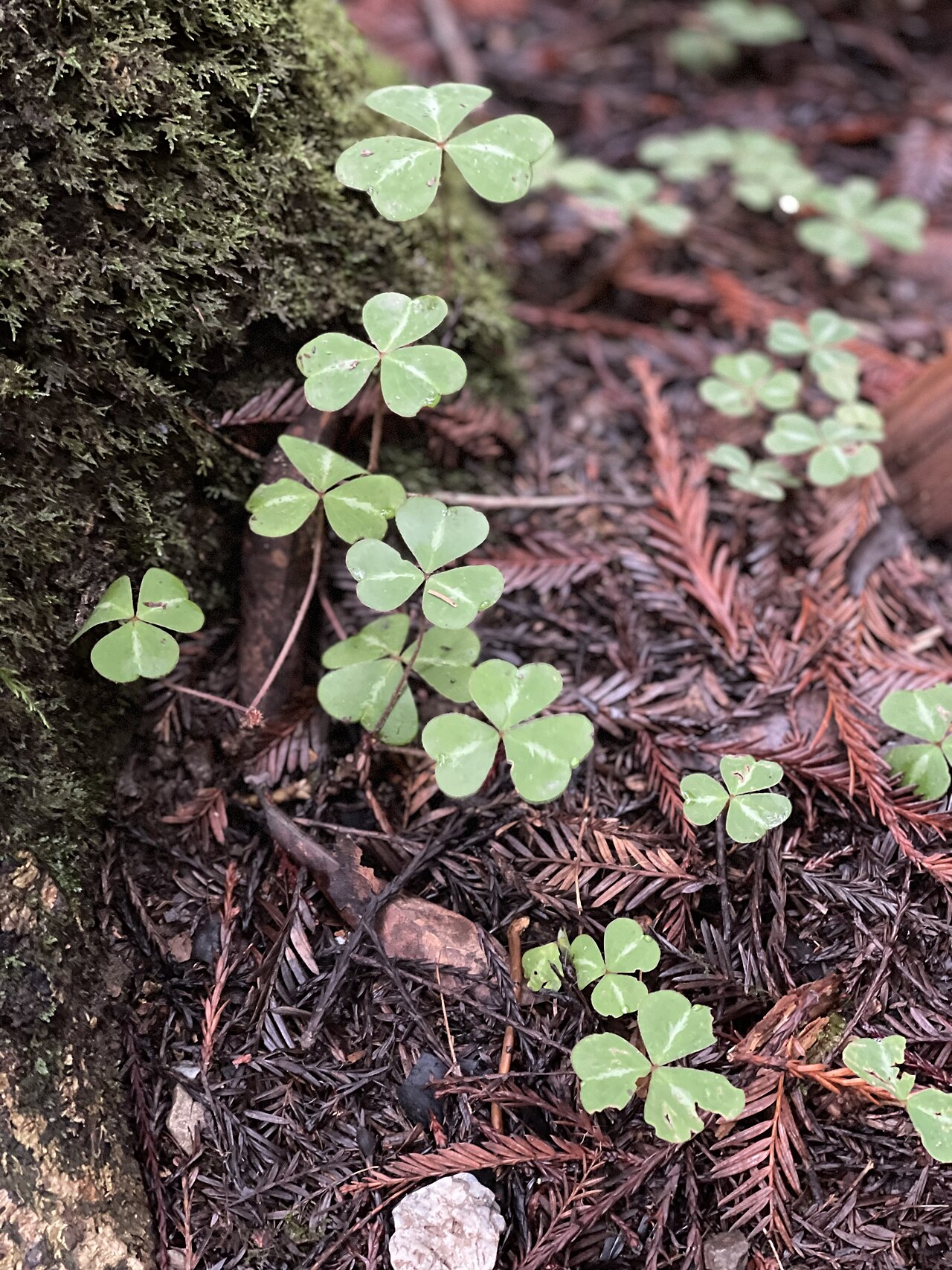
Oxalis oregana, commonly called Oregon Wood Sorrel or Redwood Sorrel, is a low, clover-leaved perennial that forms some of the most familiar ground cover on the floor of Pacific coast redwood and Douglas-fir forests. Where conditions suit it, a single colony can carpet acres of forest floor in an unbroken sheet of heart-shaped leaflets, thriving in exactly the deep shade that stops most other plants from growing at all.
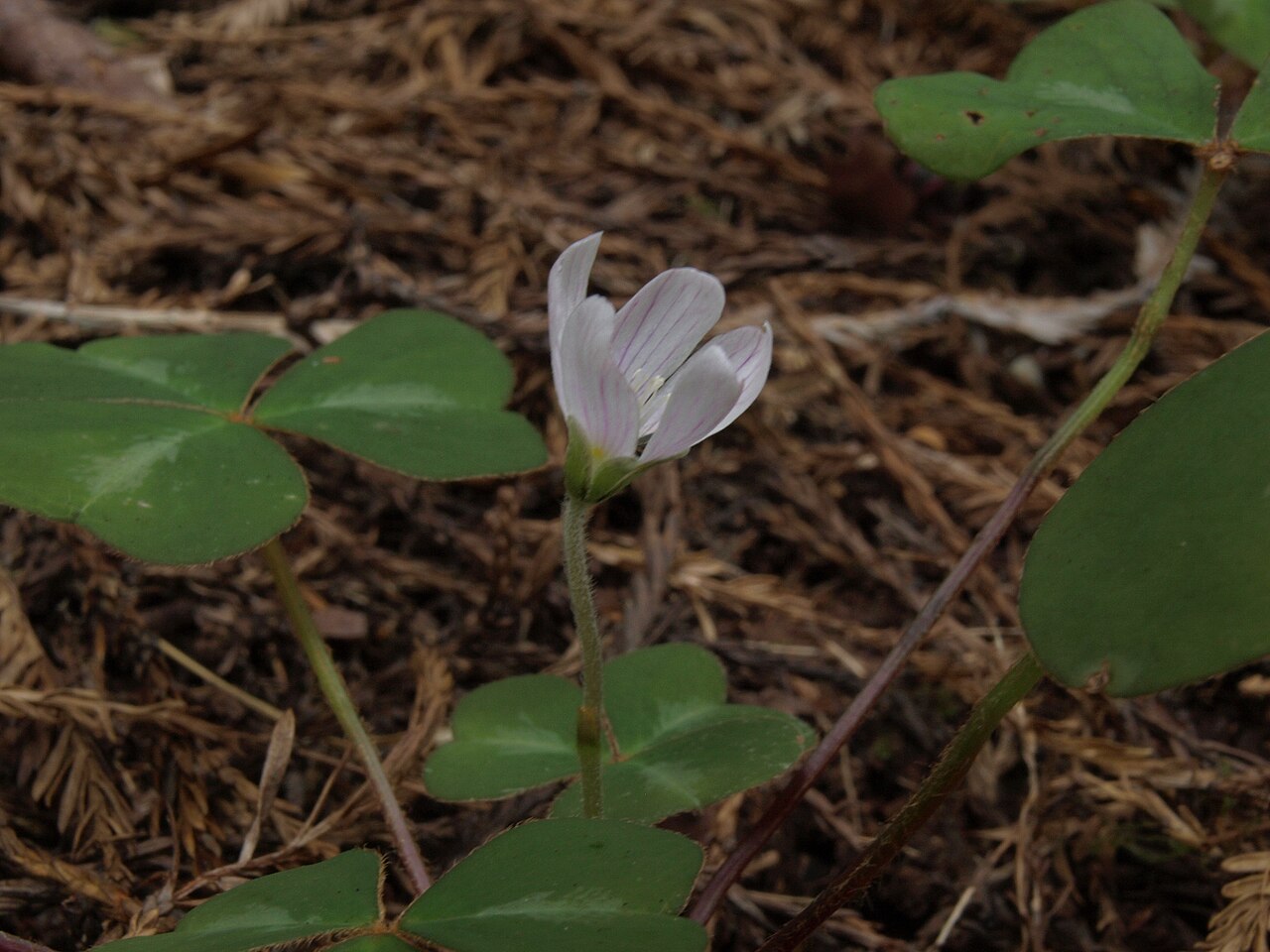
Each leaf is made of three heart-shaped leaflets on a slender stalk, giving the plant an unmistakable clover-like look, though it is unrelated to true clovers. The leaflets fold downward when struck by direct sun and reopen within minutes once shade returns, a visible adaptation to the dappled light of the forest floor. In spring, delicate white to pale pink, five-petaled flowers rise just above the foliage on their own short stems.
For gardeners with a shaded, moist corner — under conifers, along a north-facing foundation, or anywhere little else will grow — Oregon Wood Sorrel is an excellent native ground cover. It spreads by rhizome to form dense, weed-suppressing mats, asks for nothing but shade and consistent moisture, and needs no feeding or spraying once it settles in.
Identification
Oregon Wood Sorrel is a short, creeping, rhizomatous perennial that spreads horizontally rather than growing upward, usually staying under 6 inches tall even at the top of its flowering stems.
Leaves
Each leaf is divided into three heart-shaped leaflets, ½ to 1¾ inches long, held on slender stalks 2 to 8 inches tall that rise directly from a scaly, creeping rhizome. The upper surface is a rich, often glossy green; the underside is frequently tinged purplish. The leaflets are sensitive to light: they fold down along the midrib when direct sun strikes them and unfold again within a few minutes once shade returns, a movement easy to observe if you watch a patch on a sunny afternoon.
Flowers
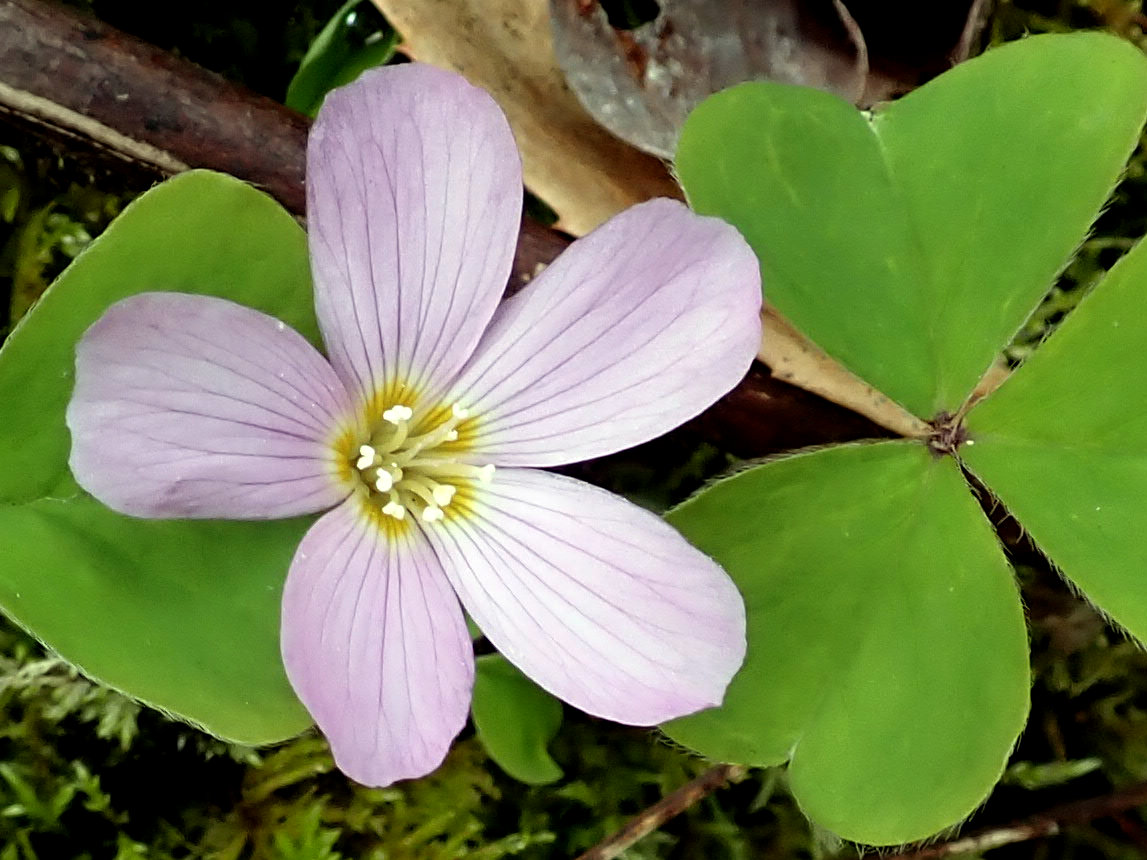
Flowers appear singly on stalks about as tall as the leaves, each about 1 to 1½ inches across with five white to pale pink petals, often traced with fine purplish veins, surrounding a small cluster of stamens. Bloom is heaviest in spring but can continue sporadically through summer in cool, moist sites.
Fruit & Spread
After flowering, a hairy, five-chambered seed capsule forms, splitting open to eject small, almond-shaped seeds a short distance from the parent plant. Most expansion of a colony, however, comes from the spreading scaly rhizome rather than from seed, which is why established patches form such dense, even mats over time.
Quick Facts
| Scientific Name | Oxalis oregana |
| Family | Oxalidaceae (Wood Sorrel) |
| Plant Type | Low, rhizomatous evergreen perennial ground cover |
| Mature Height | 4–8 in |
| Mature Spread | Indefinite; spreads by rhizome to form broad mats |
| Growth Rate | Slow to moderate |
| Sun Exposure | Full shade to part shade |
| Water Needs | Consistent moisture; not drought tolerant |
| Soil Type | Rich, humusy, moisture-retentive forest soil |
| Soil pH | Acidic to neutral |
| Bloom Time | March – June, sporadically later |
| Flower Color | White to pale pink with purplish veining |
| Fall Color | None (evergreen in mild climates) |
| Fruit | Small hairy seed capsule, inconspicuous |
| Deer Resistant | Mostly (occasional light browsing) |
| USDA Hardiness Zones | 7–9 |
Native Range
Oregon Wood Sorrel is native to the humid coastal belt of the Pacific Northwest, from southwestern British Columbia south through western Washington and western Oregon into northern and central coastal California, roughly as far south as the redwood forests of Humboldt and Mendocino Counties, with a separate range extension into parts of the Santa Cruz Mountains. It is closely tied to the fog-fed, high-rainfall climate of this coastal strip and does not occur naturally east of the Cascade and Coast Range crests.
Typical habitat is the deeply shaded floor of moist coast redwood and Douglas-fir forests, where the plant often forms the dominant ground layer beneath the canopy. It favors cool, humusy soils with a thick leaf-litter layer and reliable moisture, growing alongside sword fern, trillium, salal and other classic understory natives of the region.
Within gardens and nursery catalogs farther afield, Oregon Wood Sorrel is sometimes grown outside this native range in similarly shaded, moist temperate gardens; outside the Pacific coast fog belt it is a garden introduction, not a wild native.
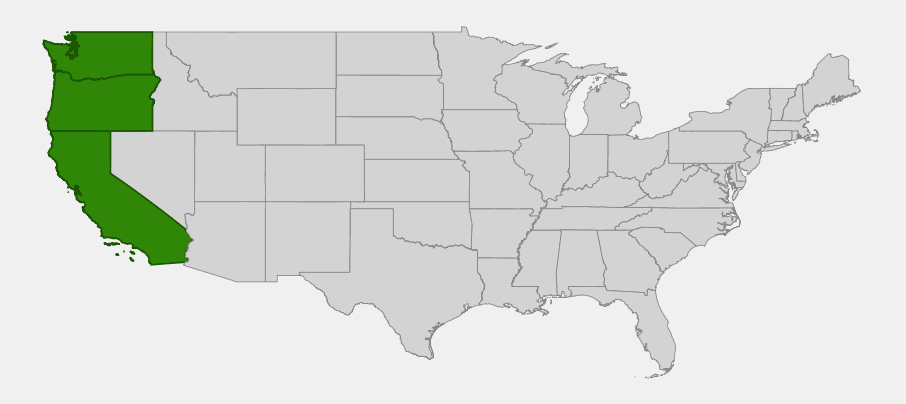
📋 Regional plant lists featuring Oregon Wood Sorrel: Western Oregon & Western Washington
Growing & Care Guide
Oregon Wood Sorrel rewards a gardener who can offer it what the redwood forest floor already provides: steady shade, steady moisture and rich, humusy soil. Give it those three things and it largely takes care of itself.
Light
This is a true shade plant. It performs best in full to partial shade, such as beneath conifers or on the north side of a building, and the leaflets will visibly fold downward if exposed to strong, direct sun, especially in hot inland gardens. Reserve it for the shadiest parts of the garden rather than mixed borders with afternoon sun.
Soil & Water
Plant in rich, humusy, well-drained soil that stays consistently moist, mimicking the damp duff of a coastal forest floor. This species is not drought tolerant and will scorch or go dormant in prolonged dry spells, so regular water is essential, particularly in gardens away from coastal fog. A 2-inch layer of leaf mold or fine bark mulch helps retain the moisture it needs.
Planting Tips
Set out nursery plants or rhizome divisions in fall or early spring. Space plants 8 to 12 inches apart if a fast-filling ground cover is the goal, since the rhizomes will knit neighboring plants together within a season or two in good conditions. Pair it with other shade-loving Pacific Northwest natives that share its moisture needs.
Pruning & Maintenance
Essentially none is required. Established patches can be thinned or edged back with a spade if they spread beyond their intended area; the rhizomes are shallow and easy to cut and lift. The plant has no significant pest or disease problems in appropriately shaded, moist sites.
Propagation
The easiest method is dividing rhizome sections in fall or early spring and replanting them promptly so they do not dry out. Seed can also be collected from ripe capsules, but division is faster and more reliable for building out a ground-cover patch.
Landscape Uses
- Shade ground cover beneath conifers, where it crowds out weeds and needs no mowing
- Woodland gardens paired with ferns, trillium and other coastal forest natives
- North-facing foundation beds where little else will thrive
- Erosion control on shaded, moist slopes with a dense rhizome mat
- Container and terrarium plantings in consistently moist, shaded settings
Wildlife & Ecological Value
Though modest in size, Oregon Wood Sorrel plays a steady supporting role in the coastal forest ecosystems it dominates underfoot.
For Pollinators
The spring flowers attract small native bees and flies, which visit for both nectar and pollen. Because the plant often blooms in large, continuous patches, it can provide a locally significant, if low-key, nectar source in the dim light of the forest floor where few other flowering plants compete for attention.
For Birds
Ground-foraging birds such as thrushes and towhees move through wood sorrel patches searching for insects and other invertebrates sheltering in the dense foliage and leaf litter beneath it.
For Mammals
Deer and other browsers occasionally nibble the foliage, though it is not a preferred forage plant, and the dense mats offer cover for small mammals such as voles moving along the forest floor.
Ecosystem Role
As one of the few plants able to thrive in the deep, near-constant shade beneath coast redwoods and Douglas-firs, Oregon Wood Sorrel forms a living ground layer that holds moisture, moderates soil temperature and helps stabilize the thin forest-floor soil on slopes. Its dense rhizome mats also suppress competing vegetation, helping maintain the open, park-like understory characteristic of old-growth redwood stands.
Cultural & Historical Uses
Indigenous peoples of the Pacific Northwest coast, including the Cowlitz, Quileute and Quinault, historically ate the leaves of Oregon Wood Sorrel, often alongside dried fish, and some groups prepared decoctions from the plant. Like spinach and other oxalate-containing greens, the leaves carry a notably sour, tangy flavor from oxalic acid, and traditional use was understood to mean small quantities rather than a staple food.
Because the leaves fold down so visibly in direct sun and reopen in shade, the plant has long attracted scientific attention as an example of rapid plant movement in response to light, and it remains a frequently cited example in discussions of plant photoresponses.
Today Oregon Wood Sorrel’s main significance is ecological and horticultural rather than culinary: it is a defining ground-layer species of Pacific coast redwood forests and a popular native ground cover for shaded Northwest gardens.
Frequently Asked Questions
Can you eat Oregon wood sorrel?
Historically, Pacific Northwest tribes ate the leaves in small amounts, but the plant contains oxalic acid, the same mildly toxic compound found in spinach and rhubarb leaves, and it should not be treated as a food source or salad green. People with kidney stones, gout or similar conditions should avoid it, and it is best left growing rather than foraged.
Why do the leaves fold down during the day?
This is a light response: the three leaflets fold downward along their midribs when struck by strong direct sun and reopen within minutes once shade returns. It helps protect the leaves from excess light and heat on the rare occasions sun reaches the forest floor.
Will Oregon wood sorrel grow in a sunny garden?
No. This is a true shade species adapted to the dim light under redwoods and Douglas-firs. Direct sun, especially in hot inland climates, will scorch the foliage and the plant will struggle or die back; reserve it for shaded, moist beds.
How fast does it spread?
Spread is slow to moderate, driven mainly by creeping rhizomes rather than seed. A new planting typically takes a couple of growing seasons to knit into a dense mat, faster in consistently moist, rich soil.
Is Oregon wood sorrel the same as common clover?
No. Despite the similar three-leaflet, clover-like look, Oregon Wood Sorrel belongs to the wood sorrel family (Oxalidaceae) and is unrelated to true clovers in the pea family. The heart-shaped (rather than oval) leaflets and five-petaled flowers are good ways to tell it apart.

Looking for a nursery that carries Oregon Wood Sorrel?
Browse our native plant nursery directory: California · Oregon · Washington