Coastal Prickly Pear (Opuntia littoralis)
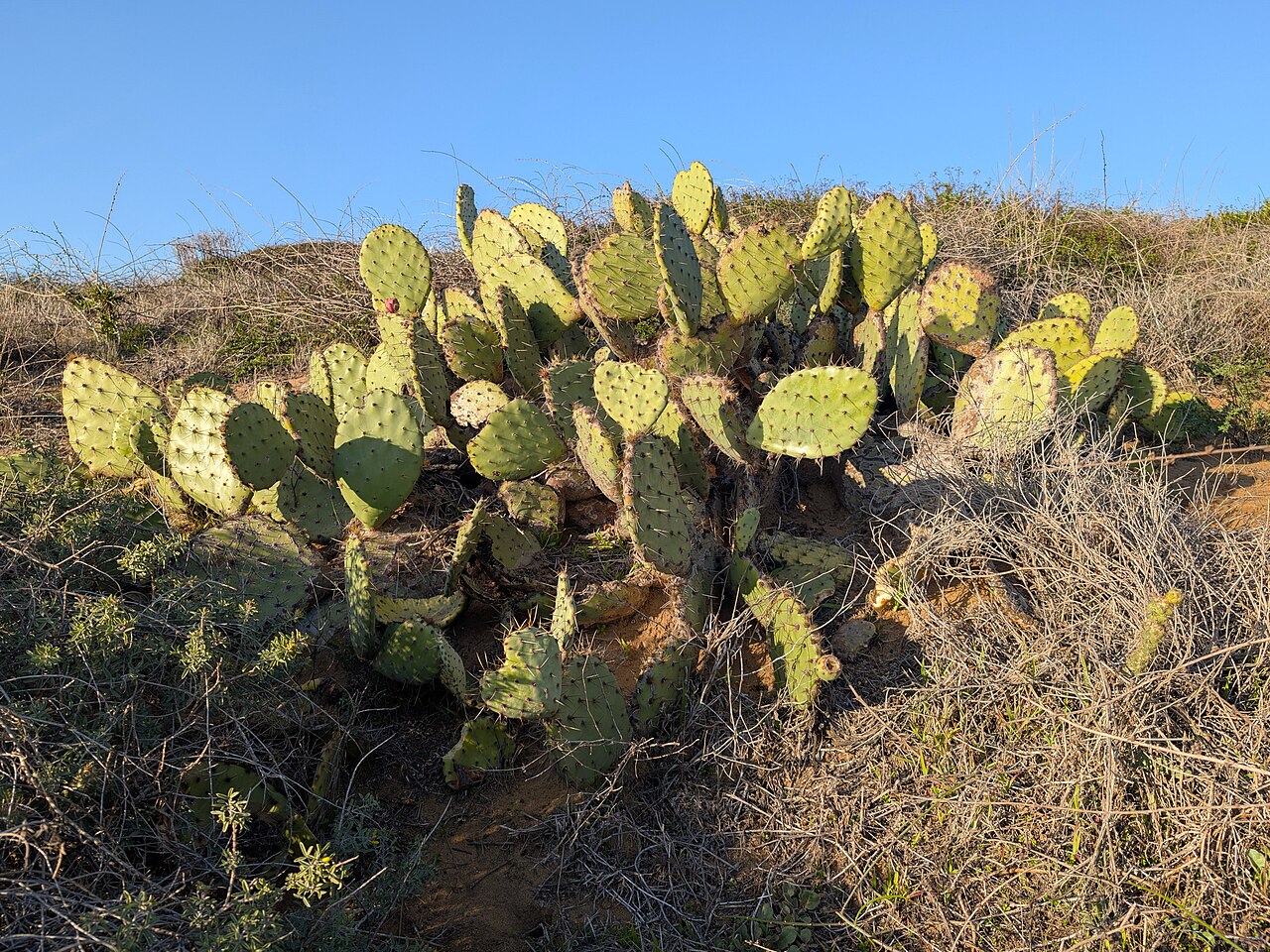
Opuntia littoralis, the Coastal Prickly Pear, is a low, sprawling cactus native to the bluffs, scrublands and dunes of coastal Southern California. Unlike the taller, tree-forming prickly pears of the desert interior, this species hugs the ground, building out a broad, tangled mound of flattened pads rarely more than knee-high but often many feet across. It is a true coastal-sage-scrub and chaparral native, long adapted to salt spray, thin soils and the region’s dry summers.
The pads (properly called cladodes) are blue-green, rounded to oblong, and studded with clusters of stiff yellow spines along with the much smaller, barely visible glochids — tiny, barbed bristles that detach at the lightest touch and are often more troublesome than the spines themselves. In late spring the plant produces large, waxy, golden-yellow flowers that open for just a day or two but draw in bees by the dozens, followed by spiny, deep red to purple fruit (called tunas) by late summer.
For gardeners in coastal Southern California, Coastal Prickly Pear is a tough, drought-proof native that asks for almost nothing once established. It is an excellent choice for a dry slope, a wildlife garden or a restoration planting in coastal sage scrub, but its spines and glochids mean it belongs away from paths, play areas and anywhere people or pets brush past regularly. Because established clumps are slow to rebuild once dug up, and because the species is easy to find at native plant nurseries, there is no reason to dig or collect pads from wild populations.
Identification
Coastal Prickly Pear grows as a low, spreading, mat-forming cactus, typically reaching only 1 to 2 feet tall but spreading several feet wide as pads root where they touch the ground or where fallen segments take hold nearby. Over years a single plant can form a dense, impenetrable thicket of pads.
Pads & Spines
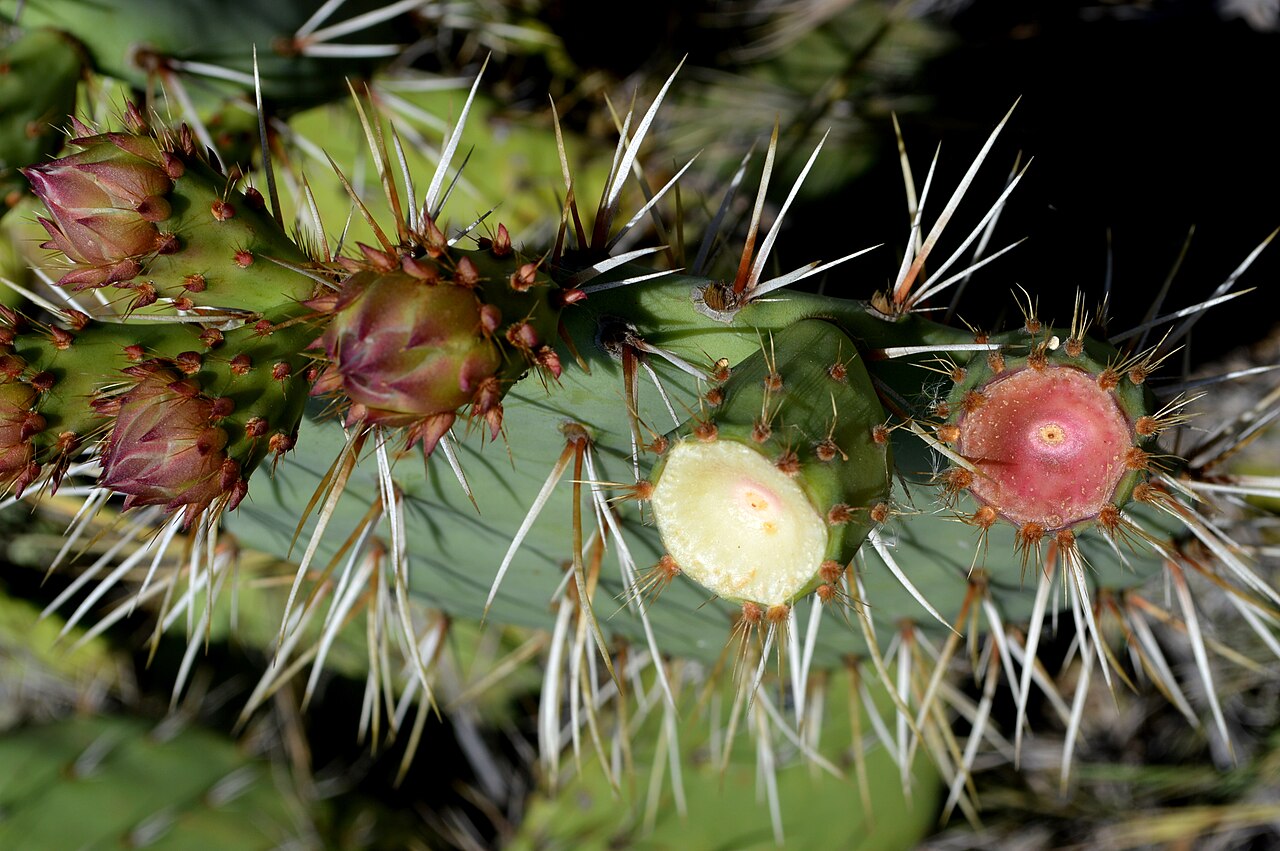
The flattened, fleshy pads (cladodes) are blue-green to gray-green, egg-shaped to oblong, and typically 4 to 12 inches long and 3 to 5 inches wide. Each pad is dotted with raised areoles that carry both the obvious spines and the easy-to-miss glochids. Spines are numerous, pale yellow to straw-colored, and range from under half an inch to roughly 1.5 inches long, often appearing shaggy across the pad surface rather than neatly arranged. The glochids are tiny tufts of fine, barbed bristles clustered at the base of each areole; they are nearly invisible but lodge in skin on contact and are difficult to remove. Always handle this species with thick gloves and long sleeves, and never attempt to harvest or move it barehanded.
Flowers
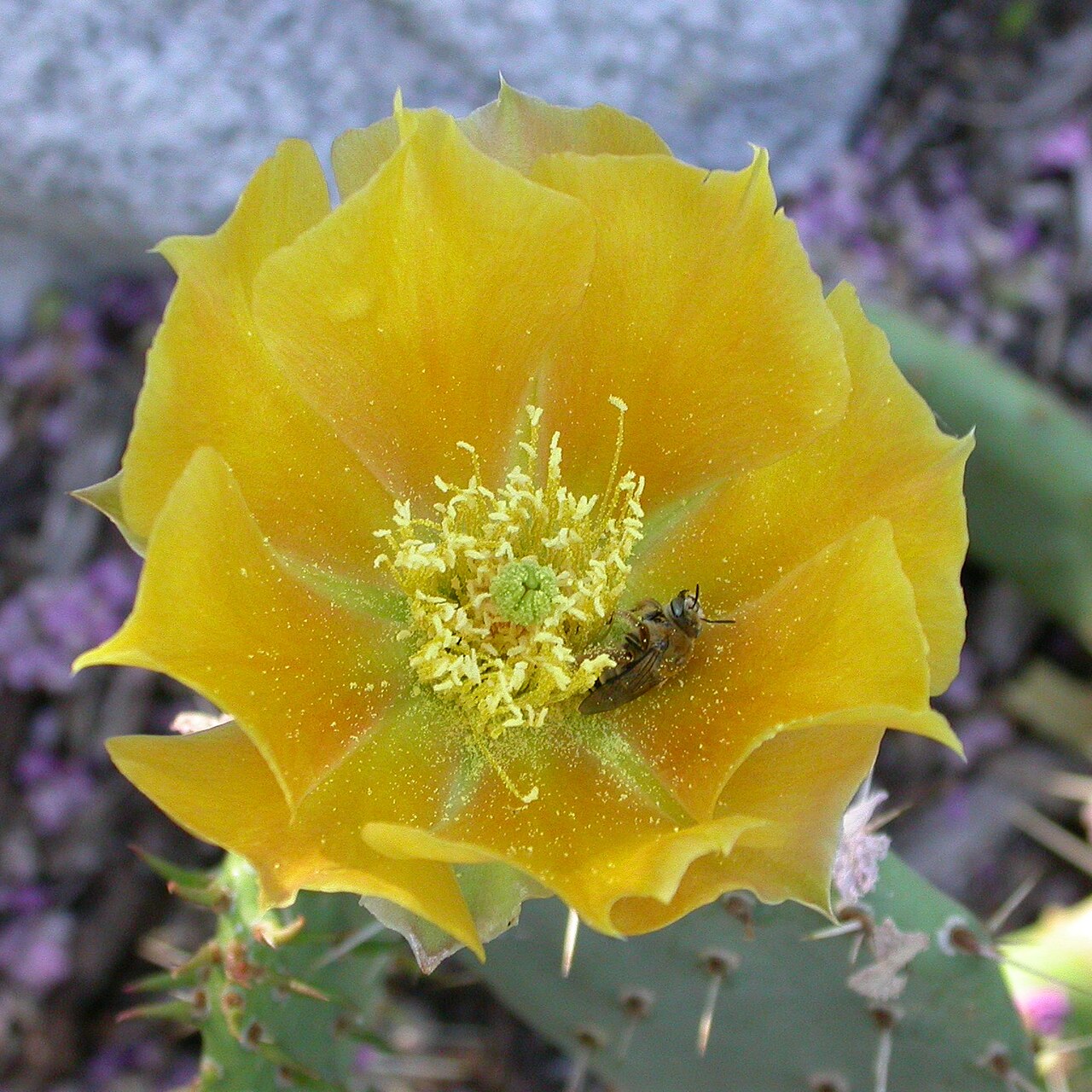
Flowers open from the edges of the upper pads in mid to late spring, each bloom 3 to 5 inches across with many waxy, golden-yellow petals surrounding a dense cluster of yellow-orange stamens. A single flower lasts only a day or two, but a well-established plant produces a long, overlapping succession of blooms across several weeks, each one drawing native bees almost as soon as it opens.
Fruit & Seeds
Pollinated flowers develop into spiny, barrel-shaped fruit (tunas) up to 2 inches long that ripen from green to a deep purplish-red by late summer. The fruit carries fewer, shorter spines than the pads but still bears glochids and should be handled with the same caution. Inside, the pulp surrounds numerous hard, flattened, cream-colored seeds.
Quick Facts
| Scientific Name | Opuntia littoralis |
| Family | Cactaceae (Cactus) |
| Plant Type | Low, mat-forming cactus |
| Mature Height | 1–2 ft |
| Mature Spread | 3–8 ft, forming broad mounded clumps over time |
| Growth Rate | Slow to moderate |
| Sun Exposure | Full sun |
| Water Needs | Low; thrives on little to no summer water once established |
| Soil Type | Well-drained sandy, rocky or clay-loam soils |
| Soil pH | Tolerant of a wide range; neutral to alkaline preferred |
| Bloom Time | April – June |
| Flower Color | Golden yellow |
| Fall Color | None (evergreen pads) |
| Fruit | Spiny red-purple tunas to 2 in, late summer |
| Deer Resistant | Yes |
| USDA Hardiness Zones | 8–11 |
Native Range
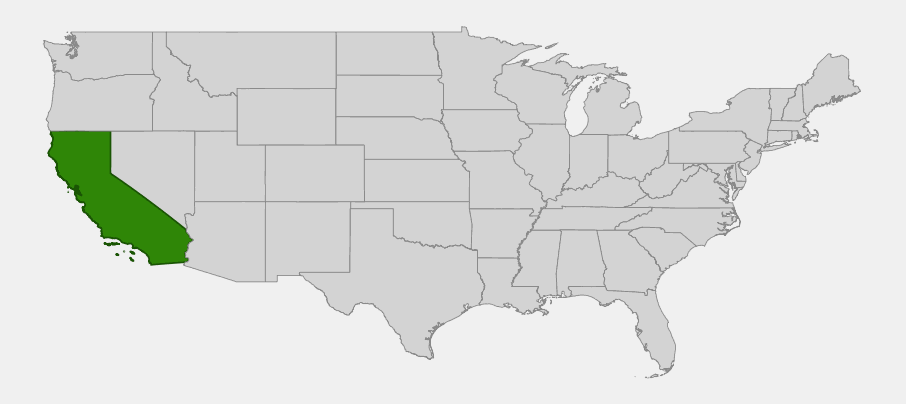
Coastal Prickly Pear is native to the coastal counties of Southern and Central California, from roughly Santa Barbara and Ventura Counties south through the Los Angeles basin, Orange County and San Diego County, including the Channel Islands. It is a true coastal-influence species, generally found within the fog belt and the sage scrub and chaparral communities that fringe the coast rather than the hotter deserts farther inland.
Typical habitat is coastal sage scrub, chaparral, coastal bluffs, dunes and dry grassland openings, usually below about 2,000 feet elevation. It grows on thin, rocky or sandy soils where competition from larger shrubs is limited, often on south-facing slopes and bluff tops exposed to wind and salt spray. Common associates include California sagebrush, coastal buckwheat, laurel sumac and various native sages.
Coastal Prickly Pear is not native outside California; plantings seen elsewhere in warm, dry climates are ornamental introductions, not wild populations. Within its native range, development along the coast has reduced and fragmented much of its original sage scrub habitat, making remaining wild stands, especially on public coastal lands and the Channel Islands, worth protecting.
📋 Regional plant lists featuring Coastal Prickly Pear: not yet covered by one of our regional native plant lists; check back as we continue to expand coverage of Southern California natives.
Growing & Care Guide
Coastal Prickly Pear is about as low-maintenance as a native plant gets, provided it has full sun and sharp drainage. Its main demands on a gardener are patience during establishment and caution during handling.
Light
Give it full sun. Coastal Prickly Pear grows naturally in open, exposed sites along bluffs and in scrub openings, and it flowers and fruits most heavily with a full day of direct sun. In partial shade it survives but stays sparse and blooms far less.
Soil & Water
Plant in well-drained soil — sandy, rocky or gravelly loam is ideal, though the species also tolerates heavier clay as long as it is not kept wet. Water occasionally during the first year or two to help pads establish roots, then taper off; mature plants need little to no supplemental water beyond normal coastal Southern California rainfall. Soggy, poorly drained soil is the most common cause of rot in this species.
Planting Tips
Coastal Prickly Pear is easiest to start from rooted nursery pads rather than seed. Plant in fall or early spring so roots can establish before summer heat. Because of the spines and nearly invisible glochids, site it well away from paths, patios, play areas and anywhere people or pets brush past — a dry slope or the back of a border works well. Always handle pads with long tongs, folded newspaper or thick leather gloves, never bare hands.
Pruning & Maintenance
Little pruning is needed beyond removing damaged or overcrowded pads to control spread, which is best done in cooler months with the same protective handling used at planting. The plant has few pest or disease problems in well-drained soil and needs no fertilizer once established.
Landscape Uses
- Dry slopes and bluffs, where its spreading habit helps stabilize loose soil
- Coastal sage scrub restoration plantings
- Wildlife and pollinator gardens, for its spring bee-magnet flowers
- Low-water demonstration gardens alongside other coastal natives
- Barrier or security plantings below windows or along property lines, set back from foot traffic
Wildlife & Ecological Value
Despite its armament, Coastal Prickly Pear is a quietly important resource for Southern California’s coastal wildlife throughout the year.
For Pollinators
The large, pollen-rich flowers are a strong draw for native bees, including digger bees and leafcutter bees, which often pack the flower center so thoroughly that the stamens visibly move. Honeybees and some beetles visit as well. Because bloom is concentrated into a few intense weeks each spring, the plant provides a reliable, short-season nectar and pollen pulse in sage scrub habitat.
For Birds
The ripe tunas are eaten by a variety of birds, including California towhees, mockingbirds and thrashers, which help disperse the seeds. The dense, spiny pad clusters also offer secure nesting and refuge sites for small birds such as wrentits, protected from most predators by the spines.
For Mammals
Coyotes, woodrats and other small mammals eat the fruit and sometimes the pads, especially during dry periods when other forage is scarce. Woodrats in particular are known to incorporate prickly pear pads into their den structures, using the spines as a defensive barrier.
Ecosystem Role
As a low, spreading succulent, Coastal Prickly Pear helps anchor loose soil on bluffs and slopes and fills structural gaps between larger sage scrub shrubs. Its dense, spiny mounds create predator-resistant microhabitat used by small reptiles and ground-nesting birds, adding structural diversity to an increasingly fragmented coastal plant community.
Cultural & Historical Uses
Like other prickly pears, Coastal Prickly Pear has a long history of use by Indigenous peoples of coastal Southern California, including Chumash and Tongva communities, who gathered the ripe tunas as a seasonal food source and used the pads, once the spines and glochids were carefully removed, in various traditional preparations. These uses are part of the region’s cultural history rather than a modern food source, and wild plants should never be harvested today.
In the nineteenth and twentieth centuries, various Opuntia species, including forms of this one, were occasionally planted as impenetrable living fences along property lines and livestock enclosures in coastal California, a practice that took advantage of the plant’s dense, spiny growth.
Today, Coastal Prickly Pear’s main role is horticultural and ecological: it is increasingly used in coastal sage scrub restoration projects and low-water native gardens, valued for its drought tolerance, wildlife value and ability to hold soil on otherwise difficult bluff and slope sites.
Frequently Asked Questions
Are coastal prickly pear spines dangerous?
The spines can cause painful punctures, and the nearly invisible glochids are often worse, lodging in skin and clothing and causing persistent irritation. Always handle this plant with thick gloves, long sleeves and tools such as tongs or folded newspaper, and plant it well away from paths and play areas.
Can I eat the fruit?
The ripe tunas were historically eaten by Indigenous peoples of the region after careful removal of the spines and glochids, but this is a matter of documented history, not a recommendation. Do not handle or attempt to eat fruit from wild plants.
Is it safe to collect pads from the wild to grow my own?
No. Wild populations of Coastal Prickly Pear occur in sensitive coastal sage scrub habitat that has already been heavily reduced by development, and digging or removing pads damages these stands. Nursery-propagated plants are widely available and establish just as readily.
How much water does this cactus need?
Very little once established. Water occasionally during the first one to two years to help pads root in, then rely on normal coastal rainfall. Overwatering in heavy or poorly drained soil is far more likely to kill this plant than underwatering.
Will coastal prickly pear spread into a problem?
It spreads by rooting pads outward, which can be vigorous but is also easy to control by removing unwanted pads (with proper protective handling). It is not considered invasive within its native California range.

Looking for a nursery that carries Coastal Prickly Pear?
Browse our native plant nursery directory: California