California Sagebrush (Artemisia californica)
Artemisia californica, commonly called California Sagebrush or coastal sagebrush, is the soft, silvery-green shrub that gives coastal sage scrub its name and its distinctive herbal fragrance. Brush past a stand on a warm afternoon and the air fills with a sharp, resinous scent — earning the plant its affectionate nickname “cowboy cologne” among hikers and ranchers alike.
Despite the name, California Sagebrush is not a true sage (Salvia) nor the same plant as the Great Basin sagebrush (Artemisia tridentata) of the interior West; it belongs to the wormwood genus within the sunflower family and is built for an entirely different climate — the fog-influenced, dry-summer coastal belt of California rather than the cold, continental Great Basin. Its finely divided, thread-like leaves and loose, airy form are instantly recognizable once you know to look for them.
California Sagebrush is considered a keystone species of coastal sage scrub, one of the most imperiled plant communities in the state due to decades of coastal development, and it is the primary habitat plant for the federally threatened California Gnatcatcher. Planting it in the garden is one of the most direct ways home gardeners in its native range can support declining coastal scrub wildlife.
Identification
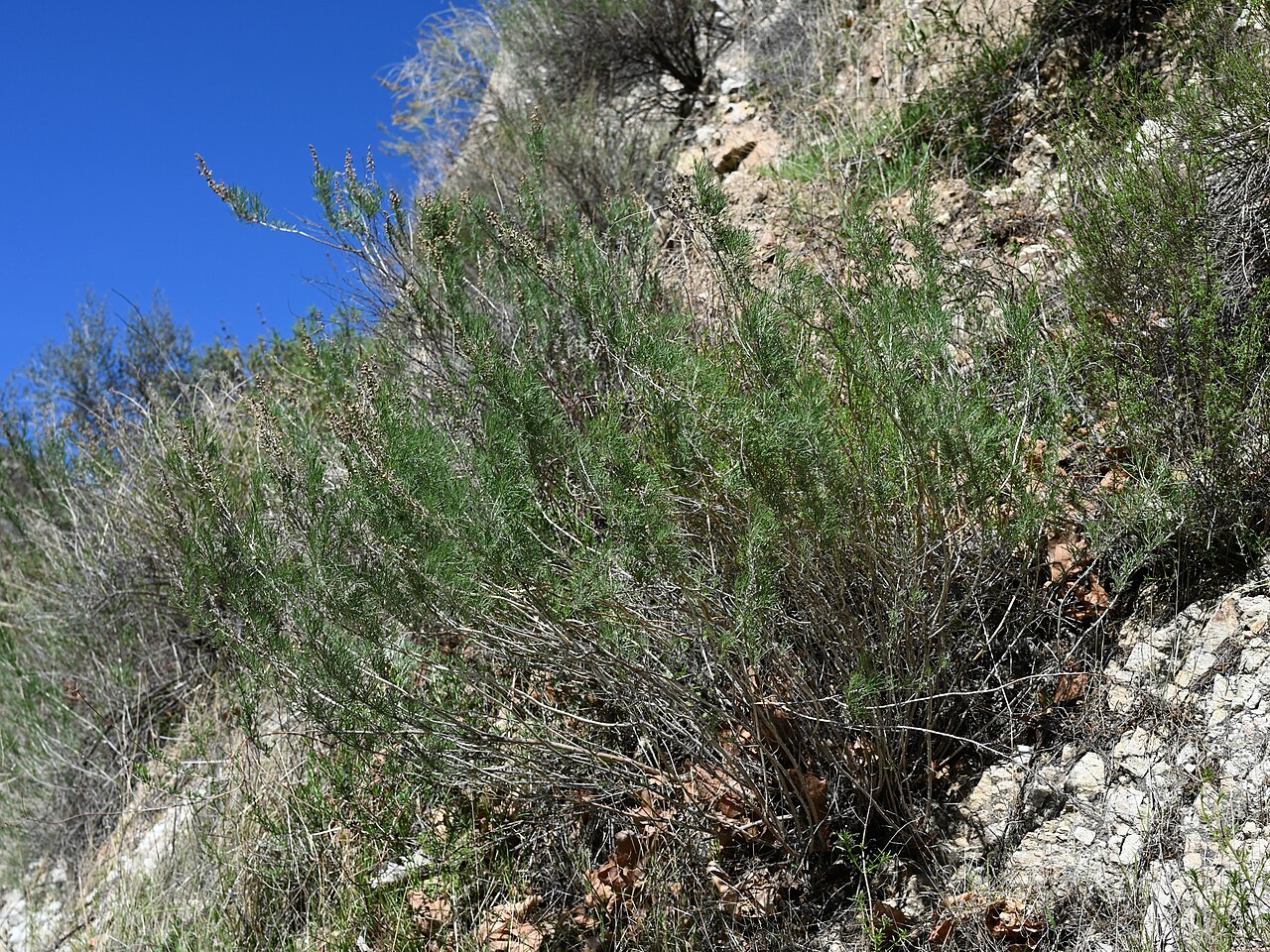
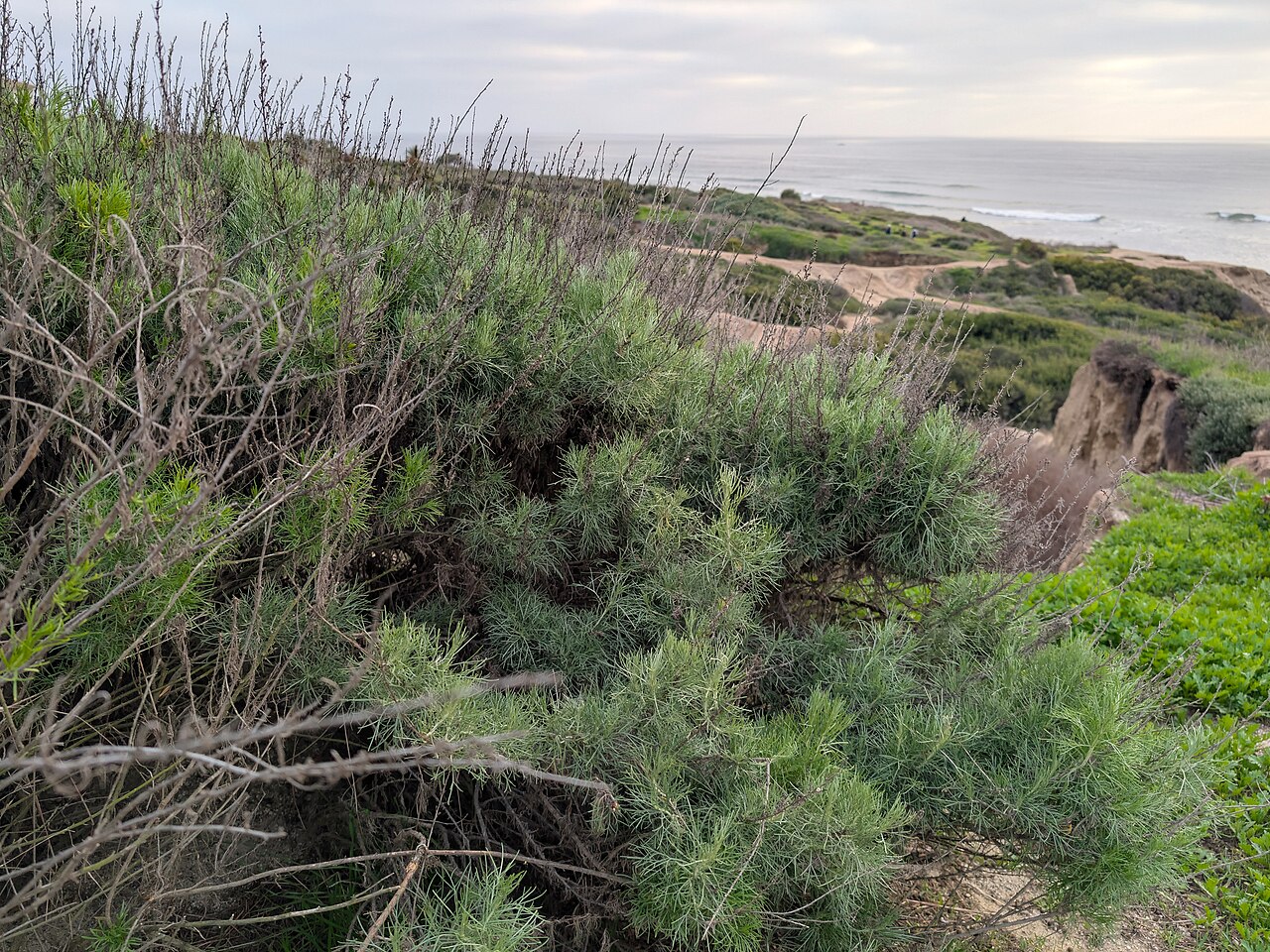
California Sagebrush grows 2 to 5 feet tall and roughly as wide, forming a loose, rounded to sprawling shrub with an airy, open structure quite different from the denser shrubs that often grow alongside it. It is semi-deciduous, sometimes described as “evergray,” dropping a significant portion of its foliage during the hottest, driest part of summer and flushing new growth again with fall and winter rain.
Bark
Stems are slender and woody, gray-brown and shredding with age, typically numerous and arising from the base in a loosely branching, somewhat untidy habit that is part of the plant’s naturalistic charm.
Leaves
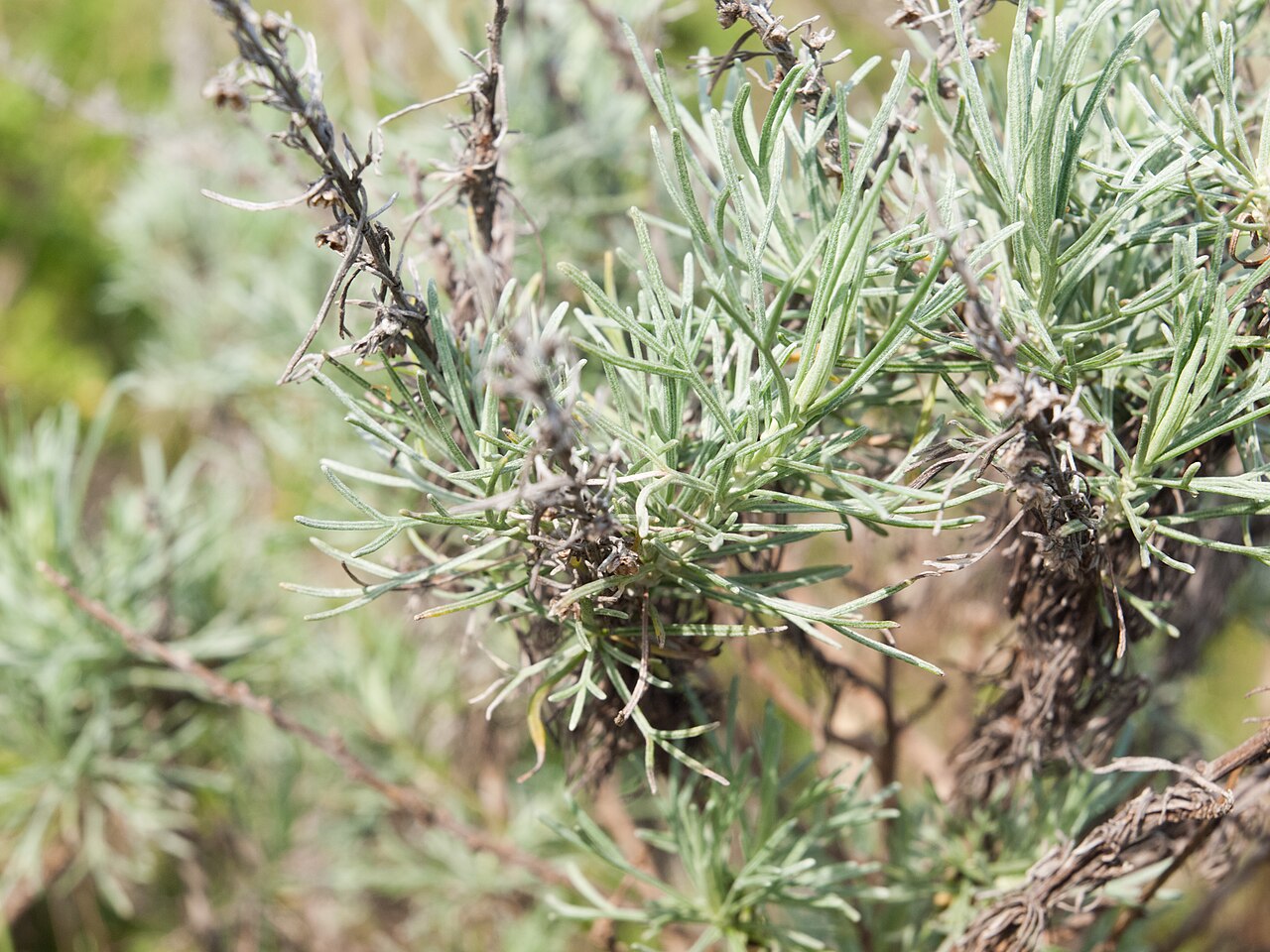
Leaves are the plant’s signature feature: finely divided into thread-like, almost needle-like segments, soft to the touch, and colored a distinctive silvery gray-green. This fine texture and pale color are what set California Sagebrush apart at a glance from the broader, flatter leaves of most other coastal sage scrub shrubs. Crushed foliage releases a strong, pungent, sage-like aroma.
Flowers & Fruit
Flowers are small, pale yellowish-green, and held in narrow, branching clusters at the stem tips, blooming in late summer and fall. They are wind-pollinated and visually inconspicuous compared to the showier coastal sage scrub species that often bloom alongside it, such as sages and buckwheats. Tiny, dry, single-seeded fruits follow and are dispersed primarily by wind.
Quick Facts
| Scientific Name | Artemisia californica |
| Family | Asteraceae (Sunflower) |
| Plant Type | Semi-Deciduous Shrub |
| Mature Height | 2–5 ft |
| Mature Spread | 3–6 ft |
| Growth Rate | Fast |
| Sun Exposure | Full Sun |
| Water Needs | Very low once established |
| Soil Type | Well-drained; sandy, loam, or clay-loam |
| Soil pH | 6.0–7.5 (neutral to slightly acidic) |
| Bloom Time | August – November |
| Flower Color | Pale yellow-green (inconspicuous) |
| Fall Color | Silvery gray-green year-round |
| Fruit | Tiny dry achenes, wind-dispersed |
| Deer Resistant | Yes (aromatic foliage deters browsing) |
| USDA Hardiness Zones | 8–11 |
Native Range
California Sagebrush is native to California only, found along the coast and nearby interior foothills from Mendocino County in the north through the Central Coast and Transverse Ranges to the Mexican border in San Diego County, with its range continuing into northwestern Baja California. It is most abundant and most characteristic of the landscape in central and Southern California, generally within about 50 miles of the coast, though it also extends into drier interior valleys where coastal influence still moderates the climate.
Within this range, California Sagebrush typically grows below about 2,500 feet in elevation on dry slopes, coastal bluffs, and mesas, forming the dominant or codominant shrub of coastal sage scrub alongside species such as black sage, California buckwheat, and laurel sumac. It is strongly associated with the state’s Mediterranean climate pattern of cool, wet winters and long, dry, often fog-moderated summers, and it is not found growing wild outside California.
Coastal sage scrub habitat, including the stands dominated by California Sagebrush, has been reduced by an estimated 70 to 90 percent in Southern California due to coastal urban development, making remaining stands and garden plantings of this species disproportionately important for the wildlife that depends on them.
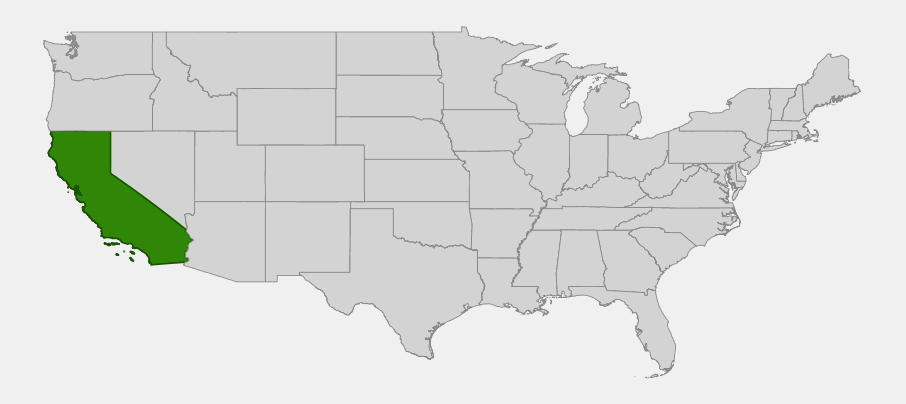
📋 Regional plant lists featuring California Sagebrush: California & Nevada
Growing & Care Guide
California Sagebrush is fast-growing, low-water, and easy to establish, making it one of the most practical coastal sage scrub plants for home gardeners in its native range.
Light
Plant California Sagebrush in full sun, matching the open, exposed coastal bluffs and slopes where it grows wild. It tolerates light part shade but develops a looser, less aromatic form without strong direct sun.
Soil & Water
This shrub adapts to a range of well-drained soils, from sandy to clay-loam, and is excellent drought tolerant once established, often needing no supplemental irrigation after the first year in coastal gardens with typical winter rainfall. It is notably fast-growing for a drought-tolerant native and can fill in a planting within one to two seasons, but like most coastal sage scrub species it is intolerant of regular summer water, which shortens its lifespan and invites root disease.
Planting Tips
Start from small container stock in fall or early winter to take advantage of rainy-season establishment, watering moderately through the first year and then tapering off sharply. Because the species is semi-deciduous and can look sparse or scruffy during peak summer dormancy, plan companion plantings that stay attractive through that season, and space plants 3 to 5 feet apart for a naturalistic, filled-in coastal scrub look.
Pruning & Maintenance
Light pruning after the fall bloom helps maintain a tidier, more compact form, since California Sagebrush can become leggy and sprawling without occasional shaping. Avoid heavy pruning into bare wood, which the plant does not always recover from well; instead prune lightly and regularly rather than infrequently and hard. Individual shrubs are relatively short-lived compared to many natives, often five to fifteen years, so periodic replacement or allowing self-seeding is a normal part of maintaining a planting over time.
Landscape Uses
- Coastal sage scrub restoration alongside black sage and buckwheat
- Erosion control on coastal bluffs and dry slopes
- Wildlife and habitat gardens, especially for gnatcatcher-supporting plantings
- Low-water foundation or filler shrub in xeriscape design
- Fragrant pathway planting where foliage can be brushed in passing
Wildlife & Ecological Value
As the namesake and often dominant plant of coastal sage scrub, California Sagebrush anchors one of the most wildlife-rich and most endangered plant communities in California.
For Birds
California Sagebrush is the primary habitat plant for the California Gnatcatcher, a small, federally threatened songbird found only in coastal sage scrub from Southern California into Baja California; the gnatcatcher nests, forages, and shelters almost exclusively within sagebrush-dominated scrub. Wrentits, California Thrashers, and Spotted Towhees also rely on the dense, low structure this shrub provides within the broader scrub community.
For Mammals
The dense branching structure offers cover for brush rabbits, woodrats, and other small mammals moving through open coastal terrain, while the aromatic foliage generally deters heavier browsing from deer, making it a reliably low-damage choice in gardens near wildland edges.
For Pollinators
Though wind-pollinated and not a major nectar source itself, California Sagebrush provides structural habitat and shelter for native bees and butterflies that depend on the broader coastal sage scrub community, and its fast growth helps quickly re-establish scrub cover after disturbance, supporting faster recovery of the pollinator-friendly plants that grow alongside it.
Ecosystem Role
As a fast-growing pioneer species within coastal sage scrub, California Sagebrush is often among the first shrubs to recolonize disturbed or burned ground, stabilizing soil and creating the shaded, moderated microclimate that allows slower-growing scrub species to establish. Its role as the primary habitat for the California Gnatcatcher also makes it a focal species in regional habitat conservation planning across Southern California.
Cultural & Historical Uses
California Sagebrush was used historically by Indigenous peoples throughout its coastal range, including Chumash and Kumeyaay communities, for its strongly aromatic foliage, which was burned or used in various traditional preparations; the plant’s pungent scent also led to practical uses such as insect-repelling bedding material. Because it grows rapidly and abundantly along the coast, it was a readily available resource across much of Indigenous Southern California.
The plant’s enduring nickname, “cowboy cologne,” comes from its historical use by ranchers and cowhands who would crush the foliage and rub it on themselves, valuing its strong, clean scent during long days working coastal rangeland — a tradition still echoed today by hikers who brush past a stand and catch the same distinctive fragrance.
In recent decades, California Sagebrush has become a symbol of coastal sage scrub conservation more broadly, its decline mirroring the broader loss of this habitat type to coastal development, and its presence in a garden or restoration site now carries real significance for regional efforts to support the California Gnatcatcher and other scrub-dependent wildlife.
Frequently Asked Questions
Is California Sagebrush the same as the sagebrush of the Great Basin desert?
No. California Sagebrush (Artemisia californica) is a coastal California species, while Great Basin or big sagebrush (Artemisia tridentata) is a different species of the cold, high-desert interior West. The two share a genus and a similar aroma but occupy very different climates and ranges.
Why does my California Sagebrush look sparse and scruffy in summer?
This is normal. The species is semi-deciduous and drops a significant portion of its foliage during the hottest, driest part of summer as a drought survival strategy, then flushes new growth again with fall and winter rain. It is not a sign of a dying plant.
How long does California Sagebrush live?
Individual shrubs are relatively short-lived for a native perennial, often five to fifteen years, and fast growth means they can look mature within just a couple of seasons. Many gardeners simply allow self-seeding or periodic replacement rather than treating it as a permanent fixture.
Is California Sagebrush important for any special wildlife?
Yes — it is the primary habitat plant for the California Gnatcatcher, a small songbird federally listed as threatened largely because of coastal sage scrub habitat loss. Planting California Sagebrush within the gnatcatcher’s range directly supports this species’ conservation.
Can California Sagebrush tolerate regular garden irrigation?
Not well over the long term. Like most coastal sage scrub natives, it is adapted to winter rain and dry summers, and consistent summer irrigation tends to shorten its already relatively short lifespan and increase susceptibility to root disease.

Looking for a nursery that carries California Sagebrush?
Browse our native plant nursery directory: California