Engelmann Oak (Quercus engelmannii)
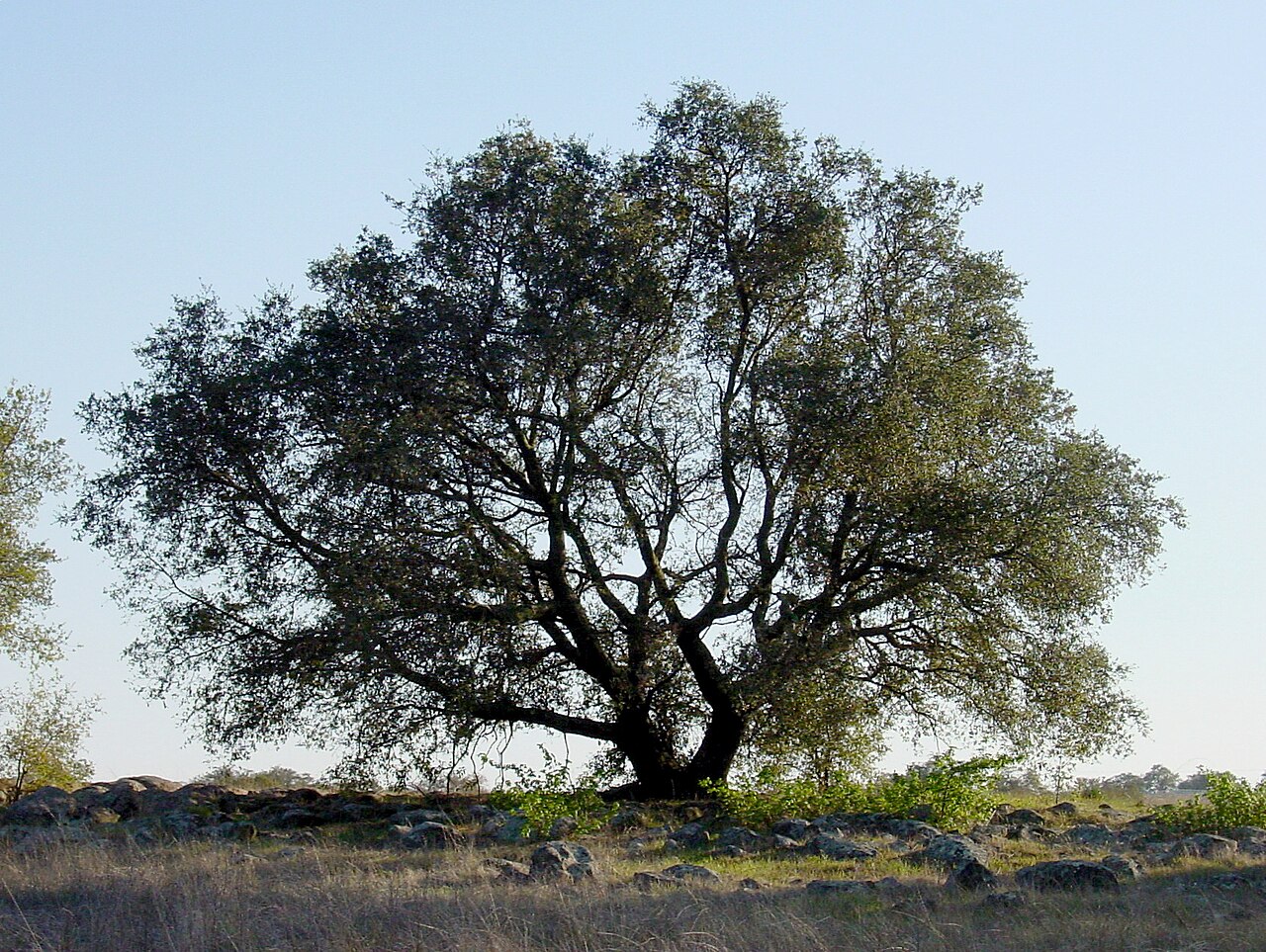
Quercus engelmannii, commonly called Engelmann Oak, Mesa Oak, or Pasadena Oak, is one of the rarest native oaks in the United States — a slow-growing, semi-evergreen tree found almost nowhere outside a handful of Southern California counties. Named for the German-American botanist George Engelmann, this white oak forms the signature tree of the region’s vanishing oak savannas: scattered, broad-crowned giants standing alone or in loose groves over rolling grassland, their blue-green foliage a quiet contrast to the gold hills around them.
Engelmann oak is a member of the white oak group (Quercus section Quercus), distinguished from the state’s more familiar live oaks by its oblong, blue-gray leaves that are often nearly smooth-margined rather than spiny, and by acorns that mature in a single season rather than two. It is also unusual among California oaks in being semi-evergreen: most leaves persist through winter and drop only as new growth emerges in spring, giving the tree a slightly scruffy, two-toned look for a few weeks each year.
Once far more widespread, Engelmann oak woodland has been reduced by more than 90 percent since the mid-1900s, lost mostly to suburban development on the gentle mesas and valleys the species prefers. The trees that remain are long-lived — individuals can stand for centuries — but regeneration is poor across much of the range, so mature Engelmann oaks are increasingly irreplaceable. Planting this species in gardens and restoration projects within its native range is one of the few ways to support its long-term future.
Identification
Engelmann oak typically grows 20 to 50 feet tall with an equal or greater spread, developing a broad, rounded to umbrella-shaped crown on a short, often leaning trunk. Open-grown trees on mesas and valley floors are the most dramatic, with massive horizontal limbs that can sweep close to the ground. In denser stands or on steeper ground the form is more upright and less spreading.
Bark
The bark is thick, gray, and deeply furrowed into small rectangular or checkered plates, similar in texture to other white oaks such as valley oak but generally shallower and grayer. Young branches are smooth and gray-brown, darkening and roughening with age.
Leaves
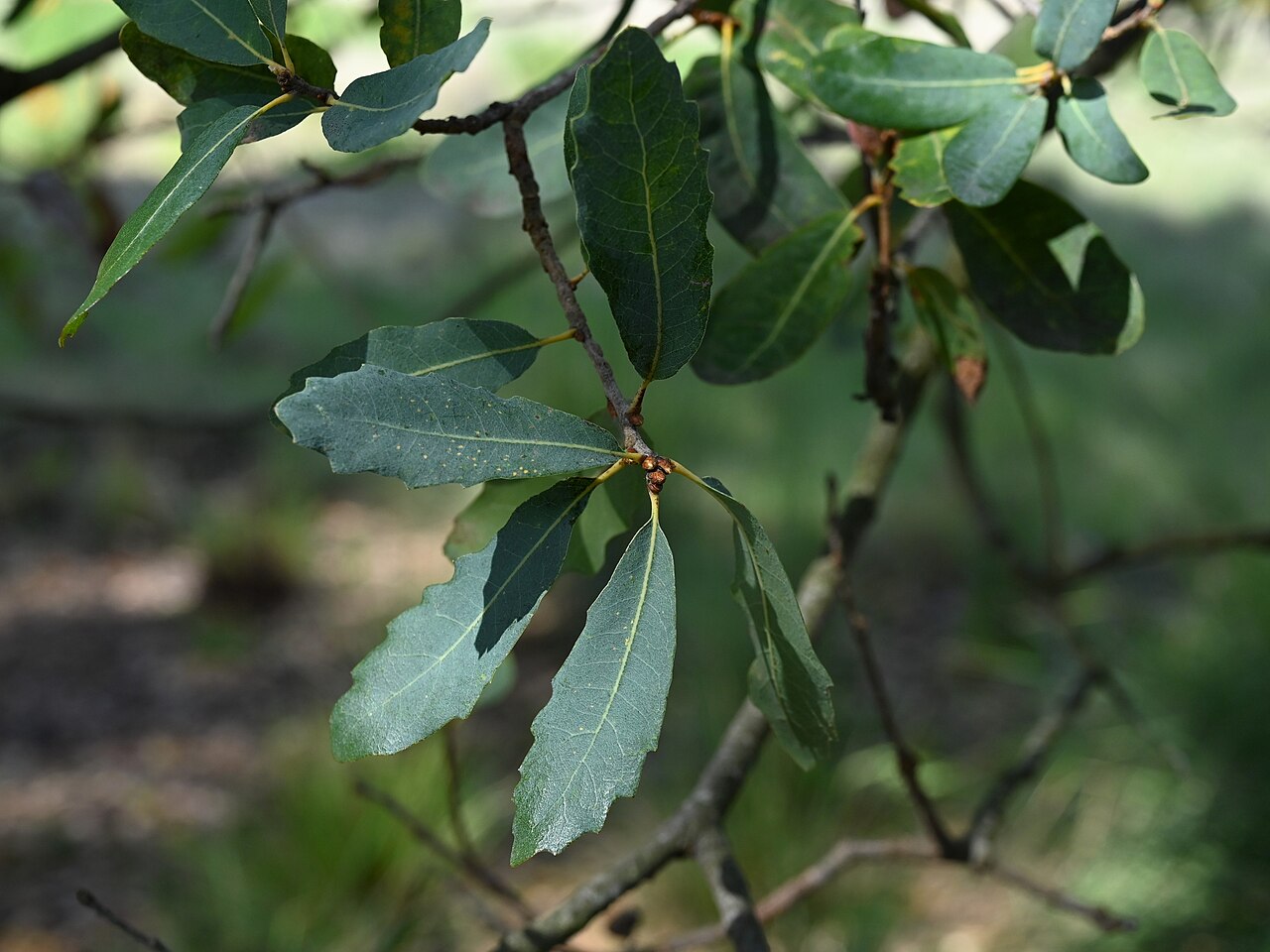
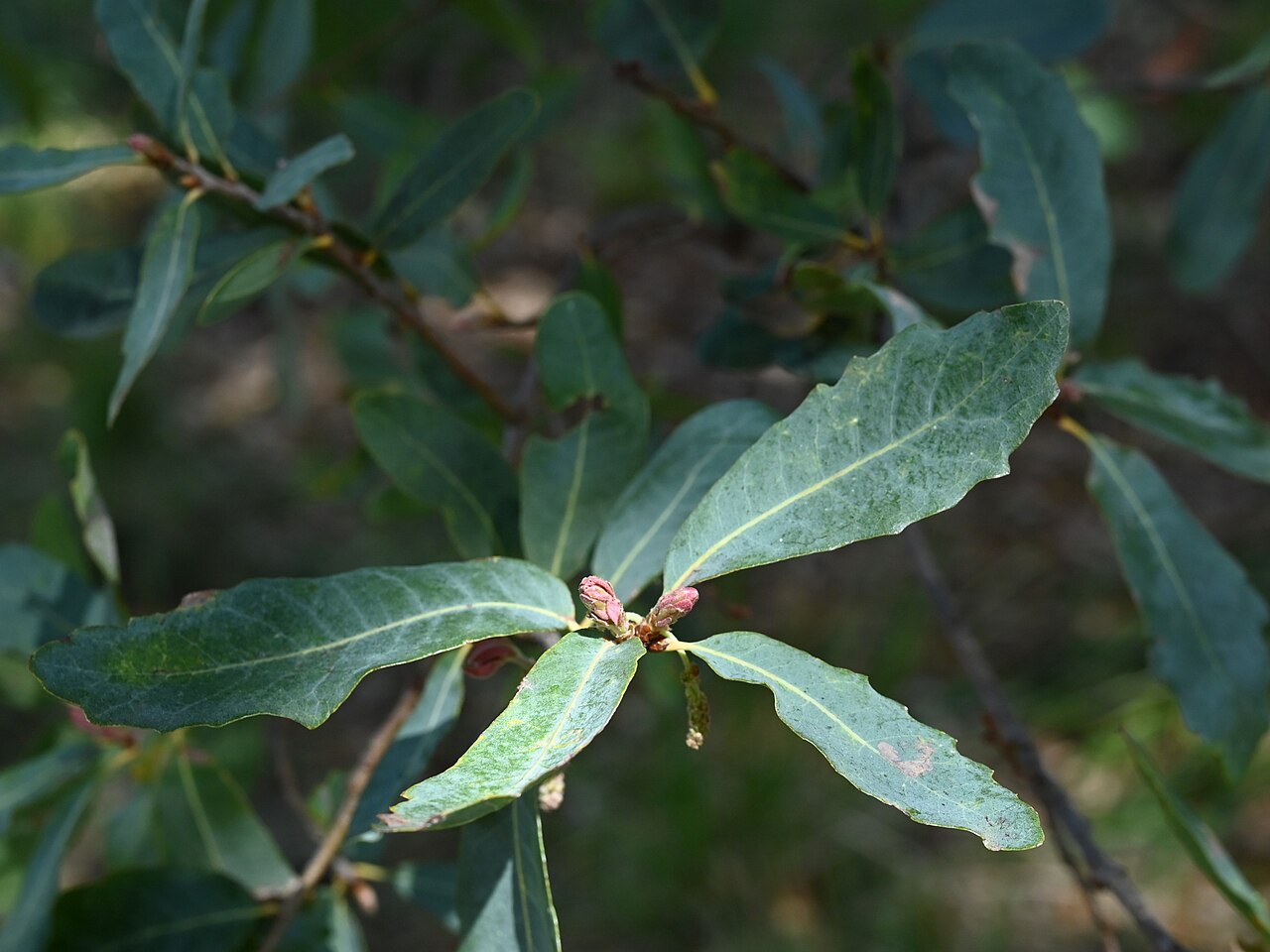
Leaves are 1 to 3 inches long, oblong to narrowly elliptical, and leathery, with a distinctive blue-gray to gray-green cast that sets the species apart from any other California oak. Margins are usually entire or only shallowly wavy-toothed, lacking the bristle tips or spines of live oaks and scrub oaks. The semi-evergreen habit means leaves can remain on the tree into winter before finally dropping as new leaves emerge, so a tree may briefly carry both old and new foliage together.
Flowers & Fruit
Like other oaks, Engelmann oak is monoecious, with inconspicuous male catkins dangling from new growth in spring and tiny female flowers tucked in the leaf axils. Acorns are relatively narrow and 1 to 1½ inches long, maturing in a single growing season (a white oak trait), with a shallow, scaly cap covering about a quarter of the nut. Acorn crops are notoriously irregular from year to year, a pattern that influences everything from wildlife populations to natural regeneration.
Quick Facts
| Scientific Name | Quercus engelmannii |
| Family | Fagaceae (Beech/Oak) |
| Plant Type | Semi-Evergreen Tree |
| Mature Height | 20–50 ft |
| Mature Spread | 20–60 ft, often wider than tall |
| Growth Rate | Slow |
| Sun Exposure | Full Sun to Part Shade |
| Water Needs | Low once established |
| Soil Type | Well-drained loam or clay-loam; tolerates heavy soils |
| Soil pH | 6.0–7.5 (neutral to slightly acidic) |
| Bloom Time | March – April |
| Flower Color | Greenish-yellow (inconspicuous) |
| Fall Color | None notable (semi-evergreen) |
| Fruit | Narrow acorns, 1–1½ in, maturing in one season |
| Deer Resistant | Mostly (young growth may be browsed) |
| USDA Hardiness Zones | 8–10 |
Native Range
Engelmann oak has one of the most restricted ranges of any North American oak. In the United States it is found only in Southern California, on gently rolling mesas, foothills, and valleys of San Diego, Riverside, Orange, and Los Angeles counties. The largest and healthiest remaining stands are in San Diego County, particularly around the Santa Rosa Plateau, Ramona, and the Cuyamaca foothills; the Los Angeles-area populations near Pasadena, which gave the tree one of its common names, are now mostly limited to scattered remnant trees and plantings. The species’ range continues south into northwestern Baja California, Mexico, where additional populations persist.
Engelmann oak occupies a narrow elevation band, generally between about 500 and 4,000 feet, favoring the ecotone between coastal sage scrub or chaparral and valley grassland. It typically grows on well-drained mesa tops and gentle slopes with clay-loam or loam soils that stay moist in winter and dry out completely by summer — conditions it shares with, and sometimes grows alongside, coast live oak at lower, wetter sites and California black oak at higher elevations.
Because so much of its native habitat sits directly in the path of Southern California’s urban growth, Engelmann oak is considered one of the state’s most threatened oak species. It is not federally listed, but it is tracked as a California Rare Plant Rank species, and many of the remaining groves are now protected within county parks, ecological reserves, or conservation easements. Gardeners in its native counties can help by planting local-genotype trees and by protecting existing specimens from grading, soil compaction, and overwatering.
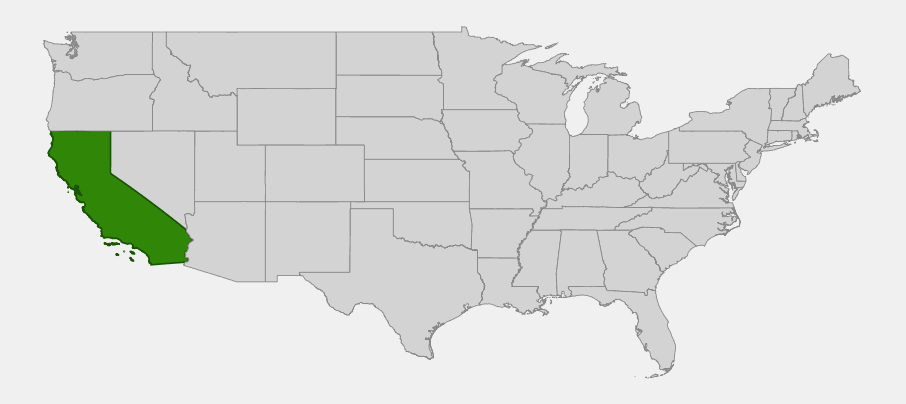
📋 Regional plant lists featuring Engelmann Oak: California & Nevada
Growing & Care Guide
Engelmann oak is a rewarding but patient-testing tree for gardeners within or near its native range. It wants exactly the conditions that made it rare in cultivation elsewhere: dry summers, winter rain, and soil that is never artificially irrigated once established.
Light
Plant Engelmann oak in full sun for the best form and densest canopy; it tolerates light part shade when young but grows more open and leggy without direct sun. Mature trees cast enough shade of their own to shelter an understory of shade-tolerant natives.
Soil & Water
This oak is adapted to well-drained loam and clay-loam soils and is notably drought tolerant once established, surviving on winter rainfall alone through most of its range. The single greatest threat to a planted or existing Engelmann oak is summer water: irrigation, lawn runoff, or soil grading within the root zone encourages root and crown rot and can kill mature trees within a few years. Keep irrigation away from the trunk and existing canopy drip line entirely once a tree is established.
Planting Tips
Start from small container stock or acorns collected locally, since Engelmann oak resents transplanting as a larger specimen and develops a long taproot early. Plant in fall to take advantage of winter rains, water sparingly through the first one to two summers to help the root system establish, and then step irrigation down to nothing. Give young trees generous space — 30 feet or more from structures and other trees — to accommodate the eventual wide, low crown.
Pruning & Maintenance
Prune minimally and only to remove dead, crossing, or hazardous limbs, ideally in late summer when oaks are less susceptible to fungal pathogens. Avoid heavy pruning that opens the canopy to sunscald on the smooth gray bark. Because the species is slow-growing and long-lived, patience is part of its care: a young Engelmann oak may take decades to reach the broad, spreading form seen in old savanna trees.
Landscape Uses
- Specimen shade tree on large properties with room for a wide mature crown
- Oak savanna restoration paired with native bunchgrasses and wildflowers
- Habitat gardens supporting acorn-dependent wildlife
- Low-water landscaping once established, needing no summer irrigation
- Erosion control on gentle slopes within its native elevation range
Wildlife & Ecological Value
Engelmann oak savanna is a keystone habitat type in Southern California, and the tree itself supports a disproportionate share of the region’s native wildlife relative to how little of it remains.
For Birds
Acorn Woodpeckers rely on Engelmann oaks for both food and the soft-barked snags they use as granary trees, drilling thousands of holes to store acorns for winter. Western Scrub-Jays, Acorn Woodpeckers, and California Towhees all forage in and around the open canopy, while raptors such as Red-tailed Hawks use the broad limbs as hunting perches over the grassland below.
For Mammals
Mule deer browse young growth and acorns, and acorns are a significant fall and winter food source for California ground squirrels, woodrats, and other small mammals, which in turn support the coyotes and bobcats that hunt them in savanna habitat.
For Pollinators
While the wind-pollinated flowers offer little nectar, the tree’s structure matters more than its blooms: Engelmann oak’s open, mature canopy and the native grassland wildflowers it commonly grows above support a range of native bees and butterflies through the surrounding plant community.
Ecosystem Role
As a foundation species of its namesake savanna habitat, Engelmann oak moderates soil moisture and temperature beneath its canopy, supports a distinct understory plant community, and provides the vertical structure many savanna wildlife species depend on for nesting and shelter. Because mature trees are slow to replace once lost, each remaining Engelmann oak represents decades to centuries of accumulated ecological value.
Cultural & Historical Uses
Acorns from Engelmann oak and other California white oaks were an important food source for Indigenous peoples of Southern California, including the Kumeyaay and Luiseño, who gathered, leached, and ground them into meal after processing out the bitter tannins. The trees’ savanna habitat, maintained in part by periodic burning, also supported the grassland seed and bulb harvests that were a major part of the regional diet.
The common name “Pasadena oak” reflects the species’ historical abundance around the San Gabriel Valley, where scattered Engelmann oaks still stand as remnants of once-extensive savanna, some incorporated into parks and private estates as the area urbanized through the twentieth century. Many of these legacy trees are now valued as living landmarks, decades or centuries old and increasingly rare.
Today the species’ main human story is one of conservation. Land trusts, regional park districts, and university reserves in San Diego and Riverside counties actively protect remaining Engelmann oak savanna, and the tree has become something of a flagship species for Southern California oak woodland conservation more broadly.
Frequently Asked Questions
Is Engelmann oak the same as Engelmann spruce?
No. Despite sharing part of their name, honoring the same botanist, these are unrelated species. Engelmann oak (Quercus engelmannii) is a Southern California broadleaf oak, while Engelmann spruce (Picea engelmannii) is a conifer of the Rocky Mountains, with no overlapping range or close relationship.
Why is Engelmann oak considered rare?
Its native range is tiny to begin with — limited to a handful of Southern California counties and part of Baja California — and much of that range overlaps directly with fast-growing suburban areas. Habitat loss, combined with poor natural regeneration in many remaining stands, has made it one of the state’s most conservation-concerned oaks.
Can Engelmann oak handle garden irrigation?
Not well in summer. Like many California oaks, it evolved with a dry summer dormant season, and regular summer water around the root zone is one of the most common causes of decline in cultivated and even wild Engelmann oaks. Keep irrigation minimal after the first couple of establishment years.
How long does Engelmann oak live?
Individual trees can live for several centuries. Combined with its slow growth, this makes mature Engelmann oaks effectively irreplaceable on a human timescale, which is part of why protecting existing trees matters as much as planting new ones.
Will Engelmann oak grow outside Southern California?
It can be grown in gardens with a similar Mediterranean climate, but it is best suited and most ecologically valuable within or very near its native range in San Diego, Riverside, Orange, and Los Angeles counties, where local wildlife and plant communities are already adapted to it.

Looking for a nursery that carries Engelmann Oak?
Browse our native plant nursery directory: California