Allegheny Monkeyflower (Mimulus ringens)
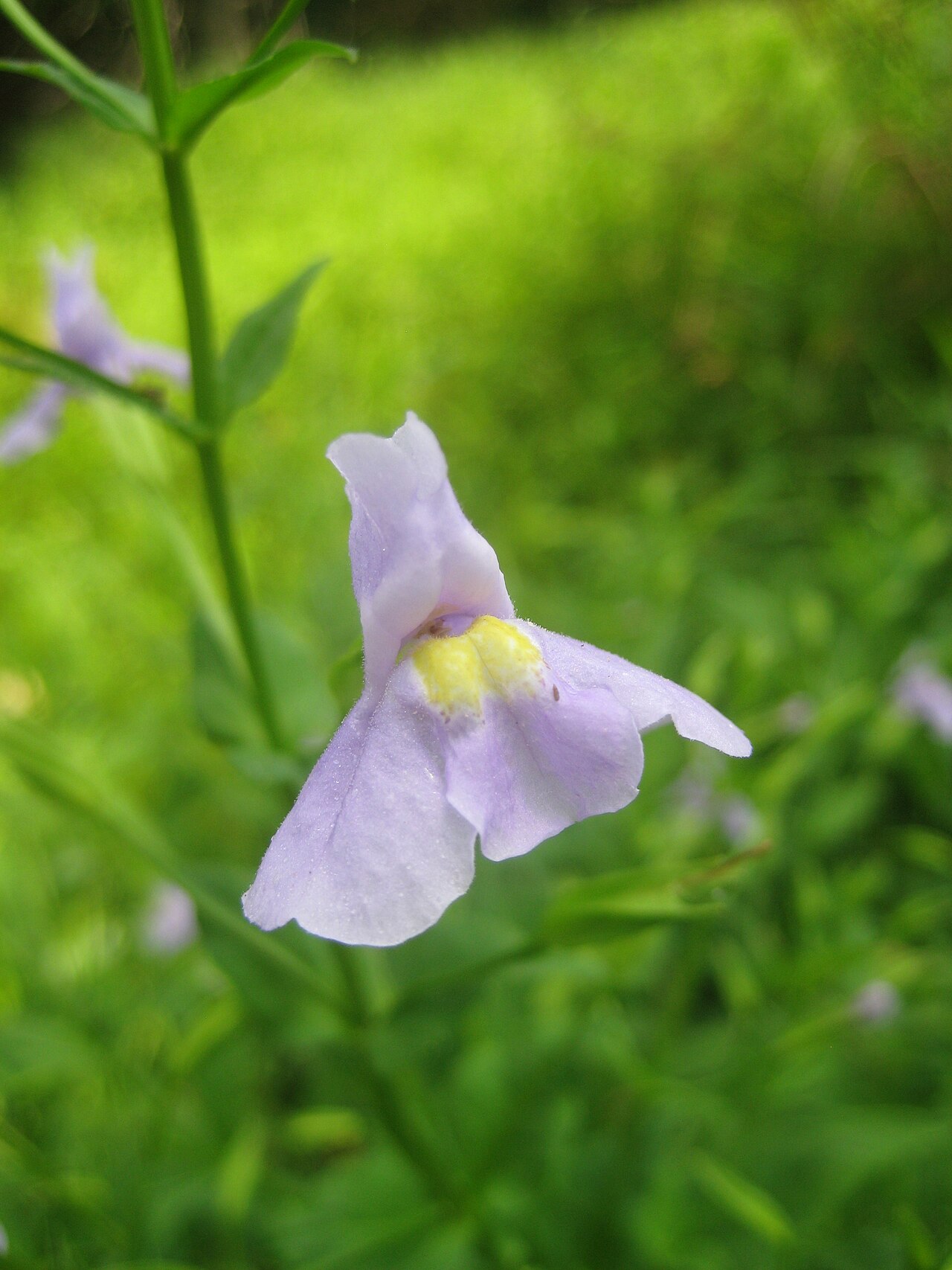
Allegheny monkeyflower (Mimulus ringens) turns a persistently damp garden edge into a summer flower patch. Its lavender-blue blooms have a wide lower lip and a small yellow-marked throat, held above opposite leaves on square stems. Unlike many plants sold for rain gardens, this eastern North American native actually welcomes wet soil. It belongs near a pond margin, seep, or low swale rather than on the dry upper rim of a basin.
In Maryland, Virginia, and West Virginia, use this species where the ground stays moist after the spring rains have passed. The regional table calls for full sun and wet soil; those are useful starting points, not interchangeable labels for drought tolerance. A plant in a sunny but rapidly draining gravel bed will need a different level of care from one beside a naturally wet meadow. Observe the site in July before deciding that a puddle seen in March represents a suitable home.
The garden reward is a succession of small, intricate flowers that bumblebees can work while larger perennials provide a backdrop. Give monkeyflower space to seed into damp open patches, or remove some capsules if a small water garden needs tighter boundaries. Buy nursery-propagated plants identified as M. ringens: the familiar yellow western monkeyflowers and the eastern winged monkeyflower are different species with different identification features.
Identification
Stems and Growth Habit
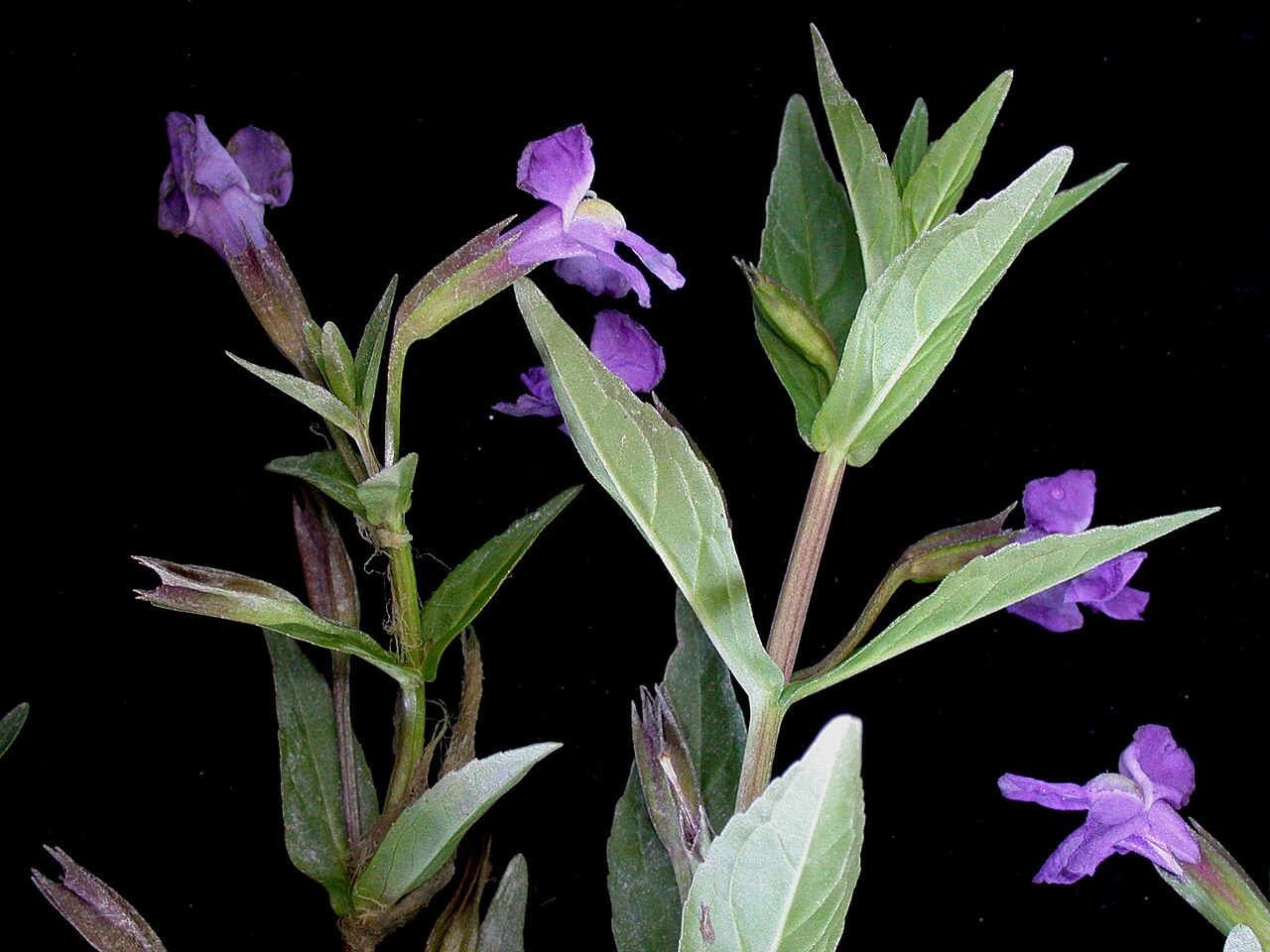
This is a herbaceous perennial, not a woody shrub. Upright, usually smooth stems have four clear angles and may branch, particularly toward their lower portions. Short underground rhizomes help a clump persist between seasons. Most garden references give a height of about 1–3 feet; vigorous stems can be taller in favorable wet ground. Height varies with light and competition, so use the square stem, leaf attachment, and flowers together instead of relying on stature alone. Winter dieback above ground is normal.
Leaves
Leaves stand opposite one another along the stem. They are narrow to oblong, pointed, and finely toothed, with little or no leaf stalk; the bases can appear to clasp the stem. Individual leaves may approach 4 inches long. Their nearly stalkless attachment is particularly useful when distinguishing M. ringens from winged monkeyflower, M. alatus, whose leaves have evident petioles and whose stem is conspicuously winged. Photograph a middle section of stem as well as the flower if you need identification help.
Flowers
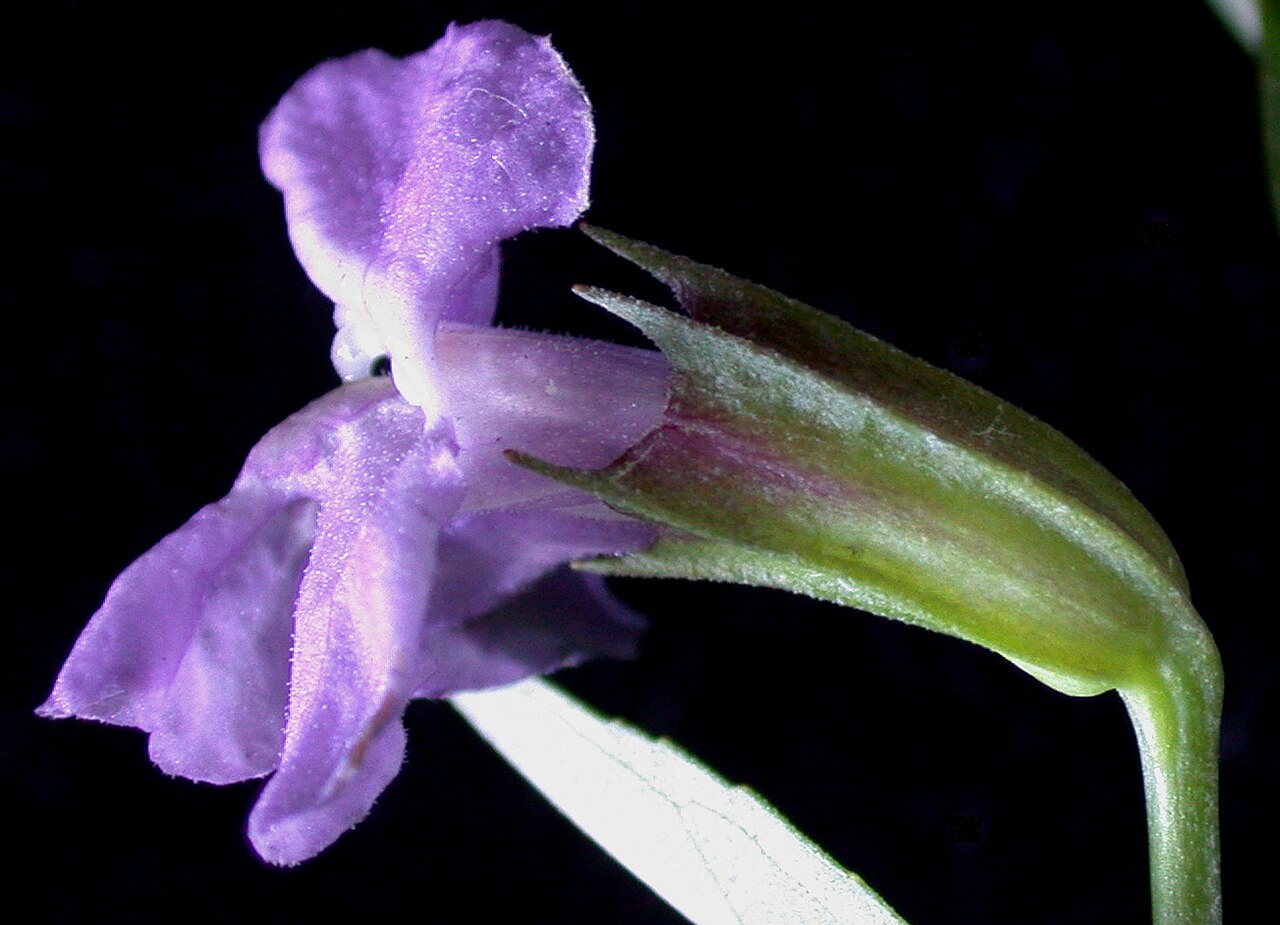
Flowers emerge from the upper leaf axils on slender stalks. A tubular base opens into two lips, with the lower lip forming a broad landing platform; the yellow throat markings contrast with the usual lavender or blue-purple corolla. Flowers are roughly an inch long. Buds may occur opposite one another without opening on the same day. A display is therefore built from successive short-lived flowers, not from one bloom lasting all summer. The green ribbed calyx remains visible behind the corolla.
Fruit and Seeds
After pollination, an oblong capsule develops inside the calyx. The seeds are minute and numerous. They can establish in nearby damp, lightly vegetated ground, a useful habit in a naturalized wet meadow but one worth watching in a formal border. A spent flower alone does not mean the whole plant has finished blooming: look farther up the stems for new buds before deadheading. Seedlings lack the dramatic flowers and are easiest to manage while small, after their identity is clear.
Quick Facts
| Scientific Name | Mimulus ringens L. |
| Family | Phrymaceae (lopseed family) |
| Plant Type | Herbaceous wetland perennial |
| Mature Height | Usually 1–3 ft; occasionally taller in favorable habitat |
| Mature Spread | About 9–12 in per clump; seedlings may extend a patch |
| Growth Rate | Moderate |
| Sun Exposure | Full sun; tolerates partial shade |
| Water Needs | Moist to wet; not a dry-bed plant |
| Soil Type | Moist loam and wet meadow or pond-margin soils |
| Soil pH | Use locally suitable wetland soil; no narrow numerical target prescribed |
| Bloom Time | Summer into early fall, depending on locality |
| Flower Color | Usually lavender to blue-purple, with a pale or yellow-marked throat |
| Fall Color | Not grown for fall foliage; stems die back seasonally |
| Fruit | Small capsules containing numerous fine seeds |
| Deer Resistant | Often avoided; browsing is still possible |
| USDA Hardiness Zones | 3–8 |
Native Range
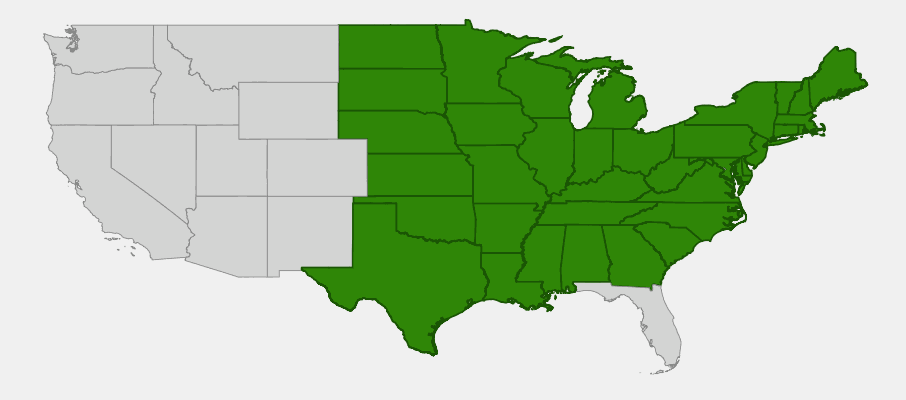
The native distribution is centered in eastern and central North America. Lady Bird Johnson Wildflower Center describes a span from Saskatchewan to Nova Scotia, south toward Georgia, Alabama, Louisiana, and northeastern Texas. Wet meadows and streambanks are characteristic settings. The species is native in the Mid-Atlantic region covered by this regional list, but it is tied to suitable hydrology rather than occurring uniformly across every landscape in those states.
Distribution lists sometimes include western occurrences without explaining their origin. Introduced populations in the Pacific Northwest are not evidence that this is a locally native western garden plant. The map here summarizes the eastern and central U.S. native area and omits those western introductions; it does not show every county, wetland, or exceptional outlying record. Consult the linked USDA record and a state flora when local provenance matters.
For a home landscape, match the plant to the wet part of the regional habitat gradient. A freshwater pond edge or seasonally wet meadow is a better analogy than an upland woodland floor. Plants that tolerate flooding may still need light and oxygen around emerging shoots: a deep pond bottom is not equivalent to a shoreline. In restoration work, retain naturally occurring populations and obtain stock appropriate to the watershed rather than moving plants from another drainage.
📋 Regional plant list: Maryland, Virginia & West Virginia
Growing & Care Guide
Light
Start with full sun for a compact plant and good flowering, in keeping with the regional list. Partial shade can work when the root zone remains wet, but heavy shade from shrubs or broad-leaved wetland perennials reduces the space available for flowering stems. Before planting, look at the site during the leafed-out season: a bright March streambank can be heavily shaded by June. Move an underperforming garden clump to a brighter wet site rather than treating lack of bloom automatically as a fertilizer deficiency.
Soil and Water
The key requirement is a reliable supply of moisture. A loamy pond shelf, wet swale, or low meadow pocket can supply that naturally. In an ordinary border, keep the root ball from drying while it establishes and during prolonged summer drought. Avoid siting this plant high on a fast-draining rain-garden bank merely because the basin occasionally floods below it. NC State also describes container culture with a shallow layer of water above rich soil; that is a managed water-garden option, not a reason to submerge foliage deeply.
Planting Tips
Plant nursery stock with the crown at its original depth and settle soil gently around the roots. In a pond basket, use a suitable mineral water-garden medium rather than a loose mix that floats away. Place the crown on a shallow shelf and adjust water levels gradually, keeping leaves above water. In ground plantings, allow approximately a foot around a young clump and more if you welcome a self-sown patch. Water the root ball even when the surrounding soil looks damp; container media can dry independently.
Pruning and Maintenance
There is no woody framework to prune. Remove damaged shoots as needed, and decide whether to leave seed capsules for natural recruitment. In a small garden, thinning excess seedlings is often more effective than cutting back the entire flowering patch. Leave some standing stems where they do not obstruct a path or water flow, then clean up selectively before new growth becomes difficult to see. Avoid indiscriminate mowing of a wetland planting during its flowering season; it removes both the display and resources for visiting insects.
Propagation
Seed and division or root-based propagation are practical routes, but purchased seed should come with a species-specific germination protocol. The seed is fine enough that deep burial is inappropriate: use a firm, moist surface and follow the supplier’s temperature and pretreatment guidance. Prevent trays from drying or being washed out by heavy rain. Established garden clumps can be separated with rooted portions intact and replanted promptly in moist soil. Do not collect from wild wetlands without permission or remove plants from sensitive natural populations.
Troubleshooting
Wilting in a nominally wet garden usually warrants a close look at the actual root zone. A short flood followed by weeks of drying, a pot perched above the waterline, or an unwatered original root ball can all leave roots dry. Sparse flowering may reflect shade or competition. Inspect rather than spraying routinely: some leaf feeding is expected in a wildlife planting. When stems collapse, check water depth and soil condition before assuming that a native wetland plant is immune to every kind of water-related stress.
Landscape Uses
- Plant in the wetter floor of a sunny rain garden that retains summer moisture.
- Combine small groups with locally appropriate sedges along a freshwater pond edge.
- Use a managed shallow water-garden container where dry garden soil cannot support it.
- Let a few seedlings fill gaps in a naturalized wet meadow, while maintaining paths and access.
Wildlife & Ecological Value
For Pollinators
Bumblebees are important visitors and effective pollinators of the two-lipped flowers. Watch a flowering group in the morning to see how a bee contacts the flower while reaching the nectar. Peer-reviewed work on M. ringens has examined how flower number, spacing, and bee movements influence pollen transfer and selfing. For gardeners, the practical lesson is to retain multiple healthy flowering plants and avoid insecticide exposure, not to promise that one plant will support every local bee species.
For Butterflies and Caterpillars
Extension and Wildflower Center references list common buckeye and Baltimore checkerspot among insects that can use this plant as a larval host. Host use is regional and depends on the insect population, so do not treat those records as a guarantee of butterflies in a particular yard. A few chewed leaves can be a sign that the planting is functioning as habitat. Keep nearby vegetation diverse and avoid broad-spectrum treatments that remove caterpillars along with unwanted pests.
For Birds and Mammals
The most defensible wildlife role here is as a flowering and foliage resource within a wetland plant community. Its cover and associated insects can contribute to a richer pond margin, but it is not a berry-bearing shrub or a major browse crop. Deer often leave monkeyflower alone, yet no garden plant is completely safe under heavy browsing pressure. Protect new plugs if local deer repeatedly sample them, and reassess once a clump has established.
Ecosystem Role
Rhizomes, roots, and seasonal stems occupy otherwise open wet soil and contribute structure to a mixed planting. They do not replace the hydrologic functions of a whole wetland or make a drainage alteration harmless. Combine this species with other regionally native plants of complementary stature, and preserve natural water movement. Where it is native, modest seedling recruitment is part of the community; where it is introduced, native status should not be inferred from an attractive flower or a North American origin.
Cultural & Historical Uses
The common name monkeyflower refers to the fanciful face-like appearance of the flower, not to any relationship with primates. Allegheny monkeyflower and square-stemmed monkeyflower are useful names, but neither substitutes for the scientific name when purchasing stock. The epithet ringens refers to a gaping or open-mouthed form, an apt description of the flower’s two lips.
Monkeyflowers have played an important role in botanical studies of pollination and reproduction. M. ringens is particularly useful because its floral displays, bee visits, and capsule production can be observed and compared. This scientific history is separate from garden performance: an experiment in one population does not establish a universal flowering schedule, seed count, or level of deer resistance for every cultivated plant.
The soundest contemporary use of this species is ornamental and ecological planting in suitable wet ground. This guide does not recommend medicinal or culinary use. For a regional native garden, provenance and habitat fit are more relevant than a dramatic historical claim. Buy propagated stock, keep its label, and record where it succeeds so future divisions can be shared with accurate identification.
Frequently Asked Questions
Is Allegheny monkeyflower the same as yellow monkeyflower?
No. This page describes the eastern lavender-flowered Mimulus ringens. Yellow-flowered western monkeyflowers sold under similar common names are different taxa. Use the scientific name and leaf and stem features to confirm a purchase.
Can it grow in a normal flower bed?
Only if the bed remains reliably moist. A well-watered low border may work, but a dry sunny border is a poor match. Choose another native species if maintaining wet soil would require constant irrigation.
Why do individual flowers disappear so quickly?
Individual flowers are short-lived, while new buds continue opening over the season. Look for developing buds and capsules before assuming that flowers have been damaged or that the plant is finished.
Will it take over my rain garden?
It can spread locally by rhizomes and produce seedlings on damp bare ground. The amount depends on conditions. Thin seedlings or remove selected seed capsules in a small design rather than labeling all native recruitment invasive.
How tall should I expect it to grow?
Plan for approximately 1–3 feet in most gardens, with taller stems possible in favorable wet ground. Give it enough space that taller neighboring perennials do not shade the lower shoots.
Sources & Further Reading
- NC State Extension: Mimulus ringens
- Lady Bird Johnson Wildflower Center: Mimulus ringens
- USDA PLANTS: Mimulus ringens
- Pollination research: floral display and reproductive success
Find Native Plants
Ask growers about nursery propagation and regional provenance. Browse our Maryland native plant nurseries, Virginia native plant nurseries, West Virginia native plant nurseries directory for suppliers.