Winged Monkeyflower (Mimulus alatus)
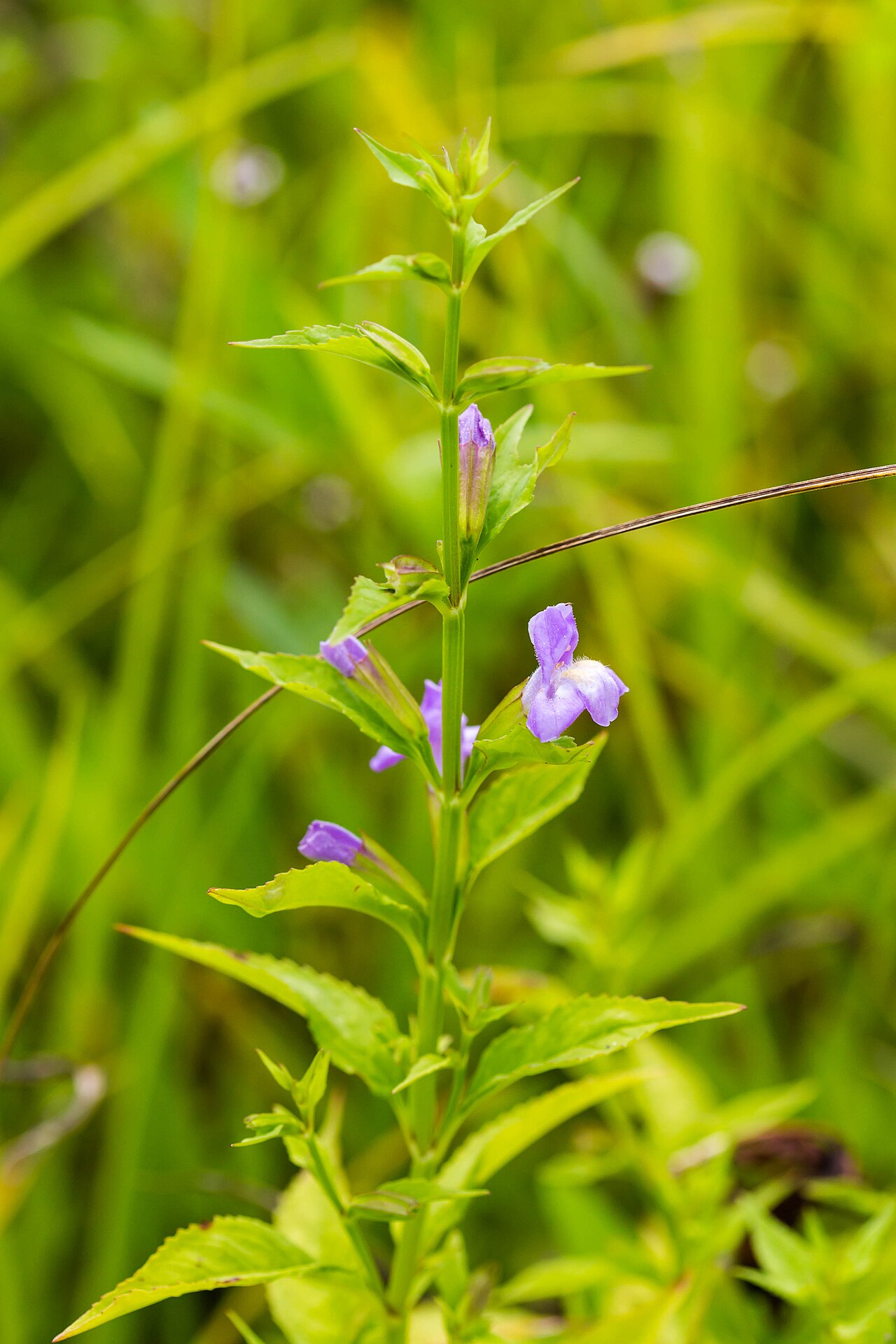
Mimulus alatus, commonly called the Winged Monkeyflower or Sharpwing Monkeyflower, is a native wetland wildflower of the eastern and central United States. It belongs to the figwort family (Phrymaceae, formerly lumped into Scrophulariaceae), a group known for snapdragon-like, two-lipped flowers. The “winged” in its name refers to the narrow ridges, or wings, that run down the four angles of its square stem — a feature that, along with its distinctly stalked leaves, separates it from its close relative the Allegheny monkeyflower (Mimulus ringens).
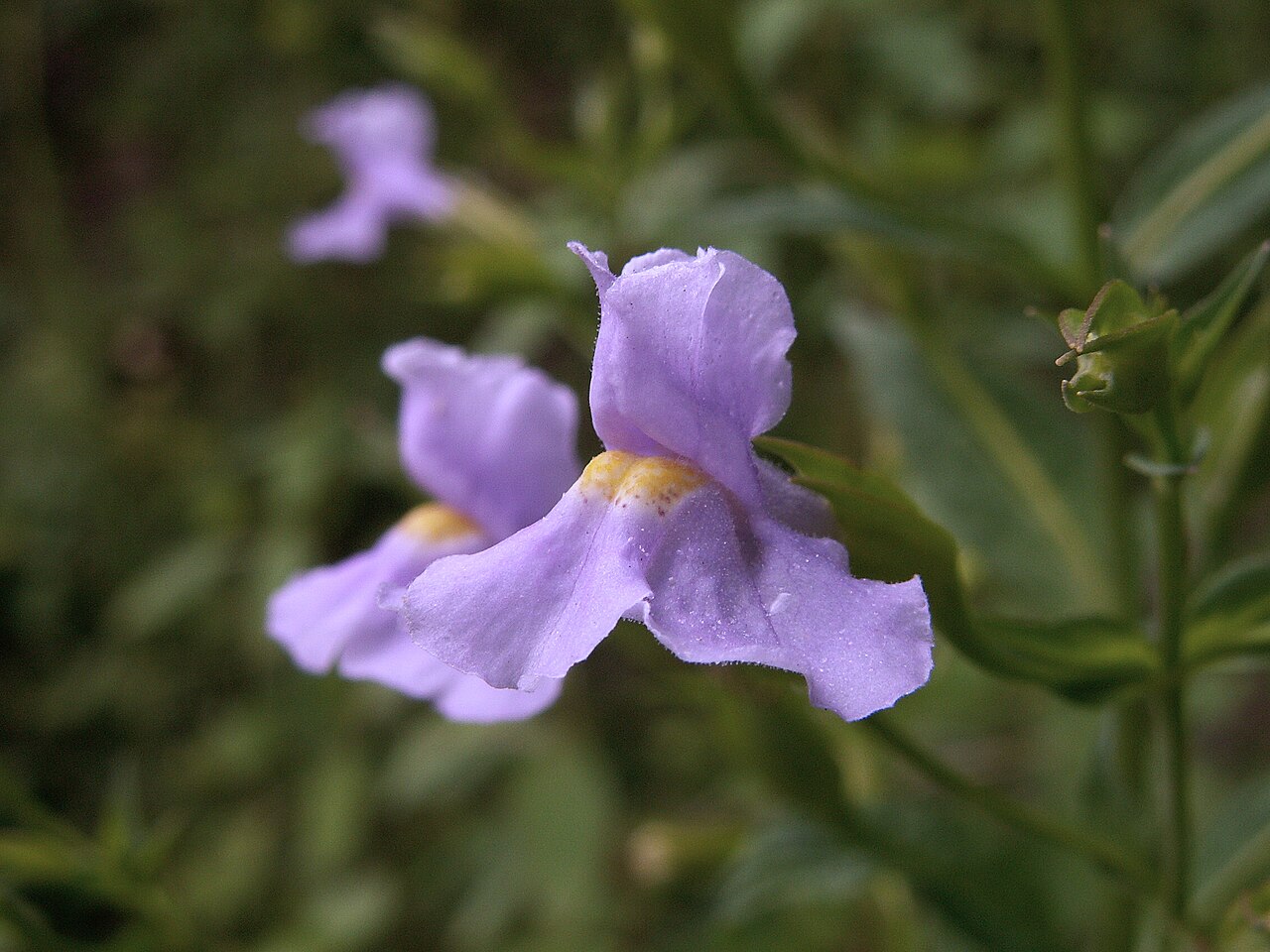
This is a plant of wet feet: ditches, streambanks, swamp margins, and the muddy edges of ponds and sloughs are its preferred haunts. Where conditions are right, it forms loose colonies of upright stems topped with violet-blue, orchid-like flowers from mid to late summer, each blossom marked with a splash of yellow and white in its throat that functions as a landing strip for pollinating bees. It is not a showy plant from a distance, but up close the flowers reward a second look.
For gardeners with a damp corner, a rain garden, or a pond edge to fill, Winged Monkeyflower is an easy, well-behaved native that blooms later in the season than many wetland wildflowers, extending nectar availability into August and September. It spreads modestly by seed and short rhizomes but is not aggressive, making it a good companion plant rather than one that takes over a bed.
Identification
Winged Monkeyflower is an erect, often branched herbaceous perennial reaching 1 to 3 feet tall, dying back to the ground each winter and resprouting from a shallow rhizome in spring.
Stems
The stem is square in cross-section, a trait typical of many plants in the figwort and mint-adjacent families, and each of the four angles carries a narrow, leaf-like wing or ridge — the feature that gives the plant its common and scientific names (alatus is Latin for “winged”). Stems are smooth (not hairy), hollow, and often tinged reddish or purplish, especially where the plant grows in sun.
Leaves
Leaves are opposite, egg-shaped to lance-shaped, 2 to 6 inches long, with toothed margins and a pointed tip. The key identification feature is the leaf stalk (petiole): Winged Monkeyflower’s leaves are distinctly stalked, with petioles up to an inch long, while the similar Allegheny Monkeyflower has leaves that clasp the stem with little or no stalk. Leaf surfaces are smooth and medium to dark green, with veins that are slightly impressed above and raised below.
Flowers
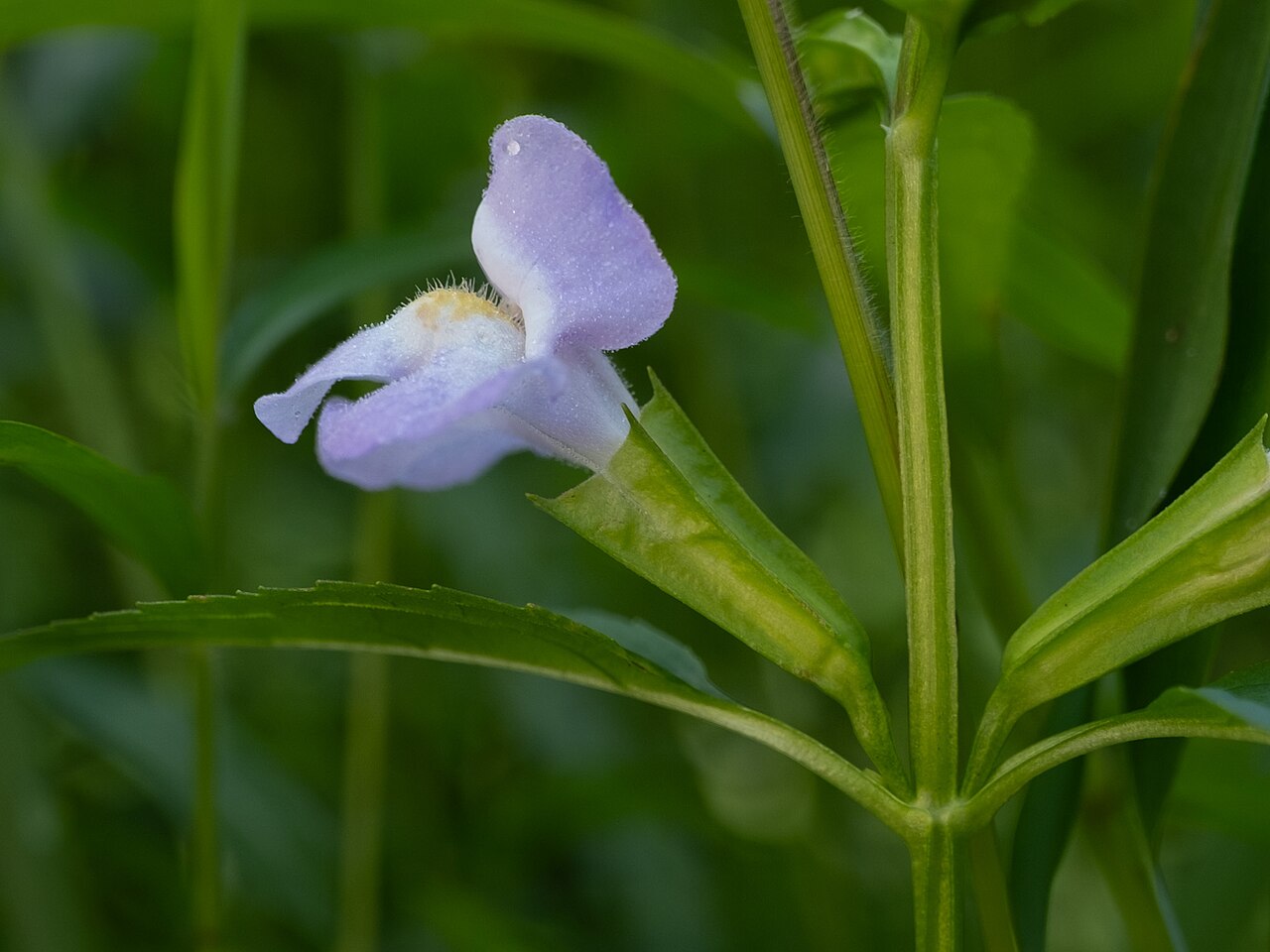
Flowers arise singly from the leaf axils on short stalks, each about 1 to 1.5 inches long. They are tubular and two-lipped in classic snapdragon fashion: a small, two-lobed upper lip and a larger, three-lobed lower lip that spreads outward to form a landing platform. Color is typically pale violet to blue-lavender, with the throat marked by patches of yellow and white that guide pollinators toward the nectar. Bloom runs from July into September, later than many wetland wildflowers, which makes this species valuable for late-season pollinator forage.
Fruit & Seeds
After pollination, each flower produces a small, two-chambered capsule packed with tiny seeds. The capsules dry and split open in fall, releasing seed close to the parent plant; over time this produces loose colonies rather than isolated individuals.
Quick Facts
| Scientific Name | Mimulus alatus |
| Family | Phrymaceae (Figwort/Lopseed) |
| Plant Type | Herbaceous Perennial Wildflower |
| Mature Height | 1–3 ft |
| Mature Spread | 1–1.5 ft (spreads by seed and short rhizomes into loose colonies) |
| Growth Rate | Moderate |
| Sun Exposure | Part Shade to Full Shade |
| Water Needs | High; tolerates standing water at the root zone |
| Soil Type | Wet, rich, muddy soils; streambanks and ditches |
| Soil pH | 5.5–7.0 (slightly acidic to neutral) |
| Bloom Time | July – September |
| Flower Color | Violet-blue with yellow and white throat markings |
| Fall Color | None notable; foliage dies back |
| Fruit | Small two-chambered seed capsule |
| Deer Resistant | Moderate (occasionally browsed) |
| USDA Hardiness Zones | 4–9 |
Native Range
Winged Monkeyflower is native to the eastern half of the United States and adjacent southern Canada, with a range stretching from New York and the Great Lakes states south to the Gulf Coast and west to the eastern edge of the Great Plains. It is most common in the Mississippi and Ohio River drainages and throughout the Southeast, where wet bottomland habitat is abundant.
Across this range it is a plant of consistently wet ground: roadside ditches, the muddy margins of streams and sloughs, swamp edges, floodplain forests, and seasonally flooded depressions. It generally grows in part shade to full shade beneath a broken canopy, though it tolerates more sun where soil moisture is reliably high. It is classed as an obligate wetland species across most of its range, meaning it is almost always found growing in standing water or saturated soil rather than merely moist ground.
Winged Monkeyflower is widely planted outside its immediate home range as a rain-garden and pond-edge plant within the broader eastern wetland flora, but gardeners west of its native range (for example, in the arid parts of the Great Plains or the Mountain West) should treat it as a garden plant rather than a local native and choose a regionally appropriate wetland wildflower instead.
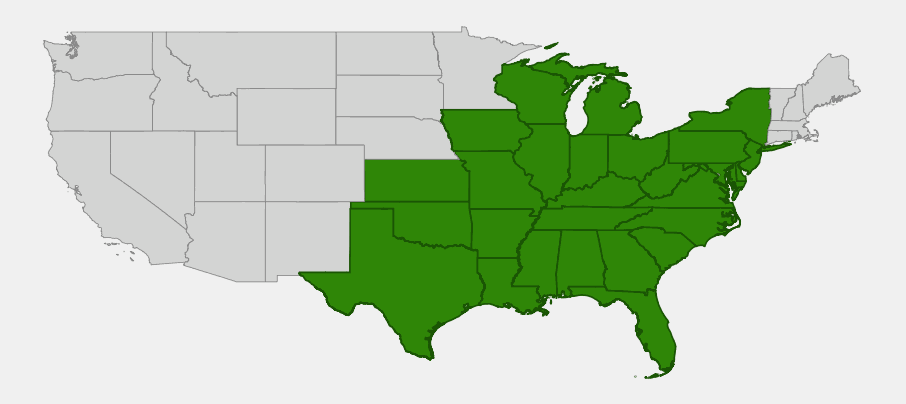
📋 Regional plant lists featuring Winged Monkeyflower: Arkansas, Louisiana, Eastern Oklahoma & Eastern Texas · Nebraska, Kansas & Eastern Colorado · Illinois, Iowa & Missouri · Georgia, Alabama & Mississippi · North Carolina & South Carolina · Kentucky & Tennessee · Maryland, Virginia & West Virginia · Ohio & Indiana · Michigan, Wisconsin & Eastern Minnesota · New York, Pennsylvania & Northern New Jersey · Delaware, Southern New Jersey & Long Island
Growing & Care Guide
Winged Monkeyflower is one of the easier native wetland wildflowers to grow, provided you can offer it the one thing it truly demands: reliably wet soil. Give it that, and it asks for very little else.
Light
This species grows best in part shade to full shade — the dappled light of a streamside tree canopy or the north side of a building. It will tolerate more sun if the soil never dries out, but foliage tends to scorch and the plant stays shorter and less floriferous in hot, exposed sites.
Soil & Water
Soil moisture is the single most important factor for success. Winged Monkeyflower wants consistently wet, rich soil and will grow directly at the waterline of a pond, in a rain garden’s wettest zone, or in a low spot that collects runoff. It tolerates brief standing water around the roots but is not a true aquatic and does not grow submerged. Allowing the soil to dry out for extended periods will stunt or kill the plant.
Planting Tips
Set out container plants in spring after the last frost, spacing them 12 to 18 inches apart so colonies can fill in. Choose the lowest, wettest part of a rain garden or the saturated soil just above the waterline of a pond or stream. Plants establish quickly in good conditions and will often self-sow into nearby bare, wet ground.
Pruning & Maintenance
Little maintenance is needed. Cut back dead stems in late fall or early spring. Deadheading is not necessary but will reduce self-seeding if a tidier, more contained patch is wanted. Divide congested clumps every few years in early spring to maintain vigor.
Propagation
Propagate by seed sown on the soil surface of wet, bare ground in fall (seeds benefit from a period of cold, moist stratification) or by dividing established clumps in spring. Softwood cuttings taken in early summer and kept consistently moist will also root readily.
Landscape Uses
- Rain gardens — thrives in the wettest, lowest zone
- Pond and stream margins — natural waterline planting
- Bioswales and stormwater basins where soil stays saturated
- Shaded wetland restoration plantings
- Late-season pollinator gardens in consistently moist soil
Wildlife & Ecological Value
Despite its modest stature, Winged Monkeyflower pulls real weight in wetland food webs, especially late in the growing season when fewer wildflowers are blooming.
For Pollinators
The tubular, two-lipped flowers are shaped for bumblebees and other long-tongued bees, which push into the throat to reach nectar and pick up pollen on their backs in the process — a classic buzz-pollination setup. Because bloom runs into September, the species provides a late-season nectar source after many spring and early-summer wildflowers have finished.
For Birds
Seed-eating songbirds forage the small capsules in fall and winter, and the dense streamside growth habit of colonies provides low cover for ground-foraging birds working wet thickets.
For Mammals
White-tailed deer browse the foliage occasionally, though it is not a preferred food source. Small mammals use the cover provided by colonies along streambanks.
Ecosystem Role
As an obligate wetland plant, Winged Monkeyflower is a reliable indicator of healthy, saturated soils and helps stabilize streambanks and ditch margins with its fibrous root system, reducing erosion along the wet edges it colonizes.
Cultural & Historical Uses
Winged Monkeyflower has no significant history of medicinal or culinary use among Indigenous peoples or early settlers, unlike some of its showier relatives in the figwort family. It was, however, documented early by botanists exploring the wetlands of the eastern United States, and its distinctive winged stem made it a useful teaching example in botany for illustrating stem anatomy.
The genus name Mimulus comes from the Latin for “little actor” or “mimic,” a reference to the flower’s resemblance to a small grinning or masked face — a quality shared across the monkeyflower group and the origin of the common name “monkeyflower.”
Today its primary human use is horticultural: restoration practitioners and rain-garden designers value it as a dependable, non-aggressive native for the wettest parts of a planting, where few other flowering perennials will thrive.
Frequently Asked Questions
How is Winged Monkeyflower different from Allegheny Monkeyflower?
The easiest way to tell them apart is the leaf stalk: Winged Monkeyflower has leaves on short but distinct stalks (petioles), while Allegheny Monkeyflower (Mimulus ringens) has leaves that clasp directly against the stem with no stalk. Winged Monkeyflower’s stem also tends to have more prominent wings along its angles.
Does Winged Monkeyflower need standing water?
It tolerates brief standing water at the root zone but does not require it. What it does require is soil that never fully dries out — the muddy margin just above the waterline of a pond or stream is ideal.
Will Winged Monkeyflower spread aggressively in my garden?
No. It spreads modestly by seed and short rhizomes, forming loose colonies over a few years rather than taking over a bed. It is easy to thin or contain if it spreads further than wanted.
What pollinates Winged Monkeyflower?
Bumblebees and other long-tongued native bees are the primary pollinators, pushing into the tubular flower to reach nectar. The late bloom period makes it a valuable late-summer nectar source.
Can I grow Winged Monkeyflower in a container water garden?
Yes, as long as the container soil stays consistently saturated but the plant is not fully submerged. A pot set at the shallow edge of a water feature, with soil kept wet, works well.

Looking for a nursery that carries Winged Monkeyflower?
Browse our native plant nursery directory: Pennsylvania to Virginia · Nebraska to Oklahoma · Idaho to Kansas · Kentucky to Montana · Alabama to Arkansas · Colorado to Hawaii · West Virginia to Wyoming