Scarlet Locoweed (Astragalus coccineus)
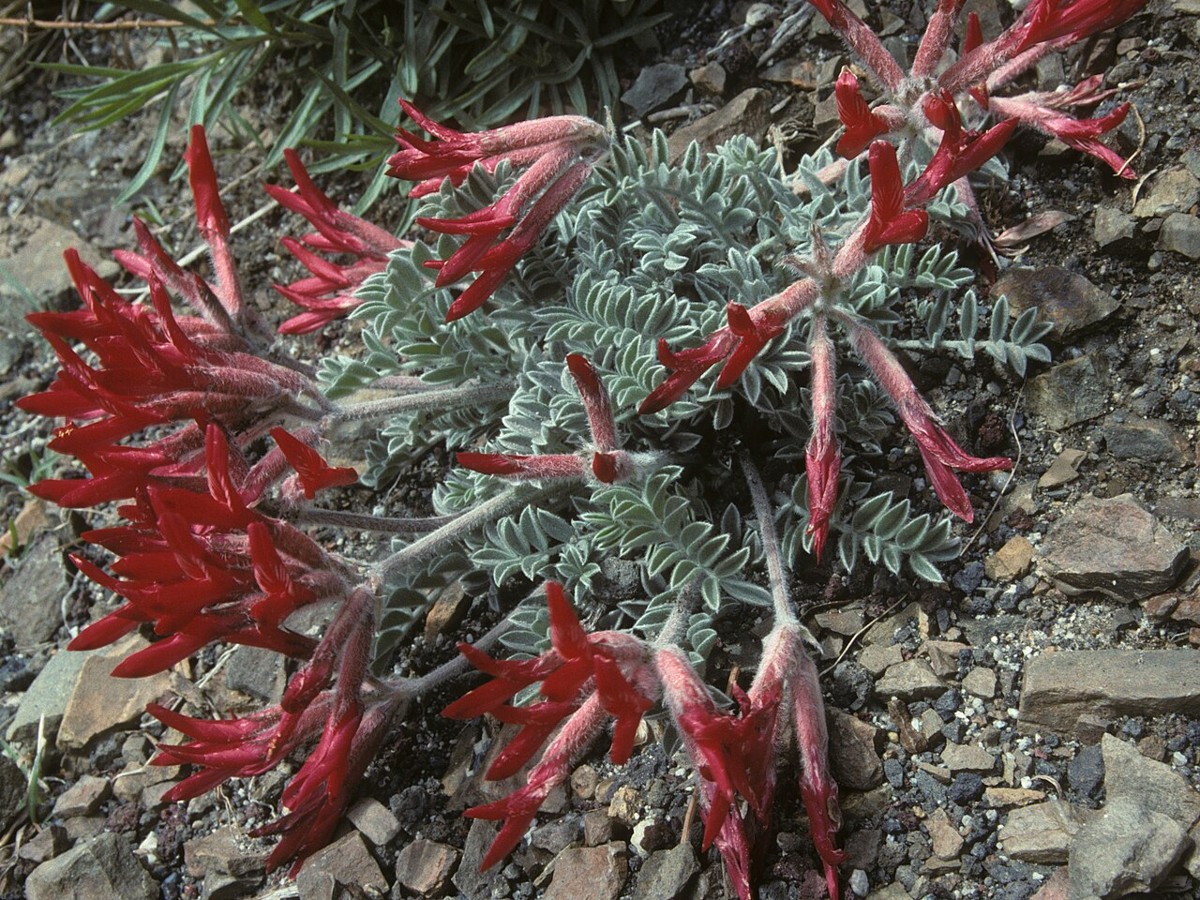
Astragalus coccineus, commonly called scarlet locoweed or scarlet milkvetch, is a low, silvery-haired perennial of the hottest and driest parts of the American Southwest. It belongs to the pea family (Fabaceae) and is one of the showiest members of a huge, mostly unassuming genus — where most locoweeds and milkvetches bloom in muted purples, pinks, or creams, this species produces startling, saturated red flowers that seem out of place among the gray rock and creosote of its desert home.
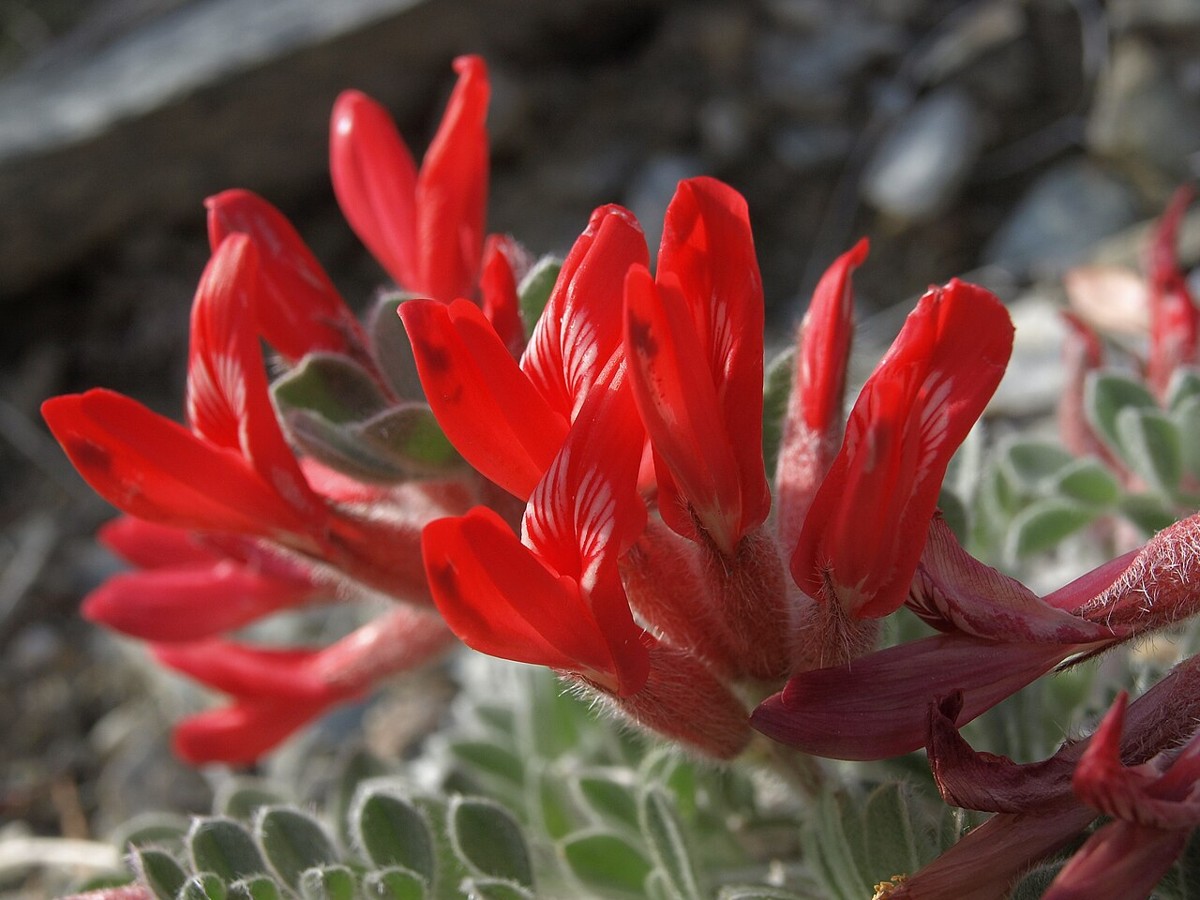
The plant grows as a dense, ground-hugging rosette or small mound, rarely more than a few inches tall, with pinnately divided leaves covered in fine silvery hairs that reflect sunlight and reduce water loss. From this silvery base rise short flower stalks carrying clusters of large, tubular red blooms, among the most vivid flowers of any desert perennial. The flowers are a magnet for hummingbirds migrating through the desert in late winter and early spring, when few other nectar sources are available.
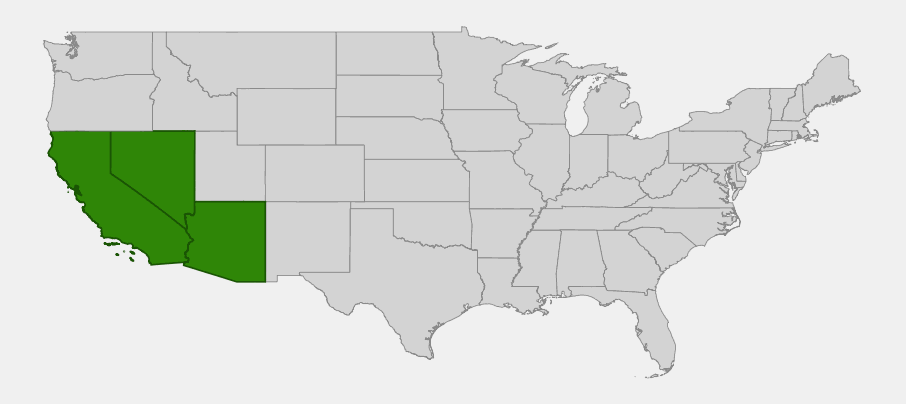
Scarlet locoweed is native only to the desert mountains and bajadas of southeastern California, southern Nevada, and western and central Arizona. It is a true specialist of rocky, well-drained desert soils and is rarely seen outside its narrow native range, though its striking color makes it a favorite subject for desert wildflower photographers and a worthwhile, low-water addition to a rock garden within its range.
Identification
Scarlet locoweed is unmistakable in bloom, but its silvery, low-growing form is distinctive even without flowers. The whole plant is covered in dense, silky, silver-white hairs that give the foliage a frosted or felted look, an adaptation that reflects intense desert sun and slows moisture loss.
Growth Form
Plants form a compact, spreading mound or rosette, usually 4 to 10 inches tall and up to about 18 inches across, with multiple stems arising from a stout woody taproot and root crown. The overall silhouette is low and tidy, hugging rocky slopes and washes rather than standing upright.
Leaves
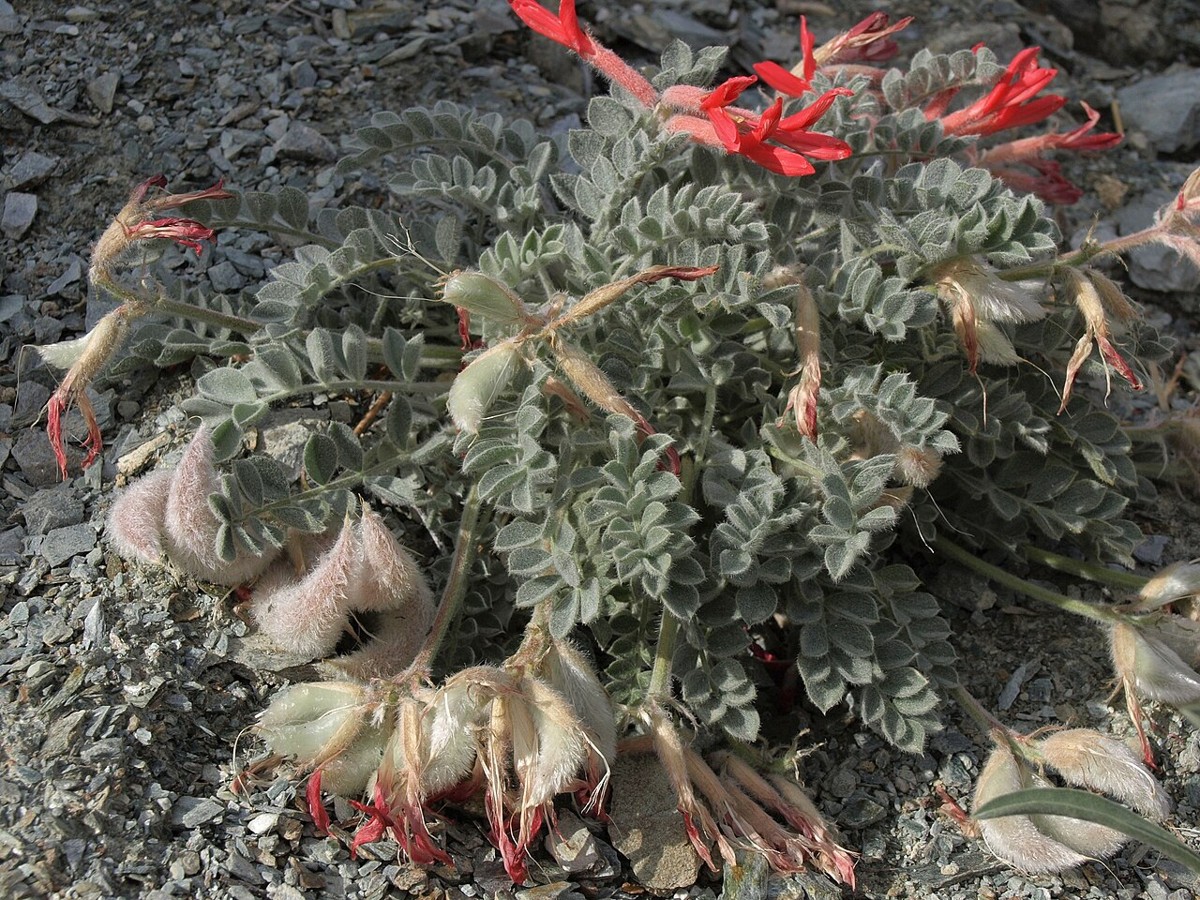
Leaves are pinnately compound, 2 to 4 inches long, made up of 7 to 15 small, oval leaflets densely covered in silvery-white silky hairs on both surfaces. The hairy covering is so thick that the leaflets often appear gray-white rather than green, especially in strong light.
Flowers
The flowers are the plant’s signature feature: large for the genus, up to 1 inch long, tubular and strongly curved, in shades of brilliant scarlet to orange-red. They are borne in dense, short racemes of 5 to 15 blooms held just above or within the foliage on short, hairy stalks. Flowering occurs from late winter into spring, typically February through April depending on elevation and winter rainfall, and the color and shape are specifically suited to pollination by hummingbirds rather than bees.
Fruit & Seeds
After flowering, the plant produces plump, woolly, silver-haired pods about an inch long that stand upright or curve among the foliage. The thick coat of hairs persists on the pods as they mature and dry, giving spent plants a distinctive silvery, shaggy appearance well into summer. Each pod contains several small, hard seeds.
Quick Facts
| Scientific Name | Astragalus coccineus |
| Family | Fabaceae (Pea) |
| Plant Type | Perennial subshrub |
| Mature Height | 4–10 in |
| Mature Spread | Up to about 18 in |
| Growth Rate | Slow |
| Sun Exposure | Full sun |
| Water Needs | Very low once established |
| Soil Type | Rocky, gravelly, sharply drained |
| Soil pH | Neutral to slightly alkaline |
| Bloom Time | February – April |
| Flower Color | Scarlet to orange-red |
| Fall Color | None notable (silvery foliage year-round) |
| Fruit | Plump, silvery-woolly pods about 1 in long |
| Deer Resistant | Yes |
| USDA Hardiness Zones | 8–10 |
Native Range
Scarlet locoweed is native to a relatively narrow band of the Mojave and Sonoran deserts: the desert mountains and bajadas of southeastern California (including the Mojave Desert, Colorado Desert, and ranges such as the White and Panamint Mountains), extreme southern Nevada, and western and central Arizona. It is a true desert specialist and does not occur naturally outside this hot, arid region.
Within this range, scarlet locoweed grows on rocky slopes, desert pavement, washes, and canyon walls, typically at elevations from near sea level up to around 7,000 feet, often rooted directly in crevices and gravelly fans where few other plants can establish. It is commonly found with creosote bush, brittlebush, desert agave, and various cacti, forming scattered, eye-catching patches of color against an otherwise muted desert palette each spring.
Because it depends on sharply drained, undisturbed rocky ground, scarlet locoweed is sensitive to habitat disturbance from off-road vehicle use and development, though it is not currently listed as threatened or endangered. It is best appreciated in place on desert hikes, and when grown in gardens it should come from nursery-propagated stock rather than wild-collected plants.
📋 Regional plant lists featuring Scarlet Locoweed: California & Nevada · Arizona & New Mexico
Growing & Care Guide
Scarlet locoweed is a rewarding but demanding plant for gardeners who can offer true desert conditions: baking sun, sharp drainage, and minimal summer water. It is not forgiving of rich soil or overwatering, but where its needs are met it is long-lived and reliably showy.
Light
Give scarlet locoweed full, unobstructed sun all day. It is adapted to intense desert light and does not perform well in shade, where growth becomes loose and flowering is sparse.
Soil & Water
Plant in rocky, gravelly, or decomposed granite soil with excellent drainage; heavy clay or soil that holds moisture is the most common cause of failure, leading to root and crown rot. Established plants need very little supplemental water and are best left to rely on natural winter and spring rainfall, with only an occasional deep soak during long dry stretches. Avoid summer irrigation, which the plant does not experience in the wild and does not tolerate well.
Planting Tips
Set out nursery-grown plants in fall or early spring so roots can establish before the heat of summer. Choose a site with reflected heat, such as near rock or gravel mulch, and avoid low spots where water collects. Space plants 12 to 18 inches apart if planting in groups. A top-dressing of gravel or decomposed granite mulch, rather than bark or organic mulch, best mimics the plant’s natural setting and keeps the crown dry.
Pruning & Maintenance
Scarlet locoweed needs almost no maintenance. Trim off spent flower stalks and old, dried pods after seed drop if a tidier look is wanted, but this is optional. Do not fertilize; rich soil and added nutrients tend to produce lax, short-lived growth in this and other desert-adapted locoweeds.
Landscape Uses
- Desert rock gardens, where its silver foliage and red flowers stand out against stone
- Hummingbird gardens in low-desert and high-desert climates
- Xeriscaping and other very low-water landscape designs
- Container culture in a fast-draining cactus mix for patios in desert climates
- Native plant and wildflower collections focused on Mojave and Sonoran desert species
Wildlife & Ecological Value
Despite its small stature, scarlet locoweed plays an outsized role for desert wildlife during its brief but vivid bloom period, when little else in the landscape offers nectar.
For Pollinators
The tubular, scarlet flowers are specifically adapted for pollination by hummingbirds, particularly Anna’s and Costa’s hummingbirds, which time their desert movements to coincide with locoweed and other early-blooming red-flowered plants. The flower shape — long, curved, and narrow — excludes most bees, which struggle to reach the nectar.
For Birds
Beyond hummingbirds feeding on nectar, the dense, low foliage can provide minor cover for small desert birds, and the seed pods are occasionally taken by seed-eating species once they split open.
For Mammals
Like many locoweeds and milkvetches, the foliage of scarlet locoweed can accumulate toxic compounds and is generally avoided by livestock and most native mammalian herbivores, which contributes to its persistence in grazed desert landscapes.
Ecosystem Role
As one of relatively few spring-blooming perennials in its rocky desert habitat, scarlet locoweed helps support early-season pollinator and hummingbird activity when food sources are scarce. Its deep taproot also helps stabilize the loose, rocky soils of the slopes and washes where it grows.
Cultural & Historical Uses
Scarlet locoweed has no significant documented history of use as food, medicine, or material by Indigenous peoples of the region, unlike many other desert plants. This is consistent with the broader genus Astragalus, many species of which — including this one — are known or suspected to contain compounds that make them unpalatable or potentially toxic to browse, a trait reflected in the common name “locoweed” shared across the genus.
The plant’s main significance to people has always been visual and botanical rather than practical. Desert botanists and wildflower enthusiasts have long prized it as one of the most striking native perennials of the Mojave and Sonoran deserts, and it remains a popular subject in desert wildflower photography during its short late-winter and early-spring bloom.
In recent decades, scarlet locoweed has found a modest place in specialty desert and xeriscape horticulture, grown by collectors and native-plant gardeners within its climate range for its unusual color and drought tolerance, though it remains uncommon in general nursery trade compared with better-known desert natives.
Frequently Asked Questions
Is scarlet locoweed toxic?
Like many species in the genus Astragalus, scarlet locoweed is suspected of containing compounds that can be toxic to livestock if eaten in quantity, which is reflected in the “locoweed” name shared across the genus. It is not grown or used as a food or medicinal plant, and gardeners should keep it out of reach of grazing animals and pets.
Why are the flowers red instead of purple like other milkvetches?
Most Astragalus species have purple, pink, or cream flowers pollinated by bees. Scarlet locoweed’s bright red, tubular flowers are instead adapted for hummingbird pollination, which favors red color and a long, narrow tube that excludes most bees.
Can I grow scarlet locoweed outside the desert Southwest?
It is difficult to grow outside hot, dry, low-humidity climates with sharply drained soil. Gardeners in wetter or more humid regions generally cannot replicate the conditions it needs and should choose a locally native alternative instead.
How do I keep scarlet locoweed from rotting in the garden?
The most common cause of failure is soil that stays wet, especially in summer. Plant in gravelly or rocky, fast-draining soil, water sparingly, and avoid organic mulch that holds moisture against the crown.
Is scarlet locoweed rare or protected?
It is not federally listed as threatened or endangered, but it is uncommon outside its specific rocky desert habitat and can be sensitive to off-road vehicle disturbance and habitat loss. Always buy nursery-propagated plants rather than collecting from the wild.

Looking for a nursery that carries Scarlet Locoweed?
Browse our native plant nursery directory: California · Nevada · Arizona