
Canada Violet (Viola canadensis)
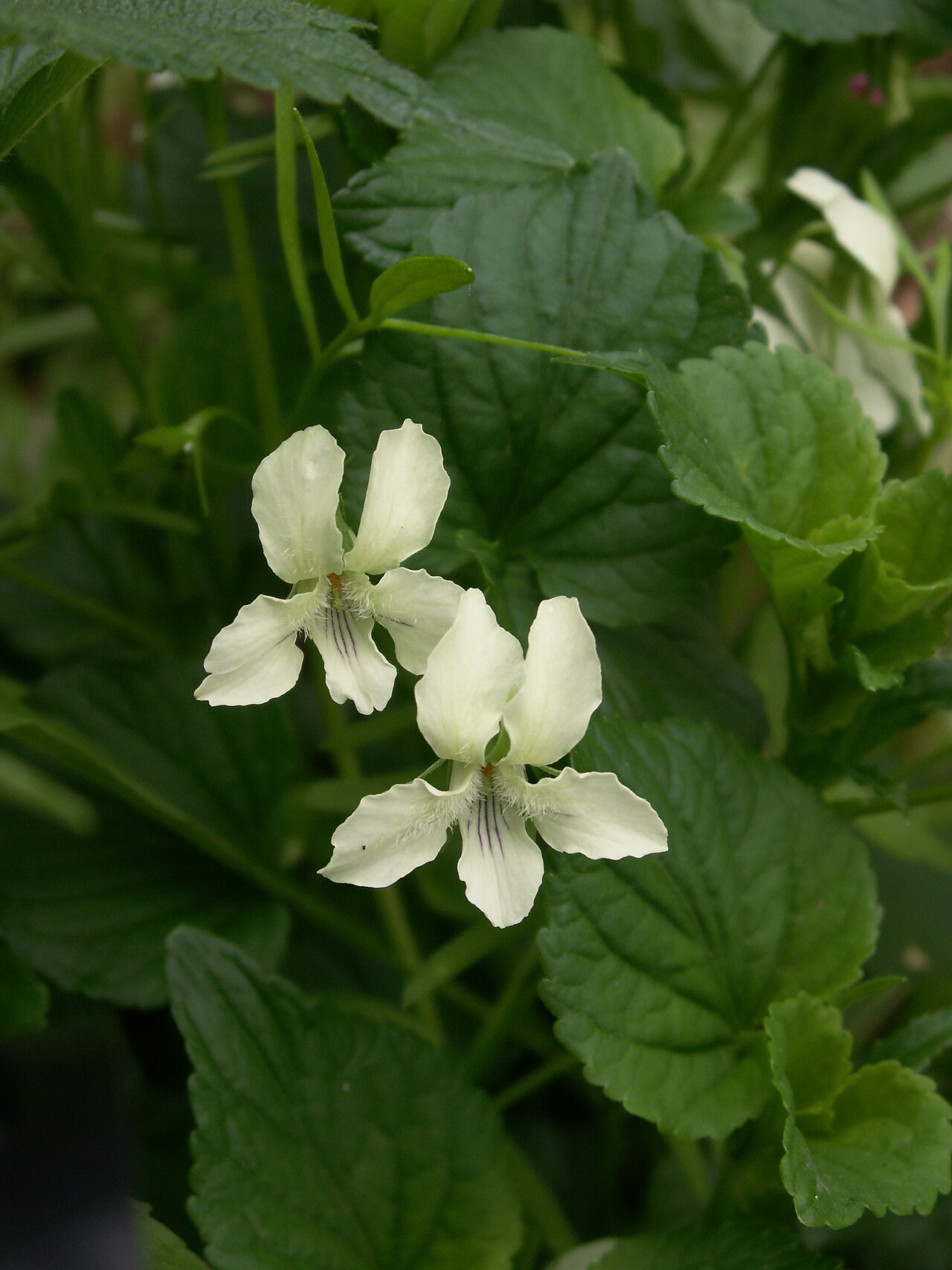
Viola canadensis, known as Canada Violet or Canadian white violet, is a tall, leafy native violet of cool, moist forests. Unlike the familiar stemless lawn violets, it grows upright on leafy stems 8 to 16 inches tall, and from spring into summer it carries fragrant white flowers with a yellow center and fine purple lines in the leaf axils. The backs of the petals are often flushed with violet or purple, so the flowers can look pinkish from behind. It belongs to the violet family (Violaceae).
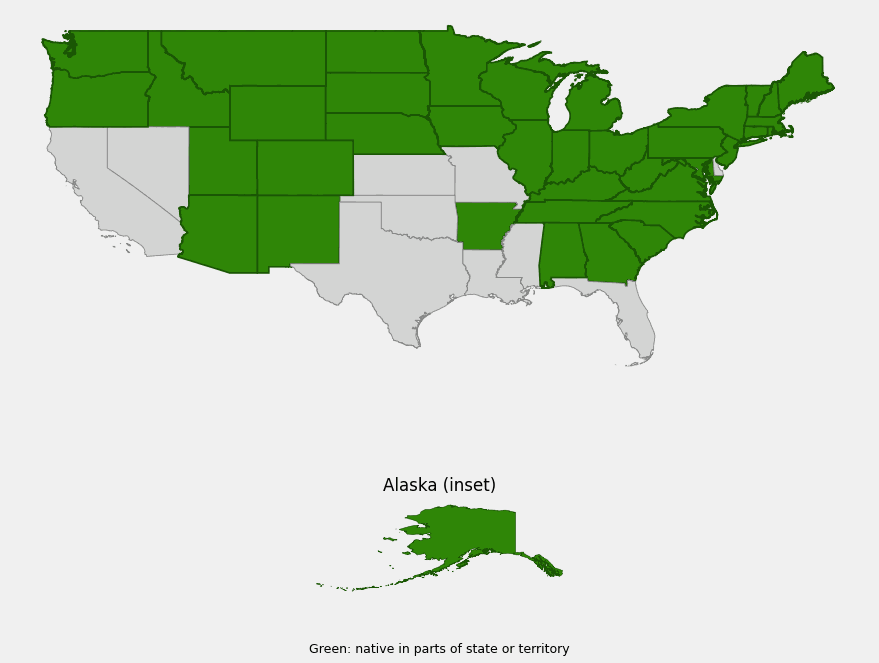
Canada violet has one of the widest ranges of any North American violet. It grows from Alaska and the Yukon across Canada to Quebec and the Maritimes, south through the northern states and Great Lakes, along the Appalachians to Georgia and Alabama, and through the Rocky Mountains to Arizona and New Mexico. Across this range it favors rich, moist woods, often in cool ravines, mountain forests and along streams.
In the garden it is one of the best violets for shade: long-blooming, fragrant, and well-behaved in most forms. It forms clumps or patches of heart-shaped leaves, often blooms again in late summer or fall, and supports native bees and fritillary butterflies. This guide covers how to identify it, where it grows, and how to grow it in woodland gardens.
Identification
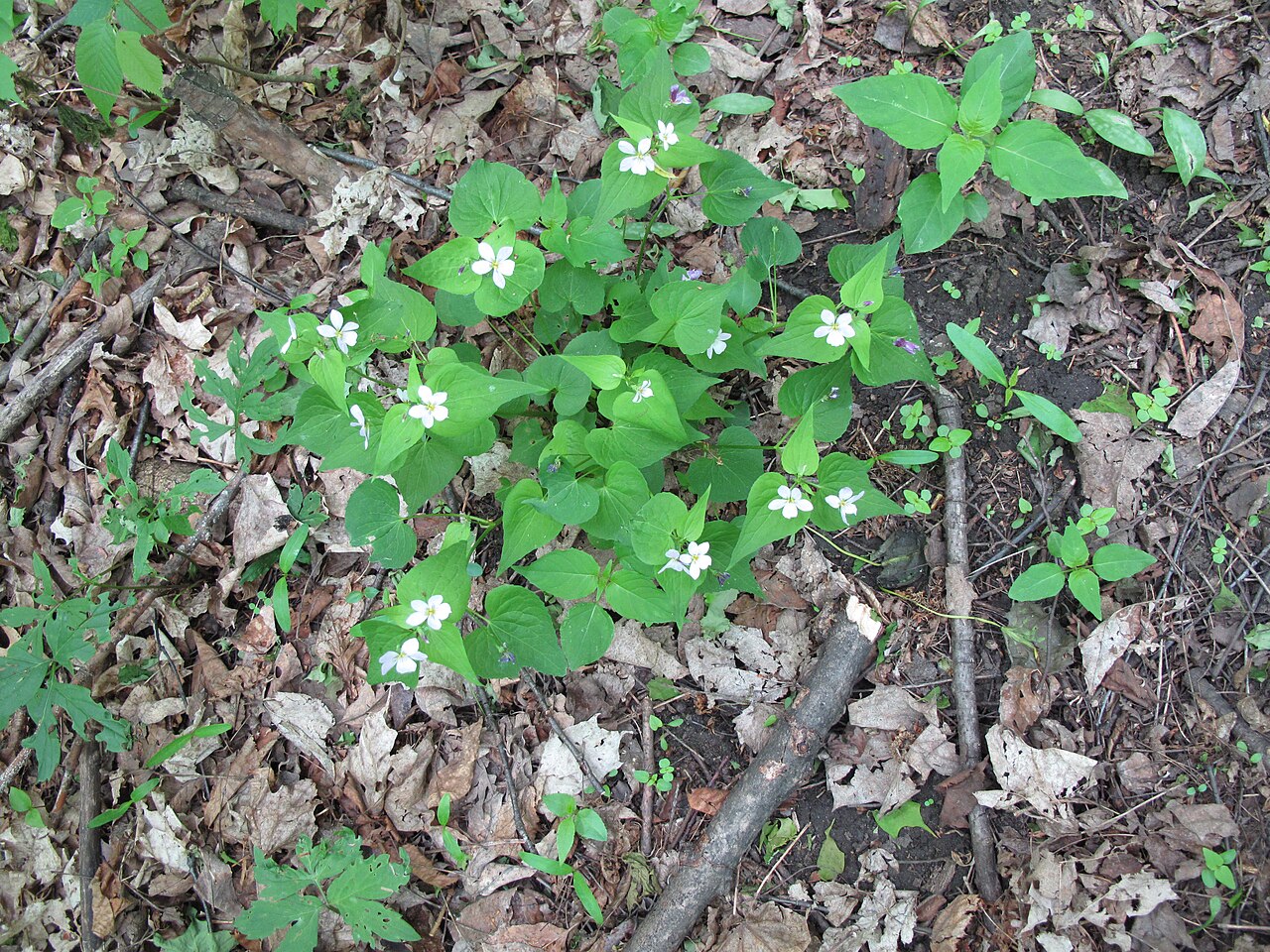
Canada violet is one of the “stemmed” violets, which bear leaves and flowers on upright stems rather than directly from the base. Among white violets in its range, its tall leafy stems, large heart-shaped leaves and yellow-centered flowers with purplish backs make it distinctive.
Stems
Plants grow from short rhizomes and produce one to several upright stems, usually 8 to 16 inches tall and sometimes taller in rich soil. Stems are leafy, smooth or finely hairy. Some populations, especially in the Midwest and West, spread by creeping underground runners and form large colonies; these are sometimes separated as var. rugulosa or as a separate species, Viola rugulosa.
Leaves
Leaves are heart-shaped with a pointed tip and finely toothed edges, usually 2 to 4 inches long, on long stalks from the base and on shorter stalks along the stems. They are dark green and smooth to slightly hairy. Basal leaves are usually the largest. The foliage stays green through summer in moist shade.
Flowers
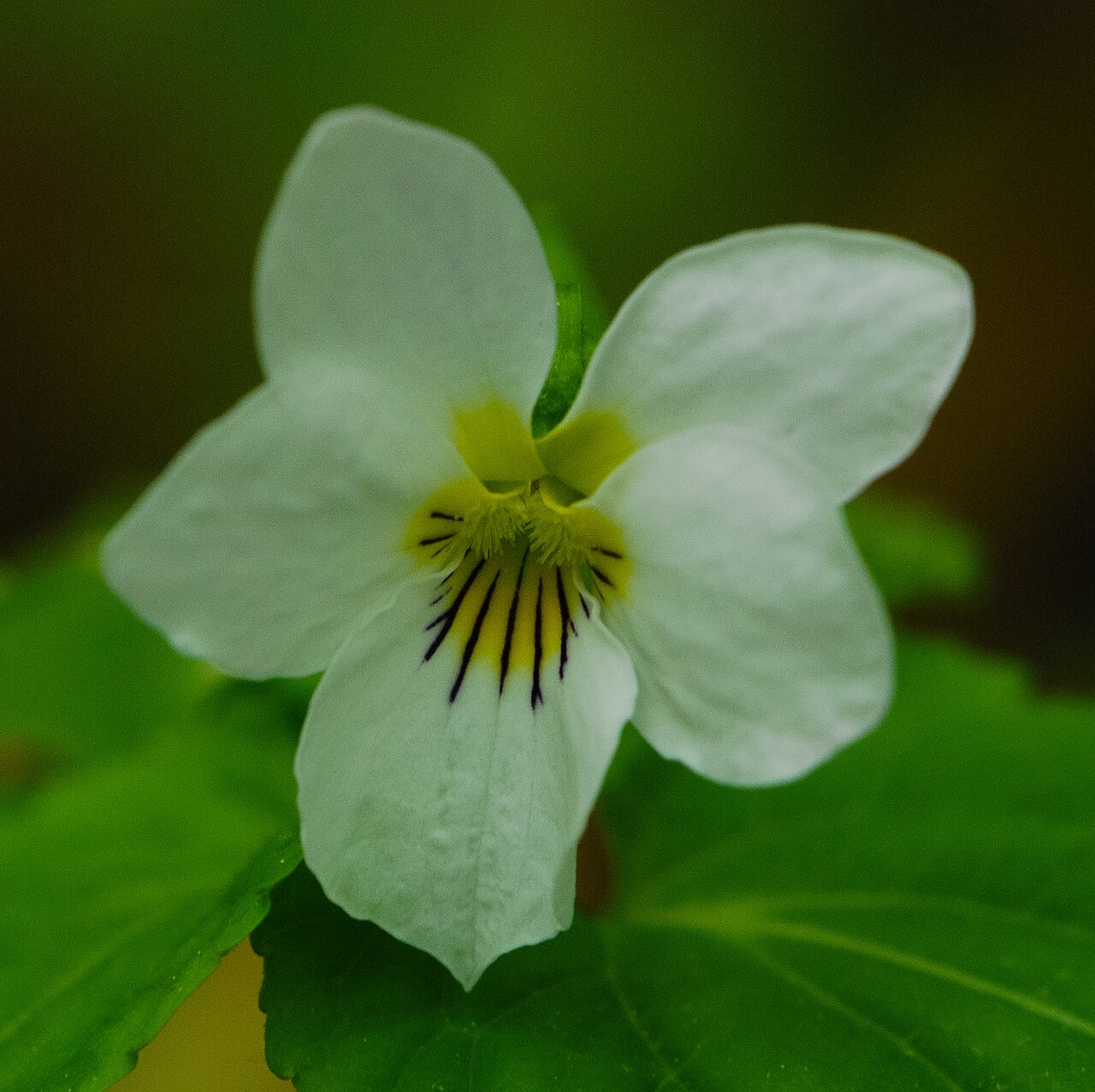
Flowers are about three-quarters of an inch to an inch across and rise on slender stalks from the leaf axils. They have five white petals: two upper, two side and one lower, with a yellow base and dark purple lines on the lower three. The side petals are bearded with fine hairs at the base, and the lower petal has a short spur. The backs of the petals are often purplish, and the flowers are pleasantly fragrant. Main bloom is April to June, with scattered flowers into summer and a second flush in late summer or fall.
Fruit & Seeds
Pollinated flowers form small, three-parted capsules that split open and fling their seeds some distance as they dry. The brown seeds carry small fatty attachments (elaiosomes) that attract ants, which carry seeds to their nests and help disperse them, as with many woodland violets.
Quick Facts
| Scientific Name | Viola canadensis L. |
| Family | Violaceae (violet family) |
| Plant Type | Herbaceous perennial; leafy-stemmed violet |
| Mature Height | 8–16 in |
| Mature Spread | 6–12 in per clump; some forms spread to form colonies |
| Growth Rate | Moderate |
| Sun Exposure | Partial shade to full shade |
| Water Needs | Medium; prefers consistently moist soil |
| Soil Type | Rich, humus-rich loam |
| Soil pH | About 6.0–7.5 (slightly acidic to neutral) |
| Bloom Time | April–June, with scattered flowers into fall |
| Flower Color | White with a yellow center and purple lines; backs of petals tinged purple |
| Fall Color | Foliage stays green until frost |
| Fruit | Three-parted capsule that ejects seeds |
| Deer Resistant | Low to moderate; deer and rabbits sometimes browse it |
| USDA Hardiness Zones | 3–8 |
Native Range
Canada violet has a very broad range. USDA PLANTS lists it as native in 39 states including Alaska, and in Canada from the Yukon and Northwest Territories and British Columbia east to Quebec, New Brunswick and Nova Scotia. In the East it grows from Maine and the Great Lakes south through the Appalachians to Georgia, Alabama and South Carolina, with outlying populations in Arkansas. In the West it follows the mountains, from Alaska and British Columbia south through Washington, Oregon, Idaho and Montana to Utah, Colorado, Arizona and New Mexico.
It is most common in cool, moist forests: northern hardwood and mixed forests, Appalachian coves and high-elevation forests, and Rocky Mountain aspen and spruce-fir forests. In the southern Appalachians it is found mainly at higher elevations and in rich, sheltered coves, and it is largely absent from the hot, dry lowlands of the Southeast and Southwest. In the Great Plains it grows in wooded ravines and river valleys, such as in the Black Hills.
Typical habitats include rich deciduous and mixed woods, streamsides, moist ravines, aspen groves, and forest edges and clearings with rich soil. It often grows on soils that are near neutral in pH.
📋 Regional plant lists featuring Canada Violet: New York, Pennsylvania & Northern New Jersey · Idaho, Eastern Oregon & Eastern Washington · Ohio & Indiana · Montana & Wyoming · Michigan, Wisconsin & Eastern Minnesota · Kentucky & Tennessee · Nebraska, Kansas & Eastern Colorado · Utah & Western Colorado · Connecticut, Massachusetts & Rhode Island · New Hampshire, Maine & Vermont · Maryland, Virginia & West Virginia · Delaware, Southern New Jersey & Long Island · Arizona & New Mexico · Illinois, Iowa & Missouri · Alabama, Georgia & Mississippi · Alaska
Growing & Care Guide
Canada violet is a dependable, easy native perennial for shady gardens with moist, rich soil. It is sold by many native plant nurseries, particularly in the Northeast, Midwest and Rocky Mountain regions. Buy nursery-propagated plants or grow it from seed rather than collecting from the wild.
Light
Plant it in partial to full shade. It does well under deciduous trees and on the north or east side of buildings. In cool northern or mountain gardens it tolerates more sun if the soil stays moist, but in hot climates afternoon shade is essential.
Soil & Water
Give it rich, humus-rich, well-drained soil that stays evenly moist. It grows best in soils near neutral pH, but tolerates slightly acidic conditions. Mulch with shredded leaves, and water during dry spells, especially in its first year. It does not tolerate long droughts.
Planting Tips
Plant in spring or early fall, spacing clumps about 12 inches apart. It works well in drifts under trees, along shady paths, and in front of ferns and taller woodland perennials. Choose plants from a regional source when possible, since Canada violet varies across its huge range, and colony-forming western and prairie forms can spread more quickly than eastern clumping forms.
Pruning & Maintenance
Little care is needed. Remove dead leaves in early spring if desired, and leave leaf litter in place in fall. Plants may self-sow modestly. Spreading forms can be thinned by pulling or dividing in spring if they outgrow their space.
Propagation
Divide established clumps in early spring or fall. Seeds can be collected as capsules turn tan, before they split, and sown outdoors in fall. They generally need a cold, moist winter period before germinating in spring.
Landscape Uses
- Woodland and shade gardens: long-blooming, fragrant white flowers for rich shade
- Native groundcover: clumps and patches under trees and shrubs
- Butterfly gardens: a larval host plant for native fritillary butterflies
- Rain garden edges and streamsides: in shaded, consistently moist soil
- Mountain and northern gardens: a hardy native for cool climates and higher elevations
Wildlife & Ecological Value
Like many native violets, Canada violet supports a surprising range of wildlife for such a small plant.
For Pollinators
The flowers are visited by small native bees, bumblebees, bee flies and butterflies, which follow the purple lines to the nectar spur. Native violets are the caterpillar host plants of fritillary butterflies (Speyeria and Boloria), and Canada violet is among the violets used by their caterpillars.
For Birds
Some ground-feeding birds, such as grouse and wild turkeys, eat violet seeds and leaves. The plant also provides cover for insects that forest birds feed on.
For Mammals
Deer, rabbits and small mammals occasionally browse the leaves. Ants and small rodents gather seeds.
Ecosystem Role
Canada violet is part of the herb layer of rich, moist forests. Its ant-dispersed seeds take part in the partnership between woodland plants and ants that is common in eastern forests. As a host plant for fritillaries, it is part of an important food chain in woodlands and forest openings.
Cultural & Historical Uses
Carl Linnaeus described Viola canadensis in 1753, based on plants from Canada. Over the centuries botanists have described several varieties and related species from different parts of its range, including the colony-forming var. rugulosa of the Midwest and West. Botanists still debate how best to classify them.
Violet flowers and young leaves have long been used as food in many cultures, and some Native American peoples used Canada violet in traditional medicine. As with all wild plants, only harvest from your own cultivated plants and be certain of identification.
For gardeners, Canada violet is often recommended as one of the best native violets for woodland gardens because of its tall, leafy habit, fragrance and long bloom. Its white flowers glow in shade, and it blends well with ferns, trilliums and other spring wildflowers.
Frequently Asked Questions
Is Canada violet invasive?
No. It is a native woodland perennial. Most forms grow as tidy clumps, though some western and prairie forms spread by underground runners and can form wide patches in moist, rich soil. These are easy to thin if needed.
Does Canada violet bloom all summer?
Its main bloom is from April to June, but it often continues to produce scattered flowers through summer and may bloom again in late summer or fall, especially in cool, moist sites.
How do I tell Canada violet from other white violets?
Canada violet has tall, leafy stems with flowers in the leaf axils, large heart-shaped leaves, and white flowers with yellow centers and purple-tinged backs. Most other white violets, such as sweet white violet (Viola blanda), are small, stemless plants with flowers rising straight from the base.
Is Canada violet good for butterflies?
Yes. Like other native violets, it is a caterpillar host plant for fritillary butterflies, and its flowers provide nectar for small bees and butterflies.
Can Canada violet grow in sun?
It prefers partial to full shade. In cool northern and mountain climates it can tolerate some sun if the soil stays moist, but in hot climates it needs afternoon shade.

Looking for a nursery that carries Canada Violet?
Browse our native plant nursery directory: Alabama, Alaska, Arizona & Arkansas · Colorado, Connecticut & Georgia · Idaho, Illinois, Indiana & Iowa · Kentucky, Maine, Maryland, Massachusetts, Michigan, Minnesota & Montana · Nebraska, New Hampshire, New Jersey, New Mexico, New York, North Carolina, North Dakota & Ohio · Oregon · Pennsylvania, Rhode Island, South Carolina, South Dakota, Tennessee, Utah, Vermont & Virginia · Washington · West Virginia, Wisconsin & Wyoming