
Monument plant (Frasera speciosa)
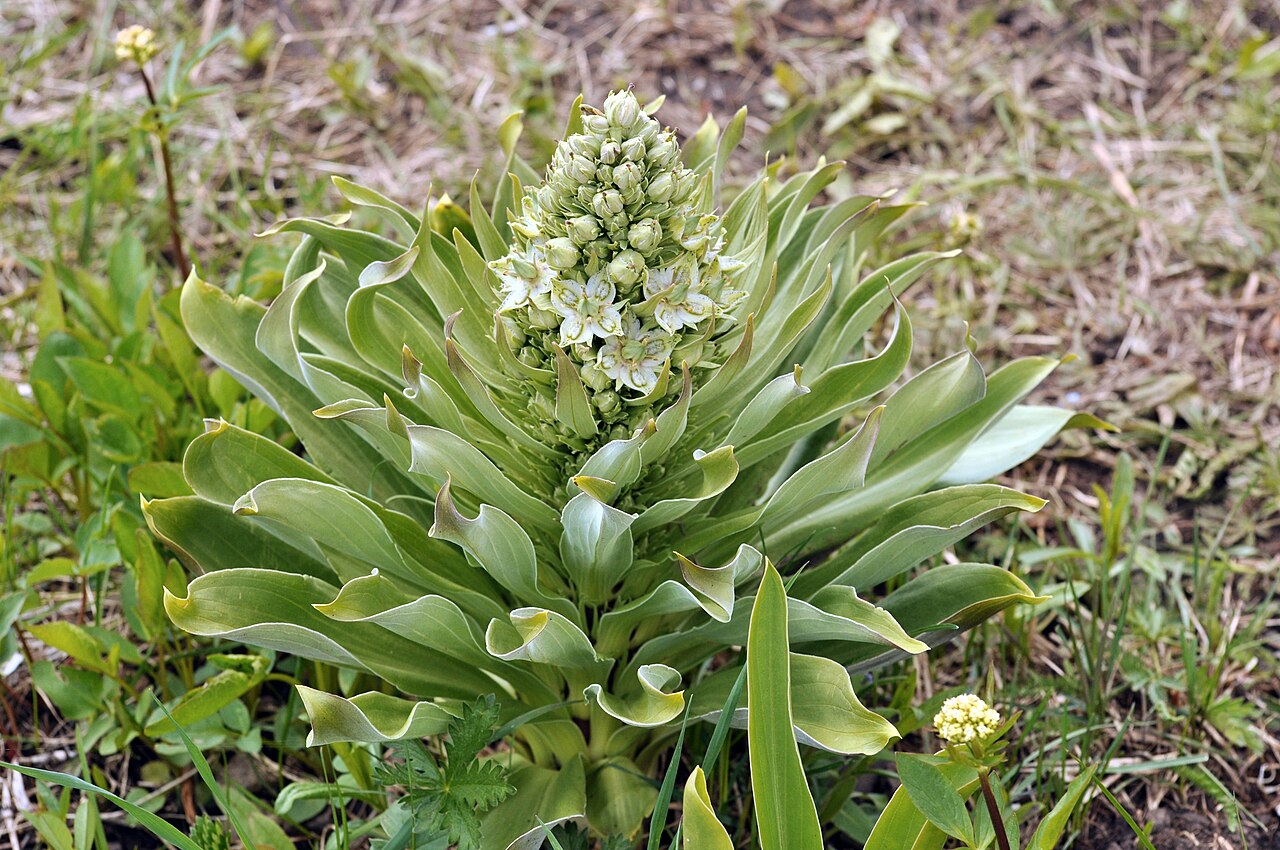
Frasera speciosa, known as Monument plant, elkweed (the USDA common name), green gentian or deer’s tongue, is one of the most remarkable wildflowers of the western mountains. For many years it lives as nothing more than a large rosette of broad, pale green leaves in a mountain meadow. Then, in a single summer, it sends up a stout, leafy stalk 3 to 6 feet tall, covered from top to bottom with hundreds of pale green, purple-speckled, star-shaped flowers. After it sets seed, the whole plant dies.
This once-in-a-lifetime pattern of flowering is called monocarpy. Monument plant is one of the best-known monocarpic perennials in North America. Long-term studies in the Colorado Rockies have found that individual plants commonly spend decades as rosettes before flowering, and that many plants in an area tend to flower together in the same year, producing spectacular “mast” years when whole hillsides bristle with green spires, followed by years with almost no flowers.
Monument plant is a member of the gentian family (Gentianaceae). It grows across much of the interior West, from Washington and Montana south through the Rocky Mountains, Great Basin ranges and Sierra Nevada to Arizona, New Mexico and the mountains of west Texas, usually in meadows, aspen groves and open conifer forests at middle to high elevations. This guide covers how to identify it, its range and ecology, and what gardeners should know about growing it.
Identification
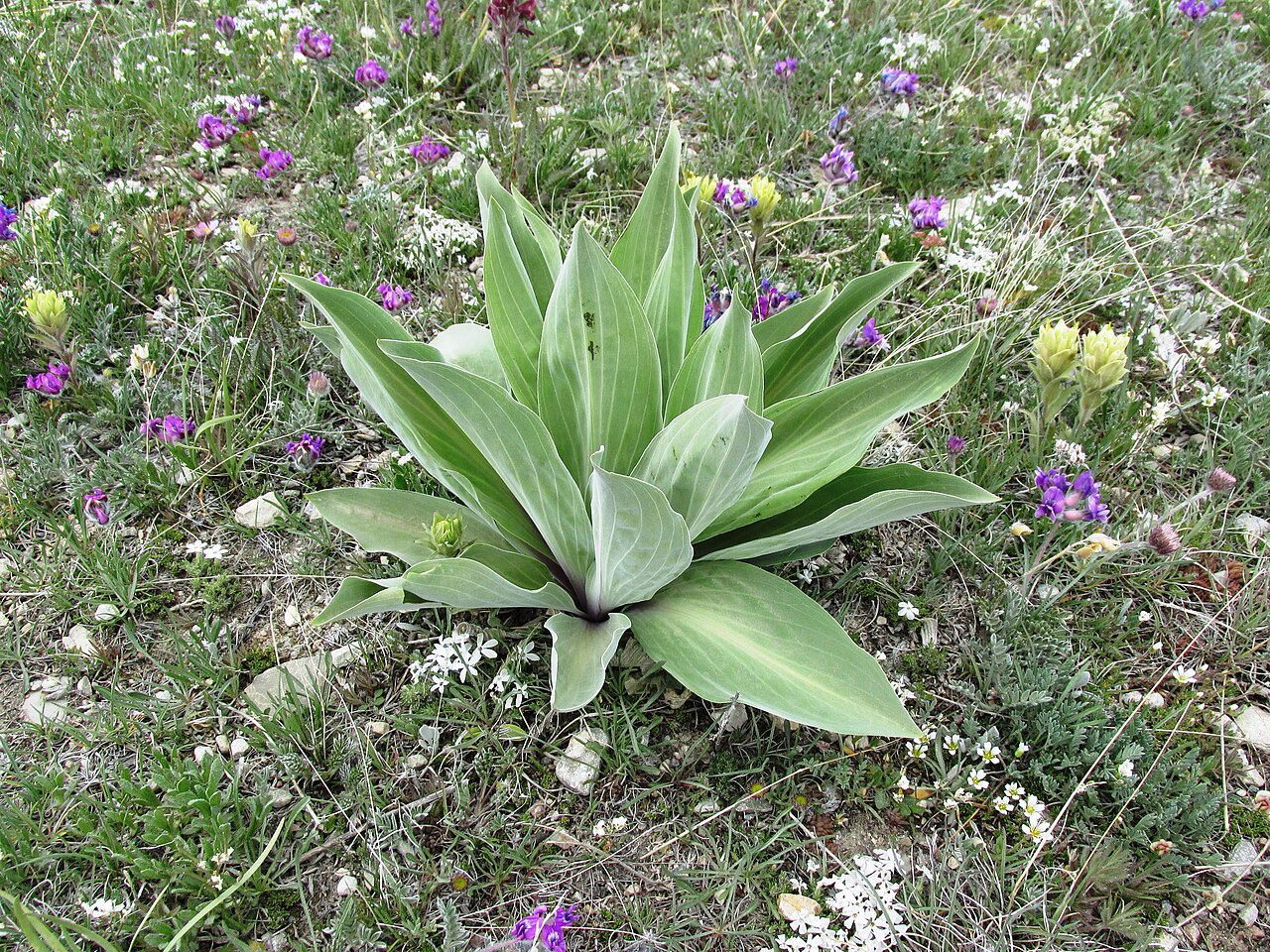
Monument plant is unmistakable when flowering. Its tall, leafy, tapering green spire looks like no other plant in western meadows. The large basal rosettes can be confused with those of corn lily (Veratrum) or mule’s ears, but monument plant leaves are smooth, not pleated like corn lily, and grow in a neat rosette.
Rosette & Roots
Before flowering, the plant is a basal rosette of broad, oblong to lance-shaped leaves, often 8 to 20 inches long, smooth, pale green to slightly bluish, with prominent parallel veins. The rosette may produce only a few leaves each year. The plant grows from a thick, fleshy taproot that stores food over the many years before flowering.
Stem & Leaves
In the flowering year a single stout, hollow stem grows rapidly to 3 to 6 feet tall, occasionally taller. Leaves grow in whorls of three to five along the stem, becoming smaller toward the top, so that the whole plant has a tapering, monument-like shape. The leaves often have a whitish margin.
Flowers
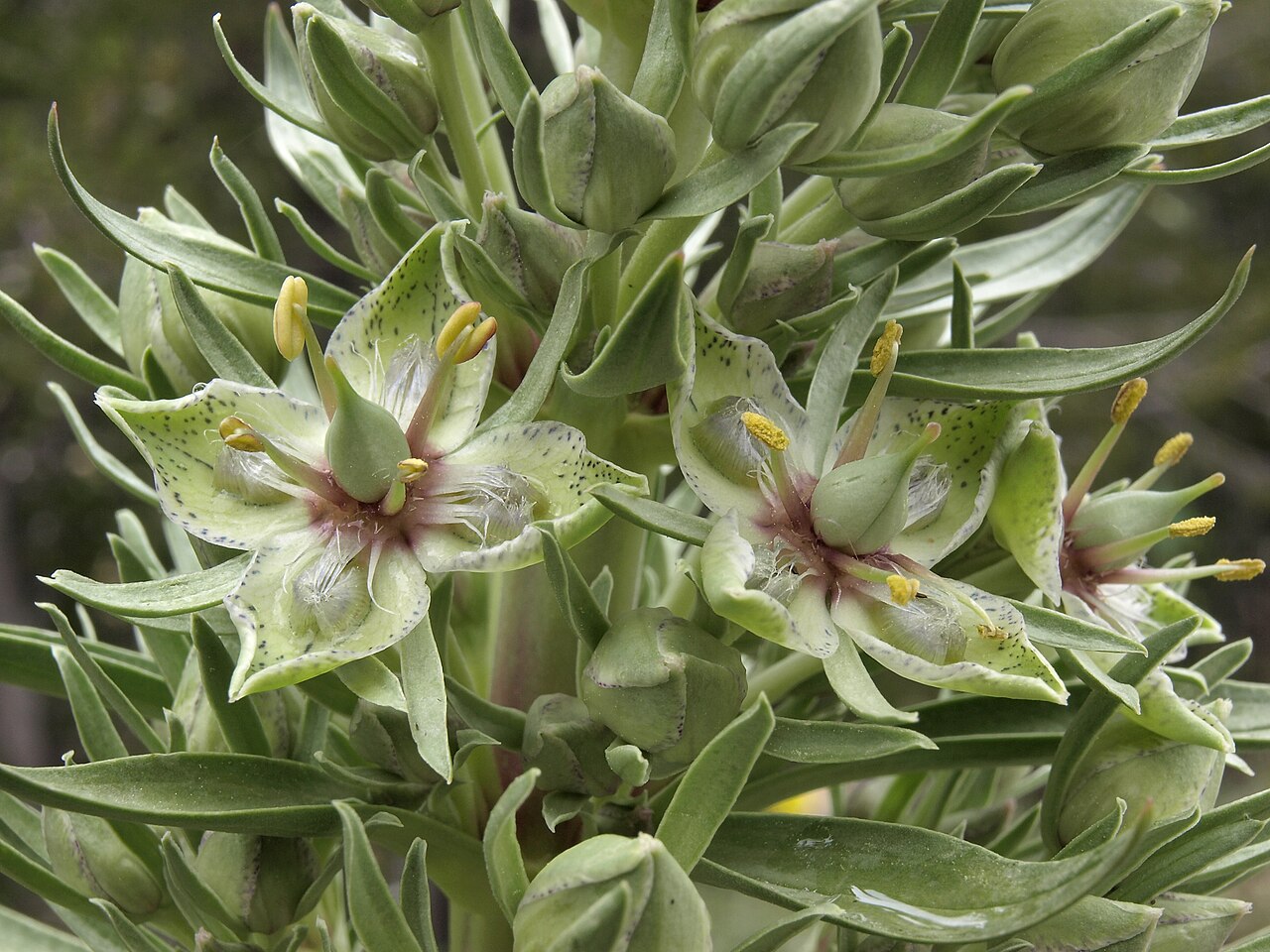
Clusters of flowers grow in the axils of the upper leaves, densely covering the upper half to two-thirds of the stalk. Each flower is about 1 to 1½ inches across, with four pointed, pale green to greenish-white petals that are speckled with purple dots. At the base of each petal are two oblong nectar glands fringed with long hairs. Four prominent stamens with yellow anthers alternate with the petals, and a green ovary sits in the center. Flowering is mostly from late May to August, earlier at lower elevations and in the south.
Fruit & Seeds
After flowering, each flower forms a flattened, oval capsule containing several flat, winged seeds. The dry stalk, often turning tan or brown, stands for a year or more after the plant dies, holding its open capsules. Seeds fall near the parent plant, and seedlings slowly build up a new rosette.
Quick Facts
| Scientific Name | Frasera speciosa (syn. Swertia radiata) |
| Family | Gentianaceae (gentian family) |
| Plant Type | Monocarpic perennial herb (flowers once, then dies) |
| Mature Height | Rosette 1–2 ft; flowering stalk 3–6 ft |
| Mature Spread | 1–2 ft |
| Growth Rate | Very slow; many years as a rosette before flowering |
| Sun Exposure | Full sun to partial shade |
| Water Needs | Medium; moist in spring, drier in late summer |
| Soil Type | Deep, well-drained loam, gravelly or rocky mountain soils |
| Soil pH | About 6.0–7.5 |
| Bloom Time | Late May–August |
| Flower Color | Pale green to greenish white, speckled with purple |
| Fall Color | Dried stalks turn tan to brown |
| Fruit | Flattened capsule with winged seeds |
| Deer Resistant | No; rosettes are grazed by elk, deer and livestock |
| USDA Hardiness Zones | 3–7 |
Native Range
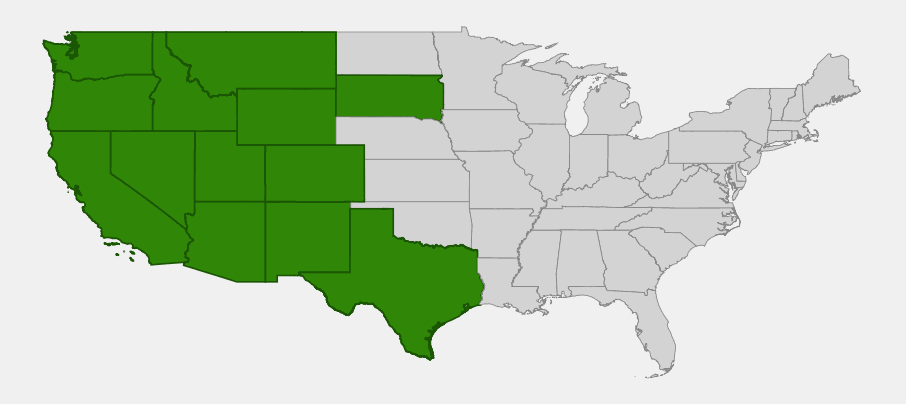
Monument plant is native to the mountains of the western United States. USDA PLANTS records it in 13 states: Washington, Oregon, Idaho, Montana, Wyoming, South Dakota, California, Nevada, Utah, Colorado, Arizona, New Mexico and Texas. It is most common in the Rocky Mountains of Colorado, Wyoming, Montana, Idaho and Utah, and in the mountains of Arizona and New Mexico.
At the edges of its range it becomes scattered. In South Dakota it grows in the Black Hills, and in Texas it is found in the mountains of the Trans-Pecos, far to the west of the rest of the state. In California it grows in the Sierra Nevada and other high ranges, and in Oregon and Washington mainly on the drier, eastern side of the Cascades and in the Blue and Wallowa Mountains. It also grows in many of the higher Great Basin ranges of Nevada.
It grows in mountain meadows, aspen groves, openings in ponderosa pine, Douglas-fir, spruce and fir forests, and on sagebrush slopes, usually between about 5,000 and 11,000 feet. It prefers deep, well-drained soils that are moist in spring, and it often grows with lupines, sticky geranium, mountain bluebells and other meadow wildflowers.
📋 Regional plant lists featuring Monument plant: Idaho, Eastern Oregon & Eastern Washington · Montana & Wyoming · Utah & Western Colorado · Arizona & New Mexico
Growing & Care Guide
Monument plant is rarely grown in gardens, mainly because of its slow, unusual life cycle. A plant grown from seed may take many years to flower, and then it dies. Still, it can be an interesting long-term addition to large native gardens, meadows and restoration projects in the mountain West, and it is best appreciated as a wildflower in the wild. Do not dig plants from the wild; their deep taproots make transplanting very difficult.
Light
Give monument plant full sun or light shade. In the wild it grows in open meadows and the edges of aspen and conifer forests.
Soil & Water
It needs deep, well-drained soil that is moist in spring and early summer and can dry out somewhat later in the season. Heavy clay and waterlogged soils lead to root rot. Once established, rosettes are fairly drought tolerant.
Planting Tips
Sow seed outdoors in fall so it receives natural cold, moist conditions over winter, or cold-stratify it for several months before spring sowing. Plant seedlings in their permanent location while still small, because the taproot resents disturbance. Be prepared to wait many years for flowers, and consider planting several over successive years so that something may eventually bloom.
Pruning & Maintenance
Little maintenance is required. Protect young rosettes from grazing by deer, elk and rabbits if necessary. After flowering, leave the dry stalk standing to drop its seeds, and remove it the following year if desired.
Propagation
Grow only from seed. Seeds need cold, moist stratification to germinate. Division and cuttings are not practical for this taprooted, monocarpic plant.
Landscape Uses
- Mountain meadow gardens: a long-term, dramatic accent in large native meadows
- Restoration plantings: in mountain meadows and aspen openings within its native range
- Pollinator habitat: a rich nectar source in flowering years
- Wildflower viewing: mast flowering years are spectacular on mountain trails
- Education: an excellent example of a long-lived monocarpic plant
Wildlife & Ecological Value
Monument plant plays an important role in mountain ecosystems, especially in mast years when thousands of plants flower at once.
For Pollinators
Each flower produces abundant nectar from its fringed glands, and a single flowering plant can carry hundreds of flowers. They attract bumblebees, solitary bees, wasps, flies and other insects. In mast years, monument plant can be one of the most important nectar sources in a mountain meadow.
For Birds
Insect-eating birds forage on the many insects drawn to the flowers. The tall dried stalks also serve as perches.
For Mammals
The name elkweed refers to its use as forage. Elk, deer and livestock graze the rosettes and young flowering stalks, especially in spring. Rodents may eat the seeds and roots.
Ecosystem Role
Monument plant’s synchronized flowering has made it a subject of long-term ecological research, particularly at the Rocky Mountain Biological Laboratory in Colorado. Mast flowering may help the plants satisfy seed predators and attract pollinators in large numbers. The plants’ long lives as rosettes also mean that populations respond slowly to disturbance, so protecting mountain meadows from heavy grazing and development helps maintain them.
Cultural & Historical Uses
The genus Frasera honors John Fraser, a Scottish botanist and plant collector who traveled in North America in the late eighteenth century. The species name speciosa means “showy”. Some botanists have placed monument plant in the related genus Swertia, as Swertia radiata, a name that still appears in some floras.
Several Native American peoples of the West have used monument plant as food and medicine, eating young roots or leaves and using the plant in remedies. These uses are part of traditional knowledge and are not recommendations for modern home use.
Today monument plant is a favorite of hikers and naturalists, who watch for mast years when meadows fill with its pale green spires. It is a reminder that some plants live much longer than they appear to, and that a single summer of flowers can represent decades of slow growth.
Frequently Asked Questions
Why does monument plant die after flowering?
It is monocarpic, which means it puts all its stored energy into a single flowering and seed-producing event. After setting seed, the plant dies. Before flowering, it may live as a rosette for decades.
How long does monument plant live?
Long-term studies in the Colorado Rockies suggest that many plants live for decades before flowering. The exact time varies with growing conditions.
What is a mast year?
A mast year is a year when many plants in a population flower at the same time. Monument plant has notable mast years, when whole meadows and hillsides are filled with flowering stalks, often followed by years with few flowers.
Can I grow monument plant in my garden?
It can be grown from seed in suitable mountain climates with deep, well-drained soil, but it may take many years to flower, and it dies afterward. It is best appreciated in the wild or in large native meadows. Do not dig wild plants.
Why is it called elkweed?
Elk and other grazing animals feed on its leaves and young stalks, especially in spring. The name elkweed is the USDA common name.

Looking for a nursery that carries Monument plant?
Browse our native plant nursery directory: Arizona · California · Colorado · Idaho · Montana · Nevada & New Mexico · Oregon · South Dakota, Texas & Utah · Washington · Wyoming