Engelmann Spruce (Picea engelmannii)
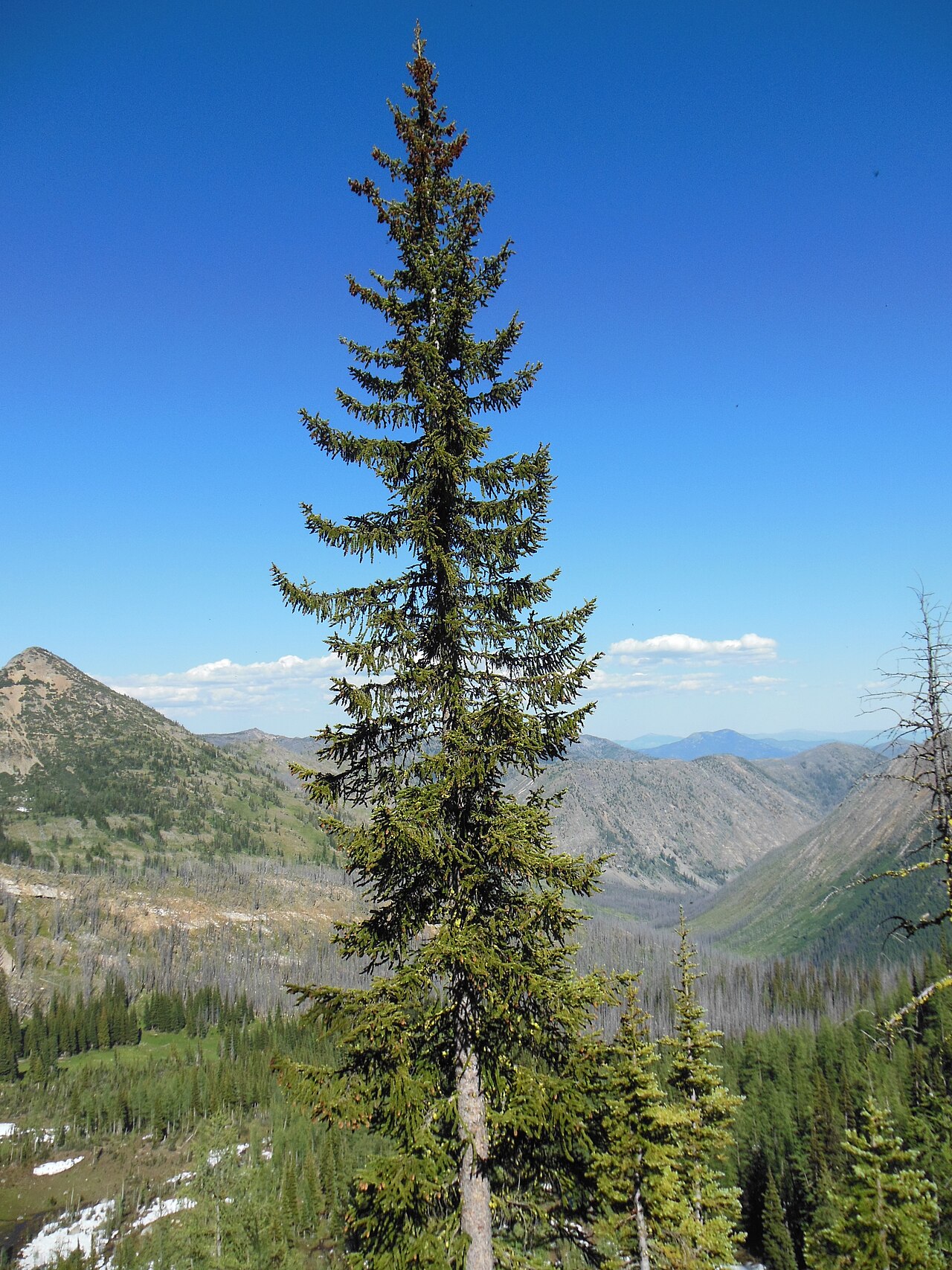
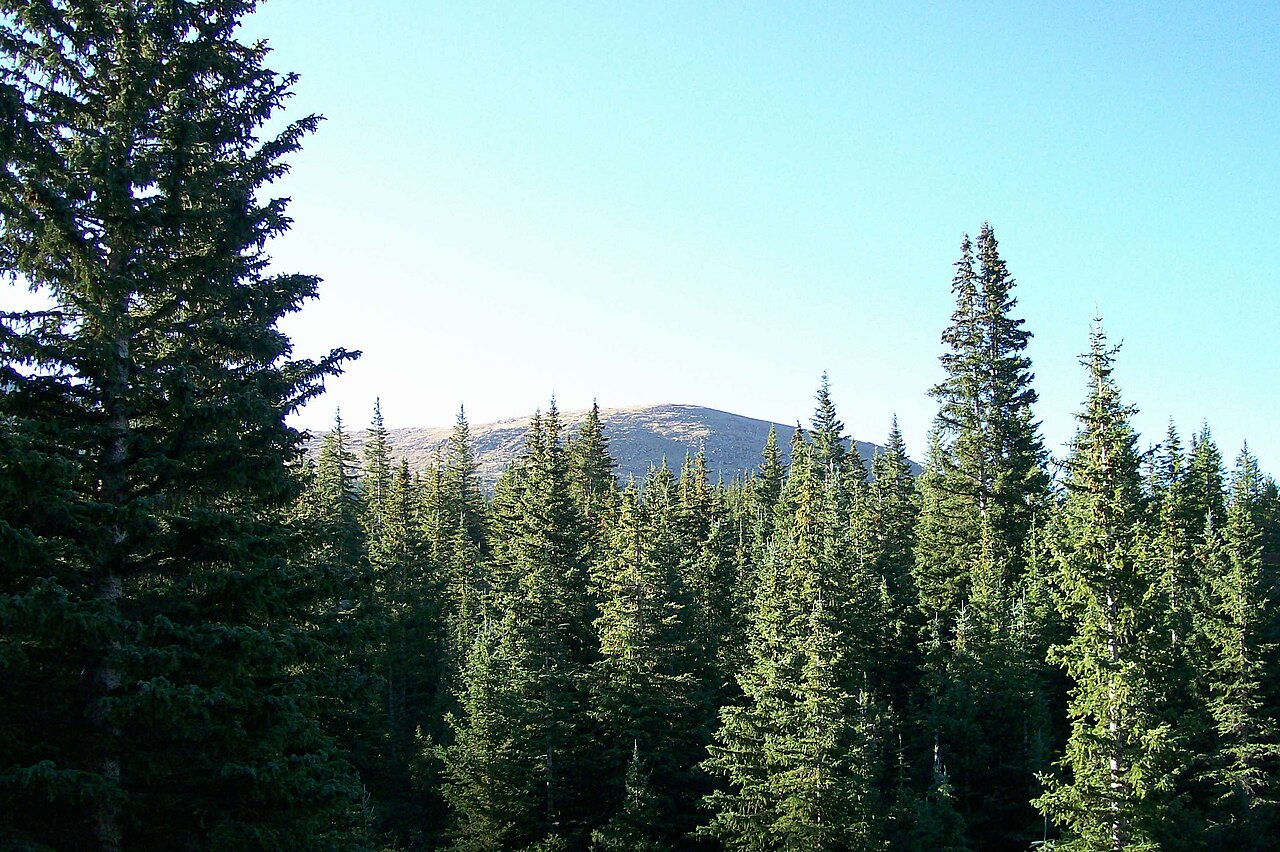
Picea engelmannii, the Engelmann Spruce, is a tall, narrow-crowned conifer of the high Rocky Mountains and interior ranges of western North America, named for the 19th-century botanist George Engelmann. It is a defining tree of the subalpine forest, forming vast, cold-tolerant stands just below treeline where few other conifers can compete, often growing alongside subalpine fir in one of the most distinctive forest types in the American West.
Engelmann spruce is a large evergreen tree, typically 80 to 130 feet tall at maturity, with a slender, spire-like crown, flexible blue-green needles, and distinctive papery, flaking bark. At its upper elevation limits it gradually shrinks into gnarled, wind-sculpted krummholz mats, a vivid illustration of just how far this species pushes into the cold, short-season world near mountain summits. Few North American trees tolerate colder growing conditions.
For gardeners and land managers at higher, cooler elevations in the Mountain West and Southwest, Engelmann spruce is a valuable native choice for naturalistic plantings, windbreaks, and restoration work on moist mountain sites. It is not a tree for hot, dry lowland gardens, but where summers stay cool and soil stays reliably moist, it offers a long-lived, stately conifer with real ecological value for high-elevation wildlife.
Identification
Engelmann spruce grows as a large, single-trunked evergreen tree reaching 80 to 130 feet tall, occasionally more in favorable old-growth stands, with a trunk up to 3 to 4 feet in diameter. The crown is narrowly conic in younger trees, becoming more cylindrical with age, and the tree typically retains a strong single leader and a dense, symmetrical outline characteristic of high-elevation spruce-fir forest.
Bark & Twigs
The bark is thin and scaly, gray to reddish-brown, flaking off in small, loose, circular plates that reveal a pale inner bark — a useful field mark for distinguishing spruce from the furrowed bark of pines and firs at a glance. Twigs are stout, yellow-brown, and finely hairy, roughened by small peg-like projections (pulvini) left where each needle attaches, a feature typical of the spruce genus.
Leaves
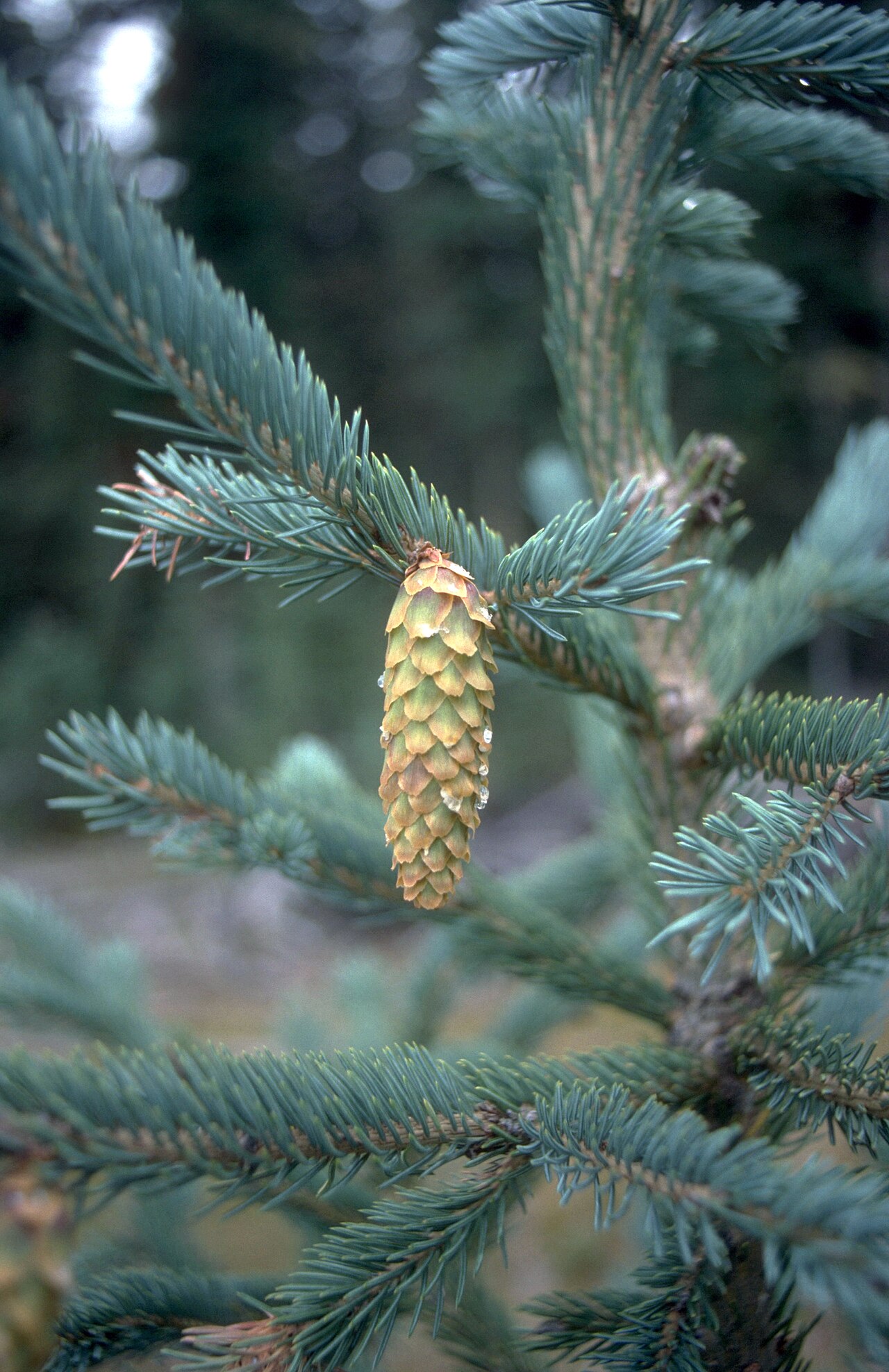
Needles are 0.6 to 1.4 inches long, four-angled in cross-section, flexible rather than stiff, and blue-green with lines of stomata on all four faces, giving the foliage a soft, bluish cast that stands out against darker conifers nearby. Unlike the sharp, rigid needles of blue spruce, Engelmann spruce needles can be rolled between the fingers without discomfort, and crushed foliage releases a pungent, resinous odor.
Cones
Seed cones are pendulous, slender and cylindrical, 1.2 to 3 inches long, with thin, flexible, papery scales that have a distinctively wavy, irregularly toothed margin. Cones mature from reddish-purple to light brown over four to seven months after pollination, then open and drop from the tree, their flexible scales helping distinguish Engelmann spruce cones from the stiffer-scaled cones of other Rocky Mountain conifers.
Quick Facts
| Scientific Name | Picea engelmannii |
| Family | Pinaceae (Pine) |
| Plant Type | Evergreen Conifer Tree |
| Mature Height | 80–130 ft (exceptionally taller in old growth) |
| Trunk Diameter | 3–4 ft |
| Growth Rate | Slow |
| Sun Exposure | Full Sun to Part Shade |
| Water Needs | Moderate to high; needs consistently moist soil |
| Soil Type | Moist, well-drained; rocky or loamy mountain soils |
| Soil pH | 5.0–6.5 (acidic to slightly acidic) |
| Bloom Time | Late spring (cones, not showy flowers) |
| Flower Color | Reddish-purple cones; yellow pollen |
| Fall Color | Evergreen (no fall color change) |
| Fruit | Pendulous cones, 1.2–3 in, light brown at maturity |
| Deer Resistant | Mostly yes; occasional browsing on young trees |
| USDA Hardiness Zones | 2–6 |
Native Range
Engelmann spruce is native to the mountains of western North America, ranging from southwestern Alberta and interior British Columbia south through the Rocky Mountains and interior ranges of the United States into the high mountains of Arizona and New Mexico, with a disjunct extension into the Sierra San Pedro Mártir of Baja California and the mountains of northern Mexico. Within the lower 48 states it occurs in Arizona, California, Colorado, Idaho, Montana, Nevada, New Mexico, Oregon, Utah, Washington, and Wyoming.
Across this range, Engelmann spruce is a tree of montane and subalpine forest, typically occurring between about 3,300 and nearly 10,000 feet in elevation, with its exact elevational band shifting higher in the warmer, more southerly parts of its range and lower near its northern limit. It is most abundant just below treeline, where it often forms nearly pure stands or mixes closely with subalpine fir in the classic Rocky Mountain spruce-fir forest, and it extends down into cooler, moister canyon bottoms and north-facing slopes at somewhat lower elevations.
Engelmann spruce hybridizes readily with white spruce where their ranges meet in parts of British Columbia and Alberta, and the variation across its broad range is continuous enough that botanists recognize only a single variety within the United States and Canada, with a distinct variety restricted to Mexico. Because it depends on cool, moist, high-elevation conditions, the species is considered sensitive to warming temperatures and is a focus of ongoing monitoring in parts of its southern range.
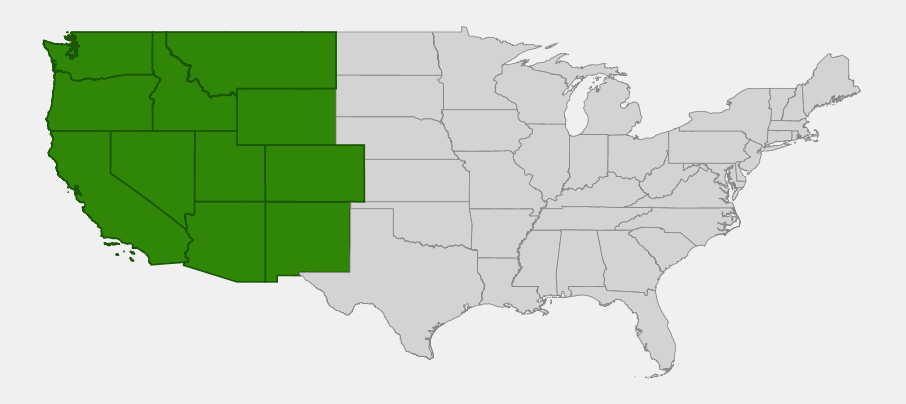
📋 Regional plant lists featuring Engelmann Spruce: Arizona & New Mexico · Utah & Western Colorado · Montana & Wyoming · Idaho, Eastern Oregon & Eastern Washington
Growing & Care Guide
Engelmann spruce is best suited to cool, moist, higher-elevation gardens that mimic its native subalpine habitat. It is a long-lived, slow-growing tree best planted with its mature size and site requirements firmly in mind.
Light
Young Engelmann spruce establish well in partial shade, which mimics the understory conditions where seedlings often begin life beneath a canopy of mature trees. As trees mature they perform best in full sun, developing a denser, more symmetrical crown. In hot, dry, low-elevation sites, even full sun is not enough to compensate for insufficient moisture and cool temperatures.
Soil & Water
This species needs consistently moist, well-drained, acidic to slightly acidic soil and struggles in hot, dry, or alkaline conditions. It is best matched to higher-elevation gardens with cool summers and reliable moisture, whether from snowmelt, rainfall, or irrigation. Established trees tolerate rocky, thin mountain soils as long as moisture is adequate, but they are not a good choice for low-elevation gardens with hot, dry summers.
Planting Tips
Plant young Engelmann spruce in spring or early fall at higher, cooler elevations, siting them where they will have room to reach their full mature height and spread over many decades. A site with light shade while trees are young, transitioning to more open sun as they mature, mimics natural establishment patterns. Mulch generously to conserve soil moisture and moderate soil temperature, especially during the first several years.
Pruning & Maintenance
Engelmann spruce requires minimal pruning beyond removing dead, damaged, or crossing branches. Its narrow, naturally conic form rarely needs shaping. Watch for spruce beetle and other bark beetle activity, which can be a significant threat during drought stress, and keep trees as healthy and well-watered as possible to reduce susceptibility.
Propagation
Engelmann spruce is propagated primarily from seed, which requires cold stratification to break dormancy before germinating reliably. Seedlings grow slowly and are often grown in containers for several years before being planted out. Named selections are sometimes grafted, but straight-species plants for restoration and naturalistic plantings are almost always seed-grown.
Landscape Uses
Engelmann spruce fits a specific but valuable set of higher-elevation landscape roles:
- Naturalistic mountain gardens at higher, cooler elevations
- Windbreaks and screens in exposed subalpine or montane sites
- Restoration plantings on disturbed subalpine forest sites
- Wildlife plantings paired with Subalpine Fir and Quaking Aspen
- Specimen conifers where a tall, narrow silhouette is wanted
Wildlife & Ecological Value
As a dominant tree of the subalpine zone, Engelmann spruce anchors one of the most distinctive high-elevation forest ecosystems in western North America, providing food, cover, and nesting structure through long, harsh mountain winters.
For Birds
Dense Engelmann spruce stands provide critical winter cover and nesting habitat for high-elevation birds, including red crossbills and pine siskins, which feed heavily on the seeds released from mature cones. Clark’s nutcrackers and several owl species also use mature spruce-fir stands for nesting and roosting, particularly in old-growth stands with large trees and complex canopy structure.
For Mammals
Red squirrels rely heavily on Engelmann spruce cones, caching them in large middens that can persist for years and serve as a key winter food source. Snowshoe hares and other small mammals use dense spruce-fir thickets for cover, and larger mammals such as elk and deer use subalpine spruce forest for summer shade and thermal cover, though they only occasionally browse the foliage itself.
For Pollinators
As a wind-pollinated conifer, Engelmann spruce does not rely on insect pollinators and offers little direct floral resource value. Its ecological contribution to pollinators is more indirect, through the structural diversity and microclimate its canopy provides to the understory plants that do support bees and other insects.
Ecosystem Role
Engelmann spruce is a foundational species of the subalpine zone, moderating snowpack retention, shading streams and reducing erosion on steep mountain slopes, and providing the structural backbone of one of the highest-elevation forest types in the Rockies. Because it is sensitive to drought and bark beetle outbreaks, healthy Engelmann spruce stands are also considered an indicator of broader subalpine forest health in a warming climate.
Cultural & Historical Uses
Engelmann spruce carries a long history of practical use across the mountain West, though it has always played a more utilitarian role than many lower-elevation native trees. Indigenous peoples throughout the Rocky Mountains used spruce wood, roots, and pitch for a range of purposes, including basketry, cordage, and waterproofing, and the resin was used in various traditional preparations.
Commercially, Engelmann spruce became an important timber species in the 20th century, particularly prized for its straight grain, light weight, and excellent acoustic properties; it remains one of the preferred woods for soundboards in pianos and other musical instruments, alongside its more famous relative, Sitka spruce. High-elevation logging of Engelmann spruce has been more limited than in lower-elevation forests, given the difficulty of access and the slow growth rate of the species at altitude.
Today, Engelmann spruce is valued less for timber than for its role as a foundational species of subalpine wilderness, a tree closely associated in the public imagination with high mountain scenery, backcountry hiking trails, and the classic spruce-fir forest of the American and Canadian Rockies. Mature old-growth stands are increasingly recognized and protected for their ecological and scenic value.
Frequently Asked Questions
How tall does Engelmann spruce get?
Most mature trees reach 80 to 130 feet tall, with a slender, spire-like crown. At its upper elevation limits near treeline, the same species can be reduced to a low, wind-sculpted shrub only a few feet tall.
What is the difference between Engelmann spruce and blue spruce?
Engelmann spruce needles are flexible and softer to the touch, while blue spruce needles are notably stiff and sharp. Engelmann spruce also tends to grow at higher elevations, in moister subalpine forest, while blue spruce more often occupies drier montane sites and streamside canyons at somewhat lower elevations.
Can Engelmann spruce grow at low elevation in a typical garden?
It struggles in hot, dry, low-elevation conditions. Engelmann spruce performs best in cool, moist, higher-elevation gardens that approximate its native subalpine habitat; in warm lowland climates it is prone to stress and pest problems.
Why do Engelmann spruce stands sometimes look reddish or dying?
Large patches of dead or dying Engelmann spruce are often the result of spruce beetle outbreaks, which can kill drought-stressed trees across whole hillsides. Healthy, well-watered stands are more resistant, but prolonged drought has made outbreaks more severe in parts of the Rocky Mountains in recent decades.
Is Engelmann spruce the same tree used for Christmas trees and lumber?
Engelmann spruce is harvested for construction lumber and, less commonly, used as a Christmas tree, though it is less widely planted for that purpose than some other spruces. Its wood is most prized commercially for musical instrument soundboards, where its light weight and resonance are highly valued.

Looking for a nursery that carries Engelmann Spruce?
Browse our native plant nursery directory: Arizona · California · Colorado · Idaho · Montana · Nevada & New Mexico · Oregon · Utah · Washington · Wyoming