
Geyer’s Willow (Salix geyeriana)
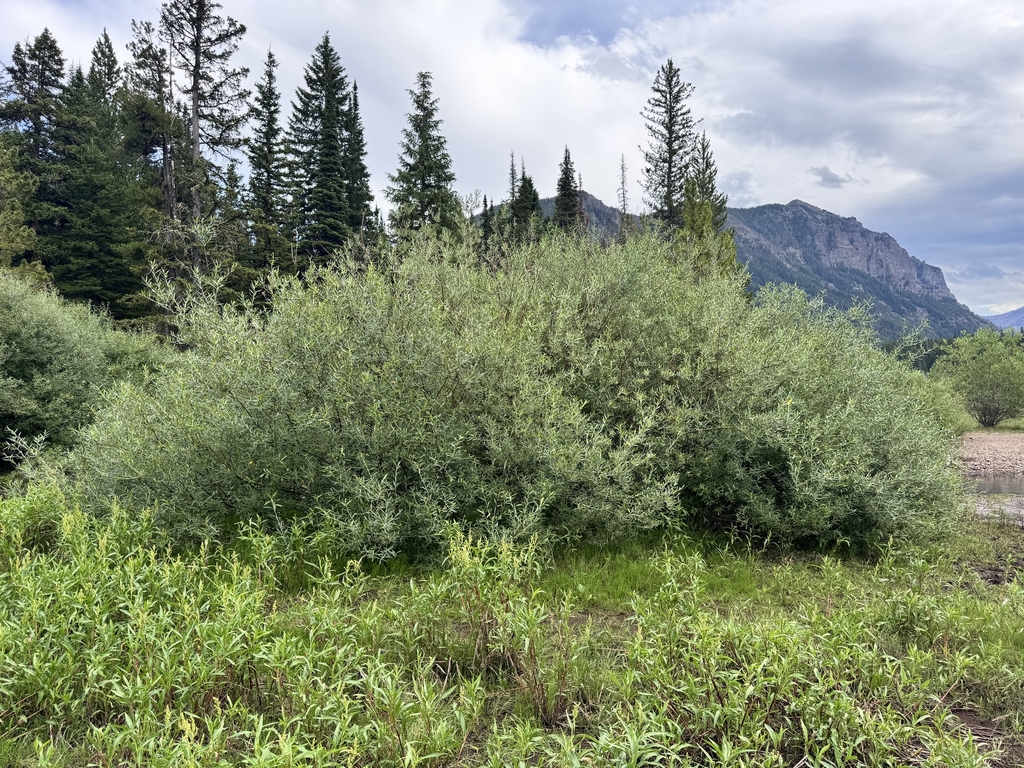
Salix geyeriana, Geyer’s Willow (also called Geyer willow), is a large, multi-stemmed native shrub of mountain meadows and streamsides across the western United States and southern British Columbia. It is one of the most common and important willows of montane riparian areas from the Cascades and Sierra Nevada to the Rocky Mountains.
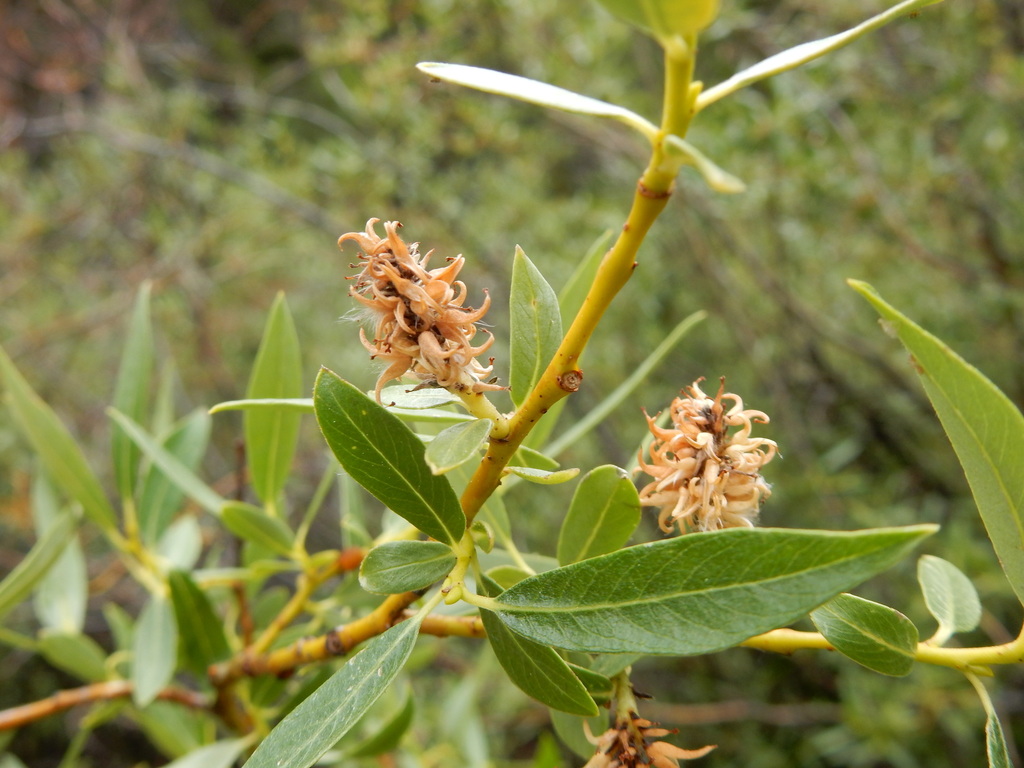
It forms rounded, gray-green clumps 6 to 15 feet tall, with narrow, silky leaves and slender twigs that are often covered with a distinctive whitish, waxy bloom. In spring, it produces small, rounded catkins as the leaves expand.
Geyer’s willow is a keystone plant of western wetlands: it shades and stabilizes streams, feeds beavers and moose, and shelters many birds. This guide covers how to identify it, where it grows, how to use it in restoration and gardens, and its value to wildlife.
Identification
Geyer’s willow is a tall, rounded, multi-stemmed shrub with narrow, gray-green, silky leaves, whitish-bloomed twigs and small, short catkins.
Form & Twigs
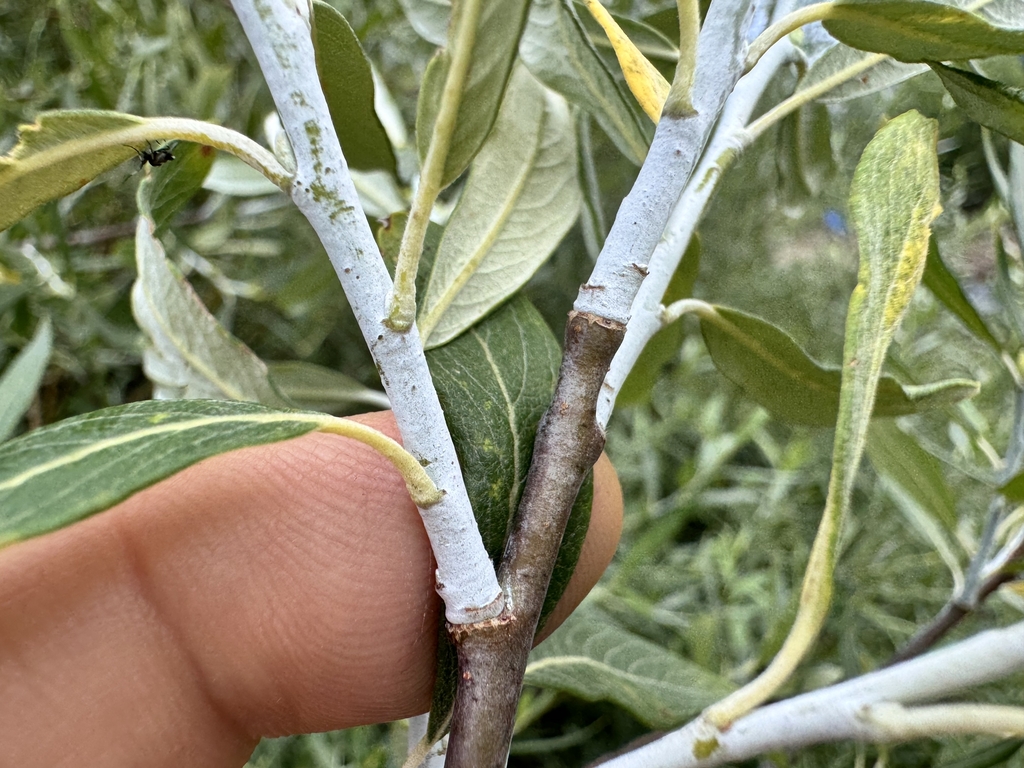
It grows 6 to 15 feet tall with many upright to spreading stems, forming dense, rounded clumps. The bark is gray to dark brown. One- and two-year-old twigs are typically covered with a whitish, waxy bloom that rubs off, a key feature shared with a few related willows.
Leaves
The leaves are alternate, narrowly lance-shaped to oblanceolate, about 1½ to 3½ inches long and less than ¾ inch wide, with smooth or nearly smooth edges. Both surfaces are covered with fine, silky hairs, giving the foliage a gray-green look, and the underside is often paler. Leaves turn yellow in fall.
Catkins
Like all willows, it has separate male and female plants. In spring, about May to June, as the leaves expand, it produces small, short, rounded catkins, usually less than an inch long, on short leafy shoots. Female catkins mature into small capsules that release cottony seeds in early summer.
Look-alikes
Booth’s Willow often grows with it but has broader, greener, less hairy leaves and twigs without bloom. Bebb Willow has broader, wrinkled leaves and long-beaked capsules. Sandbar Willow has very narrow, toothed leaves and spreads by suckers. Drummond’s willow has similar bloomy twigs but leaves with dense, white, satiny hairs beneath and larger catkins.
Quick Facts
| Scientific Name | Salix geyeriana Andersson |
| Family | Salicaceae (willow family) |
| Plant Type | Deciduous multi-stemmed shrub |
| Mature Height | 6–15 ft |
| Mature Spread | 5–12 ft |
| Growth Rate | Fast |
| Sun Exposure | Full sun |
| Water Needs | Wet to moist; tolerates seasonal flooding |
| Soil Type | Moist to wet loam, silt, sand, gravel or peat |
| Soil pH | About 5.5–8.0 |
| Bloom Time | May–June (catkins) |
| Flower Color | Yellowish to greenish catkins |
| Fall Color | Yellow |
| Fruit | Small capsules with cottony seeds |
| Deer Resistant | Low; heavily browsed by moose, elk and deer |
| USDA Hardiness Zones | 3–7 |
Native Range
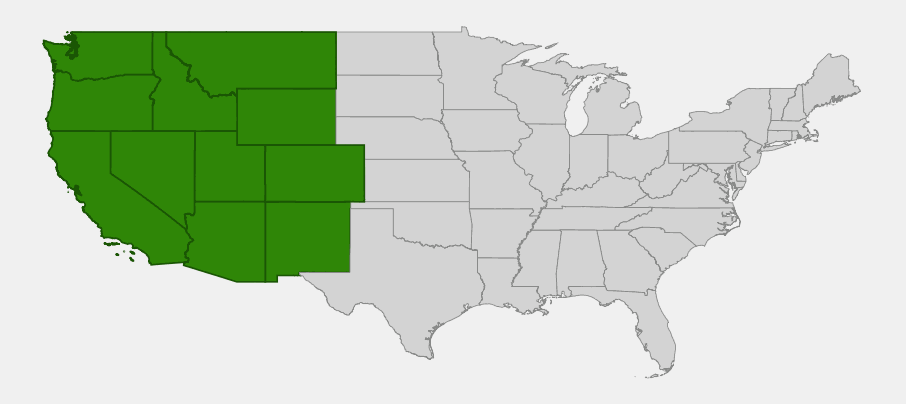
Geyer’s willow is native to the mountains of the western United States and southern British Columbia. USDA PLANTS lists it in Washington, Oregon, California, Nevada, Idaho, Montana, Wyoming, Utah, Colorado, Arizona and New Mexico.
It is most abundant in the Rocky Mountains of Montana, Wyoming, Idaho, Colorado and Utah, where it dominates many montane willow thickets, and in the eastern Cascades, the Blue Mountains and the Sierra Nevada. It becomes scattered southward into the mountains of Arizona and New Mexico.
It grows in wet meadows, along streams, beaver ponds and lake shores, in seeps and fens, and on floodplains, usually in mountain valleys and parks from about 4,000 to 10,000 feet. It often forms large thickets with other willows, especially in broad, low-gradient valleys shaped by beaver dams.
📋 Regional plant lists featuring Geyer’s Willow: Arizona & New Mexico · California & Nevada · Idaho, Eastern Oregon & Eastern Washington · Montana & Wyoming · Utah & Western Colorado · Western Oregon & Western Washington
Growing & Care Guide
Geyer’s willow is grown by native and restoration nurseries in the West, mostly for streambank and wetland restoration, and is easy to start from cuttings. It is a good choice for large, wet properties, pond edges and rural landscapes in mountain and high-plains climates, though it is too large and thirsty for most small gardens.
Light
Full sun. It thins out and declines in shade.
Soil & Water
It needs moist to wet soil with access to groundwater through the growing season, and it tolerates spring flooding and saturated soils. It grows in a wide range of soil textures and does well in cold, high-elevation climates.
Planting Tips
Plant dormant cuttings or rooted stock in early spring, 4 to 8 feet apart, along streams, pond margins or wet swales. Keep it well away from septic systems and water lines, since willow roots seek out water.
Pruning & Maintenance
Little care is needed. Old stems can be cut to the ground in late winter to rejuvenate clumps; willows resprout vigorously. Protect young plantings from heavy browsing by deer, elk, moose and beavers until established.
Propagation
Grow from dormant hardwood cuttings 12 to 24 inches long, pushed deep into moist soil in early spring; they root easily. Seed is short-lived and must be sown on wet soil within days of release.
Landscape Uses
- Streambank and wetland restoration: fast-rooting native willow for mountain streams
- Beaver and moose habitat: preferred browse and building material
- Pond edges and large wet sites: rounded, gray-green screen
- Living fences and windbreaks: dense, multi-stemmed shrub in wet ground
Wildlife & Ecological Value
Geyer’s willow is one of the most valuable wildlife plants of western mountain wetlands.
For Pollinators
Its early catkins provide pollen and nectar for bumble bees, mining bees and other early-season insects. Willows are host plants for many butterflies and moths, including mourning cloak, viceroy and Weidemeyer’s admiral.
For Birds
Willow thickets are prime nesting habitat for willow flycatchers, yellow warblers, Wilson’s warblers, song sparrows, Lincoln’s sparrows and fox sparrows. Ruffed grouse and dusky grouse feed on willow buds and leaves.
For Mammals
Moose, elk and deer browse it heavily, especially in winter, and beavers eat the bark and use the stems for dams and lodges. Snowshoe hares and many small mammals use the thickets for food and cover.
Ecosystem Role
Its dense roots stabilize stream banks, and its shade cools streams for trout. Through its close relationship with beavers, it helps create and maintain the wet meadows and ponds that store water in mountain valleys.
Cultural & Historical Uses
The species honors Charles Andreas Geyer, a German botanist who collected plants in the American West in the 1840s, including along the Oregon Trail. The Swedish willow expert Nils Johan Andersson described it in the 1850s.
In Yellowstone National Park, the recovery of willows such as Geyer’s willow after the reintroduction of wolves in the 1990s has been widely studied as a possible example of a trophic cascade, though scientists still debate how much wolves alone are responsible.
Willow bark contains salicin, the natural compound that inspired aspirin, and Indigenous peoples of the West used willow bark for medicine and willow stems for baskets, fish traps and shelters.
Frequently Asked Questions
How do I recognize Geyer’s willow?
Look for a tall, rounded, gray-green willow with narrow, silky leaves and young twigs coated with a whitish, waxy bloom, growing in a wet mountain meadow or along a stream.
Where does Geyer’s willow grow?
In wet meadows and along streams and beaver ponds in the mountains of the western United States, from Washington and Montana to California, Arizona and New Mexico.
How tall does Geyer’s willow get?
Usually 6 to 15 feet tall, forming dense, rounded clumps.
Is Geyer’s willow good for wildlife?
Yes. It is a key food for moose, elk and beavers and provides nesting habitat for willow flycatchers and many other songbirds.
How do I propagate Geyer’s willow?
Push dormant hardwood cuttings deep into moist soil in early spring. They root easily.

Looking for a nursery that carries Geyer’s Willow?
Browse our native plant nursery directory: Arizona · California · Colorado · Idaho · Montana · Nevada & New Mexico · Oregon · Utah · Washington · Wyoming

