Sandbar Willow (Salix exigua)
Salix exigua, commonly known as Sandbar Willow, Coyote Willow, or Narrowleaf Willow, is one of the most widespread and ecologically important native willows of North America. Ranging from Alaska south through all of the western states and across the Great Plains to the Eastern US, this slender, multi-stemmed shrub or small tree is the characteristic vegetation of western riverbanks, sandbars, and stream margins from low deserts to subalpine elevations. Its scientific name, from the Latin exiguus (“small, meager”), refers to its very narrow leaves rather than to the plant’s stature or ecological importance — both of which are substantial.
Sandbar Willow is the pioneer riparian shrub of the American West. Where rivers flood, erode new banks, and deposit fresh sandbars, Sandbar Willow is almost always the first woody plant to colonize — its tiny, wind-dispersed seeds germinate on bare, wet sand within hours of being deposited, and the young plants grow with extraordinary speed, fixing unstable substrate and beginning the process of riparian succession that eventually leads to mature cottonwood-willow forest. This pioneer role makes Sandbar Willow one of the most ecologically important native plants in the arid West, where riparian corridors support disproportionately high biodiversity compared to surrounding upland habitats.
Beyond its ecological services, Sandbar Willow is valued by wildlife gardeners for the exceptional cover it provides. Dense, nearly impenetrable thickets of Sandbar Willow shelter and protect nesting songbirds, provide thermal and escape cover for mule deer and elk, and support abundant invertebrate life that feeds fish, amphibians, and insectivorous birds. The winter branch color — golden to orange-red — adds striking landscape interest during the dormant season. For restoration projects along Utah streams, ditches, and wetland margins, Sandbar Willow is an outstanding, fast-growing native that establishes quickly from cuttings and provides immediate ecological benefits.
Identification
Sandbar Willow grows as a dense, many-stemmed shrub or small thicket tree, typically 5 to 15 feet tall, spreading aggressively by root sprouts to form extensive colonies. The stems are slender and flexible — ideal for withstanding flood currents — and colored yellow to golden-orange or orange-red, providing excellent winter landscape interest. Young twigs are silky-hairy; older stems become smooth and gray-brown. The plant rarely grows as a single-trunk tree; colonies of multiple interconnected root-sprouting stems are typical.
Leaves
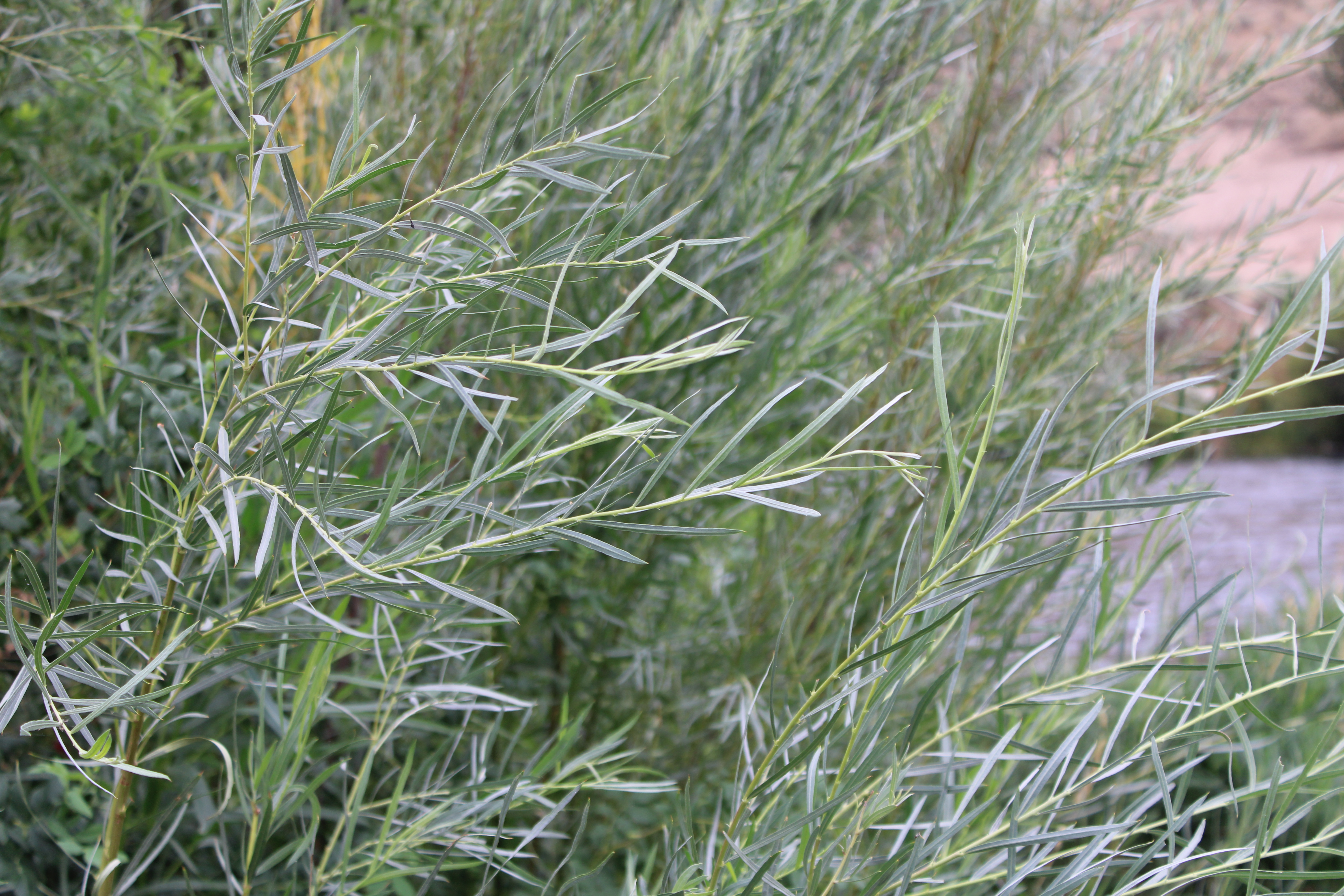
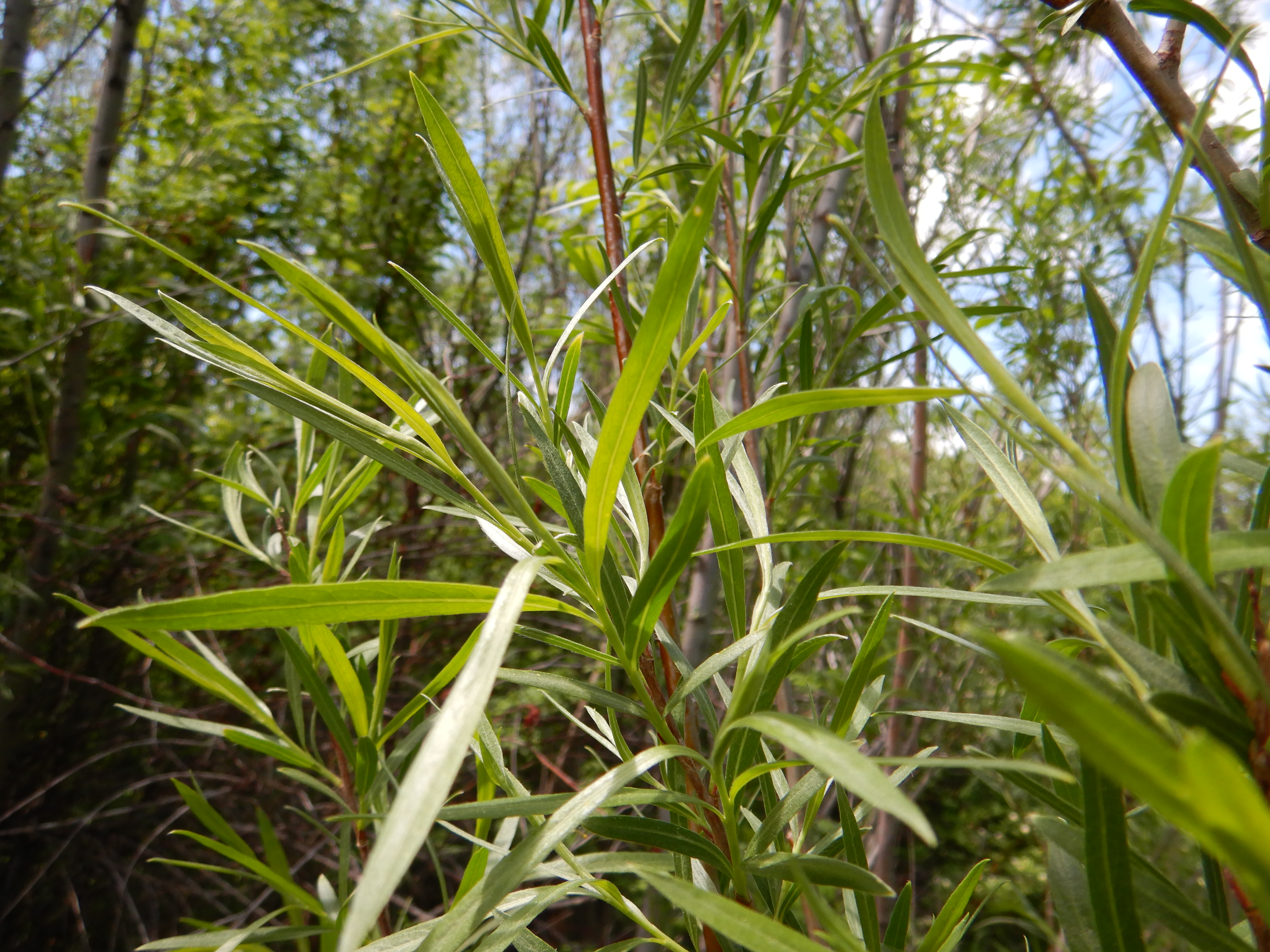
The leaves are among the most distinctive features of Sandbar Willow — they are very long and narrow, typically 1.5 to 5 inches (4–13 cm) long but only ¼ to ⅜ inch (5–10 mm) wide, linear to very narrowly lanceolate. Leaf margins have very fine, widely spaced teeth or are nearly smooth. Both leaf surfaces are initially covered with silky white hairs that give the plant a silvery, shimmering appearance; as leaves mature through summer they often become less hairy. The narrow, linear leaves flutter in the slightest breeze, creating a distinctive movement and light-catching shimmer that identifies the species from a distance. Fall color is typically soft yellow before leaf drop.
Catkins & Seeds
Like all willows, Sandbar Willow is dioecious — individual plants are either male or female. Both sexes produce catkins in early spring before or as leaves emerge. Female catkins, when mature, produce tiny capsules containing cottony-tufted seeds that are released in late spring and early summer, creating characteristic “willow fluff” that drifts on the wind and accumulates along waterways and fence lines. Seeds must land on moist, bare mineral substrate within a few days to germinate successfully — they have no dormancy period and die quickly if not in appropriate conditions.
Quick Facts
| Scientific Name | Salix exigua |
| Family | Salicaceae (Willow Family) |
| Plant Type | Deciduous Shrub to Small Tree |
| Mature Height | 5–15 ft |
| Sun Exposure | Full Sun |
| Water Needs | Moderate to High |
| Bloom Time | March – May (catkins) |
| Winter Interest | Golden to orange-red branch color in fall/winter |
| Best Use | Riparian restoration, streambanks, wetland margins |
| Wildlife Value | Exceptional — dense cover and food for dozens of species |
| USDA Hardiness Zones | 2–8 |
Native Range
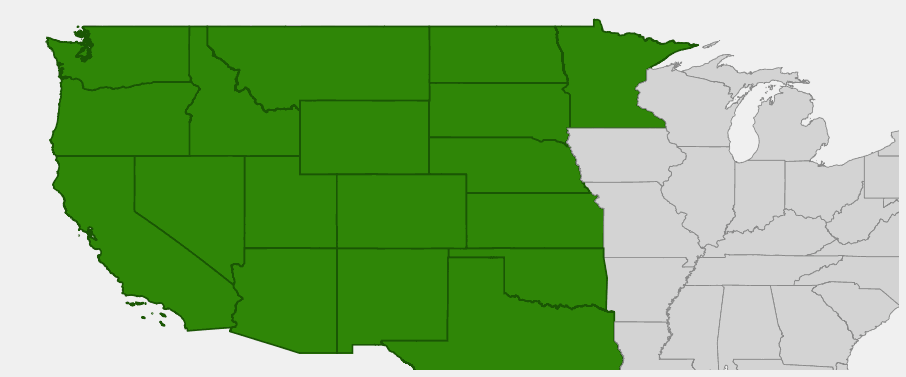
Sandbar Willow has one of the largest native ranges of any North American willow, occurring from Alaska south through British Columbia and all western states to Mexico, and east across the Great Plains to the Atlantic Coast. In the contiguous US, it is essentially found wherever there are rivers, streams, or other waterways with sandy or gravelly banks. In Utah, it is ubiquitous along the Colorado River system, the Green River, the Provo River, and virtually every perennial stream in the state, from low desert elevations near the Colorado River (about 3,700 ft) to riparian willows along subalpine streams at 9,000+ feet.
The species shows remarkable ecological and geographic adaptability. From the desert rivers of southern Utah to the arctic streams of Alaska, Sandbar Willow colonizes bare, wet, sandy substrate with equal facility. It tolerates a wide range of water chemistry, from fresh mountain snowmelt to slightly alkaline Great Plains river water. In the Colorado River system, Sandbar Willow thickets are a critical habitat component for migratory birds traveling the Intermountain West flyway, providing shelter and food along river corridors in otherwise dry, inhospitable desert landscape.
Like other pioneer willows, Sandbar Willow’s distribution is closely tied to river dynamics. Populations expand dramatically after major floods that create new sandbars and exposed streambanks, then gradually decline as plant succession proceeds toward cottonwood-willow forest. This dynamic relationship with flood disturbance means that Sandbar Willow populations are always in flux — declining in some reaches as succession proceeds, establishing in others wherever new bare substrate is created.
📋 Regional plant lists featuring Sandbar Willow: Utah
Growing & Care Guide
Sandbar Willow is one of the easiest native plants to establish from cuttings and one of the fastest-growing woody plants available to the native plant gardener. It is the ideal choice for any site with wet soil, a high water table, periodic flooding, or proximity to a stream, pond, or wetland. Its establishment speed, wildlife value, and erosion control capabilities make it a go-to species for riparian restoration projects of any scale.
Light
Sandbar Willow performs best in full sun, which is typical of its natural streambank habitat. While it can tolerate partial shade, growth is most vigorous and branch color most intense (golden-orange) in full sun locations. In shaded conditions, it becomes more open and less dense but remains serviceable for erosion control and wildlife cover.
Soil & Water
Unlike most plants in this list, Sandbar Willow thrives in consistently moist to wet soil and can grow in standing water for extended periods during flood events. It is ideal for wet depression planting, streambank stabilization, and any area that is periodically waterlogged. Sandy or gravelly substrate is preferred but it grows well in any moist, well-aerated soil. It does not perform well in dry, upland conditions — choose this plant only for sites with reliable moisture. Supplemental irrigation is rarely needed once established in an appropriate site.
Planting Tips
Sandbar Willow is most easily propagated from hardwood cuttings. Simply cut pencil-thick stems 12–18 inches long in late winter or early spring, push them 8–12 inches into moist soil, and they will root readily — sometimes with nearly 100% success. This propagation method makes large-scale restoration planting extremely economical. Container-grown plants are also available and transplant easily in spring or fall. Space plants 5–8 feet apart for restoration planting. In a garden setting, keep in mind the plant’s vigorous root-sprouting habit and plan for spread.
Pruning & Maintenance
Sandbar Willow benefits from periodic hard cutting (coppicing) to maintain dense, productive thickets. Cut back to 12–18 inches every 3–5 years in late winter to encourage fresh, brightly colored new growth (which has the best winter color) and to prevent thickets from becoming too woody and sparse. Without cutting, older stems develop gray bark and the plant becomes more open. The vigorous resprouting response to coppicing maintains the thicket form that provides the best wildlife cover.
Landscape Uses
- Streambank and riverbank stabilization — primary use in restoration projects
- Erosion control — spreading roots anchor unstable, wet soil rapidly
- Riparian restoration — key species for recreating native streamside habitats
- Wetland garden — thrives at pond margins and in wet basins
- Wildlife screen — provides dense cover along fence lines and water features
- Winter color — golden to orange-red branches provide off-season interest
Wildlife & Ecological Value
Sandbar Willow is one of the most ecologically productive native plants in the arid West, punching far above its modest stature in terms of the wildlife it supports and the ecosystem services it provides.
For Birds
Dense Sandbar Willow thickets are among the most productive bird nesting habitats in the American West. Yellow Warbler, Willow Flycatcher, Yellow-breasted Chat, Common Yellowthroat, Song Sparrow, and dozens of other species nest in or at the margins of willow thickets. During spring and fall migration, willows along western rivers provide critical resting and feeding habitat for warblers, vireos, and other migrants. Raptors — including Cooper’s Hawks, Sharp-shinned Hawks, and Great Horned Owls — use willow thickets for hunting and nesting. The abundant insects supported by willows provide the food base for a remarkable diversity of insectivorous birds during the breeding season.
For Mammals
Beaver are strongly associated with Sandbar Willow — they consume the bark and branches extensively and use willow stems as primary dam-building material. Beaver activity in turn creates pond habitats that benefit waterfowl, otters, and amphibians. Mule deer and elk browse Sandbar Willow foliage heavily in winter when it protrudes above snow. Moose consume willow at remarkable rates in northern Utah and adjacent states. Dense willow thickets provide escape cover and fawning habitat for deer, and daytime resting habitat for coyotes and foxes.
For Pollinators
Willows are among the most important early-spring pollen sources for native bees. They bloom before most other plants, providing critical early nutrition when queen bumblebees are founding new colonies and other early-active bees are at their most nutritionally stressed. Many native bee species specialize on willow pollen. The catkins also attract early-season butterflies and moths seeking nectar.
Ecosystem Role
Sandbar Willow’s ecological role as a riparian pioneer is irreplaceable. By colonizing bare sandbars and unstable streambanks rapidly, it creates the physical structure (roots, woody debris, leaf litter) that enables subsequent plant succession toward mature riparian forest. Its dense root systems dramatically reduce bank erosion, improving water quality by reducing sediment inputs to streams. The shade cast by willow thickets over stream channels lowers water temperatures, benefiting cold-water fish including native trout. Willows also intercept nutrients and pollutants from agricultural runoff before they enter waterways — making streamside willow restoration a cost-effective water quality improvement strategy.
Cultural & Historical Uses
Willows have been used by virtually every Indigenous culture that lived near water in North America, and Sandbar Willow was particularly important for peoples of the Great Basin, Colorado Plateau, and Great Plains. The flexible young stems were a premier basketry material — weavers of the Ute, Paiute, and Shoshone nations used willow shoots for making baskets, cradle boards, fish traps, and woven fences. The long, straight shoots produced by coppiced Sandbar Willow were especially prized because of their uniformity and flexibility. Willow basket-making continues as a living art form among many western Indigenous communities today.
Medicinally, Sandbar Willow shared the analgesic properties of all willows — their bark and leaves contain salicin, a compound that the body converts to salicylic acid, the active ingredient in aspirin. Indigenous peoples of the American West chewed willow bark for pain relief, brewed bark tea for fevers and inflammation, and applied willow poultices to painful joints. This knowledge was so widespread that willow-based remedies were essentially universal among cultures with access to the plant. When German chemists isolated and synthesized salicylic acid in the 1800s, they were essentially formalizing and improving on a therapeutic knowledge base developed over thousands of years by Indigenous peoples across the globe.
In more recent history, Sandbar Willow has emerged as a crucial species for stream restoration in the American West. With the recognition that widespread degradation of riparian zones — through livestock overgrazing, channelization, dewatering, and invasive tamarisk establishment — had caused massive losses of biodiversity and water quality, land managers began large-scale willow restoration programs in the late 20th century. Sandbar Willow’s exceptional ease of propagation from cuttings made it the workhorse of these efforts, with millions of cuttings planted along restored stream channels from Alaska to New Mexico. The success of these plantings has been remarkable, with rapidly established willow thickets outcompeting invasive tamarisk and demonstrating the effectiveness of native riparian restoration.
Frequently Asked Questions
Is Sandbar Willow the same as Coyote Willow?
Yes — Coyote Willow is one of the most common alternative names for Salix exigua, used particularly in California and the Southwest. The species also goes by Narrowleaf Willow (for its distinctively narrow leaves), Sandbar Willow (for its streambank habitat), and various Indigenous names across its broad range. All refer to the same species.
How do I propagate Sandbar Willow from cuttings?
Cut pencil-diameter or slightly larger stems in late winter (February–March), removing any leafy portions. Make cuts 12–18 inches long and push them 8–12 inches into consistently moist soil or into a bucket of water to root first. Cuttings root extremely easily — success rates of 80–100% are common with no rooting hormone needed. This is one of the easiest plants to propagate by cuttings of any species.
Can Sandbar Willow grow in standing water?
Yes — Sandbar Willow tolerates extended periods of flooding and can grow in permanently wet soil or at the margins of standing water. It is often found on sandbars that are inundated for weeks during spring floods. However, it performs best with some soil aeration and generally grows most vigorously just above the normal water level rather than in permanently saturated substrate.
How do I control Sandbar Willow if it spreads too much?
Root sprouts and new growth can be controlled by cutting back regularly to the desired perimeter. Unlike some other root-sprouting plants, Sandbar Willow stems cannot be allowed to reroot — pull them entirely rather than just cutting. Persistent removal of sprouts from outside the desired planting area will gradually limit spread. Alternatively, physical root barriers (12+ inches deep) can contain spread in formal garden settings.
Does Sandbar Willow have good fall color?
Fall foliage color is modest — typically soft yellow before leaf drop in October. However, the real show is winter stem color: once leaves drop, the golden to orange-red new stems become a striking feature against snow or winter sky. This winter branch color is particularly vivid in plants that have been coppiced recently, as new growth has the brightest coloration.

Looking for a nursery that carries Sandbar Willow?
Browse our native plant nursery directory: Utah