Utah Honeysuckle (Lonicera utahensis)
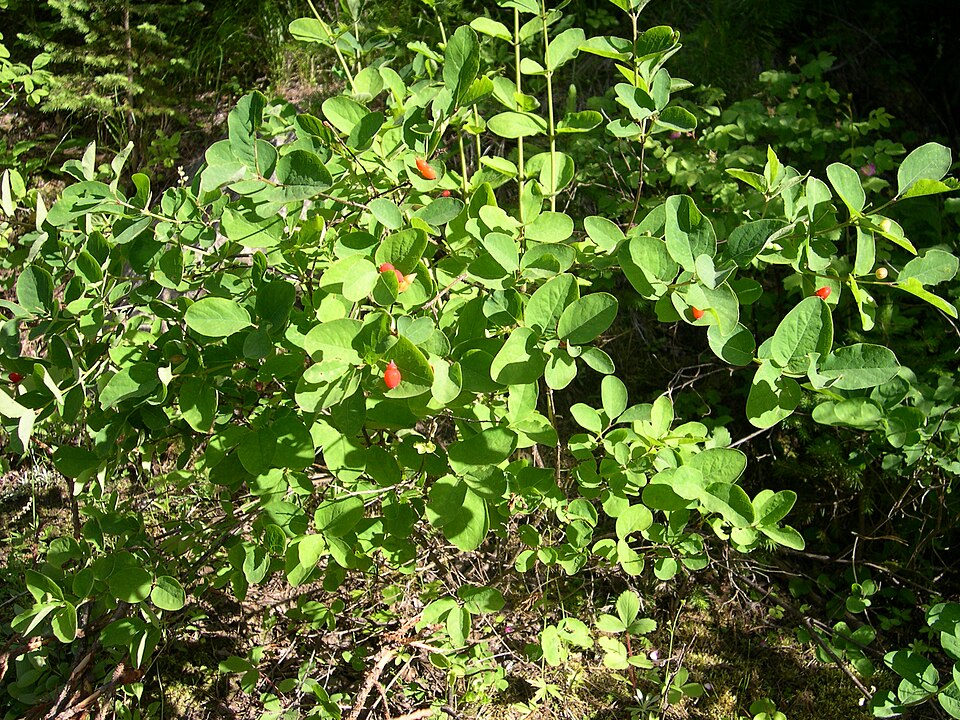
Lonicera utahensis, commonly known as Utah Honeysuckle or Red Twinberry, is a graceful native deciduous shrub of mountain and subalpine forests throughout the western United States. Unlike the aggressive Japanese Honeysuckle (L. japonica) that has invaded forests across the East, Utah Honeysuckle is a well-behaved, medium-sized native shrub that plays a modest but genuine ecological role in high-elevation forest communities. The paired, creamy yellow to white tubular flowers bloom in late spring and early summer, followed by pairs of translucent red berries that are among the most visually striking fruits of any Rocky Mountain native shrub.
Growing to 2 to 5 feet in height, Utah Honeysuckle inhabits the cool, moist understory of coniferous and mixed forests from the subalpine zone down to about 5,000 feet. It is one of the few native honeysuckles in Utah that thrives in full to partial shade, making it an invaluable choice for woodland gardens, north-facing slopes, and shaded naturalistic landscapes. The berries, while somewhat bitter and slightly toxic to humans, are readily consumed by birds, making Utah Honeysuckle an effective addition to wildlife-focused plantings in mountain settings.
For Utah gardeners working in the mountains — particularly in the Wasatch Range, Uinta Mountains, and high plateaus — Utah Honeysuckle offers a combination of spring floral interest, striking red fruit, good shade tolerance, and genuine wildlife value that is hard to match among native shrubs at these elevations. It is a plant that rewards placement in moist, shaded woodland garden settings with reliable performance and seasonal beauty.
Identification
Utah Honeysuckle is a deciduous, loosely branched shrub reaching 2 to 5 feet (0.6–1.5 m) in height with a spreading, somewhat arching form. It lacks the twining, climbing habit of some honeysuckles and grows as a self-supporting, bushy shrub. Young stems are greenish, becoming gray-brown with age; older bark develops a distinctive shredding texture that is characteristic of many Lonicera species.
Leaves
Leaves are simple, opposite, elliptic to oval, 1 to 3 inches (2.5–7.5 cm) long, with smooth or slightly undulating margins. They are bluish-green to medium green on the upper surface, paler beneath, and often have a slightly glaucous (waxy, whitish-blue) appearance. The leaf texture is smooth to slightly hairy. In fall, leaves turn yellow before dropping — a modest but attractive fall color display.
Flowers
The flowers are borne in pairs on slender peduncles arising from leaf axils. Each flower is tubular, about ¾ inch (2 cm) long, with two lips and long, protruding stamens. Color is creamy yellow to pale yellow. The paired arrangement is supported by a pair of green, leaf-like bracts. Blooming occurs from late May through July, depending on elevation.
Fruit
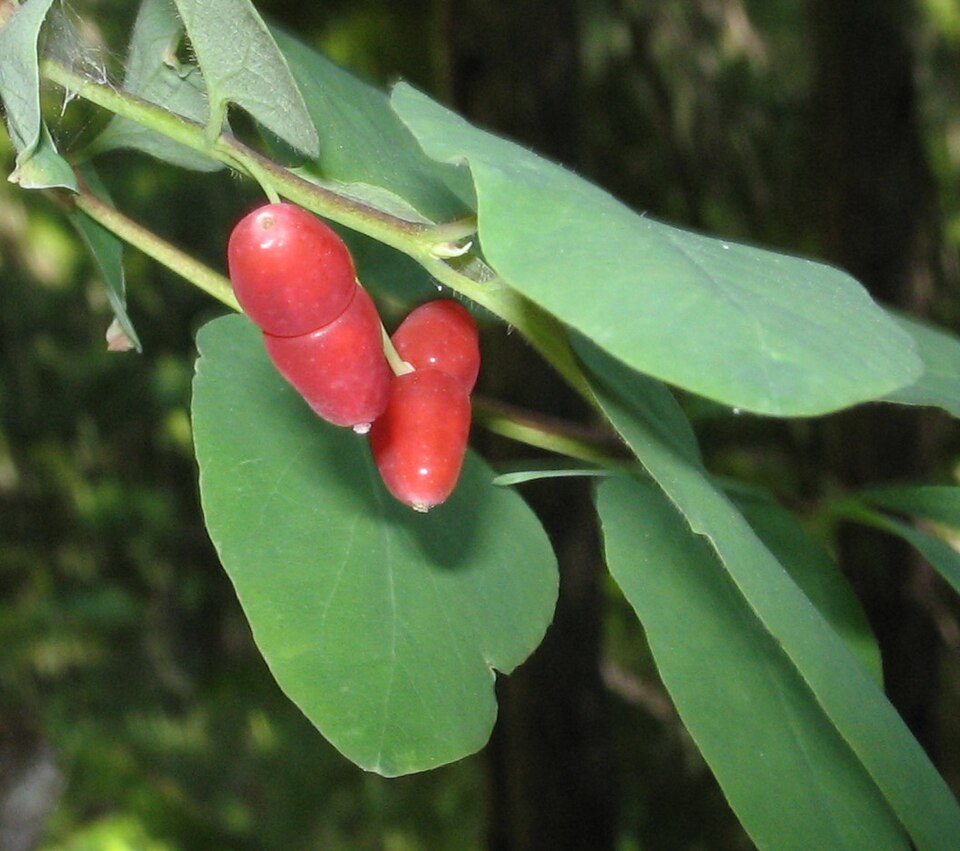
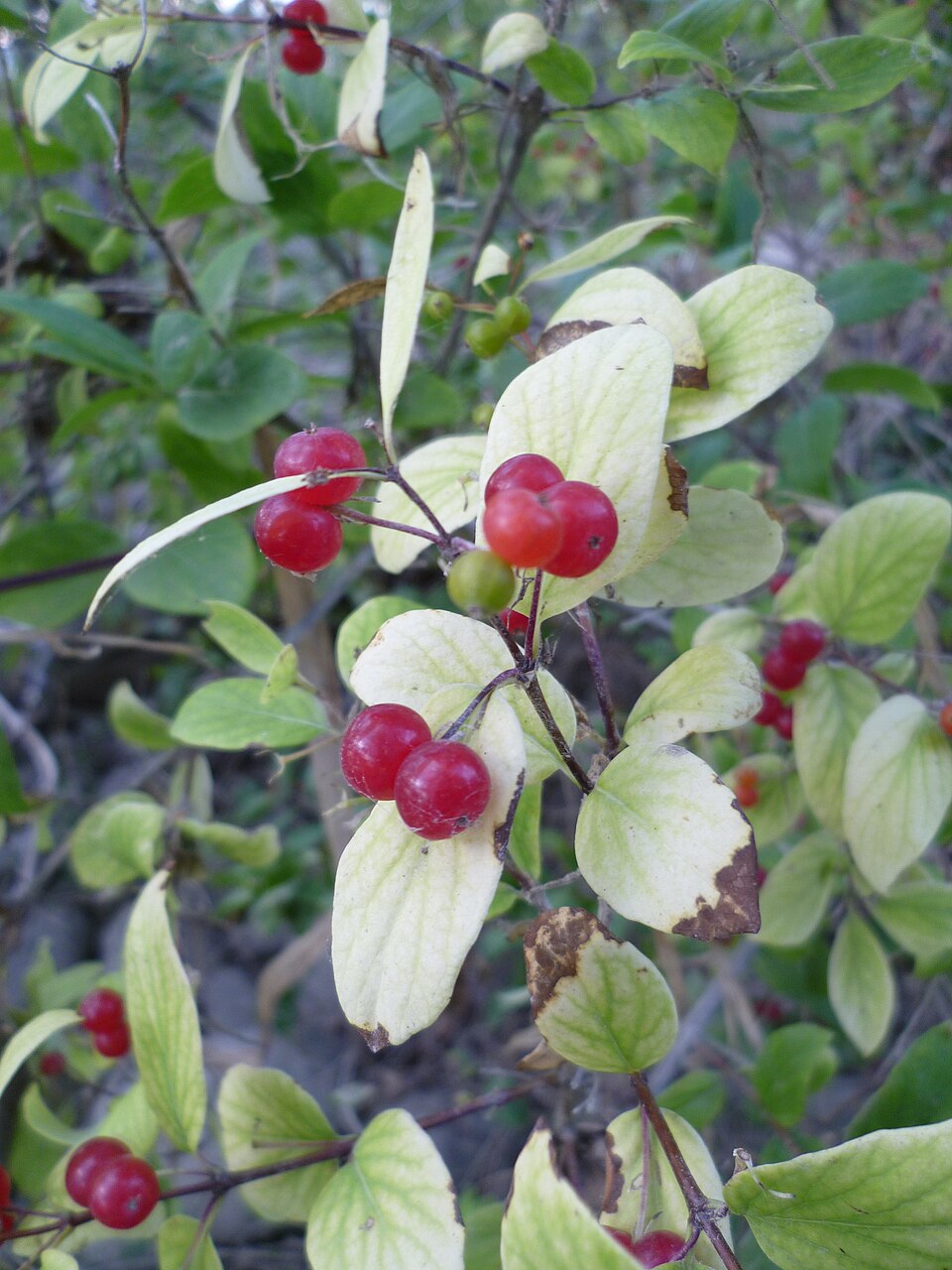
The fruit is one of the showiest features: paired, smooth, translucent red berries about ¼ to ⅜ inch (6–9 mm) in diameter, connected at their bases and sitting on the persistent green bracts. The berries ripen in late July through September and are striking against the green foliage. Note: these berries are slightly toxic to humans and should not be consumed; birds consume them readily.
Quick Facts
| Scientific Name | Lonicera utahensis |
| Family | Caprifoliaceae (Honeysuckle Family) |
| Plant Type | Deciduous Shrub |
| Mature Height | 2–5 ft |
| Sun Exposure | Full Shade (also tolerates Part Shade) |
| Water Needs | Moist to Wet (montane forest soils) |
| Bloom Time | May – July (elevation dependent) |
| Flower Color | Creamy yellow to pale yellow |
| Fruit | Paired translucent red berries (slightly toxic to humans; attractive to birds) |
| USDA Hardiness Zones | 3–8 |
Native Range
Utah Honeysuckle is native to the mountains of western North America, with a distribution ranging from southern British Columbia and Alberta south through Washington, Oregon, Idaho, Montana, Wyoming, Colorado, Utah, Nevada, California, and South Dakota. In Utah, it is found throughout the major mountain ranges — the Wasatch Range, Uinta Mountains, Markagunt Plateau, Aquarius Plateau, and the ranges of southern and eastern Utah — wherever moist, shaded forest conditions exist between roughly 5,000 and 10,000 feet elevation.
Within its mountain range habitat, Utah Honeysuckle occurs primarily in the understory of Engelmann Spruce-Subalpine Fir, Douglas-fir, and mixed conifer forests. It grows along shaded stream banks, in moist ravines, and in the shaded interiors of dense conifer stands. It tolerates a wide range of site conditions as long as soil moisture is adequate and temperatures are cool — it does not occur naturally in the hot, dry desert lowlands of Utah.
Utah Honeysuckle is a characteristic component of the mountain shrub community in Utah’s higher ranges, growing alongside Red Elderberry (Sambucus racemosa), Twinflower (Linnaea borealis), Thimbleberry (Rubus parviflorus), and various currants and gooseberries. Together these shrubs create a productive mid-story layer beneath the conifer canopy that is highly valuable to foraging and nesting wildlife.
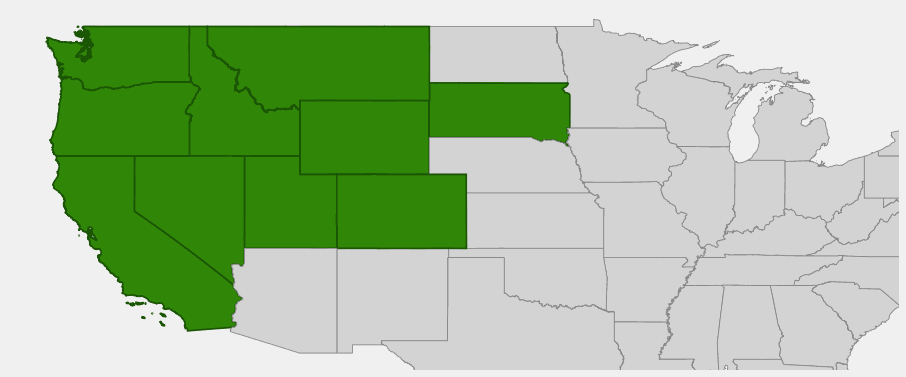
📋 Regional plant lists featuring Utah Honeysuckle: Utah
Growing & Care Guide
Utah Honeysuckle is an excellent choice for shaded, moist mountain garden settings in Utah. It thrives with minimal care when planted in conditions that mimic its natural habitat — cool temperatures, consistent moisture, and at least partial shade from taller trees or structures.
Light
Utah Honeysuckle performs best in full to partial shade, making it one of the few native shrubs suitable for deeply shaded garden locations. It can tolerate more sun at higher elevations where temperatures are cooler, but in warmer valley settings, afternoon shade is essential. In too much direct sun or reflected heat, the foliage becomes bleached and the plant struggles.
Soil & Water
Moist, well-drained, humus-rich soil closely mimics the plant’s natural forest floor conditions. Amend heavy clay soils with compost and coarse material to improve drainage while retaining moisture. The plant requires consistent soil moisture — it will not tolerate prolonged drought. Mulching with 3–4 inches of organic material (shredded bark, wood chips, leaf mold) helps retain moisture and moderate soil temperatures. Regular watering during dry summers is essential at lower elevations and warmer sites.
Planting Tips
Plant in spring after last frost, or in early fall. Utah Honeysuckle establishes well from container stock available at mountain-region native plant nurseries. Space plants 3–5 feet apart for mass plantings or as understory fill. It pairs beautifully with other native mountain shrubs and wildflowers — Red Elderberry, Thimbleberry, Mountain Bluebells, and Columbine are natural companions.
Pruning & Maintenance
Minimal pruning is needed. Remove dead or damaged branches in early spring. The plant’s open, arching form is naturally attractive and does not need shaping. Cut older, non-productive stems to the ground every few years to stimulate vigorous new growth. Leaf litter from deciduous forest companions should be left in place as natural mulch rather than raked away.
Landscape Uses
- Shade garden — one of few native shrubs for deeply shaded sites
- Mountain woodland garden understory layer
- Wildlife habitat — berries attract mountain birds
- Streambank planting in mountain settings
- North-facing slope revegetation
- Foundation planting on the north side of buildings at mountain elevations
Wildlife & Ecological Value
Utah Honeysuckle provides seasonal food and structural habitat for a variety of mountain bird and mammal species throughout the growing season.
For Birds
The red berries are consumed by American Robin, Swainson’s Thrush, Hermit Thrush, Cedar Waxwing, and various other mountain bird species. The paired berry structure and bright color make them visually attractive and easily located by foraging birds. The dense, arching branches provide nesting cover for White-crowned Sparrow, Fox Sparrow, and Wilson’s Warbler, all of which nest in mountain shrub thickets in Utah. The flowers provide nectar for hummingbirds — particularly Broad-tailed Hummingbird and Rufous Hummingbird — which are attracted to the tubular, yellow flowers.
For Mammals
Black bear consume the berries when they ripen in late summer, foraging through mountain shrub zones. Deer browse the foliage and stems. Chipmunks and ground squirrels consume fallen berries and may cache seeds. The dense branching structure of established plants provides nesting material and cover for shrews and voles in the forest understory.
For Pollinators
The tubular flowers are accessible primarily to hummingbirds and long-tongued native bees. Bumblebees are frequent visitors and important pollinators of Utah Honeysuckle in the mountain forest zone. The flowering season in late spring to early summer fills a temporal gap when few other shrub species are in bloom at subalpine elevations, making the nectar and pollen particularly valuable to early-season pollinators at high elevation.
Ecosystem Role
Utah Honeysuckle contributes to the structural complexity and food diversity of the mountain forest understory. Its seasonal berry production provides a predictable late-summer food resource for frugivorous birds and mammals at a time when many other berry-producing shrubs have already been depleted. The arching, branchy form creates sheltered microhabitats for ground-nesting insects, salamanders, and other invertebrates at the base of established plants.
Cultural & Historical Uses
Utah Honeysuckle was known to various Rocky Mountain Indigenous peoples, including the Ute, Shoshone, and related Great Basin groups who frequented the mountain ranges during summer. While not as prominently documented in ethnobotanical literature as some lower-elevation plants, Utah Honeysuckle berries were consumed in small quantities by some groups, though they were generally considered inferior to more palatable berries and used mainly as a supplemental food. Some accounts suggest the berries were cooked or mixed with other fruits to improve palatability.
Medicinally, related honeysuckle species across the genus Lonicera have been used by Indigenous peoples throughout North America and Asia for treating fevers, skin conditions, and respiratory ailments. Utah Honeysuckle was used by some Plateau tribes as a medicinal plant — bark tea was reportedly used to treat urinary problems and skin sores. However, the plant’s toxicity means it was always used carefully and in moderation. The Ute and Southern Paiute peoples of Utah’s mountain ranges were familiar with the plant as a component of the mountain shrub community, though its primary value was likely as a marker of moist, productive habitat rather than as a direct food or medicine source.
Modern uses of Utah Honeysuckle center on ornamental horticulture and habitat restoration. It is grown as a shade-tolerant native ornamental in mountain-region landscapes and is increasingly used in restoration plantings of montane riparian and forest understory communities in Utah and the Intermountain West. Its tolerance of shade and consistent fruit production make it a valued species in wildlife-focused mountain garden designs.
Frequently Asked Questions
Are Utah Honeysuckle berries edible?
The berries are slightly toxic to humans and should not be eaten. They contain lonicerin and other compounds that can cause nausea, vomiting, and diarrhea if consumed in quantity. Birds are unaffected and consume them readily — so leave the berries for the wildlife and enjoy them visually.
Is Utah Honeysuckle invasive?
No. Utah Honeysuckle is a well-behaved native shrub that does not spread aggressively. It is important to distinguish it from non-native invasive honeysuckles like Japanese Honeysuckle (Lonicera japonica) and Tartarian Honeysuckle (Lonicera tatarica), which are serious invasive pests. Utah Honeysuckle stays in bounds and does not form thickets or escape cultivation.
How do I tell Utah Honeysuckle from other honeysuckles in Utah?
Utah Honeysuckle is distinguished by its paired creamy-yellow to white flowers (not red-orange or purple), its translucent red fruit, and its habitat preference for moist, shaded, high-elevation forests. The paired flowers and fruit, each pair on a single stalk, are a characteristic feature of all twinberry honeysuckles.
Can Utah Honeysuckle grow in Salt Lake City?
Utah Honeysuckle can grow at lower elevations in Utah valley cities if given adequate shade and moisture, but it performs much better at higher elevations (above about 5,000 feet) where conditions more closely resemble its natural habitat. In the Wasatch foothills and canyon mouths, it can be grown successfully with appropriate siting on north-facing slopes or beneath larger trees.
Does Utah Honeysuckle attract hummingbirds?
Yes — the tubular yellow flowers are a good nectar source for hummingbirds. In Utah’s mountain ranges, Broad-tailed Hummingbird and Rufous Hummingbird both visit Utah Honeysuckle flowers during the late spring to early summer bloom period. Plant it near a window or garden seating area to enjoy the hummingbird activity.

Looking for a nursery that carries Utah Honeysuckle?
Browse our native plant nursery directory: Utah