White Fir (Abies concolor)
Abies concolor, commonly known as White Fir, is one of the most majestic and adaptable native conifers in the western United States. With its graceful conical silhouette, striking blue-green to silvery needles, and stately presence in mountain and canyon landscapes, White Fir is a tree that commands attention whether growing alone as a specimen or in the sweeping mountain forests where it is most at home. It is the quintessential Christmas tree form — perfectly conical when young, with whorled branches layered from ground to pointed tip — and is in fact commonly grown as a Christmas tree in nurseries across the country.
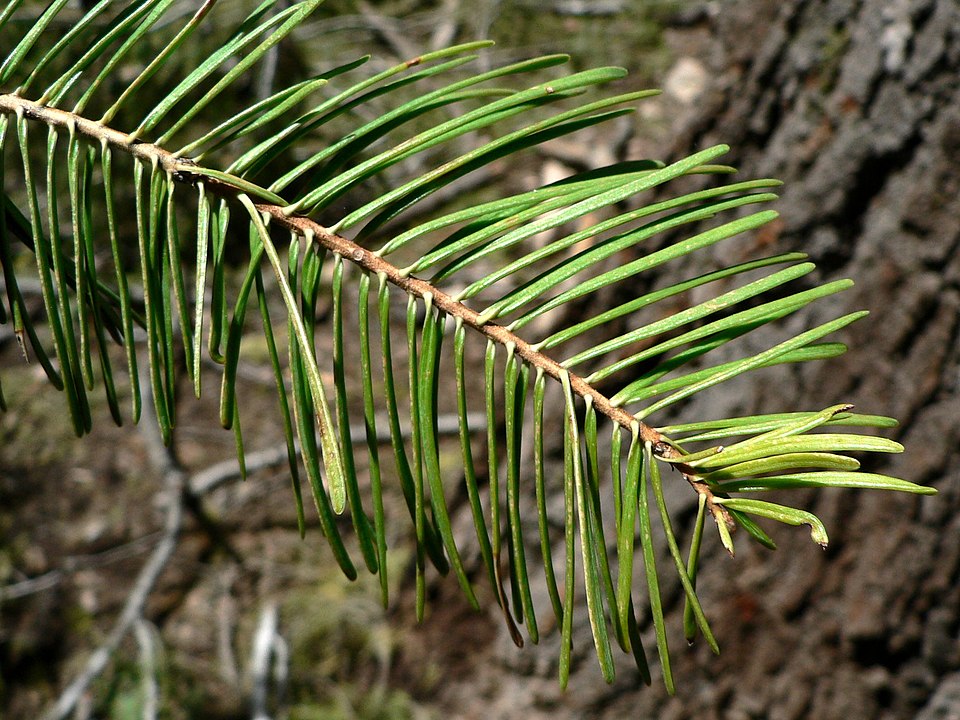
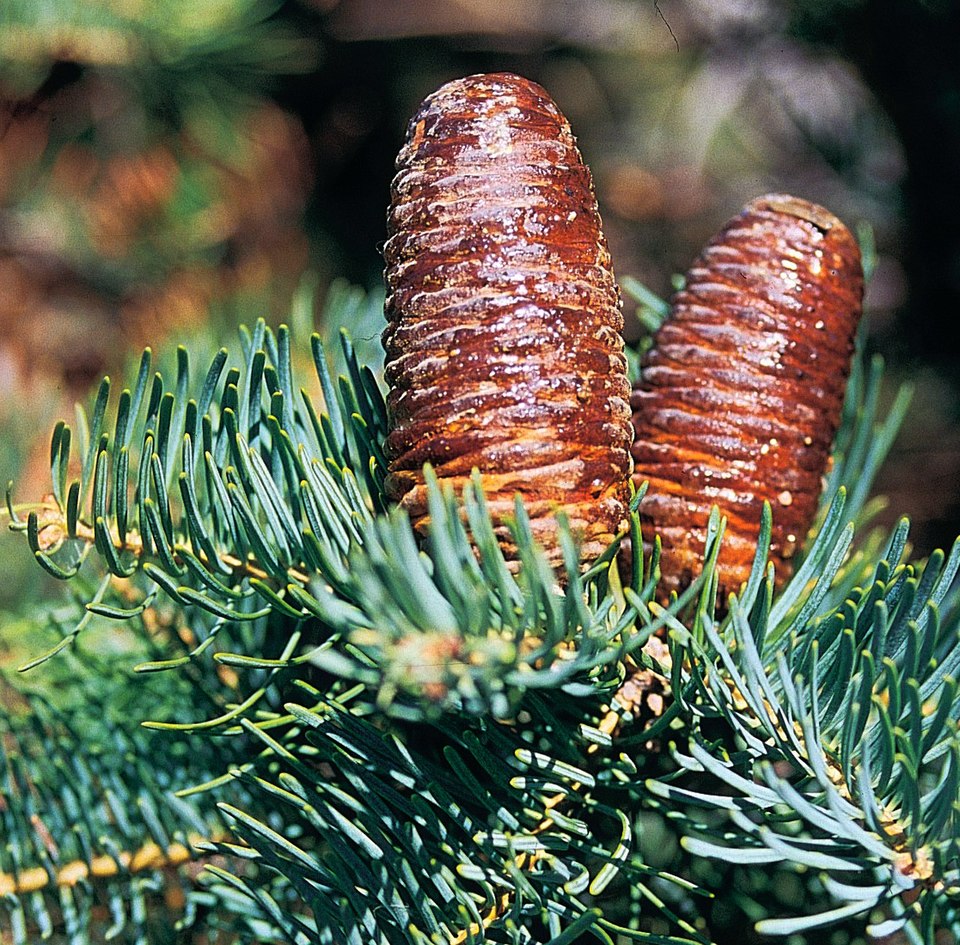
Growing to 70 feet or more in height (with exceptional specimens reaching 200 feet), White Fir is one of the larger conifers of the Intermountain West. Its distinctive needles are flat, curved upward, and oriented in two opposing rows along the branch — longer than those of Engelmann Spruce and much softer, lacking any sharpness. The needles range from gray-green to distinctly blue-gray, giving the tree a silvery, luminous quality in the forest that makes it immediately recognizable. Upright, cylindrical cones 3 to 5 inches long disintegrate on the tree at maturity, releasing winged seeds to the wind.
For Utah landscapes, White Fir is one of the finest native evergreen trees for mountain-zone properties. It is more adaptable to part shade conditions than most conifers, tolerates a range of soil types, and grows at a moderate pace to create an impressive focal tree or shade tree in mountain-region gardens. It can also be grown at lower elevations in Utah with adequate water, though it performs best above 5,000 feet.
Identification
White Fir is a large, single-stemmed coniferous tree reaching 70 to 130 feet (21–40 m) in height in forest settings, with a narrow, conical to cylindrical crown that broadens and becomes more irregular with age. Young trees have a perfectly symmetrical, Christmas-tree form; older trees develop a more open, irregular crown with upswept lower branches. The trunk is straight, cylindrical, and massive in old trees — up to 5–6 feet in diameter in ancient specimens.
Needles
The needles are the most distinctive feature: flat, 1.5 to 3 inches (4–7.5 cm) long, soft and flexible (not sharp), with a rounded tip. They are arranged in two opposing rows along the branch, curving upward to give the branch a “combed” appearance. The color is distinctive — gray-green to distinctly blue-gray, with two whitish stomatal bands on the lower surface and often on the upper surface as well, giving the tree its characteristic silvery or “white” appearance. The needles have a faint citrusy scent when crushed.
Cones
The cones are large, erect, and cylindrical — 3 to 5 inches (7–12 cm) long and 1 to 1.5 inches in diameter — sitting upright on the upper branches like candles. They are green when young, turning purple-brown at maturity. Like all true firs (Abies), the cones disintegrate on the tree at maturity rather than falling intact — the cone scales drop off one by one, releasing winged seeds, and leaving only the central axis (the “candle stick”) on the branch. The presence of these erect cones, versus hanging cones of pines and spruces, is a quick way to identify any true fir.
Bark
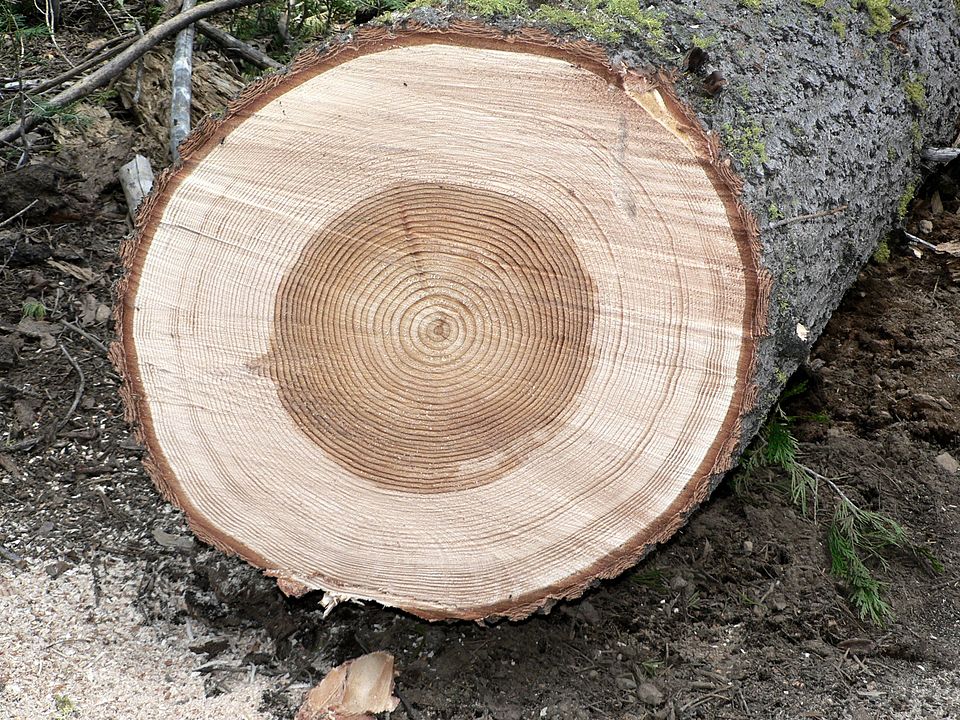
Young trees have smooth, gray, resin-blister bark that is soft and easily indented. The resin blisters contain clear, fragrant resin and give young White Fir trunks their distinctive “bubbly” texture. With age, the bark becomes thickened, deeply furrowed, and corky-gray, providing significant fire resistance. Old-growth White Fir bark can be 4–6 inches thick, one of the thickest bark profiles among western conifers.
Quick Facts
| Scientific Name | Abies concolor |
| Family | Pinaceae (Pine Family) |
| Plant Type | Evergreen Coniferous Tree |
| Mature Height | 70 ft (up to 130+ ft in old growth) |
| Sun Exposure | Part Shade (tolerates full sun in cooler climates) |
| Water Needs | Moderate |
| Needle Color | Blue-gray to silvery green; soft and flexible |
| Cone Type | Erect, cylindrical, 3–5 in.; disintegrates on tree at maturity |
| Growth Rate | Moderate (12–24 in./year in good conditions) |
| USDA Hardiness Zones | 3–7 |
Native Range
White Fir is one of the most widely distributed conifers in the western United States, native to mountain ranges from southern Oregon and northern California south through the Sierra Nevada and the mountains of the Great Basin and Colorado Plateau to southern New Mexico and Arizona. Its range includes Oregon, California, Nevada, Utah, Arizona, New Mexico, Colorado, Wyoming, and Idaho — covering the full extent of the Intermountain West’s major mountain systems. In Utah, White Fir is found throughout the Wasatch Range, Uinta Mountains, the high plateaus (Markagunt, Paunsaugunt, Aquarius, Boulder Mountain), and in the canyon country ranges of the Colorado Plateau where sufficient elevation and moisture exist.
White Fir is a major component of the mixed conifer forest zone in Utah, typically occurring between roughly 6,000 and 9,500 feet in elevation, though it extends lower in canyon bottoms where cold air drainage provides cooler, moister conditions. It often forms extensive pure stands or grows in mixed forest communities with Ponderosa Pine (Pinus ponderosa), Douglas-fir (Pseudotsuga menziesii), Engelmann Spruce (Picea engelmannii), and Quaking Aspen (Populus tremuloides). It is remarkably shade-tolerant for its size — young White Firs can persist for decades in deep shade beneath mature forest, waiting for a gap to open and allow their rapid climb to the canopy.
In the southwestern part of its range — including portions of Utah, Arizona, and New Mexico — White Fir is sometimes considered to consist of two subspecies: the Rocky Mountain White Fir (Abies concolor subsp. concolor) and the more variable forms of the Pacific and Basin regions. However, the species interbreeds freely throughout its range and these distinctions are not universally recognized.
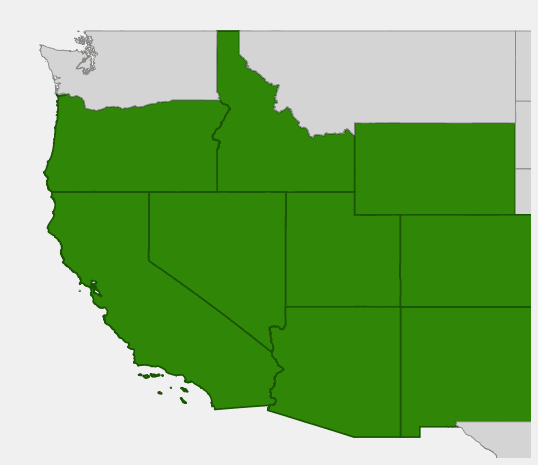
📋 Regional plant lists featuring White Fir: Utah
Growing & Care Guide
White Fir is one of the best native conifers for large-scale mountain landscaping in Utah. It combines striking blue-green foliage, an elegant conical form, and reasonable growth rate with good adaptability to part shade — making it suitable for situations where other large conifers would struggle. In mass plantings or alone as a specimen, it is truly beautiful.
Light
White Fir is notably shade-tolerant for a large conifer, performing well in part shade to full sun depending on climate. At lower elevations and in warmer, drier settings, some afternoon shade protection is beneficial. In mountain settings above 5,500 feet, it grows well in full sun or partial shade. Its shade tolerance means it can be planted beneath existing tree canopy where few other large conifers would succeed.
Soil & Water
White Fir grows best in deep, moist, well-drained soils with a slightly acidic to neutral pH (5.5–7.0). It tolerates a range of soil textures from sandy to clay-loam, but requires good drainage — it will not thrive in waterlogged soils. Moderate moisture is needed: more than xeric desert conditions, but less than riparian or wetland settings. In the landscape, regular deep watering during dry spells — especially in the first few years of establishment — promotes rapid, healthy growth. Mulching the root zone with 3–4 inches of wood chips helps retain moisture and maintain the cool, moist conditions the roots prefer.
Planting Tips
Plant in fall or spring from balled-and-burlapped or container stock. White Fir transplants well when handled carefully. Space trees at least 20–30 feet apart to allow for full crown development — their eventual size demands generous spacing. Stake young trees for the first two years if windy conditions are common. Avoid planting near buildings or in small spaces — this is a large tree that needs room to achieve its full magnificent form.
Pruning & Maintenance
White Fir requires very little maintenance. Its naturally conical, symmetrical form requires no shaping. Remove dead or damaged branches in late winter. Lower branch removal is not recommended — the full ground-to-tip crown form is one of the tree’s most beautiful features. In high-density forest planting situations, thinning to allow air circulation between trees reduces the risk of various needle diseases and fire risk. No fertilization is necessary in mountain settings with adequate native soil organic matter.
Landscape Uses
- Specimen tree — stunning as a single large focal tree in mountain landscapes
- Mass planting — beautiful in large groups to recreate natural forest stands
- Windbreak on mountain properties at appropriate elevations
- Wildlife habitat — seed, nesting, and cover for many species
- Shade tree for mountain homes and cabins
- Christmas tree production — widely grown for this purpose commercially
Wildlife & Ecological Value
White Fir is a highly valuable wildlife tree, providing nesting sites, roosting cover, food, and shelter for dozens of species across its mountain range.
For Birds
White Fir provides nesting habitat for Clark’s Nutcracker, Stellar’s Jay, Red Crossbill, White-winged Crossbill, and Pine Siskin, all of which feed on the seeds extracted from the cones. Hermit Warbler, Townsend’s Warbler, and Cassin’s Vireo nest in the dense foliage of mid-canopy White Fir in the Pacific portion of its range. Northern Goshawk and other raptors use large White Fir as perch and nest trees. The dense canopy provides thermal cover for roosting birds during cold mountain nights, and the corrugated bark of mature trees shelters bark-foraging species including Brown Creepers and nuthatches.
For Mammals
White Fir seeds are an important food source for Clark’s Nutcracker, Steller’s Jay, Abert’s Squirrel, and other seed-caching animals. The dense, low-branching crown provides thermal cover for mule deer and elk during winter storms. Porcupines are famous for their damage to White Fir — they strip the bark from upper branches and consume the cambium, a behavior that can kill or disfigure trees but is also a natural ecological process in forest ecosystems. Bears occasionally claw White Fir trunks, and the claw marks remain visible for years as a record of bear activity.
For Pollinators
White Fir is wind-pollinated and does not produce nectar. However, the resin-scented foliage and bark support populations of resin-specialist bees (particularly Osmia species) that collect resin from bark blisters to line their nest cells. The structural complexity of White Fir forest — with its diverse understory of flowering shrubs and herbs — supports rich pollinator communities that depend on the forest structure even if not on the fir itself.
Ecosystem Role
In the mixed conifer forest zone of the Intermountain West, White Fir is an important component of the structural and functional diversity of the forest. Its shade tolerance allows it to recruit successfully under existing canopy, filling gaps and maintaining forest continuity. The large seed crops in mast years fuel the population dynamics of seed-eating birds and small mammals. The thick, corky bark of mature trees provides significant fire resistance, and White Fir is generally among the more fire-tolerant of the true firs. The deep needle litter creates acidic, moisture-retaining soil conditions that support distinctive communities of acid-tolerant understory plants, fungi, and invertebrates.
Cultural & Historical Uses
White Fir has been used by Indigenous peoples throughout its range. The Miwok, Paiute, Shoshone, Navajo, and many other nations utilized the tree for food, medicine, and practical materials. The inner bark — cambium — was consumed as a food source in some communities, particularly in spring when the sweet, starchy cambium is most nutritious. Among the Shoshone and Paiute, the cambium was peeled and eaten fresh or dried for later use. The resin was applied as a wound dressing and antiseptic — its antimicrobial properties make fresh fir resin effective against skin infections.
The Navajo used White Fir in ceremonial contexts, including the Night Chant healing ceremony, where the soft, fragrant boughs played a role in ritual cleansing and purification rites. The Zuni used the wood for prayer sticks and other ceremonial objects. The boughs were used as bedding material across many cultures for their insulating properties and pleasant fragrance. In the Great Basin, fir boughs were fashioned into snowshoes and used to line storage pits.
White Fir is widely planted ornamentally and as a Christmas tree throughout the United States. It is one of the most popular Christmas trees in western states due to its excellent needle retention after cutting, attractive blue-green foliage, and pleasant faint citrusy scent. Commercially, the wood is used for lumber, boxes, and plywood, though it is less valued than many associated conifers. White Fir is also extensively planted for reforestation and watershed protection in western mountain forests.
Frequently Asked Questions
Is White Fir a good Christmas tree?
Excellent. White Fir is one of the top-rated Christmas tree species for needle retention after cutting, attractive blue-green color, soft flexible needles that won’t injure hands, and a pleasant faint fragrance. It is widely grown commercially as a Christmas tree in the western United States and is the preferred Christmas tree for many families in the Rocky Mountain region.
How fast does White Fir grow?
White Fir grows at a moderate rate — typically 12 to 24 inches per year in height under good conditions. Young trees in open, sunny sites with adequate moisture can grow faster. In dense shade, growth is slower but the tree remains healthy. White Fir is slower to establish than some pines but accelerates once its root system develops in the second and third years.
Is White Fir deer resistant?
No — White Fir is browsed by mule deer and elk. Young trees especially need protection from deer browsing for the first several years. Protect newly planted trees with deer guards or fencing until they are large enough to withstand browsing without significant damage (typically after 5+ years).
Can White Fir grow in Salt Lake City?
White Fir can be grown at lower elevations in the Salt Lake Valley with adequate water and some protection from reflected heat. It performs best in the cooler, moister conditions of canyon mouths and foothills above 5,000 feet. In the valley floor, it needs regular irrigation during summer and protection from prolonged heat waves. It is more adaptable to lower elevations than many high-elevation conifers.
How do I tell White Fir from Douglas-fir?
The simplest distinction: White Fir has soft, flat needles that curve upward, blue-gray color, and erect cones that disintegrate on the tree. Douglas-fir has needles arranged in two rows lying flat (not curving up), green to yellow-green color, and hanging cones with distinctive three-pronged bracts between the cone scales. Douglas-fir bark is also thicker and more deeply furrowed in mature trees.

Looking for a nursery that carries White Fir?
Browse our native plant nursery directory: Utah