
Fivepetal Cliffbush (Jamesia americana)
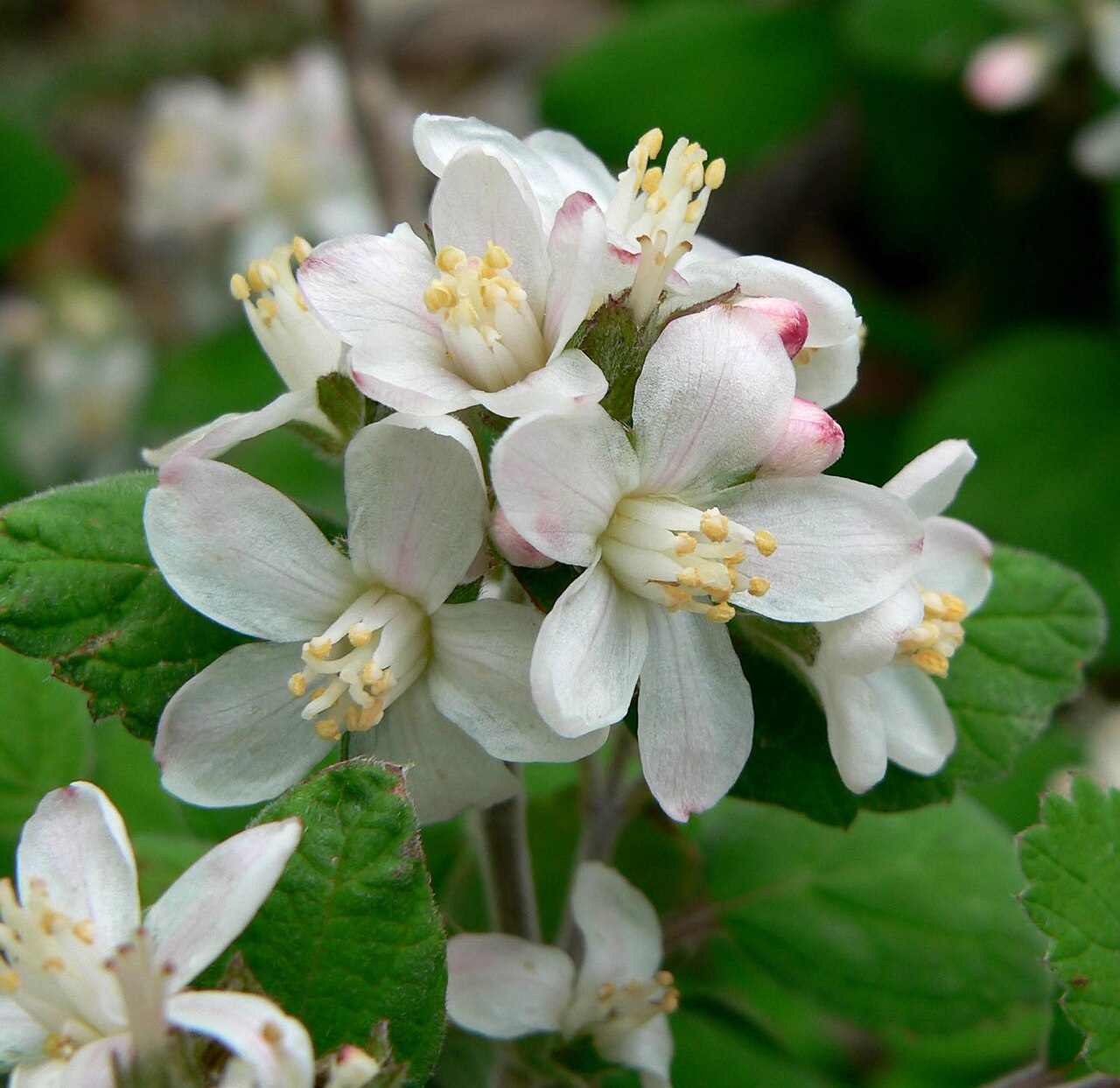
Jamesia americana, known as Fivepetal Cliffbush (also cliffbush, cliff jamesia, waxflower, wild hydrangea or mountain mockorange), is a deciduous shrub of rocky mountain slopes and canyons in the American West. It belongs to the hydrangea family (Hydrangeaceae), and in late spring and summer it carries clusters of waxy, white to pink, five-petaled flowers above soft, deeply veined, gray-green leaves.
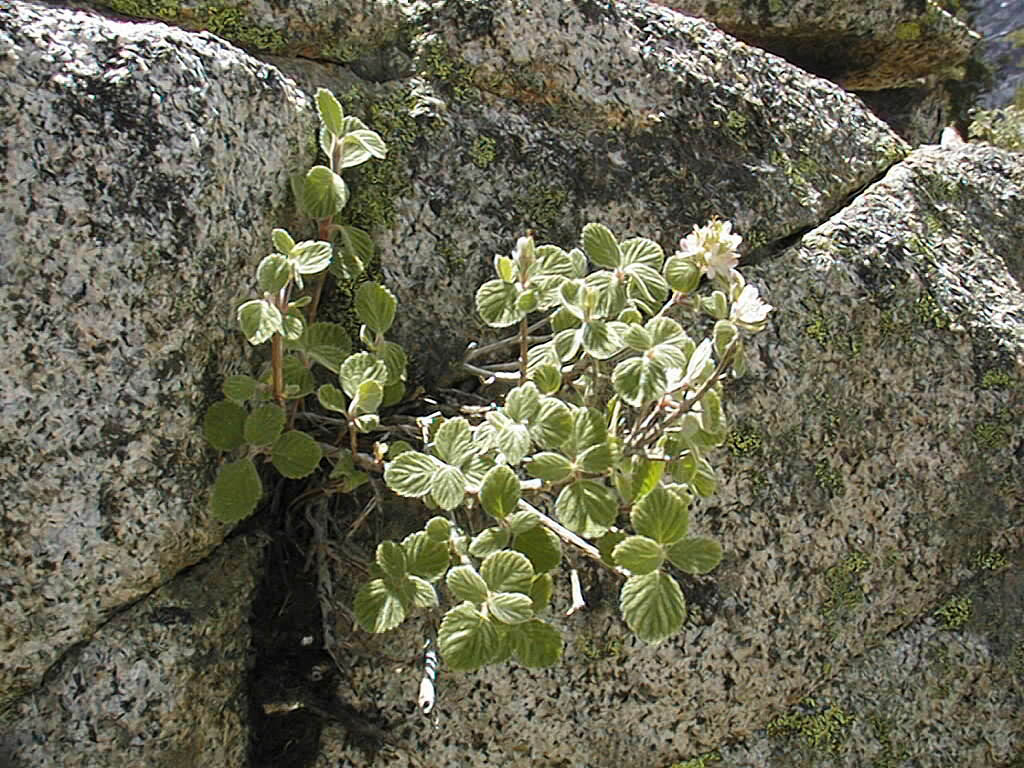
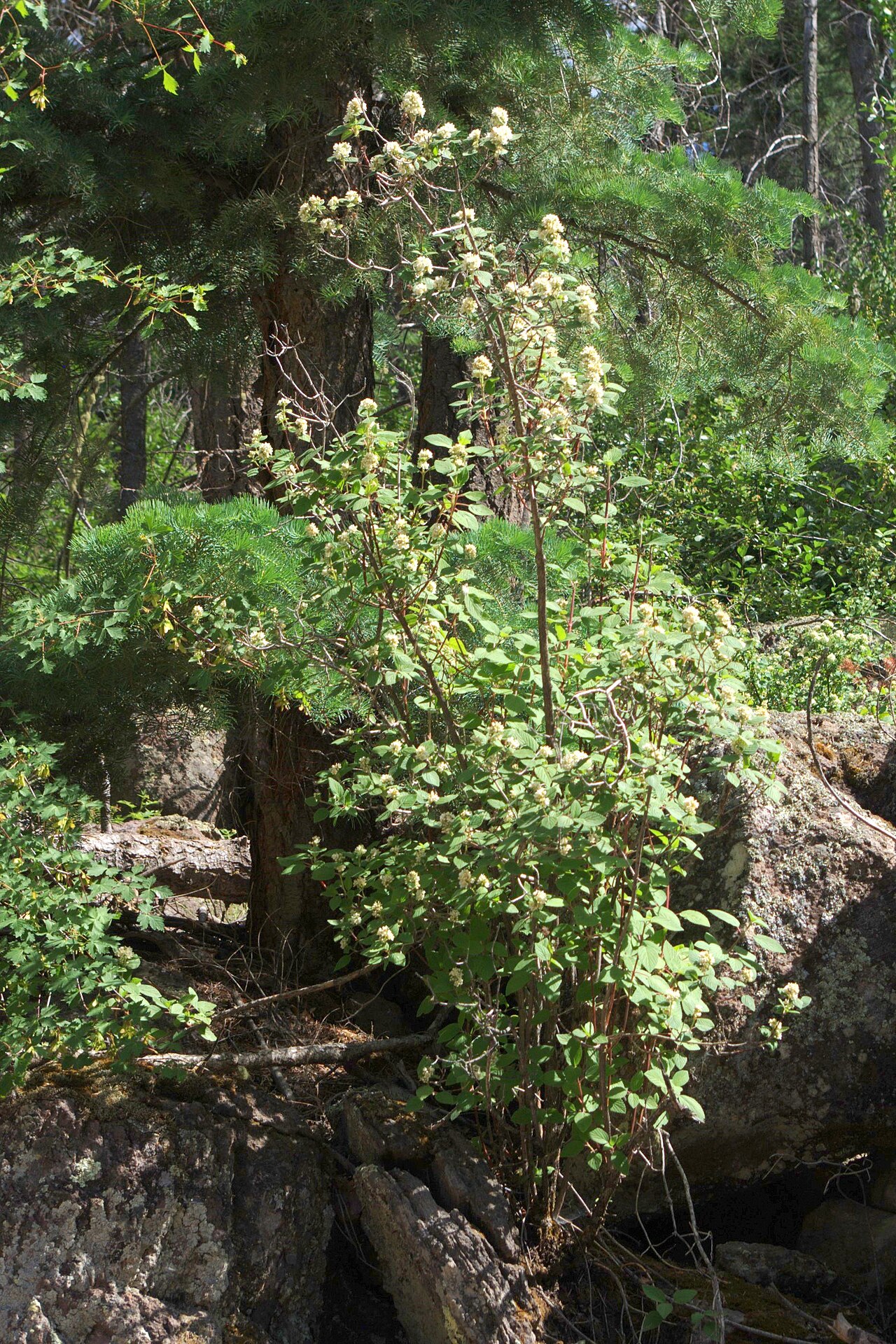
It usually grows 2 to 6 feet tall, but can reach 10 feet or more in sheltered spots. Its favorite places are cliffs, ledges, boulder fields, talus slopes and rocky canyon walls in the foothills, montane and subalpine zones, often in partial shade from conifers or cliff faces. In fall the leaves turn shades of orange, red and purple, and in winter the shreddy, cinnamon-brown bark adds texture.
Fivepetal cliffbush makes a fine, tough ornamental for western rock gardens, dry shade and naturalistic mountain gardens. It is cold hardy and drought tolerant once established, and it is one of the few shrubs that thrives in rocky crevices and between boulders.
Identification
Look for a rounded shrub on rocky slopes with opposite, oval, sharply toothed and deeply veined leaves that are fuzzy and pale underneath, and clusters of waxy white or pink flowers with five petals.
Growth Habit
A many-branched, rounded to spreading deciduous shrub, usually 2 to 6 feet tall and as wide. Young twigs are hairy and reddish-brown; older stems have brown bark that peels in thin, papery strips.
Leaves
The leaves are opposite, oval to nearly round, about 3/4 to 3 inches long, with toothed edges and conspicuous, deeply impressed veins that give them a quilted look. The upper surface is green and softly hairy; the underside is densely covered with grayish-white hairs. In fall they turn orange, red or purplish.
Flowers
The flowers are borne in branched clusters at the ends of short side branches from about May to August. Each is about 1/2 to 3/4 inch across, with five oblong, waxy white to pink petals, a hairy calyx, ten stamens and three to five styles. They have a light, sweet fragrance.
Fruit
The fruit is a small, cone-shaped capsule, about 1/4 inch long, partly enclosed by the persistent calyx, that splits at the top to release many tiny seeds in late summer and fall.
Varieties & Look-alikes
Several varieties are recognized: var. americana in the Rockies and Southwest, var. macrocalyx in the Great Basin and Utah, var. zionis around Zion National Park, and var. rosea, with pinker flowers, in the Sierra Nevada and mountains of eastern California and western Nevada. Littleleaf mockorange (Philadelphus microphyllus) has four petals and small, smooth leaves. Cliff fendlerbush has four clawed petals and narrow leaves. Mountain ninebark has alternate, lobed leaves and small flowers in dense clusters.
Quick Facts
| Scientific Name | Jamesia americana |
| Family | Hydrangeaceae (hydrangea family) |
| Plant Type | Deciduous shrub |
| Mature Height | 2–6 ft (occasionally to 10 ft or more) |
| Mature Spread | 2–6 ft |
| Growth Rate | Slow to moderate |
| Sun Exposure | Part shade to full sun |
| Water Needs | Low to medium; drought tolerant once established |
| Soil Type | Rocky, gravelly, well-drained soils; cliffs, talus and boulder fields |
| Soil pH | Slightly acidic to alkaline (about 6.0–8.0) |
| Bloom Time | May–August |
| Flower Color | White to pink |
| Fall Color | Orange, red and purple |
| Fruit | Small cone-shaped capsules |
| Deer Resistant | Moderately; browsed occasionally |
| USDA Hardiness Zones | 4–8 |
Native Range
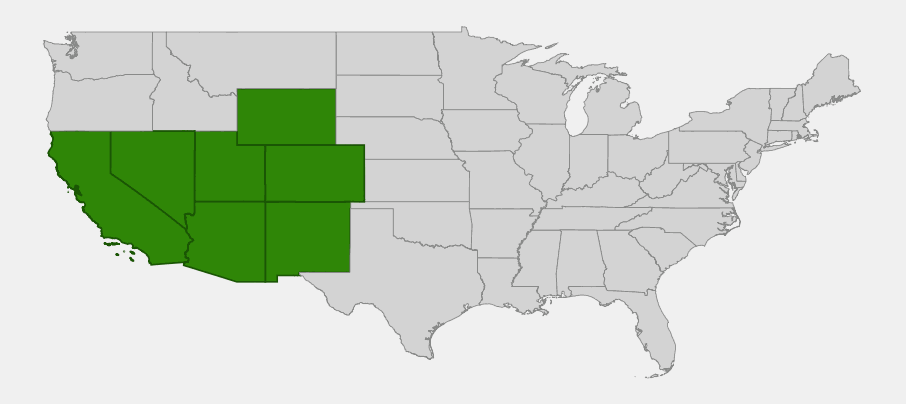
USDA PLANTS lists fivepetal cliffbush as native to Arizona, California, Colorado, New Mexico, Nevada, Utah and Wyoming. It is not native to Canada. It is most common in the southern Rocky Mountains of Colorado and New Mexico, where it is a familiar shrub of rocky foothill and montane slopes.
It also grows in the mountains and canyons of Utah, including the Wasatch Range and Zion National Park, the higher ranges of Arizona, Nevada and the Great Basin, and the Sierra Nevada and White and Inyo Mountains of eastern California. In Wyoming it is uncommon, at the northern edge of its range.
It grows on cliffs, ledges, rock outcrops, talus and boulder slopes, and in rocky canyons, often under or near ponderosa pine, Douglas-fir, aspen and spruce-fir forests. It occurs on many rock types, including granite, sandstone and limestone, and usually at about 5,000 to 11,000 feet.
📋 Regional plant lists featuring Fivepetal Cliffbush: Montana & Wyoming · Utah & Western Colorado · Arizona & New Mexico · California & Nevada
Growing & Care Guide
Fivepetal cliffbush is a durable shrub for western gardens, especially at higher elevations and in cold-winter areas. It likes the conditions it finds in the mountains: good drainage, cool roots and some shelter from hot afternoon sun.
Light
Part shade is ideal, especially in hot, low-elevation gardens. In cool mountain gardens it takes full sun. It flowers best with at least a few hours of direct sun.
Soil & Water
Plant in well-drained, rocky or gravelly soil. It tolerates poor and somewhat alkaline soils but dislikes heavy, wet clay. Water regularly the first summer; after that, deep watering every few weeks in dry spells is usually enough.
Planting Tips
Plant in spring or early fall among boulders, on a rocky slope or at the base of a wall, where the roots stay cool under stones. It combines well with other mountain shrubs such as wax currant, mountain mahogany and mountain ninebark. Allow 3 to 5 feet of space.
Pruning & Maintenance
Very little pruning is needed. Remove dead or crossing branches in late winter, and cut a few of the oldest stems to the ground every few years to renew the shrub. It blooms on old wood, so heavy spring pruning reduces flowering.
Propagation
Grow from seed sown in fall or cold-stratified for one to two months, or from softwood cuttings taken in early summer. Seedlings grow slowly at first.
Landscape Uses
- Rock gardens: a shrub that fits between boulders and on rocky slopes
- Dry shade: one of few flowering shrubs for dry, partly shaded sites
- Mountain gardens: hardy at high elevations
- Habitat plantings: flowers for bees and cover for birds
- Fall and winter interest: red fall color and peeling bark
Wildlife & Ecological Value
Fivepetal cliffbush is a common part of the shrub layer on rocky slopes in the southern Rockies and Great Basin mountains.
For Pollinators
The fragrant flowers attract many native bees, flies, beetles and butterflies in early summer.
For Birds
Its dense branching gives cover and nesting sites to small birds on rocky slopes, and some birds eat the small seeds.
For Mammals
Mule deer, elk and bighorn sheep browse the twigs and leaves, though it is generally not a preferred forage plant. Its cover on talus is used by small mammals such as chipmunks and woodrats.
Ecosystem Role
Its roots help stabilize talus, ledges and rocky soil, and its fallen leaves add organic matter to thin mountain soils.
Cultural & Historical Uses
The genus is named for Edwin James, a botanist and physician on the 1820 Long Expedition to the Rocky Mountains, who collected the plant in Colorado. James was also part of the first recorded ascent of Pikes Peak.
The names waxflower and wild hydrangea refer to the waxy texture of the petals and the plant’s family. “Cliffbush” describes its habit of growing on cliffs and rocky ledges.
Fivepetal cliffbush has been grown in European botanical gardens since the 19th century as an ornamental shrub from the American West, and it is still offered by some western native plant nurseries.
Frequently Asked Questions
Is fivepetal cliffbush related to hydrangeas?
Yes. It belongs to the hydrangea family (Hydrangeaceae), along with mockorange and fendlerbush.
Does fivepetal cliffbush need much water?
No. Once established it is quite drought tolerant, especially in part shade and in rocky soil that keeps its roots cool.
Can I grow it in shade?
Yes. It does well in part shade and is a good choice for dry, partly shaded spots, but it flowers best with some direct sun.
Does it have fall color?
Yes. The leaves often turn orange, red or purple in fall.
Where can I see fivepetal cliffbush in the wild?
Look on rocky slopes and cliffs in the foothills and mountains of Colorado, New Mexico and Utah, including places such as Rocky Mountain National Park and Zion National Park.

Looking for a nursery that carries Fivepetal Cliffbush?
Browse our native plant nursery directory: Arizona · California · Colorado · Nevada & New Mexico · Utah · Wyoming

