
Clubhair Mariposa Lily (Calochortus clavatus)
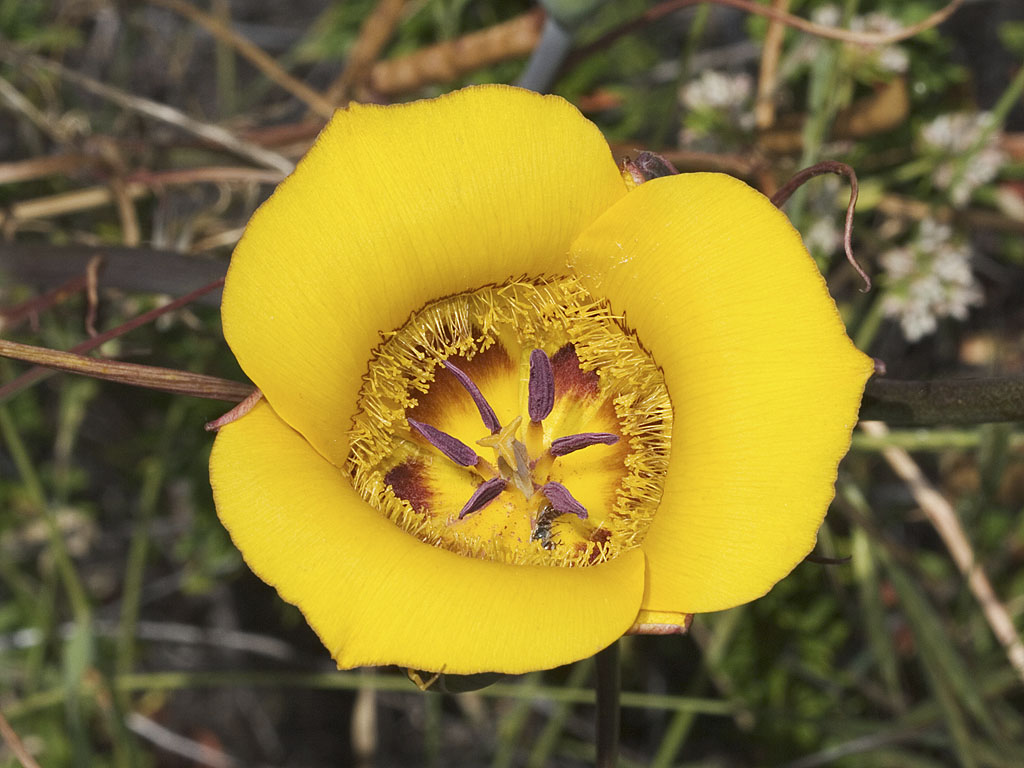
Calochortus clavatus, known as Clubhair Mariposa Lily, is a bulb-forming perennial wildflower of the lily family (Liliaceae) found only in California. In late spring it sends up a slender, often zigzagging stem up to about 3 feet tall, topped by one to several large, bowl-shaped flowers of glossy, butter-yellow petals up to 2 inches long.
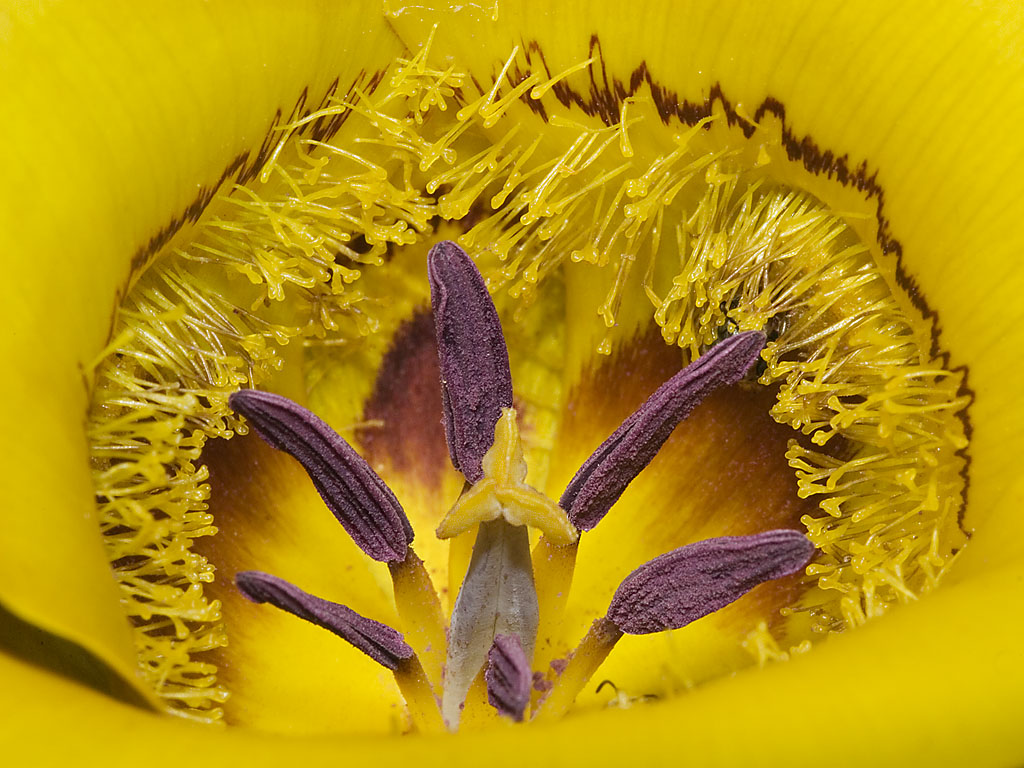
Its name comes from a detail you need to look into the flower to see: the base of each petal carries a dense band of yellow hairs with swollen, club-shaped tips (clavatus means club-shaped). Most flowers also have a thin dark reddish-brown line or zigzag band above the hairs and striking dark purple anthers, which make the center of the flower look almost painted.
Clubhair mariposa lily grows on dry, open slopes in chaparral, oak woodland, grassland and open forest, mainly in the southern Coast Ranges and Transverse Ranges, with an outlying variety in the northern Sierra Nevada foothills. Like all mariposa lilies, it is a plant to enjoy in the wild and, with patience, to grow from seed or nursery bulbs. This guide covers how to identify it, where it grows, how to grow it, and its value to wildlife.
Identification
Clubhair mariposa lily is one of California’s large yellow mariposa lilies. The combination of deep, bowl-shaped yellow flowers, purple anthers and club-tipped hairs at the petal bases identifies it.
Bulb & Stem
Each plant grows from a small, deep, membranous-coated bulb. The stem is stout to slender, usually 1 to 3 feet tall, and often bends in a zigzag between branches. It may carry several flowers on separate branches.
Leaves
There is a single long, narrow, grass-like basal leaf, which usually withers before or during flowering, so blooming plants often appear leafless apart from a few small leaf-like bracts on the stem.
Flowers
The flowers are erect and bowl- or cup-shaped, with three broad, rounded, bright yellow petals up to about 2 inches long and three narrower, shorter sepals. Near the base of each petal is a nectar gland surrounded by a dense band of yellow hairs whose tips are swollen like tiny clubs. A thin dark reddish-brown line, or sometimes a series of bands, often edges the hairy zone. The six anthers are typically deep purple. Plants bloom from about April to June, depending on elevation and the year’s rain.
Fruit & Seeds
After flowering, each flower develops an erect, narrow, three-angled capsule up to about 3-1/2 inches long, filled with flat, pale seeds that are shaken out by wind as the dry capsule splits.
Varieties & Look-alikes
Several varieties are recognized. Var. clavatus and var. pallidus are the most widespread. Var. gracilis (slender mariposa lily) of the western Transverse Ranges, var. recurvifolius (Arroyo de la Cruz mariposa lily) of the San Luis Obispo County coast, and var. avius (Pleasant Valley mariposa lily) of the northern Sierra Nevada foothills are local and are tracked as rare by the California Native Plant Society. Yellow mariposa lily (Calochortus luteus) is a different species with smaller flowers, without the dense club-tipped hairs, and grows mainly farther north. Butterfly mariposa lily (Calochortus venustus) and other species with white or lilac petals are easily told apart by color.
Quick Facts
| Scientific Name | Calochortus clavatus S. Watson |
| Family | Liliaceae (lily family) |
| Plant Type | Bulb-forming perennial; summer-dormant |
| Mature Height | 1–3 ft in flower |
| Mature Spread | 6–12 in |
| Growth Rate | Slow; several years from seed to flower |
| Sun Exposure | Full sun to light shade |
| Water Needs | Low; completely dry summer dormancy |
| Soil Type | Well-drained rocky, gravelly, sandy or clay-loam soils on slopes |
| Soil pH | About 6.0–7.5 |
| Bloom Time | April–June |
| Flower Color | Bright yellow with purple anthers |
| Fall Color | None; dormant from summer to the winter rains |
| Fruit | Narrow, erect, three-angled capsule |
| Deer Resistant | No; deer, gophers and other animals eat mariposa lilies |
| USDA Hardiness Zones | 8–10 |
Native Range
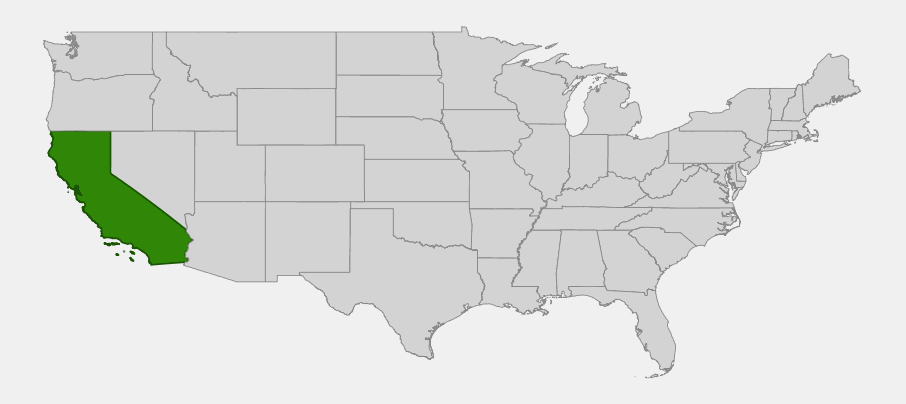
Clubhair mariposa lily is a California endemic. USDA PLANTS lists it as native only to California, and it is not known outside the state. It grows mostly at low to middle elevations in the southern half of the state’s coastal mountains.
The main range runs through the South Coast Ranges, from Monterey and San Benito counties south through San Luis Obispo and Santa Barbara counties, and on into the Transverse Ranges, including the Santa Monica Mountains, Simi Hills, Santa Susana and San Gabriel mountains. Var. avius is an isolated population in the foothills of the northern Sierra Nevada.
Typical habitats are dry, open slopes and ridges with rocky or well-drained soils, in chaparral, coastal sage scrub, oak woodland, grassland and open conifer forest. It often grows among shrubs, where the stems lean through branches for support, and it blooms after most annual wildflowers have finished.
📋 Regional plant lists featuring Clubhair Mariposa Lily: California & Nevada
Growing & Care Guide
Clubhair mariposa lily can be grown in California gardens, but it is a plant for patient gardeners who can give it a dry summer. Buy seed or bulbs only from reputable native plant nurseries and seed suppliers, and never dig bulbs from the wild: wild plants rarely survive transplanting, and several varieties are rare.
Light
Give it full sun or light, dappled shade. In nature it often grows among low shrubs and bunchgrasses, which shade the soil but leave the flowers in the sun.
Soil & Water
Sharp drainage is essential. Plant in a raised bed, a rock garden, a slope or a deep pot of gritty, fast-draining mix. Winter and spring rain is enough in most of its range; after the leaf withers in late spring, keep the bulbs completely dry until fall. Summer water is the most common cause of bulb rot.
Planting Tips
Plant bulbs in fall about 3 to 4 inches deep. Many growers keep mariposa lilies in pots or protected by wire baskets, because gophers and voles relish the bulbs. Place them among low, drought-tolerant shrubs and grasses that do not need summer irrigation.
Pruning & Maintenance
Let the stems and capsules dry naturally so seed can ripen. Mark the spot, since the plant disappears completely for most of the year. Do not fertilize heavily.
Propagation
Sow fresh seed in fall in deep pots of gritty mix and leave them outdoors for the winter rains; germination follows in winter or spring. Seedlings produce a single grass-like leaf for the first few years and usually take three to five years to flower. Keep the pots dry in summer. Some plants produce small bulblets that can be separated during dormancy.
Landscape Uses
- Dry native gardens: showy late-spring flowers with no summer water
- Rock gardens and containers: well suited to gritty, fast-draining conditions
- Chaparral and grassland plantings: a natural companion to shrubs and bunchgrasses
- Pollinator plantings: large open flowers visited by bees and beetles
- Wildflower viewing: a striking late-spring bloomer on California trails
Wildlife & Ecological Value
Mariposa lilies bloom after most spring annuals, providing a late source of pollen and nectar on dry slopes.
For Pollinators
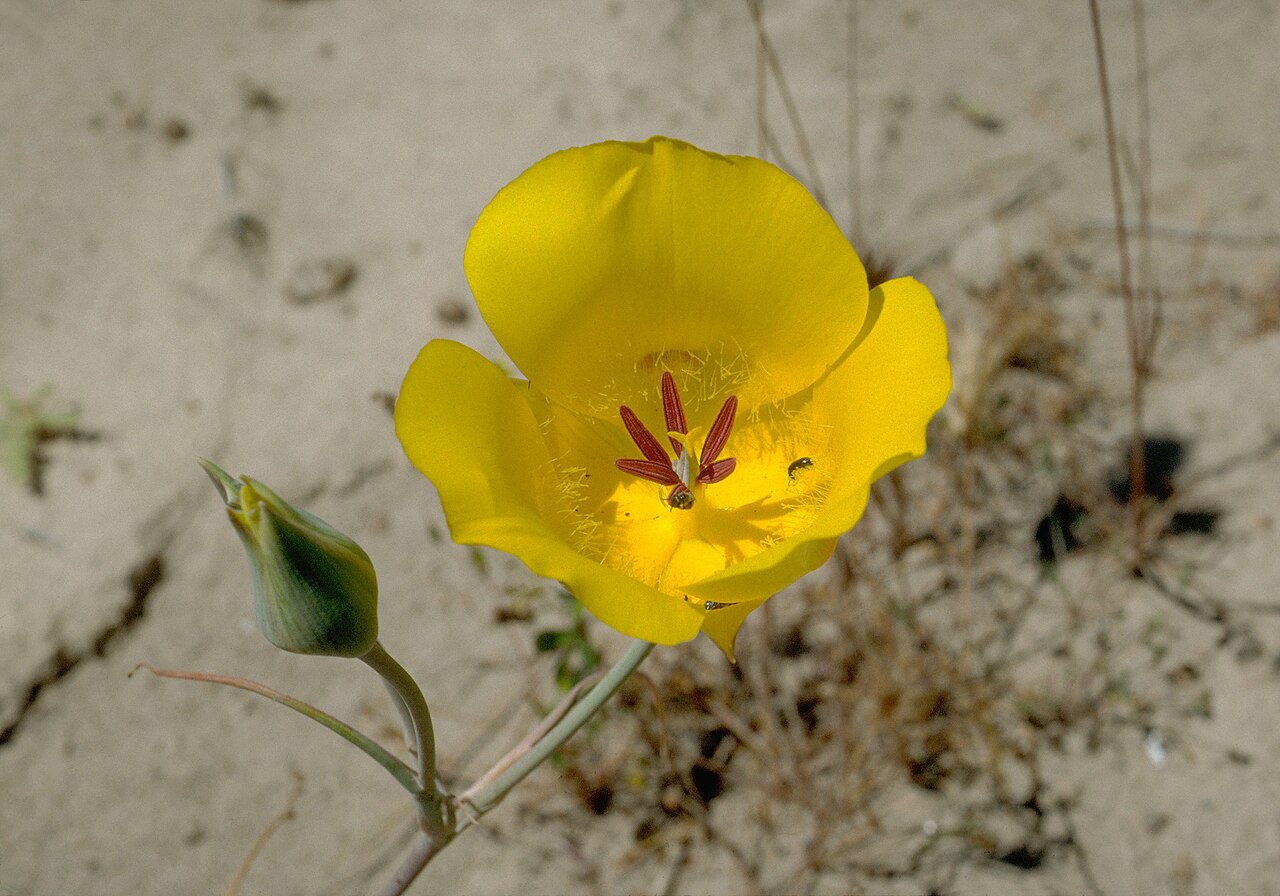
The open bowl-shaped flowers are visited mainly by native bees, including bumble bees and smaller solitary bees, as well as beetles that crawl among the hairs and anthers. The nectar glands at the base of the petals reward visitors, and the hairs may help guide them to the nectar.
For Birds
Birds make little direct use of the plant, though seed-eating birds may take some seeds from open capsules, and the insects drawn to the flowers feed insect-eating birds.
For Mammals
Pocket gophers, ground squirrels and other rodents eat the nutritious bulbs, and deer browse the flowering stems. This is one reason mariposa lilies often survive best in rocky ground or among shrubs.
Ecosystem Role
As a summer-dormant bulb, clubhair mariposa lily is part of the rich geophyte flora of California’s chaparral, woodlands and grasslands. It grows and blooms in the wet season and survives the long, dry summer and frequent wildfires underground, often blooming abundantly in the years after a fire opens up the shrub cover.
Cultural & Historical Uses
The genus name Calochortus comes from the Greek kalos, beautiful, and chortos, grass, describing these lovely flowers that rise from grass-like leaves. “Mariposa” is Spanish for butterfly, a name given to these lilies for their delicately marked, butterfly-like petals. The species was described by the American botanist Sereno Watson in 1879.
Native Californians gathered the bulbs of many mariposa lilies and ate them roasted or steamed, and the plants were tended by digging and harvesting that left small bulbs to grow. Today, with many populations reduced by development and grazing, wild bulbs should be left in place.
Clubhair mariposa lily was painted by the American naturalist and artist Mary Vaux Walcott for her series on North American wildflowers, and it remains a favorite of photographers for its intensely colored, hairy flower centers.
Frequently Asked Questions
Why is it called clubhair mariposa lily?
The inside of each petal has a dense patch of hairs with swollen, club-shaped tips. The species name clavatus also means club-shaped.
Where does clubhair mariposa lily grow?
Only in California, mainly in the South Coast Ranges and Transverse Ranges, with an isolated variety in the northern Sierra Nevada foothills. It grows on dry, open slopes in chaparral, oak woodland, grassland and open forest.
Is clubhair mariposa lily rare?
The species as a whole is fairly widespread, but several of its varieties are local and are tracked as rare by the California Native Plant Society. Never dig plants from the wild.
Can I grow it in my garden?
Yes, in California and similar dry-summer climates, from seed or nursery-grown bulbs. It needs excellent drainage, winter moisture and a completely dry summer, and protection from gophers.
When does it bloom?
Mostly from April to June, later than most spring wildflowers, depending on rainfall and elevation.

Looking for a nursery that carries Clubhair Mariposa Lily?
Browse our native plant nursery directory: California

