Blue Oak (Quercus douglasii)
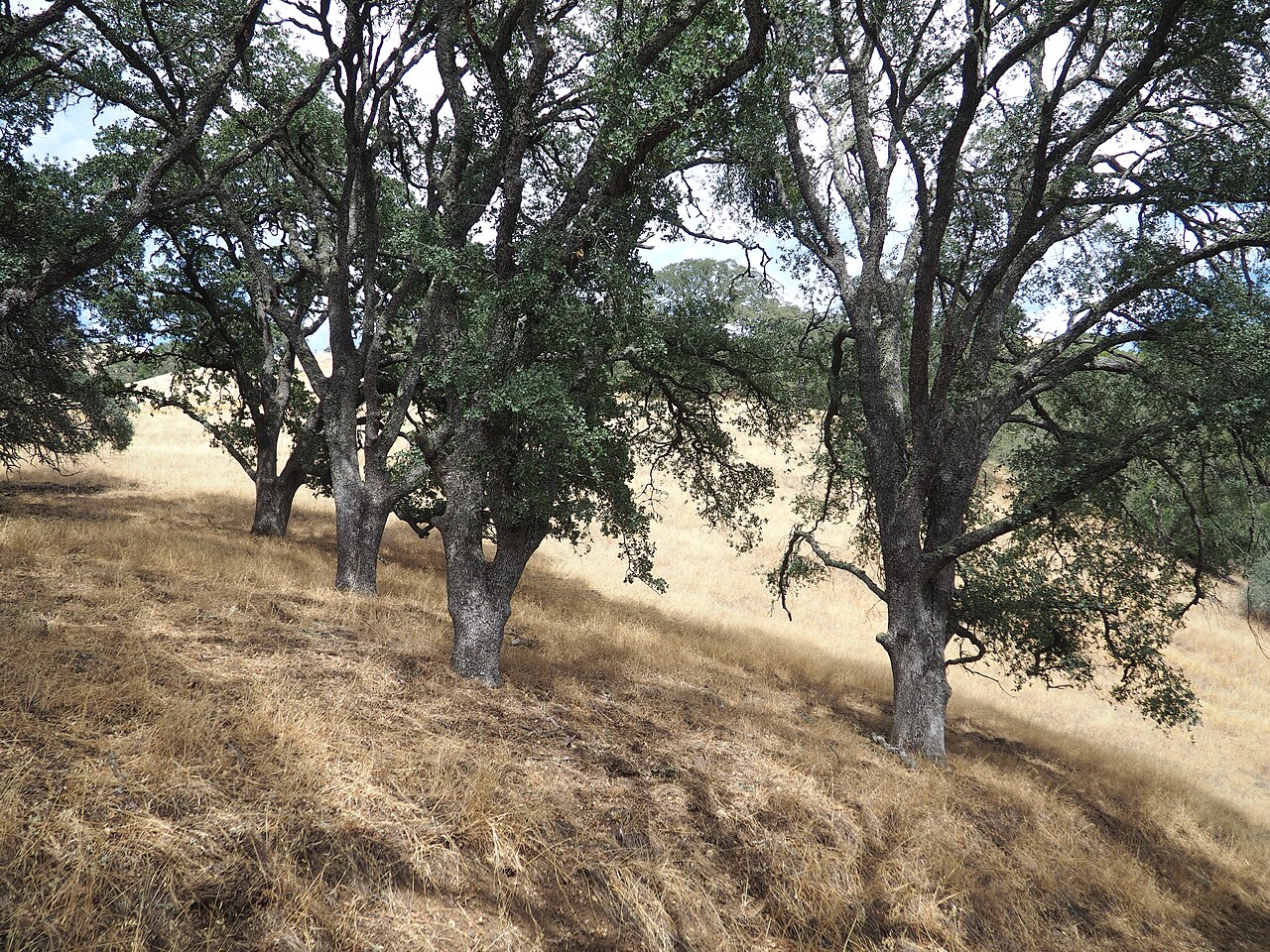
Quercus douglasii, the Blue Oak, is the defining tree of California’s dry inland foothills, named for its distinctive blue-gray foliage that sets it apart from every other California oak at a glance. Endemic to California, it forms the open, park-like woodlands that ring the Central Valley and extend into the Coast Ranges and Sierra Nevada foothills — one of the most extensive and recognizable oak-woodland types in the state.
Blue oak is a medium-sized deciduous tree, typically 20 to 60 feet tall, with an irregular, rounded crown and gray, checkered bark. It is exceptionally well adapted to California’s long dry summers and thin, rocky foothill soils, tolerating drought better than almost any other native oak. Because of this toughness, blue oak woodland often occupies the driest, hottest sites in the oak-woodland belt, giving way to blue oak alone where other oaks cannot persist.
For gardeners and land managers in California’s foothill and valley margin regions, blue oak is an outstanding low-water choice for naturalistic woodland plantings, offering distinctive silvery-blue foliage, strong drought tolerance, and significant wildlife value once established — though it asks for patience, since growth is slow and natural regeneration in the wild has become a serious conservation concern.
Identification
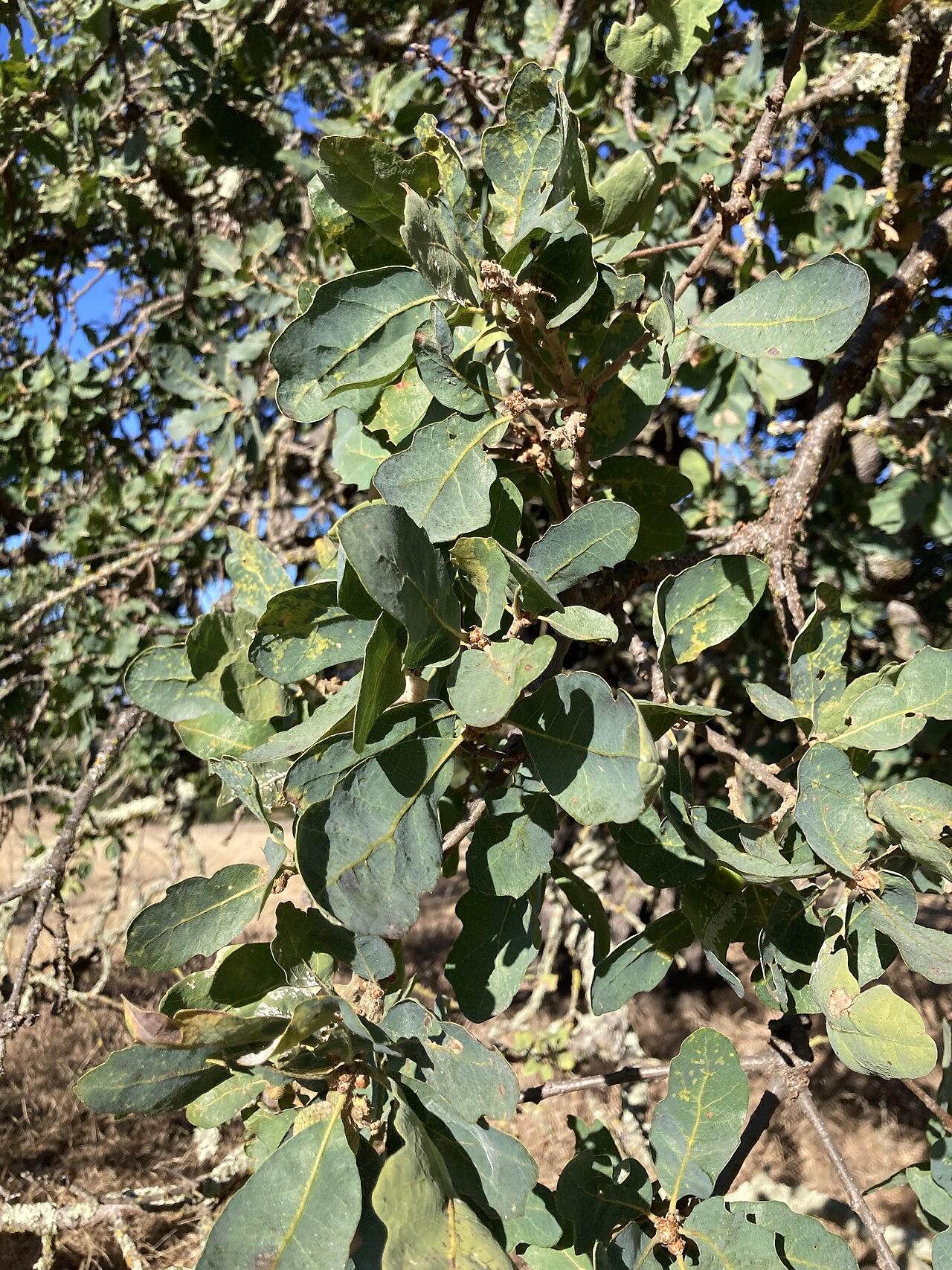
Blue oak is readily told apart from other California oaks by its blue-gray leaf color, relatively small and shallowly lobed leaves, and its typical habitat on dry, open, grassy hillsides rather than moister canyon bottoms.
Bark & Stems
The bark is light gray and broken into small, checkered rectangular plates, superficially similar to valley oak but generally thinner and paler. Twigs are slender and gray-brown. Mature trees develop a rounded, often irregular and somewhat open crown, usually shorter and less massive than valley oak, reflecting the tree’s typically harsher, drier growing sites.
Leaves
Leaves are deciduous, 1.5 to 4 inches long, with shallow, rounded lobes — much less deeply cut than valley oak’s — and sometimes nearly unlobed or wavy-margined individuals occur on the same tree. The most distinctive feature is color: a dusty blue-green to gray-green on the upper surface, a shade unmatched by any other California oak, which gives the whole canopy of a blue oak woodland a soft, silvery cast visible from a distance.
Flowers
Male flowers are borne in slender, drooping catkins 1 to 3 inches long that appear with the new leaves in spring; female flowers are small, inconspicuous, and wind-pollinated like other oaks.
Fruit & Seeds
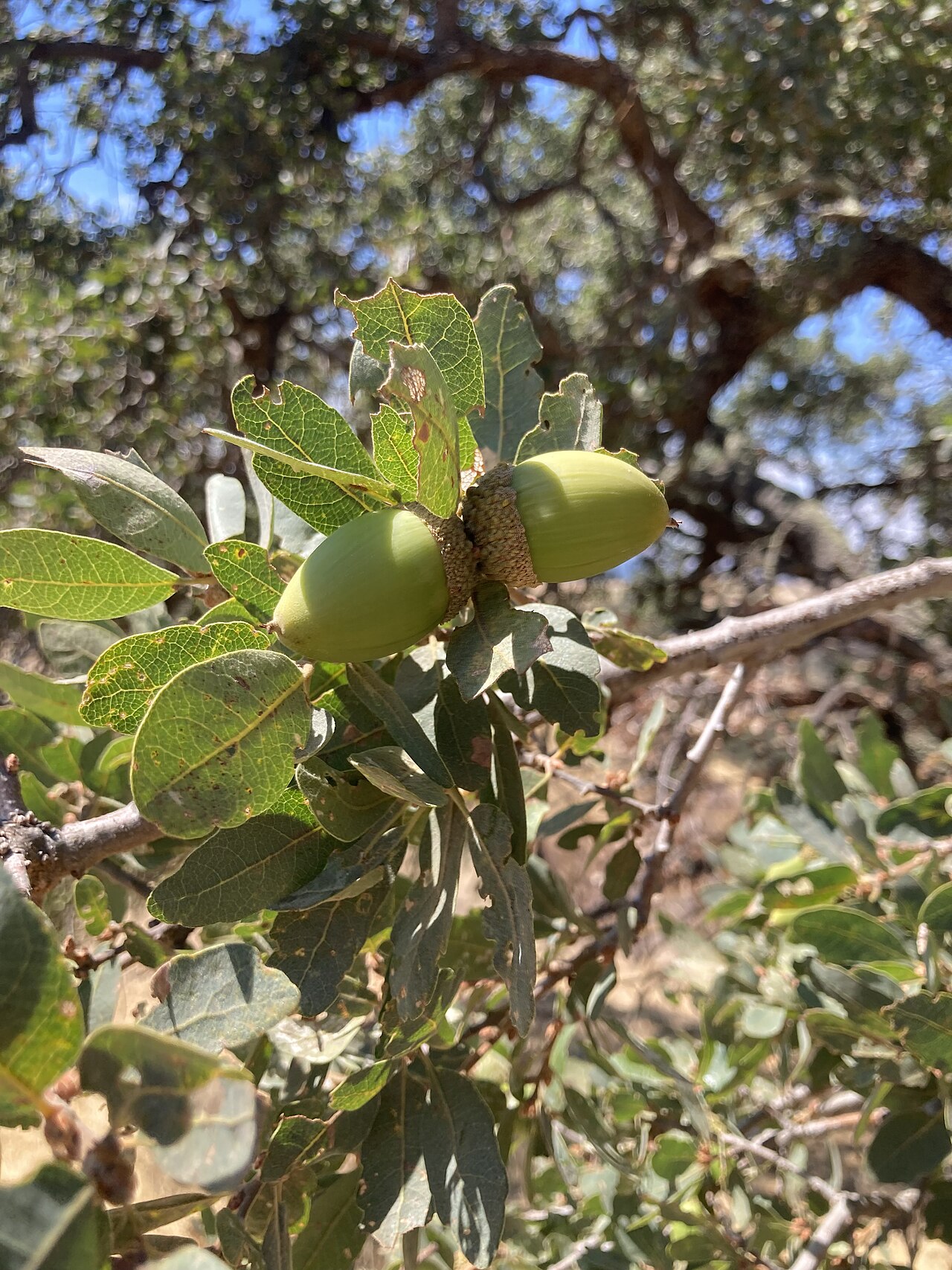
Acorns are 1 to 1.5 inches long, narrowly oval with a shallow, scaly cap covering roughly the top third of the nut, maturing in a single season and ripening from green to light brown in fall. Like most oaks, blue oak shows strong year-to-year variation in acorn production (masting), with occasional bumper crops followed by years of near failure.
Quick Facts
| Scientific Name | Quercus douglasii |
| Family | Fagaceae (Beech/Oak) |
| Plant Type | Deciduous tree |
| Mature Height | 20–60 ft |
| Mature Spread | 30–60 ft, often wider than tall on open sites |
| Growth Rate | Slow; long-lived (often 100–200+ years) |
| Sun Exposure | Full Sun |
| Water Needs | Very low once established; among the most drought-tolerant California oaks |
| Soil Type | Thin, rocky, well-drained foothill soils; adapts to clay |
| Soil pH | Tolerates a wide range, slightly acidic to alkaline |
| Bloom Time | March – April (catkins with new leaves) |
| Flower Color | Yellow-green (inconspicuous) |
| Fall Color | Dull yellow-brown, not showy |
| Fruit | Narrow oval acorn, 1–1.5 in, ripens in fall |
| Deer Resistant | Moderate (seedlings browsed by deer and livestock) |
| USDA Hardiness Zones | 7–9 |
Native Range
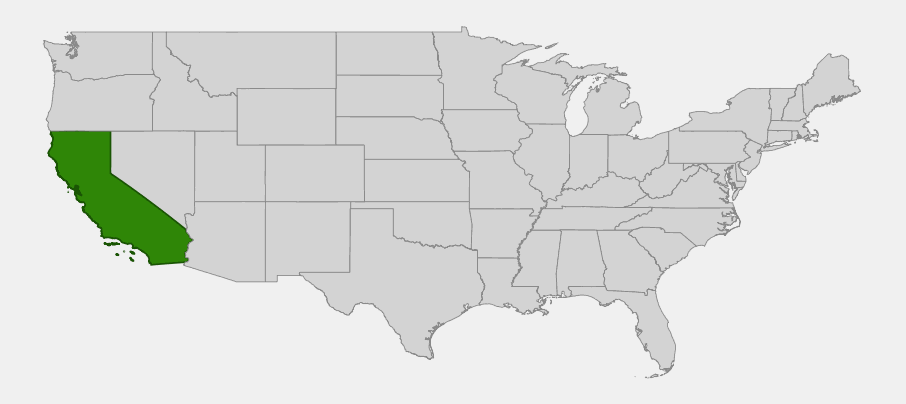
Blue oak is endemic to California, found nowhere else in the wild. It occupies a broad ring around the Central Valley, growing through the foothills of the Sierra Nevada, the inner Coast Ranges, and the Transverse Ranges of Southern California, generally at lower elevations than mixed conifer forest and often on the driest, hottest sites within the oak-woodland belt. It is not native to Oregon, Nevada, or any state outside California.
Typical blue oak habitat is open, grassy foothill slopes and low mountains with thin, rocky, often poorly developed soils — sites too dry and exposed for most other California oaks. Blue oak woodland frequently grades into denser mixed oak woodland at higher elevations or on moister north-facing slopes, and into grassland or chaparral where conditions become even drier. Elevation ranges from near sea level in some Coast Range locations to around 5,000 feet in the southern Sierra foothills.
Blue oak has become a species of significant conservation concern because natural regeneration has failed across much of its range for decades, largely due to seedling and sapling browsing by deer, cattle, and introduced wildlife, combined with changes in fire regime and land use. Many existing blue oak woodlands consist primarily of mature and old trees with few younger individuals coming up to replace them, prompting active research and restoration efforts throughout California’s foothill counties.
📋 Regional plant lists featuring Blue Oak: California & Nevada
Growing & Care Guide
Blue oak is one of the toughest, most drought-adapted trees available to California gardeners, but its slow growth means it rewards those planting for the long term rather than quick results.
Light
Blue oak requires full sun, reflecting its natural habitat on open, exposed foothill slopes. It does not tolerate shade well and will grow weakly, if at all, under a closed canopy.
Soil & Water
This species thrives in thin, rocky, well-drained foothill soils and is notably tolerant of heat and summer drought — among the most drought-hardy oaks in California. It adapts to clay soils as long as drainage is reasonable but, like most California oaks, resents summer irrigation once established; constant moisture around the root crown is a common cause of root disease in landscape settings. After an establishment period of two to three years with occasional deep watering, mature blue oaks should receive little to no supplemental summer water.
Planting Tips
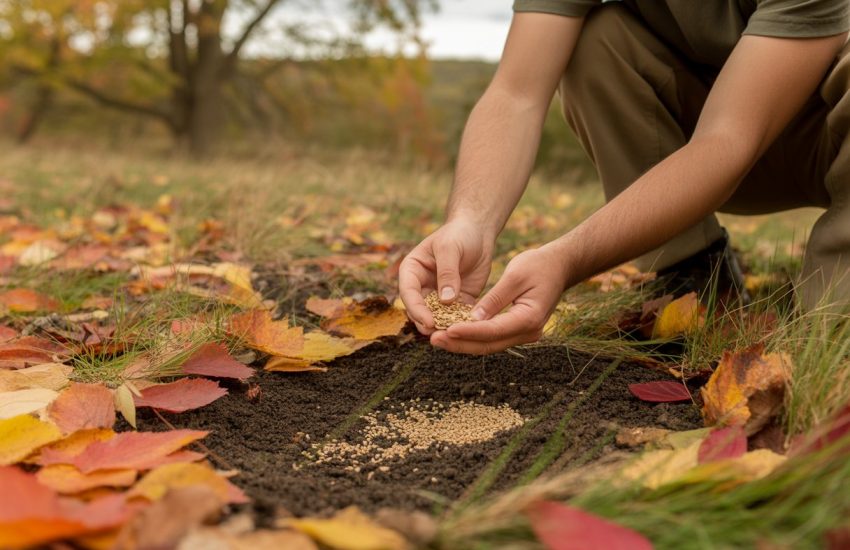
Grow blue oak from acorns sown soon after they fall, or from young container stock planted in fall to take advantage of winter rains. Because deer and livestock browsing is the single biggest obstacle to successful establishment in the wild, protect young plants with a cage or tree shelter for at least the first five years. Choose an open, sunny site with excellent drainage, and allow for an eventual spread of 30 to 60 feet.
Pruning & Maintenance
Mature blue oaks need minimal pruning beyond removing dead or hazardous limbs. Avoid changing grade, irrigation, or soil conditions within the root zone of established trees, and keep heavy equipment and new construction well away from the trunk and root area, since mature oaks are highly sensitive to soil compaction and disturbance.
Landscape Uses
- Low-water woodland plantings on dry, sunny foothill and valley-margin sites
- Oak savanna and woodland restoration throughout the Sierra and Coast Range foothills
- Specimen tree valued for its distinctive blue-gray foliage
- Erosion control on dry slopes once established
- Wildlife habitat plantings supporting acorn-dependent birds and mammals
Wildlife & Ecological Value
Blue oak woodland supports a distinctive community of foothill wildlife adapted to California’s hot, dry grassland-oak mosaic.
For Pollinators
While wind-pollinated and not a nectar source itself, blue oak’s foliage supports a large diversity of native insects, which in turn feed insectivorous birds and serve as prey for other pollinator-dependent food webs across the woodland.
For Birds
Acorn woodpeckers, oak titmice, white-breasted nuthatches, and western bluebirds are characteristic blue oak woodland birds, foraging on acorns, bark insects, and the open grassy understory. Raptors such as red-tailed hawks commonly use mature blue oaks as hunting perches over the adjacent grassland.
For Mammals
Acorns are an important fall food source for mule deer, ground squirrels, and historically black bears. Deer and livestock browsing on seedlings, however, is also the primary reason blue oak regeneration has declined so significantly across much of its range, making wildlife management an important part of any serious restoration effort.
Ecosystem Role
Blue oak woodland is one of California’s most extensive and distinctive natural communities, providing shade and structure across vast areas of otherwise open grassland, moderating soil temperatures, and supporting understory plant diversity beneath the canopy. The slow pace of natural regeneration across the state has made mature blue oak woodlands a priority for conservation planning in many foothill counties.
Cultural & Historical Uses
Blue oak acorns were gathered and processed by California’s Indigenous peoples across the tree’s foothill range, including the Miwok and Yokuts, following the same leaching process used for other California oak acorns to remove bitter tannins before grinding the meal into flour for cooking. Blue oak woodlands were also actively managed through periodic burning, which helped maintain the open, grassy understory that favored both acorn production and game animals.
With European settlement, blue oak woodland was heavily used for cattle grazing, and the open, park-like character of the landscape made it attractive for ranching throughout the 19th and 20th centuries — a use that continues across much of its range today. The wood itself is hard and dense but has seen only modest use, mainly for firewood and fence posts, since the typically twisted, irregular growth form of blue oak limits its value as milled lumber.
In recent decades, blue oak has become a focal species for California range and woodland ecology research, particularly around questions of regeneration failure, climate resilience, and the long-term future of the state’s oak woodlands under a changing climate and continued development pressure.
Frequently Asked Questions
Why is blue oak called “blue”?
Its leaves have a distinctive dusty blue-gray to gray-green cast, unlike the darker green foliage of California’s other native oaks, giving entire blue oak woodlands a soft, silvery appearance visible from a distance.
How drought tolerant is blue oak?
Extremely. Blue oak is among the most drought-tolerant trees native to California, naturally occupying some of the driest, rockiest, hottest sites in the state’s oak-woodland belt, and it needs little to no irrigation once established.
Why don’t I see many young blue oaks in the wild?
Decades of browsing pressure on seedlings and saplings from deer and livestock, along with changed fire regimes, have made it difficult for blue oak to regenerate naturally across much of its range. Protecting young plants from browsing is essential for restoration success.
How fast does blue oak grow?
Slowly. Blue oak typically adds well under a foot of height per year, especially on its characteristically dry, thin-soiled sites, and mature trees can live well over a century.
Can I eat blue oak acorns?
The acorns are edible after the bitter tannins are leached out, following the same traditional processing methods used for other California oak acorns. They are not a casual garden food source without this preparation.

Looking for a nursery that carries Blue Oak?
Browse our native plant nursery directory: California