
Slender Sunflower (Helianthus gracilentus)
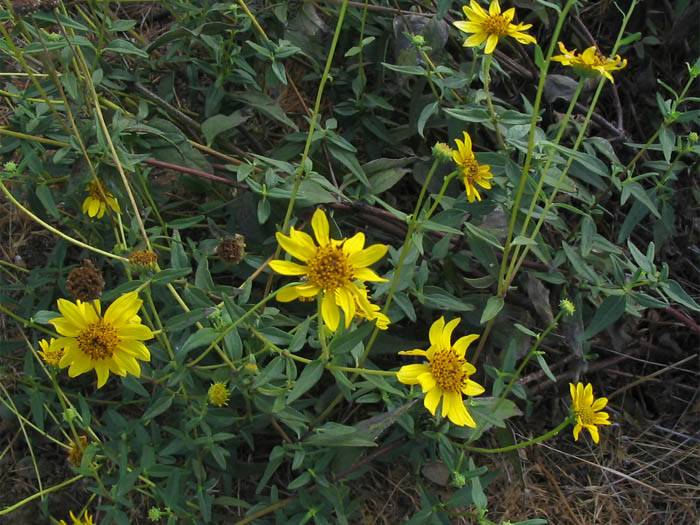
Helianthus gracilentus, known as Slender Sunflower, is a perennial sunflower of the chaparral and coastal sage scrub of central and southern California and northern Baja California. It forms an open, airy clump of slender, branching stems, usually 2 to 5 feet tall, with narrow, rough, gray-green leaves, and from late spring through summer and into fall it carries a long display of bright yellow flower heads 2 to 3 inches across.
Unlike the familiar annual sunflower, slender sunflower comes back year after year from a woody root crown. It is drought tolerant and blooms well into the dry season, after most of the spring wildflowers of the chaparral have finished. It often reappears in abundance in the years after a wildfire, along with other fire-following wildflowers and shrubs.
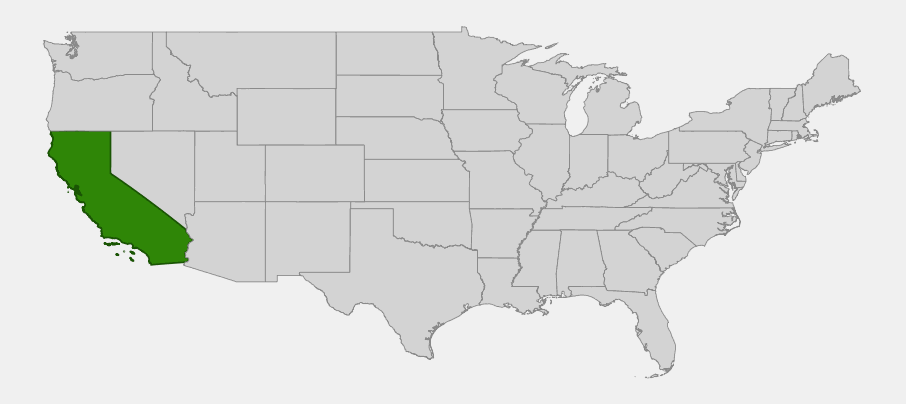
In the United States it grows only in California, where it is found on dry slopes, ridges, roadcuts and burns from the central Coast Ranges south through the Transverse and Peninsular Ranges. It is a good plant for native bees and seed-eating birds and a cheerful addition to dry native gardens. This guide covers how to identify it, where it grows, how to grow it, and its value to wildlife.
Identification
Slender sunflower looks like a smaller, finer version of the common sunflower, with many slim stems and modest flower heads. The combination of a perennial, branching habit, narrow rough leaves and dark-centered yellow heads blooming in the dry season helps identify it.
Stems & Growth Habit
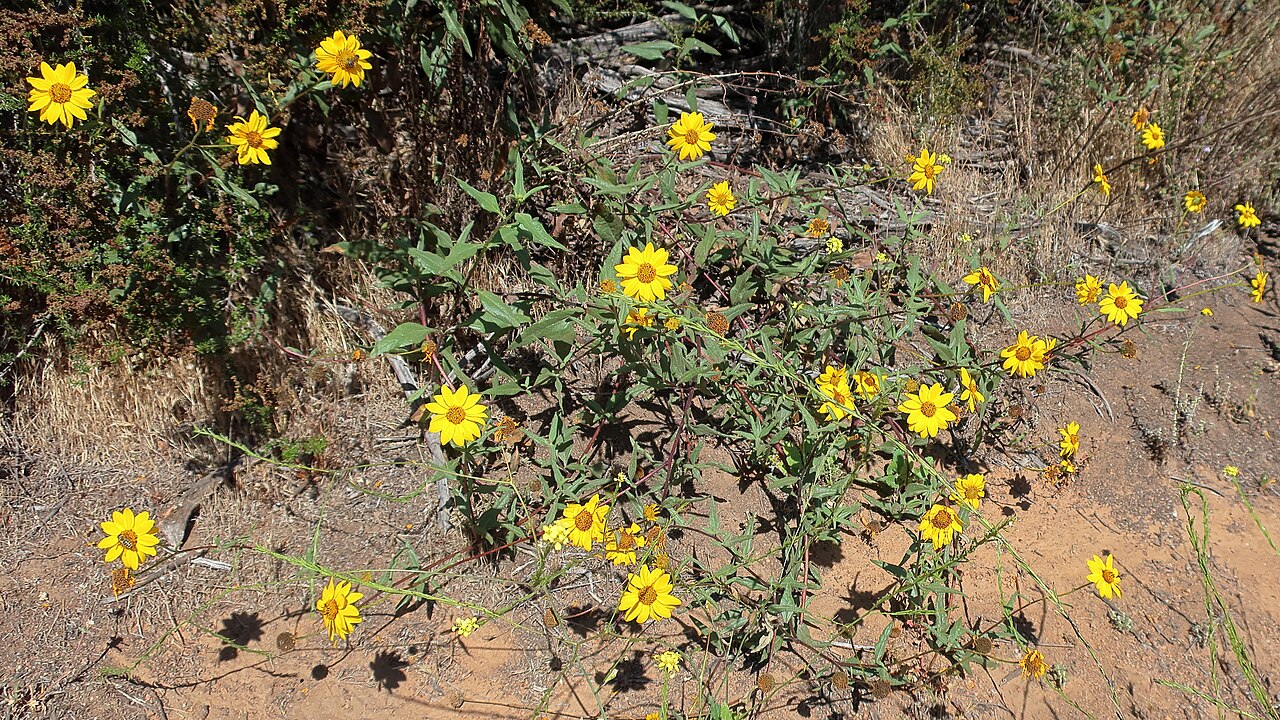
The plant grows from a woody root crown and sends up many slender, erect to sprawling stems, branched mostly in the upper part. Clumps are usually 2 to 5 feet tall and about as wide, sometimes taller in good conditions. The stems are rough to the touch and often reddish or purplish. Older stems die back in winter and new ones grow from the base in spring.
Leaves
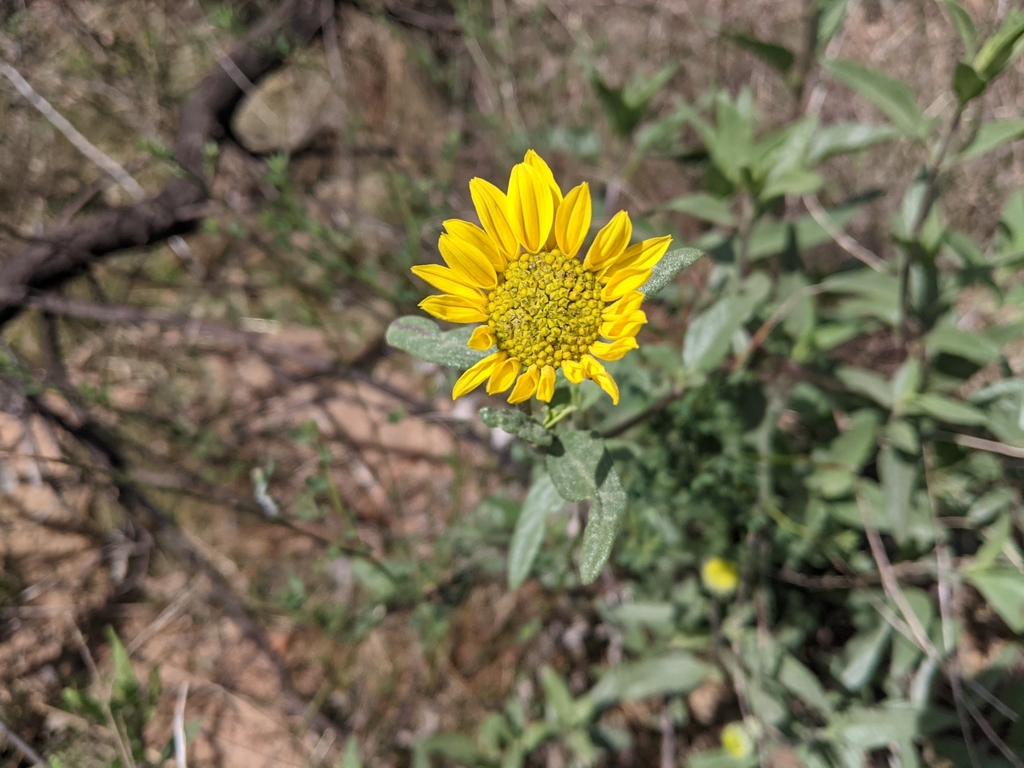
The leaves are narrowly lance-shaped, 2 to 5 inches long, gray-green and rough with short, stiff hairs, with three prominent veins from the base. Lower leaves are mostly opposite, while upper leaves are usually alternate. The leaves are much narrower than those of the common sunflower.
Flowers
The flower heads are borne singly at the ends of long, slender branches. Each head is about 2 to 3 inches across, with 10 to 20 bright yellow ray florets around a central disk about 3/4 inch wide. The disk florets have dark reddish-purple to brown lobes, so the center often looks dark, though it turns yellow when dusted with pollen. The bracts beneath the head are narrow, pointed and hairy. Bloom runs mainly from May to October, with peak flowering in early summer.
Fruit & Seeds
After flowering, the disk ripens into small, dark, wedge-shaped seeds (achenes), each tipped with a pair of small scales. They mature through summer and fall and are eaten by finches and other small birds.
Look-alikes
California encelia (Encelia californica) grows in the same coastal sage scrub and also has yellow rays and a dark center, but it is a rounded shrub with broader, smooth to softly hairy leaves and it blooms mainly in late winter and spring. The common sunflower (Helianthus annuus) is an annual with broad, heart-shaped leaves and usually larger heads. Bush sunflower and several other yellow composites of the chaparral have much smaller heads or different leaves.
Quick Facts
| Scientific Name | Helianthus gracilentus A. Gray |
| Family | Asteraceae (aster or sunflower family) |
| Plant Type | Herbaceous perennial from a woody root crown |
| Mature Height | 2–5 ft |
| Mature Spread | 2–4 ft |
| Growth Rate | Moderate to fast |
| Sun Exposure | Full sun |
| Water Needs | Low; drought tolerant once established |
| Soil Type | Well-drained sandy, gravelly or rocky soils; tolerates clay on slopes |
| Soil pH | About 6.0–8.0 |
| Bloom Time | May–October |
| Flower Color | Yellow rays; dark reddish-purple to brown disk |
| Fall Color | None notable; stems dry tan |
| Fruit | Small dark achenes |
| Deer Resistant | Not well documented |
| USDA Hardiness Zones | 8–10 |
Native Range
Slender sunflower is native to California and northern Baja California, Mexico. USDA PLANTS lists it only from California in the United States, and it does not grow naturally in any other state.
Its range runs from the southern and central Coast Ranges, around San Luis Obispo and Santa Barbara Counties, south through the Transverse Ranges, including the Santa Monica, Santa Susana and San Gabriel Mountains, and the Peninsular Ranges of Riverside and San Diego Counties, into Baja California. It reaches the inland foothills at the western edge of the deserts but is not a desert plant.
It grows on dry, open slopes, ridges and canyon sides in chaparral, coastal sage scrub and oak woodland openings, from near the coast to the mountains at middle elevations. It is especially common on disturbed ground such as roadcuts, firebreaks and recently burned slopes.
📋 Regional plant lists featuring Slender Sunflower: California & Nevada
Growing & Care Guide
Slender sunflower is an easy, drought-tolerant perennial for sunny native gardens in coastal and inland southern and central California. It is sold by some California native plant nurseries and seed companies, and it is useful for long summer color on dry slopes, in meadows and at the back of a sage scrub planting.
Light
Plant it in full sun. In shade the stems stretch and flop, and it flowers poorly.
Soil & Water
It does best in well-drained sandy, gravelly or rocky soil but tolerates heavier soil on a slope. Water young plants regularly through their first summer. Once established, it needs little or no summer water in coastal gardens and an occasional deep watering inland, which extends the bloom. Avoid frequent shallow watering, especially in heavy soil.
Planting Tips
Plant in fall or winter so the roots establish with the rains. Give each plant a couple of feet of space, or plant in drifts so the slender stems support one another. It combines well with sages, California sagebrush, buckwheats and native bunchgrasses, and it fills the gap between the spring bloom of the chaparral and the fall bloom of plants like California fuchsia.
Pruning & Maintenance
Leave seed heads standing in fall for the birds, then cut the old stems back to the base in late fall or winter, before new growth starts. That keeps the clump tidy and encourages vigorous new shoots. It may self-sow lightly in open ground.
Propagation
Grow it from seed sown in fall or late winter, either directly in place or in pots. A short period of cold, moist stratification can improve germination. Seedlings often bloom in their first or second year. Established clumps can also be divided in winter while dormant.
Landscape Uses
- Dry native gardens: long summer bloom with little or no summer water
- Slopes and banks: a tough, deep-rooted perennial for dry hillsides
- Habitat restoration: a fire-following perennial of chaparral and coastal sage scrub
- Pollinator gardens: abundant pollen and nectar for native bees in the dry season
- Bird gardens: seed heads that feed finches and other small birds
Wildlife & Ecological Value
Slender sunflower blooms when much of the chaparral is dry and dormant, which makes it especially useful to insects and birds.
For Pollinators
Like other sunflowers, its flower heads are rich in pollen and nectar and attract a wide range of native bees, including sunflower-specialist bees, along with butterflies, beetles and flies. Because it blooms from late spring into fall, it feeds pollinators in the dry months when few other flowers are open.
For Birds
Lesser goldfinches, house finches and other seed-eating birds pick the seeds from the ripening heads. Leaving the stems standing into fall gives them a longer harvest, and the dense clumps offer some cover for small birds.
For Mammals
Small mammals eat the fallen seeds. Deer may browse the young growth.
Ecosystem Role
Slender sunflower is a classic fire follower: it is common on slopes in the first years after a chaparral fire, adding color, cover and food while the shrubs regrow. It also colonizes roadcuts and other disturbed openings. As shrubs close in, it becomes less common until the next disturbance opens the canopy again.
Cultural & Historical Uses
The genus name Helianthus combines the Greek helios, sun, and anthos, flower. The species name gracilentus means “slender,” describing the thin stems and narrow leaves. The species was described by the American botanist Asa Gray.
Sunflowers are one of the few major crop plants domesticated in North America, and plant breeders have long looked to wild sunflower species as sources of traits such as disease resistance and drought tolerance for the cultivated crop.
In the Santa Monica Mountains and other parts of southern California, slender sunflower is a familiar sight along trails and fire roads in summer, its yellow heads standing above the dry chaparral. It is one of the easiest native sunflowers to grow in California gardens.
Frequently Asked Questions
Is slender sunflower a perennial?
Yes. Unlike the common annual sunflower, slender sunflower is a perennial that regrows each year from a woody root crown.
Where does slender sunflower grow?
It is native to central and southern California and northern Baja California, on dry slopes, ridges, roadcuts and burns in chaparral and coastal sage scrub. In the United States it grows only in California.
When does slender sunflower bloom?
Mainly from May to October, with peak bloom in early summer. It blooms after most spring wildflowers have finished.
Does slender sunflower need summer water?
Established plants need little or no summer water near the coast. Inland, an occasional deep watering keeps them blooming longer.
Is slender sunflower good for wildlife?
Yes. Native bees and other pollinators use the flowers through the dry season, and finches and other birds eat the seeds.

Looking for a nursery that carries Slender Sunflower?
Browse our native plant nursery directory: California

