Common Sunflower (Helianthus annuus)
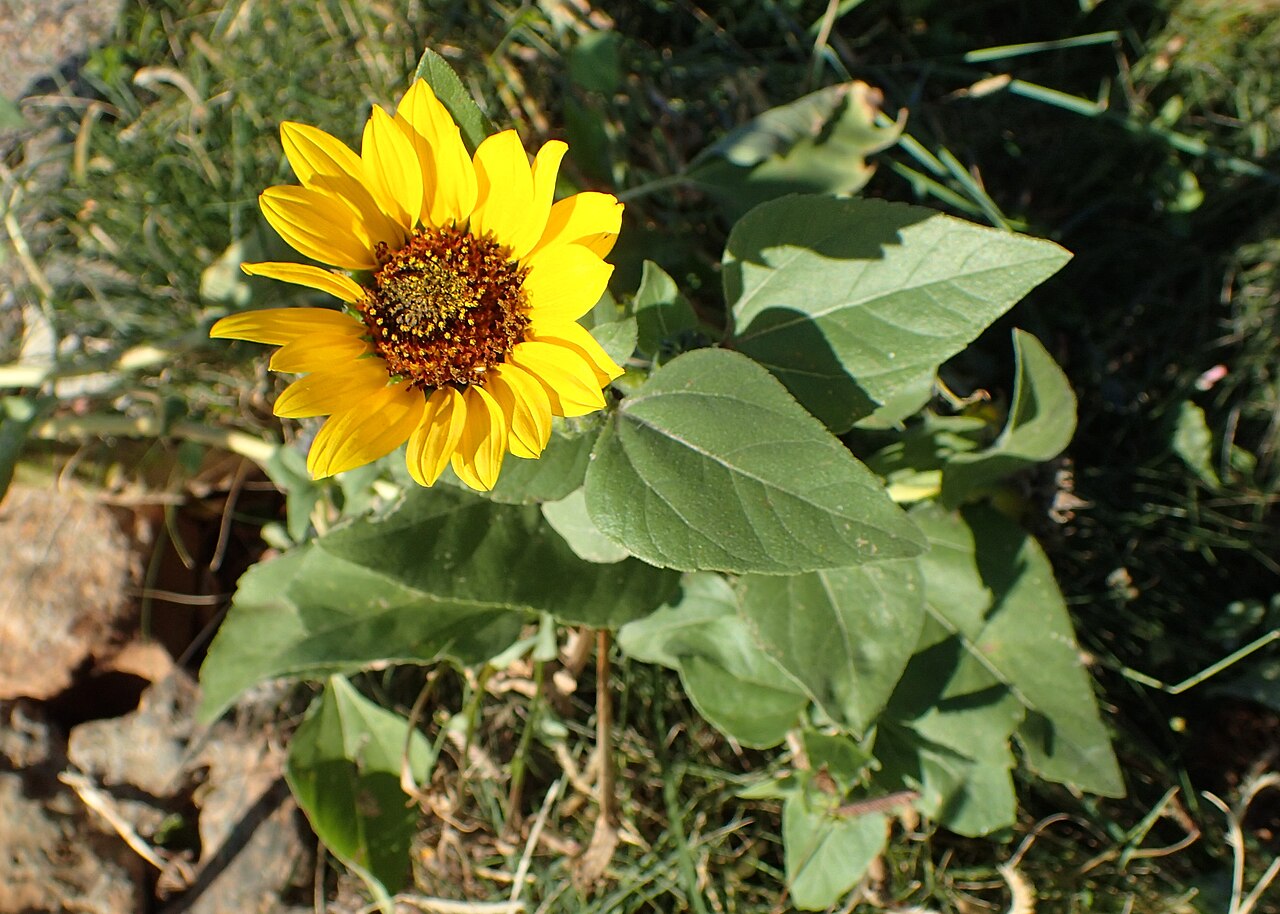
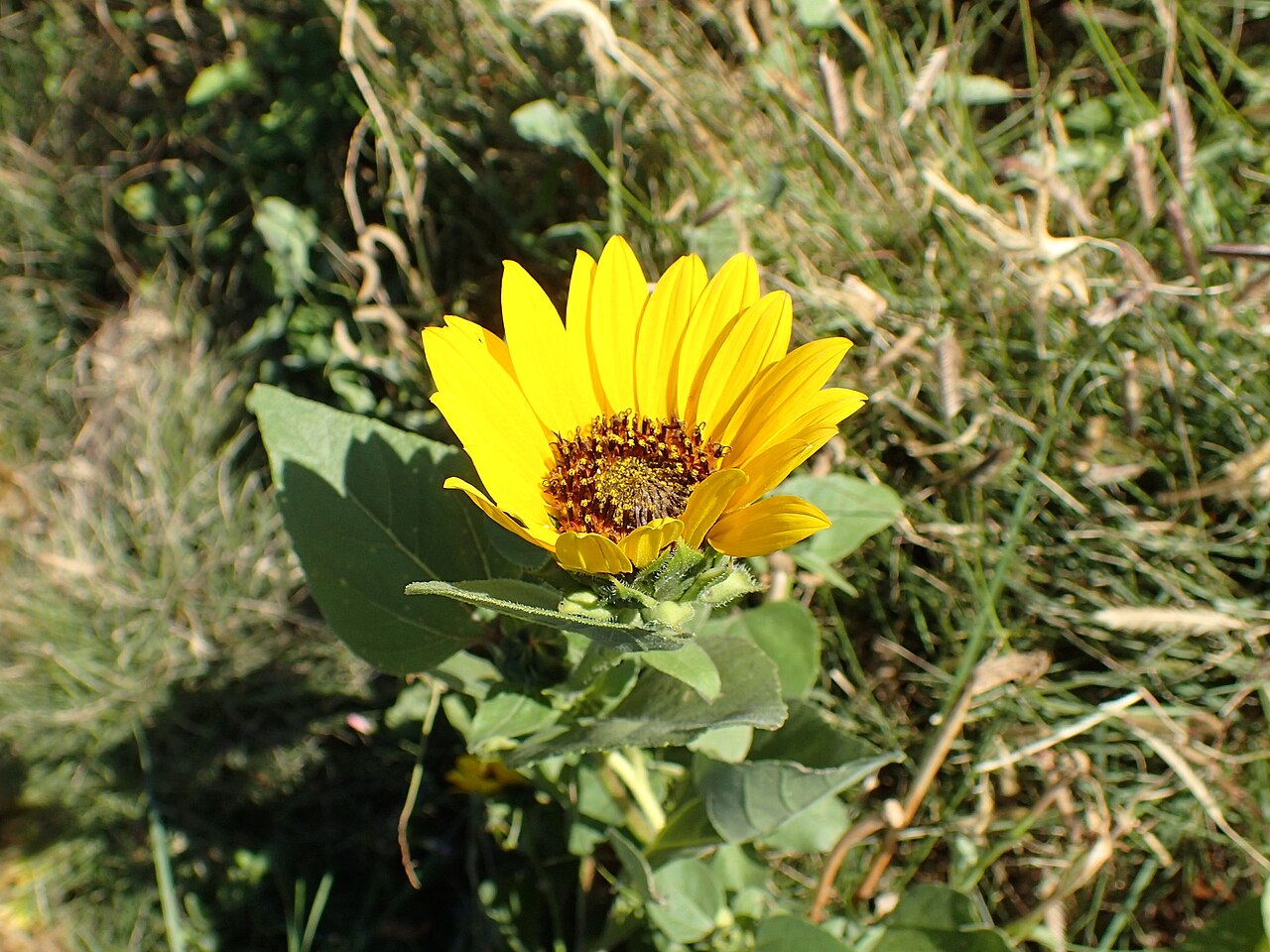
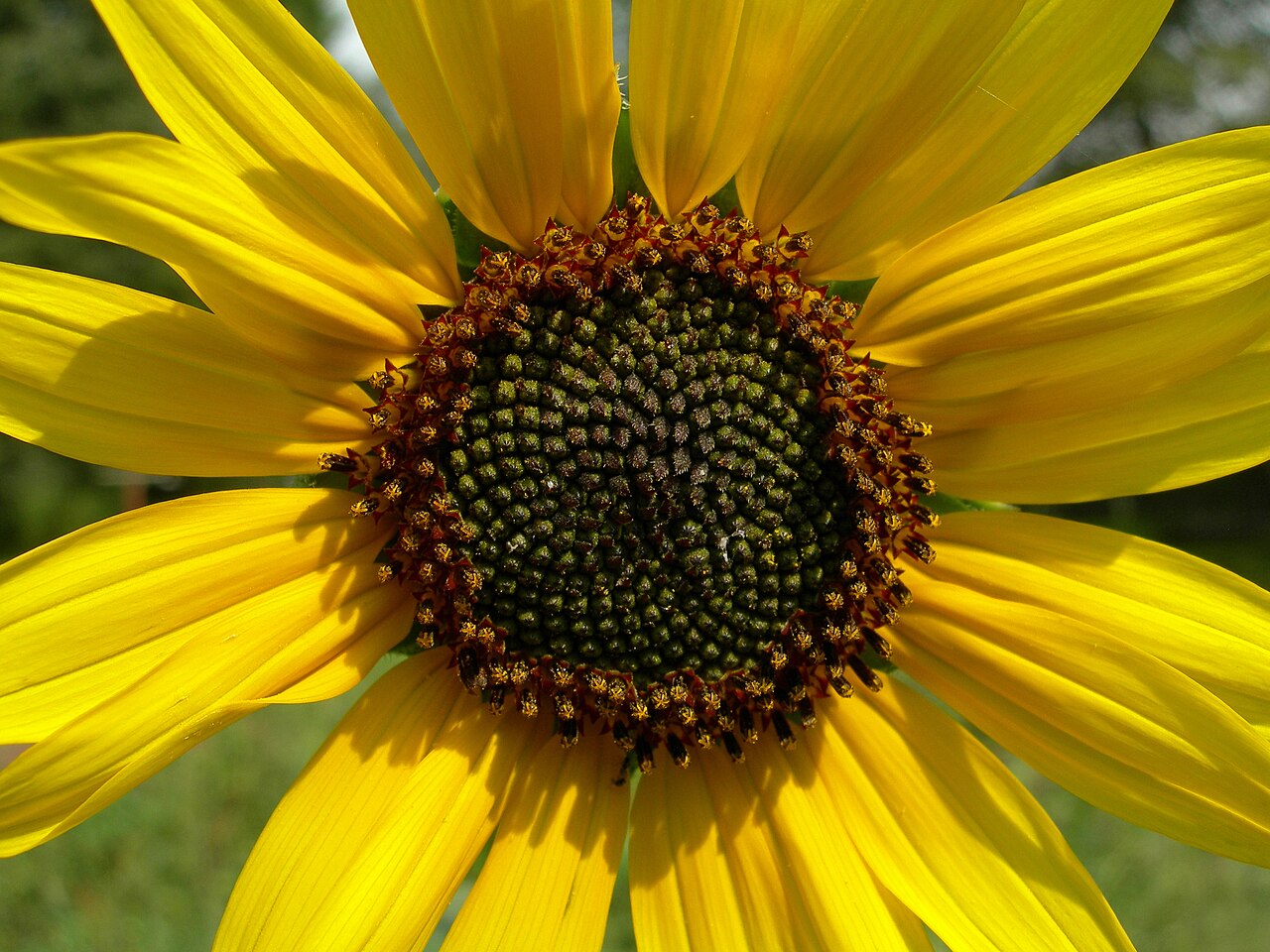
Common Sunflower (<em>Helianthus annuus</em>) is both a North American wildflower and one of the world’s familiar cultivated plants. Wild forms usually branch and carry numerous moderately sized heads, unlike the enormous single-headed varieties grown for competition or commercial seed. Yellow rays surround a darker disk of many tiny flowers, and the whole plant completes its life cycle in one growing season.
For wildlife gardening, the distinction between a documented wild seed source and an ornamental cultivar matters. A packet may contain dwarf, double-flowered, pollenless or unusually colored plants rather than the branching wild form pictured here. All may be sold as sunflowers, but they do not have identical structure, flowering behavior or value to pollen-collecting insects.
This species also needs an unusually careful native-range explanation. Utah State University treats it as a Utah native, while Kew’s current global checklist uses a much narrower southwestern native range. Centuries of domestication and movement complicate the boundary between original distribution and ancient introduction. This page makes that disagreement visible instead of turning every roadside occurrence into a claim of local nativity.
Identification
Annual habit
Common sunflower grows from seed, flowers, produces seed and dies. It has a taproot rather than the persistent spreading root system of a perennial sunflower. Plants can be only a few feet tall on a dry or crowded site, while vigorous plants and selected cultivars become much taller. The regional six-foot table value is a useful example, not a maximum or a guarantee.
Stems and leaves
Stems are upright, coarse and hairy. Leaves are broad, rough to the touch and usually toothed, with a stalk connecting the blade to the stem. Lower leaves may be opposite while upper leaves are alternate. That combination helps distinguish it from narrow-leaved perennial sunflowers, although a full identification should also consider flower-head bracts and annual root habit.
Flower heads
What looks like one flower is a composite head: yellow ray florets form the outer display, and numerous small disk florets occupy the center. Disk florets open in a sequence across the head, so one head can offer resources over several days. Wild-type heads are much smaller than giant seed cultivars and occur on branches at different stages.
Seeds and spent heads
The familiar sunflower “seed” is technically a dry fruit enclosing a seed. As heads mature they become heavier, bracts dry and the back of the head changes color. Birds may begin feeding before a gardener considers the head fully dry. Wild forms generally have smaller fruits than food cultivars, so do not expect a native seed population to produce snack-sized harvests.
Distinguishing garden forms
Double flowers can obscure the disk; pollenless cutting varieties deliberately reduce pollen production; giant cultivars emphasize a large central head. Those are horticultural selections, not reliable models for wild plants. For a habitat project, request the scientific name, wild-type status and seed provenance. A photograph of a cultivated sunflower in another country does not establish a native population there.
Quick Facts
| Scientific Name | Helianthus annuus L. |
| Family | Asteraceae (daisy family) |
| Plant Type | Warm-season annual |
| Mature Height | Commonly 2–10 feet; cultivar and site dependent |
| Mature Spread | Branching forms need roughly 1–3 feet of space |
| Growth Rate | Fast during the growing season |
| Sun Exposure | Full sun |
| Water Needs | Moderate while establishing; tolerates dry periods once rooted |
| Soil Type | Well-drained loam, sand or clay |
| Soil pH | Generally neutral to alkaline conditions |
| Bloom Time | Summer into fall, usually July–October regionally |
| Flower Color | Yellow rays with dark central disk in wild forms |
| Fall Color | Leaves yellow and stems dry after seed maturation |
| Fruit | Dry achenes, commonly called sunflower seeds |
| Deer Resistant | No; seedlings and young growth may be browsed |
| USDA Hardiness Zones | Annual; planting season and frost dates matter more than winter zone |
Native Range
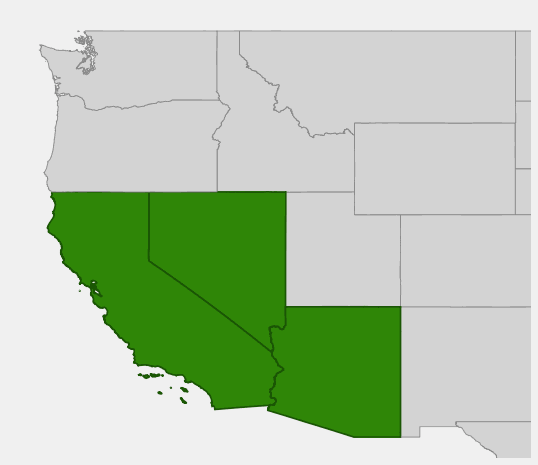
Common sunflower is native to North America, but authorities disagree about its original state-level distribution. The map below deliberately follows the narrow current Kew list for the United States: Arizona, California and Nevada. Kew also includes parts of Mexico. This is not a map of all places where the species grows, nor a claim that every other authority agrees.
Utah State University publications list <em>Helianthus annuus</em> among Utah native plants, and the USDA GRIN treatment presented by the Australian Pastures Genebank lists a far broader North American native range, including Utah and Colorado. These are genuine source differences, not evidence that a familiar plant should suddenly be described as an invasive species. For formal restoration, use the relevant local flora and project standard.
The species occupies open disturbed ground, roadsides, fields and similar sunny sites, and it is cultivated or escaped in many other regions. In garden planning, separate three questions: whether the species is accepted as native locally, whether the seed lot is local wild material, and whether the site can accommodate a vigorous reseeding annual. None of those questions is answered by a national occurrence map alone.
📋 Regional plant list: Utah & Western Colorado
Growing & Care Guide
Choosing seed
Decide whether the goal is native habitat, cut flowers or edible seed before buying. For habitat, select documented wild-type material suitable to the region. For a children’s growing project, an identified garden cultivar may be appropriate, but label it honestly. Avoid sowing an unknown birdseed mixture as a restoration seed source because origin, variety and accompanying species may be unknown.
Preparing the site
Choose a sunny area where tall growth will not shade small neighboring plants or obstruct a path. Remove competing weeds and prepare enough bare soil for seedlings to establish. Do not place the row immediately against a wall if mature branches and heads will lean into it. Consider the direction of prevailing wind and access for thinning before seed is sown.
Sowing
Direct sowing after local frost danger has passed is a straightforward approach for cultivated garden seed. Use the packet’s depth and spacing instructions, because wild and large-seeded cultivated lots differ. Keep the seed zone moist while germination occurs. Where birds repeatedly remove seed, a temporary protective cover can help, but remove or adjust it promptly as seedlings grow.
Thinning and transplanting
Thin crowded seedlings early so retained plants can develop sturdy stems. It is tempting to keep every seedling, but a dense cluster often produces weaker individual plants and more difficult maintenance. If using nursery starts, choose young plants before their taproots become tightly confined and transplant with minimal root disturbance. Water them in and monitor the root zone rather than only the surface.
Water
Established sunflower can tolerate periods of dry soil, but prolonged drought reduces size and flowering. Water deeply enough to reach the active roots when the soil dries, allowing drainage between applications. Frequent shallow sprinkling is inefficient for a tall taprooted annual. In heavy soil, avoid keeping the base continually wet simply because the upper leaves look wilted during a hot afternoon.
Soil and nutrients
A reasonably fertile well-drained soil is sufficient for a garden planting. Excess fertilizer can produce lush growth that needs more support, and it is unnecessary for every wildflower bed. Use a soil test when nutrient deficiency is suspected instead of adding a strong feed on a calendar. Preserve the difference between a low-input habitat planting and a crop managed for maximum seed yield.
Supporting tall plants
Place tall cultivars or vigorous branching plants where wind exposure is manageable. If support is needed, install it before the plant is large enough to be damaged during staking. Use ties that do not cut into thickening stems. A broken main stem can alter flowering, so prevention is easier than trying to brace a heavy head after it begins to fall.
Managing volunteers
Seedlings may return wherever mature heads shed fruit. Keep the ones that fit the design and remove extras while small. In a compact bed, leave only selected heads to mature if self-sowing becomes excessive. Native or regionally accepted plants can still behave vigorously in cultivation; managing numbers is not the same as labeling the species invasive.
Pests and leaf disease
Some chewing is compatible with a wildlife garden. Check whether damage is minor or whether seedlings are being completely lost before deciding on intervention. Good spacing and watering at the soil surface can reduce conditions favorable to leaf disease. Remove badly affected debris where necessary, but do not routinely spray open flower heads that bees are visiting.
End-of-season care
Leave sound seed heads for birds if that is a goal, and retain useful standing stems where they will not obstruct access. If collecting seed, take only a portion and dry it thoroughly before storage. Plants die after completing their annual cycle; brown stems at the end of the season are not evidence that winter protection was missing.
Landscape Uses
- Branching wild-type sunflower works well as a temporary vertical element while slower perennial plantings establish. Give it a defined zone so it does not overwhelm small seedlings. Its coarse foliage and repeated yellow heads suit meadow edges and informal gardens better than a tightly clipped border.
- A sunflower patch can make pollination and seed development easy to observe. Watch the changing disk, the different insects visiting it, and the transition from flowering to bird feeding. The plant is tall enough for observation without crouching, but pathways should remain wide enough that viewers do not have to push through stems.
- If edible seeds are the primary aim, choose a food cultivar and follow appropriate crop guidance. That is a different design decision from conserving wild sunflower genetics. Keep seed-saving records, since open pollination among nearby cultivated and wild forms can change the next generation.
Wildlife & Ecological Value
Bees and pollen
Open disk flowers provide pollen and nectar to visiting insects. Wild-type or otherwise pollen-bearing forms are preferable when pollen collection is an explicit goal. A colorful pollenless cutting cultivar should not be assumed equivalent simply because it still looks like a sunflower.
Birds and mature seeds
Maturing heads are attractive to seed-eating birds, which may work them while still standing. Leave enough stems and heads to support that use, or accept that a planned human harvest will be shared. A pesticide-free planting and nearby cover make the setting more useful than an isolated head alone.
Seasonal continuity
Sunflower is one component of a habitat garden, not a complete year-round resource. Combine it with locally native plants that bloom earlier and later, plus structural plants that remain after the annual dies. Manage vigorous sunflower seedlings so they do not replace that diversity.
Cultural & Historical Uses
Indigenous peoples domesticated sunflower long before it became a global crop. Selection changed seed size and plant form, eventually producing the large-seeded cultivated plants familiar today. The agricultural story should be credited to those long histories rather than beginning with modern European or North American commercial production.
Later movement and breeding spread sunflower far beyond its original range. That history helps explain why modern floras can differ in how they classify long-established populations. A garden guide can acknowledge the uncertainty without pretending that an introduced crop occurrence and a documented wild population are interchangeable.
The familiar idea that every mature sunflower head follows the sun all day is oversimplified. Young developing plants show directional movement, whereas mature flowering heads commonly maintain an eastward orientation. Observing the same plant at several stages is more informative than treating a field of mature heads as a moving compass.
Frequently Asked Questions
Will the same plant return next year?
No. This is an annual. New plants may appear from shed seed, but they are a new generation rather than the old root system returning.
Is common sunflower native to Utah?
Utah State University includes it among Utah natives, while Kew uses a narrower global treatment. For restoration, follow the local flora and project requirements; the range discussion explains the disagreement.
Are giant sunflowers the wild form?
Usually not. Giant single-headed plants are selected cultivars. Wild forms generally branch and carry multiple smaller heads.
Should I remove spent heads?
Remove them if controlling self-sowing is the priority. Leave some if birds and seed production are priorities. A mixed approach works well in small gardens.
Why choose a pollen-bearing variety?
Pollen-collecting bees need pollen. Some cutting cultivars are intentionally pollenless, so appearance alone does not establish equivalent pollinator value.
Sources & Further Reading
- NC State Extension: common sunflower care and identification
- USDA NRCS: annual sunflower plant guide
- Kew: current narrow native distribution
- USU: gardening with native plants
- GRIN taxonomy via Australian Pastures Genebank: broader distribution
- South Dakota State University: native plant account
Find Native Plants
Ask growers about nursery propagation and regional provenance. Browse our UT native plant nurseries, CO native plant nurseries directory for suppliers. Explore the native nursery finder.