Harriman’s Yucca (Yucca harrimaniae)
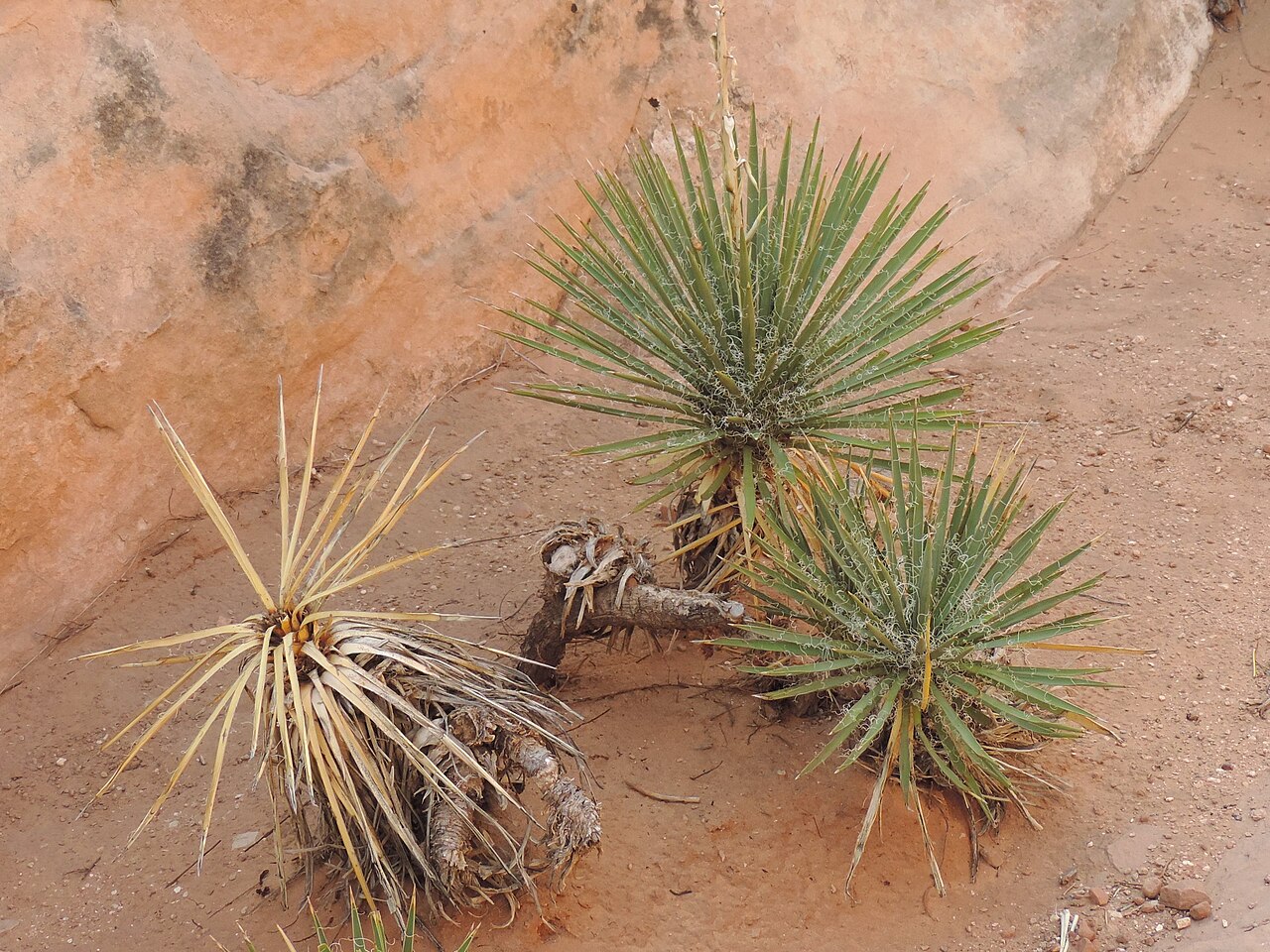
Harriman’s yucca is a compact, tough-looking plant of the interior West. Rigid pointed leaves form low rosettes, their margins often decorated with loose curling fibers. Cream-colored flowers are carried on a comparatively short stalk: unlike some taller yuccas, the lowest blossoms may remain among the leaves. Its distinctive proportions suit open dry landscapes, but the pointed foliage deserves thoughtful placement away from paths.
The name Yucca harrimaniae must be used carefully. Western yuccas have been treated differently by different authors, and photographs labeled with an older broad name may represent a segregate species. This guide follows the species rather than combining New Mexico yucca or the geographically restricted Yucca sterilis into a single garden plant. The selected images show documented Utah plants, not photographs explicitly labeled with those segregate names.
For Utah and western Colorado gardens within its native region, Harriman’s yucca can provide persistent structure where drainage and exposure fit. Native does not mean suitable for every bed: a cool irrigated lawn border or water-collecting clay depression is unlike the open habitats in which this species is normally found. Plan around the adult rosette and sharp leaf tips, not just the small container seen at purchase.
Identification
Growth Habit
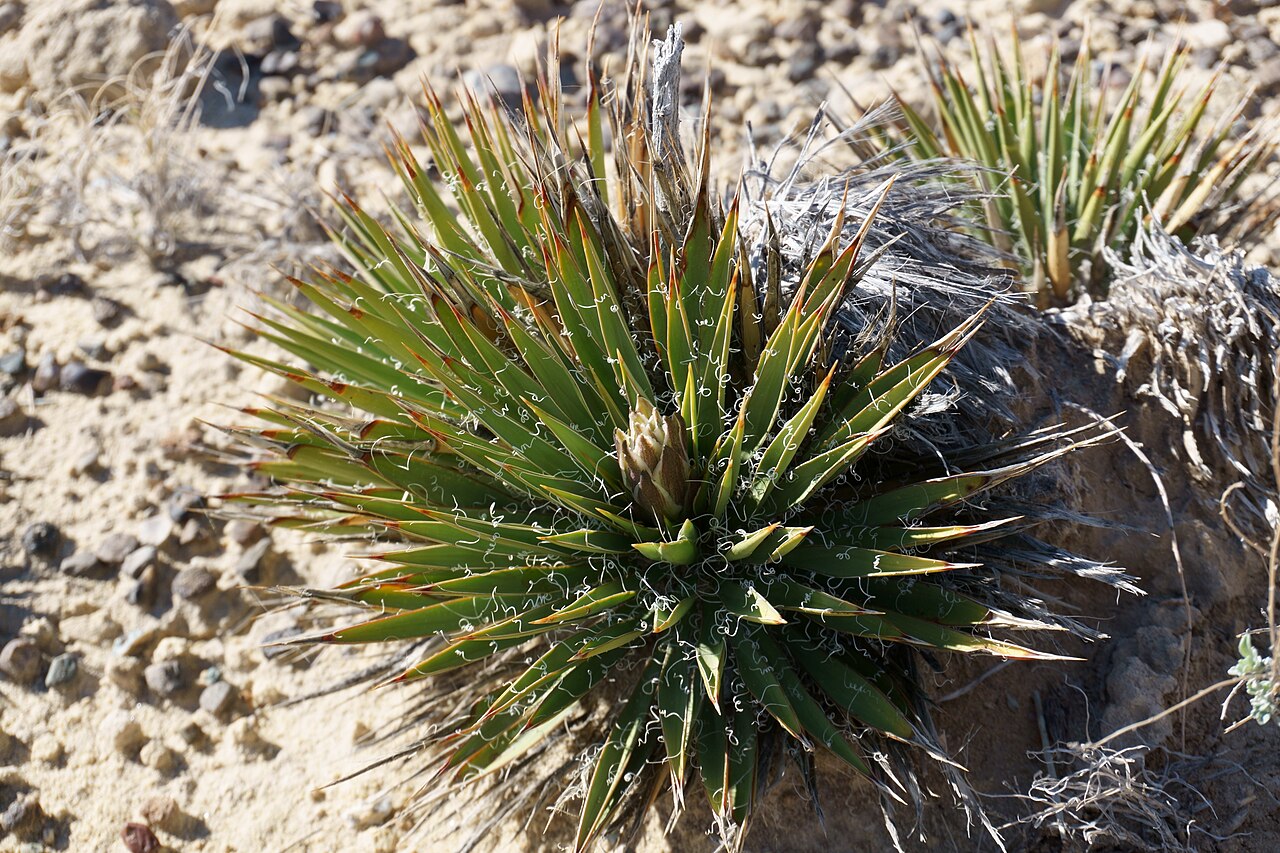
Plants form one or several basal rosettes without an obvious tall trunk. Utah Valley University describes clumps ranging from one to numerous rosettes. The overall outline is low and substantial, with leaves projecting outward and upward. Old leaves can remain around the base; their persistence does not necessarily indicate a failing plant.
Leaves
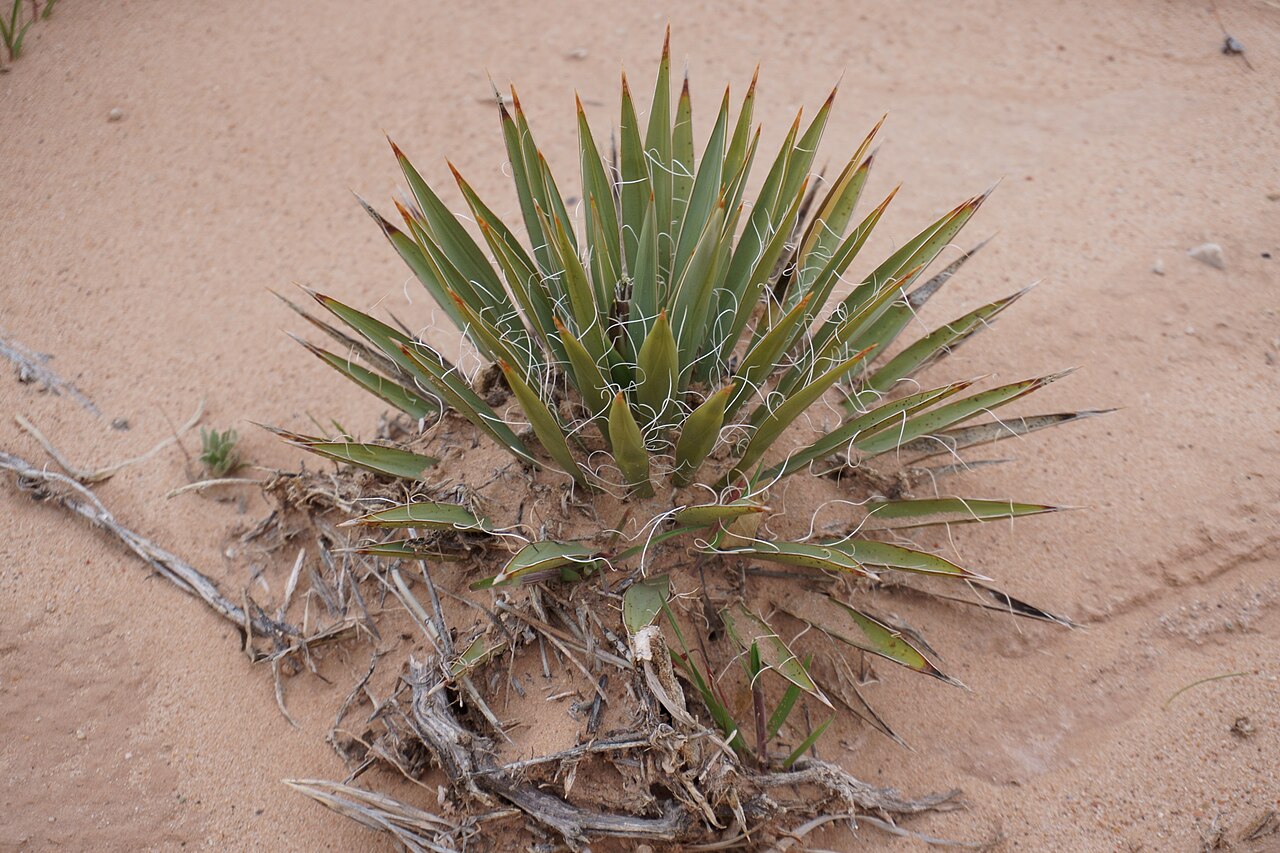
Leaves are thick, rigid and sharply tipped, approximately 10–50 centimeters long in the botanical description. Width varies, and the margins may bear conspicuous curling fibers. A close examination should be made without bringing eyes or hands near the points. Leaf width alone is not a reliable species determination; use the inflorescence, location and a regional key together.
Flowers
Broad, pendant, cream-colored flowers may show purple tinges. A characteristic feature is the short inflorescence, described around 35–70 centimeters tall, with lower flowers often within the leaf canopy. The included developing-stalk photograph records that structure before full flowering. Mature floral measurements should come from botanical descriptions, not guesses based on an immature bud photograph.
Fruit & Similar Species
The dry capsule can be constricted along its length. Narrowleaf yucca, Yucca angustissima, typically carries its lowest flowers clearly above the leaf tips and can have a much taller stalk. New Mexico yucca has been separated using morphological and genetic evidence. In places where related species occur, verify a specimen with a local flora rather than identifying every low yucca as Harriman’s yucca.
Quick Facts
| Scientific Name | Yucca harrimaniae |
| Family | Asparagaceae |
| Plant Type | Evergreen, stemless or nearly stemless rosette perennial |
| Mature Height | Leaves usually about 1–2 ft; flowering stems roughly 1–2.5 ft |
| Mature Spread | Variable clump of rosettes; allow room for sharp leaf tips |
| Growth Rate | Slow; establishment depends on site and stock |
| Sun Exposure | Full sun in an open site |
| Water Needs | Low after establishment; avoid prolonged saturation |
| Soil Type | Freely draining mineral soil; rocky or sandy settings suit its habitat |
| Soil pH | Use locally appropriate mineral soil; a narrow pH requirement is not established here |
| Bloom Time | Spring to early summer, varying with elevation and weather |
| Flower Color | Cream to greenish white, sometimes purple-tinged |
| Fall Color | Persistent green leaves; older foliage dries at the base |
| Fruit | Dry capsule |
| Deer Resistant | Rigid pointed leaves deter casual browsing, but no plant is guaranteed browse-proof |
| USDA Hardiness Zones | Choose locally proven stock; cold tolerance varies with provenance and drainage |
Native Range
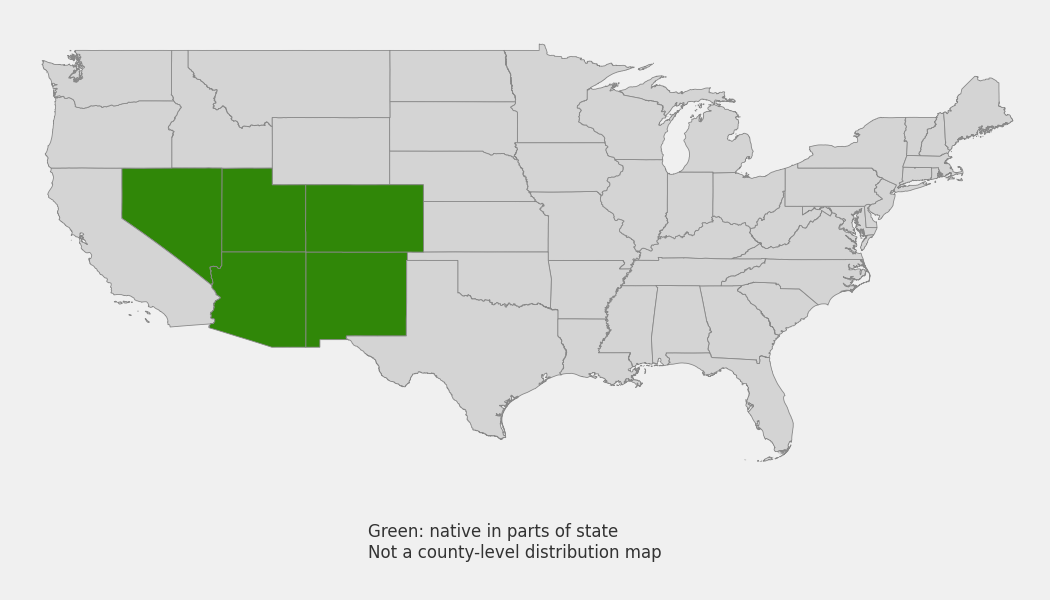
Harriman’s yucca is an interior western native. The National Park Service’s Curecanti account lists Arizona, Colorado, New Mexico, Nevada and Utah. These five states are shaded on the map as a broad geographic summary, not as a claim of continuous occurrence throughout each state.
Utah Valley University places the species in desert shrubland, grassland, sagebrush, pinyon-juniper woodland and mountain-brush communities, at approximately 1,000–2,700 meters elevation. That range covers substantial differences in winter cold and summer moisture. A plant from one end of it is not automatically the best choice for a restoration site at the other end.
Taxonomic boundaries matter especially along the edges of this range. Yucca neomexicana is treated separately in the botanical account used here; older records under a broad harrimaniae name need interpretation before they become planting advice. The map follows the species-level regional sources cited below and does not add states merely because a related yucca occurs there.
📋 Regional plant list: Utah & Western Colorado native plant list
Growing & Care Guide
Light
Choose an open sunny position. The compact rosette is adapted to exposed landscapes, not a dim forest understory. A plant squeezed beneath dense shrubs may be difficult to inspect and may remain damp longer after rain. Consider the full seasonal shade pattern before planting; the sunny gap beside a young tree can close as the canopy matures.
Soil & Water
Drainage is the first practical requirement. Avoid a depression that collects irrigation or roof runoff. Water a newly installed plant enough to settle the root ball and support establishment, then adjust according to weather and actual soil moisture. Do not interpret low water needs as permission to let a small container root ball dry completely before roots reach surrounding soil.
Planting Tips
Use nursery-propagated, correctly identified stock rather than removing a slow-growing wild rosette. Plant with the crown at its previous level and keep heavy mulch away from the leaf bases. Leave clearance from walkways, play areas and places where people bend to work. Gloves help with handling, but they do not make the pointed leaves harmless.
Pruning & Maintenance
Do not shear the green leaves into a ball or cut off all their tips. Remove a spent stalk or damaged material only when it is accessible without injury. Some old dry leaves are normal; a soft, collapsing center suggests a different problem that needs investigation. Tools and protective clothing are preferable to pulling sharply fibrous leaves by hand.
Propagation
Propagation should preserve correct identification and locality information. Seed-grown plants can be useful where the seed source is documented; offsets, where available from cultivated stock, retain the parent identity but still need careful handling. Do not assume every yucca seed packet sold under an old variety name belongs to this species. A specialist regional nursery can explain its propagation method and source.
Seasonal Care
Check winter drainage as carefully as summer irrigation. Snowmelt collecting at the crown can create conditions very different from a freely draining natural slope. In summer, avoid automatically including the plant in the frequent watering schedule for nearby annuals. Inspect after unusual weather, but do not fertilize or water heavily simply because flowering is absent in a particular year.
Pests & Common Problems
A struggling plant should first be checked for burial, saturation, root disturbance and incorrect placement. Brown outer leaves are not the same as rot at the growing point. Identify an insect before treating it: yuccas participate in specialized pollination relationships, and indiscriminate spraying can remove beneficial visitors along with a suspected pest. Use a local diagnostic service for uncertain damage.
Landscape Uses
- A structural accent in a sunny, freely draining native dry garden
- A low evergreen element among locally appropriate grasses and shrubs
- A regional habitat planting using documented local stock
- An educational planting demonstrating rosette form and specialized pollination
- A rocky slope planting positioned safely away from pedestrian contact
Wildlife & Ecological Value
Pollination
Yuccas are well known for specialized associations with yucca moths. The relationship involves pollination and seed development, not simply a generic promise of abundant nectar. Do not describe this species as a nectar feeder for every moth species. Protecting an intact flowering plant and avoiding unnecessary insecticide use are more defensible garden actions than promising a particular pollinator will arrive.
Habitat Structure
The rosette creates a persistent physical feature near the ground. In a diverse native planting it contributes a form unlike grasses, low flowering herbs or woody shrubs. Its value should be considered as part of a community rather than as a replacement for many different flowering plants. Keep surrounding habitat varied while allowing the yucca enough light and space.
Native-Range Gardening
A state-level native record is only a first filter. Local elevation, substrate and plant communities provide better guidance for a habitat project. Buying a plant with a documented source helps avoid mixing superficially similar taxa, especially when the nursery trade uses older names. An attractive photograph from another western state is not by itself proof of a local restoration match.
Cultural & Historical Uses
The species name commemorates Mrs. Harriman. Utah Valley University recounts that William Trelease encountered the plant near Helper, Utah, after the Harriman Alaska expedition, when the returning party’s train was delayed. The name therefore connects an interior western plant with a journey better known for its northern destination.
Yuccas have a broad history of practical use, including fibers and other materials, but genus-wide accounts should not be casually assigned to this particular species. The regional source discusses several yuccas and traditional applications; those distinctions matter. This guide does not turn that history into a food or medicinal preparation, and the presence of a wild plant is not permission to collect it.
Modern botanical work has also changed how some related western plants are classified. Keeping labels, photographs and sources attached to a cultivated plant makes future corrections possible. For gardeners, the immediate lesson is straightforward: record the full name and origin, not just “yucca,” and retain that information when sharing propagated plants.
Frequently Asked Questions
Is Harriman’s yucca native to Utah?
Yes. Utah is a core part of the range described by the regional botanical sources, but choose stock and conditions appropriate to your locality.
How tall does it grow?
The leaf rosette is usually around 1–2 feet high. The cited botanical description gives flowering stems about 35–70 centimeters, with variation among plants.
Why are its flowers so low?
A short flowering stalk with lower flowers among the leaves is an important identification feature. It helps distinguish this species from some taller-stalked western yuccas.
Can I plant it beside a narrow path?
Leave generous clearance. The rigid pointed leaves can injure people or animals brushing against them, especially when the plant is larger than its nursery size.
Does it need a lot of water?
Established plants are adapted to dry settings, but new plants still need establishment care. Drainage and avoidance of chronic saturation are essential.
Is every dwarf yucca this species?
No. Several yuccas can form low rosettes, and taxonomic treatments differ. Check the complete botanical name, flowering structure and source.
Are Yucca neomexicana and Yucca sterilis included here?
No. Photographs explicitly assigned to those segregate taxa were excluded from this guide.
Should I remove a plant from the wild?
No. Obtain nursery-propagated stock and retain its identification and provenance information. Wild removal can damage both the plant and its habitat.
Sources & Further Reading
- Utah Valley University Capitol Reef Field Station
- National Park Service — Curecanti native plants
- Kew Plants of the World Online
- USDA PLANTS
Find Native Plants
Ask growers about nursery propagation and regional provenance. Browse our UT native plant nurseries, CO native plant nurseries directory for suppliers. Explore the native nursery finder.