Dull Oregon Grape (Berberis nervosa)
Dull Oregon grape is a useful evergreen layer beneath a Pacific Northwest woodland canopy. Long compound leaves rise from low stems, small yellow flowers appear in upright clusters, and blue fruit follows later in the season. The plant is widely known as Mahonia nervosa; Kew’s current treatment accepts Berberis nervosa. Both names refer to the same species in this guide.
This is not tall Oregon grape and should not be confused with the smaller-leafleted creeping Oregon grape, Mahonia repens. The legacy regional table used “Creeping Oregon Grape” for M. nervosa, a common-name mismatch that can lead to the wrong nursery purchase. Here the low woodland species is called dull Oregon grape, also known as Cascade Oregon grape or longleaf mahonia.
The usual garden height is about 1–2 feet, although botanical accounts include both lower plants and unusually tall specimens. It spreads gradually through underground stems and can make an enduring patch rather than a rigid individual mound. Part shade or shade with adequate establishment moisture is a sensible garden starting point; habitat tolerance is broad, but a wet bog and a dry exposed gravel bed are not equally appropriate defaults.
Identification
Stems & Growth Habit
Short upright or ascending stems carry leaves in terminal groups. Underground rhizomes allow the patch to expand laterally over time. The leaves can make the plant look taller or fuller than its short woody stems suggest. In a woodland, observe several connected shoots to understand its colonial habit rather than treating every leaf cluster as an independent seedling.
Leaves
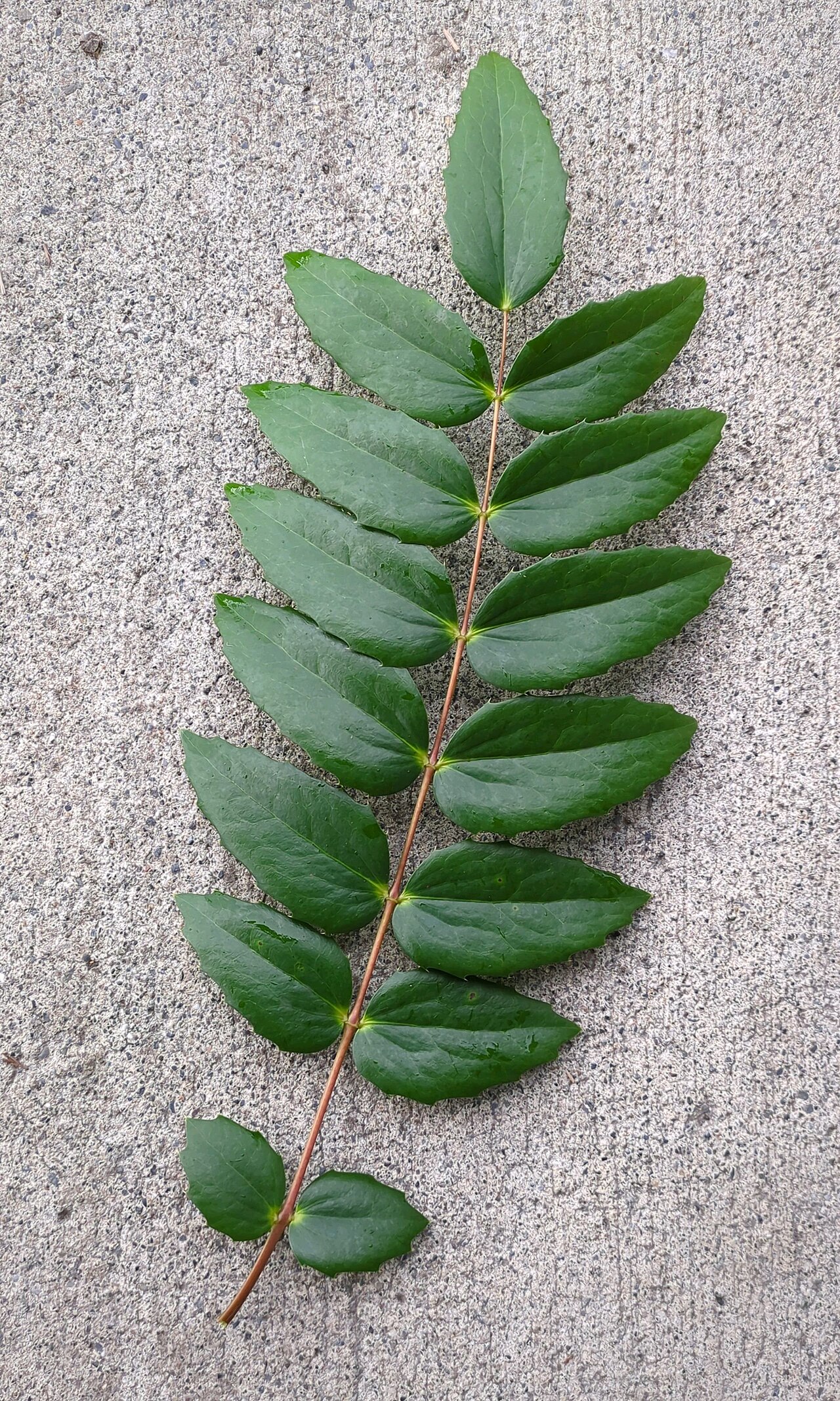
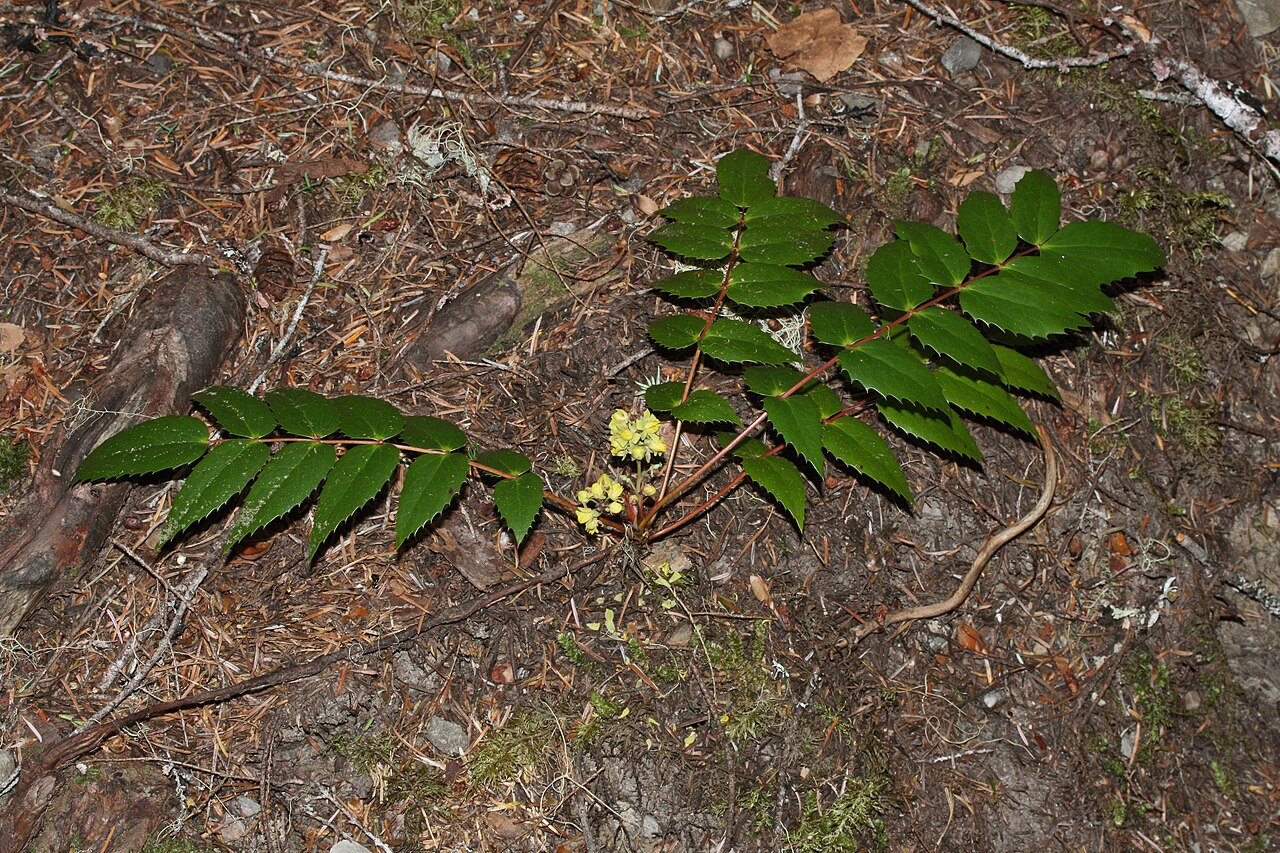
Each long leaf is divided into numerous leathery, spine-toothed leaflets, commonly around 11–21 in garden descriptions. The photograph of a leaf laid out on a surface shows an entire compound leaf, not one leaflet. Veins are conspicuous, and winter conditions may bring purple or bronze tones. Count leaflets and assess the whole growth habit when comparing this species with other Oregon grapes.
Flowers
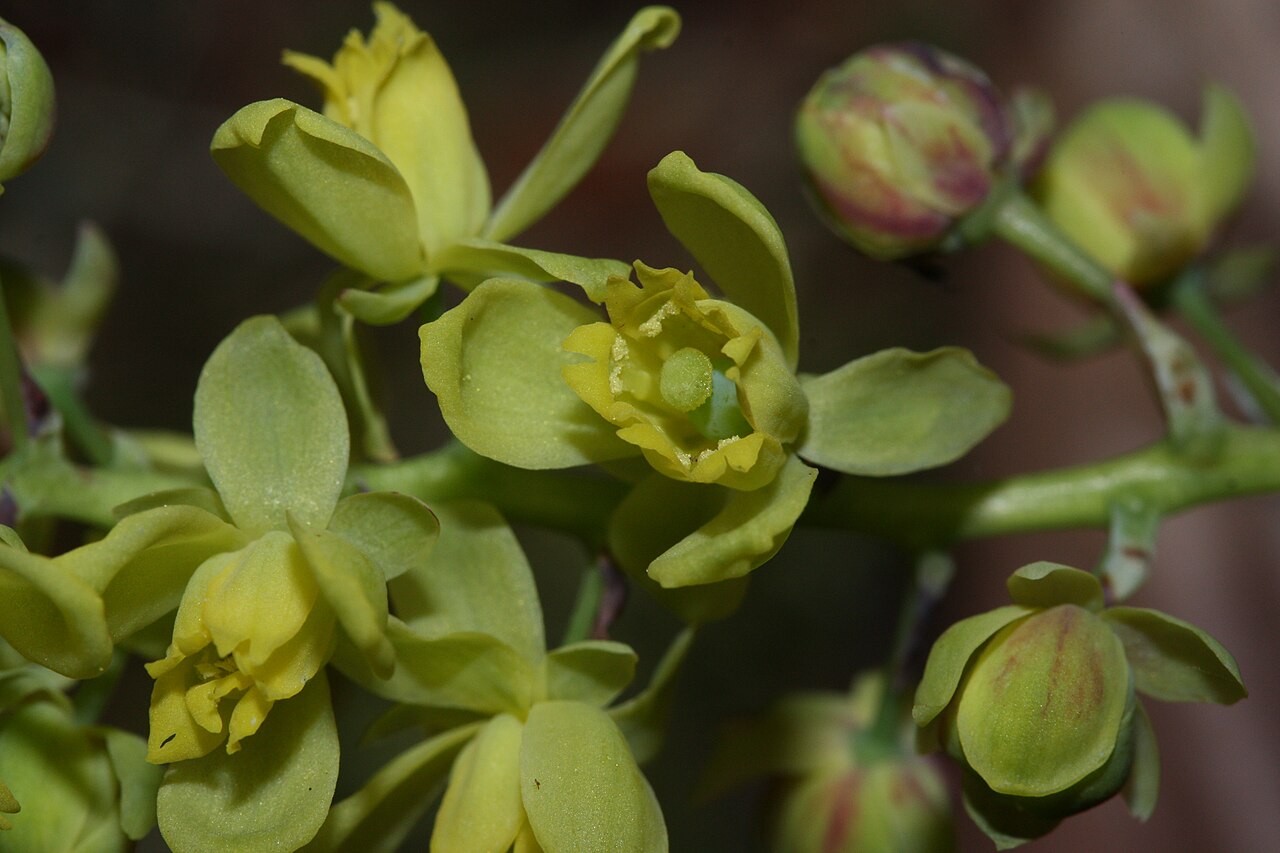
Small yellow flowers are grouped in upright elongated clusters. The individual blooms are much smaller than the overall display. Flowering is generally in spring, with timing affected by elevation and local climate. A close-up is useful for appreciating the flowers, but the compound leaves and low habit provide stronger context for distinguishing the species from related shrubs.
Fruit & Seeds
Clusters of blue berries with a waxy surface follow successful flowering. They are not true grapes: the plant is in Berberidaceae, not the grape family. Fruit development and abundance vary with site and season. Leave berries for wildlife where that is a planting goal, and avoid stripping a small patch simply because its common name sounds like a familiar cultivated crop.
Quick Facts
| Scientific Name | Berberis nervosa; synonym Mahonia nervosa |
| Family | Berberidaceae |
| Plant Type | Low broadleaf evergreen shrub; rhizomatous |
| Mature Height | Usually about 1–2 ft; botanical extremes vary |
| Mature Spread | Gradually widening colony; not a fixed single-stem width |
| Growth Rate | Slow to moderate in a garden |
| Sun Exposure | Part shade to shade; more sun possible on suitable moist sites |
| Water Needs | Average moisture; established woodland plants tolerate some seasonal dryness |
| Soil Type | Woodland soil; favor drainage and organic surface cover |
| Soil pH | Broad tolerance documented; local soil conditions are best guide |
| Bloom Time | Spring; roughly March–June by locality |
| Flower Color | Yellow |
| Fall Color | Evergreen; purple/bronze winter tones possible |
| Fruit | Blue berries with a waxy coating |
| Deer Resistant | Variable; do not assume complete resistance |
| USDA Hardiness Zones | Hardy to about zone 5; local climate and provenance matter |
Native Range
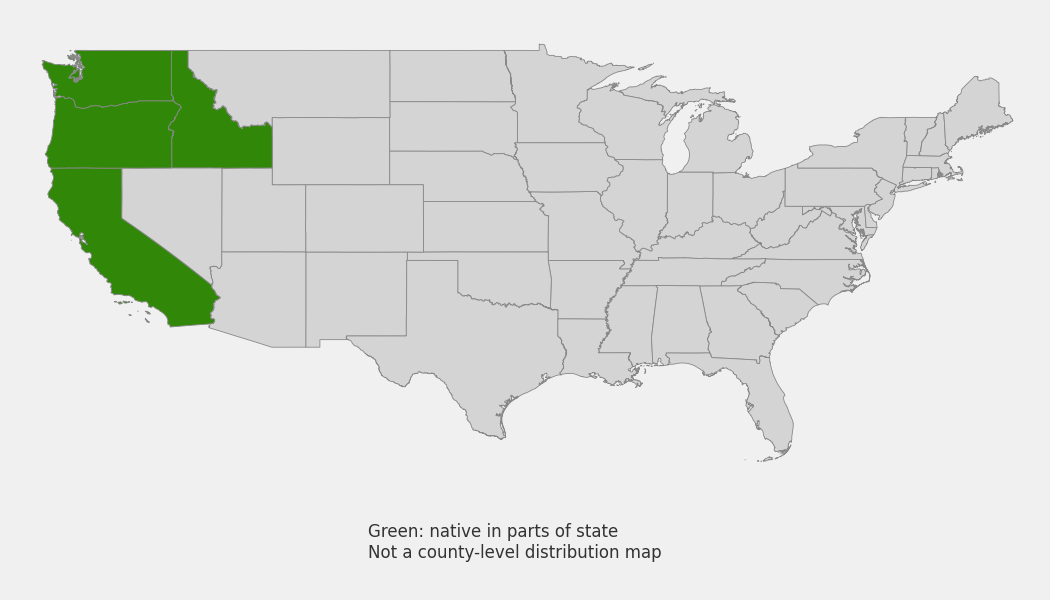
Dull Oregon grape is native to the Pacific Northwest and adjoining western regions, from southern British Columbia through Washington and Oregon into California. The Forest Service species review and Oregon State account also include Idaho. This map shades California, Oregon, Washington and Idaho; it does not mean that every habitat within those states supports the species.
Its strongest habitat association is with forest understories and related openings. Douglas-fir, western hemlock and other conifer-dominated settings can contain substantial patches, and it also occurs in several mixed evergreen and coastal forest communities. That breadth explains why one garden description may emphasize shade and moisture while an ecological account includes comparatively dry forest sites.
The mapped range is for Berberis nervosa, not for all Oregon-grape species combined. Tall Oregon grape and creeping Oregon grape have different distributions and growth habits. For habitat restoration, match a regional source with local records and site conditions; for an ornamental woodland garden, the same distinction still prevents buying an unexpectedly tall or ecologically mismatched plant.
📋 Regional plant list: Oregon & Washington native plant list
Growing & Care Guide
Light
Start with part shade or shade that resembles a forest understory. A site receiving some morning light may show flowers and foliage well without the drying stress of a hot exposed afternoon. Plants can tolerate more sun under suitable conditions, but moving a shade-grown nursery plant directly into intense summer exposure is a poor establishment strategy.
Soil & Water
Keep a new root ball moist while it establishes. Afterward, irrigation can be adjusted to weather, soil depth and shade rather than applied as a permanent high-water regime. A leaf-litter surface helps maintain the woodland setting. The ecological literature records broad soil tolerance, but that is not a reason to place the plant in a chronically flooded basin or to ignore compaction.
Planting Tips
Choose nursery-propagated plants labeled nervosa, whether the genus is written Mahonia or Berberis. Set them at the same crown level as in the container and give the eventual patch room to spread. Avoid burying short stems beneath heavy mulch. In a mixed planting, allow enough distance from very small woodland herbs that the evergreen leaves do not completely shade them out.
Pruning & Maintenance
Routine shearing is rarely necessary. Remove badly damaged leaves or stems selectively while retaining the naturally layered structure. Where a colony reaches a path, manage the edge rather than cutting every stem to one height. Wear gloves around the spine-toothed leaflets. Check first whether a bare patch reflects browsing, drought, trampling or competition before using fertilizer as a general remedy.
Propagation
The species can reproduce from seed and from vegetative growth. Rhizome-based propagation preserves a parent’s traits, while seed brings variation and may require a suitable dormancy treatment. Germination reports vary, so use a reliable species-specific protocol and record the seed’s handling history. Do not dig woodland colonies for landscaping; nursery production provides plants without damaging the source habitat.
Landscape Uses
- Evergreen ground-layer structure in a Northwest woodland garden
- A slowly expanding patch beneath compatible trees
- Low planting beside a shaded path with room for leaf spread
- A companion to ferns and other suitable forest-understory plants
Wildlife & Ecological Value
For Pollinators
The spring yellow flowers add a floral resource to a woodland planting. Their small size does not diminish their role for visiting insects. Combine the shrub with other native flowers across the growing season and avoid treating it as a complete pollinator garden by itself. Observing local visitors is more useful than assuming every named insect will occur at every site.
Birds
The blue fruits contribute to the food resources of a diverse planting, while the evergreen patch provides low cover. Berry abundance is seasonal and can vary, so pair it with other appropriately sized fruiting and seed-producing natives. Allowing natural fruit retention is a straightforward management choice where wildlife value takes priority over tidiness.
Mammals
Browsing varies with place and season; leathery leaves are not an absolute defense. A young planting may need protection even where established forest patches persist. The dense low structure also contributes habitat complexity. This guide does not turn a historical use of berries or roots into a general recommendation to feed the plant to people or pets.
Ecosystem Role
Rhizomatous persistence helps this shrub remain part of a woodland through changing canopy conditions and some disturbances. Forest Service accounts discuss resprouting, but those observations are ecological information, not a garden prescription for burning. Preserve the soil and existing roots when working around a patch, and keep disturbance proportionate to the maintenance task.
Cultural & Historical Uses
The two scientific names reflect differing generic treatments within the barberry family. Oregon State and the USDA species review commonly use Mahonia nervosa, while Kew accepts Berberis nervosa. Recording the synonym in a nursery order or garden inventory makes these references interoperable without creating a duplicate species.
The common name Oregon grape refers to the fruit’s superficial resemblance to grapes. The Forest Service review records traditional use of the plant by Pacific Northwest peoples, but such accounts belong to specific cultural contexts and should not be reduced to an unsourced recipe. This guide does not recommend medicinal preparation, dosage or harvesting roots from wild populations.
In contemporary native gardening, the plant is valuable because it makes a durable low evergreen layer rather than demanding attention only when in flower. A labeled specimen can also teach the distinction between a leaf and a leaflet, and between a botanical synonym and a different species. Those simple distinctions prevent many common planting mistakes.
Frequently Asked Questions
Are Mahonia nervosa and Berberis nervosa different plants?
No. They are alternative scientific combinations for the species treated here. This page uses Berberis nervosa with Mahonia nervosa retained as a synonym.
Is this creeping Oregon grape?
That name often refers to Mahonia repens, a different species. Use nervosa on the label when you want dull or Cascade Oregon grape.
Will it remain a single 12-inch plant?
Not necessarily. Typical stems and foliage often reach about 1–2 feet, and rhizomes gradually extend the patch. Leave room for a colony rather than assuming a fixed pot-sized footprint.
Can it tolerate summer dryness?
Established plants in suitable woodland settings can tolerate seasonal dryness, but new plants need establishment moisture. Heat exposure, soil depth and competition strongly influence performance.
Should I prune it like a formal hedge?
Usually not. Selective removal of damaged growth and occasional edge control preserve its natural low woodland form more effectively than repeated shearing.
Sources & Further Reading
- Oregon State University Landscape Plants
- US Forest Service Fire Effects Information System
- Kew Plants of the World Online
- USDA PLANTS
Find Native Plants
Ask growers about nursery propagation and regional provenance. Browse our OR native plant nurseries, WA native plant nurseries directory for suppliers. Explore the native nursery finder.