Long-headed Thimbleweed (Anemone cylindrica)
Long-headed thimbleweed is a prairie perennial for gardeners who notice seedheads as much as flowers. Small pale blooms stand above a divided basal clump, then become slender green cylinders that gradually loosen into cottony seed. The changing texture continues well after the bright summer flowers of neighboring plants have faded. In a Dakota planting, the species can occupy an airy, dry-to-average position without demanding rich soil or constant irrigation.
Anemone cylindrica is not the large-flowered Japanese anemone of late-summer borders. It is a North American species with a quieter appearance, generally one to two feet tall and suited to open prairie, light woodland and naturalistic gardens. The upright seedheads explain both long-headed thimbleweed and candle anemone, names that are more useful after flowering than while the sepals remain fresh.
Place it where its details will be visible: beside a path, in front of taller grasses, or among other low prairie perennials. A dense wall of tall grass can hide the small flowers and shade the crown. Good placement lets the plant contribute a sequence of leaf, flower, green seed cylinder and pale winter texture rather than judging it only by the size of its blossom.
Identification
Leaves & Growth Habit
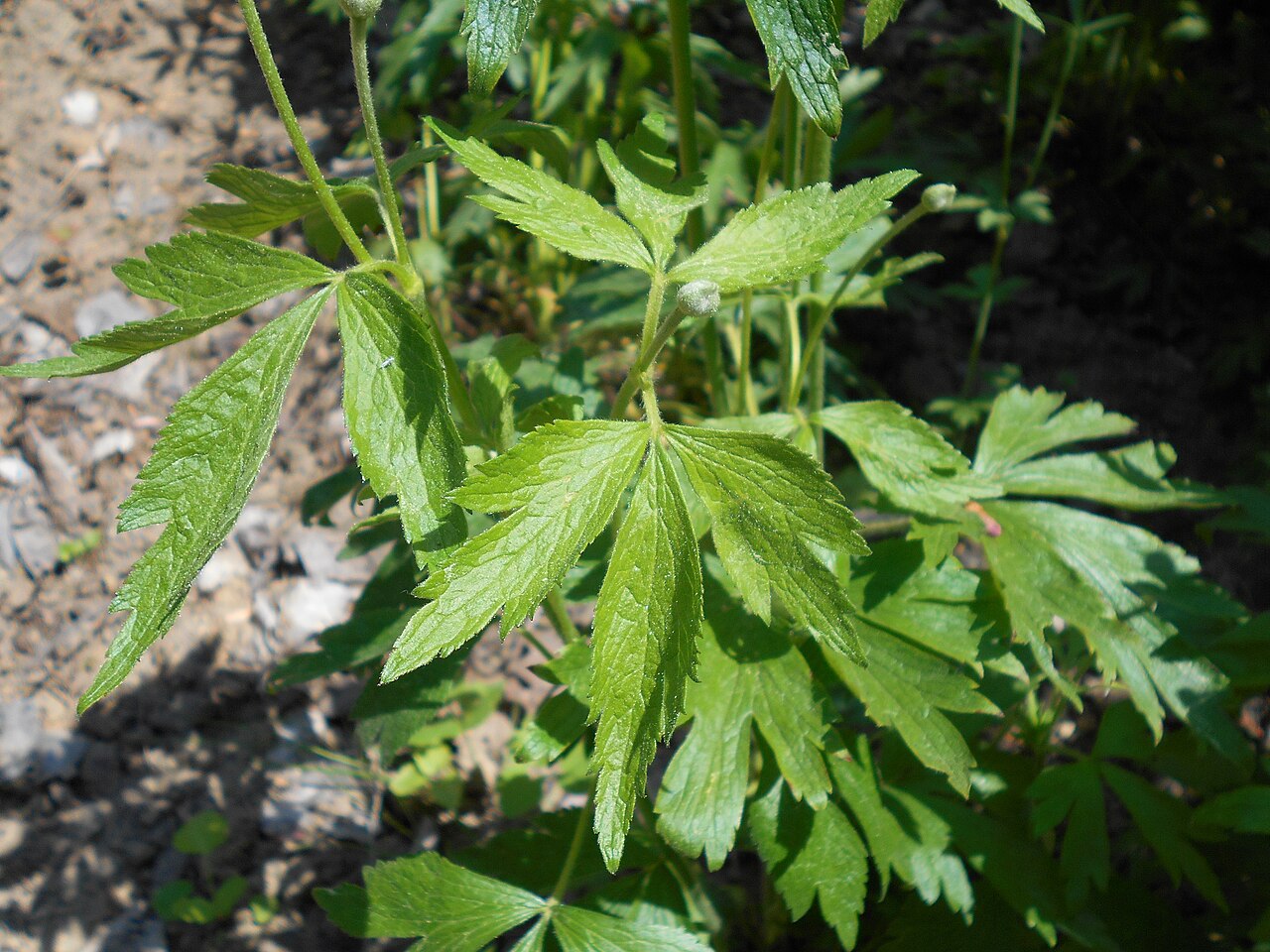
Basal leaves are divided into several toothed segments arranged around a common point. Flowering stems rise above this foliage and carry a whorl of leaflike bracts below the blooms. The whole plant has an open rather than bushy outline. When identifying an anemone, photograph both the low leaves and the leaves along the flowering stem; either view alone can leave similar species unresolved.
Flowers
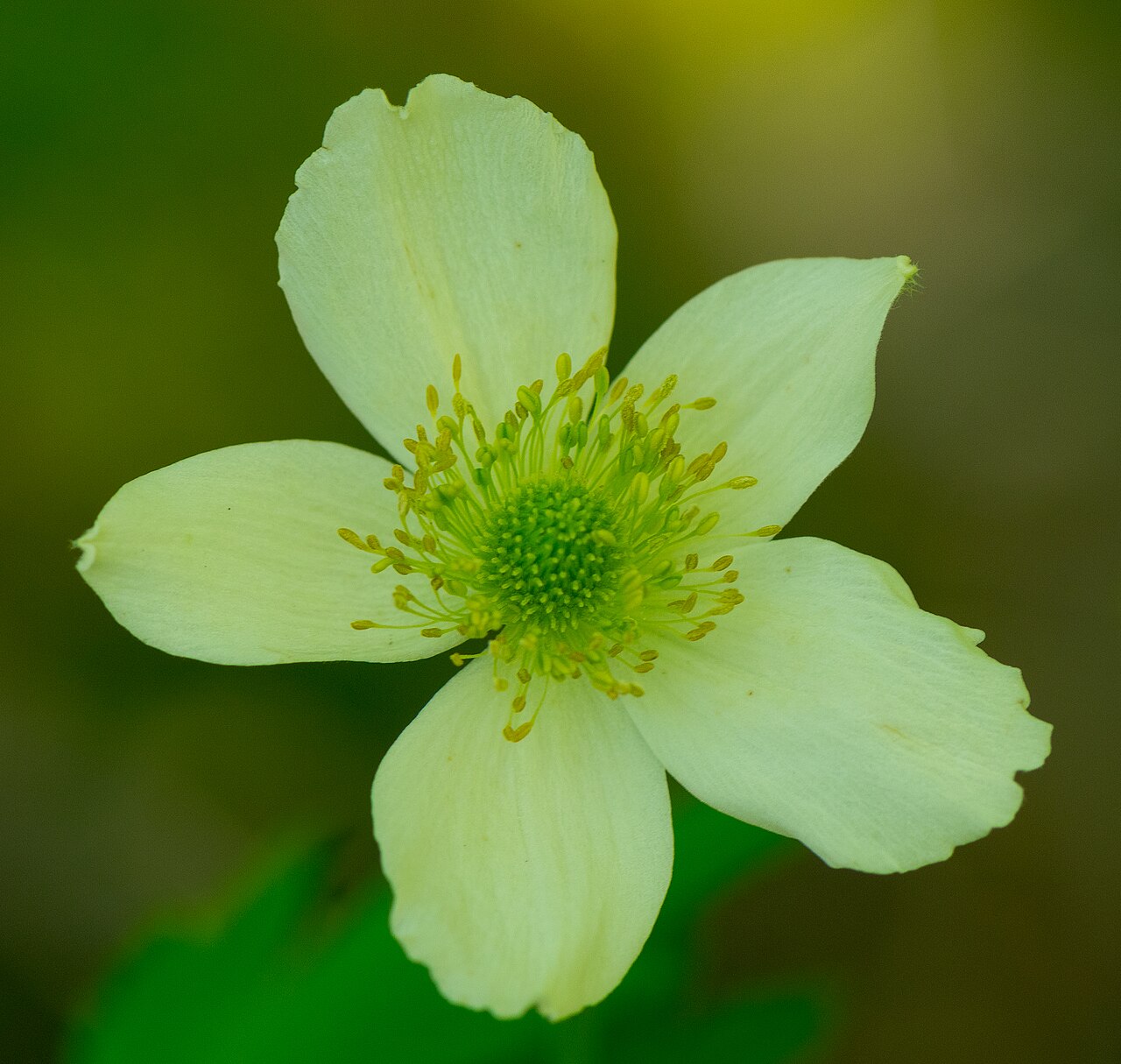
The pale structures around the center are sepals, not true petals. They may look white or greenish-white, and their restrained color blends into a prairie more than the vivid petals of neighboring coneflowers. The central cluster elongates as fruit develops. Flower color is therefore not enough to distinguish this plant from other pale-flowered native anemones.
Fruit & Seedheads
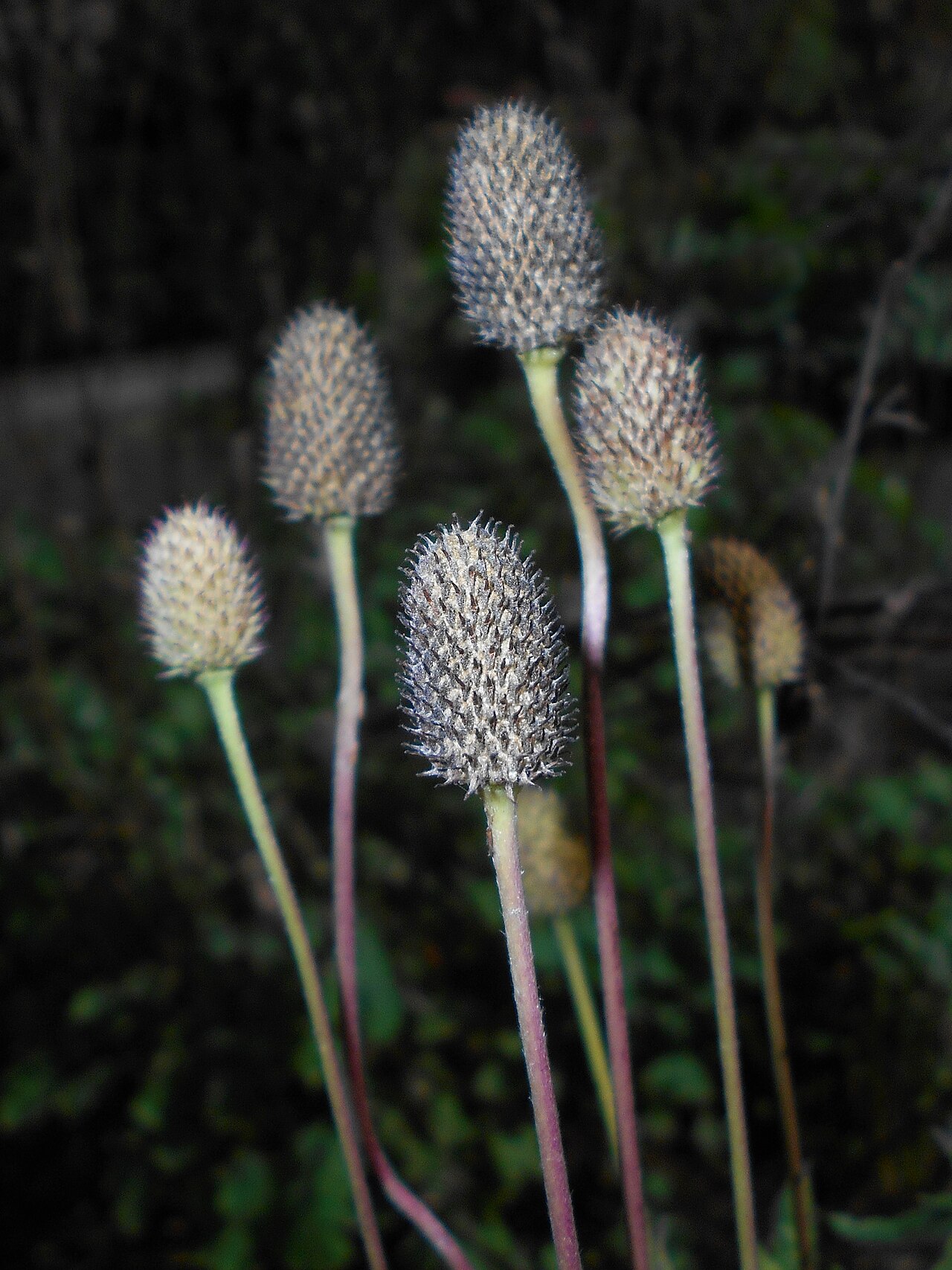
The narrow cylinder of fruits is the most memorable feature. Each small fruit is an achene bearing hairs; together they first form a firm elongated head and later a looser woolly structure. Keep several mature heads for identification instead of removing every spent flower. The seed stage also explains why a winter photograph can look dramatically different from a summer flowering plant.
Similar Species
Tall thimbleweed, Anemone virginiana, can be confused with this species. Compare the mature fruit head, bract arrangement, leaves and habitat with a regional key. Do not identify a plant from the word thimbleweed on a nursery tag alone. Canadian anemone is another distinct species and can spread more vigorously; purchasing the intended scientific name helps avoid an unexpected garden habit.
Quick Facts
| Scientific Name | Anemone cylindrica |
| Family | Ranunculaceae |
| Plant Type | Clump-forming herbaceous perennial |
| Mature Height | Usually 1–2 feet; occasionally taller |
| Mature Spread | About 1–2 feet in a mature clump |
| Growth Rate | Moderate |
| Sun Exposure | Full sun to partial sun |
| Water Needs | Dry to average moisture after establishment |
| Soil Type | Well-drained sandy, gravelly or loamy prairie soil |
| Soil pH | No narrow target; match local prairie soil |
| Bloom Time | Early to midsummer, with regional variation |
| Flower Color | White to greenish-white sepals |
| Fall Color | Brown foliage; pale woolly seedheads |
| Fruit | Elongated cylindrical heads of hairy achenes |
| Deer Resistant | Not deer-proof; protect establishing plants where browsing is heavy |
| USDA Hardiness Zones | 3–8; regional provenance matters |
Native Range
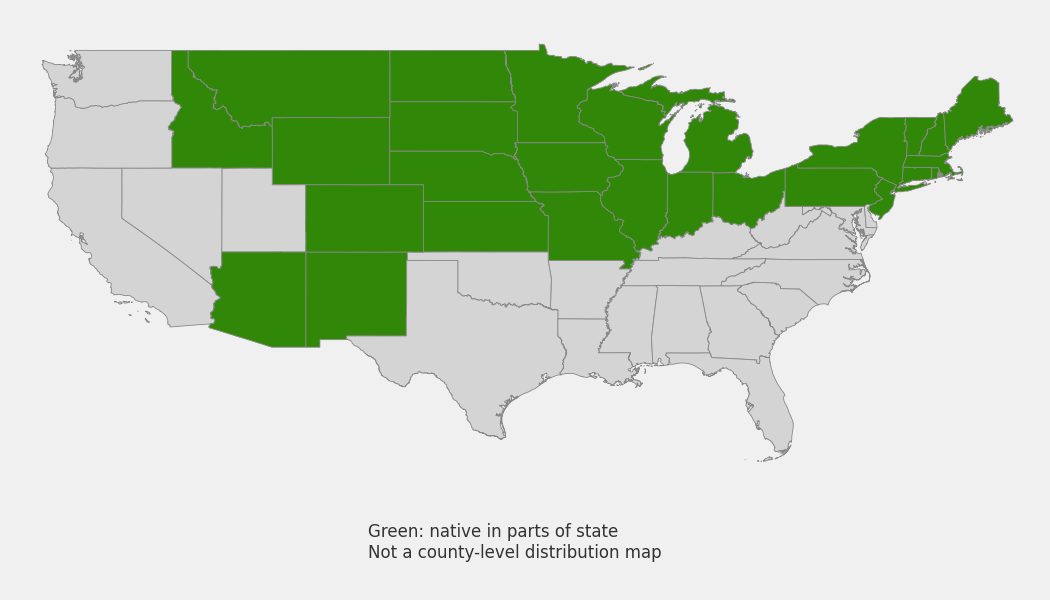
Kew documents native occurrence across much of Canada and the northern and west-central United States, reaching southwestern mountain states and parts of the Northeast. The shaded states on this map follow that native distribution. They indicate suitable natural occurrences somewhere within the state, not continuous cover or a recommendation for every soil and climate within its borders.
North and South Dakota are within the central range. Prairie, open woodland and dry openings offer the combination of light and drainage the plant needs. A wet depression in the same landscape may favor a different species. Match the individual planting position to the habitat rather than assuming that every plant listed for the Dakotas belongs in every prairie garden.
At the eastern edge, some populations are uncommon or locally restricted. Use nursery-propagated seed or plants and leave remnant wild populations intact. Seed collected from an appropriate regional source is preferable for habitat restoration, where the goal is ecological continuity rather than simply growing a species that survives winter.
📋 Regional plant list: North & South Dakota
Growing & Care Guide
Light
Full sun to partial sun is a practical starting point. In a lightly wooded opening, watch whether surrounding vegetation closes the canopy as summer advances. A site that is sunny in April can become heavily shaded in July. If stems stretch and flowering declines, consider competition and seasonal light before applying fertilizer.
Soil & Drainage
Choose a freely draining site, including modest sandy or gravelly soil. Rich compost beds are unnecessary for this prairie species and may favor larger competitors. Break up a compacted surface where needed but avoid creating a deep amended pocket in impermeable clay. The objective is a stable, aerated root zone, not maximum nutrient concentration.
Water
Water nursery plants during establishment, then adjust to rainfall and soil texture. A young plug cannot initially use the volume of soil available to an established clump. Once rooted, dry-to-average conditions are appropriate, but prolonged wilting deserves attention. Do not confuse drought adaptation with an instruction to leave newly planted roots dry.
Planting & Spacing
Plant at the nursery soil level and give the crown space to develop basal leaves. About a foot or more between small plants can be a useful starting arrangement, adjusted to the size of neighboring species. Keep heavy mulch away from the crown. Label new plants because the divided early foliage is easy to lose among seedlings during the first spring cleanup.
Seasonal Maintenance
Leave at least some seedheads standing through autumn and winter. They supply the plant’s distinctive texture and allow natural regeneration. Where a tidier edge is needed, trim selectively rather than cutting the whole planting at the first brown leaf. Remove invasive weeds early, while avoiding unnecessary disturbance around the established basal clump.
Propagation
Use correctly identified nursery seed and follow a regional propagation protocol for dormancy treatment. Outdoor fall sowing is a practical way to expose seed to seasonal conditions, but protect labelled pots from washout and rodents. Germination can be uneven. Keep separate seed lots labelled by origin so that garden propagation does not erase useful provenance information.
Landscape Uses
- An open Dakota prairie border
- A low layer beside little bluestem or other compatible regional grasses
- A dry meadow edge viewed at close range
- A seedhead-focused autumn and winter planting
Wildlife & Ecological Value
Flowers & Insects
The species is capable of substantial self-pollination, so do not market it as a nectar-rich substitute for an entire pollinator garden. Its small flowers still belong within a diverse native planting. Combine it with locally appropriate plants flowering earlier and later, and avoid treating flower size as the only measure of ecological contribution.
Seed & Seasonal Structure
Hairy fruits loosen as the seedheads age, while standing stems remain part of the low vegetation. Leaving this structure gives a naturalistic garden continuity through winter. Seed production and dispersal vary with weather and site; the presence of a woolly head does not mean seedlings will appear everywhere.
Browsing & Garden Balance
Like other buttercup-family plants, thimbleweed should be treated as a nonfood plant. Do not assume that an animal sampling it makes it safe for people. If rabbits or deer damage establishing plants, use physical protection as needed rather than relying on a blanket deer-proof claim.
Prairie Community
Its modest size helps diversify a planting otherwise dominated by large grasses and showy composite flowers. Maintaining patches of lower vegetation can allow this and other small species to persist. An established prairie garden is not maintenance-free: periodic observation and selective removal of aggressive neighbors can preserve diversity.
Cultural & Historical Uses
The common names describe a familiar household shape rather than a botanical relationship: the fruit head resembles a narrow thimble or candle. The scientific epithet cylindrica likewise points to that form. Following the plant through the fruiting season makes the name understandable in a way a nursery flower photograph may not.
For contemporary native gardens, its value is in representing a less conspicuous prairie growth form. Restorations often emphasize the largest flowers, yet small species create variation in height, texture and seasonal timing. Buy propagated stock rather than taking mature clumps from remnant grassland, where even ordinary-looking plants belong to an established community.
Frequently Asked Questions
Is this the same as Japanese anemone?
No. Anemone cylindrica is a North American prairie and open-woodland perennial, not a fall-blooming Japanese anemone or its garden hybrids.
Why are the flowers so small?
The species is naturally understated. Its divided leaves and elongated seedheads are major ornamental features, so place it where they can be seen.
Should I remove the seedheads?
Leave some for seasonal interest and seed. Selective removal is reasonable where space is limited, but cutting every head removes the plant’s most distinctive stage.
Does it need fertile soil?
No. Drainage and appropriate light matter more than rich feeding. Excess fertility can strengthen neighboring plants that shade it.
Can I use it in a wet rain-garden basin?
A permanently wet basin is not the best match. A draining upper edge is more appropriate if local soil and light conditions suit it.
Sources & Further Reading
- SDSU Extension: thimbleweed
- Kew: accepted name and native states
- New Jersey DEP: rare plant profile
- Illinois Natural History Survey: species record
Find Native Plants
Ask growers about nursery propagation and regional provenance. Browse our ND native plant nurseries, SD native plant nurseries directory for suppliers. Explore the native nursery finder.