Lanceleaf Coreopsis (Coreopsis lanceolata)
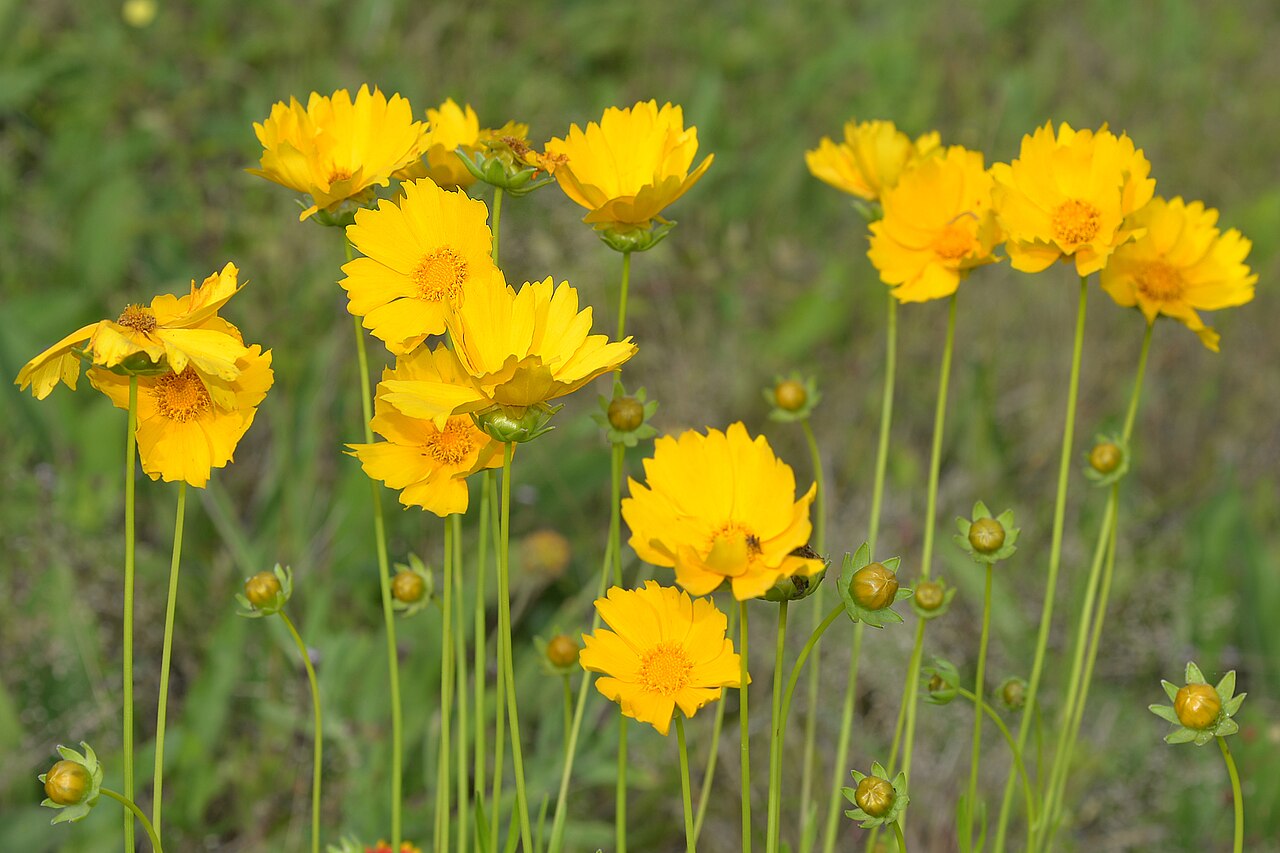
Lanceleaf coreopsis produces a clear yellow display on slender stems above a low clump of narrow leaves. It is one of the easier native-looking daisies to recognize in a sunny planting, but its horticultural popularity also makes origin important. Wild populations, garden seedlings and cultivated strains can all be called Coreopsis lanceolata. A regional native garden should use an appropriate source rather than assume every roadside colony is ancient.
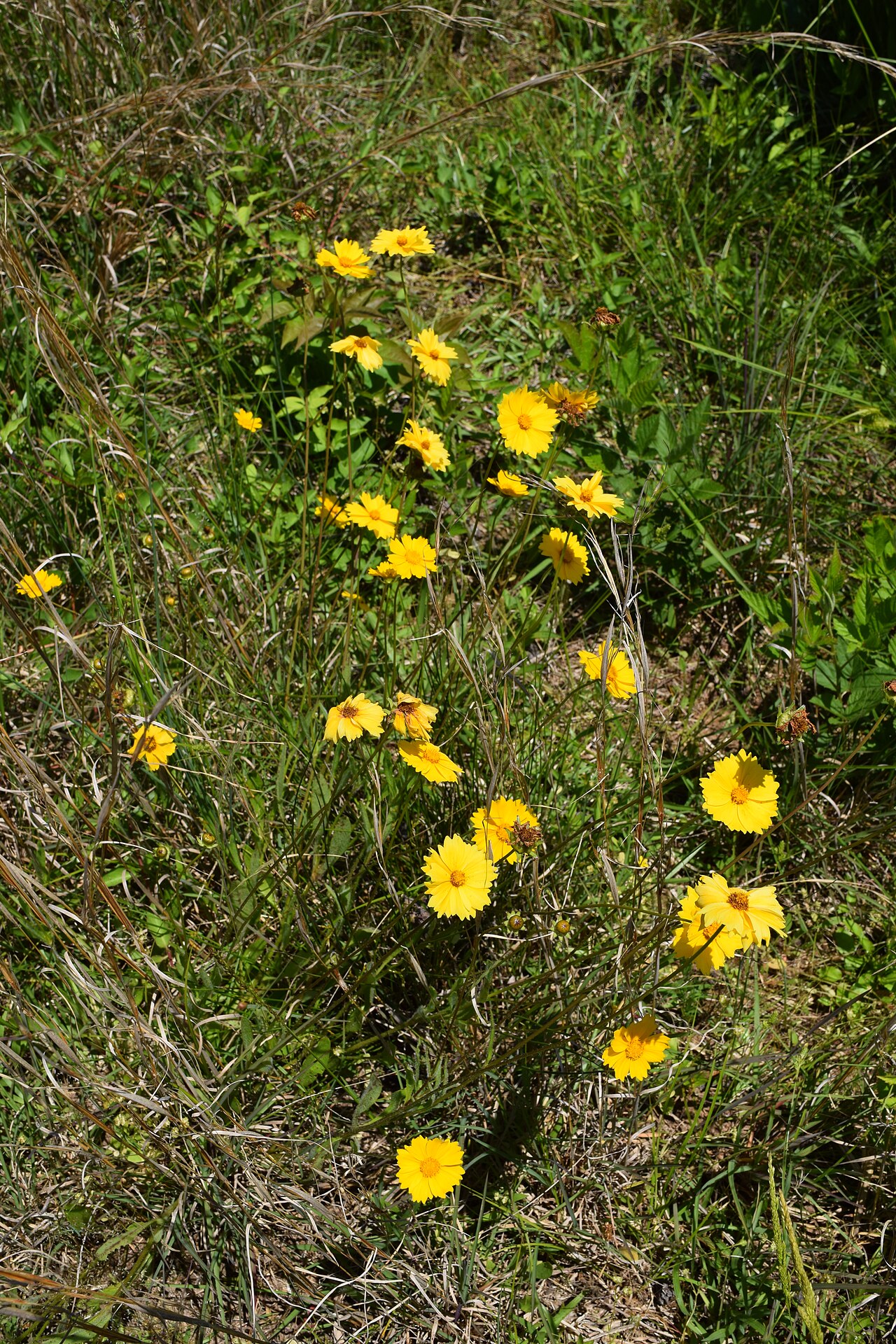
The usual garden height is around one to two feet. In lean, draining soil, the foliage remains relatively low while the flowers rise into view. Rich soil and excessive feeding can produce floppy growth and give weeds a competitive advantage. The plant is well suited to a sunny informal border where seedlings are welcome and its relatively short individual lifespan is not mistaken for a failure of the planting.
This page treats the species, not named double-flowered, dwarf or hybrid cultivars. For a planting intended to represent local flora, ask a supplier about the scientific identity and seed origin. A yellow daisy photograph alone cannot establish those details, and the ability to grow a plant in a state does not settle whether the particular population is native there.
Identification
Leaves
Most leaves cluster near the base and are lance-shaped to narrowly elongated. Some may have lobes near the base, so one divided leaf does not automatically indicate another species. Look at the overall leaf pattern and the mostly leafless upper flowering stems. Prairie coreopsis, now accepted by Kew as Anacis palmata, has a different characteristic palmately divided leaf shape.
Flowers
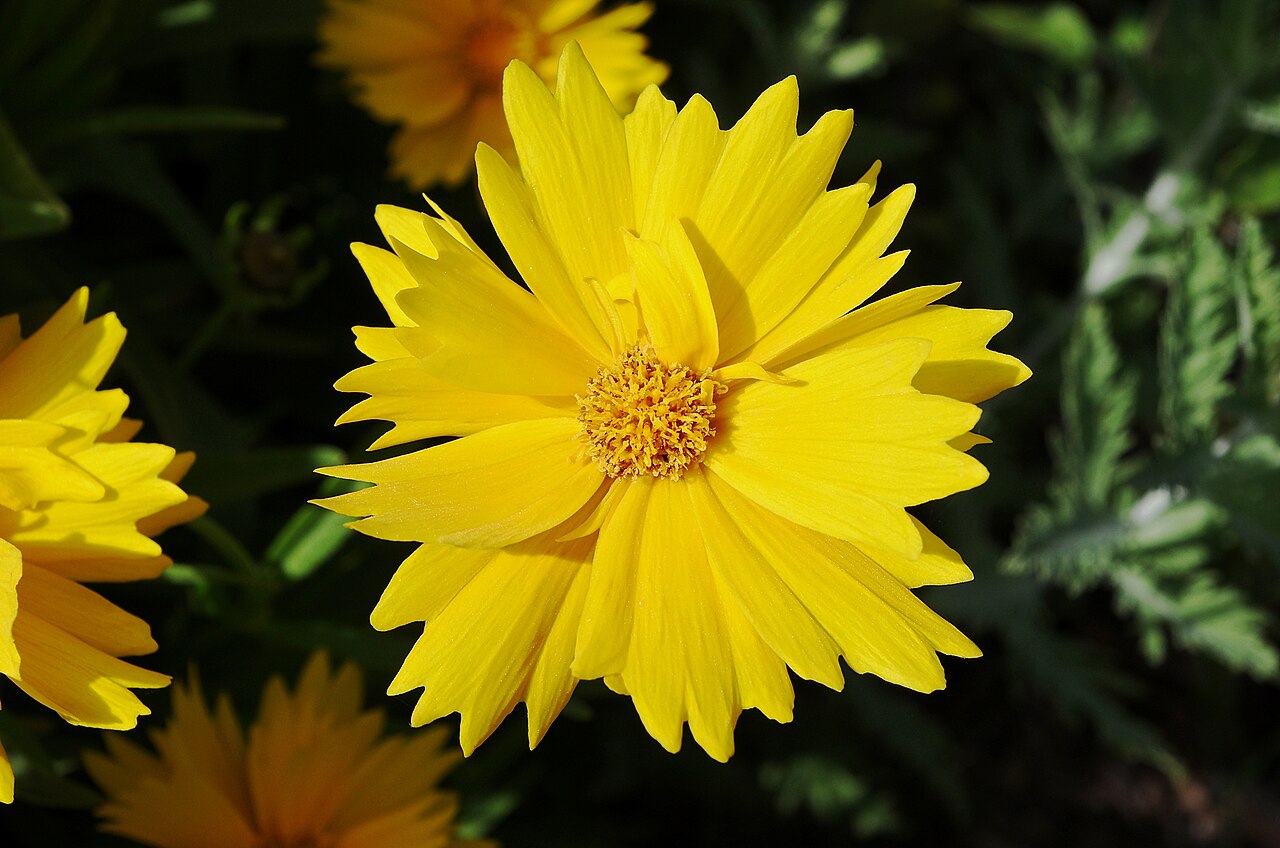
The yellow flowerhead contains both outer ray florets and central disk florets. The ray tips are toothed, giving the head a lightly notched outline. Flowerheads are held above the leaves on slender stalks, making the display seem airy rather than forming a solid shrub-like mass. Inspect the whole plant before using a close-up flower photograph as identification.
Fruit & Seed
After flowering, the head dries and produces achenes. Leave selected heads to mature if you want natural reseeding or seed collection. Plants can appear away from the original clump where suitable bare soil is available. Seedlings may vary, especially near other cultivated coreopsis, so retain labelled parent plants when conserving a known regional source.
Habit & Look-alikes
Lanceleaf coreopsis forms a basal clump, not a woody stem or a dense evergreen mound. Threadleaf coreopsis has much finer leaves, while large-flowered coreopsis and garden hybrids can look similar in bloom. Nursery labels should include the scientific name. Double blooms or unusually compact forms may indicate a selected cultivar rather than the wild-type habit shown here.
Quick Facts
| Scientific Name | Coreopsis lanceolata |
| Family | Asteraceae |
| Plant Type | Herbaceous perennial, often short-lived but self-sowing |
| Mature Height | Usually 1–2 feet |
| Mature Spread | About 1–2 feet; seedlings may spread farther |
| Growth Rate | Moderate to fast in suitable conditions |
| Sun Exposure | Full sun; light shade reduces flowering |
| Water Needs | Dry to average moisture with good drainage |
| Soil Type | Sandy, gravelly or rocky soil; avoid rich wet beds |
| Soil pH | Tolerates a range; drainage matters more than precise pH |
| Bloom Time | Late spring to early summer, sometimes reblooming |
| Flower Color | Golden yellow rays and disk |
| Fall Color | Foliage variable; not grown for autumn color |
| Fruit | Small dry achenes |
| Deer Resistant | Not deer-proof; protect establishing plants where browsing is heavy |
| USDA Hardiness Zones | 4–9; provenance and drainage matter |
Native Range
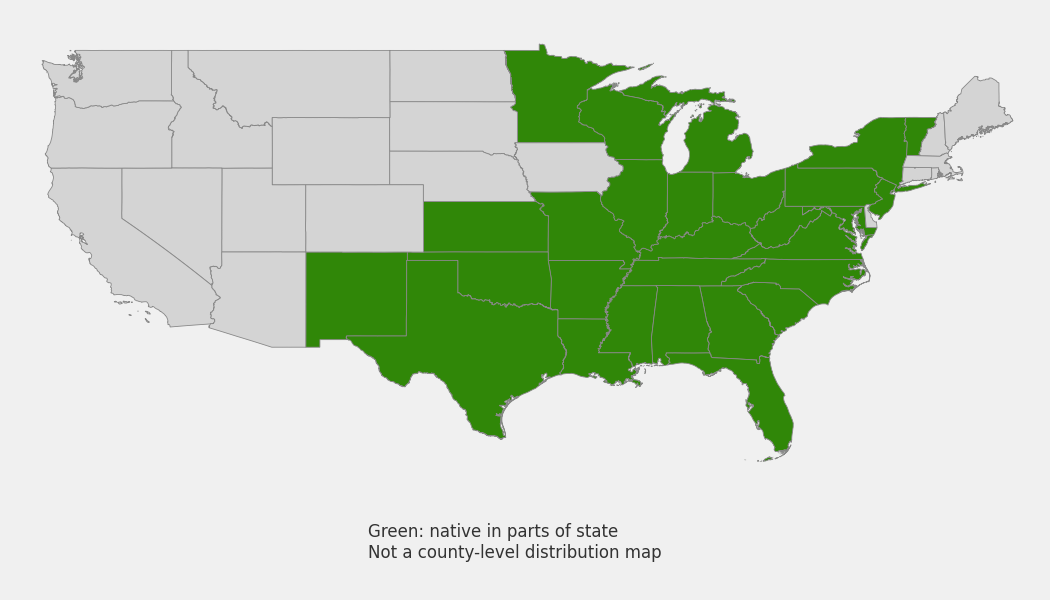
Kew lists native states through much of the eastern and central United States and several southern and southwestern locations, as well as Ontario. The map follows that broad Kew treatment. It does not include introduced populations overseas, and it should not be used as a county-level restoration map.
Native status is not treated uniformly by every regional authority. NC State Extension notes that North Carolina occurrences may be naturalized, while Native Plant Trust regards New England populations as introduced, despite Vermont appearing in Kew’s broader native list. These differences are retained here rather than hidden. For a restoration in those areas, consult the current state flora and use a species with unambiguous local provenance.
New York, Pennsylvania and New Jersey appear in Kew’s native distribution, but a planted roadside or escaped garden patch is not proof of a native local population. The regional list link is a starting point for garden planning. Match the seed source and habitat to the county or ecoregion when ecological restoration, rather than ornamental gardening, is the objective.
📋 Regional plant list: New York, Pennsylvania & New Jersey
Growing & Care Guide
Sun
Give the plant a genuinely sunny position. A few hours of morning light under a dense summer canopy are not equivalent to an open meadow. In light shade it may survive but produce fewer flowers and longer stems. If flowering declines, first check shading by nearby shrubs and grasses rather than immediately increasing fertilizer.
Soil
Lean, well-drained soil generally suits the species better than a rich, persistently wet bed. Sandy and rocky sites can be useful, provided young roots receive water while establishing. Heavy clay is more challenging when it traps winter moisture. Improve the overall drainage situation rather than filling a narrow planting hole with highly organic material.
Water & Feeding
Water newly planted plugs or divisions until roots spread into surrounding soil. Mature plants tolerate dry spells better, but no plant benefits from a rootball that repeatedly dries before establishment. Routine heavy fertilizer is unnecessary. If growth is weak, investigate competition, light and drainage before assuming a nutrient deficiency.
Planting
Set the crown at its former soil level and keep mulch from piling over the basal leaves. Allow room for the clump and for neighboring plants to reach their mature size. A group of several plants makes a visible yellow patch while retaining an informal character. Avoid placing tiny plugs immediately within dense established turf.
Deadheading & Longevity
Removing spent heads can encourage additional bloom and reduce unwanted seedlings. Leaving some heads supports renewal because individual plants may be relatively short-lived. These are different management goals: a tidy display needs more deadheading, while a self-renewing meadow needs some seed. Adjust the balance rather than expecting both maximum rebloom and abundant seed from every stem.
Division & Seed
Division of established clumps is an option when plants become crowded or decline. Use healthy material and replant promptly into a suitable site. Seed is useful for larger plantings, but use an identified source and do not assume every volunteer is identical to the parent. Keep selected cultivars separate from conservation seed production.
Keeping It in Bounds
Self-sowing is an advantage in a naturalistic border but can be inconvenient near a small rock garden or rare-plant bed. Remove seedlings while young or deadhead more consistently. In regions where the species is introduced, avoid allowing it to spread into natural areas. A native somewhere in North America is not automatically appropriate for uncontrolled dispersal everywhere.
Landscape Uses
- A sunny, lean-soil flower border
- A meadow garden where selected seedlings can renew the planting
- A low foreground in a mixed native grass and flower display
- An informal path edge with room for seasonal change
Wildlife & Ecological Value
Flower Visitors
Open composite flowerheads are accessible to a variety of insects. Observe local visitors rather than assuming every yellow coreopsis supports the same specialist relationships. Include other locally native plants with different flowering times and flower shapes. A long season of diverse resources is more useful than relying on a single brief yellow display.
Seed & Winter Interest
Some dried heads can be retained for seed and seasonal structure. Leaving them also allows the gardener to see which areas support natural recruitment. Do not remove all old stems automatically if a more natural planting is the goal, but control invasive weeds before they seed into the same openings.
Regional Ecology
Ecological value depends partly on place. A species grown outside its local native range can still attract insects, but that does not make it a replacement for the local plant community. The distribution caveats above are particularly relevant when choosing plants for a habitat restoration or a garden bordering conserved land.
A Resilient Planting
Combine lanceleaf coreopsis with compatible plants rather than a dense carpet of one species. Different root systems, heights and seasons reduce the visual impact when individual plants die or reseed. Leave space for the low foliage so taller neighbors do not eliminate it through shade.
Cultural & Historical Uses
The name lanceleaf refers to the elongated leaf blade, a useful feature to look for before flowering. Coreopsis is a familiar ornamental genus, and the common name tickseed is widely used for its members. Because that name covers many species, it is not precise enough for selecting a plant for a regional native list.
Horticultural selection has produced a wide assortment of coreopsis forms. Gardeners can enjoy those selections while still distinguishing them from regionally sourced species. For this page, the photographs and care discussion describe Coreopsis lanceolata rather than promising the behavior of any named cultivar.
Its modern use in sunny landscapes illustrates why occurrence maps require interpretation. Plants moved for ornament can establish beyond their original range. Retaining the distinction between native distribution and naturalized occurrence makes a garden guide more useful, especially when the reader is planting near sensitive habitat.
Frequently Asked Questions
Is every lanceleaf coreopsis native to my state?
No. Broad sources and local floras sometimes differ, and garden escapes occur. Check local status and seed provenance, especially in New England and North Carolina.
Why did an individual plant disappear?
The species can be relatively short-lived. Suitable drainage and some reseeding can maintain the planting even when individual clumps decline.
Should I fertilize for more flowers?
Heavy feeding is usually unnecessary and can make growth floppy. Start with sun, drainage and appropriate moisture.
Will deadheading stop it spreading?
It reduces seed production when done before seeds mature. Retain only the heads you want for renewal or collection.
Is it the same as prairie coreopsis?
No. Prairie coreopsis is Anacis palmata, widely known by the synonym Coreopsis palmata. Its divided leaves and taxonomic identity differ.
Sources & Further Reading
- NC State Extension: lanceleaf coreopsis
- Kew: native distribution
- Native Plant Trust: New England status
- USDA: plant profile
Find Native Plants
Ask growers about nursery propagation and regional provenance. Browse our NY native plant nurseries, PA native plant nurseries, NJ native plant nurseries directory for suppliers. Explore the native nursery finder.