Threadleaf Coreopsis (Coreopsis verticillata)
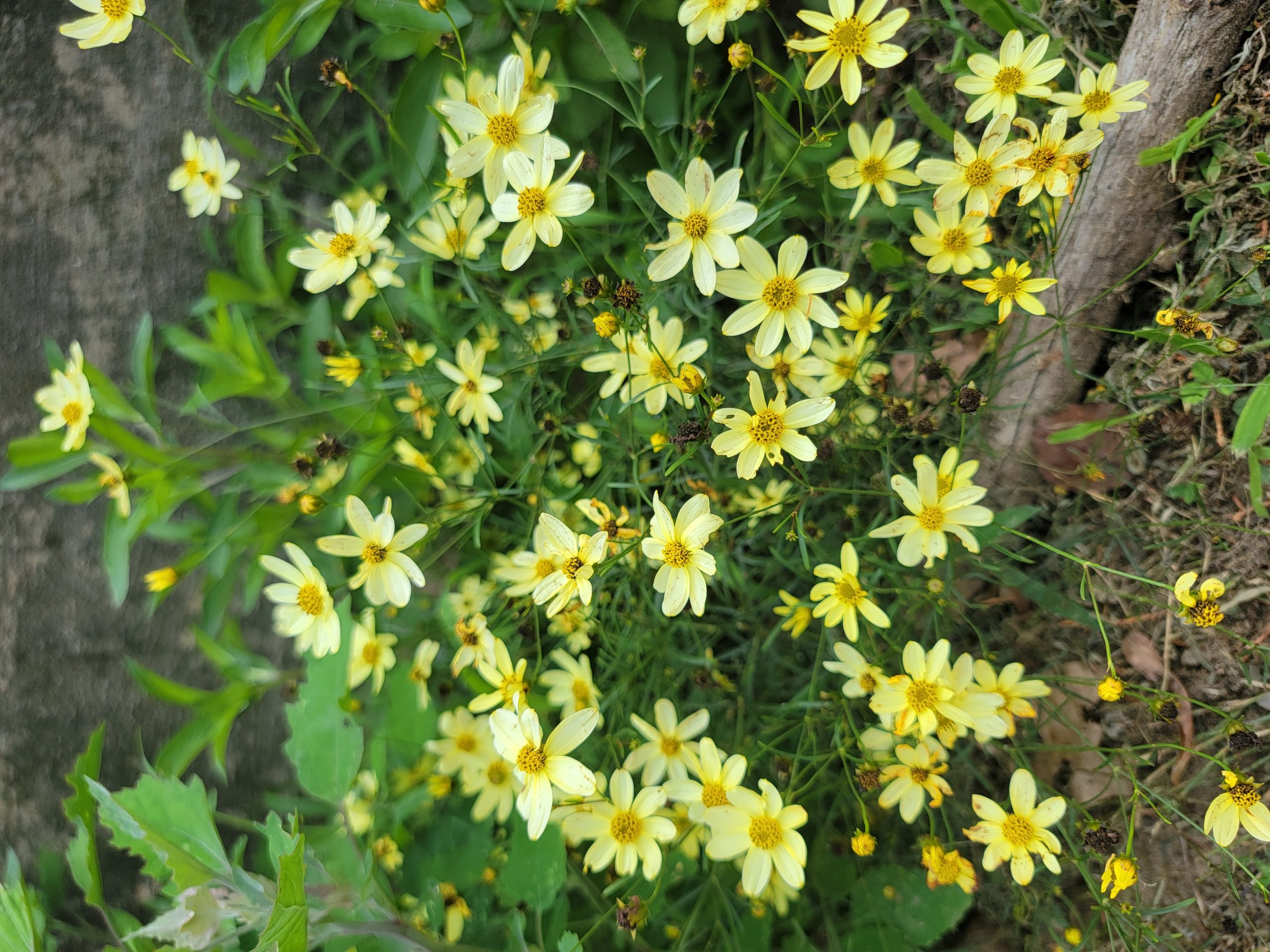
Coreopsis verticillata, commonly called Threadleaf Coreopsis or Whorled Tickseed, is a wiry, rhizomatous perennial of the Asteraceae (aster) family, native to woodland edges, pine savannas, and dry open ground across the southeastern United States. Its common name describes its most recognizable trait: each leaf is divided into narrow, thread-like segments that whorl around the stem, giving the whole plant a soft, airy, almost fern-like texture even when it isn’t in bloom.
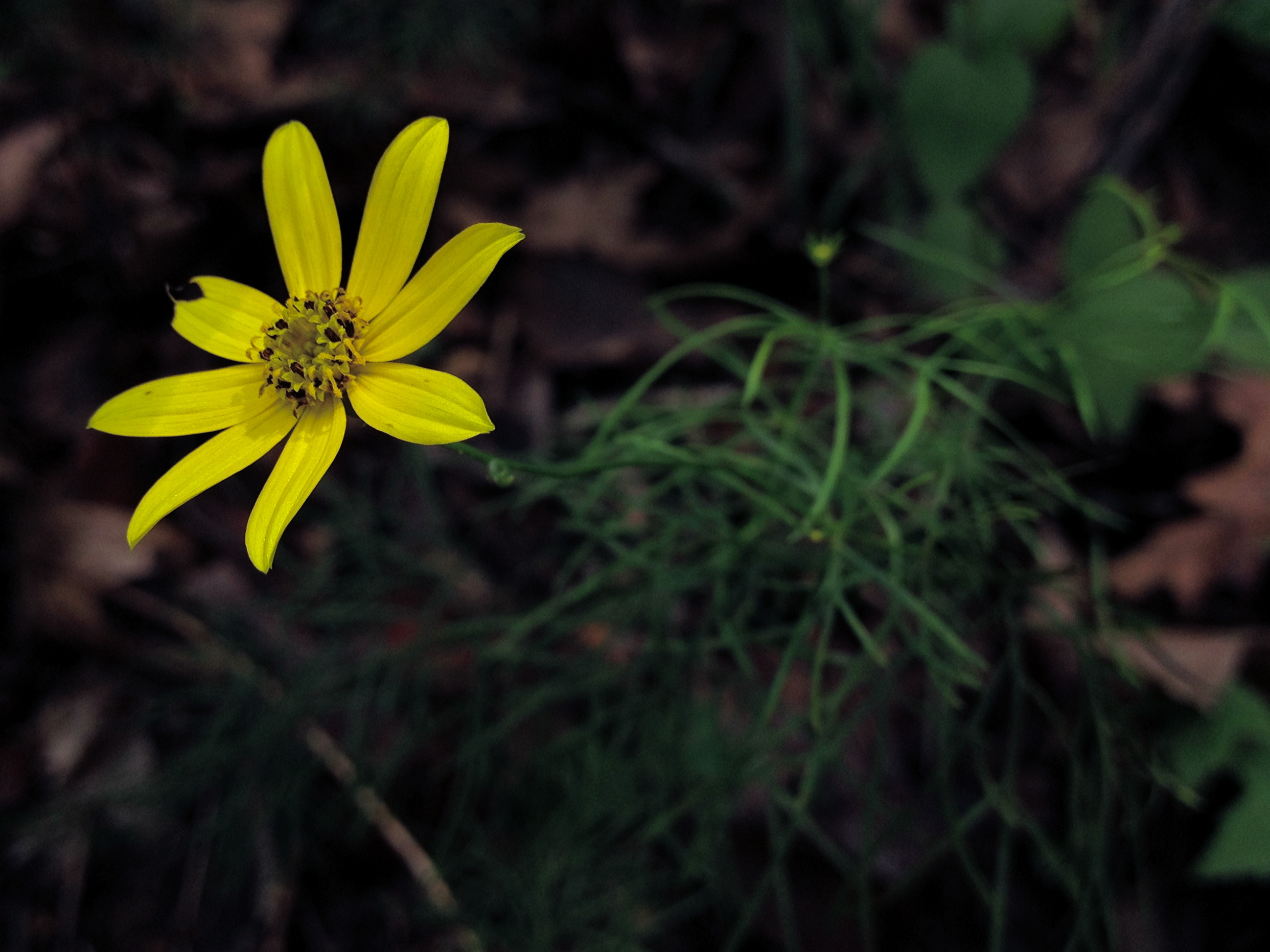
From early summer into fall, Threadleaf Coreopsis covers itself in small, bright yellow, daisy-like flowers with eight notched petals surrounding a slightly darker yellow center. A single established clump can produce hundreds of blooms over its long flowering season, making it one of the most reliable, low-maintenance bloomers for a sunny native garden. It spreads gradually by rhizomes to form a dense, weed-suppressing mat, 1 to 3 feet tall, that tolerates heat, drought, and poor sandy soil with ease.
Because it asks so little and gives so much — season-long color, pollinator traffic, and deer resistance — Threadleaf Coreopsis has long been a favorite of the nursery trade, and gardeners from Maryland to Mississippi will recognize popular cultivars like ‘Moonbeam’ and ‘Zagreb.’ The wild species, grown from local or regional seed, is just as garden-worthy and keeps the straight native genetics that local pollinators are adapted to.
Identification
Threadleaf Coreopsis forms a bushy, mounded clump 12 to 36 inches tall and about as wide, with slender, wiry stems that branch freely in the upper half of the plant. The overall look is fine-textured and feathery, more like a dill plant than a typical perennial, until the flowers open and the yellow show begins.
Leaves
The leaves are the plant’s signature feature: opposite, sessile, and deeply divided into three to seven narrow, linear to thread-like segments, each about 1 to 3 inches long and barely 1/16 inch wide. The segments are arranged so densely along the stem that the foliage reads as a soft green haze rather than individual leaves. Leaf pairs are spaced closely enough up the stem to appear whorled, which is the source of the species name verticillata (“whorled”).
Flowers
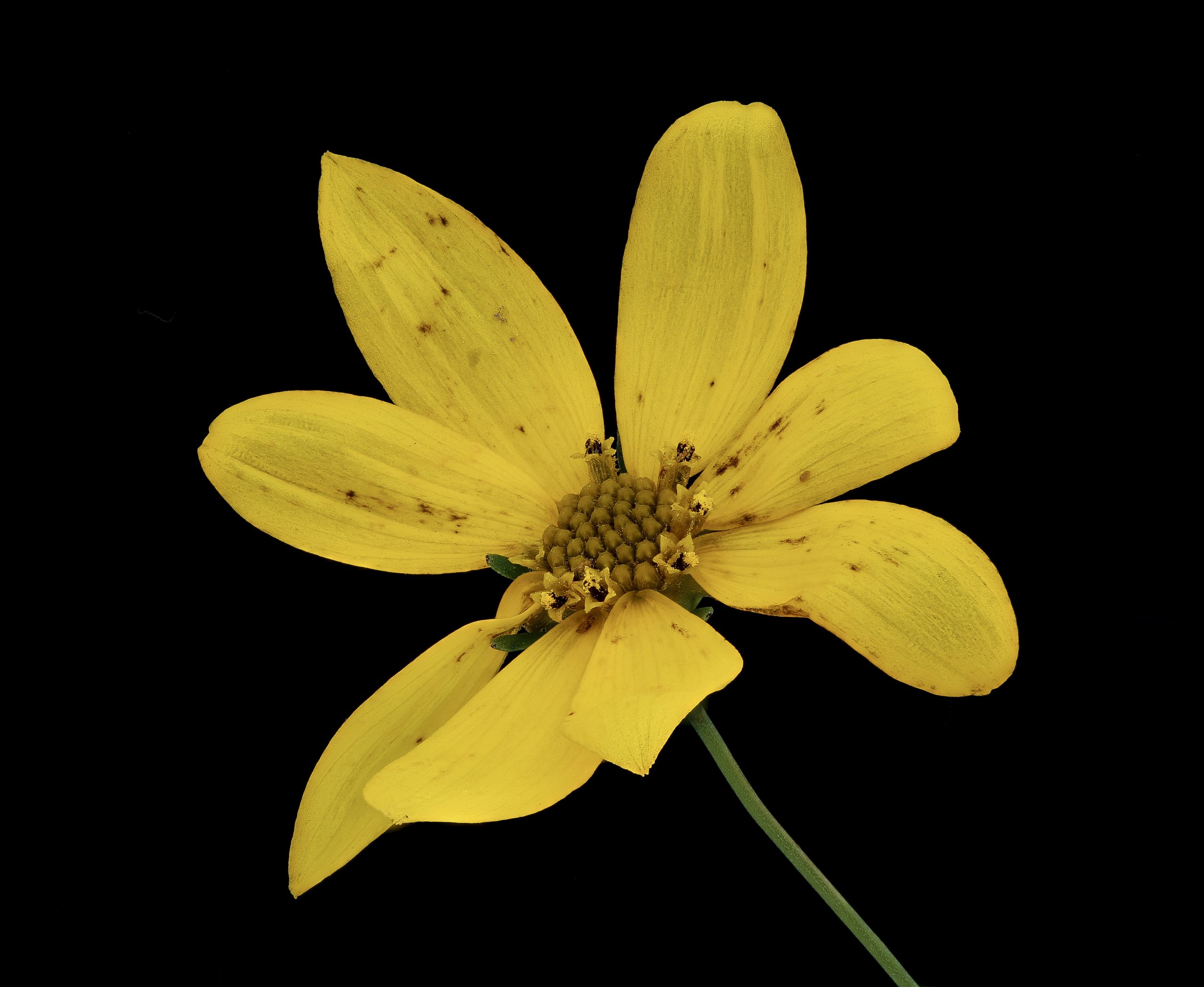
Flower heads are about 1 to 2 inches across, borne singly on slender stalks held just above the foliage. Each head has 8 ray florets (the “petals”), usually golden yellow and lightly toothed at the tip, surrounding a cluster of small disc florets that start yellow and darken slightly as the flower ages. Bloom runs from June into August in most of its range, sometimes continuing lightly into fall, and a single plant produces a long, steady succession of flowers rather than one big flush.
Fruit and Roots
After pollination, each disc floret produces a tiny black cypsela (often loosely called an achene), and spent flower heads dry to a dark brown button that can be left standing for winter interest and seed-eating birds. Below ground, Threadleaf Coreopsis spreads by creeping rhizomes, which is how a single plant gradually becomes a broad patch over several seasons.
Quick Facts
| Scientific Name | Coreopsis verticillata |
| Family | Asteraceae (Aster) |
| Plant Type | Herbaceous Perennial |
| Mature Height | 1–3 ft |
| Spread | Spreads by rhizomes; forms colonies |
| Sun Exposure | Full Sun to Part Shade |
| Water Needs | Low once established |
| Soil Type | Sandy, well-drained; tolerates poor soil |
| Soil pH | Acidic (below pH 6.8) |
| Drought Tolerance | High |
| Bloom Time | June – August |
| Flower Color | Golden yellow |
| Deer Resistant | Yes |
| USDA Hardiness Zones | 5–9 |
Native Range
Threadleaf Coreopsis is native to the Coastal Plain and Piedmont of the southeastern United States, with a core range running roughly from Maryland and Virginia south to Florida and west to Mississippi, Arkansas, and the edge of the Ozarks in Kentucky and Tennessee. In the wild it grows in open, sun-drenched sites: pine savannas, woodland edges, old fields, roadsides, and dry, sandy or rocky open ground. Plants found well north and west of this core range — including garden escapes reported in New England — are generally considered outside the species’ native distribution, so gardeners there are better served by regionally native coreopsis species such as Coreopsis lanceolata or Coreopsis major.
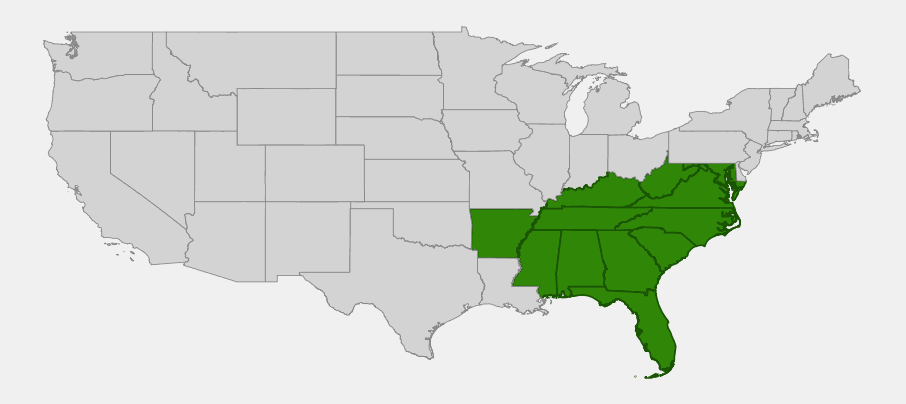
📋 Regional plant lists featuring Threadleaf Coreopsis: Maryland, Virginia & West Virginia · North Carolina & South Carolina · Georgia, Alabama & Mississippi · Arkansas, Louisiana, Eastern Oklahoma & Eastern Texas · Kentucky & Tennessee
Growing & Care Guide
Threadleaf Coreopsis is about as low-maintenance as native perennials get, which is exactly why it has become a nursery staple across its native range and beyond. Give it sun and sharp drainage, and it will reward you with months of bloom and almost no fuss.
Light
Plant it in full sun for the heaviest flowering and the sturdiest, most compact growth. It will also grow and bloom reasonably well in light or part shade, but expect a looser habit and fewer flowers the more shade it receives.
Soil & Water
This species is built for dry, sandy, acidic soils and does poorly in heavy clay or any site that stays wet. Good drainage matters more than fertility; rich, damp soil tends to produce floppy growth and can encourage crown rot. Once established, Threadleaf Coreopsis is quite drought tolerant and rarely needs supplemental water except during extended dry spells in its first year.
Planting Tips
Set out container-grown plants in spring or fall, spacing them 12 to 18 inches apart to allow for their spreading habit. Because the species spreads by rhizomes, give it room to roam or plant it where a slowly expanding patch is welcome, such as along a sunny border or massed on a dry slope. Avoid amending the planting hole with rich compost, which can work against its preference for lean soil.
Pruning & Maintenance
Shearing the plant back by about a third after the first flush of bloom can encourage a tidier, bushier shape and a second round of flowers later in the season. In late winter, cut the previous year’s dried stems down to the ground to make way for new growth; leaving the seed heads up through winter provides food for small birds and doesn’t harm the plant. Clumps that become crowded or die out in the center after several years can be divided in spring or fall to renew their vigor.
Landscape Uses
Threadleaf Coreopsis earns its keep in several garden roles:
- Sunny perennial borders, where its fine texture contrasts well with bolder-leaved companions
- Dry slopes and banks, where its rhizomes help knit together loose, sandy soil
- Pollinator and wildlife gardens, for season-long nectar and pollen
- Mass plantings and groundcover-style drifts in hot, dry sites
- Meadow and prairie-style plantings paired with native grasses
- Low-water, low-maintenance landscaping where irrigation is limited
Wildlife & Ecological Value
Despite its delicate appearance, Threadleaf Coreopsis is a workhorse for pollinators and a modest but steady food source for birds.
For Pollinators
The long bloom season makes this species especially valuable to native bees, honeybees, and butterflies, which visit the flowers for nectar and pollen throughout summer. Small native bees and syrphid flies are frequent visitors, and the flowers are a reliable nectar stop during the hottest, driest weeks of summer when fewer other plants are blooming.
For Birds
The small, dark cypselae (seeds) that follow the flowers are eaten by goldfinches and other seed-eating songbirds, particularly if spent flower heads are left standing into fall and winter rather than deadheaded. The dense, feathery foliage also offers some cover for small insects and the birds that hunt them.
Ecosystem Role
In its native pine savanna and woodland-edge habitats, Threadleaf Coreopsis is part of a diverse community of sun-loving perennials and grasses that depend on open, well-drained, periodically disturbed ground. Its spreading rhizomes help stabilize loose, sandy soils, and its long bloom window helps bridge the nectar gap between spring and fall-blooming natives.
Cultural & Historical Uses
Threadleaf Coreopsis has been grown as a garden ornamental since at least the 19th century, prized even then for its fine foliage and long bloom season. Its horticultural popularity led to the development of widely sold cultivars such as ‘Moonbeam’ (pale yellow) and ‘Zagreb’ (deep golden yellow), which remain common in nurseries throughout the eastern United States. There is no significant documented history of medicinal or culinary use for this species; its historical value has been almost entirely ornamental.
Frequently Asked Questions
Is Threadleaf Coreopsis the same as the cultivar ‘Moonbeam’?
No. ‘Moonbeam’ and ‘Zagreb’ are popular cultivars selected from Coreopsis verticillata, with slightly different flower color and habit than the wild species. The straight species, grown from regional seed, keeps the full native genetics and is the better choice for restoration and pollinator-focused plantings.
Does Threadleaf Coreopsis spread aggressively?
It spreads by rhizomes and will form an expanding patch over a few seasons, but it is not considered weedy or invasive within its native range. In garden settings, an occasional edge trim or division keeps a patch within bounds.
How much sun does it need to bloom well?
Full sun produces the most flowers and the sturdiest growth. In part shade it will still bloom, but more sparsely and with a looser, floppier habit.
Is Threadleaf Coreopsis deer resistant?
Yes, it is generally left alone by deer and rabbits, which makes it a dependable choice for gardens with heavy browsing pressure.
Can I grow Threadleaf Coreopsis outside its native range?
It is widely sold and grown as a garden plant well north of its native range, including in New England, where it is not native and has occasionally escaped cultivation. Gardeners outside the native range who want straight native genetics for pollinators should look for a locally native coreopsis species instead.

Looking for a nursery that carries Threadleaf Coreopsis?
Browse our native plant nursery directory: Alabama & Arkansas · Florida & Georgia · Kentucky, Maryland & Mississippi · North Carolina · South Carolina, Tennessee & Virginia · West Virginia