Sand Pine (Pinus clausa)
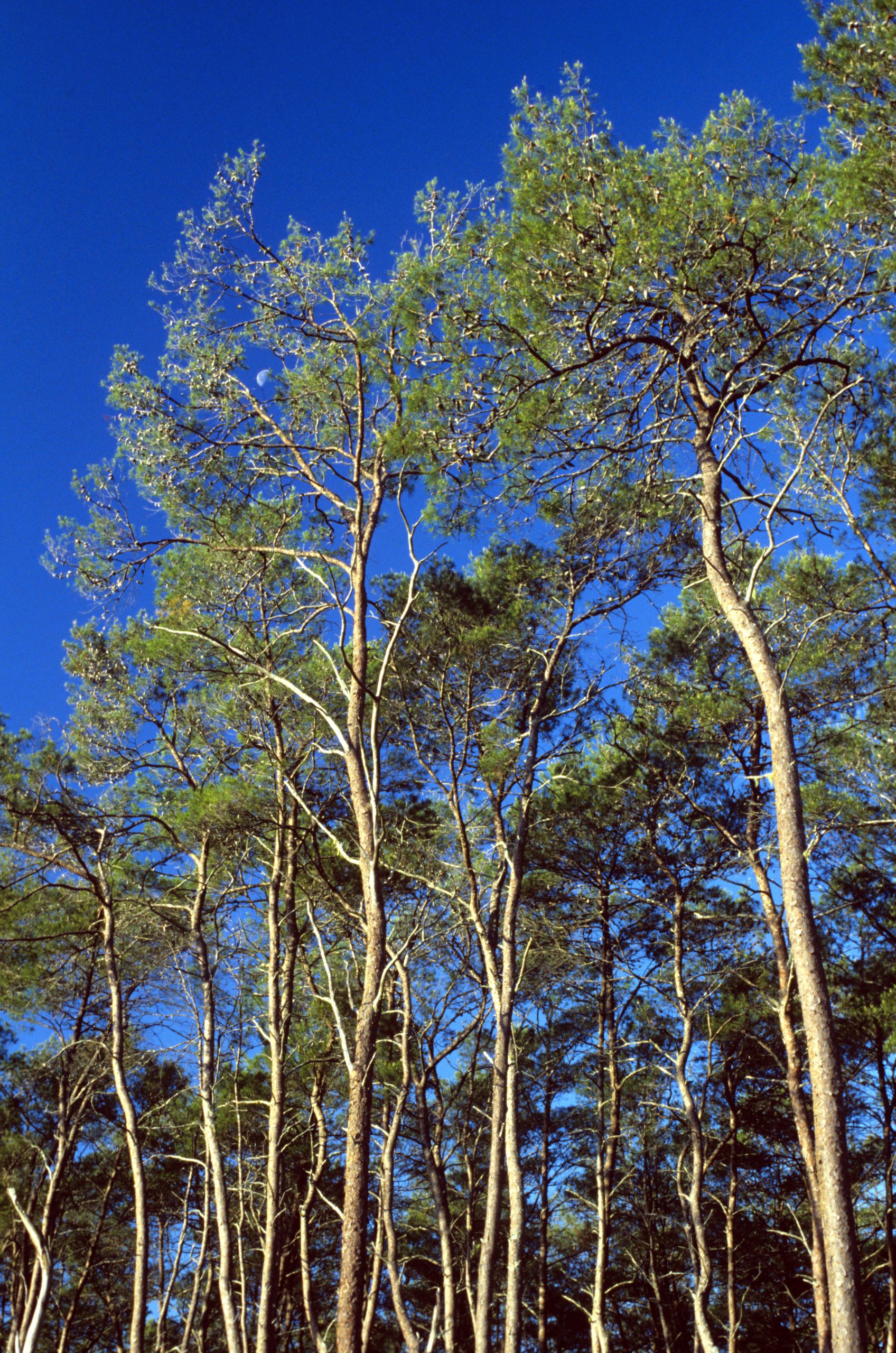
Pinus clausa, commonly known as Sand Pine, is a small to medium-sized evergreen conifer in the Pinaceae (pine) family, endemic to the deep, well-drained sandy soils of peninsular and panhandle Florida and the extreme southern tip of Alabama. It is the signature tree of the Florida scrub — the ancient, fire-adapted sand ridges that run down the center of the state — and nowhere is it more dominant than in the Ocala National Forest’s “Big Scrub,” one of the largest sand pine forests in the world.
Sand Pine is a tree built for a tough, nutrient-poor environment: dense, slightly wavy needles in bundles of two, a thin, scaly trunk, and small, often tightly closed cones that can persist unopened on the tree for years, sometimes decades, waiting for the heat of a wildfire to trigger their release. This trait, called serotiny, is the key to how entire Sand Pine forests regenerate — a single intense crown fire can kill a stand outright while simultaneously opening millions of cones and reseeding the next forest in one stroke.
Two distinct races are recognized within the species: the Ocala race of central Florida, which is strongly serotinous and regenerates almost exclusively after stand-killing fire, and the Choctawhatchee race of the western Panhandle and extreme southern Alabama, whose cones open at maturity and which tends to form more open, uneven-aged stands shaped by less destructive surface fires. Both races share the same core identity — a scrappy, short-lived pioneer tree of deep, dry sand that few other trees can tolerate.
Identification
Sand Pine typically grows 15 to 65 feet tall, usually as a slender tree with a narrow, rounded or irregularly flattened crown, though open-grown individuals can develop a broader, more spreading form. The trunk is often somewhat crooked, with bark that stays thin and scaly throughout the tree’s life rather than developing the thick, plated bark of longer-lived pines.
Needles
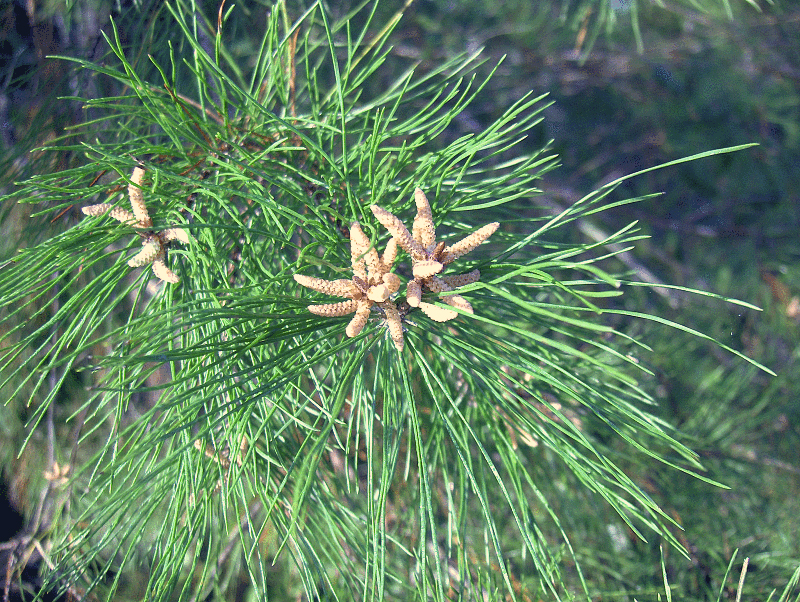
Needles are borne in bundles (fascicles) of two, typically 2 to 3½ inches long, slender, and often slightly twisted or wavy, giving the foliage a somewhat tousled appearance compared to other southeastern pines. They are a medium to dark green and persist on the tree for about two to three years before shedding.
Bark
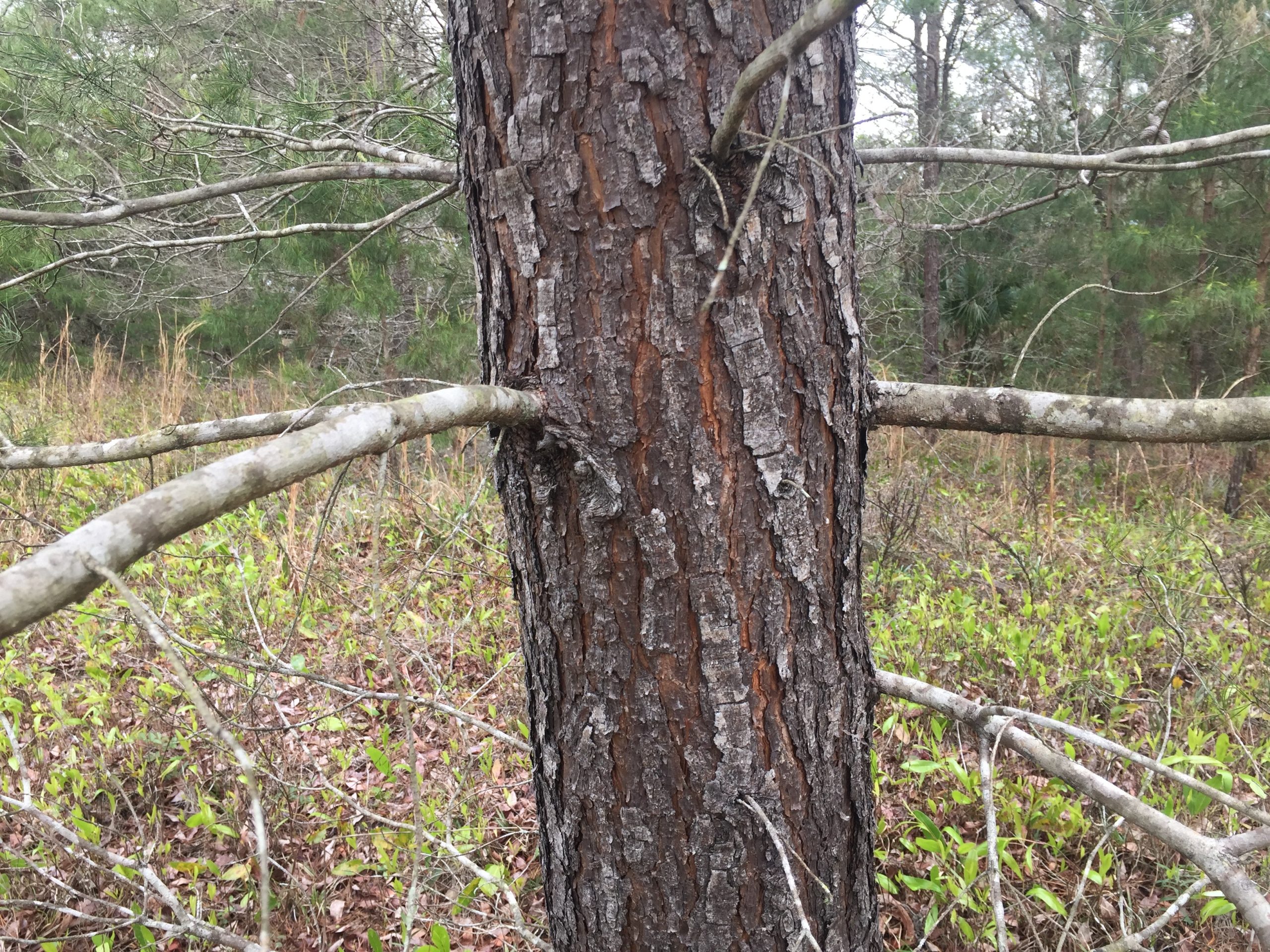
The bark is thin and composed of small, flat, reddish-brown to gray-brown scales, in contrast to the thick, deeply furrowed bark of fire-resistant pines like longleaf pine. This thin bark offers little protection from fire, which is consistent with Sand Pine’s ecological strategy of relying on post-fire reseeding rather than individual tree survival.
Cones
Cones are small, 2 to 3½ inches long, egg-shaped to conical, and often borne in whorled clusters along the branches. In the Ocala race, cones are tightly closed (serotinous) and remain sealed with resin for years until opened by the heat of fire; in the Choctawhatchee race, cones open naturally at maturity. Pollen cones are small, yellowish, and clustered at branch tips in spring.
Quick Facts
| Scientific Name | Pinus clausa |
| Family | Pinaceae (Pine) |
| Plant Type | Evergreen Conifer |
| Mature Height | 15–65 ft |
| Growth Rate | Fast |
| Lifespan | Short-lived for a pine; often 40–90 years |
| Sun Exposure | Full Sun |
| Water Needs | Low |
| Soil Type | Deep, dry, well-drained sand |
| Soil pH | Acidic |
| Drought Tolerance | Very High |
| Fire Ecology | Fire-killed; regenerates from serotinous or semi-serotinous cones |
| USDA Hardiness Zones | 8–10 |
Native Range
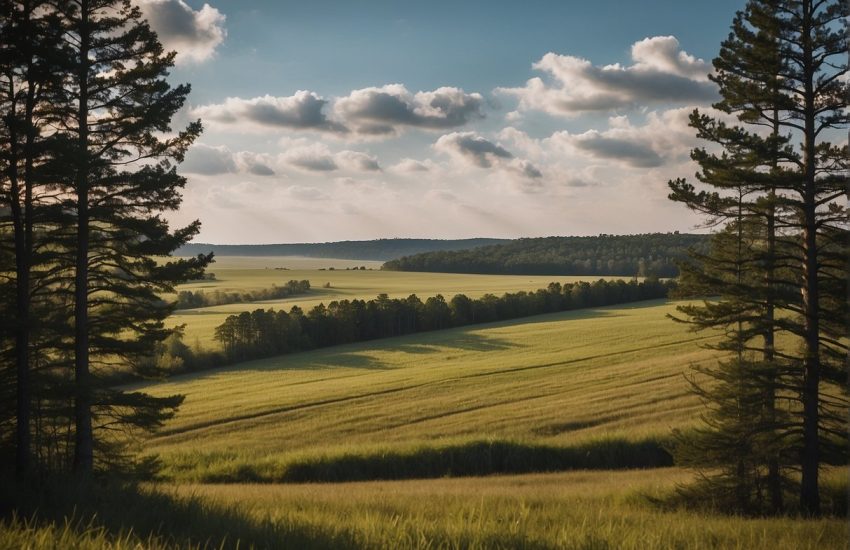
Sand Pine is a narrow endemic, restricted almost entirely to the deep, ancient sand ridges of Florida. The Ocala race occupies the Lake Wales Ridge and other sand ridges of the central Florida peninsula, most famously the “Big Scrub” of the Ocala National Forest, while the Choctawhatchee race grows on coastal sand dunes and inland sand ridges of the western Florida Panhandle, extending just across the state line into extreme southern Baldwin County, Alabama. Outside of this core range, Sand Pine is sometimes planted in forestry trials or as an ornamental, but it is not native beyond Florida and this small corner of Alabama.
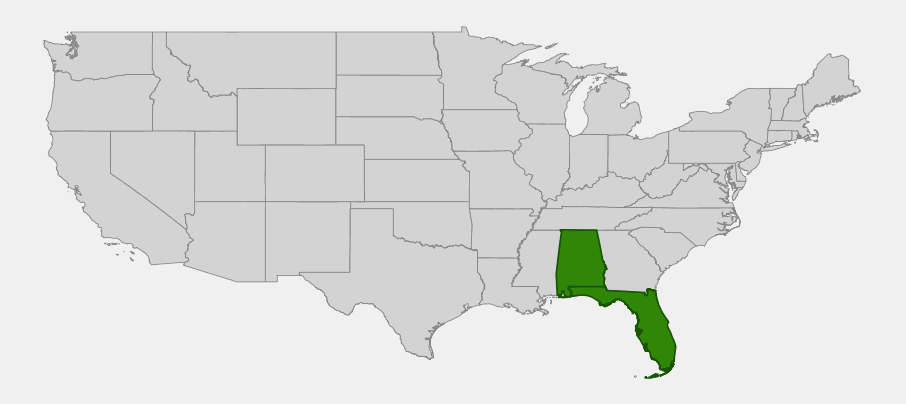
📋 Regional plant lists featuring Sand Pine: Georgia, Alabama & Mississippi
Growing & Care Guide
Sand Pine is a specialist tree, and growing it well means respecting the harsh, free-draining conditions it evolved for rather than trying to coddle it like a typical landscape conifer.
Light
This is a full-sun tree through and through. It grows naturally in open, sun-blasted scrub and sandhill habitat and does not tolerate shaded or crowded conditions well; seedlings especially need open ground to establish.
Soil & Water
Sand Pine demands deep, loose, well-drained sandy soil and is intolerant of heavy clay, compacted ground, or any site that holds moisture. It is extremely drought tolerant once established, reflecting its origin on sand ridges where rainfall drains away almost immediately. Overly rich or consistently moist soil tends to shorten its already modest lifespan and increase susceptibility to root disease.
Planting Tips
Sand Pine is best suited to large, sandy, open sites such as coastal properties, sandhill restoration projects, or naturalized scrub gardens — it is not a good fit for typical suburban clay soils or small, shaded yards. Because it is relatively short-lived and fast-growing, it works well as an early successional or “nurse” tree in a mixed scrub planting, eventually giving way to longer-lived associates. Give young trees plenty of open space, since they do not compete well with denser vegetation.
Pruning & Maintenance
Established Sand Pine needs very little maintenance beyond removing dead wood. Avoid heavy irrigation or fertilization, both of which run counter to the lean, dry conditions this tree is adapted to and can actually weaken it. Because the species is relatively short-lived and prone to storm damage and bark beetle attack as it ages, it is best used where some natural turnover and eventual removal of older trees is expected, rather than as a long-term shade tree.
Landscape Uses
Sand Pine fits a narrow but important set of landscape roles:
- Scrub and sandhill restoration, where it is the keystone canopy species
- Coastal and beachside plantings tolerant of salt spray and pure sand
- Naturalized xeric landscapes in central and north Florida
- Erosion control on loose, sandy slopes and dunes
- Wildlife habitat plantings that aim to recreate scrub-jay habitat
Wildlife & Ecological Value
Sand Pine scrub is one of Florida’s rarest and most distinctive natural communities, and the tree itself anchors a web of specialized, often rare wildlife found nowhere else.
For Birds
The Florida Scrub-Jay, a threatened species found only in Florida, depends on open sand pine and oak scrub habitat for its survival, using scattered pines as lookout perches while foraging on the ground below. Mature Sand Pine stands also provide nesting and foraging habitat for various woodpeckers and other resident birds of the scrub community.
For Mammals and Other Wildlife
The scrub habitat shaped by Sand Pine shelters numerous reptiles adapted to deep, dry sand, including the gopher tortoise, whose burrows in turn provide shelter for hundreds of other species. Small mammals such as the Florida mouse, largely restricted to scrub habitat, depend on the open, sandy understory that Sand Pine stands help maintain between fires.
Ecosystem & Fire Role
Sand Pine scrub is a fire-dependent ecosystem, and the tree’s own biology is built entirely around periodic, high-intensity, stand-replacing fire. The Ocala race’s tightly serotinous cones stay sealed for years, releasing a flush of seed only after fire clears competing vegetation and exposes bare sand — a strategy that regenerates whole even-aged forests in the wake of a single burn. The Choctawhatchee race, with its earlier-opening cones, instead favors a patchier cycle of smaller surface fires. Without periodic fire, Sand Pine scrub gradually shifts toward oak domination and loses the open, sandy structure that so much of its specialized wildlife depends on.
Cultural & Historical Uses
Sand Pine has limited history as a timber species compared to other southern pines, since its wood is generally considered lower quality — knotty, resinous, and less structurally strong. Historically it saw some use for pulpwood and rough lumber, and it has been planted in forestry trials for pulp production on sites too sandy and dry for other commercial pines. Its greatest documented value has always been ecological and, in recent decades, as the defining species of a globally rare natural community targeted for conservation and restoration throughout central and north Florida.
Frequently Asked Questions
Why are Sand Pine cones sealed shut?
In the Ocala race, cones are serotinous, meaning they stay sealed with resin until the heat of a wildfire melts the resin and triggers them to open, releasing seed onto freshly burned, competition-free sand. This ensures a new generation of trees establishes right after a stand-killing fire.
How is Sand Pine different from Longleaf Pine?
Longleaf Pine has much longer needles (8–18 inches, in bundles of three), thick fire-resistant bark, and survives individual fires as a mature tree. Sand Pine has shorter, two-needle bundles, thin bark that offers little fire protection, and instead relies on its cones to regenerate an entire stand after fire kills the parent trees.
Can Sand Pine grow outside of deep sandy soil?
It is poorly suited to anything but loose, well-drained sand. In heavier or wetter soils it tends to struggle, grow slowly, or become prone to root problems, so it is best reserved for genuinely sandy sites.
Is Sand Pine a long-lived tree?
No — compared to many pines, Sand Pine is relatively short-lived, often reaching full maturity and beginning to decline within 40 to 90 years, which fits its role as a fast-growing pioneer species in a fire-cycled landscape.
Is Sand Pine good for a typical home landscape?
It works best in large, sandy, sunny sites such as coastal or sandhill properties rather than small suburban yards with irrigated lawns and clay soil, where it tends to struggle and is more prone to decline.