Overcup Oak (Quercus lyrata)
Quercus lyrata, commonly known as Overcup Oak, is a medium to large deciduous tree in the white oak group, native to bottomland forests and seasonally flooded lowlands of the eastern and south-central United States. The tree takes its common name from its most distinctive feature: an acorn cup that wraps almost completely around the nut, often enclosing two-thirds or more of it — unlike any other oak in its range.
Overcup Oak is a true wetland specialist. In the wild, it dominates poorly drained clay flats, river backswamps, and seasonally inundated bottomlands where few other trees can compete, tolerating standing water for weeks at a time during the dormant season. Despite this flood tolerance, established trees also handle average, well-drained upland soils without difficulty, which has made Overcup Oak an increasingly popular choice for street trees and parks in the South, where it combines adaptability with a handsome, long-lived form.
Growing slowly — often 25 to 30 years to reach maturity — Overcup Oak is a patient investment for anyone planting for the long term. Mature trees can live for centuries, with some documented specimens estimated at 400 years old, making this a true legacy tree for bottomland restoration, rain gardens, and naturalized landscapes throughout its native range.
Identification
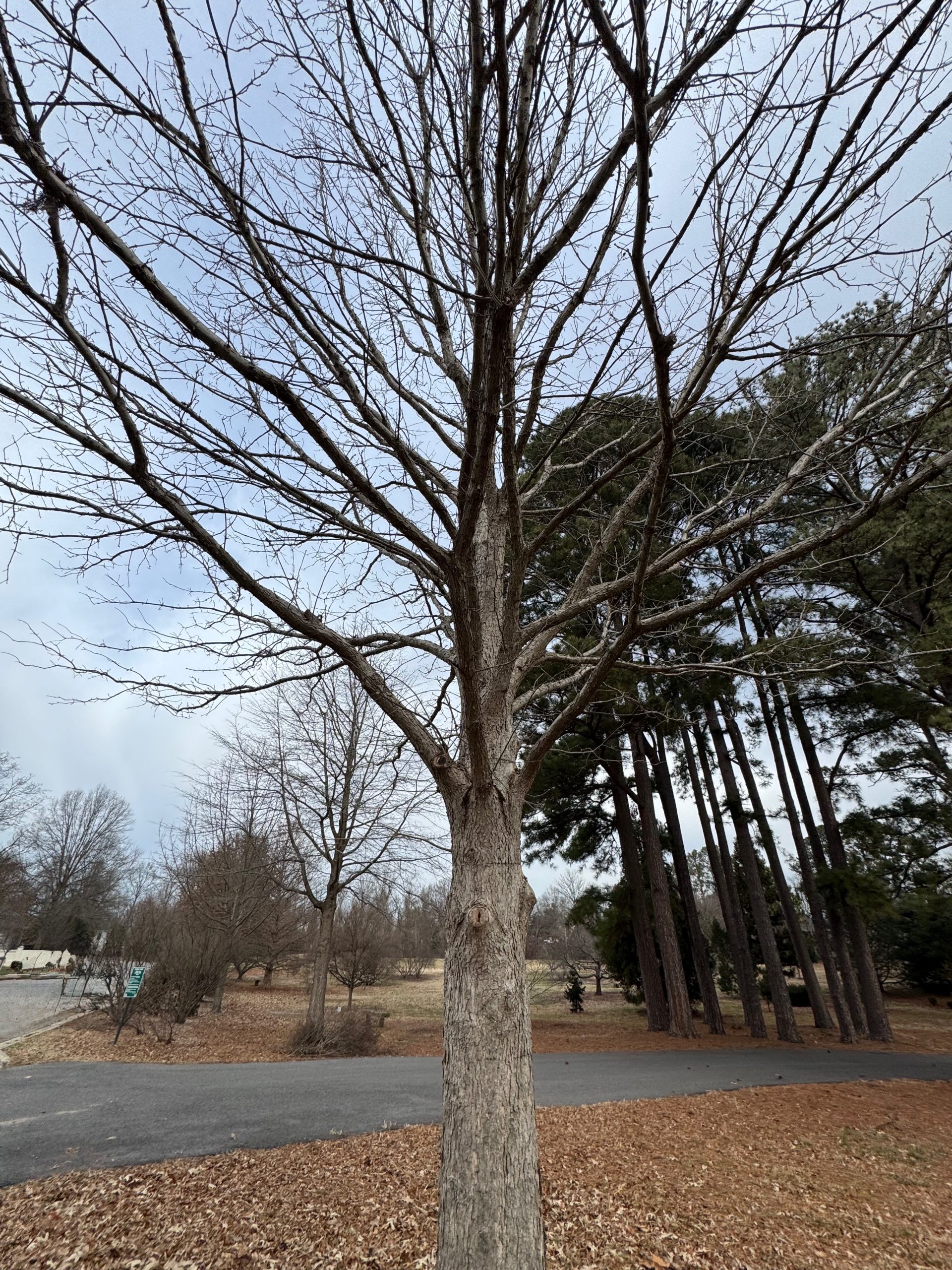
Overcup Oak is a medium to large deciduous tree, typically reaching 40 to 60 feet in cultivation and up to 100 feet or more in favorable bottomland sites, with a trunk diameter that can exceed 3 feet on old specimens. Young trees have a pyramidal to oval crown that becomes broader and more rounded with age. Growth is notably slow, and the tree is long-lived, with an estimated maximum lifespan approaching 400 years.
Bark
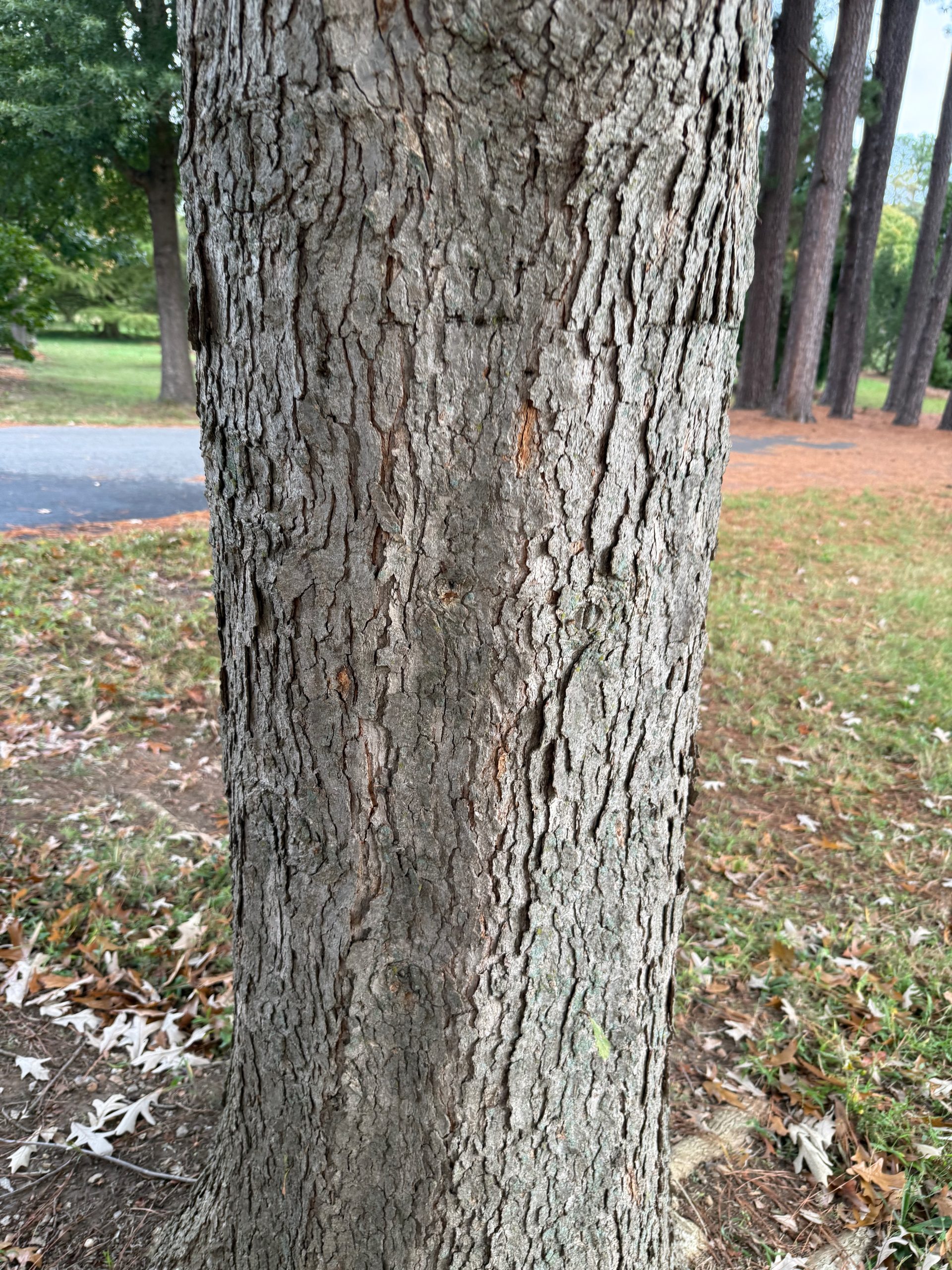
The bark is light to dark gray, breaking into irregular ridges and scaly plates as the tree matures — a texture typical of the white oak group, though somewhat coarser and more deeply furrowed than that of white oak itself. On older trunks the bark can appear almost blocky, with narrow fissures running between flattened ridges.
Leaves
Leaves are simple, alternate, and 6 to 10 inches long, with 5 to 9 rounded lobes separated by deep, variable sinuses. The leaf shape is often described as “lyre-shaped” (lyrate) — narrower toward the base and widest near the tip — which is the source of the species name lyrata. The upper surface is dark green and glossy; the underside is pale gray-green with fine, soft hairs. In autumn, foliage turns shades of yellow-brown to reddish-brown, less showy than some oaks but still an attractive component of a fall bottomland woodland.
Acorns
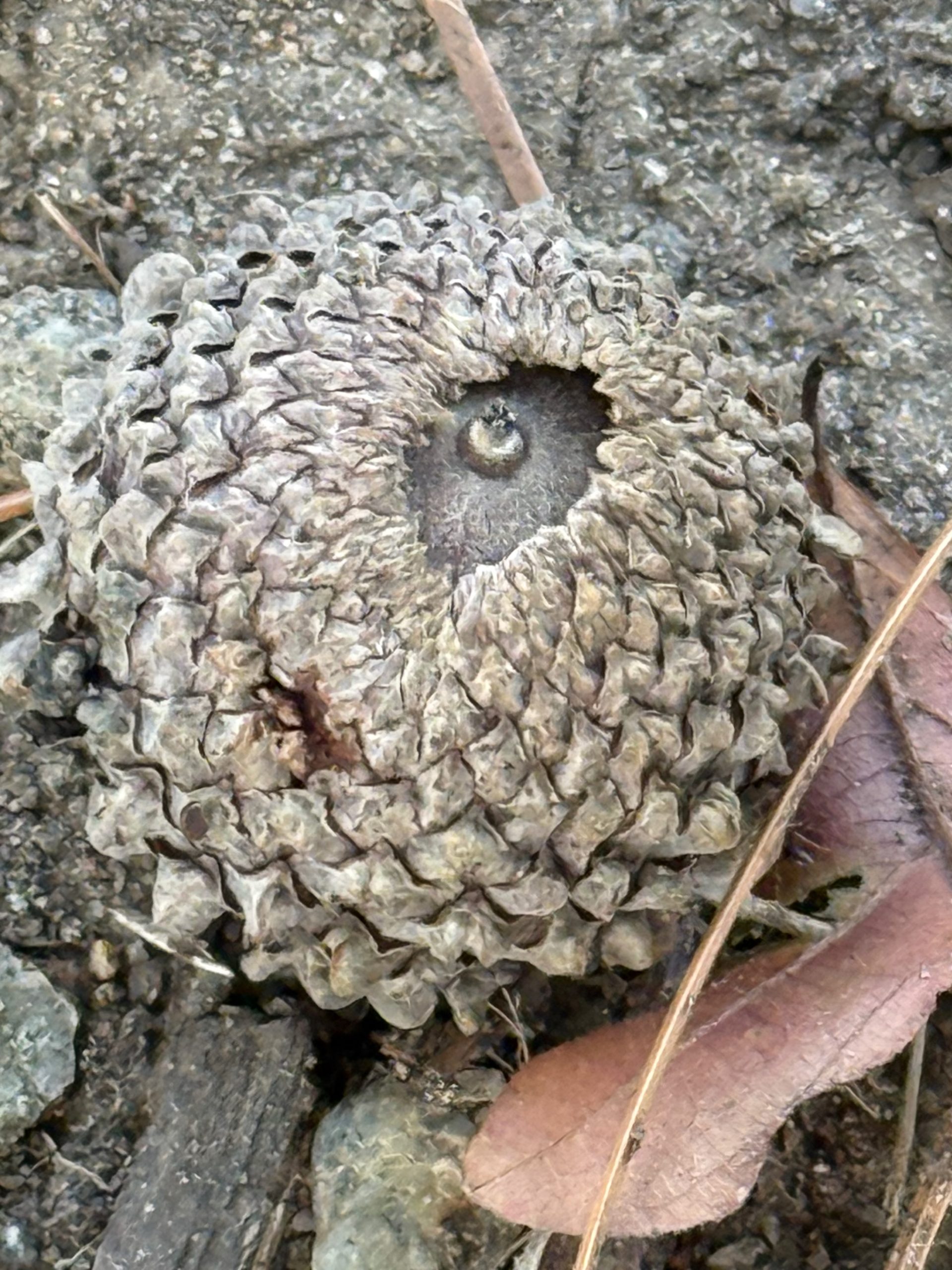
The acorn is the tree’s signature feature: a rounded nut 1 to 1.5 inches long, almost entirely enclosed by a warty, grayish cup that enfolds 70 to 100 percent of the nut, leaving only a small round opening at the tip. This near-total enclosure is unique among oaks native to the eastern United States and makes Overcup Oak acorns immediately recognizable once you know what to look for. Acorns mature in a single season and are buoyant, an adaptation that lets them float and disperse during seasonal flooding — a key reason the species thrives in bottomland habitats.
Quick Facts
| Scientific Name | Quercus lyrata |
| Family | Fagaceae (Beech/Oak) |
| Plant Type | Deciduous Tree |
| Mature Height | 40–60 ft (to 100+ ft in bottomlands) |
| Trunk Diameter | Up to 3+ ft |
| Growth Rate | Slow (25–30 years to maturity) |
| Sun Exposure | Full Sun |
| Water Needs | Moderate to High; tolerates seasonal flooding |
| Soil Type | Clay, loam; tolerates poor drainage |
| Soil pH | 5.0–7.0 (acidic to neutral) |
| Bloom Time | March – April |
| Flower Color | Yellow-green catkins (inconspicuous) |
| Fall Color | Yellow-brown to reddish-brown |
| Fruit | Acorn, nut mostly enclosed by cup |
| Deer Resistant | Moderate (seedlings browsed, mature trees resilient) |
| USDA Hardiness Zones | 5–9 |
Native Range
Overcup Oak is native to the Coastal Plain and Mississippi Valley of the eastern and south-central United States, ranging from southern Virginia south through the Carolinas, Georgia, Alabama, Mississippi, and the Florida Panhandle, west through Louisiana and into eastern Texas. Its range extends north through the Mississippi Valley into Arkansas, southeastern Oklahoma, southern Illinois, southwestern Indiana, western Kentucky, and much of Tennessee and Missouri.
Within this range, Overcup Oak is a classic bottomland hardwood species, found on poorly drained clay flats, river backswamps, sloughs, and seasonally flooded terraces where standing water is common during the dormant season. It is frequently found growing alongside other flood-tolerant species in low, heavy-soil sites that exclude many upland oaks. Despite this strong association with wet sites, Overcup Oak also performs well when planted on ordinary, well-drained upland soils, which is part of what has made it a popular urban and landscape tree well beyond its wettest native habitats.
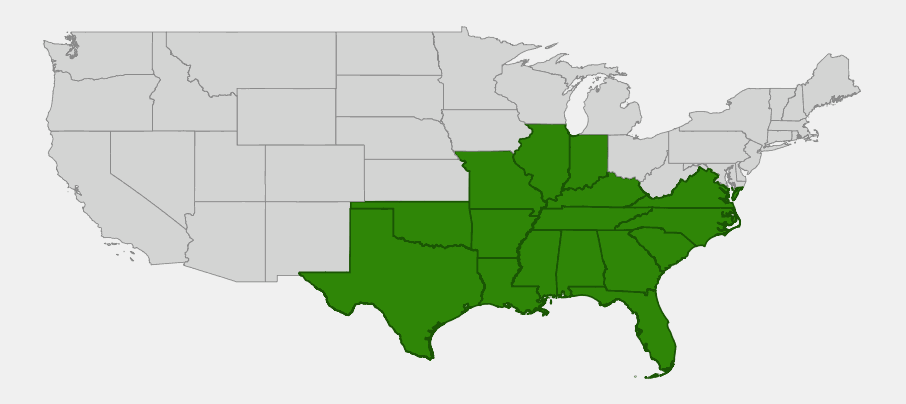
📋 Regional plant lists featuring Overcup Oak: Maryland, Virginia & West Virginia · North Carolina & South Carolina · Georgia, Alabama & Mississippi · Arkansas, Louisiana, Eastern Oklahoma & Eastern Texas · Kentucky & Tennessee · Ohio & Indiana · Illinois, Iowa & Missouri
Growing & Care Guide
Overcup Oak has a reputation as a tough, adaptable tree that performs well far outside the flooded bottomlands where it grows wild, making it one of the more forgiving native oaks for difficult landscape sites.
Light
Plant Overcup Oak in full sun for the best form and densest canopy. Young trees can tolerate partial shade while establishing in a woodland setting, but growth and form are noticeably better with at least six hours of direct sun.
Soil & Water
This is one of the most flood-tolerant oaks available for landscape use, capable of withstanding weeks of standing water during the dormant season without harm — a rare trait that makes it valuable for low spots, retention basins, and rain gardens where other trees would fail. At the same time, Overcup Oak adapts readily to average, well-drained upland soils once established, and it tolerates heavy clay better than most oaks. It prefers slightly acidic to neutral soil but is not particular about soil type as long as moisture is adequate.
Planting Tips
Plant balled-and-burlapped or container-grown stock in fall or early spring. Because Overcup Oak is slow-growing, especially in its first decade, give it a head start with consistent watering for the first two to three years, even though mature trees handle both flooding and moderate drought well. Allow ample room — a single mature specimen can need 40 to 50 feet of canopy spread.
Pruning & Maintenance
Prune in winter dormancy to establish a strong central leader and remove crossing or damaged branches while the tree is young; mature Overcup Oaks need very little maintenance pruning. The tree is generally resistant to the pests and diseases that trouble many other oaks, though like all oaks it can be susceptible to oak wilt where that disease is present, so avoid pruning during the warm growing season in regions where oak wilt is a known risk.
Landscape Uses
Overcup Oak’s flood tolerance and adaptability make it valuable in several settings:
- Rain gardens and bioswales — one of the few large shade trees that tolerates standing water
- Street and parking lot trees in the South, where it tolerates compacted, poorly drained soils
- Bottomland and wetland restoration plantings
- Shade tree for large residential or park landscapes with patience for slow establishment
- Wildlife plantings where mast production supports game and songbirds
Wildlife & Ecological Value
As a bottomland mast producer, Overcup Oak supports a wide range of wildlife throughout its native range, particularly in the flooded forests where it is often a dominant canopy species.
For Birds and Mammals
The acorns are an important food source for wood ducks, mallards, and other waterfowl that forage in flooded bottomlands, as well as wild turkey, white-tailed deer, squirrels, and other mast-dependent wildlife. Because the acorns are buoyant and float, they are especially accessible to waterfowl during the fall and winter flood pulses typical of Overcup Oak habitat, giving this species an outsized role in bottomland wildlife food webs compared to upland oaks.
For Insects
Like other oaks, Overcup Oak supports an exceptional number of native caterpillar and insect species, which in turn form the backbone of the food supply nesting songbirds rely on to raise their young. Oaks as a genus are considered among the most valuable wildlife plants in North America for this reason.
Ecosystem Role
In its bottomland habitat, Overcup Oak helps stabilize soil in seasonally flooded forests and contributes to the structural complexity that supports amphibians, reptiles, and other wetland-associated wildlife during high-water periods. Its tolerance for prolonged inundation allows it to persist in sites where few other large trees can establish, making it a keystone species in many Southern bottomland hardwood forests.
Cultural & Historical Uses
Overcup Oak wood is heavy, hard, and similar in character to white oak, and it has historically been used for flooring, furniture, railroad ties, fence posts, and firewood in the regions where it grows, though it is generally considered less commercially desirable than white oak itself because of its slower growth and often less uniform trunk form in flooded sites.
In recent decades, Overcup Oak has gained a strong reputation as a landscape and street tree in the South, promoted by foresters and municipal planners specifically for its ability to handle the compacted, poorly drained soils and periodic flooding common in urban plantings — conditions that cause many other oak species to fail. Its slow, steady growth and long lifespan also make it a frequent choice for legacy and memorial tree plantings intended to be enjoyed by future generations.
Frequently Asked Questions
Why is it called Overcup Oak?
The name comes from its acorn cup, which wraps around 70 to 100 percent of the nut — far more than any other native oak — leaving only a small opening at the tip.
Does Overcup Oak need wet soil to grow well?
No. While it is exceptionally tolerant of seasonal flooding and poorly drained clay, Overcup Oak also grows well in ordinary, well-drained upland soil, which is why it has become a popular landscape and street tree outside of true bottomland sites.
How fast does Overcup Oak grow?
It is a slow-growing tree, often taking 25 to 30 years to reach maturity. Patience pays off, though — mature trees can live for centuries, with some specimens estimated at around 400 years old.
Are Overcup Oak acorns edible for wildlife?
Yes, the acorns are an important food source for waterfowl, turkey, deer, and squirrels, especially in flooded bottomlands where the buoyant acorns float and become accessible to foraging ducks.
How big of a space does Overcup Oak need?
Plan for a mature canopy spread of 40 to 50 feet and a trunk that can eventually exceed 3 feet in diameter, so give it plenty of open space away from structures and power lines when planting.

Looking for a nursery that carries Overcup Oak?
Browse our native plant nursery directory: Virginia, South Carolina, Tennessee & Texas · North Carolina & Oklahoma · Georgia & Florida · Alabama & Arkansas · Mississippi, Louisiana, Missouri & Kentucky · Illinois & Indiana