Fringed Bleeding Heart (Dicentra eximia)
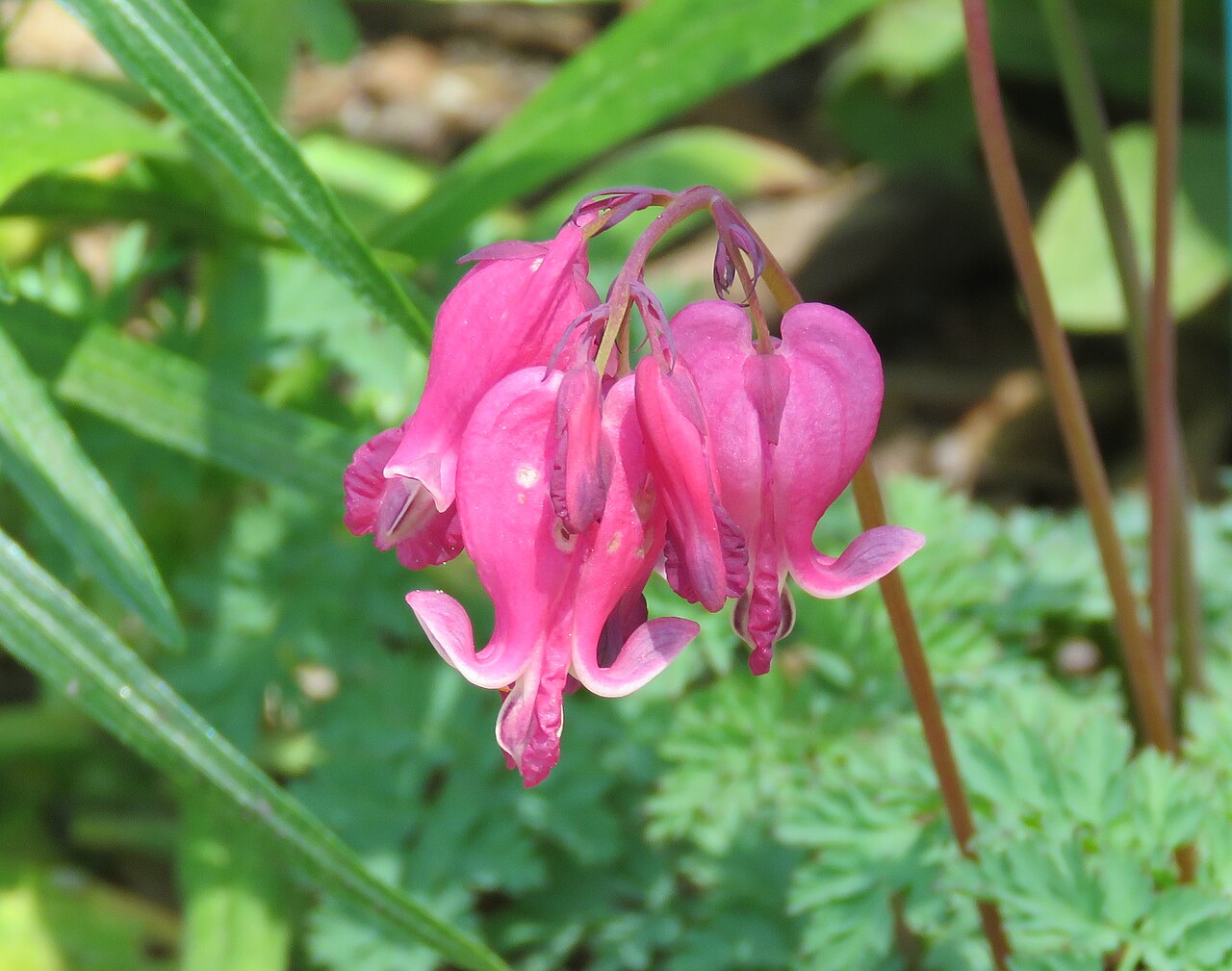
Fringed bleeding heart brings finely divided foliage and small pendant pink flowers to a woodland garden. Unlike the large Asian bleeding heart familiar from old gardens, this eastern North American species has a low, fernlike outline and can remain attractive well beyond the first spring flowers. Its natural home is the Appalachian region, especially rocky slopes and ledges where moisture is available without stagnant soil.
Dicentra eximia is best appreciated close to a path or a shaded seating area. The flowers are intricate rather than massive, and the foliage makes a soft contrast with broad-leaved woodland plants. In a cool, suitable position, flowering may continue intermittently after the main spring display. Hot weather can interrupt bloom, so continuous flowers should not be promised in every climate.
Correct identity matters because western Dicentra formosa and garden hybrids can be sold under similar common names. This page describes the eastern species. Buy propagated plants with a reliable scientific label, especially for a regional native planting. Neither a pink flower nor the word native on a retail tag establishes the origin of a particular plant.
Identification
Leaves
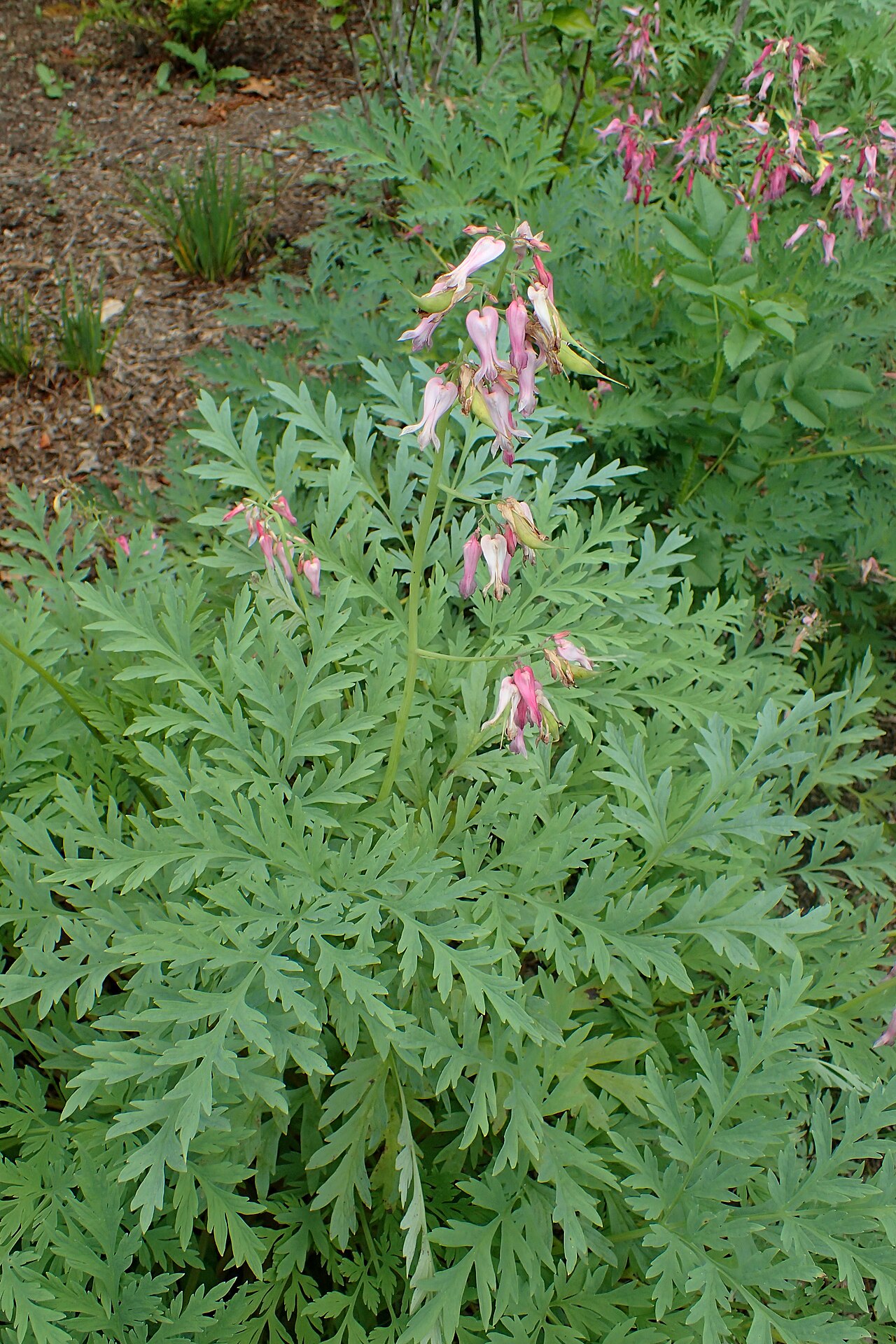
The leaves arise near the base and are divided repeatedly into small segments, producing the fringed or fernlike effect. They are not actual fern fronds: the plant flowers and makes seeds. Healthy foliage can remain after flowering, although heat, drought or seasonal cold can change its appearance. Do not remove living leaves simply because one flowering stem has finished.
Flowers
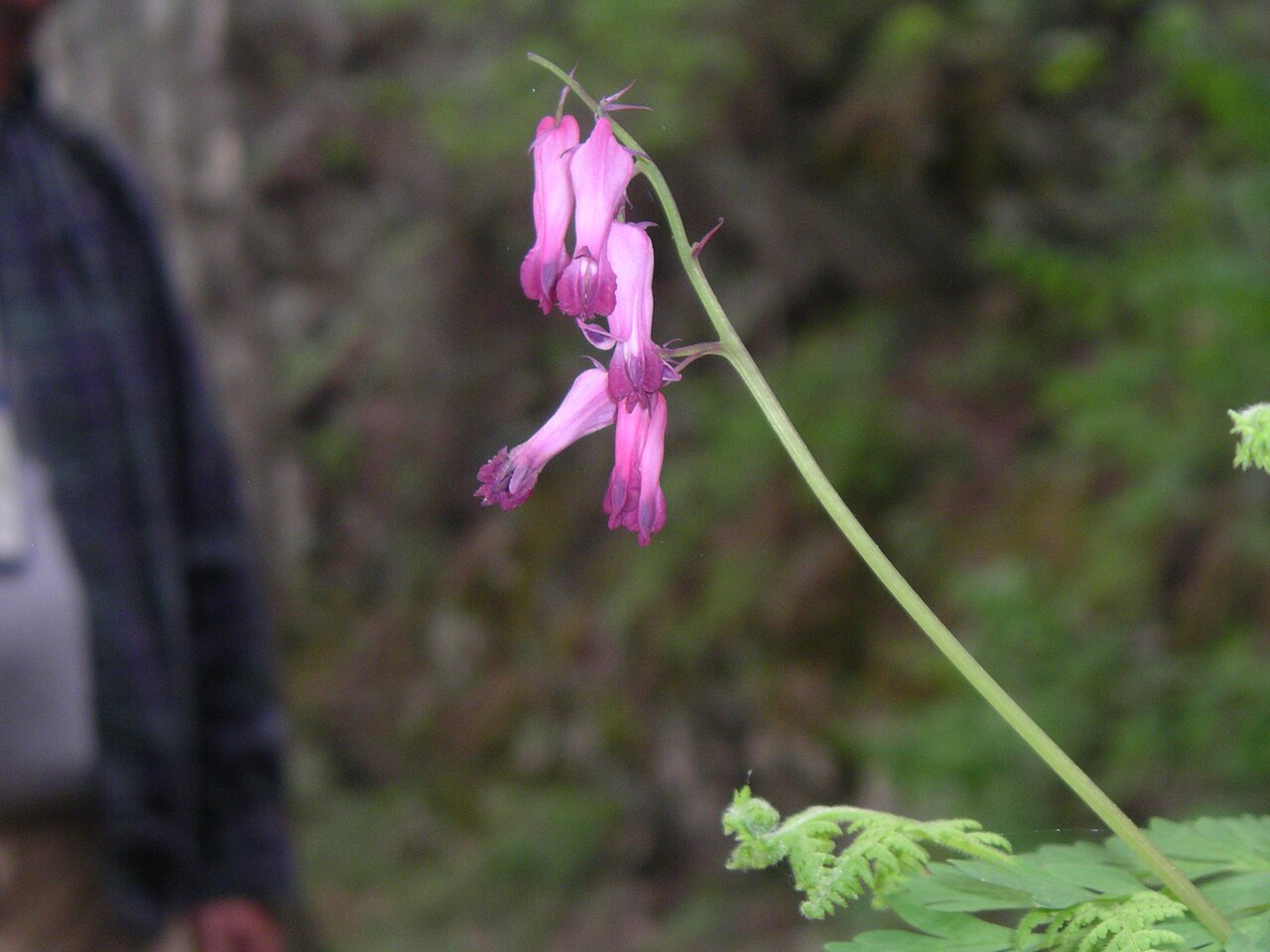
Pendant flowers have an elongated heartlike form, usually in shades of pink. The outer petals form the conspicuous pouch, while the inner parts project below. Flowering stalks rise above the basal foliage. Compare the detailed flower shape with an authoritative description if separating the eastern species from western bleeding heart or a hybrid; a distant photograph is not enough.
Roots & Seasonal Habit
The plant develops from rhizomes and forms a persistent low clump. Its behavior is not identical to Dutchman’s breeches or squirrel corn, which flower very early and commonly disappear soon afterward. Fringed bleeding heart may keep foliage for a much longer part of the year. Leave a marker so the crown is not damaged during seasonal planting or weeding.
Fruit & Look-alikes
Small capsules follow successful pollination. Their seeds have fleshy appendages involved in ant dispersal. Distinguish this species from Lamprocapnos spectabilis, the larger Asian garden bleeding heart, and from white-flowered Dicentra cucullaria and D. canadensis. Hybrids complicate identification, so keep nursery provenance with the plant rather than relying only on a common name.
Quick Facts
| Scientific Name | Dicentra eximia |
| Family | Papaveraceae; traditionally placed in Fumariaceae |
| Plant Type | Rhizomatous herbaceous woodland perennial |
| Mature Height | About 12–18 inches in flower |
| Mature Spread | About 12–18 inches; established clumps can be wider |
| Growth Rate | Moderate |
| Sun Exposure | Partial shade; protected sun in cool moist sites |
| Water Needs | Average to moist, never persistently waterlogged |
| Soil Type | Rich, humusy but well-drained woodland soil |
| Soil pH | Acidic woodland soil, often about 5–6 |
| Bloom Time | Spring into early summer; intermittent later bloom in favorable weather |
| Flower Color | Rose-pink, occasionally white |
| Fall Color | Foliage may persist or die back with climate |
| Fruit | Small capsules containing dark seeds with fleshy appendages |
| Deer Resistant | Not deer-proof; protect establishing plants where browsing is heavy |
| USDA Hardiness Zones | 3–9 in horticultural references; summer heat and drainage are important |
Native Range
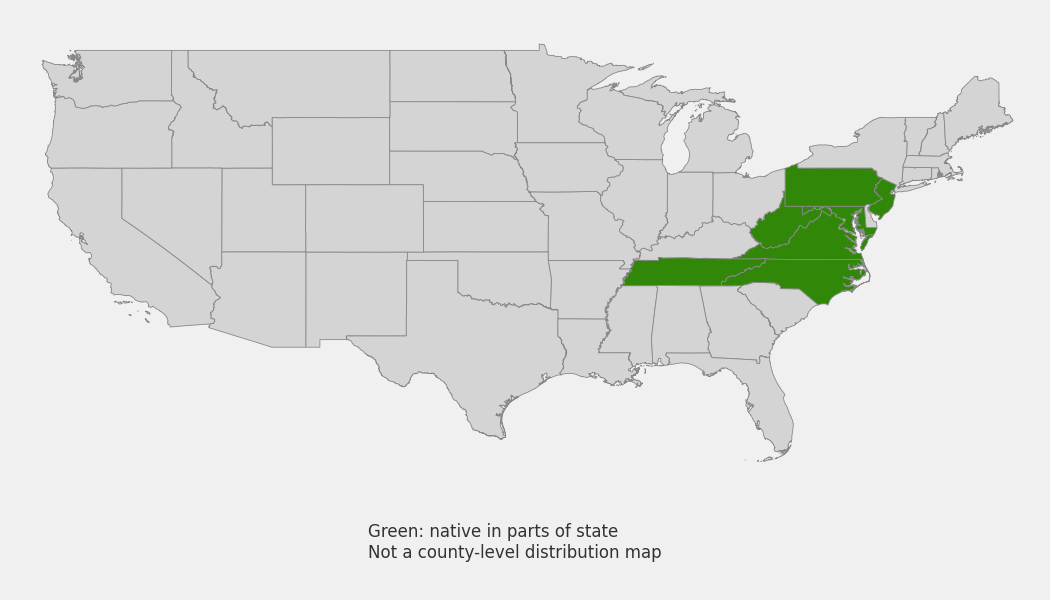
The natural range follows the Appalachians, with a core extending from Pennsylvania and Maryland south through Virginia and West Virginia to Tennessee and North Carolina. Older broad summaries can miss localized edge populations. New Jersey’s 2024 rare-plant profile explicitly recognizes an unquestionably native population in Warren County, so New Jersey is included on this map.
New York records and more distant occurrences may represent garden escapes or misidentifications, as discussed in Flora of North America. A New York, Pennsylvania and New Jersey regional list therefore needs a caveat: Pennsylvania and a very restricted part of New Jersey have native populations, while a New York garden occurrence is not equivalent evidence. The map excludes New York rather than converting cultivation into native range.
For the Carolinas, North Carolina mountain populations are within the accepted range; South Carolina is not included in this conservative native map. Use the state flora for conservation decisions and choose propagated regional material. The species can be rare even where native, making wild collection especially inappropriate.
📋 Regional plant list: New York, Pennsylvania & New Jersey
Growing & Care Guide
Light
Partial shade is a dependable garden choice, especially where afternoon sun is hot. Natural rocky openings can be sunnier, but their cool conditions and root access to moisture may differ from a paved garden edge. If leaves scorch or flowering pauses, evaluate heat and moisture together. Dense shade may reduce flowers without necessarily killing the plant.
Soil & Drainage
Provide humus-rich soil that drains after rain. Rocky woodland habitat does not mean the plant wants a dry gravel tray; roots can occupy moist crevices beneath the surface. Conversely, a heavy planting hole that holds water is not a woodland substitute. Work with the whole bed and avoid burying the crown beneath dense wet mulch.
Water
Keep establishing plants evenly moist and check the root zone rather than watering by a fixed calendar. In summer heat, occasional deep watering may help preserve foliage, but repeatedly soaking already wet soil can damage roots. A temporary flowering pause is not in itself a reason to increase irrigation. Look for actual dryness before responding.
Planting
Set the crown at its former depth, water gently and keep the planting labelled. Allow space for the foliage to spread without being covered by larger neighboring leaves. A small group can create a coherent woodland patch. Use nursery-propagated stock; moving a wild plant can damage a scarce population and does not guarantee garden survival.
Maintenance
Remove genuinely dead or damaged foliage, but keep green leaves that are still supporting the crown. Avoid a severe midsummer cut simply to force bloom. If a plant declines, check for waterlogging, drought, slug damage and competition before applying fertilizer. A modest leaf-litter layer can help conserve moisture without smothering the crown.
Propagation
Fresh seed and division are useful approaches. Seed can require cold, moist conditions and may germinate unevenly, so label pots and retain them long enough for delayed seedlings. Do not let fresh seed dry unnecessarily. Divide healthy cultivated clumps carefully when conditions favor root recovery, keeping each section viable rather than splitting a small plant into many weak pieces.
Choosing Plants
Ask whether the plant is the species or a named hybrid. Some bleeding-heart cultivars have parentage involving western or Asian relatives and may behave differently. A horticultural selection can be attractive, but it should not be substituted without explanation in a planting meant to conserve eastern regional genetics. Keep labels and purchase records with your garden notes.
Landscape Uses
- A sheltered woodland path edge
- A moist but draining rock-garden pocket in partial shade
- A low flowering layer among compatible native woodland perennials
- A small native garden where delicate foliage can be seen closely
Wildlife & Ecological Value
Pollination
The enclosed flower shape favors insects capable of opening or reaching into the bloom, including bumblebees. This differs from an open daisy available to many short-tongued visitors. Plant a variety of flower forms nearby and avoid insecticides on blooming plants. Visitors that take nectar through a hole in the flower may not provide the same pollination service.
Seed Dispersal
Ants can move seeds attracted by their fleshy appendages. This small-scale relationship is a reason to leave some undisturbed soil and leaf litter around a woodland planting. Heavy cultivation or a thick synthetic barrier interrupts the ground-level processes that help woodland herbs establish.
Wildlife & Safety
The plant is not a food crop. Keep historical or ecological observations separate from claims of human edibility. Protective measures may still be needed where local animals damage nursery plants; no ornamental label can promise absolute resistance. Observe the actual site rather than relying on a deer-proof slogan.
Conservation
Native populations are localized, and some states treat the species as rare. Propagated garden plants can introduce people to the species without removing wild individuals. Protecting the rocky woodland habitat and its surrounding conditions is more valuable than transplanting a plant from a sensitive site into a private garden.
Cultural & Historical Uses
The common name describes the pendant flower, while fringed points to the finely divided foliage. Bleeding heart is also applied to unrelated-looking garden forms and to several Dicentra species, which is why the scientific name remains important in native-plant records.
The species has a long horticultural appeal because foliage and flowers work together in a shaded border. Modern breeding has expanded the range of garden bleeding hearts, but a cultivar’s ornamental success does not establish that it belongs to the eastern wild species. Clear labels let gardeners choose knowingly between a species planting and a broader ornamental collection.
Historical medicinal references should not be read as home-use instructions. Members of this group contain biologically active compounds, and the garden role here is ornamental and ecological. Enjoy the plant visually, use gloves if sensitive to sap and keep plant material out of food preparation.
Frequently Asked Questions
Is it native to New Jersey?
Yes, but very locally: New Jersey DEP recognizes an unquestionably native Warren County population. That does not make every escaped garden colony native.
Is it native to New York or South Carolina?
This conservative treatment does not include either state in the native map. Records outside the Appalachian core need careful review for cultivation or misidentification.
Will it bloom all summer?
It may flower intermittently in favorable conditions, but heat can interrupt bloom. Do not promise continuous flowering in every garden.
Is it the large Asian bleeding heart?
No. That familiar garden plant is Lamprocapnos spectabilis. Dicentra eximia is a smaller eastern North American species with more finely divided foliage.
Can I dig a wild plant for my garden?
Use nursery-propagated stock instead. Native populations may be rare, and removing plants damages both the population and its habitat.
📋 Also listed: North & South Carolina
Sources & Further Reading
- NC State Extension: fringed bleeding heart
- Flora of North America: identity and range
- New Jersey DEP 2024: native population and biology
- Clemson Extension: native bleeding hearts
Find Native Plants
Ask growers about nursery propagation and regional provenance. Browse our PA native plant nurseries, NJ native plant nurseries, NC native plant nurseries directory for suppliers. Explore the native nursery finder.