Large-flowered Coreopsis (Coreopsis grandiflora)
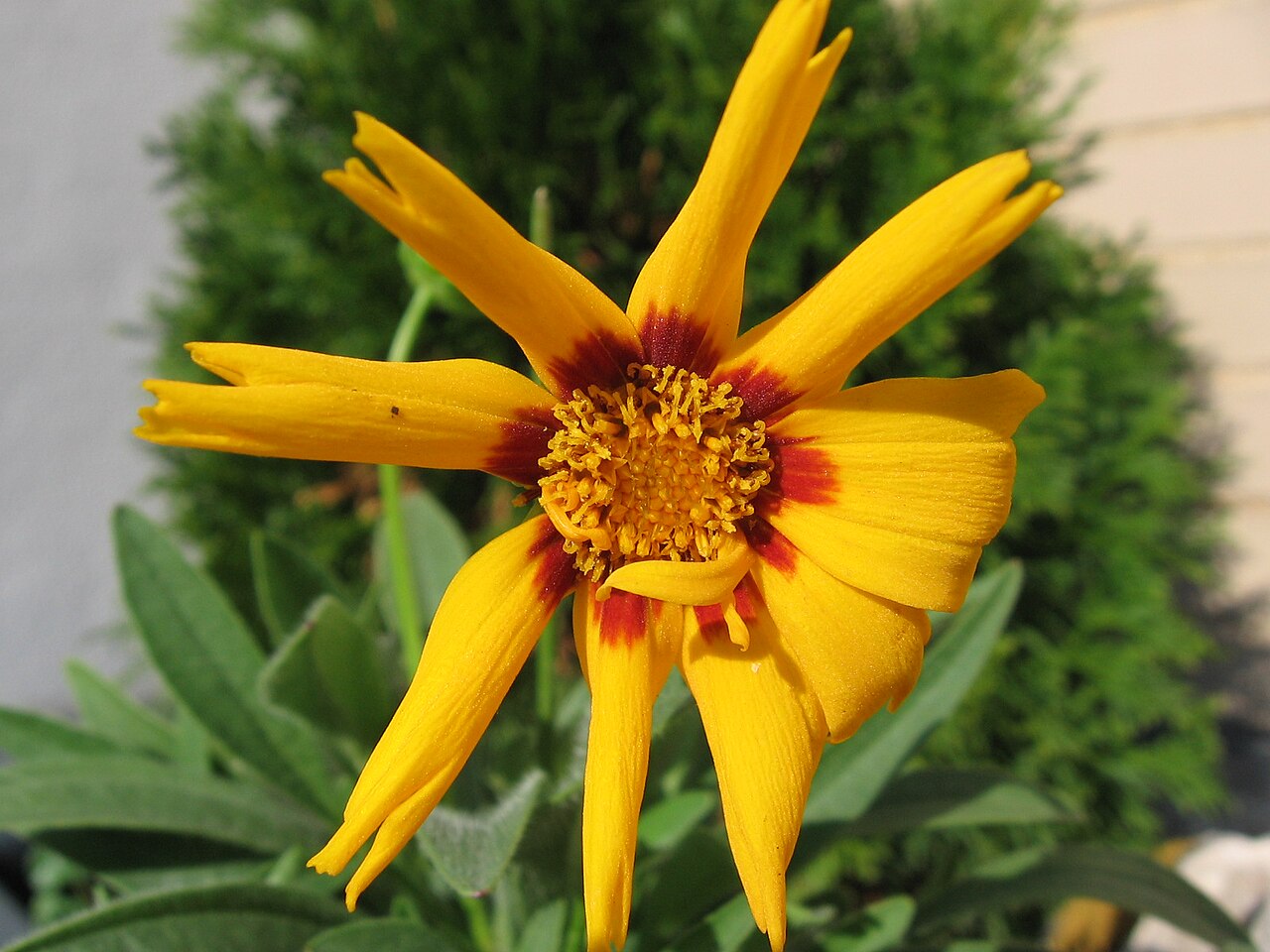
Coreopsis grandiflora, commonly known as Large-flowered Coreopsis or Largeflower Tickseed, is a cheerful, free-blooming perennial wildflower native to the south-central and southeastern United States. True to its name, it produces some of the largest flowers in the tickseed genus — bright, toothed-edge yellow daisies up to 2 inches across — held well above a low mound of finely divided, almost fern-like foliage. Few native perennials bloom as generously or as early in the season.
In the wild, large-flowered coreopsis grows in open, sandy ground: prairies, glades, roadsides and disturbed open woods where competition is low and sunlight is abundant. That same adaptability to lean, well-drained soil makes it an outstanding, low-maintenance garden plant across a wide swath of the country, whether used in a naturalistic wildflower meadow or tucked into a sunny perennial border.
Large-flowered coreopsis is short-lived as perennials go, often behaving more like a biennial or short-lived perennial in garden conditions, but it makes up for that with enthusiastic self-seeding. Once established in a bed with the open, sunny conditions it prefers, a planting tends to renew itself year after year, making it a reliable, low-fuss source of early-summer color and pollinator activity.
Identification
Large-flowered coreopsis is an herbaceous perennial, usually 1 to 2 feet tall, occasionally reaching upward of 2.5 feet in rich soil, with several leafy stems rising from a basal clump. The overall look is airy and open rather than dense, with slender stems that hold the flowers well clear of the foliage.
Leaves
Leaves are borne mostly along the lower two-thirds of the stem, deeply and irregularly divided into 3 to 9 narrow, linear to lance-shaped lobes, giving the foliage a feathery, dissected texture distinct from plainer-leaved coreopsis relatives. Basal leaves are sometimes simple and spoon-shaped, while stem leaves become progressively more lobed higher up the plant.
Flowers
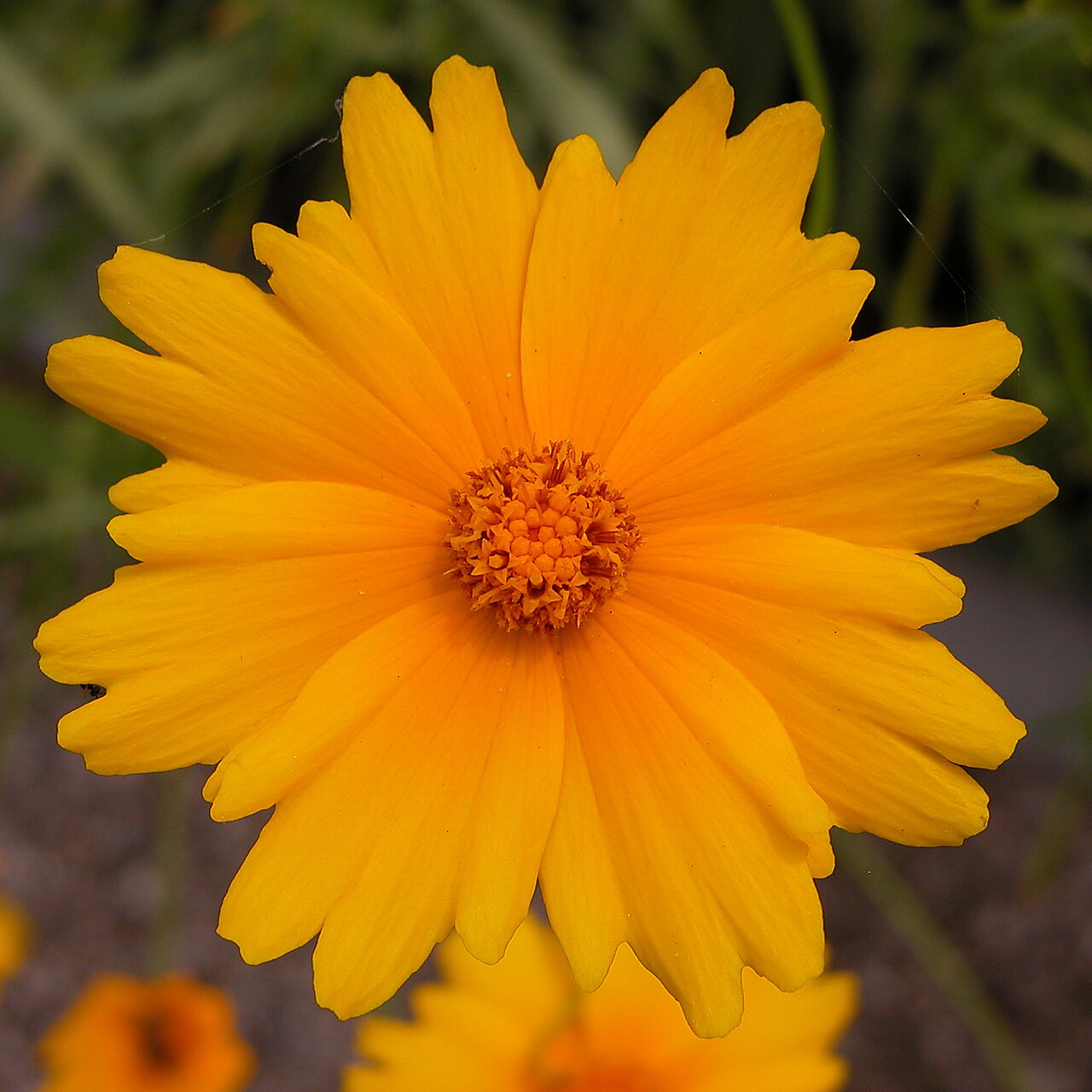
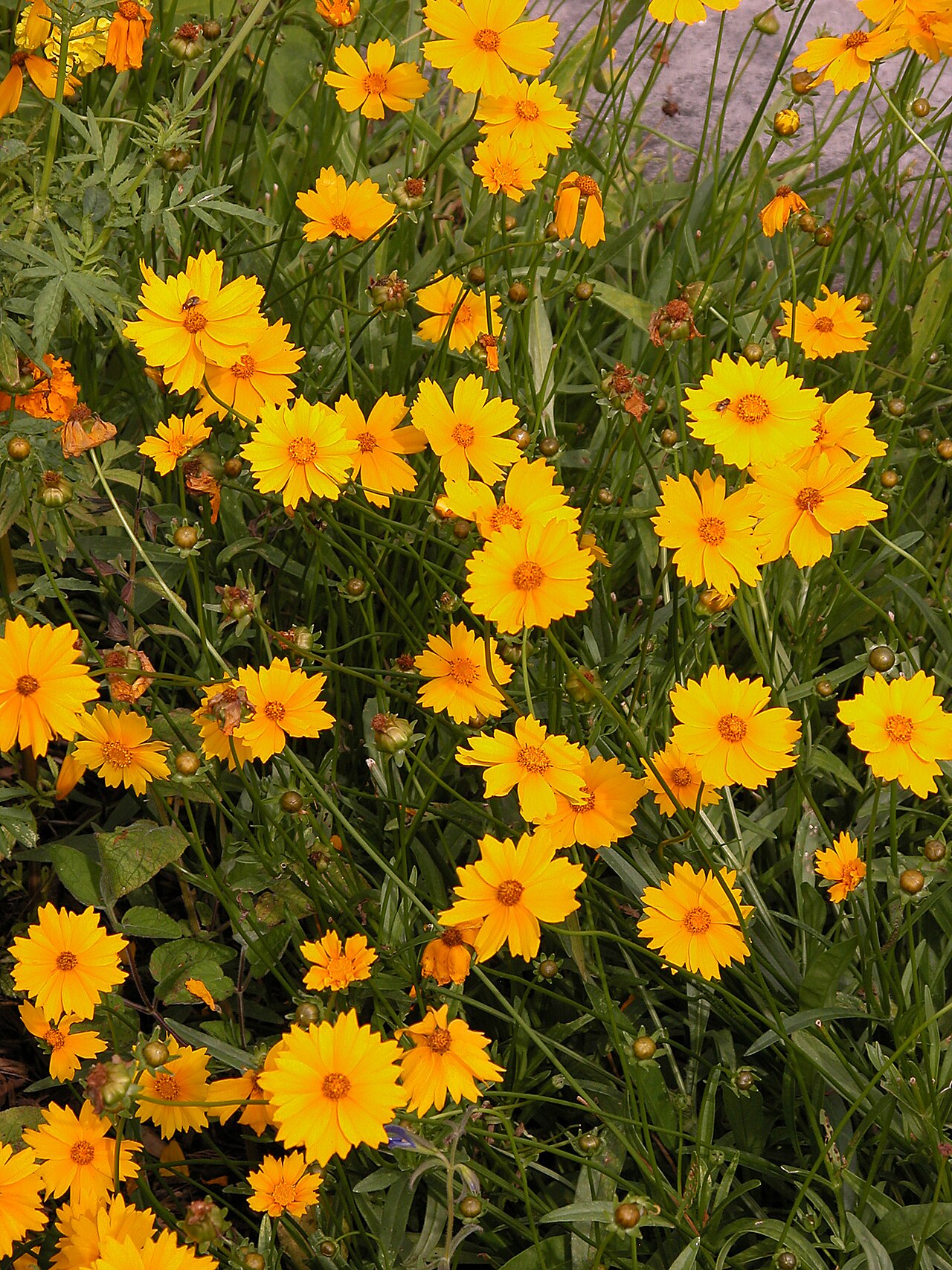
Flower heads are borne singly atop long, leafless stalks (peduncles) that lift each bloom well above the foliage, making the display especially showy. Each head has 6 to 10 broad, bright yellow ray flowers with toothed, often slightly notched tips surrounding a cluster of yellow to orange-brown disc flowers at the center; some individuals show a faint maroon-brown blotch at the base of each ray. Bloom time runs from late spring through midsummer, often from May into August with deadheading or in favorable seasons.
Fruit
After flowering, each head develops into a cluster of small, flattened, winged fruits called cypselae, though they are often loosely called achenes. The wings are papery and may be smooth-edged or irregularly toothed, and the seed heads dry on the stem, aiding wind dispersal and the plant’s readiness to self-sow.
Quick Facts
| Scientific Name | Coreopsis grandiflora |
| Family | Asteraceae (Aster) |
| Plant Type | Herbaceous Perennial Wildflower |
| Mature Height | 1–2 ft (to about 2.5 ft) |
| Mature Spread | 1–1.5 ft |
| Growth Rate | Fast |
| Sun Exposure | Full Sun to Part Shade |
| Water Needs | Low to average; drought tolerant once established |
| Soil Type | Sandy, well-drained soils; tolerates poor, lean ground |
| Soil pH | 5.5–7.5 (slightly acidic to neutral) |
| Bloom Time | May – August |
| Flower Color | Bright yellow, sometimes with a maroon-brown base |
| Fall Color | None notable; foliage declines after seed set |
| Fruit | Small winged cypselae (achenes) in dry seed heads |
| Deer Resistant | Yes (generally avoided by deer and rabbits) |
| USDA Hardiness Zones | 4–9 |
Native Range
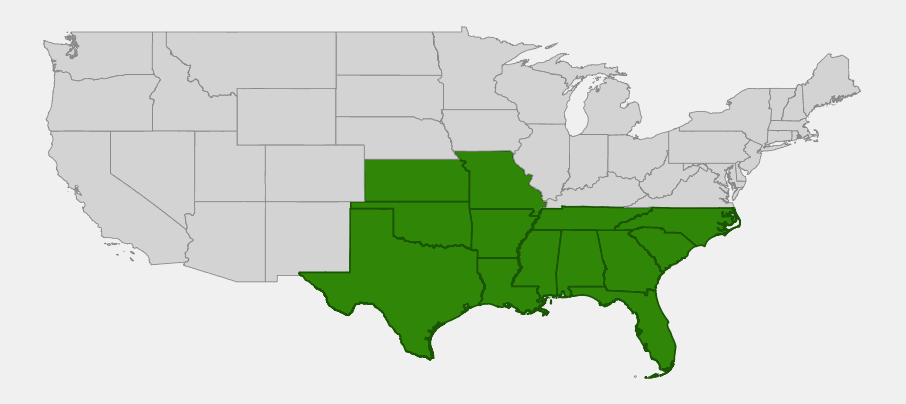
Large-flowered coreopsis is native to the south-central and southeastern United States. Its core range runs through Alabama, Arkansas, Florida, Georgia, Louisiana, Mississippi, North Carolina, South Carolina and Tennessee, extending inland through Missouri, eastern Kansas, Oklahoma and Texas. It has also become naturalized well beyond this native range, including parts of the Midwest, Northeast and even southeastern Canada, so garden escapes are sometimes seen outside its original native footprint.
Typical wild habitat includes dry to mesic prairies, open glades and barrens, sandy roadsides, old fields and the edges of open woods, almost always in full sun on lean, fast-draining soil. It is a pioneer of disturbed and open ground rather than a forest-interior species, which is part of why it establishes so readily along roadsides and in restored prairie plantings.
Because large-flowered coreopsis self-sows freely and has long been popular in wildflower seed mixes, its presence in a given location does not always indicate a naturally occurring wild population, especially outside its core southeastern and south-central range. Within that core range, though, it remains a common and ecologically valuable component of native prairie and glade communities.
📋 Regional plant lists featuring Large-flowered Coreopsis: Arkansas, Louisiana, Eastern Oklahoma & Eastern Texas · Georgia, Alabama & Mississippi · North Carolina & South Carolina · Kentucky & Tennessee · Illinois, Iowa & Missouri · Nebraska, Kansas & Eastern Colorado
Growing & Care Guide
Large-flowered coreopsis is one of the easiest native wildflowers to grow, asking for little beyond sun and good drainage, and it rewards that simplicity with months of bright color and a steady stream of pollinator visitors.
Light
Give this plant full sun for the strongest flowering and the sturdiest, least floppy stems. It tolerates light or part shade, especially in hotter climates, but expect fewer flowers and a looser, more sprawling habit as shade increases.
Soil & Water
Large-flowered coreopsis thrives in sandy, lean, fast-draining soil and actually performs better in poor ground than in rich, heavily amended beds, where it can grow leggy and flop over. It is quite drought tolerant once established and is a poor fit for consistently wet or heavy clay soils, which encourage crown rot. Water regularly through the first season to establish roots, then let rainfall carry established plants through all but the longest dry spells.
Planting Tips
Set out container plants or sow seed in spring after the danger of frost has passed, spacing plants about 12 to 18 inches apart to allow for their spreading habit. Because the species self-sows readily, it is well suited to naturalistic plantings and wildflower meadows where volunteer seedlings are welcome; in a more formal border, deadhead some flower heads before they set seed to control spread.
Pruning & Maintenance
Deadheading spent flowers encourages additional bloom flushes through the summer and reduces unwanted self-seeding. Because individual plants are often short-lived, cutting back about a third of the seed heads each year while leaving the rest to drop seed helps maintain a self-sustaining patch over time. Divide congested clumps every two to three years in early spring to keep plantings vigorous.
Landscape Uses
- Wildflower meadows and prairie restorations alongside black-eyed Susan and native grasses
- Sunny perennial borders for season-long color with minimal care
- Pollinator gardens, where its abundant blooms draw bees and butterflies
- Dry, sandy or poor-soil sites where many other perennials struggle
- Cut flower gardens, since the long stems and cheerful blooms hold up well in a vase
- Erosion control on sunny slopes with lean, well-drained soil
Wildlife & Ecological Value
Despite its modest size, large-flowered coreopsis punches well above its weight as a pollinator and wildlife resource throughout its native range.
For Pollinators
The large, open-faced flowers are an easy landing pad for a wide range of bees, including native sweat bees and long-horned bees, as well as butterflies and day-flying moths. Its early and extended bloom period makes it a valuable nectar and pollen source in the gap between spring ephemerals and the main flush of summer prairie wildflowers.
For Birds
Seed-eating birds such as goldfinches and sparrows feed on the small cypselae in the dried seed heads through late summer and fall, so leaving some spent flower heads standing extends the plant’s wildlife value well past bloom time.
For Mammals
Large-flowered coreopsis is generally left alone by deer and rabbits, which makes it a reliable choice in landscapes where browsing pressure limits other flowering perennials.
Ecosystem Role
As an early colonizer of open, disturbed ground, large-flowered coreopsis helps stabilize soil and provide quick floral resources while slower-growing prairie perennials and grasses establish around it. Its tendency to self-sow and fill in gaps makes it a useful “nurse” species in young prairie restorations.
Cultural & Historical Uses
Large-flowered coreopsis has a long history as a garden plant, prized since at least the early 1800s for the size and brightness of its blooms relative to other tickseeds. British and European gardeners embraced it early; the species was described and illustrated in British garden literature well before it became a staple of American wildflower seed mixes in the twentieth century.
Among Indigenous peoples of the southeastern United States, various coreopsis species, including this one, were used historically to produce dyes, with the flowers and plant parts yielding shades of yellow, orange and red-brown depending on the mordant used. This dye tradition is part of a broader history of coreopsis use across the genus rather than a use unique to this species alone.
In modern horticulture, large-flowered coreopsis has been the parent of numerous garden cultivars bred for compact habit, extended bloom or unusual flower forms, and it remains one of the most widely sold native perennial wildflowers in the American nursery trade.
Frequently Asked Questions
Is large-flowered coreopsis a true perennial?
It is classified as a perennial, but individual plants are often short-lived, sometimes behaving more like a biennial in garden settings. Vigorous self-seeding typically keeps a planting going for years even as individual plants decline.
Will large-flowered coreopsis take over my garden?
It can self-sow enthusiastically in open, sunny, well-drained soil, so some gardeners find it spreads more than expected. Deadheading most of the flowers before they set seed, or confining it to a naturalistic area where volunteers are welcome, keeps it in check.
Do I need to deadhead large-flowered coreopsis?
Deadheading is not required but encourages more flowers over a longer season and reduces self-seeding. Leaving some seed heads in late summer benefits seed-eating birds like goldfinches.
Why are my coreopsis plants flopping over?
Flopping usually means the soil is too rich or the site too shady. This species is adapted to lean, sandy, full-sun conditions, and overly fertile soil or too little light both encourage weak, sprawling stems.
Is large-flowered coreopsis native to my area?
It is native through the south-central and southeastern states, from Texas and Oklahoma east through the Gulf states and the Carolinas, and north into Missouri and eastern Kansas. It has naturalized well beyond that range through wildflower seed mixes, so check your state’s native plant resources if you are restoring a specific local ecosystem.

Looking for a nursery that carries Large-flowered Coreopsis?
Browse our native plant nursery directory: Alabama & Arkansas · Florida & Georgia · Kansas · Louisiana, Mississippi & Missouri · North Carolina & Oklahoma · South Carolina, Tennessee & Texas