Cliff Fendlerbush (Fendlera rupicola)
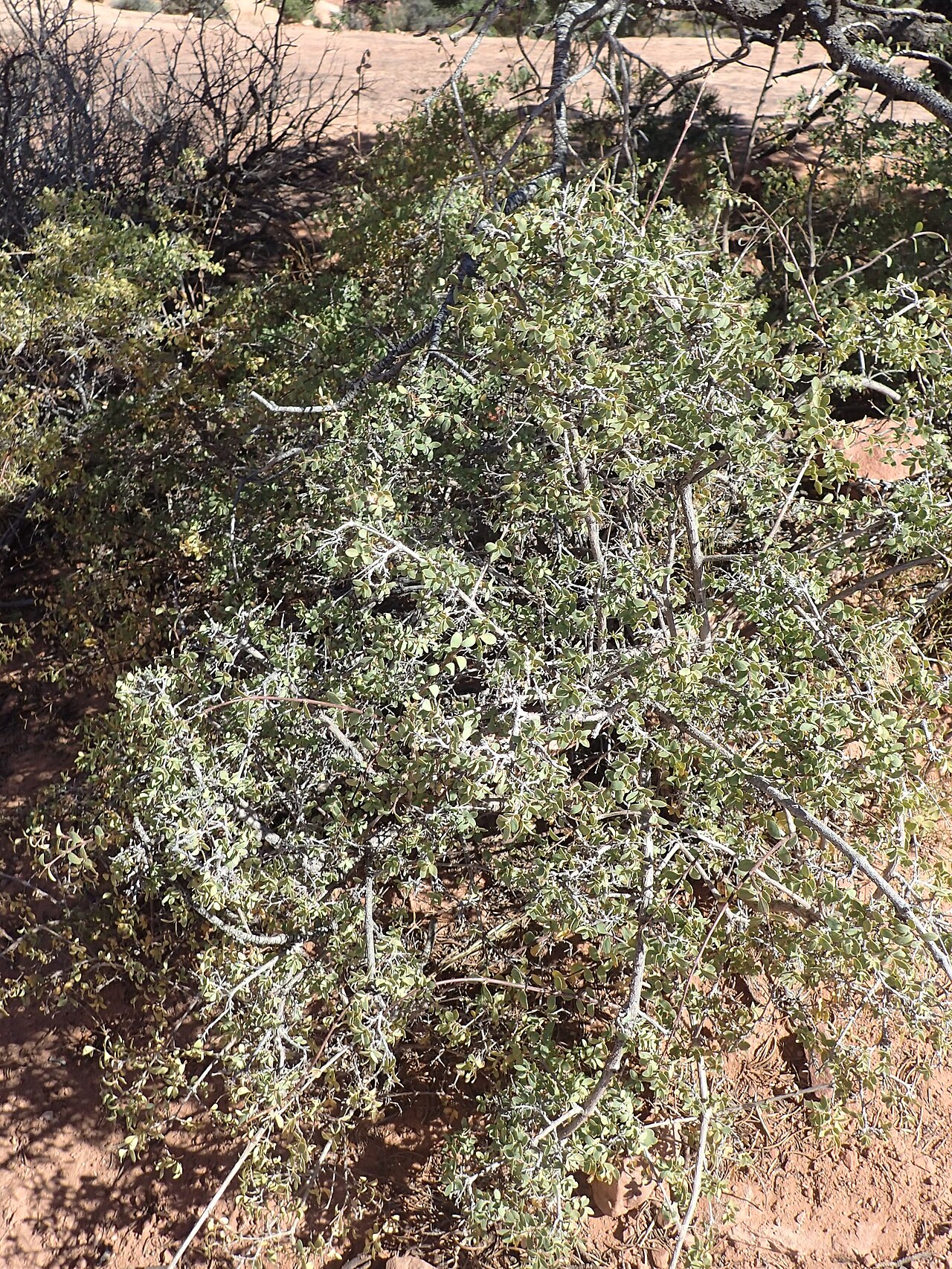
Fendlera rupicola, commonly known as Cliff Fendlerbush or False Mock Orange, is a tough, widely-branched desert shrub native to the canyons, mesas, and rocky slopes of the American Southwest. A member of the Hydrangeaceae (hydrangea family), it is named for the German-American botanist Augustus Fendler, who first collected plants in New Mexico in the 1840s, and for the rocky, cliff-side habitat it favors throughout its range.
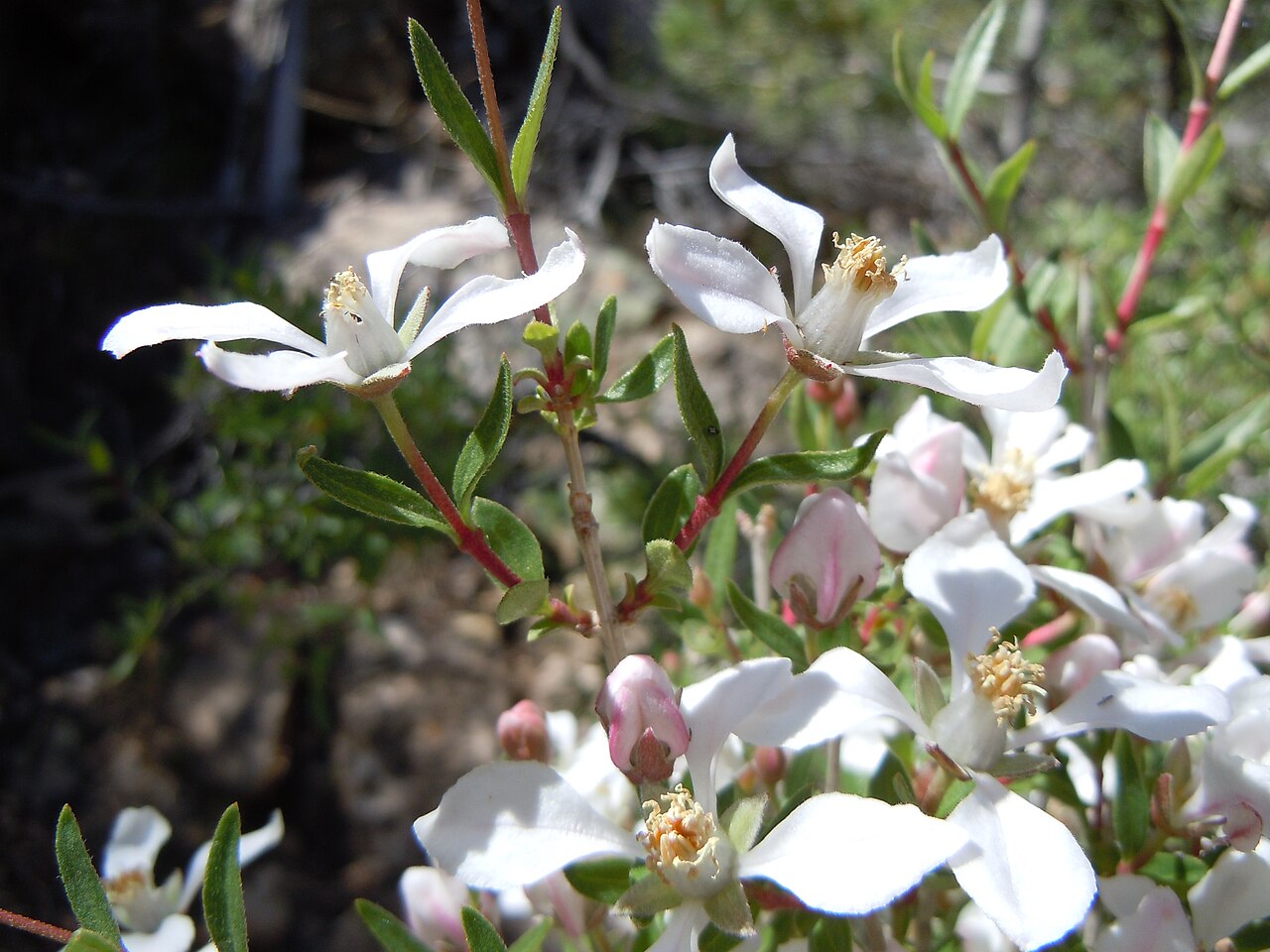
For most of the year Cliff Fendlerbush is an unassuming gray-green shrub of narrow, leathery leaves and shreddy, reddish-tan bark, easy to pass by among the junipers and pinyons it grows beside. Then, for a few weeks each spring, it transforms: the entire plant is smothered in showy, four-petaled white or pink-blushed flowers that resemble a true mock orange (Philadelphus) at a glance, giving rise to its other common name. The display is intense enough that established plants can look snow-dusted from a distance.
Cliff Fendlerbush is built for hard conditions — thin rocky soil, intense sun, long dry spells — and it is correspondingly easy to place in a dry Southwestern garden once it is sited correctly. It is a natural choice for rock gardens, xeriscapes, and naturalistic plantings on igneous or limestone-derived soils anywhere within its native range, and it has long been valued by gardeners well outside that range too, though it is only native to the desert Southwest.
Identification
Cliff Fendlerbush is a native, deciduous, widely-branched shrub, typically 3 to 6 feet tall but capable of reaching 9 feet in favorable sites. It has a dense, twiggy, rounded form with numerous thin branches arising from the base, and it tends to become somewhat lanky with age unless pruned.
Bark & Stems
New bark is a lustrous reddish-tan, aging to gray and becoming distinctly shreddy, peeling in thin strips as the stems mature. The plant is deep-rooted, an adaptation that lets it tap moisture well below the thin, rocky surface soils where it typically grows, and it forms mycorrhizal associations that help it extract phosphorus from poor desert soils.
Leaves
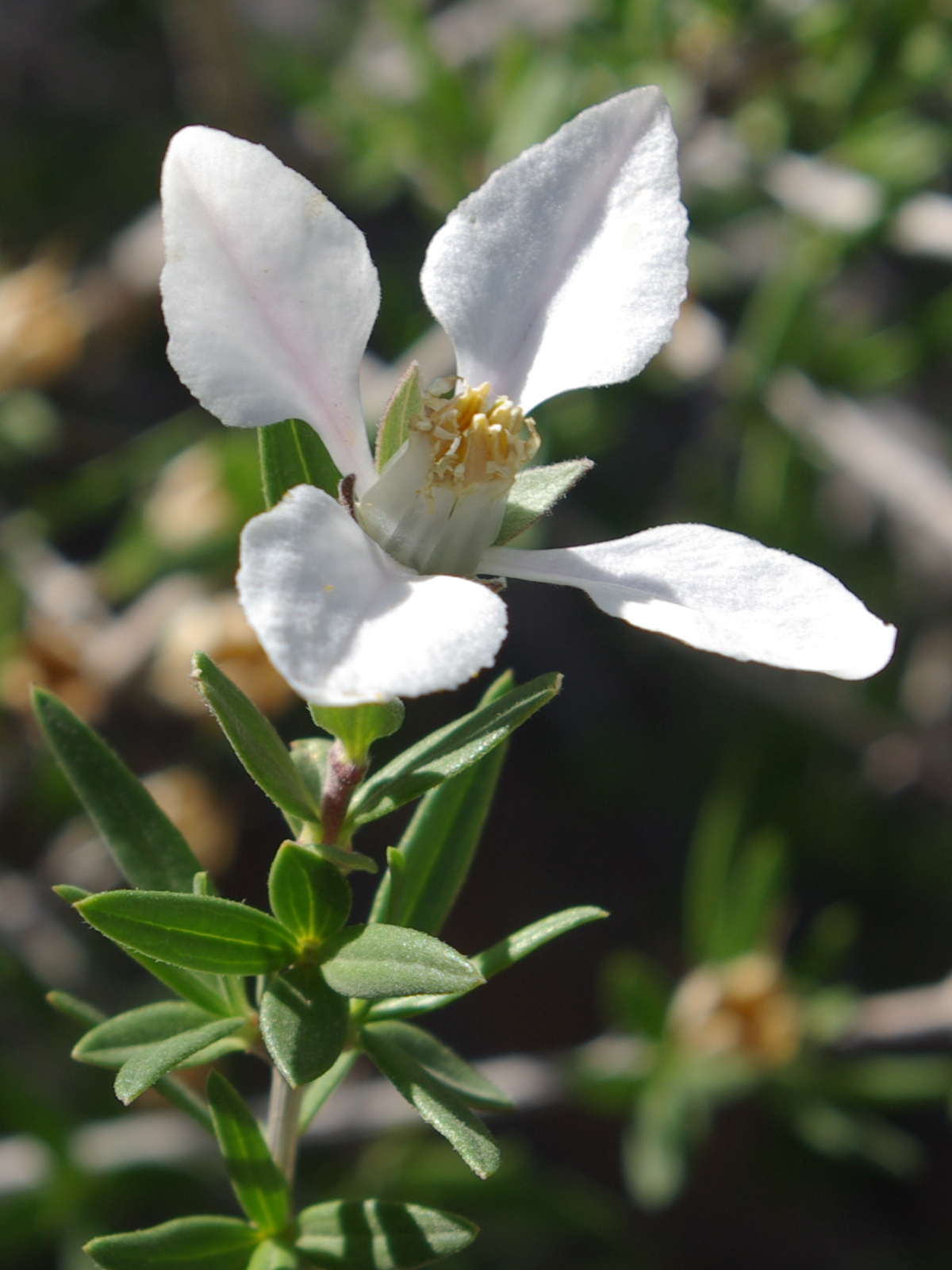
Leaves are opposite, thick, and somewhat twisted, narrowly oblong to lance-shaped, ⅕ to 1⅗ inches long and under ¼ inch wide, with margins that roll slightly under. They are deciduous to semi-evergreen depending on winter severity, and their narrow, leathery form is itself an adaptation to minimize water loss in intense sun.
Flowers & Fruit
Flowers are solitary or borne two to three together at the ends of short side branches, each with four broad white or pink-tinged petals surrounding a cluster of pale stamens. In a heavy bloom year the flowers can blanket the entire plant, opening from March into June depending on elevation and local conditions. The fruit is a small, woody, four-celled capsule that persists on the plant through much of the year, a useful identification feature even after flowering has finished.
Quick Facts
| Scientific Name | Fendlera rupicola |
| Family | Hydrangeaceae (Hydrangea) |
| Plant Type | Deciduous to Semi-Evergreen Shrub |
| Mature Height | 3–6 ft, occasionally to 9 ft |
| Mature Spread | 3–6 ft |
| Growth Rate | Slow to Moderate |
| Sun Exposure | Full Sun |
| Water Needs | Low |
| Soil Type | Rocky, well-drained; igneous or limestone-derived |
| Soil pH | 7.0–8.5 (neutral to alkaline); high lime tolerance |
| Bloom Time | March – June |
| Flower Color | White, often pink-tinged |
| Fall Color | None notable |
| Fruit | Small woody four-celled capsule, persistent |
| Deer Resistant | No (readily browsed by deer, goats, sheep, cattle) |
| USDA Hardiness Zones | 5–9 |
Native Range
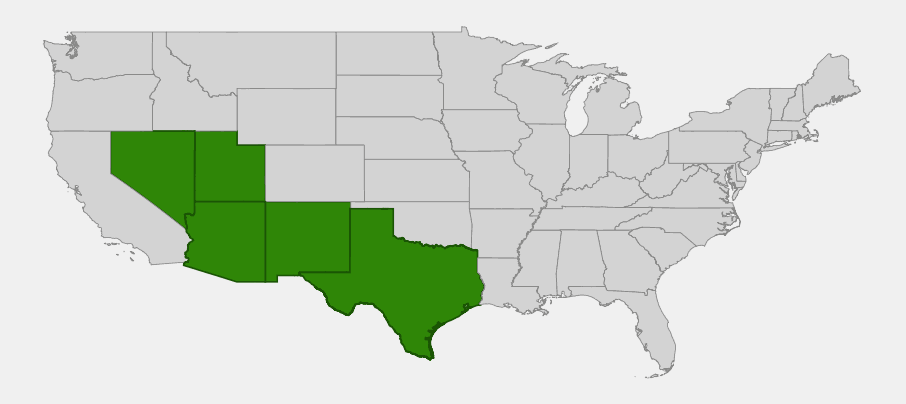
Cliff Fendlerbush is native to the desert Southwest, ranging across Arizona, New Mexico, Nevada, Utah, and western and trans-Pecos Texas, and continuing south into northern Mexico. In Texas it is found in scattered locations from the Sabinal River west to the Pecos River, and is common in the higher mountains of the Trans-Pecos, including the Davis, Chisos, and Guadalupe mountains.
Across its range it grows on dry, rocky mountain slopes, mesas, canyon walls, and in desert and desert-grassland habitats, typically on igneous or limestone-derived soils. It is a characteristic shrub of pinyon-juniper woodland and desert shrub communities, often found alongside oneseed juniper, alligator juniper, true pinyon pine, wavyleaf oak, skunkbush sumac, mountain mahogany, and antelope bitterbrush.
County-level native records concentrate in southern Utah, Arizona, New Mexico, west Texas, and the extreme southern tip of Nevada bordering Arizona — the plant should not be assumed to be native to Colorado, despite the state sometimes being included in broader range summaries; confirmed county records there are lacking, and the species is best treated as a western Colorado non-record until further documented.
📋 Regional plant lists featuring Cliff Fendlerbush: California & Nevada · Utah & Western Colorado · Arizona & New Mexico · South and West Texas
Growing & Care Guide
Cliff Fendlerbush is a low-maintenance, drought-tolerant shrub for gardeners in the Southwest who want a reliable spring flower display without coddling. Its main requirements are sun and sharp drainage; beyond that, it is remarkably forgiving.
Light
Plant in full sun. In the wild it grows on exposed rocky slopes with little shade, and it flowers most heavily where light is unobstructed. In too much shade the plant becomes sparse and leggy with reduced bloom.
Soil & Water
Cliff Fendlerbush thrives in rocky, well-drained soils derived from igneous rock or limestone, and it tolerates high soil calcium carbonate levels well. It is highly drought-tolerant once established and needs very little supplemental irrigation — occasional deep watering during the first year or two is usually enough to get it established, after which natural rainfall is typically sufficient in its native range. Soggy or poorly drained soil is its main enemy.
Planting Tips
Choose a sunny, well-drained site — a rocky slope, raised bed, or gravel garden all work well. Space plants 4 to 6 feet apart to allow for their mature spread. It establishes well from container stock and has been successfully grown well outside its native range, including as far north as New England, though it is only considered native within the desert Southwest.
Pruning & Maintenance
Cliff Fendlerbush can become lanky and open with age; periodic pruning after flowering helps maintain a denser, more compact form and encourages fresh flowering wood. Remove dead or crossing branches as needed. The shrub tolerates browsing and resprouts readily, which also makes it a good candidate for occasional renewal pruning.
Landscape Uses
Cliff Fendlerbush earns a place in several kinds of Southwestern gardens:
- Rock gardens on well-drained, sunny sites
- Xeriscapes and low-water gardens once established
- Naturalistic pinyon-juniper or desert-shrub plantings
- Spring-flowering accent shrub for a showy but brief seasonal display
- Erosion control on rocky slopes, thanks to its deep root system
Wildlife & Ecological Value
Cliff Fendlerbush is an important browse plant across much of its desert and foothill range, and its spring flower display makes it valuable to pollinators as well.
For Pollinators
The abundant spring flowers are conspicuous and nectar-rich, drawing native bees and other pollinating insects at a time when flowering resources on dry rocky slopes can otherwise be limited.
For Mammals
Cliff Fendlerbush is browsed by mule deer, white-tailed deer, bighorn sheep, goats, and cattle, and its palatability is especially high for goats. In the San Cayetano Mountains of Arizona, it made up roughly 11 percent of white-tailed deer diets during the hot, dry late spring — a critical period when other forage is scarce in the desert Southwest. Because it is so palatable, the species tends to decline under heavy grazing pressure.
Ecosystem Role
As a deep-rooted shrub with mycorrhizal fungal associations that improve its uptake of scarce soil phosphorus, Cliff Fendlerbush helps stabilize thin, rocky soils on slopes and canyon walls while contributing structural diversity to pinyon-juniper and desert shrub communities. Its persistent seed capsules and browse value make it a steady, if modest, contributor to Southwestern shrubland food webs year-round.
Cultural & Historical Uses
Cliff Fendlerbush takes its scientific and common names from Augustus Fendler, a German-American botanist who collected extensively in New Mexico in the 1840s and whose specimens helped introduce many Southwestern plants to formal botanical science. The species epithet rupicola, meaning “rock-dwelling,” reflects its characteristic rocky, cliff-side habitat.
Historically, the shrub’s value was primarily as rangeland browse for livestock and wildlife rather than as a plant used directly by people. Its shreddy, fibrous bark and straight young stems have occasionally been noted in regional accounts as useful for small crafting purposes, though no major traditional use has been widely documented.
In more recent decades, Cliff Fendlerbush has become appreciated primarily as an ornamental. Its drought tolerance and showy spring bloom have made it a popular choice for rock gardens in the Southwest, and it has even been grown successfully as far north as New England, well outside its native range, as a specialty flowering shrub for gardeners willing to give it sharp drainage.
Frequently Asked Questions
Is Cliff Fendlerbush the same as mock orange?
No, though it is sometimes called False Mock Orange because its white, four-petaled flowers resemble true mock orange (Philadelphus). Cliff Fendlerbush is in the related but distinct genus Fendlera, within the same Hydrangeaceae family.
How much water does Cliff Fendlerbush need?
Very little once established. It is adapted to dry, rocky slopes with intense sun and minimal rainfall, and it needs only occasional deep watering during its first year or two in the ground. Overwatering or poorly drained soil is more likely to harm it than drought.
Where does Cliff Fendlerbush grow natively?
It is native to the desert Southwest, including Nevada, Utah, Arizona, New Mexico, and western and trans-Pecos Texas, extending south into northern Mexico. Confirmed county-level native records do not currently support Colorado as part of its native range.
Do deer eat Cliff Fendlerbush?
Yes — it is a favored browse plant for mule deer, white-tailed deer, bighorn sheep, goats, and cattle, and is not considered deer resistant. In some Arizona mountain ranges it is a significant part of deer diets during the hot, dry late spring.
How big does Cliff Fendlerbush get?
Most plants reach 3 to 6 feet tall and wide, though it can grow as tall as 9 feet in favorable conditions. Periodic pruning after flowering helps keep it compact, since it can become lanky and open with age.

Looking for a nursery that carries Cliff Fendlerbush?
Browse our native plant nursery directory: Nevada & New Mexico · Utah & Texas · Arizona