Alpine Forget-me-not (Myosotis asiatica)
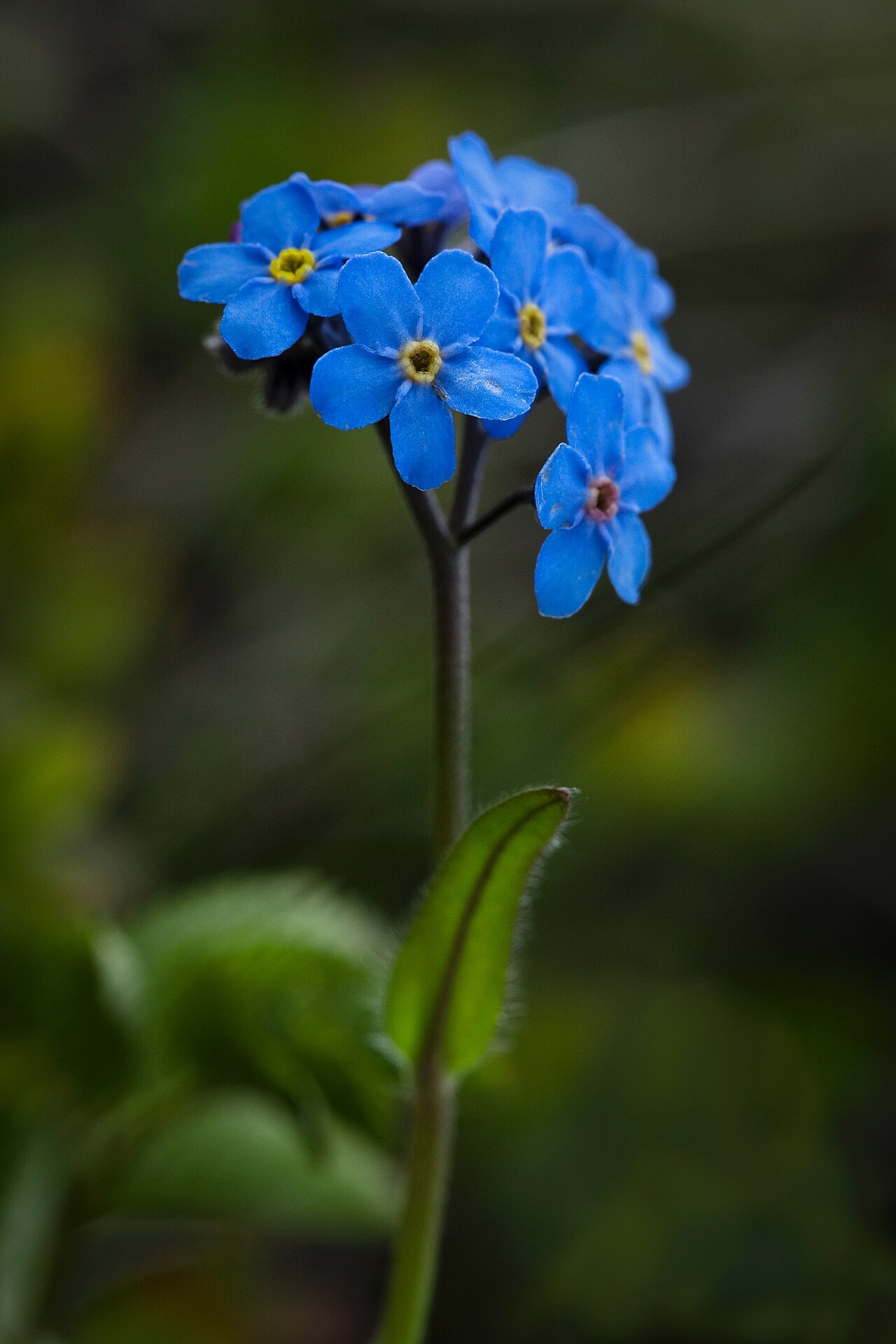
Myosotis asiatica (Vesterg.) Schischk. & Serg. — the Alpine Forget-me-not, also called the Asian forget-me-not — is the true native forget-me-not of the far Northwest, and the only one that belongs in Alaska’s wild landscapes. It was long treated as a subspecies of the European Alpine forget-me-not, Myosotis alpestris subsp. asiatica, and you will still see it sold and listed under that older name, but USDA PLANTS and current floras recognize it as its own species, Myosotis asiatica. This is the plant pictured on Alaska postcards and license plates: a small, true-blue, five-petaled flower with a bright yellow eye, chosen as the official Alaska state flower in 1949 to symbolize the perseverance of the territory’s early settlers.
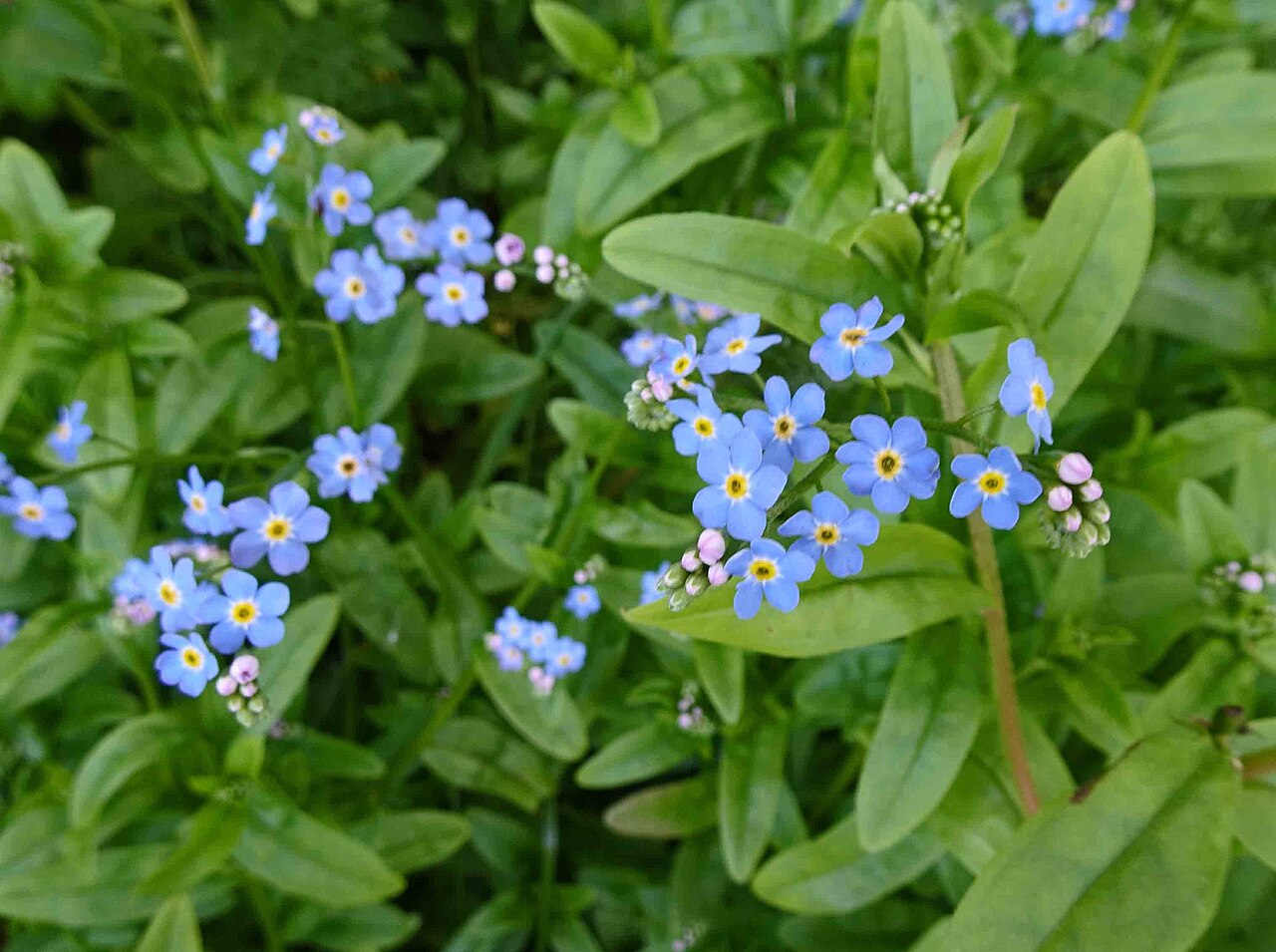
Unlike the showy garden forget-me-nots that have escaped cultivation and gone invasive in wet meadows and stream banks across much of the country, Alpine forget-me-not is a true high-country native. It grows low and unobtrusive among rocks and sedges on open alpine and subalpine slopes, well above where garden forget-me-nots ever wander, and it has never been documented as weedy or aggressive anywhere in its native range.
Gardeners in Alaska, the northern Rockies and the high Cascades value it as a compact, long-blooming rock garden and alpine trough plant that pairs beautifully with other true alpines. It asks for little beyond sharp drainage, cool roots and a sunny site, and it rewards that simple care with weeks of brilliant sky-blue flowers in the heart of the short mountain summer.
Identification
Alpine forget-me-not is a low, tufted perennial herb, usually 4 to 10 inches tall, forming small clumps or loose mats from a short, branching rootstock. The whole plant is covered in short, stiff hairs that give the foliage and stems a slightly grayish, bristly texture — a texture that can mildly irritate skin on contact, something to mention to children who want to pick a bouquet.
Leaves
Leaves are simple, undivided, and lance- to spoon-shaped, arranged alternately along weak, slender stems. Basal leaves form a loose rosette and are somewhat larger than the few leaves carried up the flowering stem. All leaf surfaces bear the same coarse hairs as the stems.
Flowers
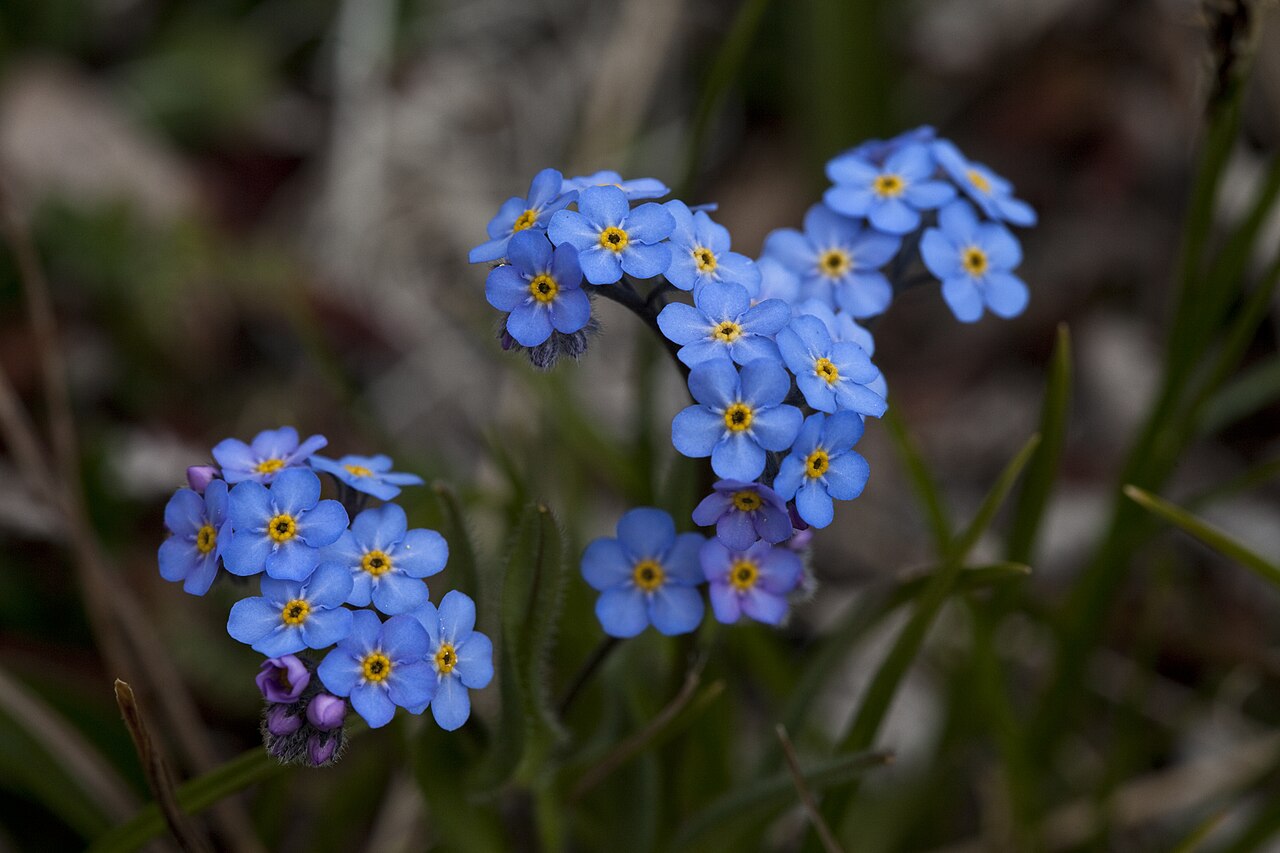
The flowers are tiny — rarely more than a quarter-inch across — with five petals fused at the base into a short tube that flares into five rounded, deep sky-blue lobes around a contrasting bright yellow center. They open in a loosely coiled cluster (a scorpioid cyme) at the stem tip; the cluster slowly uncurls through the growing season as new buds open at the tip while older flowers mature below. Bloom runs from June into August at higher elevations, tracking the short alpine growing season.
Fruit & Roots
After flowering, each flower produces a cluster of small, smooth nutlets inside a persistent calyx. The hairs on the calyx are hooked (uncinate) rather than straight and appressed — the easiest field mark separating this native species from the naturalized European forget-me-nots found in wet lowland sites. Roots are fibrous and shallow, typical of a plant adapted to thin, rocky alpine soils.
Quick Facts
| Scientific Name | Myosotis asiatica (syn. M. alpestris subsp. asiatica) |
| Family | Boraginaceae (Borage) |
| Plant Type | Herbaceous Perennial Wildflower |
| Mature Height | 4–10 in (10–25 cm) |
| Mature Spread | 6–12 in (15–30 cm), loose tufts |
| Growth Rate | Slow |
| Sun Exposure | Full Sun to Part Sun |
| Water Needs | Average, cool and consistently moist roots |
| Soil Type | Gritty, rocky, sharply drained |
| Soil pH | Neutral to slightly acidic |
| Bloom Time | June – August |
| Flower Color | Sky blue with a yellow center |
| Fall Color | None notable; foliage dies back |
| Fruit | Tiny dry nutlets, not ornamental |
| Deer Resistant | Yes, generally avoided |
| USDA Hardiness Zones | 2–6 |
Native Range
Alpine forget-me-not is native across much of Alaska and south through the high country of the northern and central Rocky Mountains. In Alaska it grows from the Alaska Range and Chugach Mountains out through much of the state’s mountainous interior and south-central coast, including the well-known populations around Denali and Juneau’s Mendenhall Glacier. Farther south, it occurs in the high mountains of Washington, Idaho, Montana, Wyoming and the alpine ranges of western Colorado, always restricted to elevations where summers stay short and cool.
Across the Rocky Mountain portion of its range, Alpine forget-me-not is a true subalpine-to-alpine specialist, typically found between about 7,500 and 10,000 feet in open, rocky terrain, grassy alpine meadows and wooded upper slopes just below treeline. In Alaska, where arctic-alpine conditions occur at far lower elevations, it grows in open rocky tundra and gravelly slopes from near sea level in the north and west up through the subalpine zone of the southern mountain ranges, often near the upper limit of White Spruce forest.
Because its range is defined by elevation and climate as much as latitude, Alpine forget-me-not is naturally patchy — common on suitable rocky, well-drained alpine ground, and essentially absent from valley bottoms, lowland meadows and wetlands, which is exactly where the invasive European forget-me-nots (Myosotis scorpioides and M. sylvatica) have instead become established as garden escapees.
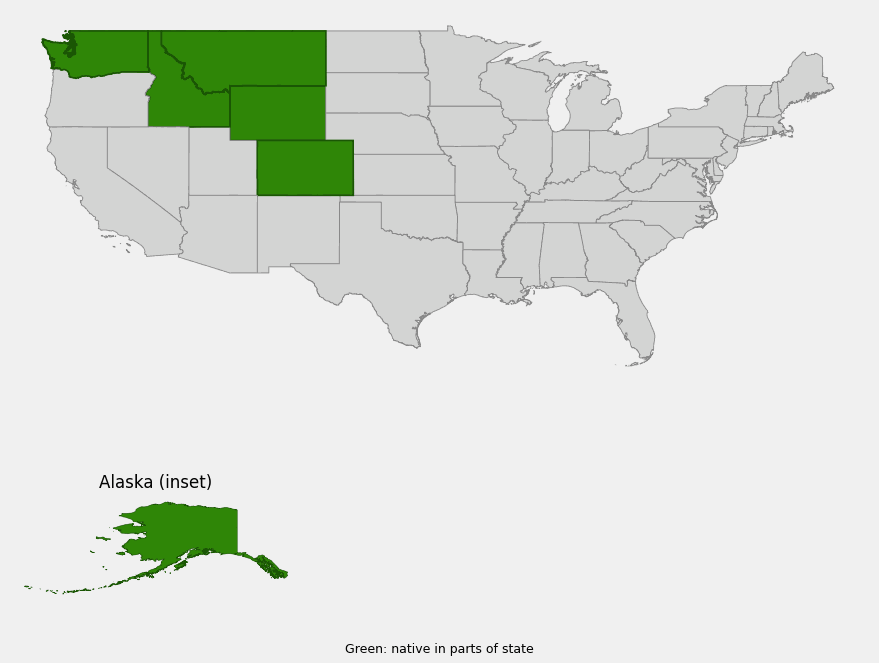
📋 Regional plant lists featuring Alpine Forget-me-not: Alaska · Western Oregon & Western Washington · Idaho, Eastern Oregon & Eastern Washington · Montana & Wyoming · Utah & Western Colorado
Growing & Care Guide
Alpine forget-me-not is a specialist’s plant: it is not difficult once its basic needs are met, but those needs — cool roots, sharp drainage and a short, honest winter dormancy — are not the conditions of an average lowland garden bed. It is best suited to rock gardens, alpine troughs, scree beds and high-elevation gardens where summers stay mild.
Light
Give it full sun in cool mountain climates, or light afternoon shade in warmer lowland gardens where summer heat builds up quickly. In its native alpine habitat it grows fully exposed to intense high-elevation sunlight, so shade is a concession to heat, not a true preference.
Soil & Water
Plant in gritty, mineral, sharply drained soil — a standard rock-garden mix of coarse sand, fine gravel and a little loam works well. Roots should stay cool and lightly moist through the growing season but never sit wet, and good drainage through winter is essential; soggy crowns in a non-alpine climate are the most common cause of failure. A top-dressing of fine gravel around the crown helps keep foliage dry and deters rot.
Planting Tips
Set out nursery divisions or seedlings in spring once the soil has warmed, spacing plants 6 to 8 inches apart for a mat-like drift. Raised beds, troughs or scree gardens that drain quickly are far more forgiving than flat garden soil. Gardeners outside its natural cool-summer range should treat it as a short-lived perennial and expect to replace plants every few years.
Pruning & Maintenance
Little pruning is needed. Shear off spent flower stalks after bloom to tidy the clump and encourage compact new growth. Division every two to three years keeps older clumps vigorous and is also the easiest way to propagate more plants.
Propagation
Propagate by seed sown in fall to take advantage of natural cold stratification, or by dividing established clumps in early spring. Fresh seed germinates most reliably; stored seed benefits from several weeks of moist chilling before sowing.
Landscape Uses
- Rock gardens and alpine troughs, its best and most natural setting
- Scree beds paired with other true alpine wildflowers
- Edging for cool, sunny borders in mountain-climate gardens
- Containers that can be given sharp drainage and cool roots
- Restoration plantings on disturbed alpine or subalpine sites in its native range
Wildlife & Ecological Value
Though diminutive, Alpine forget-me-not plays a real role in the short, intense growing season of alpine and subarctic plant communities.
For Pollinators
The bright blue-and-yellow flowers attract native bees, flies and other small pollinating insects that are active at high elevation and high latitude during the brief summer window. The strong color contrast between the blue petals and yellow eye is thought to help guide pollinators to the nectar and pollen.
For Birds
The plant itself is too small to offer significant food or cover for birds, though the open rocky and tundra habitats it favors support ground-nesting species such as horned larks and American pipits, which forage among the same low alpine vegetation.
For Mammals
Alpine forget-me-not is occasionally browsed incidentally by small mammals and deer moving through alpine meadows, but it is not a preferred forage plant, and its bristly, hairy foliage likely discourages heavy browsing.
Ecosystem Role
As one of relatively few broadleaf flowering plants able to persist in thin, rocky alpine soils, it adds floral diversity to plant communities dominated by sedges, grasses and dwarf shrubs, and its hooked-haired seeds catch on fur and clothing, helping the species disperse slowly across the patchy, rocky alpine terrain it calls home.
Cultural & Historical Uses
Alpine forget-me-not holds a special place in Alaska’s identity. It was designated the official state flower of Alaska in 1949, a choice meant to evoke the perseverance of the territory’s early pioneers through hardship. The flower appears widely in Alaska state symbolism, from license plates and quarters to civic emblems.
Historically, the forget-me-not genus as a whole has a long history of use in European folk medicine as a mild astringent, applied in poultices to soothe skin irritation, a use rooted in the related European species rather than documented specifically for this North American plant. This is a matter of historical record, not a modern health recommendation, and the plant’s bristly hairs can themselves cause mild skin irritation on contact.
Beyond its symbolic role, Alpine forget-me-not has no significant history of food or fiber use among Indigenous peoples of the region, likely owing to its small size and its restriction to remote, high-elevation terrain.
Frequently Asked Questions
Is the Alaska state flower forget-me-not the same as the garden forget-me-not?
No. Alaska’s state flower is Myosotis asiatica, a native alpine wildflower restricted to high, rocky terrain. The common garden forget-me-nots sold at nurseries are usually European species such as Myosotis sylvatica or M. scorpioides, which have escaped cultivation and become invasive weeds of wet meadows and stream banks in many parts of the United States. Planting the native alpine species instead avoids that invasive risk.
Can I grow Alpine forget-me-not in a regular flower bed?
It is possible in cool-summer climates with sharply drained soil, but it generally performs poorly in average garden beds, especially in hot or humid regions. A rock garden, raised scree bed or alpine trough that mimics its native rocky, well-drained habitat will give far better results.
Why are the flower clusters curled?
The coiled flower cluster is called a scorpioid cyme. New buds form and open at the curled tip while older flowers below mature and set seed, a growth pattern shared by the whole borage family.
Is Alpine forget-me-not toxic or an allergen?
It is not known to be toxic, but like many borage-family plants its foliage carries coarse, mineral-stiffened hairs that can mildly irritate skin on contact. It is not used or recommended as a food plant.
How can I tell the native species from the invasive ones?
Habitat is the best clue: the native Alpine forget-me-not grows on dry, rocky, high-elevation ground, while the invasive European species grow in wet lowland meadows, ditches and stream banks. Botanically, the native species has hooked hairs on the calyx, while the European weeds have straight, appressed hairs.