Spike Muhly (Muhlenbergia wrightii)
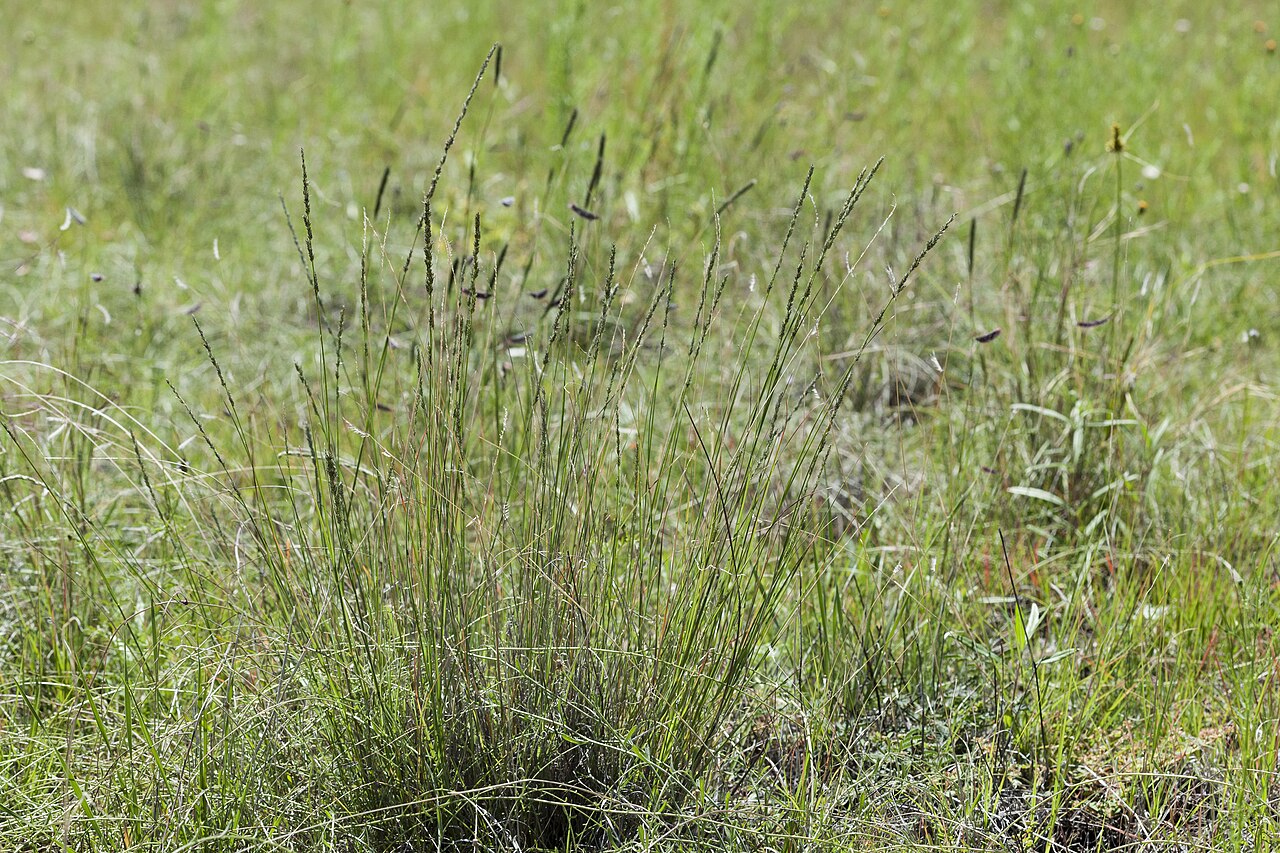
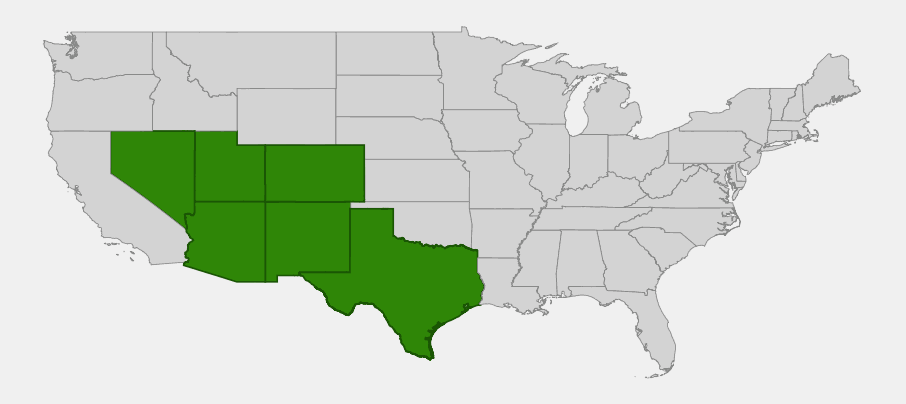
Muhlenbergia wrightii, commonly known as Spike Muhly, is a native warm-season bunchgrass of the southern Rocky Mountains and Colorado Plateau, named for its tight, narrow, spikelike seed head — a dense column of tiny spikelets rather than the loose, open panicle typical of many of its muhly relatives. It is a modest grass, usually under two feet tall, but it is a dependable, good-condition indicator on rangeland across its range, turning up reliably in healthy pinyon-juniper and grassland sites in Arizona, Colorado, New Mexico, Nevada, Texas, and Utah.
Spike muhly grows on gravelly prairies, rocky slopes, and in mountain meadows between roughly 3,800 and 9,000 feet, usually on soils derived from granite, sandstone, or limestone. That limestone tolerance is notable — it has a high tolerance for calcium carbonate (caliche) soils that many other grasses struggle with, which makes it a useful choice on the alkaline, rocky ground common across much of the Colorado Plateau and southern Rockies.
For gardeners in its native range, spike muhly is a tough, low-key grass for a dry, sunny, rocky site — xeriscapes, high-desert gardens, and restoration plantings all suit it well. It is slow to establish, so patience is part of the deal, but once it takes hold it persists reliably with very little care, the same quality that has made it a trusted indicator species on well-managed rangeland for generations.
Identification
Spike muhly is a perennial, warm-season bunchgrass, growing in dense to loose tufts. Mature plants typically stand 6 inches to 2 feet tall, with a similar spread as clumps slowly widen with age.
Leaves & Stems
Leaf sheaths are usually shorter than the internodes, smooth or lightly roughened, and compressed-keeled; they do not become spirally coiled with age, a detail that helps separate it from some similar muhlys. Ligules are membranous and truncate (squared-off), 1 to 3 (rarely 5) mm long. Leaf blades are narrow, 0.6 to nearly 5 inches (1.4–12 cm) long and only 1 to 3 mm wide, flat to folded, smooth to lightly roughened on the underside and strigose (lined with stiff, appressed hairs) on the upper surface.
Flowers & Seed Heads
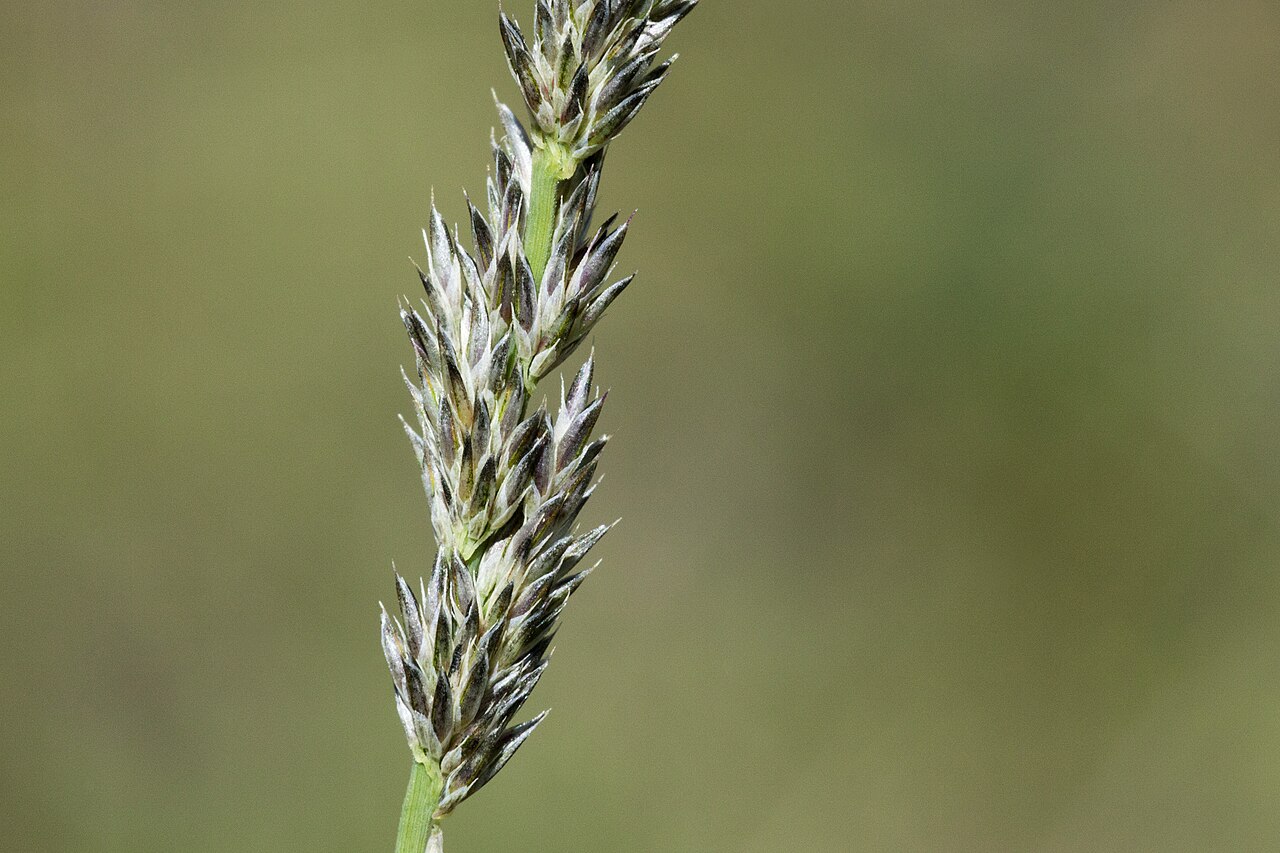
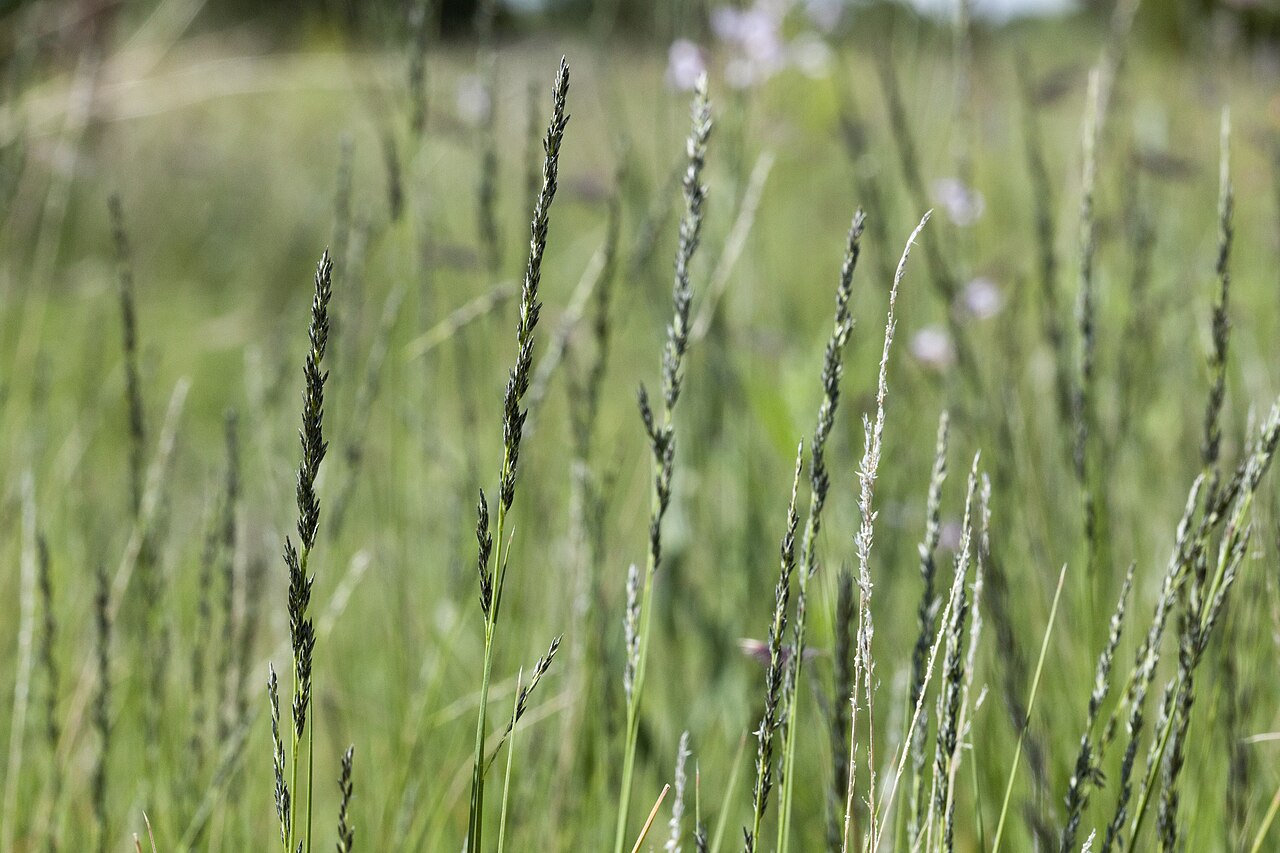
The feature that gives the plant its common name is the panicle: 2 to 6.3 inches (5–16 cm) long but only about 0.1 to 0.5 inch (0.2–1.2 cm) wide, dense and distinctly spikelike rather than open and branching. Primary branches are short (0.3–2 cm) and held tightly appressed to the main axis, with very short pedicels, which is what packs the spikelets into that tight, narrow column. Flowering generally runs through summer into early fall, following the pattern of other high-elevation Southwestern grasses that green up and bloom with the warm-season rains.
Quick Facts
| Scientific Name | Muhlenbergia wrightii |
| Family | Poaceae (Grass) |
| Plant Type | Warm-season perennial bunchgrass |
| Mature Height | 6 in – 2 ft |
| Mature Spread | 1–3 ft, widening slowly |
| Growth Rate | Slow to establish, persistent once mature |
| Sun Exposure | Full Sun |
| Water Needs | Low to medium; drought tolerant once established |
| Soil Type | Various dry, rocky soils — granitic, sandstone, or limestone-derived |
| Soil pH | Neutral to alkaline; high tolerance for calcium carbonate (caliche) soils |
| Bloom Time | Summer into early fall |
| Flower Color | Pale green to straw, dense narrow spikes |
| Fall Color | Tan/straw as the clump cures |
| Fruit | Small caryopsis (grain), typical of the grass family |
| Deer Resistant | Generally yes, though grazed by livestock and wildlife as forage |
| USDA Hardiness Zones | 5–9 |
Native Range
Spike muhly is native to the southern Rocky Mountains, Colorado Plateau, and adjoining parts of the Southwest. It occurs in Arizona, Colorado, New Mexico, Nevada, Texas (chiefly the Trans-Pecos), and Utah, generally at elevations of roughly 3,800 to 9,000 feet. Within that range it is most frequent in New Mexico and Arizona, where it is a recognized component of pinyon-juniper woodland and grassland range.
Typical habitat is gravelly prairie, rocky slopes, and mountain meadows, usually on soils derived from granite, sandstone, or limestone. Its tolerance of calcareous (caliche) ground is a distinguishing trait among Southwestern grasses, letting it hold on in alkaline, rocky soils where many other species fail. It is frequently found alongside pinyon pine and juniper, as well as other native bunchgrasses such as blue grama and Indian ricegrass, in the open woodland and grassland mosaics typical of the Colorado Plateau and southern Rocky Mountain foothills.
Because of this habitat preference, spike muhly is best thought of as a rocky, well-drained-ground specialist rather than a generalist grassland dominant — it tends to occupy the drier, stonier pockets within a given landscape rather than deep, fertile valley soils.
📋 Regional plant lists featuring Spike Muhly: Arizona & New Mexico · Utah & Western Colorado
Growing & Care Guide
Spike muhly asks for the same conditions it gets in the wild: full sun, rocky and fast-draining soil, and minimal fuss. It is not a quick grower, so set realistic expectations for the first couple of seasons.
Light
Plant it in full sun. This is an open-ground, high-light species throughout its native range and will not perform well in shade.
Soil & Water
Give spike muhly lean, gravelly, well-drained soil; it tolerates granitic, sandstone, and limestone-derived ground equally well, including alkaline, high-caliche soils that are a problem for many other landscape grasses. Water use is low to medium: water regularly while plants establish, then cut back, relying on natural rainfall except during extended dry spells once the root system is developed.
Planting Tips
Spike muhly is slow to establish but persistent once it takes hold, so plant it where you can give it a season or two of patience before it fills in. It is best suited to higher-elevation gardens within its natural 3,800–9,000-foot elevation band; in rock gardens or gravel beds at lower, hotter elevations outside that range, results will be less reliable. Space plants roughly 12 to 18 inches apart to let individual tufts develop their narrow, upright form.
Pruning & Maintenance
Cut back old growth in late winter before spring regrowth begins. Spike muhly needs little other maintenance; avoid heavy, repeated grazing or mowing during the growing season, since — like most native bunchgrasses — it is more productive on rangeland that is rested and allowed to regrow than on ground that is continuously, heavily used.
Landscape Uses
Spike muhly’s rocky-ground toughness and narrow, upright form suit several specific roles:
- Xeriscape and high-desert gardens on gravelly or rocky soil
- Caliche and alkaline-soil plantings where many other grasses struggle
- Pinyon-juniper and Colorado Plateau restoration seed mixes
- Rock gardens paired with other small Southwestern native grasses
- Rangeland reseeding as a recognized good-condition indicator species
Wildlife & Ecological Value
Spike muhly is best known on the land as a working rangeland grass — a species range managers watch as a sign of ecological health rather than one with extensively documented wildlife research of its own.
For Mammals
Spike muhly is recognized as good forage on Southwestern rangeland. In U.S. Forest Service range-condition classifications for alligator juniper woodland in Arizona, it is listed among the “good”-condition indicator grasses (alongside Indian ricegrass and black and blue grama), meaning its presence and abundance signal a healthier, better-managed range for livestock and native grazers alike.
For Birds & Pollinators
As with other native bunchgrasses in pinyon-juniper and grassland habitat, spike muhly’s seed provides food for seed-eating birds, and its tufted form offers modest ground-level cover. Grasses are wind-pollinated and do not provide floral resources for pollinators, but the open grassland and woodland habitat it grows in supports a broader community of flowering plants that do.
Ecosystem Role
By persisting on the rocky, calcareous, and otherwise marginal soils that many grasses avoid, spike muhly helps fill out the plant cover and stabilize ground on sites that would otherwise be sparsely vegetated. Its presence is used by land managers as a practical, on-the-ground gauge of range condition, since this is a species that declines under poor management and increases where grazing is well controlled — much like its relative mountain muhly elsewhere in the same mountain ranges.
Cultural & Historical Uses
Spike muhly does not carry a well-documented history of Indigenous or settler use distinct from the broader pattern of native Southwestern grasses grazed by livestock since the range cattle industry expanded across the region in the late 1800s. Its chief historical role has been agronomic rather than cultural: as a forage and range-condition indicator species tracked by ranchers and federal land managers across Arizona, Colorado, New Mexico, and Utah.
That practical, working-landscape role continues today. Land management agencies still use spike muhly’s abundance, alongside species like blue grama and Indian ricegrass, as one measure of whether pinyon-juniper and grassland range is being grazed sustainably, and native-seed and native-plant nurseries within its range increasingly offer it for restoration plantings aimed at rebuilding that same healthy range condition.
Frequently Asked Questions
How is spike muhly different from other muhly grasses?
Its panicle (seed head) is the giveaway: spike muhly’s is dense and narrow, forming a tight, spikelike column rather than the loose, open, feathery panicle typical of many related muhlys. That compact seed head is where the common name comes from.
Does spike muhly tolerate alkaline or limestone soil?
Yes, notably well. It has a high tolerance for calcium carbonate (caliche) soils and grows naturally on granitic, sandstone, and limestone-derived ground, making it a good option for alkaline soils that give many other grasses trouble.
How fast does spike muhly establish?
Slowly. It is known to be slow to establish but persistent once it does, so give new plantings a couple of growing seasons before expecting a full, mature clump.
Is spike muhly good forage for livestock?
Yes. It is recognized as a good-forage, good-condition indicator grass on pinyon-juniper and woodland range in the Southwest, meaning healthy, well-managed range tends to support more of it.
What elevation does spike muhly need?
It is adapted to roughly 3,800 to 9,000 feet in its native range, so it performs best in mid-to-high-elevation gardens within the southern Rockies and Colorado Plateau rather than at low desert elevations.

Looking for a nursery that carries Spike Muhly?
Browse our native plant nursery directory: Arizona · Colorado · New Mexico & Nevada · Texas & Utah