
Moss Campion (Silene acaulis)
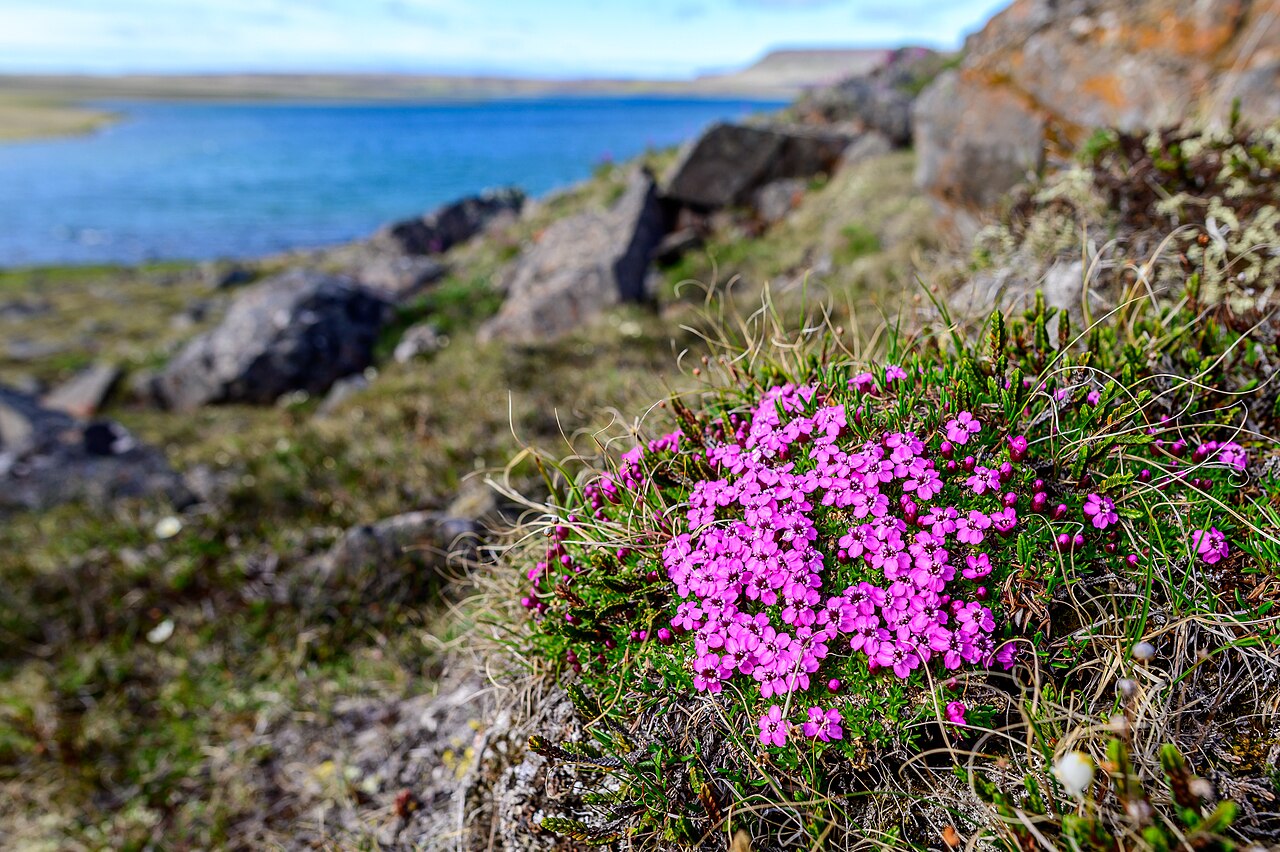
Silene acaulis, known as Moss Campion, is a tiny, cushion-forming perennial of the pink family (Caryophyllaceae) that grows on alpine ridges, tundra and rocky Arctic shores around the Northern Hemisphere. It forms tight, bright green mounds of crowded, needle-like leaves that look like moss, and in early summer the cushions are covered with small pink flowers. The species name acaulis means “stemless,” because the flowers sit almost directly on the cushion.
Moss campion is one of the classic plants of the high country. Its dense, low cushion is an adaptation to wind, cold and a very short growing season: it traps heat and moisture, resists drying winds and shelters seedlings of other plants. Cushions grow very slowly, often taking years before they first flower, and large cushions can be many decades old.
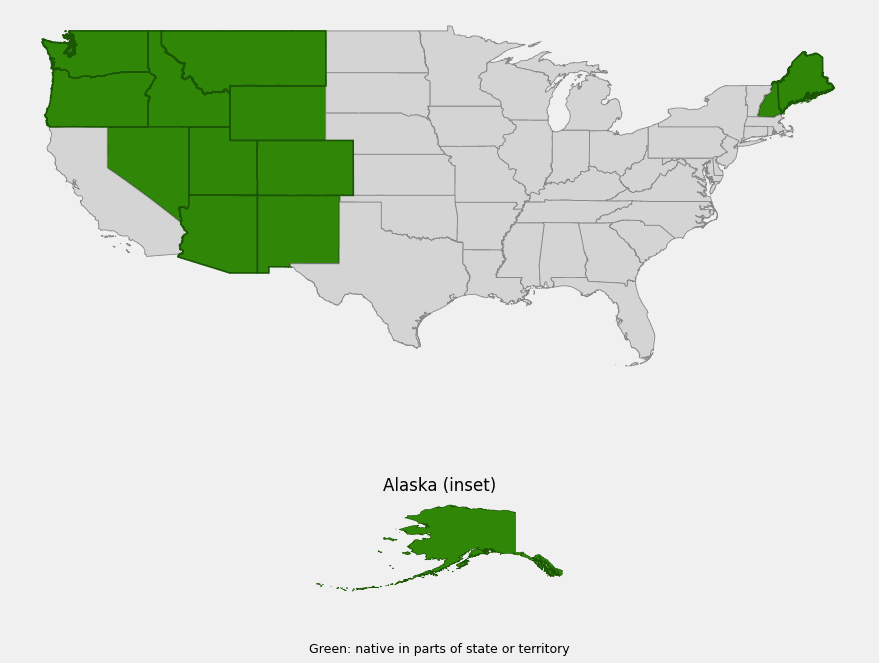
In the United States it grows in Alaska, the Rocky Mountains south to Arizona and New Mexico, the Cascades and Olympics, and the alpine summits of New England. It is a beautiful plant, but it is honestly difficult in ordinary lowland gardens. It needs cool summers, sharp drainage and a rock or alpine garden setting, and it should never be dug from the wild.
Identification
Moss campion is easy to recognize in bloom: a low, moss-like green cushion dotted or covered with pink, five-petaled flowers, growing on bare rock, gravel or tundra above treeline.
Cushion & Roots
The plant forms a dense, rounded or flat cushion usually 1 to 3 inches tall and from a few inches to more than a foot across. It is anchored by a long, deep taproot that reaches moisture between rocks. Old leaves stay on the stems inside the cushion, where they decay slowly and hold water and nutrients.
Leaves
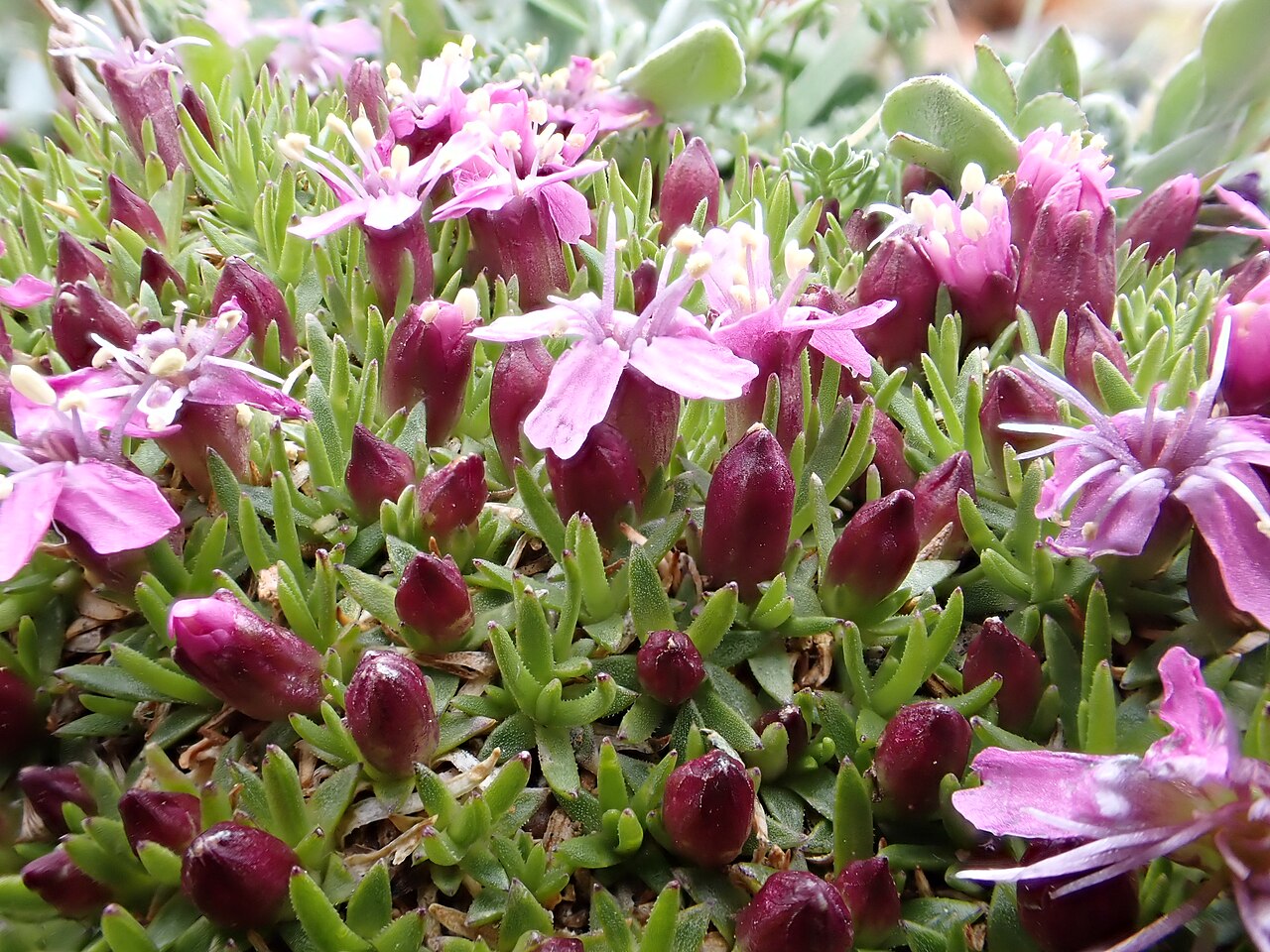
The leaves are small, narrow and stiff, about 1/4 to 1/2 inch long, bright green and crowded on short stems. They are often fringed with tiny hairs along the edges. Together they form the firm, moss-like surface of the cushion.
Flowers
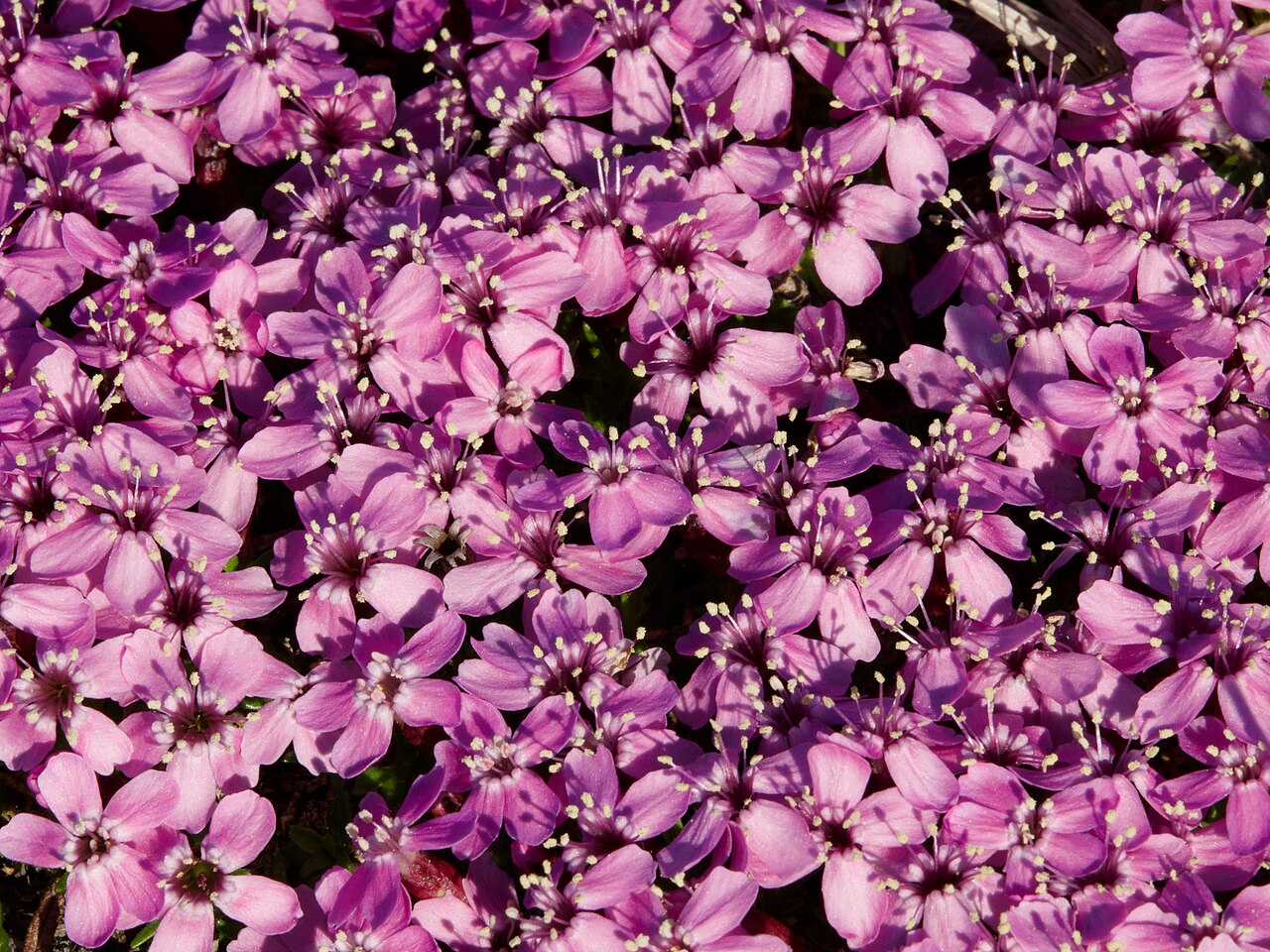
From June to August, depending on elevation and snowmelt, the cushion produces many flowers on very short stalks. Each flower is about 1/2 inch across, with five pink to lilac (rarely white) petals that are usually slightly notched at the tip, and a tubular, often reddish calyx. Many plants have flowers of only one sex, and some cushions are mostly male or mostly female. Flowering often starts on the sunnier, south-facing side of the cushion.
Fruit & Seeds
After flowering, each female or bisexual flower produces a small, cylindrical capsule that opens at the top by teeth to release small brown seeds. The seeds fall close to the parent plant or are moved short distances by wind and meltwater.
Look-alikes
Several other alpine cushion plants grow with moss campion. Alpine phloxes have five petals joined into a tube and usually white to pale blue flowers. Purple saxifrage (Saxifraga oppositifolia) has opposite, scale-like leaves and purple, cup-shaped flowers early in the season. Diapensia (Diapensia lapponica) of New England summits has white flowers and leathery leaves. Moss campion’s pink, notched petals and needle-like leaves separate it.
Quick Facts
| Scientific Name | Silene acaulis |
| Family | Caryophyllaceae (pink family) |
| Plant Type | Evergreen cushion-forming perennial |
| Mature Height | 1–3 in |
| Mature Spread | 4–12 in or more (very slowly) |
| Growth Rate | Very slow |
| Sun Exposure | Full sun |
| Water Needs | Moderate; moist but very well-drained |
| Soil Type | Gravel, scree, rocky or sandy soil |
| Soil pH | About 5.5–8.0 (acidic to alkaline) |
| Bloom Time | June–August |
| Flower Color | Pink to lilac, rarely white |
| Fall Color | None; evergreen cushion |
| Fruit | Small cylindrical capsule |
| Deer Resistant | Generally not browsed; too small and low |
| USDA Hardiness Zones | 2–6 |
Native Range
Moss campion is circumpolar, growing across the Arctic and in high mountains of North America, Europe and Asia. USDA PLANTS lists it as native in Alaska, Canada, Greenland, Saint Pierre and Miquelon and the lower 48 states, where it is recorded from Arizona, Colorado, Idaho, Maine, Montana, New Hampshire, New Mexico, Nevada, Oregon, Utah, Washington and Wyoming. In Canada it ranges from Yukon, Nunavut and the Northwest Territories south through Alberta, British Columbia and Saskatchewan, and east to Ontario, Quebec, Newfoundland and Labrador and Nova Scotia.
In the West it is common on alpine ridges and fell-fields of the Rocky Mountains from Montana and Idaho south through Wyoming, Colorado and Utah, reaching its southern limits in the high peaks of northern New Mexico and Arizona. It also grows in the Olympic Mountains and the Cascades of Washington and Oregon, the Wallowa Mountains of northeastern Oregon, and in a few high ranges of Nevada, where it is rare. In the East it is found on the alpine summits of the Presidential Range in New Hampshire; Maine’s records are historical, and NatureServe considers it extirpated there.
Typical habitats are alpine tundra, fell-fields, scree and talus slopes, rocky ridges and gravelly Arctic shores and plains. In the Arctic it grows down to sea level; in the southern Rockies it is found mostly above treeline, roughly 10,500 to 14,000 feet.
📋 Regional plant lists featuring Moss Campion: Idaho, Eastern Oregon & Eastern Washington · Montana & Wyoming · Utah & Western Colorado · New Hampshire, Maine & Vermont · Arizona & New Mexico · Alaska · Western Oregon & Western Washington · California & Nevada
Growing & Care Guide
Moss campion is a plant for experienced rock gardeners and for gardens in cool, high or northern places. In hot, humid lowland gardens it usually rots or burns in summer. If you want to try it, buy nursery-grown plants or grow it from seed, and give it the conditions of an alpine scree. Never dig it from the wild: old cushions are decades in the making and almost never survive transplanting.
Light
Give it full sun in cool climates. Where summers are warm, light afternoon shade helps, but too much shade makes the cushion loose and reduces flowering.
Soil & Water
It needs very sharp drainage: a scree bed, crevice garden, trough or raised bed with a mix of mostly gravel or grit and a little loam. Keep the root zone evenly moist during the growing season but never soggy, and keep the crown dry. A collar of gravel around the cushion prevents rot. It tolerates both acidic and limestone gravels.
Planting Tips
Plant small, pot-grown plants in spring, setting them deep between rocks or in a crevice so the roots stay cool. Troughs and alpine houses give the most control. It combines well with other small alpines such as dwarf phloxes, saxifrages and alpine pinks.
Pruning & Maintenance
No pruning is needed. Remove fallen leaves or debris from the cushion, which can cause rot, and pull weeds while they are tiny. In regions without reliable snow cover, a cover of evergreen boughs or a pane of glass over the cushion in winter keeps off excess wet.
Propagation
Sow fresh seed in a gritty mix in fall or winter and leave the pots outdoors for a natural cold period; germination often follows in spring. Seedlings grow slowly and can take several years to flower. Small cuttings of rosettes can also be rooted in sand in summer. Collect seed only where it is legal and sparingly, never plants.
Landscape Uses
- Rock and crevice gardens: for cool, high or northern regions
- Alpine troughs: where drainage and moisture can be controlled
- Alpine restoration: seeded or planted on disturbed sites in high country
- Nature education: a classic example of an alpine cushion plant
- Wildflower viewing: a highlight of alpine trails in early summer
Wildlife & Ecological Value
Moss campion plays an important role in harsh alpine and Arctic environments, where it is both an early nectar source and a nurse plant for other species.
For Pollinators
The pink flowers are visited by bumblebees, butterflies, flies and other insects of the alpine zone. Because the plant often bears male and female flowers on separate cushions, insects are needed to carry pollen between plants. Some butterflies and moths with long tongues reach the nectar at the base of the narrow flower tube.
For Birds
Birds of the tundra, such as ptarmigan, feed on leaves, buds and seeds of alpine plants including moss campion, and rosy-finches forage on alpine seeds in summer.
For Mammals
Pikas, marmots and other alpine mammals may eat cushion plants, though moss campion is not a major food. Its cushions are sensitive to trampling by people and livestock.
Ecosystem Role
Moss campion is a well-studied nurse plant. Its cushion is warmer, moister and richer in organic matter than the bare ground around it, so seedlings of other plants and many small invertebrates live within or beside the cushion. It is also an early colonizer of bare gravel and rock as glaciers retreat.
Cultural & Historical Uses
Moss campion is one of the most widely photographed alpine wildflowers, and in many national parks it is the first flower hikers see on the tundra in early summer. Its tendency to flower first on the sunny, south-facing side of the cushion has led to its nickname as a “compass plant,” although this is a rough guide at best.
Across the Arctic, moss campion is one of the most conspicuous flowers of the short summer, and its pink cushions on bare gravel are a familiar sign of the season to people who live and travel on the tundra. It is a symbol of the fragility of alpine and Arctic plant life, and parks in the Rockies and New England ask visitors to stay on trails to protect it.
Because it is so slow-growing and long-lived, moss campion has been used by scientists to study plant survival in extreme climates, the effect of climate warming on alpine plants and how cushion plants help other species. In gardens, it has been grown by rock gardening enthusiasts since the nineteenth century, but it remains a challenge outside cool climates.
Frequently Asked Questions
Is moss campion actually a moss?
No. It is a flowering plant in the pink family. Its common name comes from its tight, moss-like cushion of tiny leaves.
Can I grow moss campion in my garden?
Possibly, if you have cool summers and can give it a gritty, very well-drained scree, crevice or trough. In hot, humid lowland gardens it usually fails. Start with nursery-grown plants or seed.
How old are moss campion cushions?
They grow very slowly and can take years to flower for the first time. Large cushions can be many decades old, which is why they should never be dug up.
When does moss campion bloom?
Usually from June to August, soon after snowmelt. At lower Arctic elevations it blooms earlier; at high alpine sites later.
Is moss campion rare?
It is common in the Arctic and on many western alpine ridges, but it is rare at the edges of its range, such as New Hampshire and Nevada, and considered extirpated in Maine. Stay on trails to protect it.

Looking for a nursery that carries Moss Campion?
Browse our native plant nursery directory: Alaska & Arizona · Colorado · Idaho · Maine & Montana · Nevada, New Hampshire & New Mexico · Oregon · Utah · Washington · Wyoming