
Wild Cowpea (Vigna luteola)
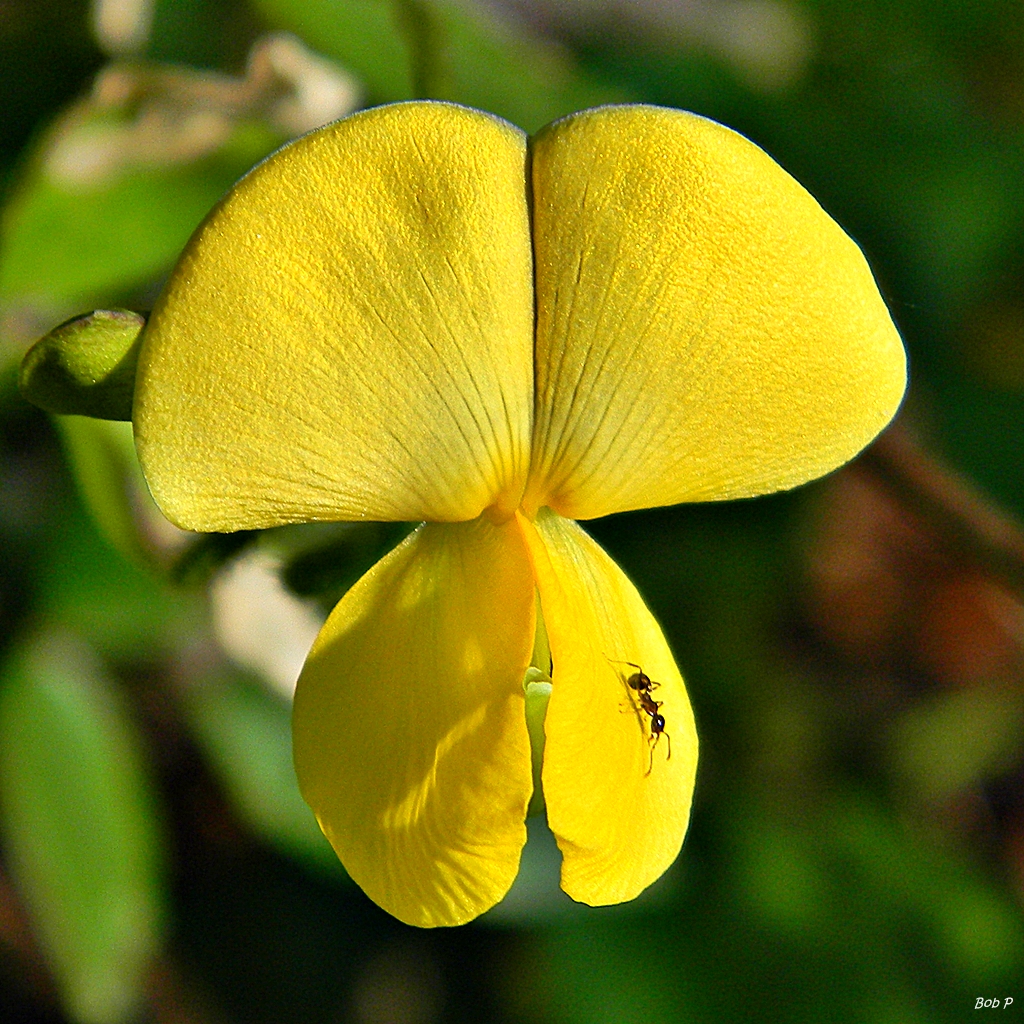
Vigna luteola, known as Wild Cowpea (USDA: hairypod cowpea) and also called yellow vigna or deer pea, is a twining, sprawling vine of the pea family (Fabaceae). It is a wild relative of the black-eyed pea and mung bean, and it grows along warm coasts throughout the tropics and subtropics of the Americas.
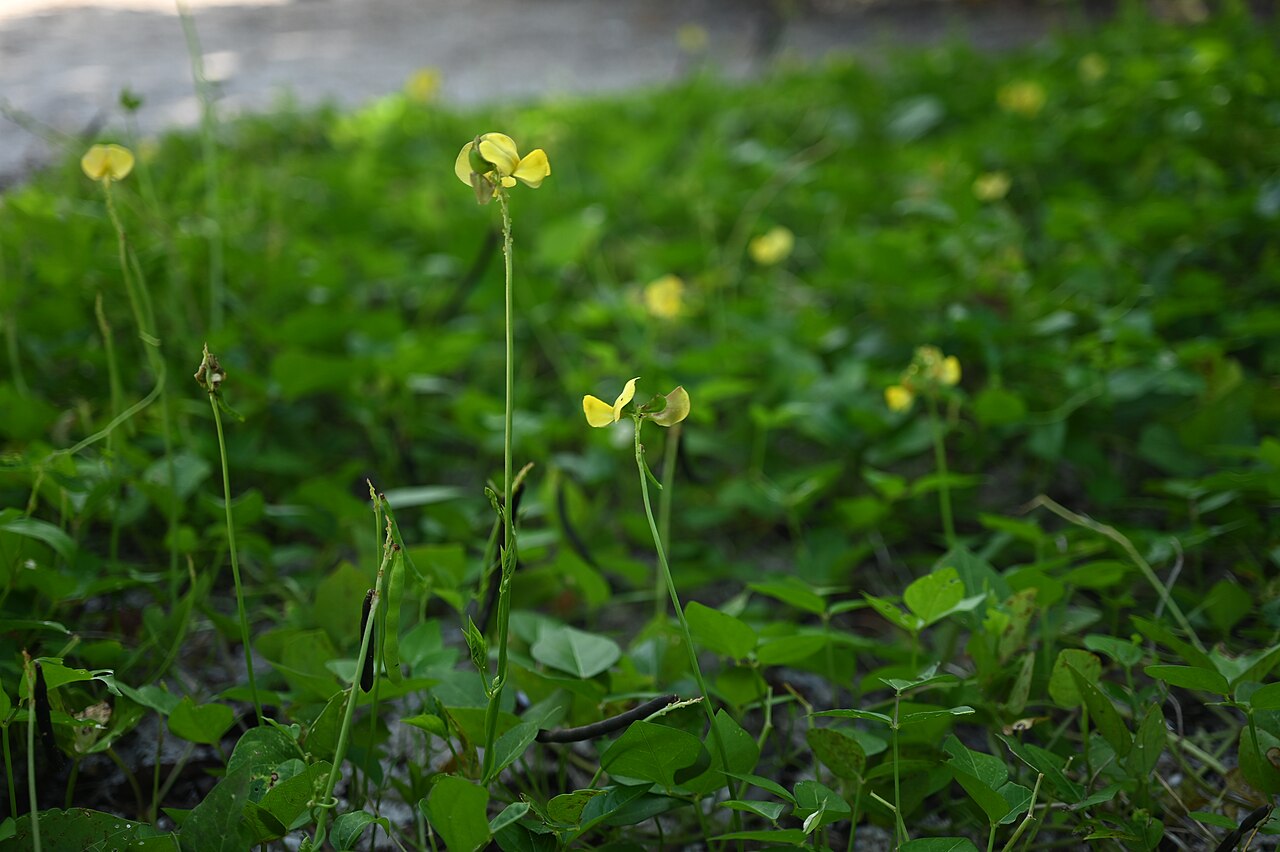
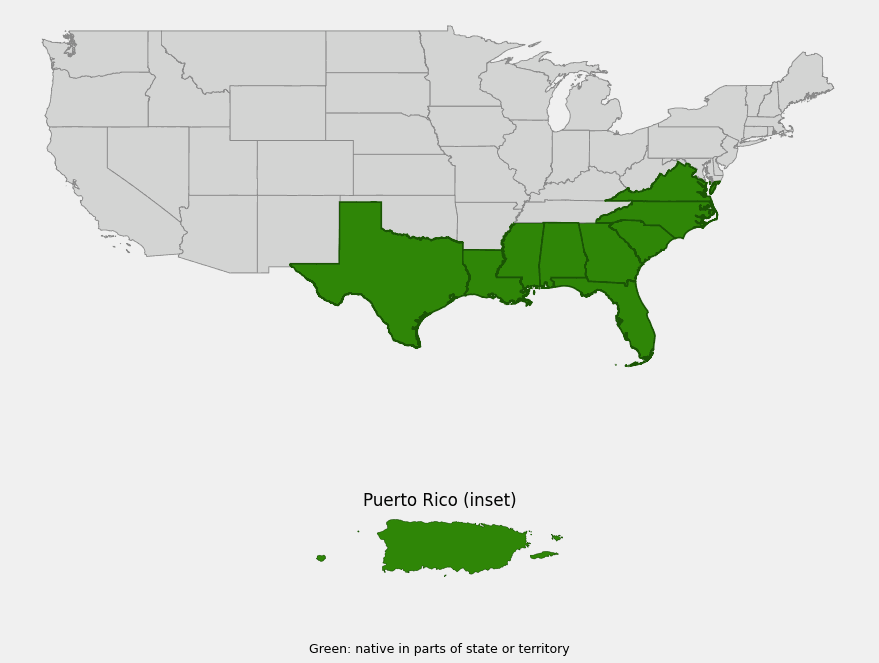
In the United States it grows on the coastal plain from southeastern Virginia to Florida and west along the Gulf Coast to Texas, and it is also native in Puerto Rico. Its stems twine over grasses and shrubs or trail across sand, carrying leaves of three oval leaflets. From long, upright stalks it produces small clusters of bright yellow, pea-like flowers about 3/4 inch across, followed by slender pods that ripen dark brown to black.
Wild cowpea is a plant of coastal dunes, beach edges, the margins of salt and brackish marshes, ditches, wet meadows and roadsides. It is an attractive, fast-growing native vine for coastal and wet gardens, it fixes nitrogen in the soil, and its flowers are worked by large bees.
Identification
Wild cowpea is easy to recognize by its bright yellow pea flowers held in small clusters at the tips of long, bare stalks, and by its three-parted bean-like leaves.
Growth Form
A herbaceous perennial vine (sometimes behaving as an annual at the northern edge of its range). Stems twine and scramble over other vegetation or trail on the ground, reaching about 3 to 10 feet long. Stems are slender and finely hairy.
Leaves
Leaves are alternate and divided into three leaflets, each oval to lance-shaped, about 1 to 3 inches long, with smooth edges and sparse hairs. Small leafy stipules sit at the base of each leaf stalk.
Flowers
Flowers are borne in small clusters of 2 to about 12 at the end of a stiff stalk that is often longer than the leaves. Each flower is about 1/2 to 1 inch across, with a broad, rounded, bright yellow banner petal and a curved yellow keel. Flowers open a few at a time. In Florida and Puerto Rico it can bloom for most of the year; farther north it flowers from summer into fall.
Fruit
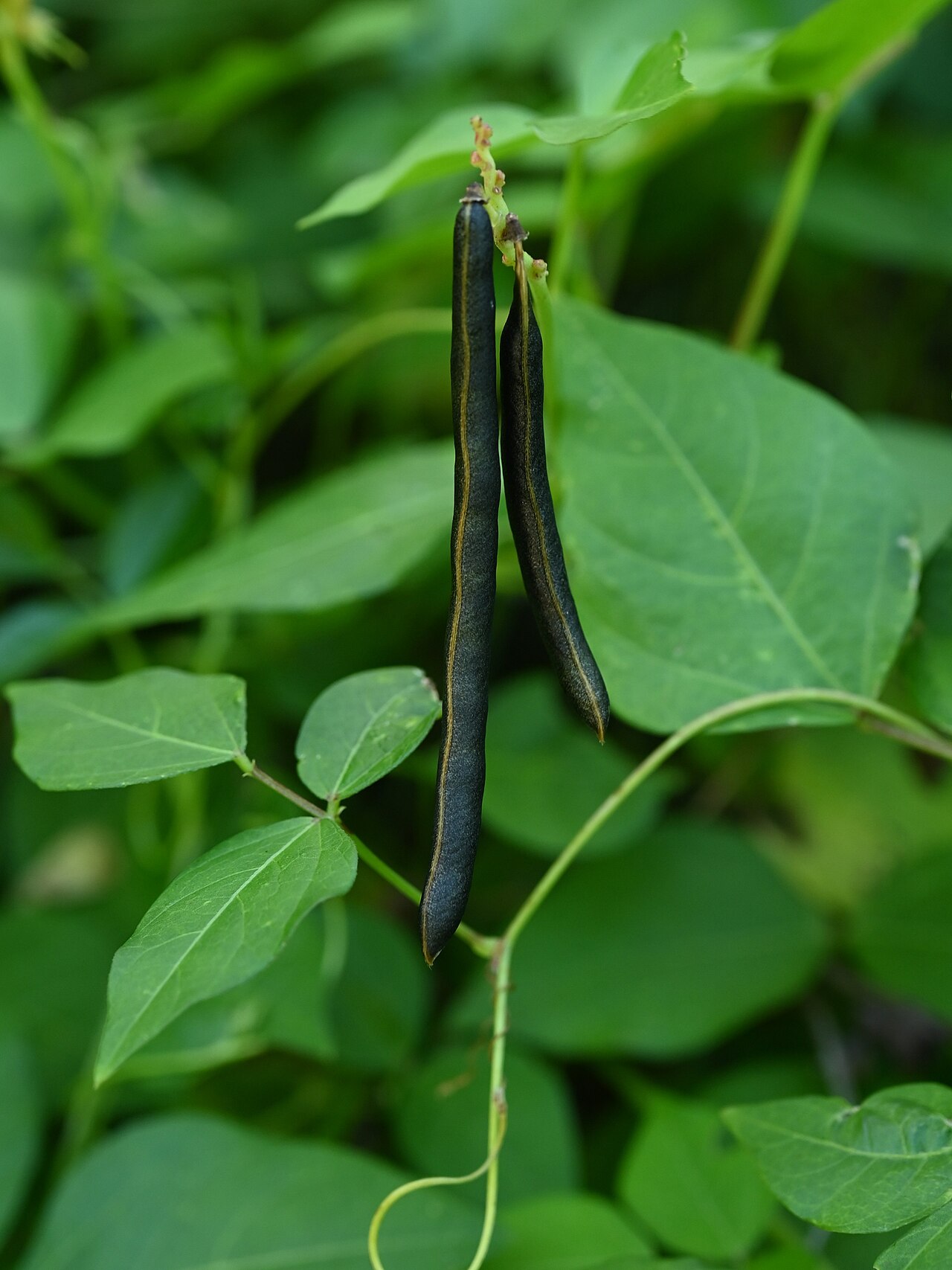
The pods are narrow and straight to slightly curved, about 1 1/2 to 3 inches long, finely hairy, green at first and dark brown to black when ripe. They split and twist open to scatter several small, dark beans.
Look-alikes
Trailing Fuzzy Bean (Strophostyles helvola) grows in similar coastal places but has pink to purple flowers and often lobed leaflets. Hairypod cowpea is sometimes confused with the cultivated cowpea (Vigna unguiculata), which has white to purple flowers and much larger pods. Baybean (Canavalia rosea), another dune vine, has large, rounded leaflets and pink flowers.
Safety
Do not eat wild cowpea seeds or pods. The Lady Bird Johnson Wildflower Center notes that the seeds of some Vigna species contain cyanide-forming compounds that can be toxic to people and animals if eaten raw. Keep children from sampling the “beans.”
Quick Facts
| Scientific Name | Vigna luteola |
| Family | Fabaceae (pea family) |
| Plant Type | Herbaceous perennial twining vine |
| Mature Height | Climbs or sprawls 3–10 ft |
| Mature Spread | 3–6 ft |
| Growth Rate | Fast |
| Sun Exposure | Full sun to part shade |
| Water Needs | Moderate to high; moist soil, tolerates brief flooding |
| Soil Type | Sand, loam or muck; tolerates salt spray and brackish soils |
| Soil pH | About 6.0–8.0 |
| Bloom Time | Summer–fall; much of the year in Florida and Puerto Rico |
| Flower Color | Bright yellow |
| Fall Color | None; dies back with frost in the north |
| Fruit | Slender hairy pod ripening dark brown to black |
| Deer Resistant | No; browsed by deer and rabbits |
| USDA Hardiness Zones | 8–11 |
Native Range
Wild cowpea is native to warm coastal regions of the Americas, from the southeastern United States through Mexico, Central America and the Caribbean to South America. USDA PLANTS lists it as native in the lower 48 states, Puerto Rico and the U.S. Virgin Islands. In the United States it grows from southeastern Virginia south through the Carolinas, Georgia and Florida and west along the Gulf Coast through Alabama, Mississippi and Louisiana to Texas.
It is most common in Florida and along the Gulf Coast, and it is mainly a coastal plant elsewhere. USDA also lists Pennsylvania, but the only Pennsylvania records are 19th-century specimens from ballast dumps at the Philadelphia waterfront, where seeds arrived with ships’ ballast. That was not a native population, so Pennsylvania is left off this page’s range.
Typical habitats are coastal dunes and swales, beach edges, the margins of salt and brackish marshes, hammock edges, wet prairies, ditches and roadsides. It is listed as a facultative-wetland plant and tolerates salt spray and occasional flooding.
📋 Regional plant lists featuring Wild Cowpea: Maryland, Virginia & West Virginia · Alabama, Georgia & Mississippi · North & South Florida · Puerto Rico · North & South Carolina · Arkansas, Louisiana, Eastern Oklahoma & Eastern Texas · South & West Texas
Growing & Care Guide
Wild cowpea is offered now and then by native nurseries in Florida, and it grows easily from seed. It is a good choice for coastal, salt-tolerant plantings and for moist, sunny spots where a vigorous, flowering vine is welcome.
Light
Grow it in full sun to part shade. It flowers best in full sun.
Soil & Water
It adapts to sand, loam and mucky soils and tolerates salt spray and brackish conditions. It prefers moist ground and handles short periods of flooding; on dry sand it needs occasional water until established. As a legume it fixes its own nitrogen, so no fertilizer is needed.
Planting Tips
Give it something to climb, such as a fence, a trellis or sturdy grasses and shrubs, or let it sprawl as a loose groundcover on dunes and slopes. Space plants 2 to 3 feet apart. It can twine over small plants, so keep it away from delicate perennials.
Pruning & Maintenance
Trim stems as needed to keep it in bounds. Where frost kills the top growth, cut back dead stems in late winter. It reseeds moderately.
Propagation
Grow it from seed. Collect pods as they darken, before they split, and nick or soak the hard seeds overnight before sowing in warm weather.
Landscape Uses
- Coastal gardens: a salt-tolerant flowering vine for dunes and seaside yards
- Wet meadows and ditches: grows in moist, periodically flooded soil
- Pollinator gardens: yellow pea flowers for carpenter bees and bumble bees
- Fence and trellis cover: a fast, light vine for warm-climate gardens
- Restoration plantings: adds a nitrogen-fixing legume to coastal habitats
Wildlife & Ecological Value
Like other wild beans, wild cowpea feeds a range of insects and wildlife along the coast.
For Pollinators
Its flowers are pollinated mainly by large, strong bees, such as carpenter bees and bumble bees, which can push open the keel to reach the nectar. It is also a larval food plant for legume-feeding butterflies; the long-tailed skipper (Urbanus proteus), for example, feeds on wild beans including Vigna.
For Birds
Seed-eating birds, including doves and quail, eat the seeds that fall from the pods, and the tangles provide cover for small birds in dune and marsh-edge habitats.
For Mammals
Deer and rabbits browse the leaves and stems, which are relatively high in protein, like those of other wild legumes.
Ecosystem Role
As a legume, wild cowpea hosts nitrogen-fixing bacteria in its root nodules and adds nitrogen to the poor, sandy soils of dunes and coastal swales. Its trailing stems help cover and stabilize bare sand.
Cultural & Historical Uses
The genus Vigna honors Domenico Vigna, a 17th-century Italian botanist and professor at Pisa. The species name luteola means “yellowish,” for the flowers. The genus includes some of the world’s most important food beans, such as the cowpea or black-eyed pea, the mung bean and the adzuki bean.
Because it grows wild on many tropical coasts and tolerates salt and flooding, wild cowpea has been grown as a pasture legume and cover crop in warm countries. Plant breeders also study wild Vigna species as a source of salt and flood tolerance for their cultivated relatives.
In Florida it is one of the most familiar wildflowers of coastal dunes and marsh edges, and native plant gardeners value it as a tough, salt-tolerant vine that blooms through much of the year.
Frequently Asked Questions
Is wild cowpea edible?
It should not be eaten. Some Vigna seeds contain cyanide-forming compounds that can be toxic when raw, and wild cowpea is not a food plant. Grow it for its flowers and wildlife value.
Is it related to black-eyed peas?
Yes. It belongs to the same genus as the cultivated cowpea or black-eyed pea (Vigna unguiculata), but it is a separate wild species with small yellow flowers and slender pods.
Will it take over my garden?
It grows quickly and can twine over small plants, but it is not aggressive in most gardens. Trim it back as needed.
Can it grow near the beach?
Yes. It tolerates salt spray, sandy soils and brackish conditions, and it grows naturally on coastal dunes and the edges of salt marshes.
Is it native in Pennsylvania?
No. USDA lists Pennsylvania, but those records are 19th-century plants that grew on ship-ballast dumps in Philadelphia. Its native range in the United States is the southeastern coastal plain and Texas, plus Puerto Rico.

Looking for a nursery that carries Wild Cowpea?
Browse our native plant nursery directory: Alabama · Florida & Georgia · Louisiana & Mississippi · North Carolina · South Carolina, Texas & Virginia