
Trailing Fuzzy-bean (Strophostyles helvola)
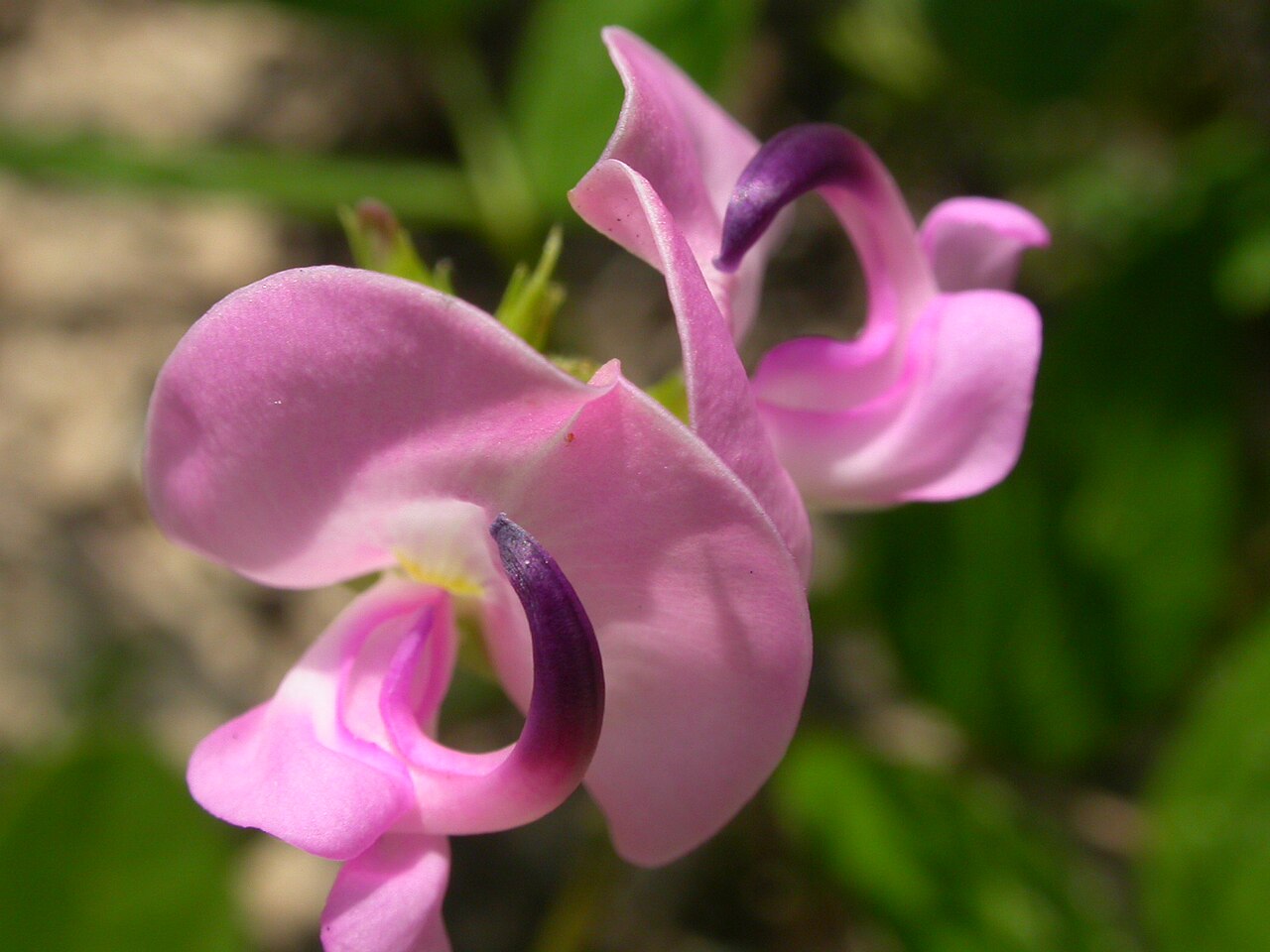
Strophostyles helvola, known as Trailing Fuzzy-bean, amberique-bean (the USDA name), trailing wild bean or annual sand bean, is a native annual vine in the pea and bean family (Fabaceae). Its thin stems trail across sand or twine through grasses and shrubs, and from early summer into fall it carries small clusters of pink to purplish pea flowers on long stalks. Narrow, bean-like pods follow and twist open when dry, flinging their seeds.
It is a plant of open, sandy, often disturbed ground: beaches and the backs of dunes, riverbanks and sandbars, lake shores, old fields, roadsides and the edges of open woods. From the Atlantic and Gulf coasts it ranges inland across the eastern half of the United States and into southern Ontario and Quebec. The genus name comes from Greek strophe, a turning, and stylos, style, after the curled keel and style at the heart of each flower.
Trailing fuzzy-bean is not a showy garden perennial, but it is a useful native legume. It fixes nitrogen, holds loose sand, feeds bees in late summer and produces seeds that ground-feeding birds eat. This guide covers how to identify it, where it grows and how to use it in sandy meadows, dune plantings and wildlife areas.
Identification
Trailing fuzzy-bean looks like a small, wild version of a garden bean. Three Strophostyles species grow in the East, and they are separated mainly by their leaflets, flowers and seeds. The curled keel on the flower separates the genus from most other native vines in the bean family.
Stems & Habit
The stems are slender, branched and sparsely hairy. They trail along the ground or twine around other plants, usually reaching 2 to 6 feet and occasionally about 10 feet in good sites. Plants on open beach sand often lie flat in loose mats, while those in thickets climb into shrubs and tall grasses.
Leaves
The leaves are alternate and divided into three leaflets, like a garden bean. Each leaflet is roughly ovate, 1 to 3 inches long, and often has a rounded lobe or bulge on one or both sides near the base. That lobing is a good field mark for this species, though it varies from plant to plant and some leaflets are unlobed. Small, pointed stipules sit at the base of each leaf stalk.
Flowers
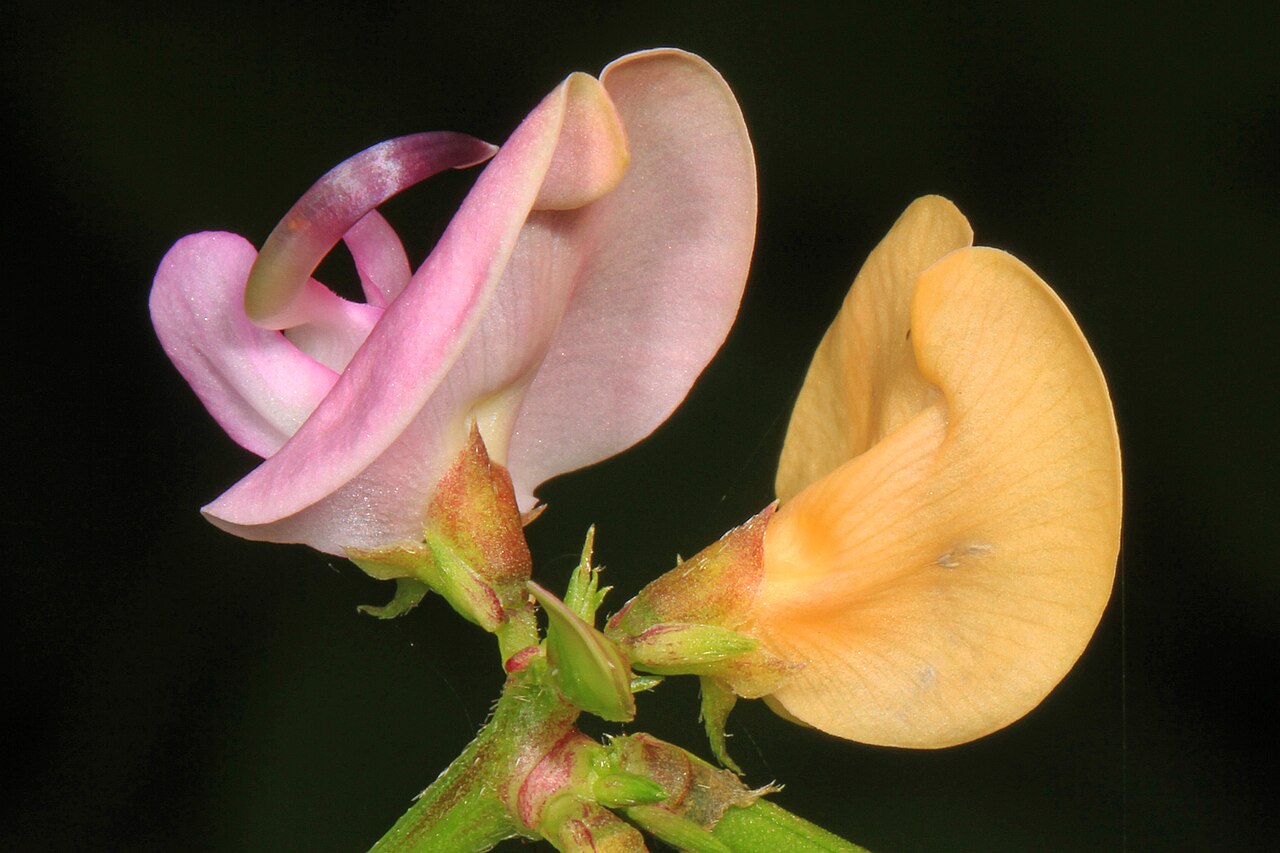
Flowers sit in small, tight heads of 2 to about 10 at the tip of a stalk that is usually much longer than the nearby leaves. Each flower is about half an inch long. The broad upper petal (the banner) is pink to rose-purple, and the keel is long, narrow and curved upward into a hook or partial spiral, darkening to purple at the tip. Flowers open in the morning and fade to pale orange, tan or greenish by afternoon, so a cluster often shows both colors. Bloom runs from about June to October.
Fruit & Seeds
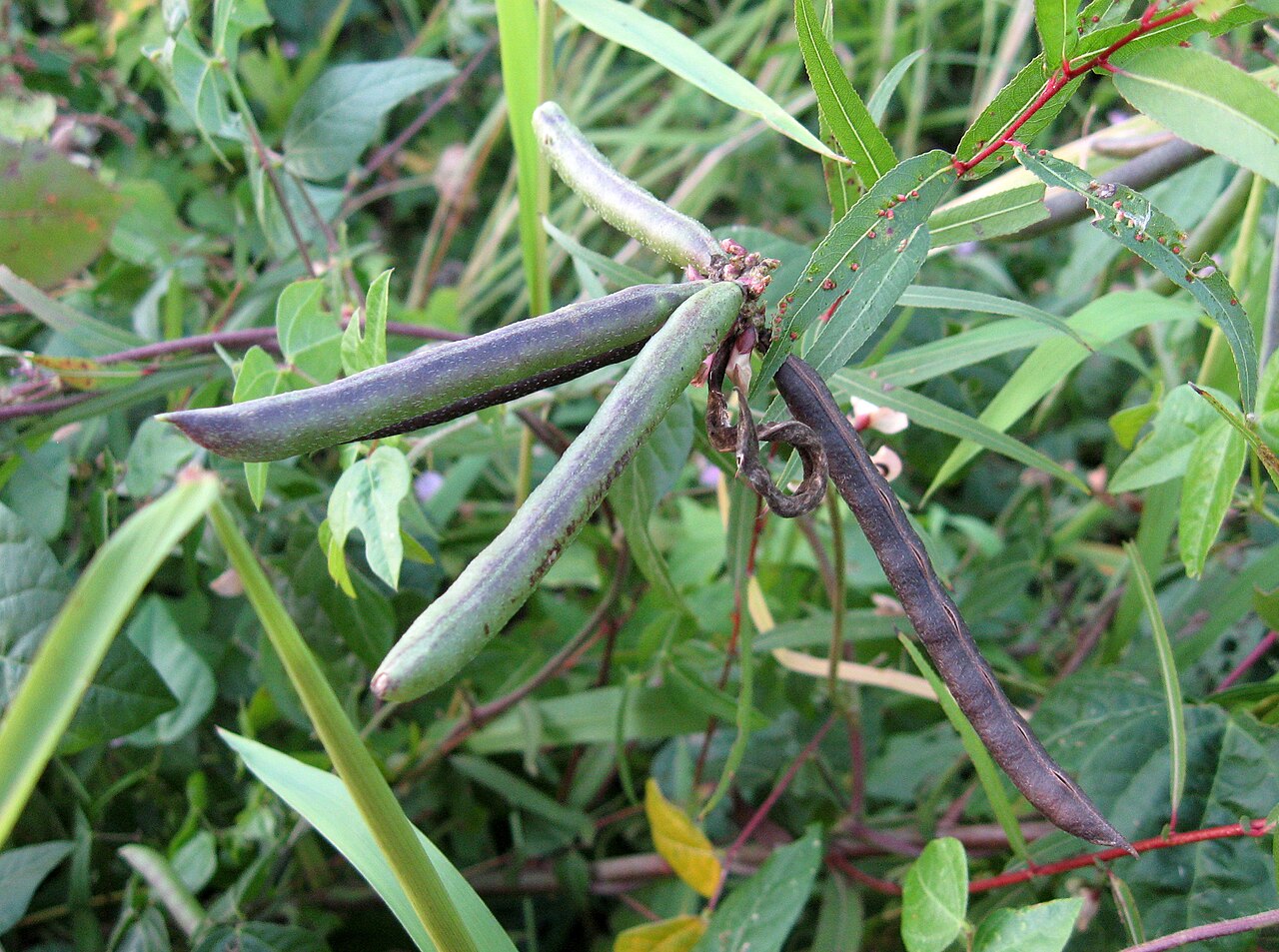
The pods are straight, nearly cylindrical, 1½ to 4 inches long and finely hairy, ripening from green to dark brown or black. When dry they split and coil, throwing out several oblong seeds about a quarter inch long. The seeds are covered with a fine, woolly coating that rubs off with handling. Trailing fuzzy-bean is the annual of the group: its roots are thin, not the thicker roots of the perennial pink fuzzy-bean (S. umbellata).
Quick Facts
| Scientific Name | Strophostyles helvola (also spelled S. helvula) |
| Family | Fabaceae (pea and bean family) |
| Plant Type | Annual trailing or twining vine |
| Mature Height | Stems 2–6 ft long (occasionally to about 10 ft); mats usually under 1 ft tall |
| Mature Spread | 2–6 ft per plant |
| Growth Rate | Fast |
| Sun Exposure | Full sun to light shade |
| Water Needs | Low to medium; tolerates dry sand and occasional flooding |
| Soil Type | Sand, sandy loam and gravel; also disturbed clay |
| Soil pH | About 5.5–7.5 |
| Bloom Time | June–October |
| Flower Color | Pink to rose-purple, fading to tan or pale orange |
| Fall Color | None; plants die after setting seed |
| Fruit | Slender hairy pod with woolly-coated seeds |
| Deer Resistant | No; deer and rabbits browse it |
| USDA Hardiness Zones | Annual; grows wild in areas equivalent to zones 3–10 |
Native Range
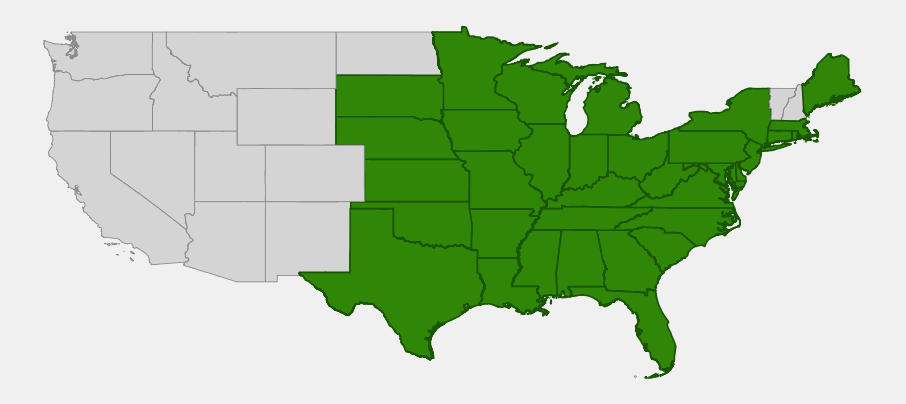
USDA PLANTS records trailing fuzzy-bean as native in 34 states and the District of Columbia, from Maine, New York and Minnesota south to Florida and Texas and west to South Dakota, Nebraska, Kansas and Oklahoma. In Canada it grows in southern Ontario and Quebec. The Lady Bird Johnson Wildflower Center gives the same range.
It is most common along the Atlantic and Gulf coasts, where it trails over beach sand, dune swales and the edges of salt marshes, and along the sandy floodplains of large rivers such as the Mississippi, Ohio and Missouri. Inland it turns up on sand prairies, lake shores, railroad embankments and fallow fields. The Maine record lies near the northeastern edge of its range, and the plant is scarce in the northern tier of the Midwest.
Because it is an annual that thrives after disturbance, its local numbers rise and fall from year to year. A sandbar or roadside can be covered one summer and nearly bare the next, depending on floods, mowing and competition.
📋 Regional plant lists featuring Trailing Fuzzy-bean: New York, Pennsylvania & Northern New Jersey · Ohio & Indiana · Michigan, Wisconsin & Eastern Minnesota · Kentucky & Tennessee · Nebraska, Kansas & Eastern Colorado · Connecticut, Massachusetts & Rhode Island · New Hampshire, Maine & Vermont · Maryland, Virginia & West Virginia · Delaware, Southern New Jersey & Long Island · Illinois, Iowa & Missouri · Alabama, Georgia & Mississippi · North & South Florida · North & South Carolina · Arkansas, Louisiana, Eastern Oklahoma & Eastern Texas · North Dakota, South Dakota & Western Minnesota
Growing & Care Guide
Trailing fuzzy-bean is easy to grow from seed in sunny, well-drained ground. As an annual it lives for one season, but it reseeds where it has open soil, so it suits wild meadows, dune plantings and naturalized areas better than tidy beds. Seed is offered by some native seed companies, especially in coastal and Midwestern mixes.
Light
Full sun gives the most flowers and seeds. It tolerates light shade at woodland edges, where it tends to climb higher in search of light.
Soil & Water
Sandy or gravelly soil is ideal, but the plant also grows in disturbed loam and clay. It handles drought well once established, and on floodplains it survives short floods during the growing season. Like other legumes it forms root nodules with nitrogen-fixing bacteria, so it needs no fertilizer and does well in poor soil.
Planting Tips
Sow seed in fall or early spring where you want plants to grow, pressing it lightly into bare soil about a quarter inch deep. Hard seed coats slow germination. Soaking seed overnight in warm water, or nicking the coat, speeds it up for spring sowing. Give the vines grasses, a fence or low shrubs to scramble over, or let them trail across open sand.
Pruning & Maintenance
Little care is needed. Pull vines that climb over small perennials you want to protect. Leave the plants standing until the pods have shattered if you want volunteers the following year. Late mowing or light disturbance every year or two keeps the open ground this annual needs.
Propagation
Grow it from seed only. Collect pods as they turn brown and before they split, and let them finish drying in a paper bag, which catches the seeds when the pods twist open. Store dry seed in a cool place and sow it the following spring after soaking or scarifying.
Landscape Uses
- Dune and beach plantings: a trailing, nitrogen-fixing groundcover with sea oats and beach grasses in its coastal range
- Sandy meadows and sand prairies: a late-season legume that adds pink flowers among grasses
- Wildlife and quail plantings: seeds for ground-feeding birds; tangled cover in field edges
- Riverbank and disturbed-site restoration: a quick annual cover on sandbars, embankments and bare soil
- Pollinator gardens: late-summer flowers for bees in an informal, naturalized area
Wildlife & Ecological Value
Trailing fuzzy-bean is a modest plant, but it fills a useful gap. It blooms into fall on poor, sandy ground where few other legumes grow, and its seeds and foliage feed insects, birds and mammals.
For Pollinators
The flowers are visited mainly by bees, including bumble bees and leafcutter bees, which are heavy enough to press down the wing petals and expose the curled keel and style. Like garden beans, the flowers hold their pollen inside the keel. Bloom continues into September and October, when bees have fewer sources in sandy, open habitats.
For Birds
The seeds are eaten by ground-feeding birds, and wildlife managers in the Southeast and Midwest list wild beans among the native legumes that northern bobwhite quail and doves eat. The trailing tangles also give cover to sparrows and other small birds in field edges.
For Mammals
White-tailed deer and rabbits browse the leaves and stems, and small mammals eat fallen seeds.
Ecosystem Role
Like most legumes, trailing fuzzy-bean hosts nitrogen-fixing bacteria in root nodules, adding nitrogen to sandy, nutrient-poor soils. As a pioneer annual it is one of the first plants to cover fresh sandbars, overwash areas and disturbed ground, and its stems help trap blowing sand. Its leaves feed the caterpillars of legume-feeding insects.
Cultural & Historical Uses
Linnaeus described the plant in 1753 as Phaseolus helvolus, placing it with the garden beans. Stephen Elliott moved it to his new genus Strophostyles in 1823. The species name has been spelled both helvola and helvula, and both spellings appear in older floras and herbarium records.
Common names vary by region. “Amberique-bean,” the name used by USDA, is an old name of uncertain origin. “Annual sand bean” and “trailing wild bean” describe its habitat and habit. Ethnobotanical records list medicinal uses by several Native American groups, and the plant is a wild relative of the cultivated bean group in the tribe Phaseoleae.
Today it is valued mainly in restoration. Coastal programs use it as a native legume in dune plantings, and Midwestern sand prairie and river restoration projects include it in seed mixes. It is one of the few native annual vines that tolerate open, shifting sand.
Frequently Asked Questions
Is trailing fuzzy-bean an annual or a perennial?
It is an annual. Each plant grows from seed, flowers and sets pods in one season, then dies. It comes back each year from seed where the soil stays open. Its close relative, pink fuzzy-bean (Strophostyles umbellata), is a perennial.
Is trailing fuzzy-bean invasive?
No. It is native across the eastern United States and does not form dense monocultures. It can scramble over small plants in a garden, but it is easily pulled and does not spread by runners.
Why do the flowers change color?
Each flower lasts about a day. It opens pink to rose-purple in the morning and fades to tan, pale orange or greenish as it ages, so one cluster often shows fresh and old flowers together.
Can you eat the beans?
It is a relative of cultivated beans, but its seeds are small and hard. There is too little reliable information on its edibility to recommend eating it, so grow it for wildlife rather than food.
How do I tell it from other wild beans?
Look for three leaflets, often with a lobe near the base, and long-stalked clusters of pink flowers with a strongly curled keel. Pink fuzzy-bean has smaller, unlobed leaflets and is perennial. Slickseed fuzzy-bean (S. leiosperma) has narrow leaflets and small seeds without the woolly coat. American hog-peanut and groundnut are other native bean-family vines, but their flowers are not curled in the same way.

Looking for a nursery that carries Trailing Fuzzy-bean?
Browse our native plant nursery directory: Alabama & Arkansas · Connecticut, Delaware, Florida & Georgia · Illinois, Indiana, Iowa & Kansas · Kentucky, Louisiana, Maine, Maryland, Massachusetts, Michigan, Minnesota, Mississippi & Missouri · Nebraska, New Jersey, New York, North Carolina, Ohio & Oklahoma · Pennsylvania, Rhode Island, South Carolina, South Dakota, Tennessee, Texas & Virginia · West Virginia & Wisconsin