American Beach Grass (Ammophila breviligulata)
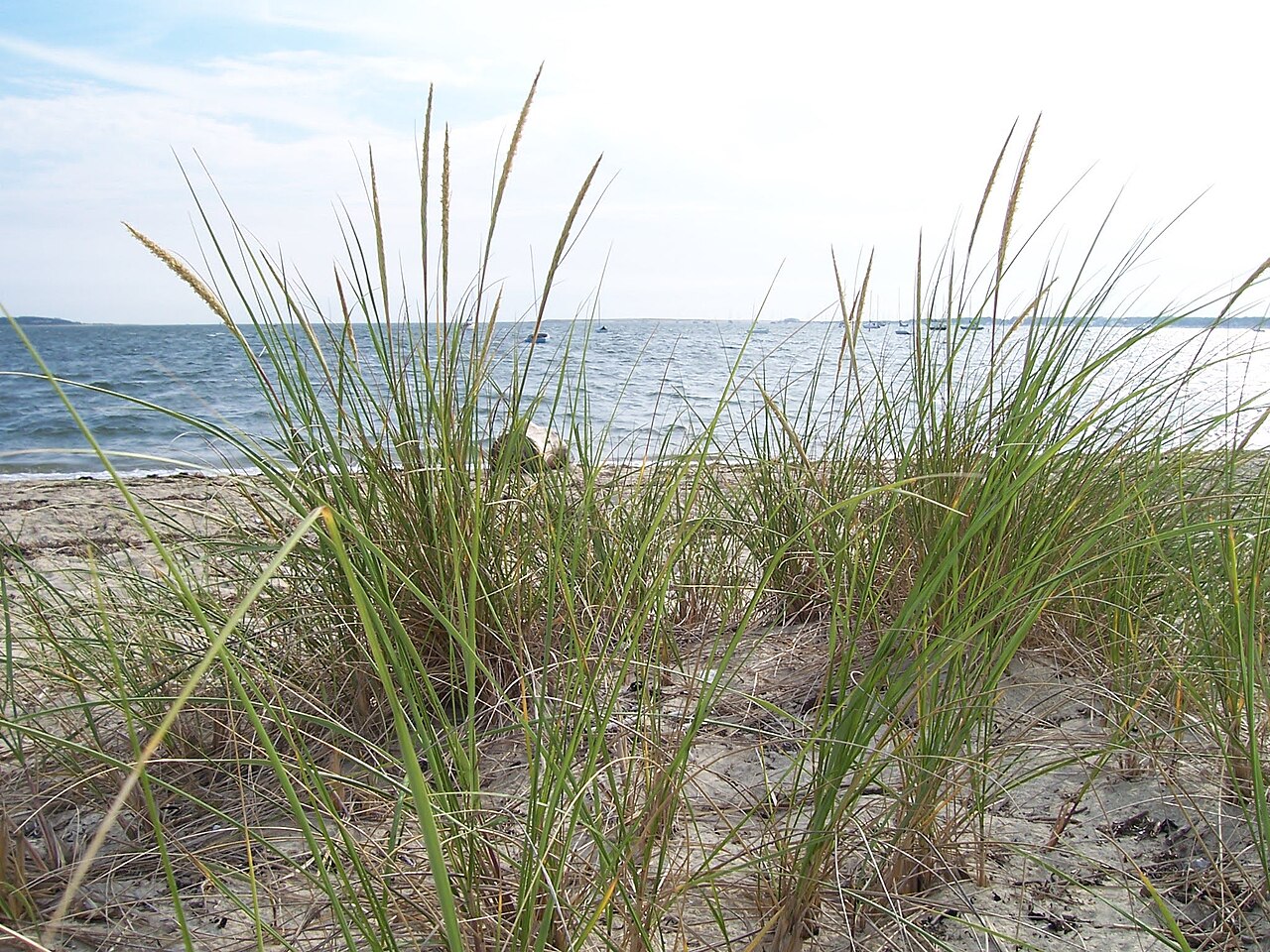
Ammophila breviligulata, commonly called American Beach Grass or American marram grass, is the single most important plant for stabilizing sand dunes along the Atlantic coast and Great Lakes shorelines. Its tough, wiry blades and deep, wide-spreading rhizome system let it do something almost no other plant can: actually grow faster when buried by blowing sand, pushing new shoots up through fresh drifts and knitting the dune together as it goes. Without beach grass, most of the foredunes that protect coastal towns, roads, and back-dune habitats from storm surge simply would not exist in their present form.
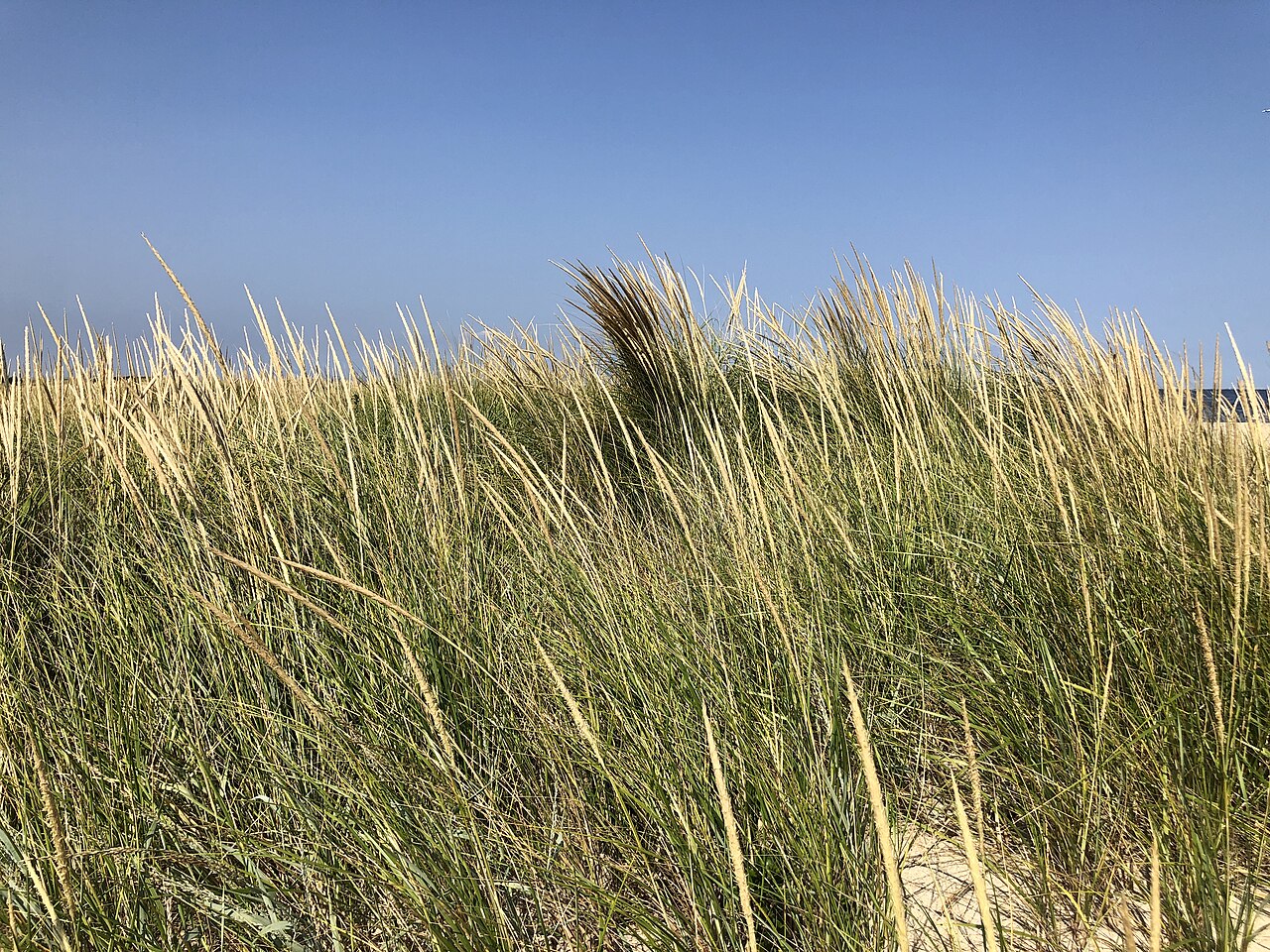
In the wild, American beach grass is a plant of the harshest possible growing conditions — open, shifting, salt-sprayed sand with essentially no organic matter, brutal wind, and periodic burial or exposure of its roots. It thrives there precisely because almost nothing else can compete, forming dense, waving stands of narrow, blue-green to straw-colored foliage on the seaward slopes of dunes from Atlantic Canada down to North Carolina, and around the shores of the Great Lakes.
For coastal gardeners and dune-restoration projects within its native range, American beach grass is less an ornamental choice than an ecological necessity — plant it to build and hold a dune, not for its subtle beauty, though its rippling texture and pale winter gold color have their own appeal. Note that the same qualities that make it so effective at stabilizing dunes have made it a problem plant where it was introduced outside its native range: on the Pacific coast it was planted deliberately for erosion control and has since become invasive, outcompeting native dune species there.
Identification
American beach grass is a coarse, rhizomatous perennial grass forming large, spreading colonies from long underground stems (rhizomes) that can extend many feet in search of stable footing in the sand. Individual clumps send up dense tufts of narrow, stiff leaf blades and flowering stalks that stand well above the surrounding sand.
Stems & Leaves
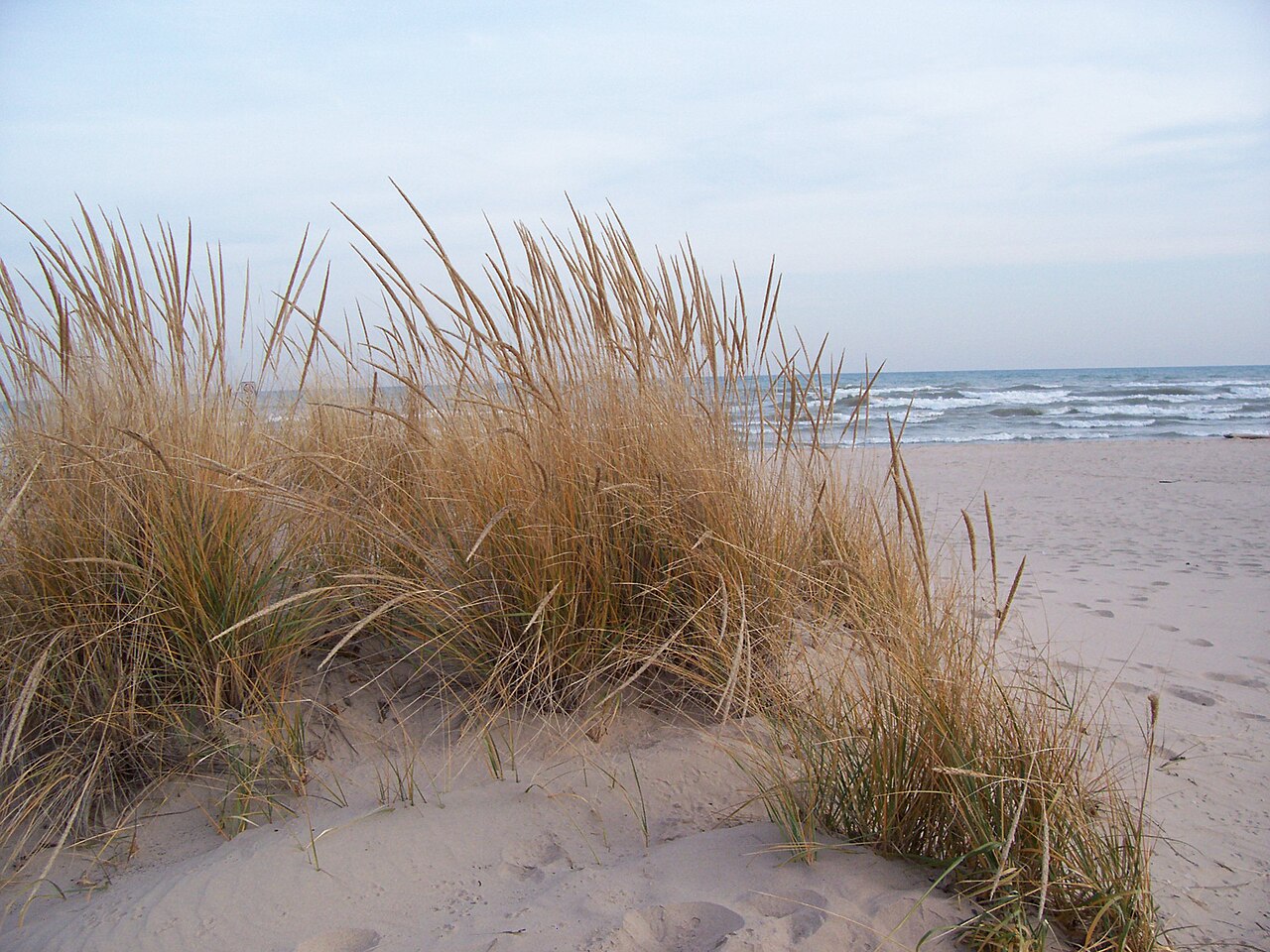
The leaf blades are narrow (1/8 to 1/4 inch wide), stiff, and tightly inrolled, giving them a wiry, almost needle-like appearance that reduces water loss in the drying wind and sun. They are blue-green when actively growing and fade to a pale straw-gold color by late summer and through winter, which is the color most beachgoers associate with dune grass. The plant spreads aggressively by rhizomes, which is exactly what allows it to colonize and bind loose, shifting sand.
Flowers & Seed Heads
From June through August, American beach grass sends up flowering stalks 2 to 4 feet tall, topped by a dense, narrow, spike-like seed head (panicle) 6 to 12 inches long. The seed heads start out tan to purplish and dry to a pale straw color, giving mature dunes their characteristic rippling, golden look by late summer. Despite producing viable seed, most natural spread and nearly all restoration plantings rely on the rhizomes rather than seed.
Roots & Rhizomes
The extensive rhizome and root system is the plant’s defining feature: a single plant can send roots down several feet and rhizomes many feet horizontally, binding huge volumes of sand. Crucially, buried stems respond to sand accumulation by growing upward and producing new roots at each buried node, so a dune actively building up sand stimulates the grass to grow more vigorously rather than suffocating it — the opposite of how most plants respond to burial.
Quick Facts
| Scientific Name | Ammophila breviligulata |
| Family | Poaceae (Grass) |
| Plant Type | Rhizomatous perennial grass |
| Mature Height | 2–4 ft (foliage 1–3 ft, flower stalks taller) |
| Mature Spread | Unlimited by rhizome; forms large colonies |
| Growth Rate | Fast, especially when buried by fresh sand |
| Sun Exposure | Full Sun |
| Water Needs | Low; relies on rainfall, highly salt and drought tolerant |
| Soil Type | Pure sand; essentially no organic matter needed |
| Soil pH | 6.0–8.0 (wide tolerance) |
| Bloom Time | June – August |
| Flower Color | Tan to purplish, drying straw-gold |
| Fall Color | Pale straw-gold through winter |
| Fruit | Small grain (caryopsis); spreads mainly by rhizome |
| Deer Resistant | Yes |
| USDA Hardiness Zones | 2–8 |
Native Range
American beach grass is native to the Atlantic coast from Newfoundland and Labrador south to North Carolina, and to sandy shorelines around the Great Lakes, including Minnesota, Wisconsin, Michigan, Illinois, Indiana, Ohio, and Pennsylvania. It is a plant of the immediate coastline: foredunes, backshore sand flats, and blowouts within reach of salt spray on the Atlantic, or wind-driven sand on the Great Lakes.
It is not native south of North Carolina along the Atlantic or Gulf coasts, and it is not native anywhere on the Pacific coast. In fact, it was deliberately introduced to Washington, Oregon, and British Columbia in the early twentieth century for dune stabilization, and it has since become an aggressive invasive species there, forming dense, steep foredunes that displace native dune plants such as American dunegrass (Leymus mollis) and alter habitat for nesting shorebirds like the western snowy plover. Gardeners and restoration projects on the West Coast should avoid planting it and should instead look for regionally native dune species.
Within its native range, American beach grass is typically the first vascular plant to colonize open, actively accreting sand on the foredune, ahead of later-successional dune species such as beach pea, seaside goldenrod, and bayberry that follow once the dune has begun to stabilize.
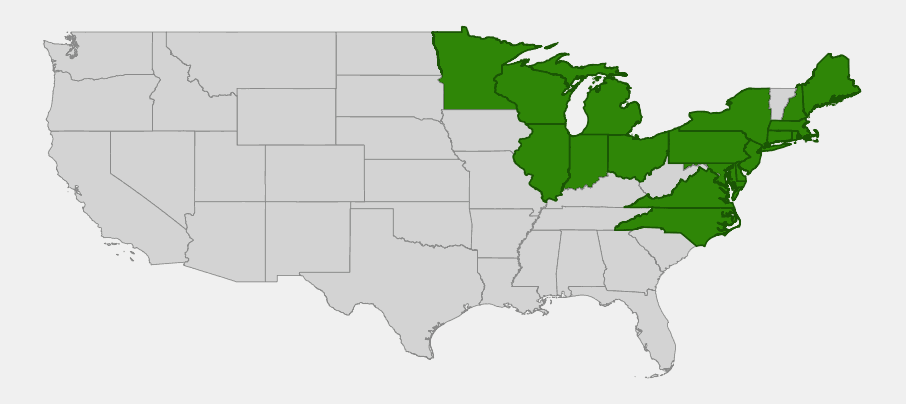
📋 Regional plant lists featuring American Beach Grass: New Hampshire, Maine & Vermont · Connecticut, Massachusetts & Rhode Island · New York, Pennsylvania & Northern New Jersey · Delaware, Southern New Jersey & Long Island, New York · Maryland, Virginia & West Virginia · North Carolina & South Carolina · Michigan, Wisconsin & Eastern Minnesota · Illinois, Iowa & Missouri · Ohio & Indiana
Growing & Care Guide
American beach grass is grown almost exclusively for dune building and erosion control within its native coastal range, and its needs are simple: full sun, pure sand, and room to spread.
Light
Full sun is required. American beach grass evolved in completely open, exposed dune conditions and will not tolerate shade from buildings, trees, or dense neighboring vegetation.
Soil & Water
It needs sandy, extremely well-drained soil and is specifically adapted to pure beach sand with little to no organic matter — rich garden soil is unnecessary and unhelpful. It tolerates salt spray and periodic salt water inundation, and once established needs no irrigation beyond natural rainfall; it is adapted to survive extended dry periods in open sand.
Planting Tips
Plant bare-root culms (stem cuttings with a few nodes) in fall through early spring, setting them 10 to 18 inches deep so at least one node is below the sand surface, in a staggered grid roughly 12 to 18 inches apart for dune-building projects. Many state coastal programs and conservation districts run organized beach grass planting days using nursery-grown or donor-dune stock; check local guidance before planting on a public beach, as dune planting is often regulated. Avoid planting where erosion is severe enough that roots cannot establish before the next storm.
Pruning & Maintenance
Established stands need essentially no maintenance. Mowing or cutting is not necessary and can weaken the plant’s ability to trap sand; let the grass grow and flop naturally, which is part of how it catches blowing sand. Fertilizer is rarely needed and can encourage excessive leafy growth at the expense of the deep rooting that holds the dune.
Landscape Uses
American beach grass has a narrow but critical set of uses within its native range:
- Dune stabilization and building on ocean and Great Lakes shorelines
- Coastal erosion control after storms or beach nourishment projects
- Habitat restoration for dune-dependent wildlife
- Natural sand fencing alongside wooden snow-fence style barriers
- Textural accent in coastal native plantings, where its movement and winter gold color are valued
Wildlife & Ecological Value
American beach grass is a foundation species for Atlantic and Great Lakes dune ecosystems, and the habitat it builds supports a specialized community of coastal wildlife even though the grass itself is not a major direct food source.
For Birds
Dense beach grass clumps provide essential nesting cover and camouflage for ground-nesting shorebirds, including piping plovers and least terns, both species of conservation concern along the Atlantic coast. The seeds are eaten in small amounts by some sparrows and other seed-eating birds that forage along the dune edge.
For Mammals
Small mammals such as meadow voles and beach mice use beach grass stands for cover and nesting material, and the root mass helps create the stable microhabitat these animals depend on in an otherwise harsh, shifting environment.
For Pollinators
As a wind-pollinated grass, beach grass offers little direct nectar or pollen value to bees and butterflies, but the dune habitat it creates supports many of the flowering plants, such as seaside goldenrod and beach pea, that pollinators depend on later in dune succession.
Ecosystem Role
Beach grass is the primary engineer of foredune formation along much of its native range: its rhizomes trap and bind windblown sand, building and anchoring the dunes that buffer inland habitats, wetlands, and human infrastructure from storm surge and wave energy. By stabilizing the first line of dunes, it creates the conditions that allow later-successional dune plants, and the animals that depend on them, to establish behind it.
Cultural & Historical Uses
American beach grass has long been recognized by coastal communities as essential for protecting shorelines, and organized beach grass planting has a history stretching back over a century on the U.S. Atlantic coast, where towns and conservation agencies have planted it after storms to rebuild damaged dunes. Cape Cod and the New Jersey shore in particular have decades of community and agency-led beach grass planting programs that continue today.
Indigenous peoples of the Atlantic coast and Great Lakes region had limited direct use for the plant itself, as it offers no significant food or fiber value, though its role in stabilizing the dune and backshore habitats they relied on for other resources would have been part of the landscape they knew well.
The species’ effectiveness at dune building also led to its introduction outside its native range in the early 1900s, most significantly on the Pacific coast, where federal and state agencies planted it for erosion control. That decision is now understood as an ecological mistake: West Coast dune managers today spend considerable effort removing introduced beach grass to restore native dune plant communities and threatened species habitat, a cautionary tale about moving even a beneficial native plant outside its natural range.
Frequently Asked Questions
Why does beach grass grow better when buried in sand?
Its rhizomes and stem nodes respond to sand burial by growing upward and sprouting new roots at each buried node, so accumulating sand stimulates more vigorous growth rather than smothering the plant. This unusual adaptation is exactly what makes it so effective at building dunes.
Is American beach grass invasive?
Within its native Atlantic and Great Lakes range, no — it is a beneficial native species. However, it was introduced to the Pacific coast for erosion control and has become invasive there, displacing native dune plants and altering habitat for shorebirds like the western snowy plover. It should not be planted on the West Coast.
Can I plant beach grass on my own beachfront property?
Often yes within its native range, but dune areas are frequently regulated by state coastal management programs or local conservation authorities, so check local rules before planting. Many coastal towns run community beach grass planting events that are the easiest way to get involved.
Does beach grass need watering or fertilizing?
No. Once established it relies on natural rainfall and is adapted to nutrient-poor sand; fertilizing is unnecessary and can promote weaker, less deeply rooted growth.
How is American beach grass different from European beach grass?
European beach grass (Ammophila arenaria) is a related but distinct species, introduced to parts of the U.S. Pacific coast, that tends to build steeper, denser dunes than the native West Coast vegetation favors. American beach grass is the native East Coast and Great Lakes species and is a different plant from its European counterpart, though the two can be confused where their introduced and native ranges overlap.

Looking for a nursery that carries American Beach Grass?
Browse our native plant nursery directory: Maine, Michigan & Minnesota · New Hampshire, New Jersey, New York, North Carolina & Ohio · Connecticut & Delaware · Pennsylvania, Rhode Island & Virginia · Illinois & Indiana · Wisconsin