Nodding Wild Onion (Allium cernuum)
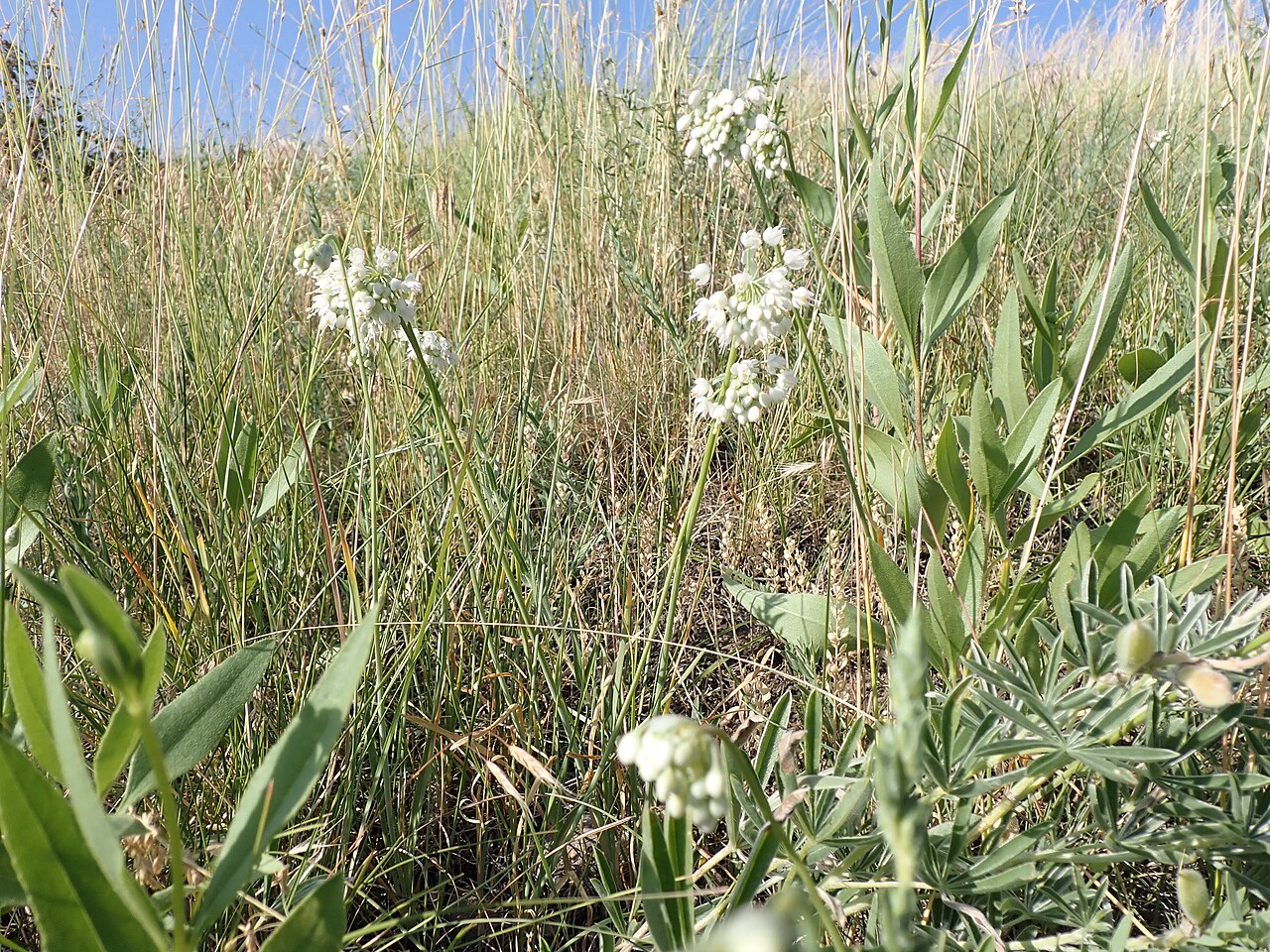
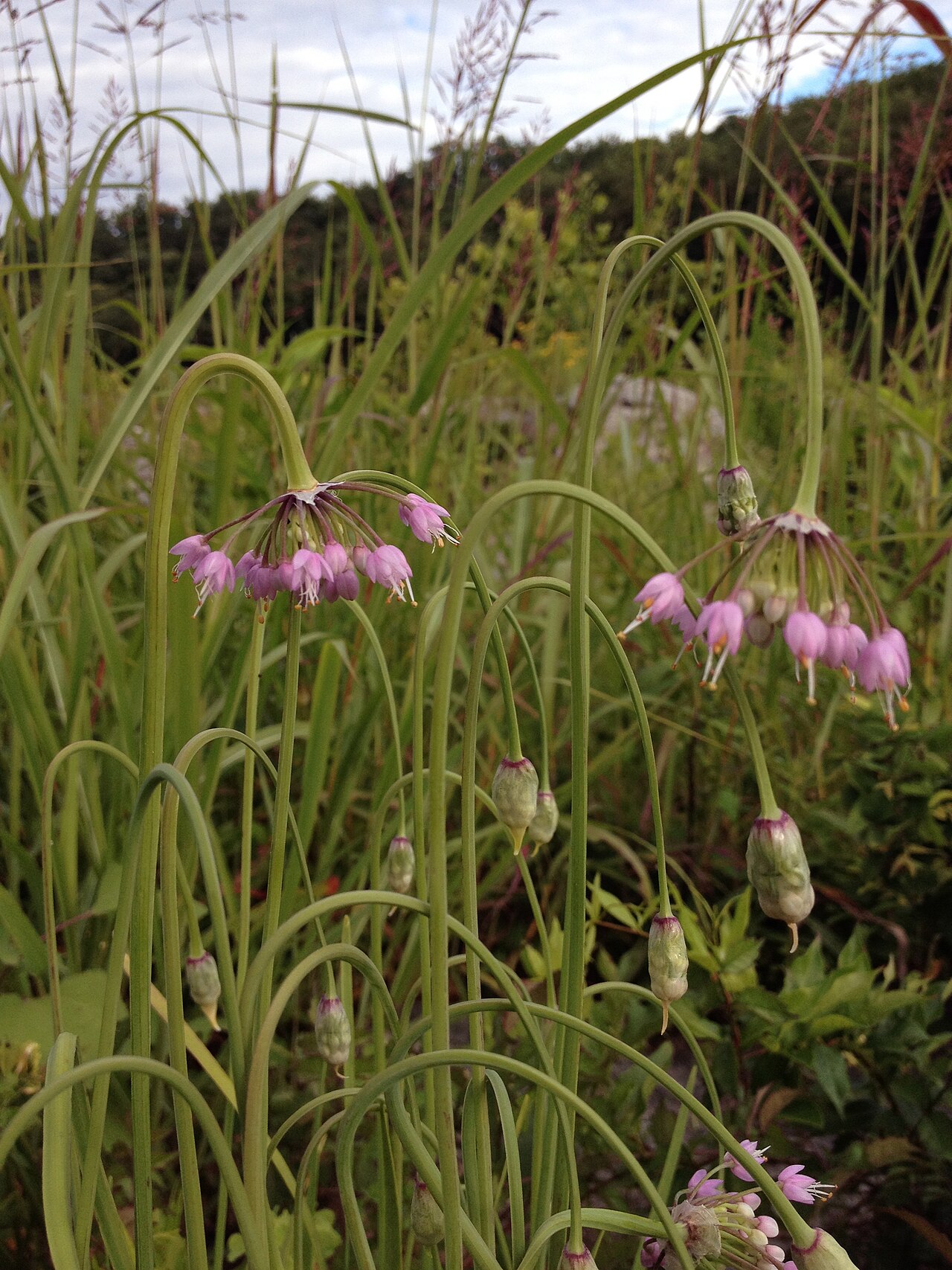
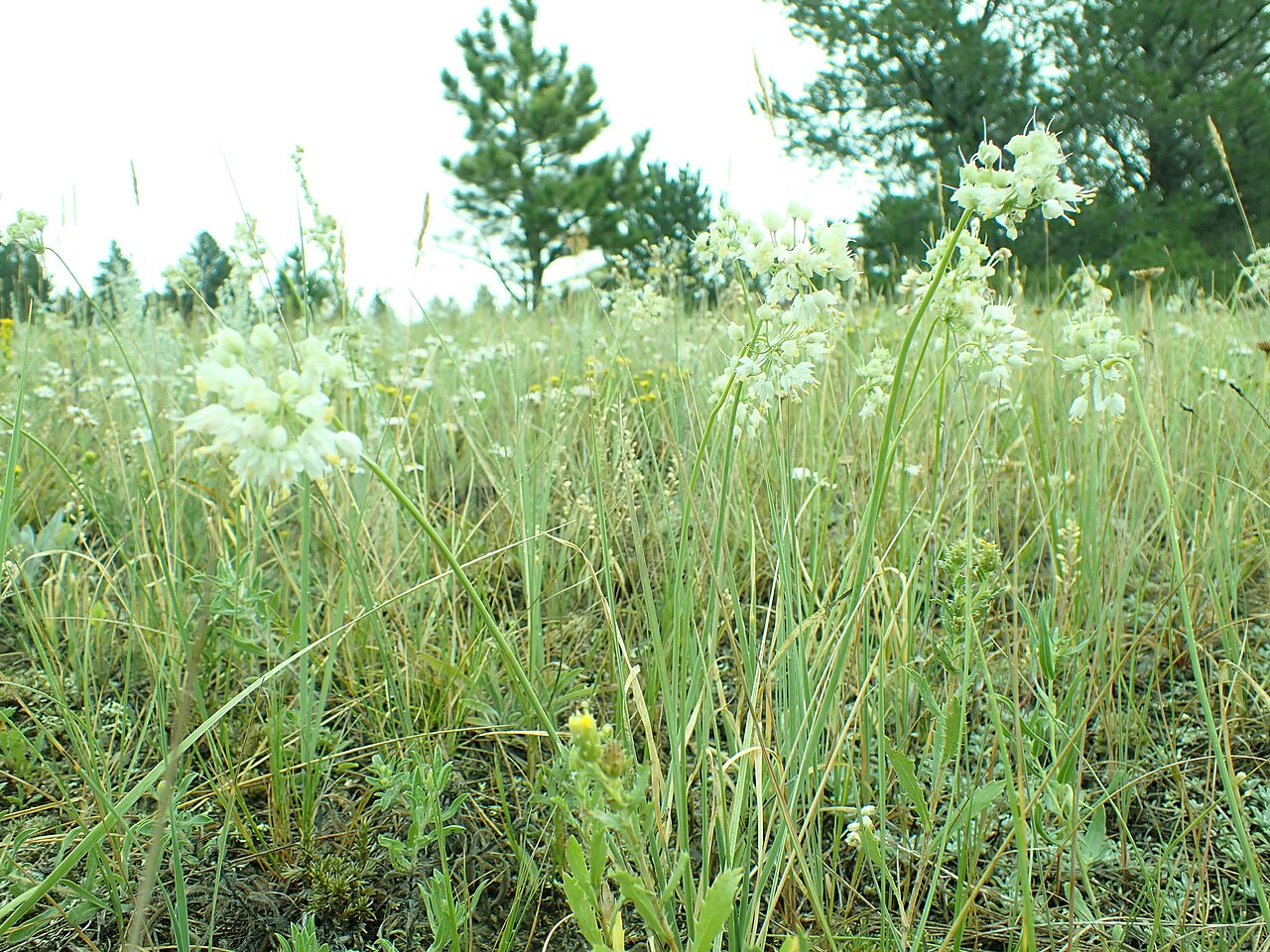
Allium cernuum, commonly called Nodding Wild Onion or nodding onion, is a clump-forming perennial wildflower found across more of North America than almost any other native onion. Its name comes from the distinctive crook in the flowering stem, which bends sharply so the whole umbel of flowers hangs upside down, looking out over the surrounding grasses rather than up at the sky. From midsummer into early fall, those nodding clusters open into dozens of small bell-shaped flowers in shades of white, pink, or light purple, each one dangling from its own slender pedicel like a tiny chandelier.
In the wild, nodding wild onion grows from dry rocky glades and open prairies to mountain meadows and open pine woodlands, often where the soil is thin and well drained. It is genuinely a plant of open, sunny ground — it does not compete well with tall, dense vegetation — which is why you find it on bluffs, roadcuts, gravel bars, and grazed or burned grasslands where taller plants are kept in check. Its narrow, grass-like leaves emerge in spring from a slender bulb and often fade by the time the flowers open, so established clumps are easy to overlook until the flower stalks appear.
For gardeners, nodding wild onion is an easy, long-lived addition to a sunny native bed, rock garden, or prairie planting. It asks for little beyond good drainage and full sun, multiplies steadily by offsets and seed without becoming aggressive, and draws a steady stream of small native bees and other pollinators while deer and rabbits generally leave it alone. Because true populations are native across so much of the country, it pairs naturally with an unusually wide range of regional prairie and woodland-edge companions.
Identification
Nodding wild onion grows from a narrow, elongated bulb covered in fibrous, grayish outer coats, usually growing in loose clusters where offset bulbs have multiplied over several seasons. The whole plant has the unmistakable onion smell when any part is bruised or cut, which is often the quickest way to confirm an identification in the field.
Leaves
The leaves are grass-like, flat to slightly keeled, 2–4 millimeters wide and up to about 12 inches long, arising in a basal cluster directly from the bulb. They are bright green, soft-textured, and often begin to yellow or wither by the time the plant flowers in mid- to late summer, so look for them earlier in the season if leaf identification is needed. Unlike true grasses, the leaves have a faint onion scent when crushed.
Flowers
The flowering stalk (scape) stands 8 to 20 inches tall and is topped by a distinctive sharp downward bend just below the flower cluster, forcing the umbel to nod rather than face upward — the single most reliable field mark for this species. Each umbel holds 20 to 40 individual bell-shaped flowers, 1/4 to 3/8 inch across, in shades ranging from white through pale pink to lavender-purple, with yellow pollen visible on the anthers. Bloom runs from July into September depending on latitude and elevation, later at higher elevations and further north.
Fruit & Seeds
After bloom, the flowers mature into small three-lobed seed capsules that split open to release shiny black seeds. Unlike some other Allium species, nodding wild onion does not produce bulblets (small vegetative bulbs) in the flower cluster, so its umbels stay clean and flower-only through the season — useful for distinguishing it from look-alike onions that do produce bulbils.
Quick Facts
| Scientific Name | Allium cernuum |
| Family | Amaryllidaceae (Onion) |
| Plant Type | Herbaceous bulb perennial |
| Mature Height | 8–20 in |
| Mature Spread | 6–12 in per clump, widening slowly by offsets |
| Growth Rate | Slow to moderate |
| Sun Exposure | Full Sun to Part Sun |
| Water Needs | Low to average; drought tolerant once established |
| Soil Type | Dry to average, well-drained; rocky, gravelly or sandy |
| Soil pH | 6.0–7.5 (neutral to slightly alkaline tolerated) |
| Bloom Time | July – September |
| Flower Color | White to pink or lavender-purple |
| Fall Color | Foliage dies back by late summer; no notable fall color |
| Fruit | Small three-lobed capsule with black seeds |
| Deer Resistant | Yes (onion scent deters browsing) |
| USDA Hardiness Zones | 3–8 |
Native Range
Nodding wild onion has one of the broadest native ranges of any North American Allium, stretching from British Columbia and Washington east across the northern prairies and Great Lakes to New York and Pennsylvania, south through the Appalachians to Georgia and Alabama, and west through the Great Plains and Rocky Mountains to Arizona and New Mexico. Across this huge range it is consistently a plant of open, well-drained ground rather than a particular climate zone, which is why it turns up in such different settings as Pacific Northwest bunchgrass hills, Ozark glades, and Rocky Mountain foothill meadows.
It is absent or only sparingly documented in much of the Deep South coastal plain, peninsular Florida, the Gulf Coast, New England, and the humid Mid-Atlantic coastal plain, where consistently moist, acidic, or heavily wooded conditions do not suit it. In Texas it is concentrated in the drier Edwards Plateau and western two-thirds of the state rather than the humid eastern pine woods. Gardeners east of the Appalachians or along the Gulf should treat it as a plant for an open, sharply drained site rather than typical garden soil.
Across its range it typically grows on limestone or other rocky glades, dry prairie, open oak and pine woodland edges, gravel bars, bluffs, and mountain meadows up to subalpine elevations in the Rockies. It tolerates periodic fire and grazing well, since both help keep competing vegetation low, and it is often one of the more persistent native wildflowers in restored or managed prairie remnants.
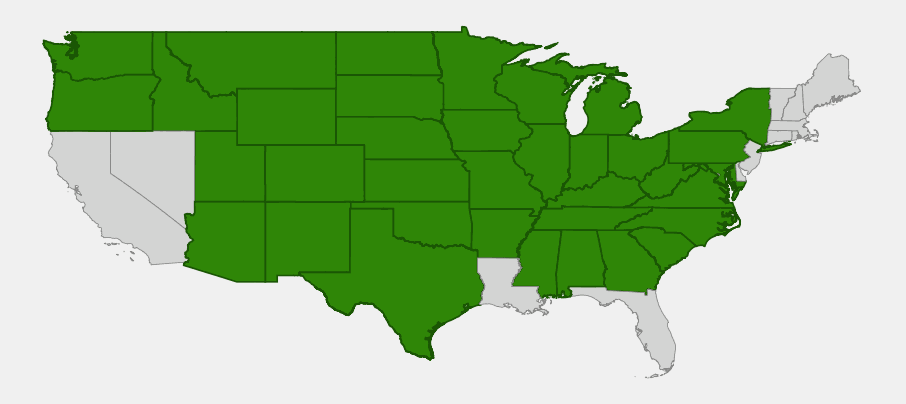
📋 Regional plant lists featuring Nodding Wild Onion: Western Oregon & Western Washington · Idaho, Eastern Oregon & Eastern Washington · Montana & Wyoming · Utah & Western Colorado · Nebraska, Kansas & Eastern Colorado · Arizona & New Mexico · North Dakota, South Dakota & Western Minnesota · Michigan, Wisconsin & Eastern Minnesota · Illinois, Iowa & Missouri · Ohio & Indiana · Kentucky & Tennessee · Maryland, Virginia & West Virginia · North Carolina & South Carolina · Georgia, Alabama & Mississippi · Arkansas, Louisiana, Eastern Oklahoma & Eastern Texas · New York, Pennsylvania & Northern New Jersey
Growing & Care Guide
Nodding wild onion is one of the easiest native bulbs to grow, as long as it gets the sharp drainage it has in the wild. Give it a sunny spot with lean, well-drained soil and it will form a long-lived, slowly expanding clump with little attention.
Light
Full sun produces the best flowering and the sturdiest, most compact flower stalks. The plant tolerates light part shade, especially in hotter climates, but will stretch and bloom more sparsely in deeper shade. In a prairie or meadow planting, keep it clear of tall, aggressive neighbors that would shade it out.
Soil & Water
Good drainage matters more than fertility. Nodding wild onion is at home in rocky, gravelly, or sandy soil and resents constantly wet or heavy clay ground, where the bulbs are prone to rot. It is drought tolerant once established and needs only occasional watering during its first season; after that, rainfall is usually sufficient except in extended summer dry spells. Avoid rich, heavily amended soil, which tends to produce floppy growth.
Planting Tips
Plant bulbs or container-grown plants in fall or early spring, setting bulbs about 2–3 inches deep and spacing clumps 6–10 inches apart. It is an excellent choice for rock gardens, gravel gardens, raised berms, and the sunny edges of a prairie planting, where its narrow leaves and thin flower stalks won’t be swamped by companions. It establishes readily from seed as well, though flowering is typically delayed two to three years from sowing.
Pruning & Maintenance
Little maintenance is needed. Leave seed heads in place if you want the clump to self-sow, or deadhead spent flower stalks for a tidier look. Foliage naturally yellows and dies back by late summer; this is normal bulb dormancy, not a sign of a problem, and nearby plants can be used to visually cover the fading leaves. Clumps can be lifted and divided every several years to renew vigor or share with other gardeners.
Landscape Uses
Nodding wild onion earns a place in several kinds of native plantings:
- Rock gardens and gravel gardens, where its need for sharp drainage is easily met
- Prairie and meadow plantings as a mid-summer bloomer among grasses
- Pollinator gardens for its long bloom period and bee visitors
- Dry slopes and berms where other perennials struggle with drainage
- Edging and border fronts, thanks to its modest, clumping habit
- Deer-prone landscapes, since the onion scent discourages browsing
Wildlife & Ecological Value
Despite its modest size, nodding wild onion is a reliable nectar source through the hottest, driest part of summer, when many spring wildflowers have already finished blooming.
For Pollinators
The flowers attract a wide range of native bees, including small sweat bees and bumble bees, as well as butterflies, skippers, and other nectar-seeking insects. Because it blooms in mid- to late summer, it fills a gap left by many earlier-flowering prairie species, providing a dependable nectar source when options are otherwise thin.
For Birds
The plant is not a major food source for birds, but the open, sunny habitats where it grows — prairie, glade, and open woodland edge — support ground-feeding and seed-eating birds that benefit from the broader plant community it is part of.
For Mammals
The onion scent and taste make nodding wild onion unpalatable to deer and rabbits, which is a practical benefit in gardens but also means it persists in heavily browsed wild landscapes where more palatable wildflowers are grazed down. Small mammals generally leave the bulbs undisturbed for the same reason.
Ecosystem Role
In prairies and glades, nodding wild onion is a low-growing, fire-tolerant component of plant communities that depend on periodic disturbance to stay open. Its bulb allows it to survive fire and drought that would kill less resilient plants, and its late-summer bloom helps sustain pollinator activity into a period when many other flowers have finished.
Cultural & Historical Uses
Nodding wild onion was gathered and eaten by many Indigenous peoples across its wide range, who used the bulbs and young leaves much like a wild onion or scallion, raw, cooked, or dried for later use. Its mild onion flavor and wide availability made it one of the more commonly used wild alliums across the prairies, Rocky Mountains, and eastern woodlands.
Early European settlers and botanists likewise recognized it as an edible wild plant, and it appears in historical accounts of foraging across much of its range. Like other wild onions, it was sometimes used as a flavoring herb and, in some traditions, as a minor folk remedy for coughs and colds, though such historical uses are not a basis for modern medicinal claims.
Today nodding wild onion’s main role is horticultural and ecological rather than culinary. It has become a popular native plant for rock gardens, prairie restorations, and pollinator plantings, valued for its resilience, its long bloom season, and its place as one of the few North American alliums with such a wide and well-documented native distribution.
Frequently Asked Questions
Why is it called “nodding” onion?
The flowering stem makes a sharp downward bend just below the cluster of flowers, so the whole umbel hangs upside down, “nodding” toward the ground instead of facing up like most onion flowers. This crook is the most reliable way to identify the species in the field.
Is nodding wild onion edible?
Yes, the bulbs and leaves are edible with a mild onion flavor and have long been used by Indigenous peoples and foragers. As with any wild edible, be certain of identification before eating, and avoid harvesting from natural populations where the species is uncommon.
Will nodding wild onion spread aggressively in my garden?
No. It spreads slowly by offset bulbs and seed, gradually forming a larger clump over several years rather than running or seeding in aggressively. It is easy to keep within bounds in a garden bed.
Does nodding wild onion need rich soil?
No — it actually performs best in lean, rocky, or sandy soil with sharp drainage. Rich, heavily amended garden soil tends to produce weaker, floppier growth and can increase the risk of bulb rot.
Is nodding wild onion native to the eastern United States?
It is native to parts of the eastern U.S., including Pennsylvania, New York, the Appalachians, and the Midwest, but it is not native to the Atlantic coastal plain, New England, or Florida, where consistently moist or acidic conditions do not suit it. Gardeners in those regions should give it an open, well-drained site rather than typical damp garden soil.

Looking for a nursery that carries Nodding Wild Onion?
Browse our native plant nursery directory: Washington · Oregon · Idaho, Illinois, Indiana, Iowa & Kansas · West Virginia, Wisconsin & Wyoming · Colorado & Georgia · Nebraska, New Mexico, New York, North Carolina, North Dakota, Ohio & Oklahoma · Kentucky, Maryland, Michigan, Minnesota, Mississippi, Missouri & Montana · Pennsylvania, South Carolina, South Dakota, Tennessee, Texas, Utah & Virginia · Alabama, Arizona & Arkansas