Vanilla Leaf (Achlys triphylla)
Achlys triphylla, commonly known as Vanilla Leaf (also called Sweet-After-Death or Deer’s Foot), is a quietly distinctive rhizomatous perennial of the Pacific Northwest’s shaded forest floor. Named for the sweet, vanilla-like scent the leaves release as they dry — a fragrance strong enough that Indigenous peoples and early settlers once hung bundles of the drying foliage as a natural air freshener and insect repellent — Vanilla Leaf forms dense, low carpets beneath conifers from the coast to the mid-elevation mountains.
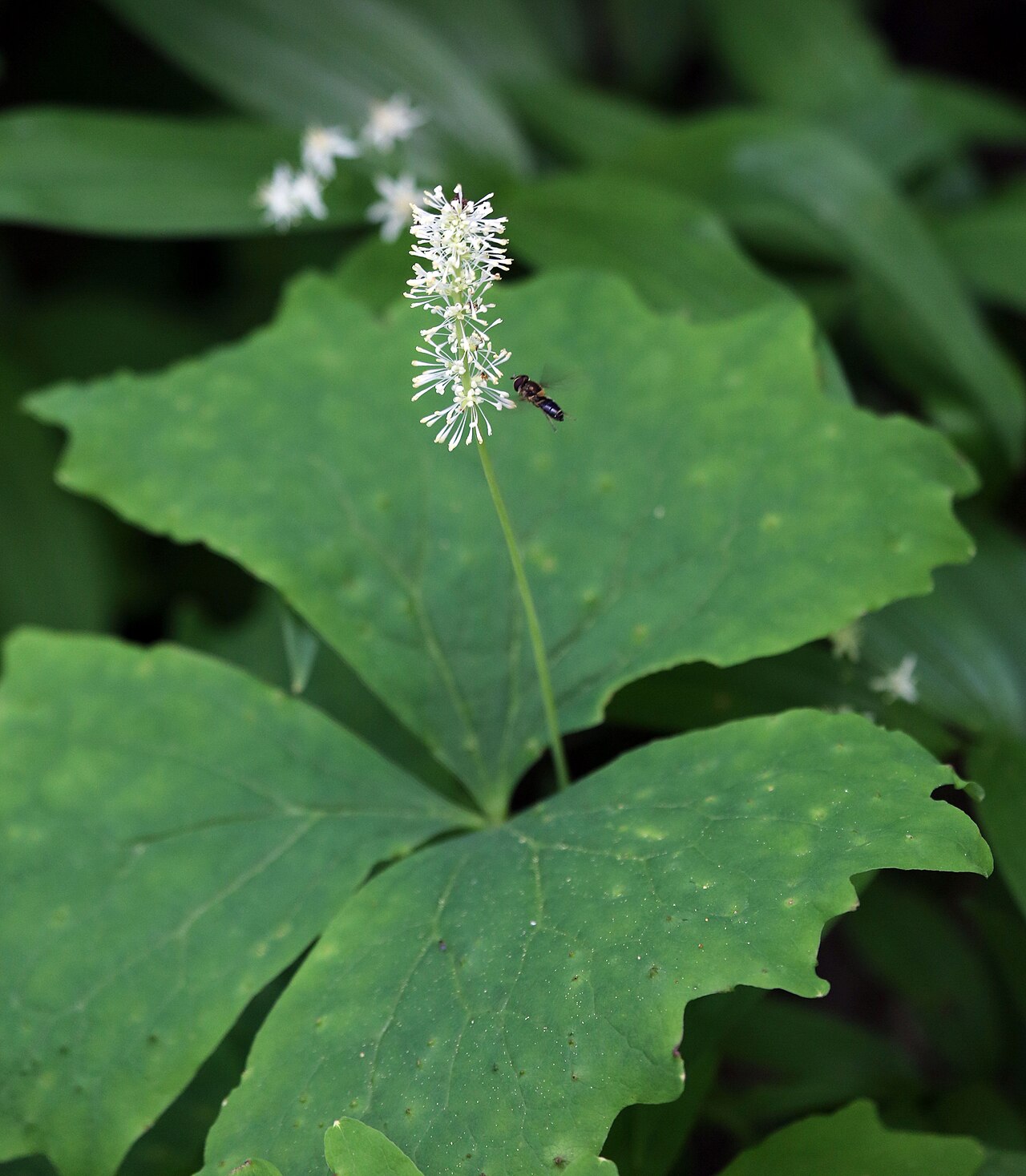
Unlike most showy native wildflowers, Vanilla Leaf’s appeal is architectural rather than floral. Its broad, three-parted leaves fan out on wiry stalks held well above a spreading rhizome mat, creating a uniform, almost sculptural groundcover in deep woodland shade where few other perennials thrive. In late spring, slender flower spikes rise above the foliage bearing tiny white flowers without petals — just tufts of stamens — giving the inflorescence a soft, bottlebrush appearance.
Vanilla Leaf belongs to the barberry family (Berberidaceae) and is one of only two species in its genus worldwide, the other occurring in temperate East Asia — a classic example of the disjunct Asian-North American plant distributions botanists find in old, moist temperate forests. For gardeners west of the Cascades and along the northern California coast, it is an excellent, low-maintenance groundcover for the deepest, driest shade under established conifers.
Identification
Vanilla Leaf is a low, colony-forming perennial herb reaching 8 to 16 inches tall, spreading steadily by shallow, branching rhizomes to form dense, even patches over time.
Leaves
Each leaf is held on a slender, wiry petiole rising directly from the rhizome and is divided into three broad, fan-shaped leaflets arranged in a distinctive triangular, almost umbrella-like whorl — the single most reliable field mark for this species. Leaflets are coarsely toothed or shallowly lobed along their outer margins, medium green, and somewhat leathery in texture. When bruised, dried, or pressed, the foliage releases a sweet, vanilla-like fragrance, the source of both the common name and the less flattering “sweet-after-death,” a reference to its traditional use as a scent for drying rooms and storage.
Flowers
In May and June, a single leafless flower stalk rises from the base of the plant, slightly taller than the leaves, bearing a narrow, cylindrical spike of small white flowers. The flowers lack petals entirely; what appears decorative is a cluster of four white sepals and numerous slender white stamens, giving each flower a fuzzy, star-like look. The overall effect of the spike is a soft bottlebrush held just above the leaf canopy.
Fruit
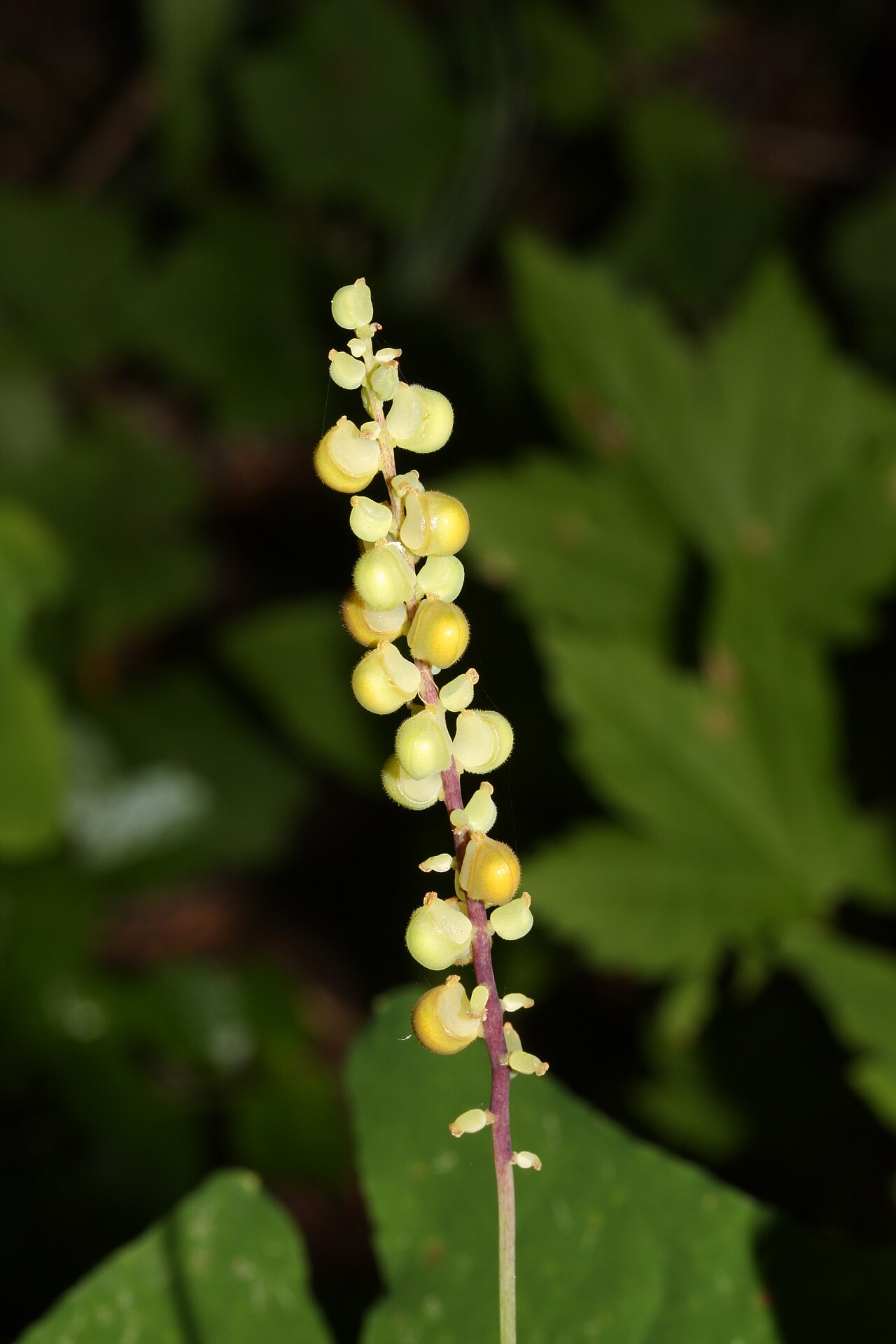
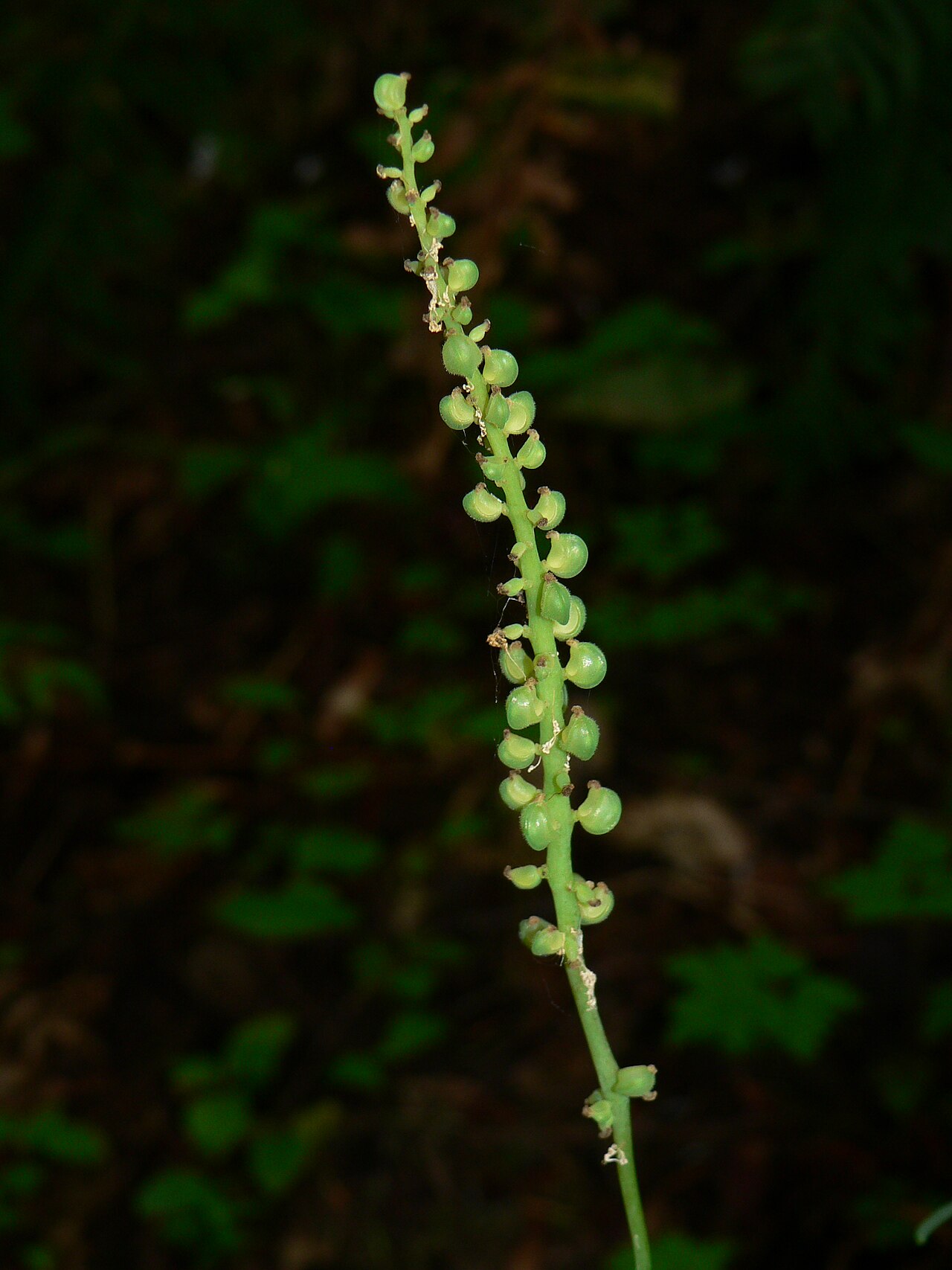
Following bloom, the flower spike persists and develops small, hooked, bristly green fruits (achenes) arranged along the same stalk. The fine hooked bristles catch on fur and clothing, aiding in animal-mediated seed dispersal — a simple but effective strategy for a plant that spends its life in dim, still forest understory where wind dispersal is unreliable.
Quick Facts
| Scientific Name | Achlys triphylla |
| Family | Berberidaceae (Barberry) |
| Plant Type | Herbaceous Perennial, Groundcover |
| Mature Height | 8–16 in (20–40 cm) |
| Spread | Forms dense colonies by rhizome |
| Growth Rate | Slow to moderate |
| Sun Exposure | Full Shade to Part Shade |
| Water Needs | Low to Moderate once established |
| Soil Type | Humus-rich, well-drained forest soil |
| Soil pH | 5.0–6.5 (acidic) |
| Bloom Time | May – June |
| Flower Color | White |
| Fruit | Small bristly, hooked achenes |
| Deer Resistant | Yes (rarely browsed) |
| USDA Hardiness Zones | 6–9 |
Native Range
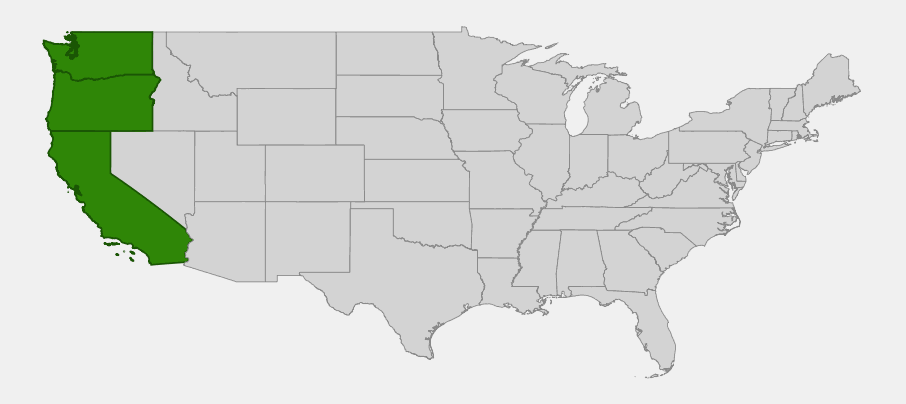
Vanilla Leaf is native to the Pacific Coast, occurring from southwestern British Columbia south through western Washington and western Oregon to the coastal ranges and Sierra Nevada foothills of northern and central California. It is a plant of the moist, shaded conifer forests west of the Cascade crest and does not occur on the dry, interior side of Washington and Oregon or in the Rocky Mountain states.
Within this range, Vanilla Leaf is a characteristic understory species of mixed conifer-hardwood forests, especially those dominated by Douglas fir, western hemlock, and western redcedar. It grows from near sea level in coastal forests up into mid-elevation mountain forests, typically in deep shade where soil stays consistently moist and rich in organic matter.
📋 Regional plant lists featuring Vanilla Leaf: Western Oregon & Western Washington
Growing & Care Guide
Vanilla Leaf is a specialist for the deep, dry shade under mature conifers — conditions where many other groundcovers struggle. Once established, it is remarkably self-sufficient.
Light
This species needs shade. Full shade to dappled part shade under a closed conifer or mixed-forest canopy produces the lushest, most uniform colonies; direct sun scorches the foliage and stunts growth. It is one of the best groundcovers for the deep shade beneath established evergreens where lawn and sun-loving perennials fail.
Soil & Water
Vanilla Leaf prefers humus-rich, acidic, well-drained forest soil with a consistent organic mulch layer, mimicking the duff of its native conifer forest floor. It tolerates the dry summer shade typical of established Pacific Northwest forests once its rhizome network is established, needing only occasional deep watering during prolonged summer drought. Soggy or poorly drained soil should be avoided.
Planting Tips
Plant divisions or container stock in fall or early spring, spacing pieces 10 to 12 inches apart — colonies knit together gradually as the rhizomes spread. A loose layer of leaf litter or conifer duff left in place helps retain the moisture and organic structure this species needs. Patience is key; Vanilla Leaf spreads at a modest pace compared to more aggressive groundcovers, typically taking two to three years to form a dense mat.
Maintenance
Established plantings require almost no upkeep. Leave fallen leaves and conifer needles in place as a natural mulch rather than raking them away. Division is rarely necessary, but can be done in early spring if you want to propagate new patches elsewhere in the garden.
Landscape Uses
- Deep shade groundcover under established conifers
- Woodland garden understory plantings
- Native forest restoration and duff-layer enrichment
- Dry shade solutions where few other perennials succeed
- Naturalistic borders beneath native shrubs and trees
Wildlife & Ecological Value
Vanilla Leaf’s ecological role is subtle but important in the moist Pacific Northwest forest community it calls home.
Seed Dispersal
The small, hooked fruits catch on the fur of passing mammals and the feathers or feet of ground-foraging birds, hitching a ride to new sites — a dispersal strategy well suited to the still, breezeless air of a dense forest understory where wind-carried seed would travel poorly.
Groundcover and Soil Habitat
As a dense, long-lived rhizomatous groundcover, Vanilla Leaf helps stabilize forest floor soil, suppress erosion on shaded slopes, and maintain the cool, moist microclimate that supports fungi, salamanders, and invertebrates living in the leaf litter layer. Its persistence as a low, even mat also helps limit colonization by more aggressive, often non-native, understory weeds.
Deer and Browsing Pressure
The foliage is seldom browsed by deer or elk, likely due to its leathery texture and chemical defenses, making it a reliable, low-maintenance choice in forested areas with heavy deer pressure where many other native perennials are repeatedly grazed down.
Cultural & Historical Uses
Several Pacific Northwest Indigenous peoples traditionally gathered Vanilla Leaf for its fragrance, hanging bundles of the leaves to dry in homes, smokehouses, and storage areas, where the sweet vanilla-like scent that develops as the foliage dries served as a natural air freshener and was traditionally believed to help repel insects such as fleas and mosquitoes. This same fragrance, released only after drying or bruising — fresh leaves are nearly scentless — is also the origin of the folk name “sweet-after-death.”
Beyond its use as a scenting herb, Vanilla Leaf has little recorded history as a food or medicinal plant, and no food use is documented for the species; its traditional value was almost entirely aromatic and practical. Today it remains valued chiefly as a garden and restoration plant for the deep shade conditions so common beneath Pacific Northwest conifer canopies.
In the wild, Vanilla Leaf is frequently found growing alongside Sword Fern and Dull Oregon Grape, two other shade-tolerant Pacific Northwest natives that make excellent companions in a woodland garden setting.
Frequently Asked Questions
Why is it called Vanilla Leaf?
The leaves release a sweet, vanilla-like fragrance as they dry or are bruised, a scent that was traditionally used by Indigenous peoples of the Pacific Northwest for scenting storage spaces and discouraging insects. Fresh, undamaged leaves have little scent.
Will Vanilla Leaf grow in full sun?
No. This is a true shade specialist adapted to the dim understory of conifer forests, and it performs poorly — with scorched, stunted foliage — in direct sun. Plant it only in full or dappled shade.
Is Vanilla Leaf edible or medicinal?
There is no significant documented history of Vanilla Leaf as a food plant, and it should not be considered an edible or medicinal herb. Its traditional use was as a fragrant material for drying rooms, not for consumption.
How fast does Vanilla Leaf spread?
It spreads gradually by rhizome, typically taking two to three years to form a dense, even groundcover patch. This modest pace makes it a good-behaved, non-aggressive choice for a shaded woodland garden bed.
Is Vanilla Leaf native to my state?
Vanilla Leaf is native only to California, Oregon, and Washington (plus British Columbia), where it grows in moist, shaded conifer forest. It is not native east of the Cascade Range or outside the Pacific Coast states.

Looking for a nursery that carries Vanilla Leaf?
Browse our native plant nursery directory: California · Oregon · Washington